
Review · OSAKA
Osaka: Kuromon Market Food Walking Tour (6 stops, 6 tastes)
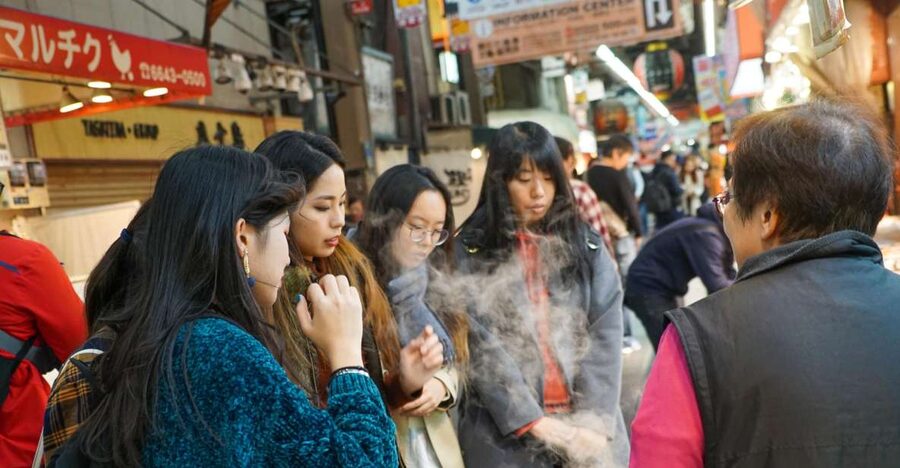
Osaka’s best introduction may be a snack in one hand and a local guide pointing out the next stall. This two-hour Kuromon Market walk combines food, neighborhood history, a shrine, kitchenware shops, and the bright streets around Dotonbori. You get a useful first look at central Osaka without giving up half a day.
I like the generous food allowance and the way the route goes beyond eating. You may try takoyaki, grilled scallops, yakitori, sashimi, fruit, sweets, or other market specialties, then browse Doguyasuji for knives and cooking tools. I also like the friendly guides, including Nina, Niko, Aiko, Noz, and Yusuke, who have been praised for clear English, photos, and flexible food choices.
The main drawback is that Kuromon can be crowded, and some walking areas are not suitable for wheelchairs or strollers. The tour also cannot guarantee allergy-free meals, and gluten-free requests cannot be accepted, so this is not the right pick if strict dietary control is essential.
Key points at a glance
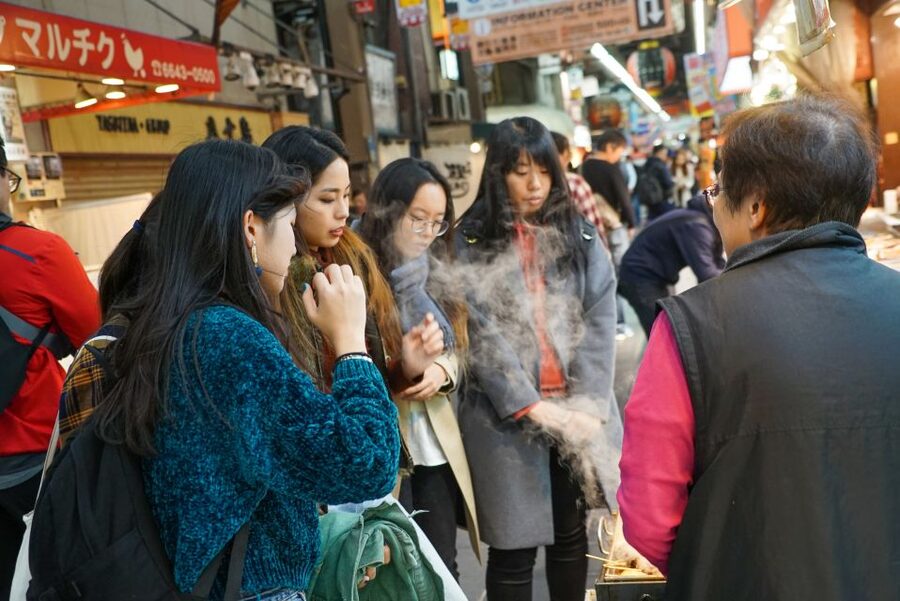
- Five or six food tastings: Expect enough samples to serve as a light lunch, with choices that can include takoyaki, seafood, skewers, fruit, sweets, and other Osaka favorites.
- Kuromon beyond the main street: Your guide helps you choose stalls and explains how the market fits into Osaka’s food culture.
- Doguyasuji kitchenware street: Look for Japanese knives, cookware, tableware, and practical souvenirs.
- A compact Namba route: The walk links Kuromon Market with Hozenji Yokocho and Dotonbori.
- Friendly English-speaking guides: Guides such as Nina, Niko, Aiko, Noz, and Yusuke are praised for local tips, photos, and an easygoing pace.
- Best for flexible eaters: Vegetarian and vegan requests may be possible with advance notice, but food choices remain limited.
Why Kuromon Market makes a good first Osaka stop

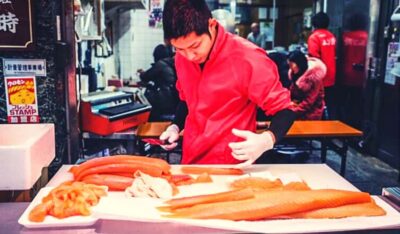
Kuromon Ichiba Market is often called the Kitchen of the Nation, and you can see why within minutes. Family-run shops have operated here for decades, selling seafood, produce, prepared foods, and cooking supplies. It is not simply a row of snack counters designed for sightseeing. It remains part of the city’s food life.
That makes a guided visit useful. You can walk through Kuromon alone, but the choice can be confusing. One stall may sell grilled seafood, another fruit, another sweets, and another ingredients you do not recognize. A local guide can explain what is popular in Osaka, point out what is fresh, and help you order without guessing.
I like that the tour does not treat food as a series of isolated bites. You also hear about Osaka’s role in Japanese culture and its long connection with merchants, cooking, and eating out. That context helps you understand why the market matters, rather than simply photographing a plate and moving on.
The market is also a working place. You should expect narrow passages, people shopping, and busy food counters. Your guide may buy the food and move you to a quieter spot to eat, which is helpful when the main walkway is crowded. Be ready to keep moving and avoid blocking shop entrances.
More Food Walking Tours in Japan
- Tokyo Tsukiji Fish Market Food and Culture Walking Tour
★ 5.0 · 3,184 reviews - Tokyo: Tsukiji Fish Market Food and Walking tour
★ 5.0 · 1,724 reviews - Nishiki Market Brunch Walking Tour (7 Tastings + Brunch)
★ 5.0 · 1,355 reviews
Meeting near Nippon-bashi without a late start
The meeting point is in front of the SMBC ATM at Nippon-bashi 1chome, near Kintetsu Nippon-bashi Station Exit 10. Look for the guide holding a MagicalTrip board. The listed starting location is the Picasso Nihonichi Building, so check your booking details carefully before setting out.
I would arrive early. One person described the meeting point as a little difficult to find, and this tour starts on time. If you arrive late, you cannot join, reschedule, or receive a refund. That rule matters in Namba, where station exits, shopping arcades, and narrow side streets can make a short distance take longer than expected.
The route covers several central neighborhoods on foot, but the exact food lineup can change. Shops open, close, sell out, or offer different seasonal items. Think of the six tastes as a guided sampling plan, not a fixed restaurant menu.
The opening neighborhood walk and local orientation
The first part includes a short guided visit of about 15 minutes before the main market stop. The supplied route calls this a hidden gem, but the important point is that you begin with local orientation rather than jumping straight into food.
This is where you can ask practical questions about Osaka. Ask your guide what to eat later, where to find a particular souvenir, or which areas suit your evening plans. Guides such as Nina, Niko, and Aiko have been praised for offering restaurant suggestions and helping people plan the rest of their time in the city.
The opening section also gives you a chance to settle into the pace. You will be walking, stopping, eating, and listening in an area that can feel busy and unfamiliar. Families have used the tour with teenagers and children, and one guide made special allowances for a baby, but you should still expect city walking rather than a slow museum visit.
Kuromon Ichiba: six tastes among old family shops
The market section lasts about 30 minutes, though the food stops can make this feel like the heart of the tour. You receive five or six samples, with enough food to fill you up for a light lunch. Come hungry, since buying extra dishes before the tour may leave you too full for the tastings.
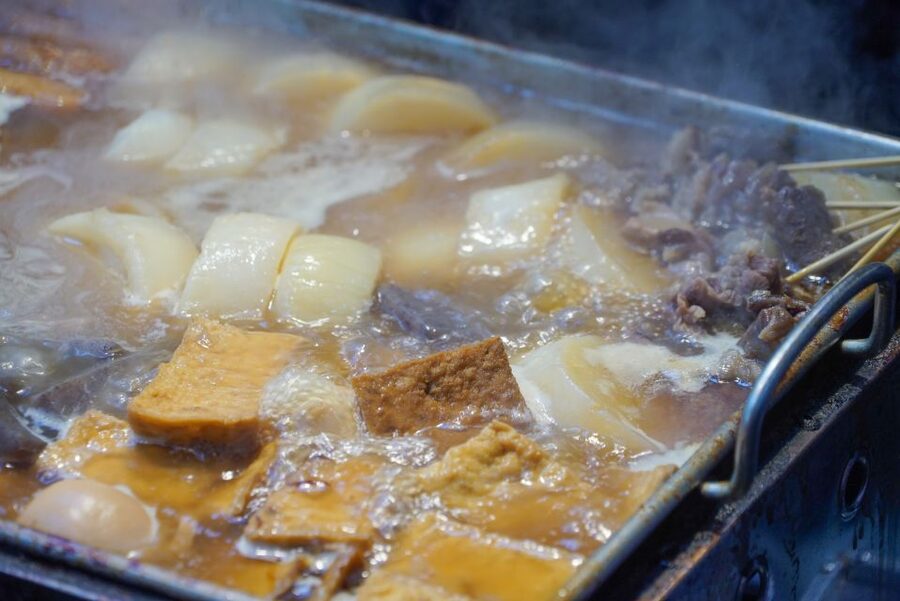
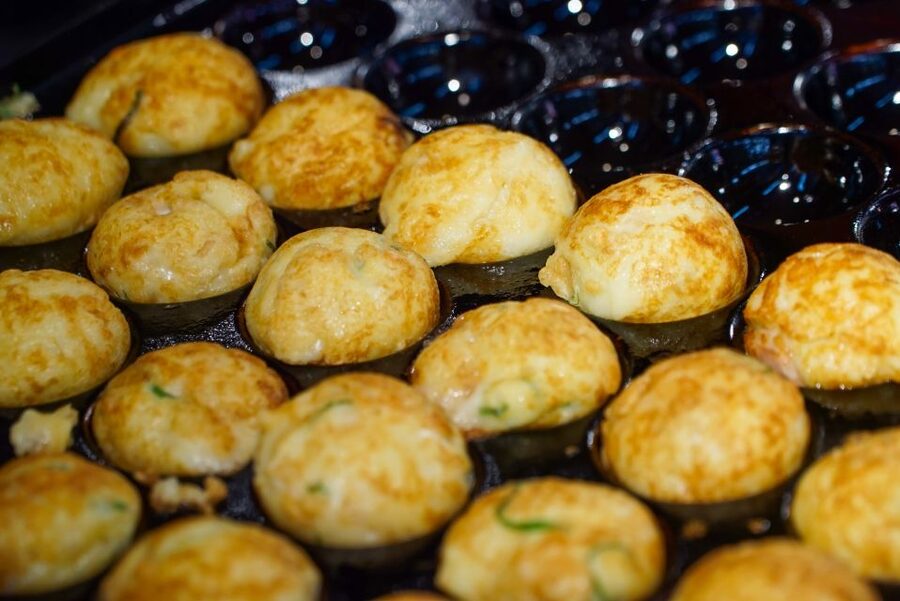
The best part is the variety. Typical choices mentioned for this experience include takoyaki, grilled scallops, grilled yakitori skewers, and other Osaka specialties. Past food combinations have also included tuna belly sashimi, tempura, gyoza, roast chestnuts, dried fruit, fresh watermelon, strawberry mochi, sakura mochi, and taiyaki filled with red bean paste.
You may also encounter less familiar Japanese foods. One past group tried puffer fish and whale, while another sampled wasabi and several kinds of seafood. These foods are not guaranteed, but they show why a guide helps. You can ask what something is, how it is prepared, and if it suits your taste before spending money on it.
The guide generally chooses the stops, but the experience can adapt to what you want to try. I like that balance. You get local direction without being forced to eat something you dislike. Still, do not expect every preference to be met. Vegetarian and vegan choices can be arranged if you give notice at least one day ahead, but options may be limited.
The market can be the most crowded part of the walk. Keep your belongings close, stay near the guide, and be ready to eat away from the busiest counters. This is also where the small-group format matters. A compact group can move through the aisles more easily than a large crowd.
More Market Walking Tours in Japan
- Tokyo: Tsukiji Fish Market Guided Walking Tour
★ 4.9 · 1,397 reviews - Tsukiji Fish Market Small-Group Food Walking Tour
★ 5.0 · 621 reviews - Kyoto: Nishiki Market Brunch Walking Tour-7 Tastings+Brunch
★ 4.8 · 197 reviews - Tokyo: Guided Walking Tour of Tsukiji Market with Breakfast
★ 4.4 · 134 reviews
Doguyasuji and the art of useful souvenirs
After Kuromon, the route spends about 20 minutes at Sennichimae Doguyasuji Shotengai. This shopping street is a fine change of pace from food tasting. Its focus is Japanese kitchen equipment, cookware, knives, tableware, restaurant supplies, and other tools used in professional and home kitchens.
I especially like this stop for shoppers who want something more useful than a generic souvenir. You might find a small bowl, chopsticks, cooking tool, or serving item that fits in your luggage. Japanese kitchen knives can be tempting, but ask the guide about size, care, and packing before buying one.
The time is short, so you will not browse every shop. Use the guide to identify the types of stores that match your interests. If you want to return later for a serious purchase, note the location and ask how much time you should allow. One useful feature of taking this tour early in your Osaka stay is that you can come back to the market or kitchenware street after you know what you want.
A short local restaurant stop
The itinerary includes about 10 minutes at a local restaurant. This is not presented as a full sit-down meal, and the main food allowance comes from the market tastings. Instead, this short stop gives you another look at how Osaka residents eat beyond the market stalls.
The limited time means you should not expect a long menu explanation or a relaxed restaurant meal. That is a fair trade for the route’s variety. In two hours, you see several kinds of food businesses rather than spending most of the tour at one table.
If you have a strict allergy, this part requires extra care. Food is prepared in outside kitchens, and allergy-free meals or substitutions cannot be guaranteed. Tell the operator about vegetarian or vegan needs at least a day before the tour, but do not assume the guide can prevent cross-contact.
Hozenji Yokocho and a quiet shrine pause
The walk then reaches Hozenji Yokocho for about 10 minutes. This narrow lane and nearby shrine provide a visual pause after the market and kitchenware shops. You get a glimpse of a more traditional side of central Osaka before the route returns to the energy of Namba.
Several guides have made time for a shrine visit, and this is one of the reasons the experience feels broader than a food crawl. You are not only eating famous dishes. You are also seeing the contrast between working market streets, small lanes, religious spaces, and major entertainment districts.
The stop is brief, so treat it as an introduction rather than a full cultural tour. Follow your guide’s directions and be respectful around the shrine. You may want to ask about local customs, the meaning of the site, or other traditional places to visit later.
Dotonbori as the lively finish
The final 25 minutes take you through Dotonbori, Osaka’s famous food and entertainment district. This is a fitting endpoint. After learning about market food and local shopping, you see the city’s more theatrical public face, with bright signs, restaurants, and crowds along the canal area.
The route does not promise a particular attraction or meal here, so think of Dotonbori as a closing neighborhood walk. Your guide can help you understand where you are and suggest places to return for dinner or evening snacks. Guides have also offered useful ideas for families looking for things to do on very hot days.
The final stop helps you connect the earlier pieces. Kuromon shows ingredients and daily food shopping. Doguyasuji shows the tools behind Japanese cooking. Hozenji offers a traditional pause. Dotonbori shows Osaka’s love of eating out and public entertainment.
How much value you get for $49
At $49 per person, the tour is priced above simply buying a few snacks at Kuromon. The value comes from the combination of food, guidance, local history, photos, and route planning. Five or six samples can add up quickly, especially when they include seafood, sweets, prepared foods, and fruit.
The tour also saves you from making every decision alone. You do not need to compare dozens of stalls, work out what is worth trying, or find Doguyasuji and Hozenji Yokocho on your own. For a first day in Osaka, that orientation has real value.
You should still compare the price with your eating style. If you are confident ordering Japanese food, happy to browse alone, and prefer one large meal, you might spend less without a guide. If you want a broad tasting menu and local advice in a short period, $49 is reasonable.
Tour photos add another small benefit. Several guides, including Nina, Noz, and Aiko, have been praised for taking photos during the walk and sharing them afterward. That lets you focus on eating and looking around instead of constantly asking someone to take a picture.
Timing, weather, and walking comfort
The tour lasts two hours, but the route packs a lot into that time. You will be on your feet, moving through markets and shopping streets, and stopping to eat. Comfortable shoes are more important than dressy clothes.
Osaka weather can be extreme. Summer temperatures may reach around 40°C, while winter lows can fall to about -5°C. In hot weather, carry water, dress lightly, and expect heat around crowded market streets. One guide prepared chilled neck rings for a very hot tour, but you should not count on that for every departure.
Some sections are not wheelchair or stroller accessible, and the tour is not recommended for people with mobility issues. All ages are welcome, and families with children have enjoyed it, but parents should be ready for crowds, narrow walkways, and a quick urban pace.
Who should book this food walk
I would choose this tour for a first or second day in Osaka. It gives you a map in your head, a list of foods to revisit, and practical advice for Namba, Dotonbori, Kuromon, and Doguyasuji.
It suits curious eaters who want to try foods they might skip on their own. It also works well for couples, families, and small groups who prefer an informal walk to a formal cooking class. The private or small-group option may be worth considering if you want more room for questions or more control over the pace.
I would hesitate if you need a fully accessible route, strict gluten-free food, or guaranteed allergy-safe substitutions. I would also skip it if you dislike seafood, sweets, or eating in busy market areas, since the food selection centers on local market fare and cannot be fully customized.
Should you book the Kuromon Market food walk?
Book it if you want a friendly, efficient introduction to Osaka food and central Namba. The strongest reasons are the generous tastings, the chance to sample unfamiliar dishes with guidance, the kitchenware shopping stop, and the useful neighborhood context.
Take it early in your stay so you can return to the stalls, shops, or restaurants that catch your interest. Bring cash for extra food and drinks, arrive early at the SMBC ATM meeting point, and tell the operator about vegetarian or vegan needs at least one day ahead.
If those conditions suit you, this is a practical $49 introduction to Osaka: enough food to replace lunch, enough walking to orient you, and enough local advice to improve the rest of your visit.
FAQ
How long does the Kuromon Market food tour last?
The tour lasts two hours and includes food stops, market visits, kitchenware shopping, Hozenji Yokocho, and Dotonbori.
How many food tastings are included?
Five or six food samples are included. The amount is intended to be filling, so you should arrive hungry.
What foods might I try?
Possible foods include takoyaki, grilled scallops, yakitori skewers, sashimi, tempura, gyoza, fruit, mochi, taiyaki, sweets, and other local market items. The exact selection can vary.
Is the tour conducted in English?
Yes. The tour has a live English-speaking guide.
Can vegetarians or vegans join?
Vegetarian and vegan requests can be accommodated, but choices may be limited. You must provide notice at least one day in advance, and same-day requests cannot be accepted.
Can the tour accommodate gluten-free or allergy-free diets?
Gluten-free requests cannot be accommodated. Allergy-free meals and substitutions are not guaranteed because food is prepared in outside kitchens.
Where does the tour meet?
Meet in front of the SMBC ATM at Nippon-bashi 1chome near Kintetsu Nippon-bashi Station Exit 10. Look for a guide holding a MagicalTrip board.
Is the tour wheelchair accessible?
No. Some locations are not accessible for wheelchairs or strollers, and the tour is not recommended for people with mobility issues.
New routes in Japan
- Tokyo: Asakusa & Sensoji ー Oldest Temple Walking Tour (2hrs)★ 5.0 · 213 reviews
- Asakusa Cultural Walk & Matcha Making Tour★ 5.0 · 245 reviews
- Asakusa Senso-ji Temple and Old Tokyo Walking Tour★ 5.0 · 560 reviews
- Tokyo: Tsukiji Market Walking Tour & Sushi Cooking Class★ 4.6 · 122 reviews
- Tokyo: Shinjuku Nightlife & Secret Backstreets Walking Tour★ 4.8 · 229 reviews
- Tokyo: Shinjuku Bar Hopping & Night Walking Tour★ 4.6 · 137 reviews
- Tokyo: Dark Side of Tokyo Shinjuku Red Light Walking Tour★ 4.7 · 862 reviews
- Tokyo: Shibuya Highlights Walking Tour★ 4.8 · 601 reviews
Osaka Walking Tours, compared.
Hotspots & Hidden Gems Walking Tour Private or Group
Read our review →
Osaka Local Foodie Walking Tour in Dotonbori and Shinsekai
Read our review →
Deep Backstreets Walking Tour with Dinner Option
Read our review →
Ultimate Osaka Walking Tour: Castle, Dotonbori & Hidden Gems
Read our review →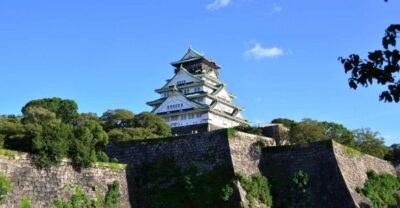
Main Sights and Hidden Spots Guided Walking Tour
Read our review →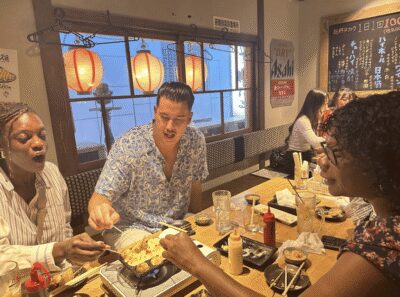
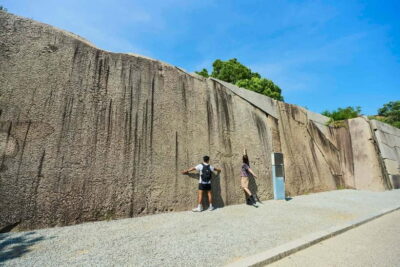
Castle History Walking Tour / Castle Tower Admission
Read our review →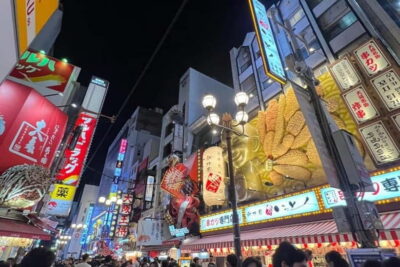
Browse the lists this tour appears in