
Review · JAPAN
Asakusa Senso-ji Temple and Old Tokyo Walking Tour
Asakusa’s great strength is also its challenge: Senso-ji Temple is easy to find, but its customs, side streets, shops, and neighboring shrine can be hard to understand on your own. This two-hour walk gives you the useful backstory before you wander off to explore.
I like the small group, capped at 12 people, because you can hear the guide and ask questions. I also like that the route goes beyond the temple to Hoppy Street, Shin Nakamise, and Azuma Bridge, giving you a taste of old Tokyo and a good place to continue on your own.
The main drawback is the short schedule. You will see several places, but this is an introduction rather than a slow temple visit or a food tour. Asakusa can be crowded, and finding the guide near the starting point may take a little patience.
Key points to know before booking
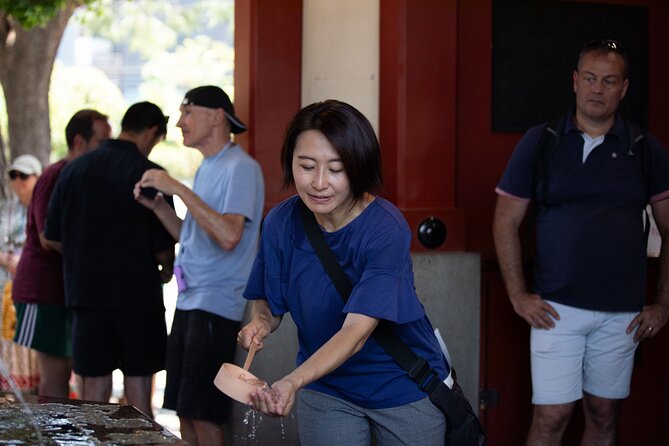
- Temple customs made clear: Learn how to purify yourself, receive a fortune, and pray at Buddhist and Shinto sites.
- A useful first Tokyo activity: The tour explains basic differences between Buddhism and Shinto, helpful for the rest of your Japan trip.
- Small group, personal attention: The maximum group size is 12, allowing time for questions and photos.
- More than Senso-ji: The route includes Nakamise, Asakusa Shrine, Hoppy Street, Shin Nakamise, and Azuma Bridge.
- Practical local advice: Guides such as Aya, Glenda, Keiko, Loc, and Polina have offered food, shopping, and photo suggestions.
- Good value at $20: You get roughly two hours with an English-speaking guide and no extra admission fee at the listed stops.
Why Asakusa is best understood on foot
Asakusa is one of the most rewarding parts of Tokyo for a first visit. It gives you temple gates, traditional shops, food stalls, neighborhood pubs, river views, and some of the city’s oldest religious landmarks in one compact area.
It is also easy to experience Asakusa as a blur of red gates, incense, crowds, and souvenir shops. That is where a guide earns the $20 price. The tour explains what you are looking at and how to behave, instead of leaving you to copy the nearest person at the washing basin.
The format is simple. You meet near Tokiwado Kaminari-okoshi Honpo at 1-chome-3-2 Asakusa, walk through the district, and finish near Azuma Bridge. The route is short enough to fit into a busy Tokyo day, and the endpoint gives you a practical starting place for more sightseeing afterward.
You should allow extra time to reach the meeting point. The starting area is near public transportation, but Asakusa’s crowds and many similar-looking streets can slow you down. The meeting point itself is not at the temple entrance, so check your confirmation carefully and arrive with time to spare.
More Walking Tours in Japan:
- Kyoto Geisha Walking Tour: Gion District & Hidden Gems
★ 4.7 · 3,273 reviews - Tokyo Tsukiji Fish Market Food and Culture Walking Tour
★ 5.0 · 3,184 reviews - Kyoto: Gion Magical Night Walking Tour with Geisha Trivia
★ 4.9 · 2,393 reviews
Kaminarimon and Nakamise, your first look at old Asakusa
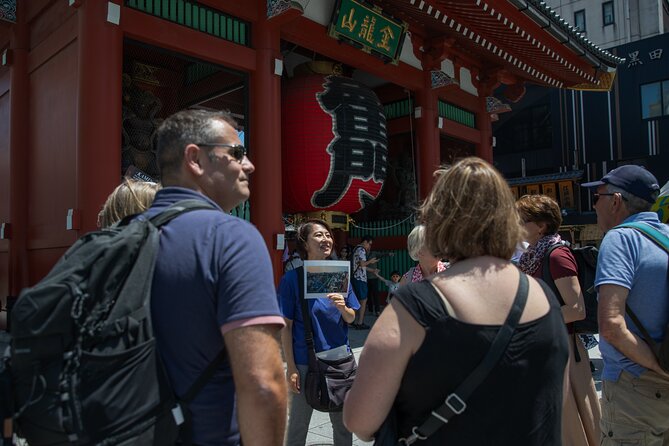
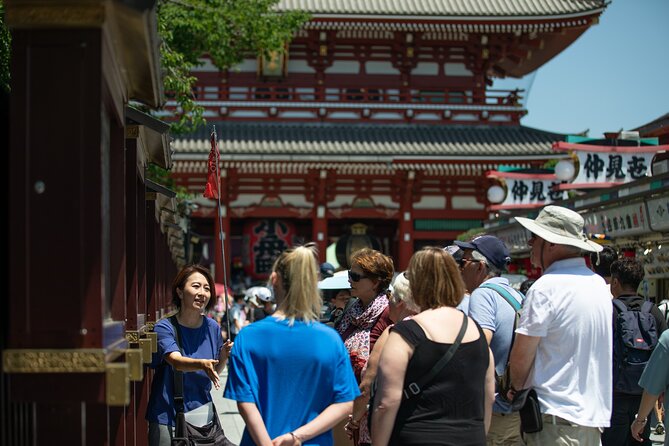
The walk begins around Kaminarimon and Nakamise Shopping Street. Kaminarimon, or Thunder Gate, is the grand entrance to Senso-ji and one of the most recognizable sights in Asakusa.
From there, Nakamise leads toward the temple with a long line of traditional stalls and shops. You might find snacks, small gifts, clothing, and objects connected with Japanese customs. The guide can help separate the genuinely useful local information from the simple shopping appeal.
The scheduled stop here is about 10 minutes, so do not expect time for serious shopping. That is sensible at the beginning of a walking tour. You get your bearings first, then you can return later if a particular snack or souvenir catches your eye.
This is also one of the busiest parts of the route. Stay close to the guide and keep an eye on the meeting group. One useful detail from the tour experience is that some people have found the guide tricky to spot at first because of the crowds, so a clear description of the meeting point matters.
Senso-ji Temple, where the context really helps
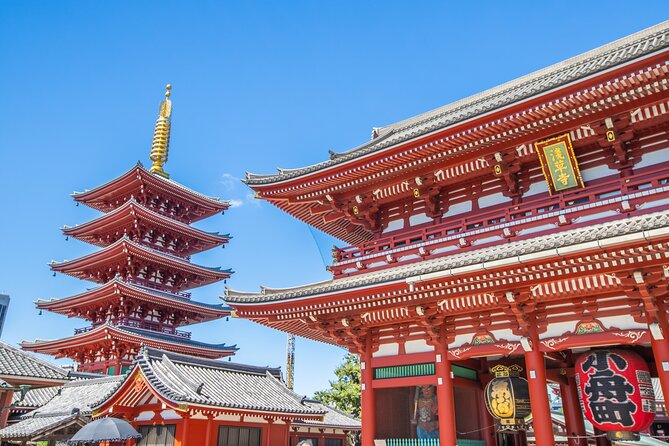
Senso-ji is the centerpiece of the walk, with about 30 minutes set aside for the temple. This is the point where the tour moves from seeing impressive buildings to understanding their purpose.
Your guide explains the temple’s place in Asakusa and the stories tied to it. The commentary also helps you read the setting: the gates, approach, incense, worship space, and customs are not just scenic details. You learn how to purify yourself, how to approach prayer, and how to receive a fortune.
That instruction is one of the strongest reasons to book this tour early in your Tokyo visit. The basics of Japanese religious practice can seem confusing at first, especially when Buddhist and Shinto customs appear close together. Several guides, including Aya, Glenda, and Loc, have been praised for answering questions about Buddhism, Shinto, Japanese history, and local traditions.
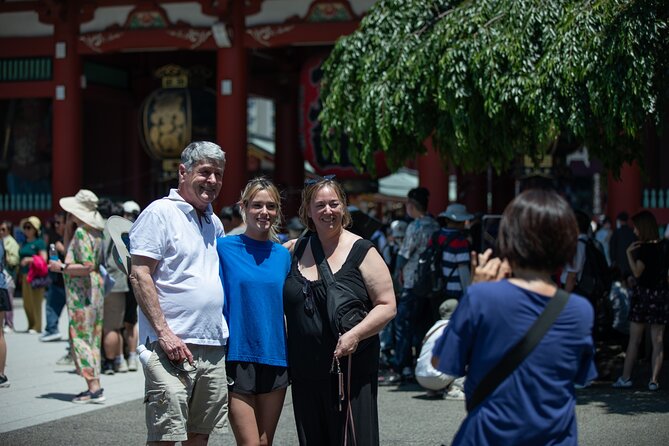
You still get some freedom to look around and take photos. Glenda, in particular, has used visual material to explain the temple’s past, while other guides have pointed out photo positions with broad views over the temple grounds. Exact guiding style depends on who leads your departure, but the repeated strength of the experience is clear: the guide adds meaning to details you could easily miss alone.
The temple can be crowded, so this is not the place to expect silence or long private reflection. If you want detailed architectural study or extended prayer time, return after the tour. The walk gives you an informed first visit, not an unhurried religious retreat.
Asakusa Shrine and the difference between temple and shrine
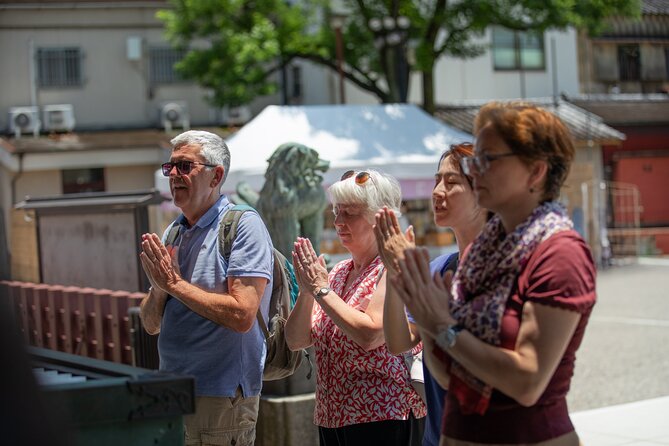
Next comes Asakusa Shrine, also called Sanja-sama, set beside Senso-ji. The visit lasts about 15 minutes and offers an important contrast with the Buddhist temple next door.
The shrine is dedicated to the three men associated with the founding of Senso-ji. Your guide can explain why a Buddhist temple and a Shinto shrine occupy such a close relationship in this part of Tokyo, and how the customs differ when you move from one site to the other.
This is where the practical teaching pays off. Instead of treating every red gate and ritual as the same, you begin to notice distinctions. Guides have shown participants how to approach both Buddhist and Shinto places, which gives you confidence for later visits around Japan.
Fifteen minutes is enough for an explanation and a short look around, but not for a long exploration of every corner. Think of Asakusa Shrine as a key lesson in the tour rather than a separate major attraction.
Same streets, a different guide:
- Tokyo: Imperial Palace and Shogun Historical Walking Tour
★ 5.0 · 2,251 reviews - Kyoto: Gion Geisha District Walking Tour – Stories of Geisha
★ 4.7 · 2,187 reviews - Best of Kyoto: Gion, Geisha, Pagodas & Cobblestones
★ 4.9 · 2,058 reviews - Night Walk in Gion: Kyoto’s Geisha District
★ 4.5 · 2,003 reviews
Hoppy Street, a quick look at Asakusa after dark
Hoppy Street changes the mood. Near the temples, the atmosphere is ceremonial and historic. Along Hoppy Street, you see the everyday side of Asakusa, with izakayas, casual dining, and the drink that gives the lane its name.
Hoppy is a non-alcoholic beer-flavored beverage, and the surrounding pubs are part of the neighborhood’s social character. The planned stop is about 10 minutes, so you will not be sitting down for a full meal or tasting session during the tour.
That limitation is worth noting. If you want the food side of Asakusa, keep your evening open after the walk. Guides have offered recommendations for local food and dinner, and some participants have returned to try the places or snacks suggested during the tour.
I like this stop because it prevents the experience from becoming only a temple visit. Asakusa is not a museum district. Its food streets and small pubs are part of what makes the area feel lived in. Still, you pay for your own food and drinks, and nothing is included in the $20 price.
Shin Nakamise and the shopping streets
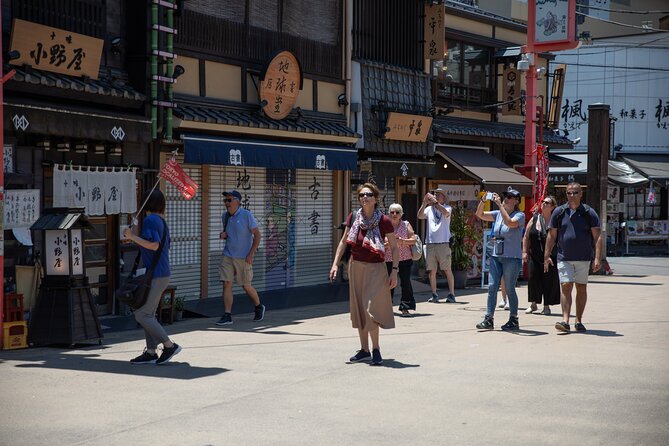
The route also extends to Shin Nakamise, a more modern shopping street connected with the Nakamise area. It offers contemporary shops alongside the older shopping zone, so you get a better sense of how Asakusa balances tradition with present-day commerce.
The available schedule does not give a separate duration for this stop, so treat it as part of the walking connection rather than a dedicated shopping break. You may have a chance to note places to revisit, but the tour is not designed for browsing every store.
This is useful for first-time visitors because it broadens your mental map. If you only follow the main path to Senso-ji, you can miss the streets where people shop, eat, and pass through as part of daily life.
Azuma Bridge and the finish by the Sumida River
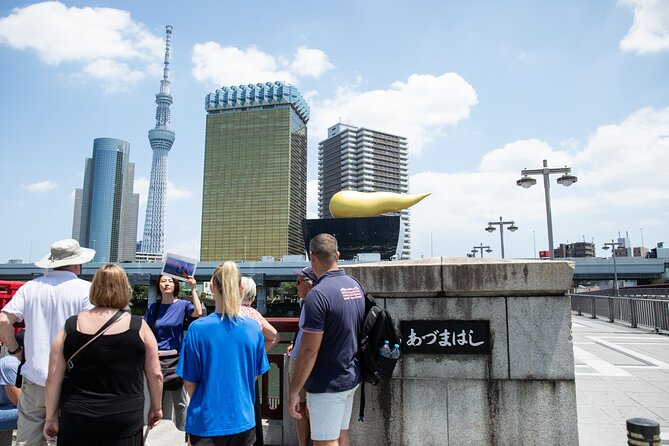
The walk ends at Azuma Bridge, near 2-chome-1-16 Kaminarimon. The bridge crosses the Sumida River and offers views toward Tokyo Skytree and the Asahi Beer Hall building.
The stop is listed at about 10 minutes, enough for a final explanation and photos. It is a smart endpoint because you are not left back at the same crowded gate where the tour began. From here, you can continue exploring, find food, or simply pause beside the river.
This final view also gives the tour a change of scale. You have spent most of the walk among gates, shops, streets, and temple grounds. At the river, Asakusa opens up and connects to the wider Tokyo skyline.
Do not expect a long river cruise or a separate sightseeing program at the bridge. The value is the view and the location. It is a clean finish to a compact neighborhood walk.
The guides and the value of a small group
The guide can shape the experience more than any individual stop. Names associated with particularly warm feedback include Aya, Glenda, Keiko, Loc, Polina, Mei or Miyu, Rio, Ayaka, Hiroko, and Nana.
The strongest qualities to look for are clear English, patience, and a willingness to answer questions. Glenda has been noted for speaking clearly and at an easy pace, while Aya has taken photos, checked that everyone was keeping up, and offered food and dinner suggestions. Loc has been praised for making Japanese history and customs approachable. Keiko has been described as personable and engaging.
You cannot necessarily request a specific guide, so book for the format rather than one individual. The group maximum of 12 is a real advantage in Asakusa, where a large crowd can scatter around gates and shop fronts. You should be able to hear the explanation and ask about customs without fighting for attention.
The tour has a rating of 4.8 from 561 reviews, with 96 percent recommending it. Those numbers suggest reliable satisfaction, but they do not change the basic tradeoff: the walk is strongest for explanation and orientation, not for long free time at each attraction.
Is $20 a fair price?
At $20 per person, this is a low-cost guided introduction to one of Tokyo’s main historic districts. There are no admission charges for the listed stops, so the price mainly pays for the English-speaking guide, local interpretation, route planning, and the chance to ask questions.
I think the value is good if this is your first time in Tokyo or your first visit to Asakusa. A guide can help you understand temple and shrine behavior in the first hours of your trip, then you can use that knowledge elsewhere in Japan.
The value is less clear if you already know Senso-ji, understand basic Buddhist and Shinto customs, and prefer to explore independently. You may get more from returning alone with an appetite and several open hours.
Food, drinks, transportation to the meeting point, personal purchases, tips, and insurance are not included. The tour requires good weather. If the provider cancels for poor weather, you are offered another date or a full refund. You can cancel for a full refund up to 24 hours before the start time, but changes or cancellations inside that window are not accepted.
Who should book this Asakusa walk?
I would choose this tour for a first morning in Tokyo, especially if you woke up early, have only a short window, or want basic cultural guidance before visiting more temples and shrines.
It also fits solo visitors well. The group gives you company without requiring a full-day commitment, and the guide can point you toward food and shopping after the walk. Couples and families who want a simple introduction should also find the pace manageable, since most travelers can participate and service animals are allowed.
You should think twice if your main goal is eating. Hoppy Street is included, but food and drinks are not. You should also look elsewhere if you want an evening pub crawl, a long shopping session, or detailed time inside every temple building.
What to bring and how to use the rest of your day
Wear comfortable shoes and expect to walk through busy public streets. Keep your phone handy for the mobile ticket and meeting details, and leave enough time to find the guide near the starting point.
Bring curiosity rather than a packed schedule. The tour moves through several stops, and the best use of the experience is to note what you want to revisit. Afterward, you can return to Nakamise for snacks, spend more time around Senso-ji, follow the shopping streets, try a food recommendation, or enjoy the river view near Azuma Bridge.
If you are visiting Tokyo for the first time, schedule this early in your stay. The lessons about purification, prayer, shrines, temples, and local food can improve the rest of your sightseeing.
Should you book the Asakusa Senso-ji walking tour?
Book it if you want clear cultural context in two hours for $20, with a small group and a route that covers more than the famous temple. The best reasons are the practical explanations, the guide’s local tips, and the gentle introduction to both Buddhist and Shinto customs.
Skip it if you want a food-focused outing, extensive free time, or a private tour. For most first-time visitors, though, this is a sensible and inexpensive way to get oriented in Asakusa before exploring the district at your own pace.
FAQ
How long does the Asakusa walking tour last?
The tour lasts approximately two hours.
What places are included?
The route includes Kaminarimon and Nakamise Shopping Street, Senso-ji Temple, Asakusa Shrine, Hoppy Street, Shin Nakamise, and Azuma Bridge.
Where does the tour start?
It starts at Tokiwado Kaminari-okoshi Honpo, 1-chome-3-2 Asakusa, Taito City, Tokyo 111-0032, Japan.
Where does the tour finish?
The tour finishes near Azuma Bridge at 2-chome-1-16 Kaminarimon, Taito City, Tokyo 111-0034, Japan.
How large is the group?
The experience has a maximum of 12 participants.
Are food and drinks included?
No. Food, drinks, and personal expenses are not included.
What is the cancellation policy?
You can cancel up to 24 hours before the start time for a full refund. Cancellations or changes made less than 24 hours before the start time are not accepted for a refund. If poor weather causes the tour to be canceled, you are offered another date or a full refund.
New routes in Japan
- Tokyo: Asakusa & Sensoji ー Oldest Temple Walking Tour (2hrs)★ 5.0 · 213 reviews
- Asakusa Cultural Walk & Matcha Making Tour★ 5.0 · 245 reviews
- Tokyo: Tsukiji Market Walking Tour & Sushi Cooking Class★ 4.6 · 122 reviews
- Tokyo: Shinjuku Nightlife & Secret Backstreets Walking Tour★ 4.8 · 229 reviews
- Tokyo: Shinjuku Bar Hopping & Night Walking Tour★ 4.6 · 137 reviews
- Tokyo: Dark Side of Tokyo Shinjuku Red Light Walking Tour★ 4.7 · 862 reviews
- Tokyo: Shibuya Highlights Walking Tour★ 4.8 · 601 reviews
- Tokyo: Shibuya Highlights Walking Tour & Secret View Spot★ 4.9 · 196 reviews
Japan Walking Tours, compared.
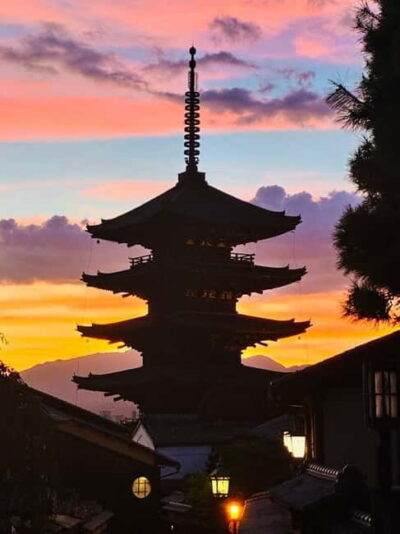
Kyoto Geisha Walking Tour: Gion District & Hidden Gems
Read our review →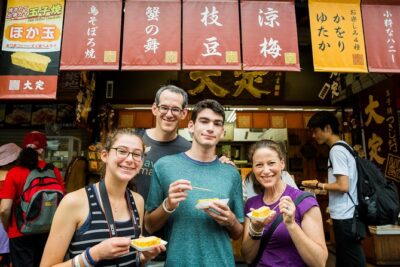
Tokyo Tsukiji Fish Market Food and Culture Walking Tour
Read our review →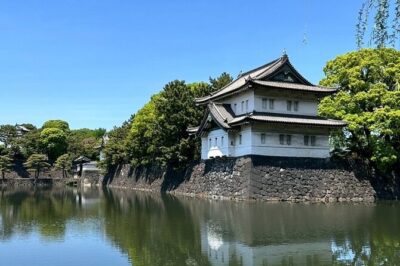
Imperial Palace and Shogun Historical Walking Tour
Read our review →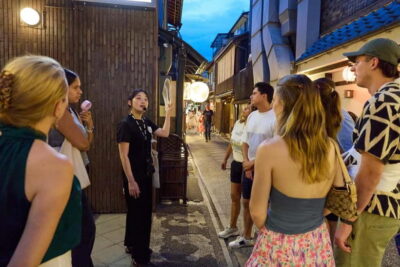
Gion Geisha District Walking Tour – Stories of Geisha
Read our review →
Best of Kyoto: Gion, Geisha, Pagodas & Cobblestones
Read our review →
Shinjuku Local Bar and Izakaya Guided Walking Tour
Read our review →
Asakusa Walking Tour with Sensoji Temple Visit
Read our review →Browse the lists this tour appears in