

Review · KYOTO
Kyoto: Gion Magical Night Walking Tour with Geisha Trivia
Gion changes character after sunset. The crowds thin, lanterns glow, and Hanamikoji’s wooden streets feel closer to the Kyoto of old. This 100-minute evening walk combines geisha culture with shrines, a lit Buddhist pagoda, quiet lanes, and small details you could easily miss on your own.
I like the small groups of up to 10 and the way guides such as Hina, Shino, Masami, Sho, and Kevin make room for questions. I also like that the tour explains shrine manners and the difference between maiko and geisha, rather than treating Gion as a backdrop for photographs. The main consideration is the route’s stairs, which rule it out for wheelchair users, baby carriages, and people with limited mobility.
Key points to know before booking
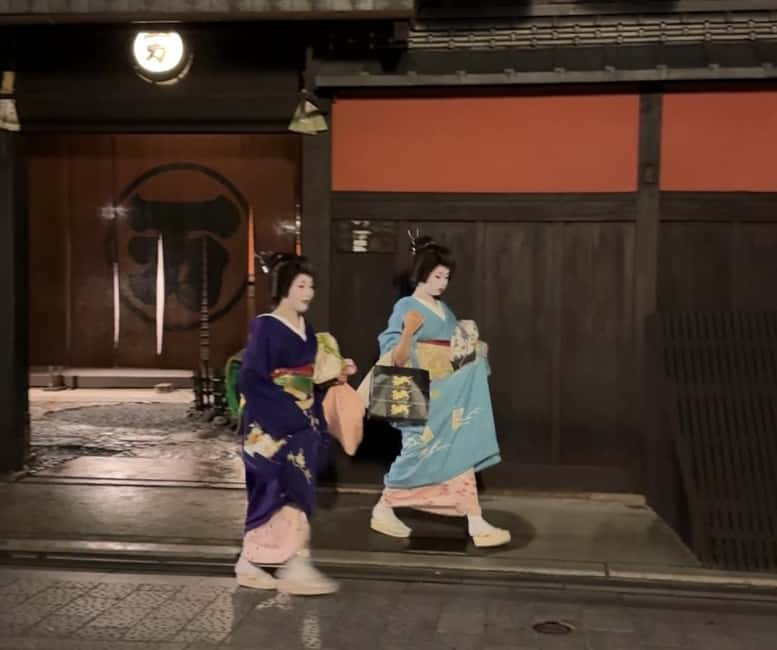
- Gion after dark feels calmer: Lit streets and quieter temple areas give you a different view than a daytime visit.
- Geisha culture is explained with care: You learn about maiko, geiko, private clubs, lanterns, customs, and local rules.
- The route goes beyond Hanamikoji: Expect a matchmaking shrine, an illuminated Buddhist pagoda, side paths, and a shrine more than 1,000 years old.
- Small groups improve the experience: With no more than 10 people, it is easier to hear the guide and ask questions.
- Sightings are possible but never promised: You might see a maiko or geisha moving through Gion, but this is not a meeting opportunity.
- The price is modest for Kyoto: At $24 per person, the tour offers local orientation, cultural context, and photography help for less than many structured city tours.
Meeting at Minamiza Theatre in Gion
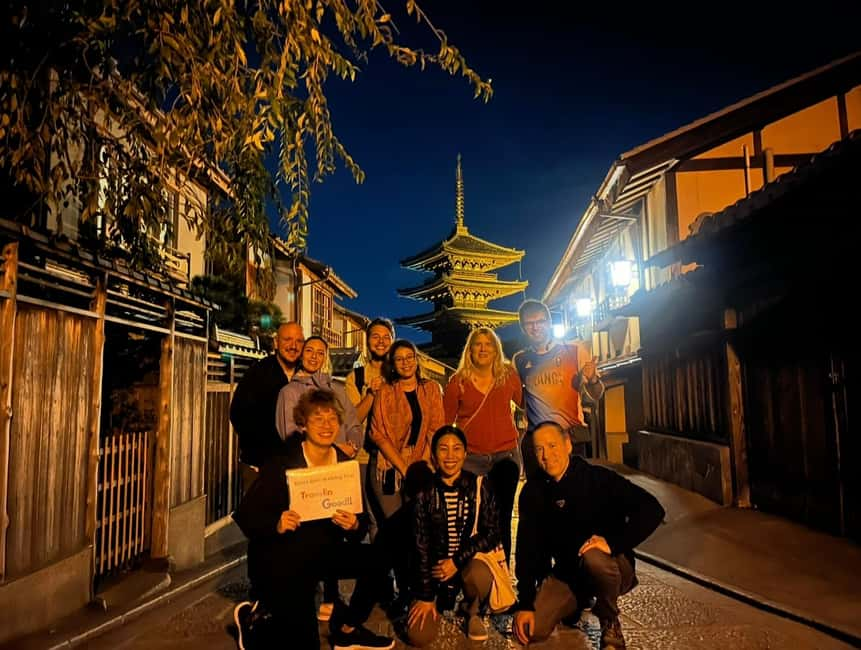
The tour begins in front of the Minamiza Theatre, a famous landmark on the edge of Gion. Meet on the front side of the theatre and look for the guide holding a TravelinGood sign.
Pay close attention to the time printed on your booking. It is the departure time, not the time to arrive at the meeting point. I would arrive at least five minutes early, and I would allow extra time if you are coming by bus or taxi. Kyoto traffic can slow down, especially when you are trying to reach a fixed departure.
There is also a seasonal wrinkle. In February, some departures begin at 3pm. That option suits you if you have dinner plans later or prefer to walk while there is still daylight. The standard night departures are best if you want illuminated streets and a quieter feel.
More Night Walking Tours in Kyoto
- Night Walk in Gion: Kyoto’s Geisha District
★ 4.5 · 2,003 reviews - Kyoto Gion Night Walk & Geisha District Guided Tour
★ 5.0 · 786 reviews - Gion Walking Tour by Night
★ 4.5 · 429 reviews
Hanamikoji and the working world of geisha
From Minamiza Theatre, the group heads toward Hanamikoji, one of Gion’s best-known streets. Its traditional wooden buildings and lanterns create the setting most people picture when they think of Kyoto’s geisha district.
The important point is that this is a working neighborhood, not a theme park. Your guide explains the difference between a maiko, a geisha in training, and an established geisha, along with the rules and customs that shape life in the district. Guides use photographs and videos at times, which makes the clothing, hairstyles, and stages of training easier to understand.
You also hear about details such as the lanterns, private clubs, and the discreet nature of entertainment in Gion. These explanations give the street more meaning. Instead of simply seeing a beautifully preserved lane, you begin to understand why the buildings look and operate as they do.
A real sighting is possible. Several guides, including Pam, Shino, and Hina, have helped groups spot maiko or geisha moving through the district. But keep your expectations sensible. The tour does not arrange meetings, photographs, or introductions. If you do see someone, treat the moment respectfully and remember that you are watching people go to work.
That distinction matters. A good guide helps you learn about geisha culture without turning local residents into a show. This tour appears best suited to visitors who want context, not a staged encounter.
Shrine customs and the spiritual side of Gion
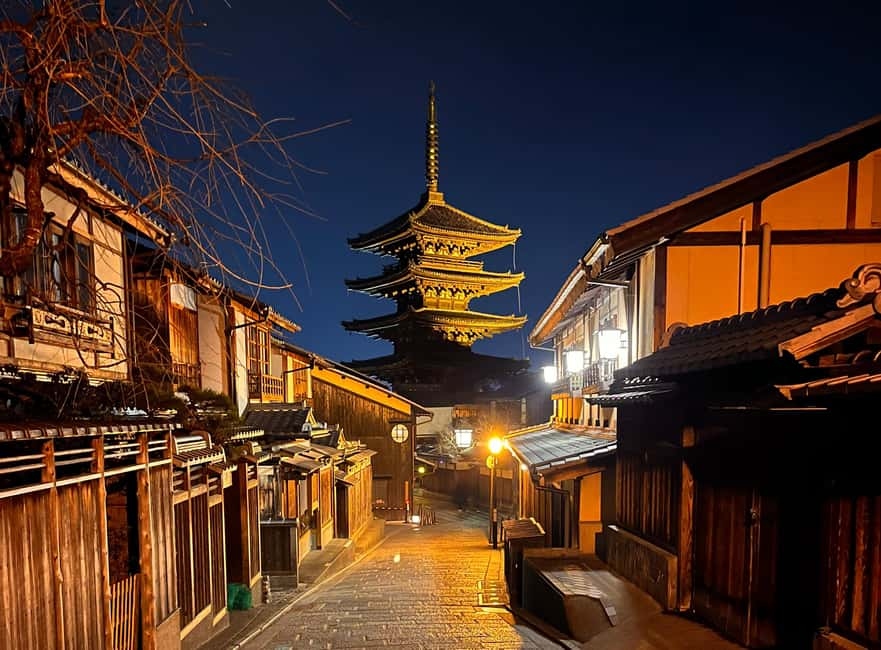
The walk is not only about geisha. Along the route, the guide introduces shrines and explains how Shinto differs from Buddhism. You learn what different shrines represent and how to behave when you visit.
Some guides demonstrate the steps used when praying at a Shinto shrine, allowing you to practise the ritual rather than simply watching from the side. This can be especially useful if you are visiting Japan for the first time and feel unsure about what to do at a shrine.
The explanations also touch on legends and stories connected with local religious sites. That gives the route a wider focus. Gion is not just a district of teahouses and traditional architecture. It is also a place where everyday life, spiritual practice, festivals, and old stories overlap.
The matchmaking shrine is a memorable stop for couples, families, and anyone curious about Japanese folk beliefs. You do not need to share the belief to appreciate the role such shrines play in local life. The guide helps explain the idea without turning the stop into a sales pitch or a forced photo opportunity.
The illuminated pagoda and quieter paths
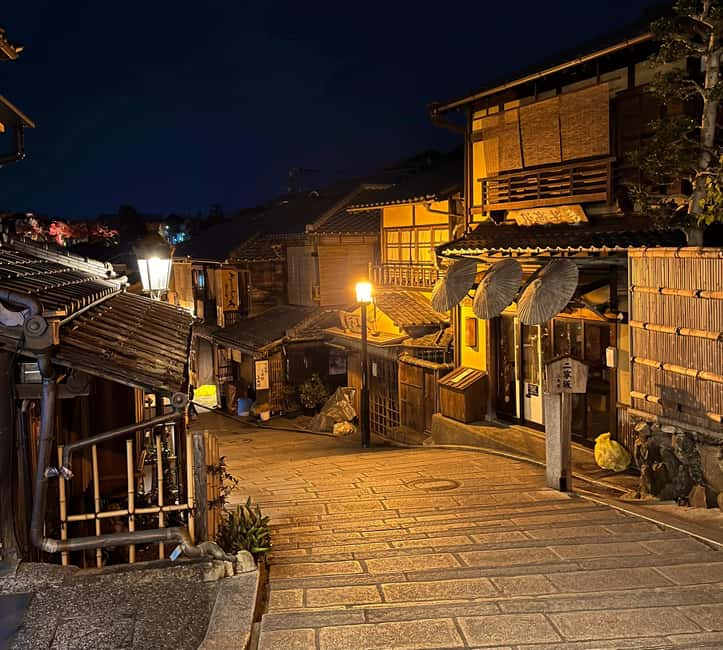
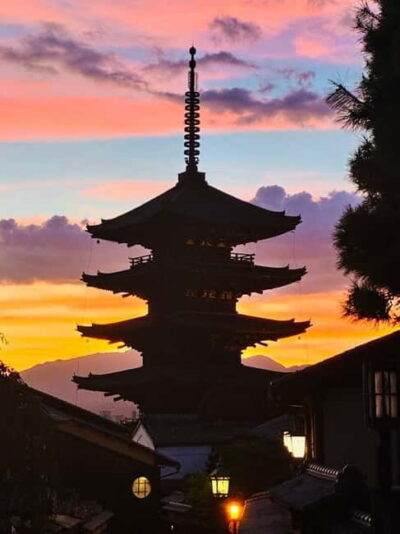
One of the most appealing parts of the route comes after the main geisha district. You see a Buddhist pagoda lit against the night sky, then continue along less obvious paths and quieter corners of Gion.
This is where the timing earns its keep. During the day, the area can feel crowded, and it is easy to rush from one famous street to the next. At night, the light picks out rooflines, gates, stone paths, and temple details in a more selective way. You get fewer broad views, but the scenes can feel more intimate.
The pagoda is often a highlight because it gives the walk a change of scale. Hanamikoji is about shopfronts, lanes, and wooden façades. The pagoda adds height and a strong Buddhist presence, particularly when it is illuminated.
The side paths are also useful for orientation. A guide who knows the area can point out places you might pass without noticing, while keeping the pace relaxed. Masami was praised for adding small stories and checking that everyone had questions. Sho was noted for showing quieter places with good views. These personal touches matter more in a walking tour than a long list of dates.
Still, the route is not a full temple tour. You will see several religious sites and learn about them, but the emphasis remains on Gion’s culture and night-time character. If your main goal is detailed temple architecture, you may want a separate daytime visit.
Same streets, a different guide:
- Kyoto Geisha Walking Tour: Gion District & Hidden Gems
★ 4.7 · 3,273 reviews - Kyoto: Gion Geisha District Walking Tour – Stories of Geisha
★ 4.7 · 2,187 reviews - Best of Kyoto: Gion, Geisha, Pagodas & Cobblestones
★ 4.9 · 2,058 reviews - Kyoto Gion Geisha District Walking Tour – The Stories of Geisha
★ 5.0 · 1,441 reviews
Ending at a shrine more than 1,000 years old
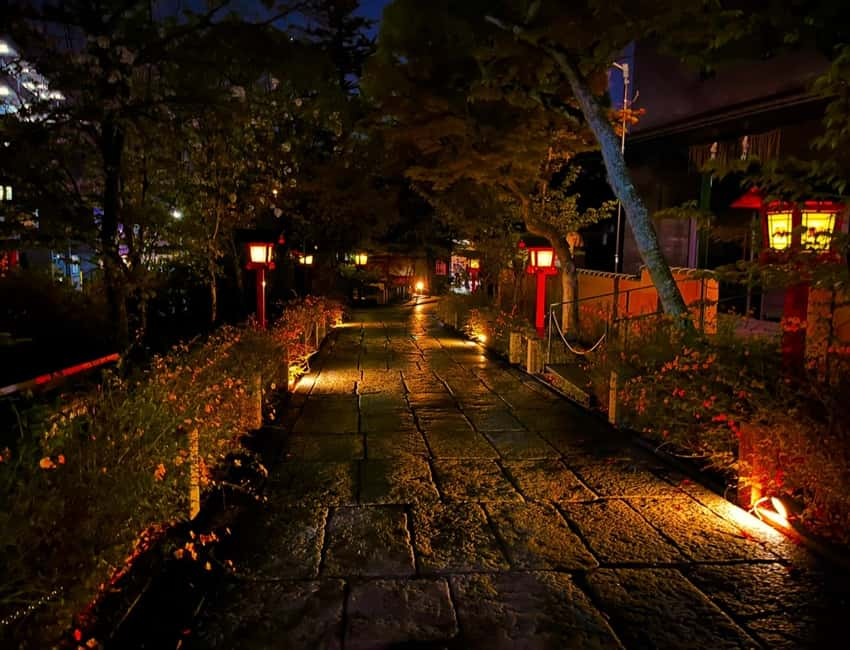
The tour finishes at a shrine more than 1,000 years old. Ending at an old religious site gives the walk a fitting final chapter, moving from modern Gion streets back toward Kyoto’s long spiritual past.
You can expect more explanation about the shrine’s meaning and the correct way to pray. Guides have also offered restaurant suggestions and ideas for daytime sightseeing at the end, which makes this a useful first-night activity. You can ask where to eat nearby or what sights deserve a return visit.
That practical advice is one of the tour’s strengths. Shino, Pam, and other guides have helped visitors plan the next part of their Kyoto stay with food and sightseeing suggestions. The value is not only in the 100 minutes themselves. You leave with a better mental map of Gion and a few ideas for using the rest of your time.
Photography service is included. The supplied information does not promise a specific number of photographs or a formal photo session, so think of it as helpful picture-taking during the walk rather than a professional portrait shoot.
Why the small group matters
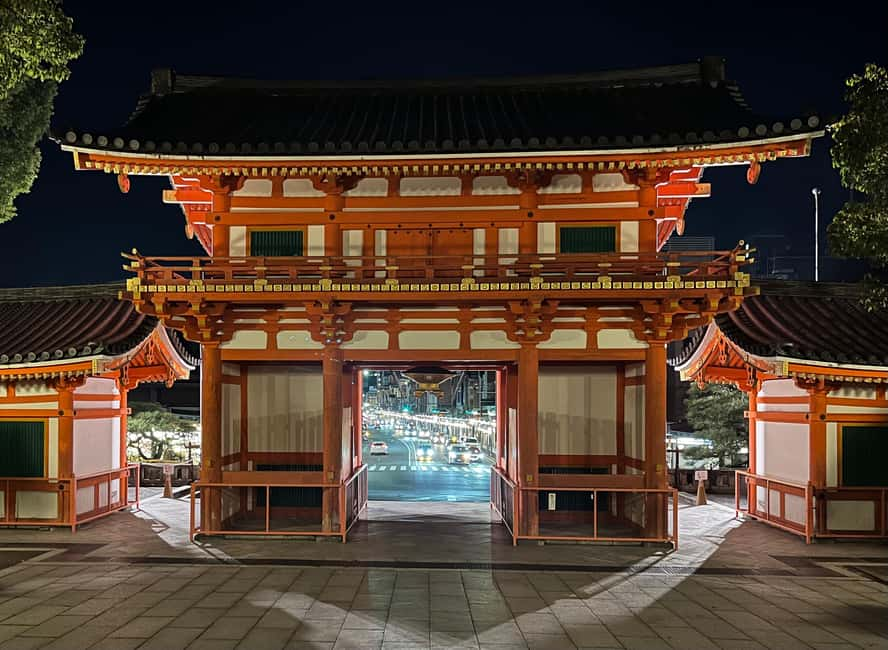
The group limit of 10 is more than a marketing detail. Gion’s lanes are narrow, and a large crowd would make it harder to hear, stop, or move with courtesy.
With a smaller group, you can ask about a specific custom, request clarification, or point out something you have noticed. Guides such as Yuri and Masami were praised for answering many questions patiently, while Hina and Shino were noted for making people feel comfortable across different ages.
The small format also helps the guide adjust the pace. One visitor described the walk as manageable even for an older participant, while another family said children aged 9 and 11 enjoyed it. That said, the route includes stairs and uneven sections, so manageable does not mean fully accessible.
Children under 6 do not need a ticket. Babies under 1 year are listed among those for whom the tour is not suitable. Families should also consider the evening timing and whether young children will manage a 100-minute walk with stops and stairs.
What the guides add
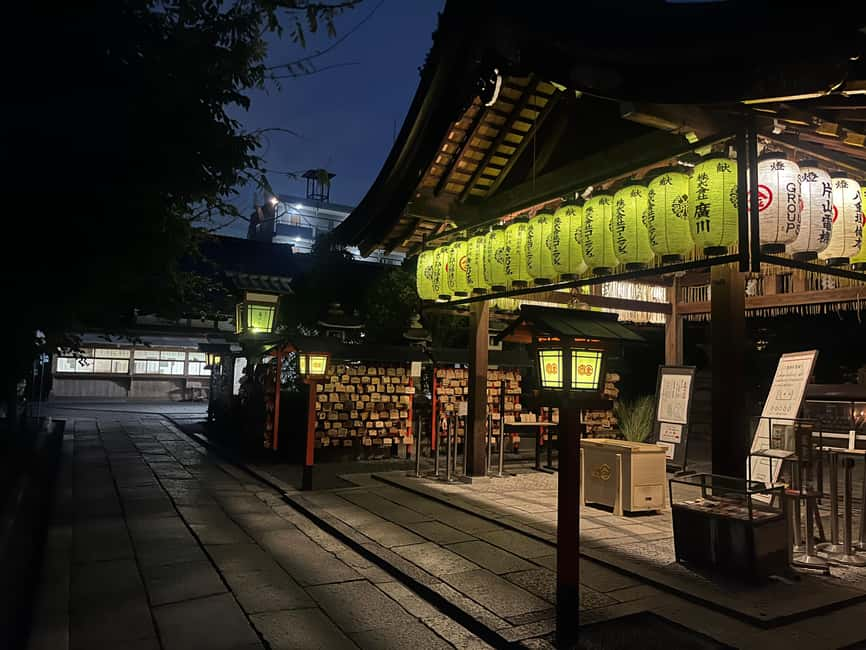
The guide can shape this experience more than the route itself. The company uses different English-speaking guides, and the supplied names include Hina, Shino, Masami, Sho, Pam, Kevin, Yuri, Sora, Wasabi, Ricky, Hinari, and Liki.
The strongest pattern is clear English, friendly conversation, and useful cultural explanation. Wasabi, who was described as being from Kyoto, focused on local knowledge about geisha traditions and shrine customs. Hina was praised for combining warmth with detailed explanations. Shino often added food suggestions and help with shrine rituals. Kevin was noted for easy-to-understand English and a broad explanation of Japanese culture.
You should not expect every guide to tell the exact same stories or spend equal time at every stop. That variation is normal in a live walking tour. The key advantage is having someone available to answer questions in the moment and explain behavior that may otherwise seem mysterious.
Is $24 good value?
At $24 per person, this is a strong value if you want a guided introduction to Gion rather than a private or highly specialized tour. You receive 100 minutes with an English-speaking guide, a small group, cultural explanation, photography help, and a route that combines several types of sights.
The price is especially fair for a first evening in Kyoto. A self-guided walk can show you the streets, but it cannot easily explain maiko traditions, private clubs, shrine rituals, or the difference between Shinto and Buddhism. You also risk walking past the quieter stops without knowing their importance.
The tour is less useful if you already know Gion very well or have spent substantial time studying geisha culture. One person found that the walk offered little new information, though even that assessment suggested it would work well for first-time visitors.
Free cancellation up to 24 hours before departure and reserve-now, pay-later booking make it easier to fit into a changing itinerary. Your ticket is valid only for the date and time you book, so do not show up for another departure without confirmation.
Night, late afternoon, or daytime visit?
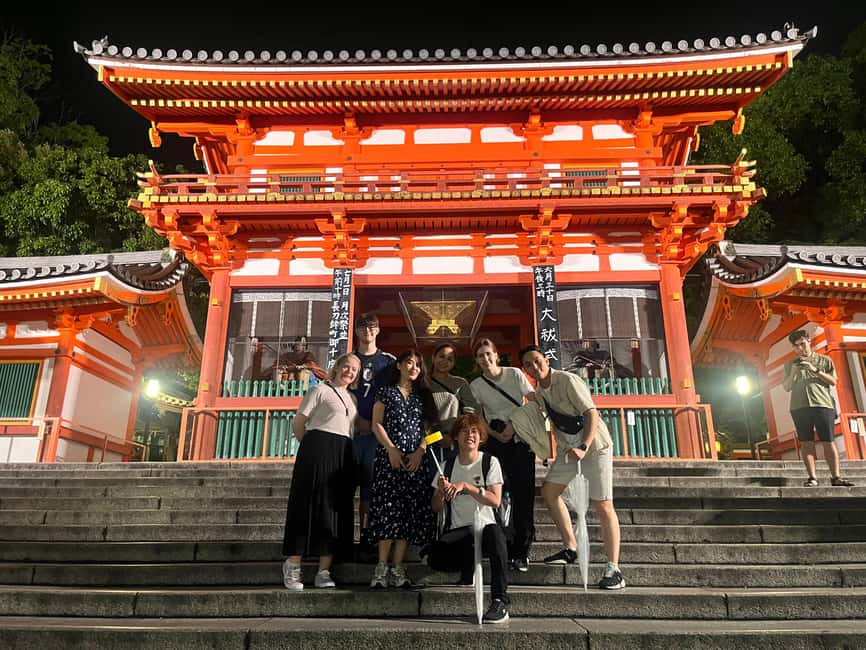
The standard night walk is the best choice if you want lanterns, illuminated religious sites, and fewer people. Several participants especially liked the quiet streets and the golden light around Gion’s shrines and pagoda.
The February 3pm departure gives you a different mood. You may see the district before full darkness and still experience the transition into evening. It is useful if you have dinner reservations or prefer not to walk late.
This tour does not replace a daytime visit. Daylight reveals details in the wooden buildings and lets you explore at your own speed. The guided walk adds interpretation and night-time atmosphere, so the two experiences work well together if you have the time.
Bring comfortable shoes and dress for the season. The tour is outdoors, and the route includes stairs. In colder months, a warm layer matters. One guide even provided a hand warmer, but you should not count on that as a standard inclusion.
Who should book this Gion walk?
I would recommend it to first-time Kyoto visitors, solo visitors who want easy company, couples looking for a calm evening activity, and families with older children. It is also a good choice if you have already seen Gion during the day and want to experience it under lantern light.
You will get the most from it if you are curious about customs, local stories, and the difference between geisha culture and the popular image of it. The tour is less suitable if you want a guaranteed geisha encounter, a private guide, a detailed temple study, or a fully accessible route.
The best practical plan is to take it early in your Kyoto stay. Use the guide’s restaurant and sightseeing tips afterward, then return to any place that caught your interest.
Should you book it?
Book this tour if you want a reasonably priced, small-group introduction to Gion that goes beyond the main street. The combination of Hanamikoji, geisha culture, shrine customs, an illuminated pagoda, quiet lanes, and an old shrine gives you a well-rounded evening without taking up half a day.
Skip it if you already know Gion thoroughly or need step-free access. For most first-time visitors, though, the timing, scale, and price make this a smart way to get your bearings while seeing Kyoto at its most atmospheric.
FAQ
Where does the Gion night walking tour meet?
Meet in front of the Minamiza Theatre in Gion, on the front side of the theatre. The guide holds a TravelinGood sign.
Is the listed time the meeting time?
No. The listed time is when the group leaves the meeting point. Arrive at least five minutes before departure, and allow extra time for traffic if you are coming by bus or taxi.
How long does the tour last?
The walking tour lasts 100 minutes.
What language is the tour conducted in?
The tour has a live English-speaking guide.
How many people are in the group?
The group is limited to 10 participants.
Will I definitely see a geisha or maiko?
No. You might see a geisha or maiko during the walk, but sightings are not guaranteed. The tour is not intended for meeting geisha.
Is the tour accessible for wheelchair users or baby carriages?
No. Stairs along the route mean it is not suitable for wheelchair users, baby carriages, or people with limited mobility.
Can children join the tour?
Children under 6 do not need to purchase tickets. Babies under 1 year are listed as unsuitable for the activity, and families should consider the stairs and 100-minute walking time.
New routes in Kyoto
- Kyoto : Private Custom Walking Tour With A Local Guide★ 4.6 · 144 reviews
- Kyoto: Private 2.5 Hour Historical Walking Tour★ 4.9 · 121 reviews
- Kyoto: Gion Walking Tour★ 5.0 · 195 reviews
- Kyoto: Izakaya Bars Guided Walking Tour★ 4.9 · 815 reviews
- Kyoto: Gion Sunset Walking Tour with Local Guide★ 4.7 · 351 reviews
- Kyoto: Private Walking Tour with a Local★ 4.6 · 118 reviews
- Kyoto Fushimi-Inari Night Walking Tour★ 4.8 · 171 reviews
- Kyoto Gion Cultural Walk & Geisha Show with Dining Options★ 5.0 · 518 reviews
Kyoto Walking Tours, compared.
Kyoto Geisha Walking Tour: Gion District & Hidden Gems
Read our review →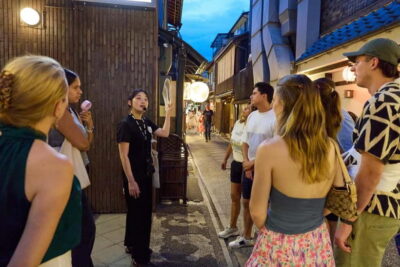
Gion Geisha District Walking Tour – Stories of Geisha
Read our review →
Best of Kyoto: Gion, Geisha, Pagodas & Cobblestones
Read our review →
Nishiki Market Brunch Walking Tour (7 Tastings + Brunch)
Read our review →
Kyoto Arashiyama Walking Tour: Bamboo, Monkeys, Gardens & Secrets
Read our review →
Kyoto Gion: 2-Hour Geisha Culture & History Walking Tour
Read our review →
Browse the lists this tour appears in