
Review · KYOTO
Kyoto Gion Geisha District Walking Tour – The Stories of Geisha
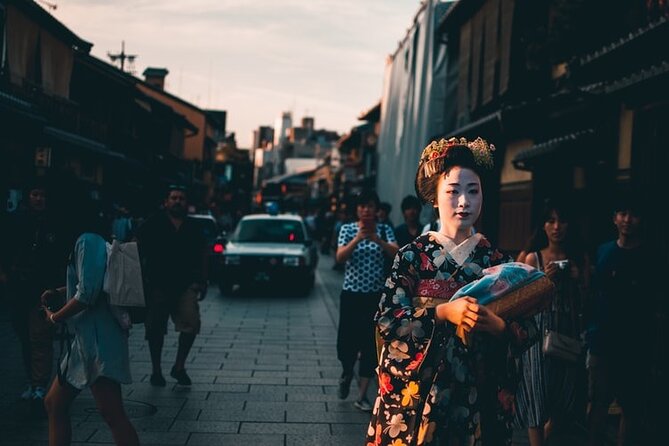
Gion looks different after sunset. Lanterns glow over old wooden facades, the daytime crowds thin out, and you may see geiko or maiko heading to appointments. This two-hour walk gives you a useful introduction to that world without pretending that a stroll through the district offers private access to it.
I like the small maximum group of 15, which makes it easier to hear the guide and ask questions. I also like the focus on stories and history rather than simply pointing at attractive buildings. Guides including Ben, Shin, Deborah, Nami, Kenji, and Melanie are praised for making the subject clear and lively.
The main consideration is that this is still a walking introduction, not a geisha performance or a visit inside a teahouse. Some people may find the route a little light on stops, and winter evenings can be very cold, so dress for the weather.
Key points at a glance
- Gion after dark: See the district when the strongest daytime crowds have gone.
- A useful geisha introduction: Learn about geiko, maiko, their work, and the history of Kyoto’s entertainment quarters.
- Maximum 15 people: A smaller group makes questions and conversation more practical.
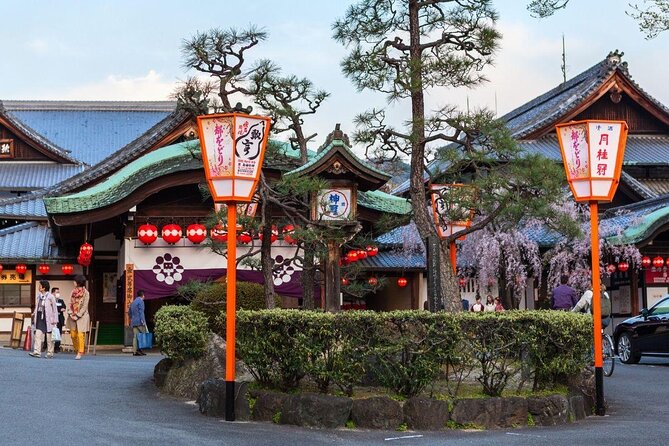
- Historic route: Visit or pass landmarks including Minamiza, Tatsumi Bridge, Hanamikoji Street, Gion Corner, and Yasaka Shrine.
- Good first-evening activity: The walk helps you understand Gion and nearby areas early in a Kyoto visit.
- Low price, limited scope: At $25 per person, it offers good value for orientation and local context, but not for a full cultural performance.
Why Gion is more interesting after sunset
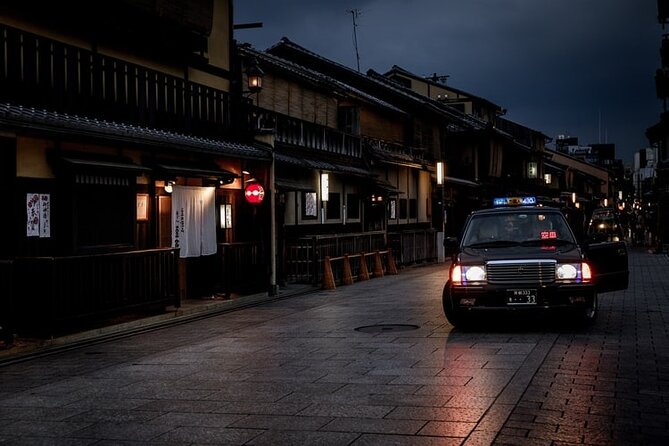
Gion is one of Kyoto’s most famous districts, but daytime sightseeing can make it hard to see the place clearly. Tour groups, phone cameras, and shoppers often fill the streets. In the evening, the mood changes. Traditional buildings catch the light, restaurant entrances become more noticeable, and the district’s connection to geiko and maiko feels easier to understand.
This tour is built around that change of atmosphere. You walk rather than move from one major attraction to another by vehicle, so the distance between landmarks becomes part of the experience. The guide can point out buildings and streets that look ordinary at first but matter to Gion’s entertainment culture.
You should keep your expectations realistic. Seeing a geiko or maiko is possible because the walk takes place when they may be traveling to appointments, but it is not guaranteed. The real purpose is learning how the district works and why its streets look the way they do.
More Walking Tours in Kyoto:
- Kyoto Geisha Walking Tour: Gion District & Hidden Gems
★ 4.7 · 3,273 reviews - Kyoto: Gion Magical Night Walking Tour with Geisha Trivia
★ 4.9 · 2,393 reviews - Kyoto: Gion Geisha District Walking Tour – Stories of Geisha
★ 4.7 · 2,187 reviews
Meeting at Ben’s Cookies and walking into old Kyoto
The meeting point is Ben’s Cookies Kyoto Shijo at 89 Shinchō in Kyoto’s Shimogyo Ward. The tour ends at Yasaka Shrine in Gionmachi Kitagawa, so you are not returned to the starting point. That matters when planning dinner, transport, or your next sight.
The starting location is near public transportation, and a mobile ticket makes arrival simple. You should still allow time to find the shop and gather before departure. The tour lasts about two hours, which makes it easy to fit into an evening without giving up an entire night.
The route is not designed as a strenuous hike, but it does involve a fair amount of walking and standing. One account specifically points out that cold weather made the walk feel harder. I would choose warm layers in winter and comfortable shoes in every season.
Izumo-no-Okuni and the theatrical roots of Gion
The first listed stop is the statue of Izumo-no-Okuni, a bronze figure honoring the woman traditionally linked with the founding of kabuki theater. The statue provides a useful opening because Gion is not only about geisha. It is also tied to performance, music, dance, theater, and the long history of paid entertainment in Kyoto.
This is where a good guide can make the tour more than a procession of photo stops. Guides such as Manny and Nami have been singled out for explaining the development of geisha, geiko, and maiko, along with the wider history of entertainment in Japan. That context helps you understand that these terms describe a working cultural tradition, not simply a costume seen on a street.
The stop itself is brief, listed at about 10 minutes, so do not expect a long museum-style lecture. Its value comes from placing Gion within a wider performance tradition before the walk moves into the district’s streets.
Minamiza: Kyoto’s kabuki connection
Minamiza is a historic theater associated with kabuki performances. It adds another layer to the evening because kabuki and geisha culture belong to the same broad world of traditional stage arts, but they are not the same thing.
The information provided for the route does not give Minamiza its own timed stop, so treat it as a point you may see or discuss along the way rather than a theater visit. There is no performance included in the $25 price. If you want to attend kabuki, that requires a separate plan and ticket.
Still, even a short explanation outside the theater can help you read Kyoto’s streets. The route becomes less about buildings that look old and more about the relationship between theater, tea houses, dance, and the people who worked in those settings.
Same streets, a different guide:
- Best of Kyoto: Gion, Geisha, Pagodas & Cobblestones
★ 4.9 · 2,058 reviews - Night Walk in Gion: Kyoto’s Geisha District
★ 4.5 · 2,003 reviews - Nishiki Market Brunch Walking Tour (7 Tastings + Brunch)
★ 5.0 · 1,355 reviews - Kyoto Arashiyama Walking Tour: Bamboo, Monkeys, Gardens & Secrets
★ 5.0 · 1,216 reviews
Tatsumi Bridge and Gion Shinbashi
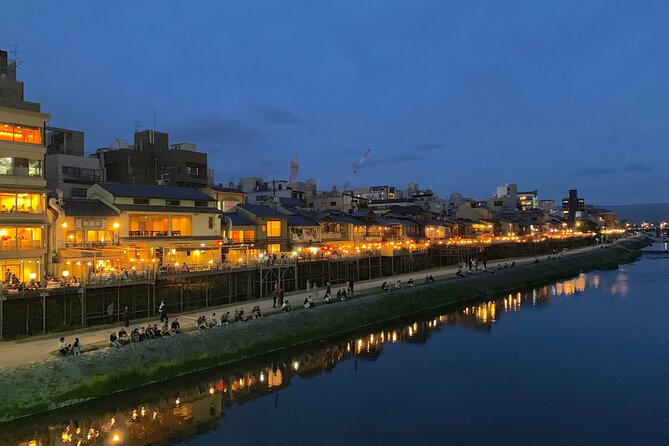
Tatsumi Bridge is one of the most scenic parts of the walk. It sits in the Gion Shinbashi area, known for traditional streets, tea houses, and links to geisha culture. The bridge and surrounding lanes give you the kind of setting most people picture when they imagine old Kyoto.
The stop is listed at around 10 minutes. That is enough time for an explanation and a few photographs, but not an extended pause. The narrow streets can make a group feel larger than it is, which is one reason the 15-person limit matters.
This is also a place where respectful behavior matters. The tour description notes that geiko and maiko may be making their way to appointments. You are visiting a working neighborhood, not a theme park. Listen to the guide, avoid treating people as scenery, and keep your attention on the explanation rather than chasing a photograph.
The route’s strongest feature is the information attached to ordinary-looking places. One guide, Sakuri, was praised for identifying nondescript buildings and explaining why they mattered to geisha culture. That kind of detail is more useful than simply being told that a street is beautiful.
Hanamikoji Street and the image of Gion
Hanamikoji Street is one of Gion’s best-known roads, lined with traditional machiya houses, upscale restaurants, and teahouses. It is also one of the places where visitors often arrive with a simplified idea of geisha culture.
The guide helps sort out that picture. You can expect discussion of geiko and maiko, the history of the district, and how the entertainment business developed. The best part of this stop is not merely the view of wooden facades. It is learning how to interpret the entrances, signs, and different kinds of establishments along the street.
The stop is listed at about 10 minutes, so this is an introduction rather than a detailed architectural tour. One four-star assessment found the route informative but wished it had more content. That is a fair point. If you already know a lot about Gion, the walk may feel short. If this is your first visit, the compact format is easier to absorb.
Gion Corner and traditional performance
Gion Corner is a cultural center and performance venue offering a condensed presentation of traditional Japanese arts. It connects naturally with the earlier discussion of kabuki and with the broader world of dance, music, and stage performance.
Again, the walk does not include admission to a performance at Gion Corner. The venue is part of the cultural map of the district, not a separate show included in the booking. If you want a stage experience, you need to arrange that independently.
I consider this an important distinction when comparing tours. Some activities in Gion focus mainly on photography and atmosphere. This one spends more time explaining the culture behind the streets, but it does not give you a full performance. At $25, that is reasonable, as long as you are paying for interpretation and orientation rather than entertainment on a stage.
Yasaka Shrine gives the walk a strong finish
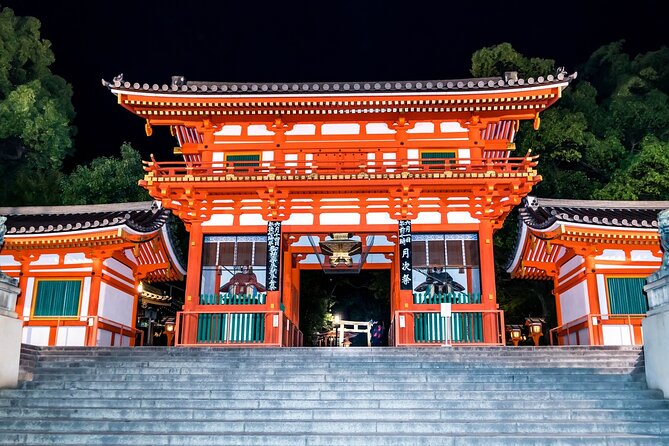
The tour ends at Yasaka Shrine, also called Yasaka Jinja or Gion Shrine. It is one of the best-known Shinto shrines in Kyoto and sits at the edge of the Gion district. Finishing here gives the route a clear endpoint rather than leaving you in a random side street.
The shrine also helps connect Gion to the larger city. The district is not an isolated old quarter. It sits beside major religious sites, shopping streets, restaurants, and transport links. After the tour, you can continue your evening from a central and recognizable location.
The itinerary lists roughly 10 minutes at Yasaka Shrine. That is enough for a closing explanation and a look around, but not a full shrine visit. If you want quiet time for photographs or prayer, plan to stay after the guide departs.
What the guides add to the walk
The guide is the most important variable in this experience. The strongest comments describe guides who explain clearly, answer questions, and connect geisha history with Japanese culture more broadly.
Ben is praised for explaining the hidden codes of the flower towns and for showing parts of Gion, Pontocho, and Kyoto by night. Deborah is described as passionate about geisha culture and good at bringing the subject to life. Shin is noted for answering questions and giving a useful overview of the area. Melanie is praised for a down-to-earth approach, while Kenji is described as keeping the walk fun for families with teenagers.
Other named guides include Joy, Manuel, Nami, Manny, Ikari, Nikki, Tommy, Adrian, and Sakuri. The exact guide depends on the date, so you should not book expecting one particular person unless the operator confirms it. What you can expect is a guide-led interpretation of the district rather than a self-guided stroll.
The overall score is 4.8 from 1,441 ratings, with 96 percent recommending the activity. Those figures suggest a dependable experience, but they do not remove the need to match the tour to your interests. The walk works best if you enjoy asking questions and learning context. It will feel less satisfying if you want a private encounter or a formal geisha show.
Is $25 a fair price?
At $25 per person, this is a modestly priced Kyoto activity. All fees and taxes are included, and the only listed exclusion is bottled water. You are mainly paying for a guide, a planned route, and two hours of explanation in an area that can be confusing to understand on your own.
I consider that good value for a first evening in Kyoto. The tour covers several important points, introduces the difference between geiko and maiko, and gives you background that guidebooks often spread across many pages. The small group also improves the value because you have a better chance of hearing the guide and asking about details that catch your attention.
The limits are clear. There is no food, drink, performance, museum admission, or private meeting with a geiko or maiko included. If you want a deeper study, you may need a longer cultural activity afterward. For a short orientation walk, though, the price is sensible.
Who will enjoy this most?
I would recommend the tour to first-time visitors who want to understand Gion before exploring it alone. It also suits families with older children and teenagers, since the walk is short enough to manage and the subject gives young people more to think about than another sequence of temples.
It is useful for anyone curious about the history of Japanese performance and entertainment. The tour is not limited to costume descriptions. It covers Kyoto’s streets, theaters, shrine culture, and the working world connected with geiko and maiko.
You may want to skip it if you dislike guided walks, already have a strong background in Gion, or want a guaranteed encounter with a performer. The route is informative, but one hour or two hours cannot explain every part of the district’s culture.
Practical details that affect your evening
You receive confirmation when booking, and the ticket is mobile. The activity is near public transportation, and service animals are allowed. Most people can participate, but the route requires walking and standing, so consider your own comfort before booking.
The group can include up to 15 people. That is small enough for a personal feel, but it is not a private tour. The tour requires good weather. If poor weather cancels it, you are offered another date or a full refund.
Free cancellation is available until 24 hours before the start time. Cancel at least 24 hours ahead for a full refund. Inside that window, payment is not refunded and changes are not accepted. The cut-off follows Kyoto local time.
Should you book the Gion Geisha District Walking Tour?
Book it if you want a reasonably priced, two-hour introduction to Gion with strong cultural context and an evening setting. The best reasons are the small group, the knowledgeable guides, and the useful route from the Izumo-no-Okuni statue through Tatsumi Bridge and Hanamikoji Street to Yasaka Shrine.
Do not book it expecting a performance, a private tea-house visit, or guaranteed photographs of geiko or maiko. Think of it as a guided reading of Gion. For most first-time visitors, that makes the streets more meaningful and helps you get your bearings before returning on your own.
FAQ
How long does the Kyoto Gion Geisha District Walking Tour last?
The tour lasts approximately two hours.
How much does the tour cost?
The listed price is $25 per person.
How many people can join the tour?
The group has a maximum of 15 travelers.
Where does the tour begin?
The meeting point is Ben’s Cookies Kyoto Shijo, at 89 Shinchō, Shimogyo Ward, Kyoto, 600-8001, Japan.
Where does the tour end?
The walk ends at Yasaka Shrine, 625 Gionmachi Kitagawa, Higashiyama Ward, Kyoto, 605-0073, Japan.
Which places are visited during the walk?
The route includes the Izumo-no-Okuni statue, Minamiza, Tatsumi Bridge, Hanamikoji Street, Gion Corner, and Yasaka Shrine.
Is a geisha performance included?
No. The tour provides a guided walk and cultural explanation. A performance at Gion Corner or another venue is not included.
Is bottled water included?
No. Bottled water is not included. All fees and taxes are included.
What is the cancellation policy?
You can cancel at least 24 hours before the start time for a full refund. Cancellations or changes made less than 24 hours before the start time are not accepted for a refund. If poor weather causes the operator to cancel, you are offered another date or a full refund.
New routes in Kyoto
- Kyoto : Private Custom Walking Tour With A Local Guide★ 4.6 · 144 reviews
- Kyoto: Gion Walking Tour★ 5.0 · 195 reviews
- Kyoto: Private 2.5 Hour Historical Walking Tour★ 4.9 · 121 reviews
- Kyoto: Izakaya Bars Guided Walking Tour★ 4.9 · 815 reviews
- Kyoto: Gion Sunset Walking Tour with Local Guide★ 4.7 · 351 reviews
- Kyoto: Private Walking Tour with a Local★ 4.6 · 118 reviews
- Kyoto Fushimi-Inari Night Walking Tour★ 4.8 · 171 reviews
- Kyoto Gion Cultural Walk & Geisha Show with Dining Options★ 5.0 · 518 reviews
Kyoto Walking Tours, compared.
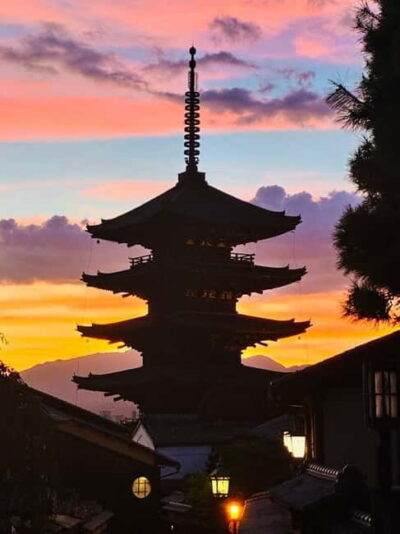
Kyoto Geisha Walking Tour: Gion District & Hidden Gems
Read our review →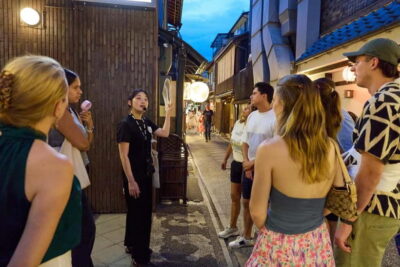
Gion Geisha District Walking Tour – Stories of Geisha
Read our review →
Best of Kyoto: Gion, Geisha, Pagodas & Cobblestones
Read our review →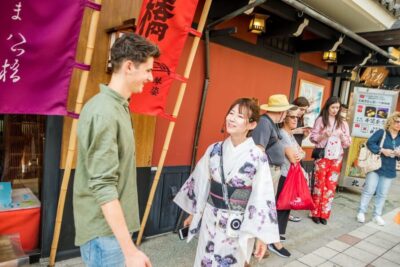
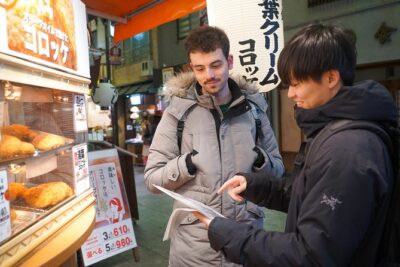
Nishiki Market Brunch Walking Tour (7 Tastings + Brunch)
Read our review →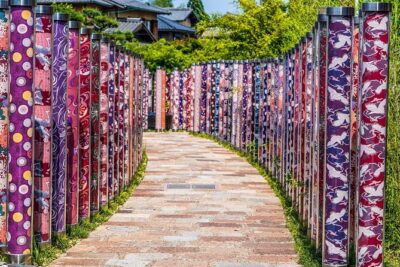
Kyoto Arashiyama Walking Tour: Bamboo, Monkeys, Gardens & Secrets
Read our review →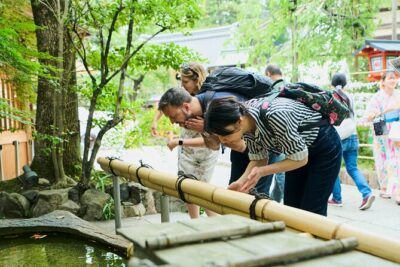
Kyoto Gion: 2-Hour Geisha Culture & History Walking Tour
Read our review →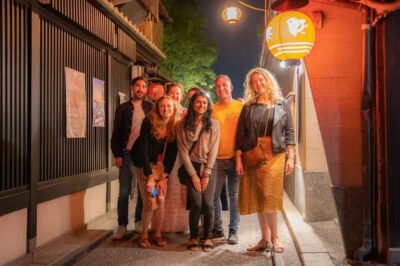
Browse the lists this tour appears in