
Review · KYOTO
Kyoto: Private Walking Tour with a Local
Kyoto is easiest to appreciate when someone helps you read the city, not just photograph it. This private walk pairs you with a local guide and lets you shape the day around food, temples, shopping, street art, neighborhoods, or simple orientation. I especially like the one-to-one format and the freedom to ask practical questions as you go. I also like that guides have taken visitors to quieter temples, favorite cafés, local restaurants, and less obvious corners of town.
The main tradeoff is that this is not a fixed sightseeing circuit. You will not automatically receive a polished march through Kyoto’s famous landmarks, and entrance fees, meals, and city transport cost extra. Your experience depends on the guide assigned to you and how clearly you explain what you want before the walk begins.
Key points to know before booking
- Your route is built around you: Tell the guide if you care most about temples, food, shopping, photography, art, neighborhoods, or transport advice.
- It is genuinely private: You walk with your own guide and party, without a larger group or set commentary.
- Quiet spots are possible: Guides have introduced visitors to less crowded temples and local cafés away from the busiest routes.
- The guides are practical helpers: Past guides have assisted with train and bus planning, supermarket shopping, museum research, and family needs.
- You can book three to six hours: A shorter walk suits orientation, while six hours gives you more room for a neighborhood, a meal stop, and transport practice.
- Budget for extras: Attraction tickets, food, drinks, taxis, buses, and any optional activities are not included in the $82 price.
A private introduction to Kyoto, not a standard sightseeing march
This experience works best as a flexible first look at Kyoto. You meet a Lokafyer, a local guide arranged for your date, then spend several hours walking and talking through the city. There is no fixed script, and the route can change as your interests become clearer.
That matters in Kyoto. The city has more temples, shrines, lanes, markets, cafés, and museums than you can sensibly fit into one visit. A guide who asks what you actually enjoy can save you from spending half a day on sights that do not suit you.
You might focus on a particular district, combine a few major sights with a quiet side street, or use the time to understand how Kyoto works. The walk can include photo stops, scenic views, local suggestions, and help with public transport. You may also ask for food, shopping, or cultural advice that is hard to get from a guidebook.
The personal nature of the walk is the strongest part. Nicolo was praised for being accommodating and helpful. Maha created routes around specific requests, took families to quieter places, and helped one visitor’s daughter practice French. Agustin even followed up with information about a museum exhibition and an antique shop for a visitor interested in Japanese netsuke.
Those examples show the useful range of this service. You are not simply paying for facts. You are paying for a local person who can listen, adjust, and help you make better choices during the rest of your stay.
More Private Walking Tours in Japan
- Kyoto: Private Customized Walking Tour with a Local Insider
★ 4.8 · 383 reviews - Kyoto : Private Custom Walking Tour With A Local Guide
★ 4.6 · 144 reviews - Kyoto: Private 2.5 Hour Historical Walking Tour
★ 4.9 · 121 reviews
Meeting in central Kyoto and setting the tone
The listed meeting points include Maccha House Kyoto Kawaramachi and the Kyoto City Office for Gender Equality area. You can also begin at your hotel lobby or outside your Airbnb, provided the location is a central landmark or intersection within Kyoto’s city center.
That flexibility is important if you are carrying luggage, traveling with children, or still getting used to Kyoto. Confirm the exact meeting point and look for a clear landmark. One guide helped a visitor identify the meeting place and sort out train travel, which is the kind of small assistance that can prevent a frustrating start.
Use the opening conversation well. Tell your guide what you have already seen, what you want to avoid, how much walking you can manage, and if food allergies, children, or mobility concerns affect the plan. If you want to enter a temple, museum, or other attraction, say so early. You must pay your guide’s admission as well as your own.
Because the route is not fixed, your preparation directly affects the result. A vague request such as show me Kyoto gives the guide less to work with. A short list such as quiet temple, local lunch, Japanese crafts, and help with buses gives the walk a much clearer shape.
What the walking route can include
The experience description allows for a broad mix of Kyoto activities. You could stop for photographs, walk through a neighborhood, look at street art and local culture, or pause at a café that the guide likes. You may hear personal stories about the areas you pass through rather than only receiving standard dates and names.
Past routes have included Fushimi Inari Shrine, Higashi Honganji Temple, and Nishiki Market. One visitor walked all the way to the top of Fushimi Inari with Toan, then visited Higashi Honganji and Nishiki Market. That is a demanding amount of ground for a short tour, so be realistic about pace and stamina.
Other guides have chosen less crowded temples and shrines. Maha brought visitors to a temple and shrine that were not part of their other tours, followed by a restaurant in a riverside village where they enjoyed sashimi. Agustin took a visitor to a temple away from the main tourist trail during the autumn color season.
These examples do not promise the same stops for every booking. They do show what a private route can do: connect familiar Kyoto interests with places that fit your pace and avoid repeating the most obvious circuit.
A café stop can be as useful as another landmark. One guide introduced a visitor to a small café that became a favorite place during the rest of the stay. Ask your guide for one or two places you can return to on your own. That turns the walk into a practical start to your Kyoto visit rather than a one-off outing.
The value of local advice about food and daily life
Kyoto is not only a collection of temples. You also need to know where to eat, how to move around, and how to behave in small shops, shrines, and restaurants. A private guide gives you time to ask basic questions without holding up a group.
Food advice has been a repeated strength. Lawrence’s guide suggested good local food, and Maha brought visitors to a restaurant near the river. You can ask for help choosing between a market snack, a casual restaurant, or a more traditional meal, though the meal itself is not included.
A guide may also help you understand where to shop. One guide assisted a visitor at a supermarket, while Agustin researched an antique shop linked to a specific collecting interest. If you care about crafts, secondhand goods, food markets, or Japanese design, state that during booking rather than hoping it comes up by chance.
The local perspective is especially useful for visitors who have several days in Kyoto. Your guide can point out areas to revisit, places that suit your budget, and routes that are simpler by bus, train, or on foot. The value continues after the scheduled walk because you can use that advice independently.
More Private Walking Tours in Kyoto:
- Beijing: Forbidden City Tour(Group/Private)-Tickets Included
★ 4.8 · 7,974 reviews - Private Walking Grand Tour of Copenhagen
★ 5.0 · 3,953 reviews - Private 3 hrs Venice Tour: St Mark’s, Walking tour & Boat tour
★ 4.0 · 3,372 reviews - Private Street Food Evening Walking Tour in Ho Chi Minh City
★ 5.0 · 3,175 reviews
Public transport, taxis, and the real walking commitment
This is a walking tour, so comfortable shoes are essential. The duration ranges from three to six hours, and Kyoto’s distances can make a walk feel longer than the clock suggests. If you want to cover several districts, ask about transport before setting the route.
You may use public transport or a taxi during the walk, but you pay those costs yourself. A private car can be requested as an extra arrangement. The guide can help you understand buses and trains, but transport is not part of the $82 price.
This arrangement can be a good compromise. You get personal help with a confusing route without paying for a full private vehicle. It also lets you choose when to walk and when to save energy. On the other hand, a visitor expecting door-to-door sightseeing should budget for extra fares or ask about a private car before booking.
One guide helped a visitor revise a Kyoto plan and work out transport in only two hours. That shows how useful a shorter booking can be. You do not have to spend six hours sightseeing if your real need is orientation and a workable plan for the next few days.
Families and visitors with limited mobility
Children under three join free, and children from three through twelve receive a 50 percent discount. The private format also gives families more control over breaks, pace, and interests than a large group tour.
A guide was praised for being patient with a five-month-old baby, and another planned a Kyoto visit for a wheelchair user with limited mobility. The activity is listed as wheelchair accessible, but that does not remove the need for a detailed conversation before the day.
Tell the guide about wheelchair dimensions, walking limits, rest needs, and any places you hope to enter. Kyoto routes can vary greatly in surface, slope, and crowd levels, and attraction access may involve separate conditions. The useful point is that the route can be discussed in advance rather than imposed on you.
Families may also appreciate the social side. Maha helped a thirteen-year-old practice French, and other guides were praised for patience with visitors who needed extra help. Those personal touches are more likely in a private walk than in a large scheduled group.
How much value do you get for $82?
At $82 per person, the price makes the most sense when you use the guide as both a sightseeing companion and a Kyoto planner. For a couple or family, the per-person total can add up, but you are receiving a private experience rather than sharing time with strangers.
The value is strongest when you have clear priorities. If you want a local food introduction, help with transport, a route for a wheelchair user, or a personalized first afternoon, the guide’s advice can save time and reduce mistakes. It can also help you avoid paying for attractions you would not enjoy.
The value is weaker if you want a fixed list of famous sights with all entrance fees included. You must pay for your guide’s admission when you visit attractions, along with your own tickets, food, drinks, and transport. Those extras should be part of your working budget.
The flexible three to six hour range helps. Book three hours if you want orientation or a focused neighborhood walk. Choose closer to six hours if you want several stops, a meal suggestion, transport practice, and time for questions. You can request a particular start time, subject to availability.
The guides and the human side of the experience
The strongest praise centers on friendliness, patience, and willingness to adapt. Nicolo was described as warm and accommodating. Maha appears several times in the booking history, helping with quiet sights, restaurants, children, language practice, and customized routes. Agustin, Toan, Iago, Cristobal, and others were also praised for practical help and easy company.
The guide you receive may not be Japanese. Maha, for example, was described as not being Japanese but still able to explain many aspects of Kyoto and its culture. That is worth knowing if you expect a guide with a particular background.
The benefit of this model is the conversation. You can ask how to use a bus, where to buy groceries, how to find a museum, or how to shape the rest of your visit. The possible drawback is inconsistency: the experience depends on the person assigned and on the match between your interests and the guide’s strengths.
Send useful details before the tour. Mention your preferred language, age range, mobility needs, favorite foods, shopping interests, and any sights already on your list. The more the guide knows, the more personal the route can become.
Who should book this Kyoto walk?
I would recommend it to a first-time visitor who wants to understand Kyoto quickly, especially someone uneasy about transport or overwhelmed by the city’s many choices. It also suits repeat visitors who have already seen the major temples and want a more personal look at neighborhoods, cafés, shops, or local culture.
Families, older visitors, and people with mobility concerns may benefit from the private format because the pace and route can be discussed in advance. Food-focused visitors and anyone interested in Japanese crafts should also make their interests clear before the meeting.
I would be less inclined to book this if you prefer a formal lecture, a guaranteed list of landmark stops, or a tour where all costs are bundled together. In that case, a fixed sightseeing program may be easier to compare.
For everyone else, the best approach is to treat the walk as a flexible Kyoto orientation. Use the guide for local judgment, practical advice, and places that fit you, then spend the rest of your trip exploring with more confidence.
FAQ
How long does the private Kyoto walk last?
The tour lasts from 3 to 6 hours. You can check available starting times when booking.
What is included in the price?
The price includes a local guide and a customized private walking tour.
Does the tour include entrance tickets?
No. Entrance fees are not included. If you visit an attraction, you must also pay the entrance cost for your local guide.
Are meals and drinks included?
No. Meals and drinks are personal expenses and are not included.
Is transportation included?
No. Public transportation and taxis are available at your own expense during the walk. You can request a private car as an additional arrangement.
Where can the tour begin?
You can meet at one of the listed central meeting points, including Maccha House Kyoto Kawaramachi and the Kyoto City Office for Gender Equality area. Hotel lobby or Airbnb pickup is possible when the location is a central landmark or intersection within Kyoto’s city center.
Which languages are available?
The tour is available with live guides speaking English, Spanish, or German.
Is the tour private?
Yes. It is a private group experience with a customized route and no larger shared group.
Can children join the tour?
Children under three years old can join free of charge. Children from three to twelve years old receive a 50 percent discount.
Can wheelchair users join?
The activity is listed as wheelchair accessible. You should explain mobility needs in advance so the route can be planned appropriately.
Can I choose the starting time?
You can request a specific time, though you need to check availability for the date you want.
What should I wear?
This is a walking tour, so comfortable shoes are recommended.
New routes in Kyoto
- Kyoto : Private Custom Walking Tour With A Local Guide★ 4.6 · 144 reviews
- Kyoto: Private 2.5 Hour Historical Walking Tour★ 4.9 · 121 reviews
- Kyoto: Gion Walking Tour★ 5.0 · 195 reviews
- Kyoto: Izakaya Bars Guided Walking Tour★ 4.9 · 815 reviews
- Kyoto: Gion Sunset Walking Tour with Local Guide★ 4.7 · 351 reviews
- Kyoto Fushimi-Inari Night Walking Tour★ 4.8 · 171 reviews
- Kyoto Gion Cultural Walk & Geisha Show with Dining Options★ 5.0 · 518 reviews
- Kyoto: Imperial Palace & Nijo Castle Guided Walking Tour★ 4.7 · 453 reviews
Kyoto Walking Tours, compared.
Kyoto Geisha Walking Tour: Gion District & Hidden Gems
Read our review →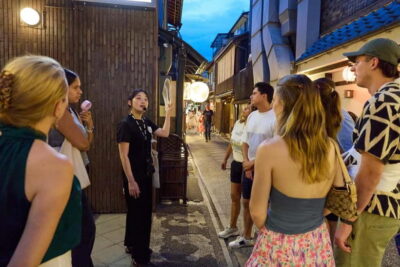
Gion Geisha District Walking Tour – Stories of Geisha
Read our review →
Best of Kyoto: Gion, Geisha, Pagodas & Cobblestones
Read our review →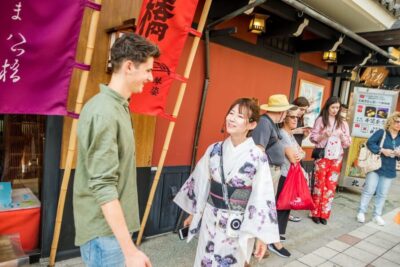
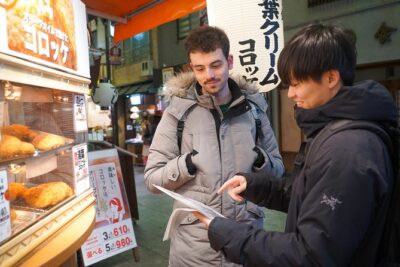
Nishiki Market Brunch Walking Tour (7 Tastings + Brunch)
Read our review →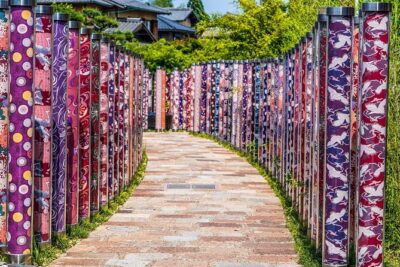
Kyoto Arashiyama Walking Tour: Bamboo, Monkeys, Gardens & Secrets
Read our review →
Kyoto Gion: 2-Hour Geisha Culture & History Walking Tour
Read our review →
Browse the lists this tour appears in