
Review · KYOTO
Kyoto: Private 2.5 Hour Historical Walking Tour
Kyoto’s best sights make more sense when someone explains what you’re seeing. This private walk links Yasaka Shrine, a Zen temple, a pagoda, and Kiyomizu Temple in one tidy route, with time to ask questions instead of simply collecting photographs.
I like the personal scale, with one group of up to five people for $80, and I like the guide’s use of hand-drawn maps and pictures. Guides such as Hisako, Hiroko, and Takayuki Ishii have helped visitors connect Shinto, Buddhism, politics, art, and daily customs.
The main consideration is that temple admission is extra, and the walk ends at Kiyomizu-dera rather than returning you to your hotel. The route includes slopes, stone steps, and plenty of standing, so comfortable shoes matter.
Key points to know before booking
- A private route for up to five people: The flat group price can be good value for a family or small party.
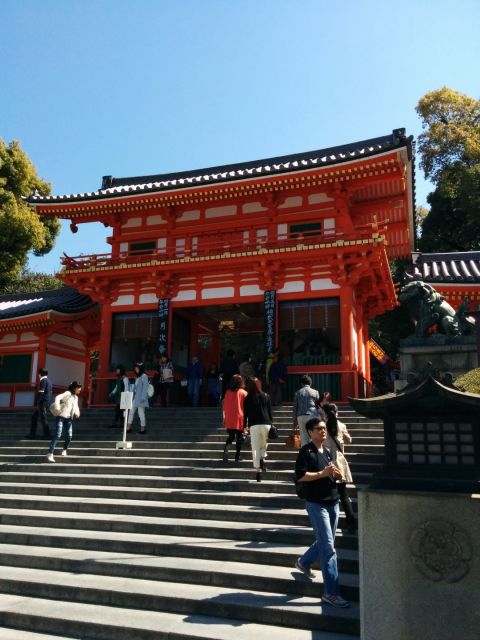
- Starts at Yasaka Shrine: Meet at the west, or red, gate near Gion.
- Entoku-in adds quiet Zen atmosphere: You see dry gardens, traditional rooms, and painted sliding doors.
- The teaching is a major part of the tour: Guides use maps, drawings, and prepared notes to explain complicated subjects clearly.
- Kiyomizu-dera supplies the big finish: The wooden stage, Koyasu Pagoda, sacred water, and Jishu Shrine give you plenty to see.
- The tour ends at Kiyomizu Temple: Plan your next stop from there, and budget separately for admission fees.
Why this short walk works well in Kyoto
Kyoto can feel like a giant collection of gates, roofs, statues, and prayer rituals. You can photograph all of it and still miss the point. This tour gives you a basic framework before the details start piling up.
At the beginning, the guide uses a map of Kyoto to explain the city’s position and past. That opening matters. It helps you place the eastern temple district within the wider city instead of treating each stop as an unrelated sight.
The route also gives you two ways to see Kyoto. Yasaka Shrine and Kiyomizu-dera are major attractions, while Entoku-in offers a quieter interior experience. The walk between them passes through old streets and small religious sites, so the day is not only about grand buildings.
I would choose this tour early in a Kyoto stay. Several guides have helped people understand shrine and temple customs well enough to recognize them later in Japan. That makes the two and a half hours more useful than a one-off history lesson.
More History Walking Tours in Japan
- Kyoto Gion: 2-Hour Geisha Culture & History Walking Tour
★ 5.0 · 1,186 reviews - Tokyo: Imperial Palace and Shogun Historical Walking Tour
★ 5.0 · 2,251 reviews - Tokyo: Imperial Palace Japanese History Walking Tour
★ 4.9 · 987 reviews
Starting at Yasaka Shrine and learning how to worship
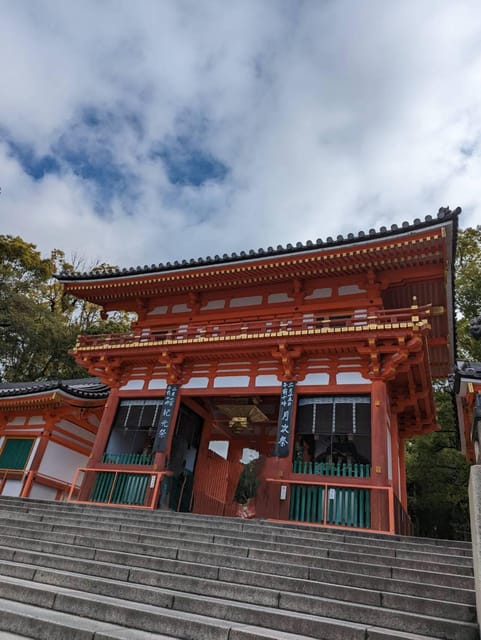
Meet your guide at the west gate, the red gate of Yasaka Shrine. From Gion Shijo Station on the Keihan Line, or Kawaramachi Station on the Hankyu Line, walk east along Shijo Street and climb the stone steps toward the gate. By bus, get off at Gion.
The guide begins with an overview of Kyoto, then explains Yasaka Shrine. You learn how to worship at a Shinto shrine, which is practical information you can use throughout Japan. The point is not simply to watch a ritual. It is to understand what the actions mean and how a shrine differs from a Buddhist temple.
This is also a useful place to ask basic questions. If you are unsure about Shinto, Buddhism, emperors, shoguns, or the role of religion in Japanese life, say so early. Guides such as Hisako have been praised for answering wide-ranging questions patiently, including questions about modern Japan.
The meeting point is easy to describe, but I would still arrive with time to spare. Gion has many paths and gates, and the west gate is more specific than simply saying meet at Yasaka Shrine.
Maruyama Park and Nene-no-michi
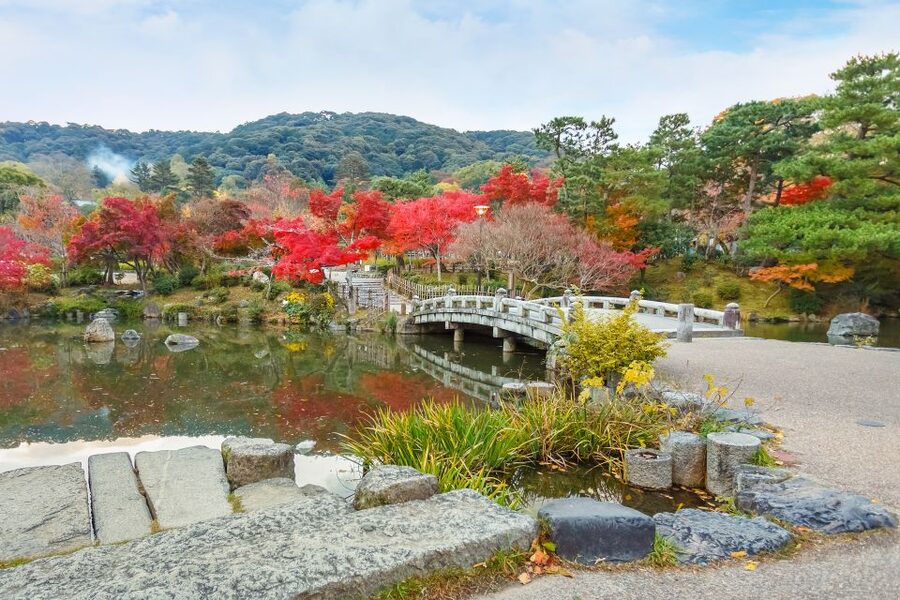
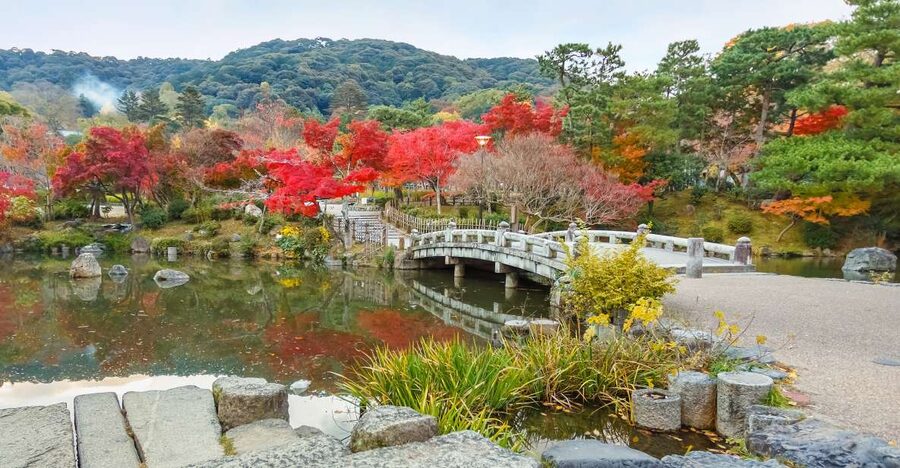
From Yasaka Shrine, you walk through Maruyama Park. The stroll takes about 10 minutes, giving the guide a natural chance to continue the story without turning the outing into a long lecture at one fixed spot.
You then reach Nene-no-michi, a busy stone-paved street named for Nene, the wife of Toyotomi Hideyoshi, a major political figure of late sixteenth-century Japan. The name opens a door into the people behind Kyoto’s monuments, especially the women and political families often left out of a quick sightseeing visit.
The route here is scenic, but it is also a working public street. You should expect other people, photographs, and some uneven walking. The reward is the transition from a broad park to narrow historic lanes associated with temples and old Kyoto.
Entoku-in’s dry gardens and painted rooms
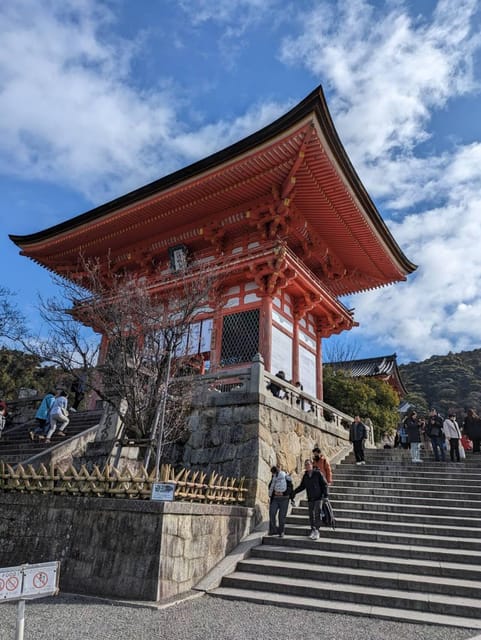
Entoku-in is the first substantial stop, with about 40 minutes set aside. It is a Zen temple linked with Nene and offers a change of pace after the shrine and street walking.
The main attraction is the dry garden, where carefully placed rocks, gravel, and plants create a scene without a pond or stream. Your guide can help you look at the garden rather than merely walk past it. Zen spaces often reward stillness, and this is likely to be the calmest part of the route.
Inside, you can see traditional Japanese rooms and painted sliding doors. These details show how architecture, art, and everyday life worked together. Rooms were not decorated with separate framed pictures in the modern Western style. The sliding panels formed part of the room itself.
This stop is one reason I prefer the private format. A guide can adjust the explanation to your interests. If you want more on Zen practice, Japanese art, architecture, or Nene’s connection with the temple, you can ask. If your children need a shorter explanation, the guide can keep moving.
A practical note: the temple entrance fee is not included. The tour information does not give a fixed admission price, so check the current charge when booking or at the entrance. You may also remove your shoes in traditional interiors, so footwear that is easy to take off helps.
More Private Walking Tours in Japan
- Kyoto: Private Customized Walking Tour with a Local Insider
★ 4.8 · 383 reviews - Kyoto : Private Custom Walking Tour With A Local Guide
★ 4.6 · 144 reviews - Kyoto: Private Walking Tour with a Local
★ 4.6 · 118 reviews - Osaka: Hotspots & Hidden Gems Walking Tour Private or Group
★ 4.9 · 1,300 reviews
Yasaka Koshin-do and the five-storied pagoda
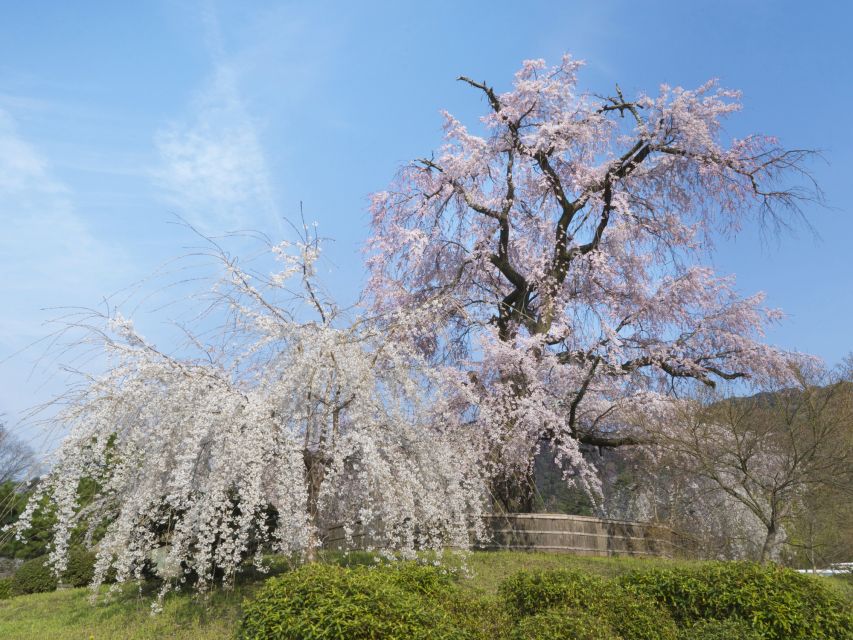
After another walk of about 10 minutes, the route reaches Yasaka Koshin-do. The planned visit lasts about 15 minutes. This small temple is associated with Koshin beliefs and gives the walk a more local, close-up feel than the broad approach to Kiyomizu-dera.
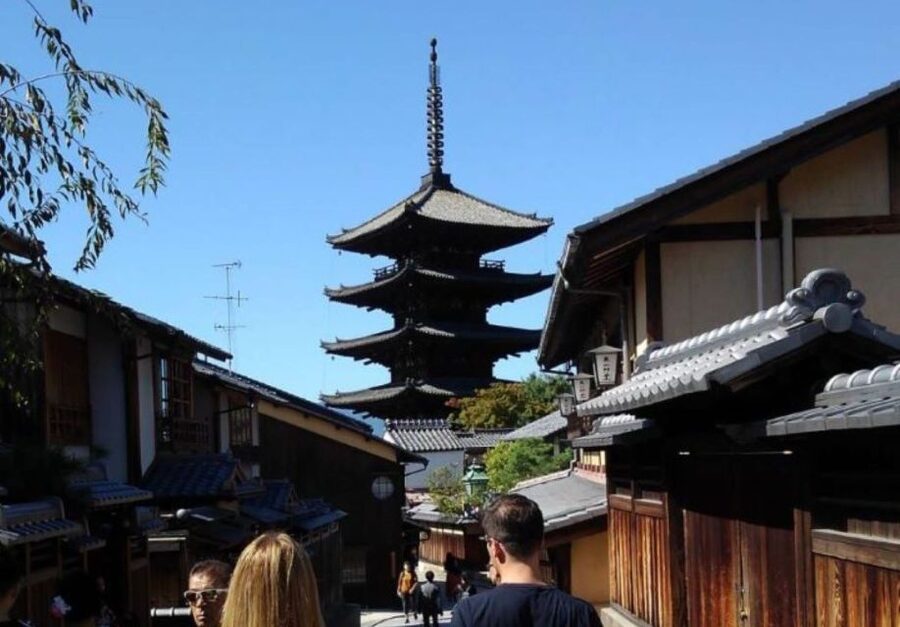
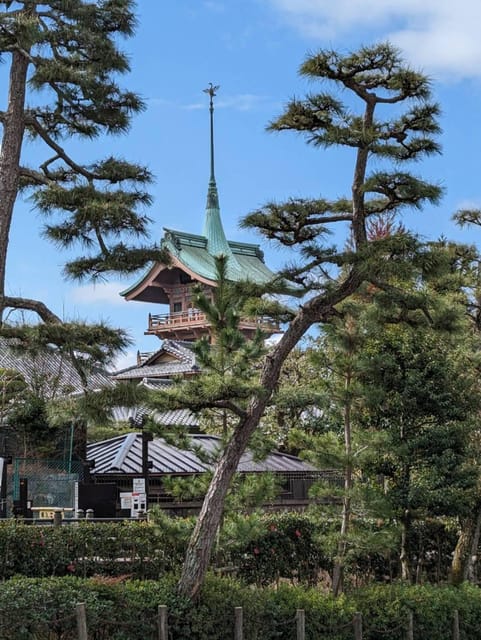
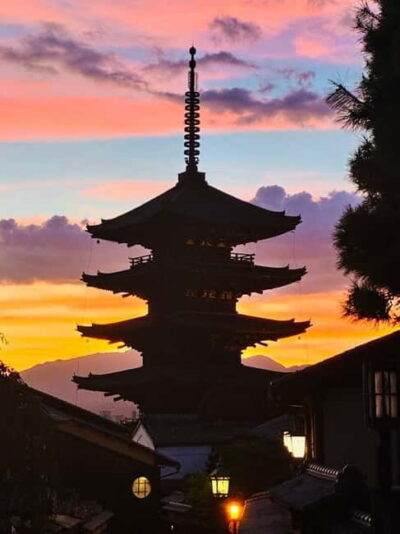
From there, you see Yasaka-no-to, the five-storied pagoda, from outside. The pagoda is close to Koshin-do, and a nearby street provides a well-known photo spot. The guide helps place the pagoda in the surrounding neighborhood, so you see more than an isolated tower in your camera frame.
Do not expect an interior pagoda visit here. The supplied plan specifically describes seeing it from outside. That is a minor limitation if you want to climb or enter every structure, but it keeps the walk moving toward Kiyomizu-dera.
The photo stop lasts about 10 minutes. Use it. Kyoto’s lanes can be crowded and narrow, and a guide who knows where to pause can save you from wandering around while trying to frame the pagoda.
Reaching Kiyomizu-dera through the eastern hills
The walk to Kiyomizu-dera takes about 15 minutes. By this point, the route has included a shrine, a park, a Zen temple, a small religious site, and an exterior pagoda. Kiyomizu-dera then provides the large-scale finale.
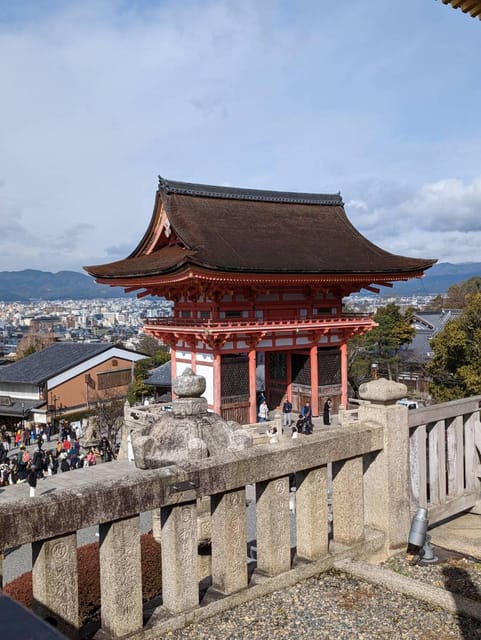
Kiyomizu-dera was originally built in the eighth century and receives about five million visitors a year. Its main object of worship is Kannon Bodhisattva, and the precinct contains Buddhist statues and several important structures.
The wooden stage attached to the main hall is the visual highlight. It was built without nails, and the view from it reaches across the surrounding area toward the three-storied Koyasu Pagoda. Koyasu means easy birth, and women visit the pagoda to pray for a safe delivery.
Kiyomizu means pure water. A stream from the mountain behind the temple has never dried up, and people line up to drink from it. The guide explains the meaning of the water and the customs around it, helping you understand why the line is part of the religious experience rather than just another attraction.
You can also see an iron stick and iron clogs donated to the temple. The stick is very heavy, and you may try to lift it. This small physical detail adds welcome humor to a site filled with grand architecture and serious religious meaning.
The tour ends after you leave the main hall. Before saying goodbye, the guide explains Jishu Shrine, linked with matchmaking. That final stop gives the tour a lighter ending and introduces another layer of belief within the Kiyomizu area.
What the guides add to the experience
The strongest feature here is the teaching style. Several guides connected with this walk use folders, maps, bullet points, drawings, and colored-pencil illustrations. Hisako has been described as formally trained in Japanese history and a certified guide, while other guides, including Hiroko and Takayuki Ishii, have also received praise for clear explanations and careful pacing.
The visual material is useful because Japanese history can become a blur of names and dates. A drawing of a building, a map of Kyoto, or a simple explanation of a religious figure gives you something to hold onto.
The best guide will not simply recite a speech. You can ask about imperial history, samurai, shogunates, language, philosophy, gender roles, Shinto, Buddhism, and Japanese aesthetics. The experience may become more conversational than the published route suggests.
That flexibility has a limit. One less enthusiastic assessment found the guide could have offered more information without prompting. If you prefer a constant stream of facts, tell your guide what you want to hear. A private tour works best when you take part in shaping it.
Timing, walking, and group value
The activity is advertised as a 2.5-hour historical walking tour, although the listed walking and visit times add up to roughly 2 hours and 15 minutes. In practice, the outing may run close to the advertised duration, especially if you stop for questions, photographs, or a slower pace.
The walking itself is manageable for most people who are comfortable with city sightseeing, but this is not a bus tour. You use stone steps, streets, temple paths, and sloped approaches. Wear comfortable shoes and be ready to stand.
At $80 for a private group of up to five, the value improves as your group gets larger. A group of five pays about $16 per person before temple admission. A solo participant pays the full group price, so the format makes the most financial sense for families, couples traveling with friends, or small groups who want personal explanations.
Transportation to Yasaka Shrine, food, drinks, insurance, and temple entrance fees are not included. Since the tour ends at Kiyomizu-dera, you should plan your next activity from there rather than expecting a return transfer.
Free cancellation is available up to 24 hours before the start time, and you can reserve now and pay later. Those terms help if your Kyoto plans are still shifting, but they do not remove the need to check the start time and meeting point carefully.
Who should book this Kyoto walk
I would recommend it to first-time Kyoto visitors who want a clear introduction to the city’s religious customs and political past. It also suits families, especially if a guide can adjust the explanations and keep children involved with questions and visual material.
History-minded visitors will get the most from it. The tour can cover far more than the buildings themselves, including the imperial family, nobility, samurai, shogunates, Shinto, Buddhism, philosophy, art, and daily customs.
It is less suited to someone who wants a fast checklist of famous sights with little explanation. The route contains popular places, but its purpose is to slow down and make them understandable. You also need to pay extra for temple admissions and make your own way to the meeting point.
Should you book the Historical Walking Tour?
Book it if you want Kyoto to make sense, not just look beautiful. The private group size, strong English communication, hand-drawn teaching aids, and blend of major and quieter sites make this a useful first or second-day activity.
I would especially choose it for a group of three to five, when the $80 price becomes good value. Pick another option if you dislike walking, want hotel pickup, or prefer a tour built around many attractions with no extra entrance costs.
For most curious visitors, the route offers a sensible balance: Yasaka Shrine for customs, Entoku-in for calm, Yasaka Koshin-do and the pagoda for smaller-scale Kyoto, and Kiyomizu-dera for the grand finish. The best guides, including Hisako and Hiroko, appear to make the history personal and easy to follow.
FAQ
Where does the tour begin?
The tour begins at the west gate, also called the red gate, of Yasaka Shrine.
Where does the tour finish?
The tour finishes at Kiyomizu-dera, after the guide explains Jishu Shrine.
How long does the tour last?
It is advertised as a 2.5-hour tour. The listed walking and stop times total about 2 hours and 15 minutes, with questions and photographs potentially extending the outing.
How many people can join?
The tour is private for a group of up to five people.
What language is available?
The live tour guide speaks English.
Is transportation included?
No. Transportation to and from the meeting point is not included.
Are temple admission fees included?
No. Admission fees to the temples are separate.
Are meals and drinks included?
No. Meals and drinks are not included.
What should I bring?
Bring comfortable shoes for walking on streets, steps, and temple paths.
Can I cancel for a full refund?
Yes. You can cancel up to 24 hours in advance for a full refund.
More Private Walking Tours in Kyoto
- Beijing: Forbidden City Tour(Group/Private)-Tickets Included
★ 4.8 · 7,974 reviews - Private Walking Grand Tour of Copenhagen
★ 5.0 · 3,953 reviews - Private 3 hrs Venice Tour: St Mark’s, Walking tour & Boat tour
★ 4.0 · 3,372 reviews - Private Street Food Evening Walking Tour in Ho Chi Minh City
★ 5.0 · 3,175 reviews
More History Walking Tours in Kyoto
- History and Hauntings of Salem Guided Walking Tour
★ 5.0 · 14,564 reviews - Lisbon: History, Stories and Lifestyle Walking Tour
★ 4.8 · 10,902 reviews - Boston: Freedom Trail History Small Group Walking Tour
★ 5.0 · 6,450 reviews - Historic Charleston Guided Sightseeing Walking Tour
★ 5.0 · 6,216 reviews
New routes in Kyoto
- Kyoto : Private Custom Walking Tour With A Local Guide★ 4.6 · 144 reviews
- Kyoto: Gion Walking Tour★ 5.0 · 195 reviews
- Kyoto: Izakaya Bars Guided Walking Tour★ 4.9 · 815 reviews
- Kyoto: Gion Sunset Walking Tour with Local Guide★ 4.7 · 351 reviews
- Kyoto: Private Walking Tour with a Local★ 4.6 · 118 reviews
- Kyoto Fushimi-Inari Night Walking Tour★ 4.8 · 171 reviews
- Kyoto Gion Cultural Walk & Geisha Show with Dining Options★ 5.0 · 518 reviews
- Kyoto: Imperial Palace & Nijo Castle Guided Walking Tour★ 4.7 · 453 reviews
Kyoto Walking Tours, compared.
Kyoto Geisha Walking Tour: Gion District & Hidden Gems
Read our review →
Gion Geisha District Walking Tour – Stories of Geisha
Read our review →
Best of Kyoto: Gion, Geisha, Pagodas & Cobblestones
Read our review →
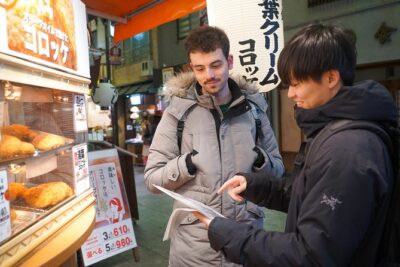
Nishiki Market Brunch Walking Tour (7 Tastings + Brunch)
Read our review →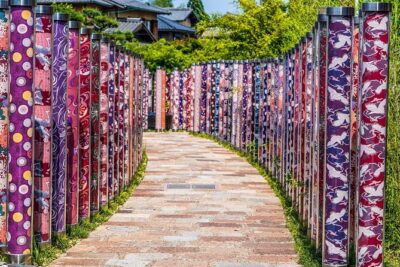
Kyoto Arashiyama Walking Tour: Bamboo, Monkeys, Gardens & Secrets
Read our review →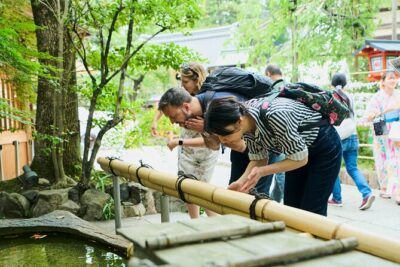
Kyoto Gion: 2-Hour Geisha Culture & History Walking Tour
Read our review →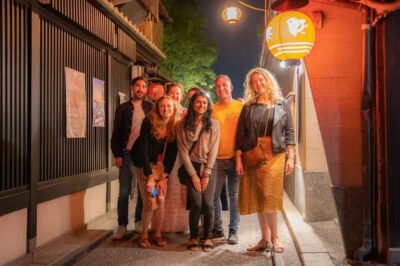
Browse the lists this tour appears in