
Review · KYOTO
Kyoto: Gion Walking Tour
Gion is much more than a pretty street lined with wooden houses and the hope of spotting a Geisha. This small-group walk connects Pontocho, Gion-Kobu, and Gion-Higashi, while guides such as Jose and Saskia explain the people, customs, shrines, and city changes that are easy to miss when you wander alone.
I like two things here: the six-person limit, which keeps the walk conversational, and the guides’ willingness to follow your questions. You may learn about Maiko and Geiko life, then shift to Japanese football, restaurant customs, or daily life in Kyoto without being pushed back to a script.
The main consideration is simple: this is a walking tour, not a Geisha sighting tour. It covers about 3.3 kilometers in two hours, does not include Hanamikoji-Dori, and offers no promise of seeing a Maiko or Geiko.
Key points at a glance
- Three hanamachi in two hours: Visit Pontocho, Gion-Kobu, and Gion-Higashi, three of Kyoto’s five traditional Geisha districts.
- A very small group: With no more than six participants, you can hear the guide clearly and ask plenty of questions.
- History beyond the famous lanes: The route includes bridges, statues, shrines, preserved streets, and overlooked corners of central Kyoto.
- A practical introduction to Maiko and Geiko life: Learn about training, routines, customs, and the difference between popular images and real life.
- Flexible, personal guiding: Jose, Saskia, and the other guides adapt explanations to your interests and can share their own experiences of living in Japan.
- Important limits: Hanamikoji-Dori is not on the route, and spotting a Maiko or Geiko cannot be guaranteed.
What this Gion walk is really about
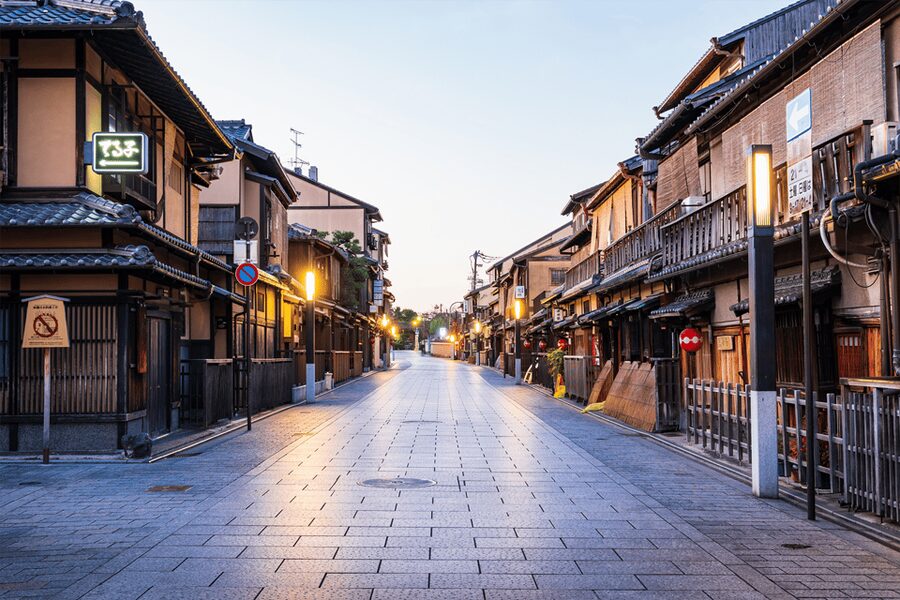
Many visitors arrive in Gion expecting one famous street, a few lanterns, and perhaps a quick glimpse of someone in elaborate dress. This tour takes a wider view. It treats Gion as part of Kyoto’s working center, shaped by waterways, shrines, theater districts, entertainment quarters, and ordinary city life.
That broader approach is the tour’s main strength. You are not simply pointed toward an attractive wooden facade. You learn why the district developed where it did, how the hanamachi operate, and how Kyoto’s older customs still fit into a modern city.
The walk is led in English, Spanish, Dutch, or French. Jose and Saskia are frequently named as guides, and their style is personal rather than formal. They use photos, maps, and stories to show how places have changed, and they leave room for questions instead of filling every minute with a lecture.
That matters in Gion. The most useful information is often not visible at first glance. A narrow entrance, a building detail, a bridge name, or a small shrine can make much more sense once someone explains its role.
More Walking Tours in Kyoto:
- Kyoto Geisha Walking Tour: Gion District & Hidden Gems
★ 4.7 · 3,273 reviews - Kyoto: Gion Magical Night Walking Tour with Geisha Trivia
★ 4.9 · 2,393 reviews - Kyoto: Gion Geisha District Walking Tour – Stories of Geisha
★ 4.7 · 2,187 reviews
Starting near Kyoto’s busiest shopping streets
The meeting point is in front of the Disney Store at Kyoto Shijo-Kawaramachi. The guide sits outside holding an iPad showing the Get Your Guide image and the tour name. Kyoto has only one Disney Store, so the location is meant to be easy to identify.
This is a practical starting point near the heart of downtown Kyoto. It is not inside Gion itself, which means the walk begins by linking the modern shopping area with the older districts across the Kamo River.
The tour lasts two hours and covers about 3.3 kilometers, or roughly two miles. That is a manageable distance for most people who are comfortable walking, but you should still wear proper shoes. The route includes busy streets, bridges, narrow lanes, and outdoor stops, so bring water and prepare for sun, rain, or heat.
Pontocho Alley and the Kamo River
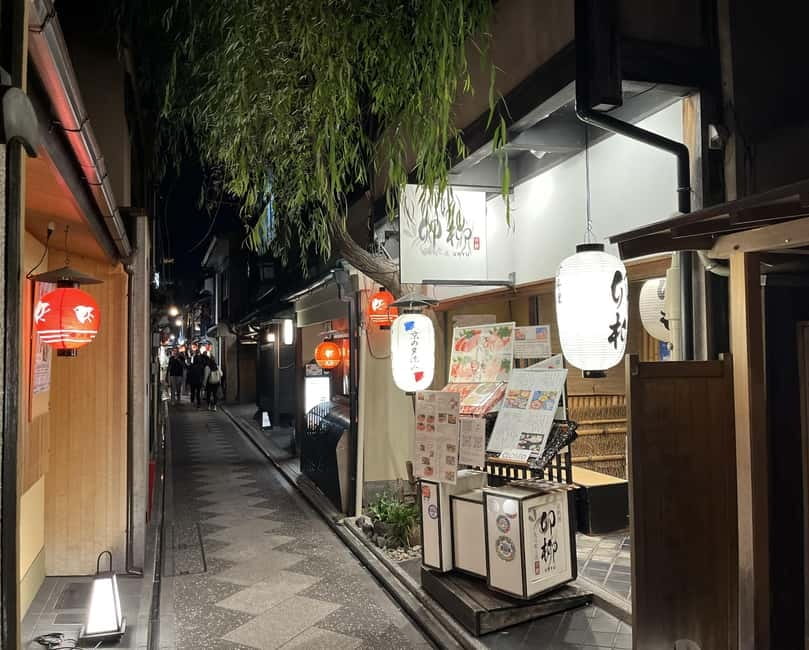
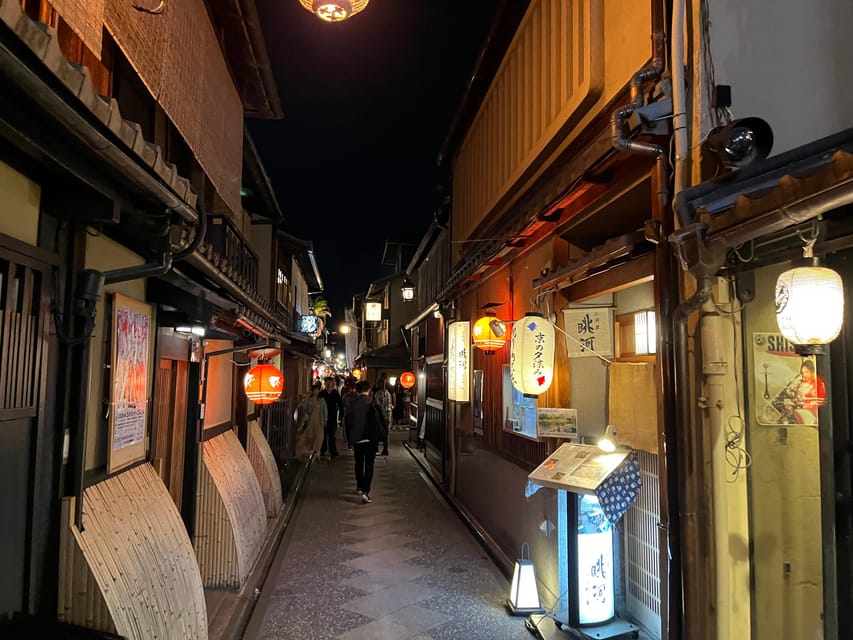
The first section takes you through Pontocho Alley, one of Kyoto’s best-known traditional entertainment areas. Its narrow form and old-style facades give it a very different feel from the broad commercial streets near the meeting point.
Pontocho is also one of Kyoto’s five hanamachi, traditional Geisha districts. The guide explains how these districts function and how Pontocho relates to Gion-Kobu and Gion-Higashi. This makes the walk more useful than a simple photo stop, since you begin to understand that each area has its own identity and customs.
The route continues around Pontocho Kabu-renjo, a major performance and cultural institution connected with the district. You may not enter every building, but the guide can explain why these spaces matter to the training and public performances associated with Maiko and Geiko.
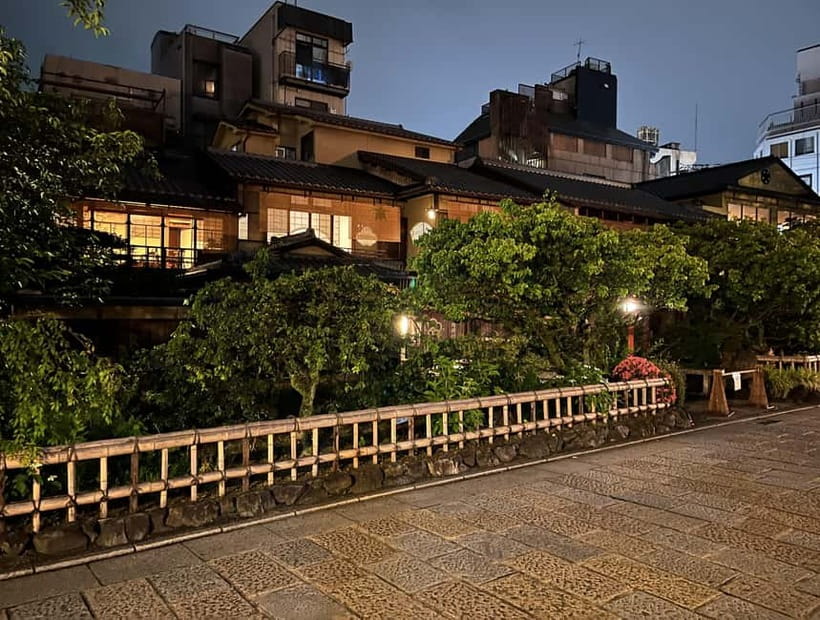
From there, the walk reaches the Kamo River. The river is more than a scenic break. It helps explain Kyoto’s layout, its bridges, and the way people move between the city’s commercial core and eastern neighborhoods.
The route also includes the Yagi-san and Kita-san statues. These are the kind of details you could easily pass without noticing. A guide’s value here is not a dramatic attraction but the context that turns small urban features into part of a larger story.
Sanjo Ohashi and the route into Gion
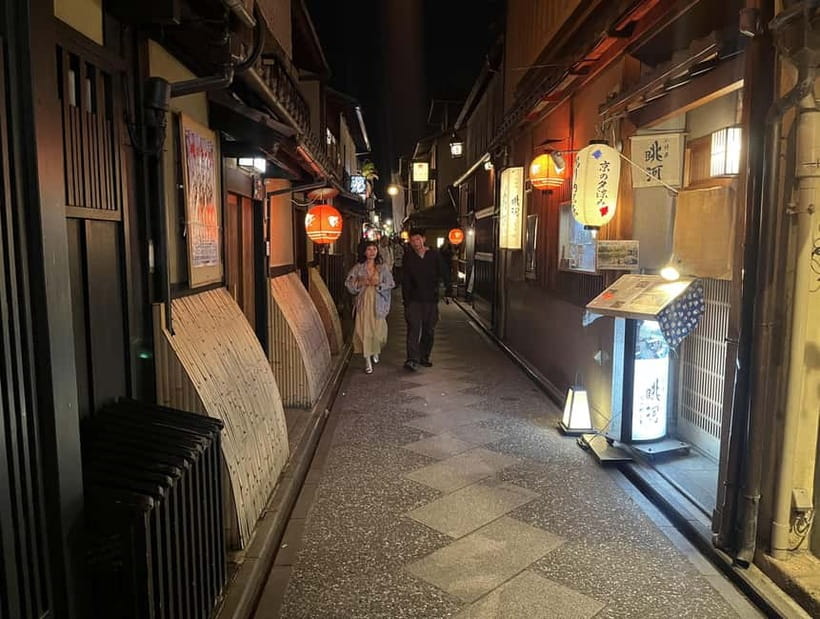
Sanjo Ohashi, or Sanjo Bridge, provides another useful pause. Bridges in Kyoto are natural orientation points, and this one helps connect the route’s different sections.
You will also walk along Yamato Dori before entering Gion-Kobu. The movement from Pontocho toward Gion shows how close several historic districts are to one another. On a map, they may look like separate stops. On foot, they become part of one connected central Kyoto experience.
This is where the guide’s local knowledge becomes especially helpful. The tour does not rush from landmark to landmark. Instead, it stops often for short explanations, then moves on. That rhythm suits a neighborhood like Gion, where the meaning is spread across many small details rather than concentrated in one grand monument.
Same streets, a different guide:
- Best of Kyoto: Gion, Geisha, Pagodas & Cobblestones
★ 4.9 · 2,058 reviews - Night Walk in Gion: Kyoto’s Geisha District
★ 4.5 · 2,003 reviews - Kyoto Gion Geisha District Walking Tour – The Stories of Geisha
★ 5.0 · 1,441 reviews - Nishiki Market Brunch Walking Tour (7 Tastings + Brunch)
★ 5.0 · 1,355 reviews
Gion-Kobu, Shinbashi, and Shirakawa
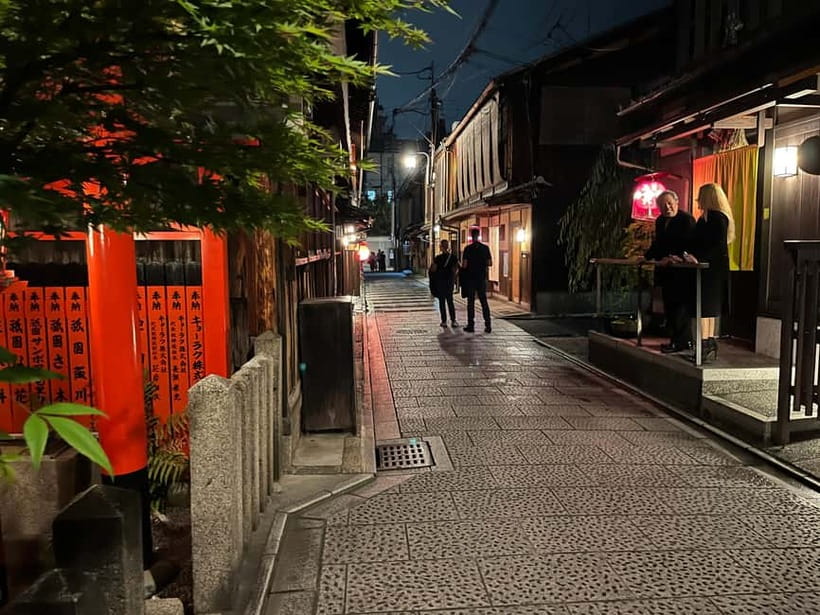
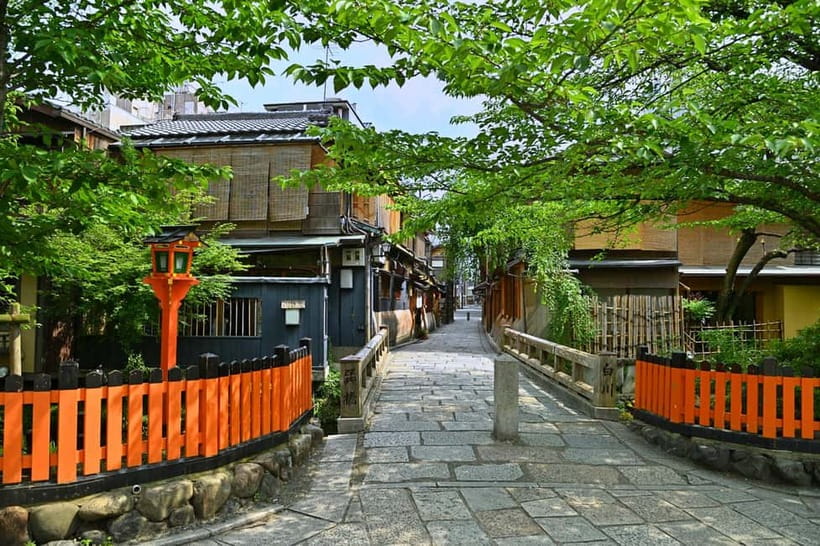
Gion-Kobu includes Gion-Shinbashi Dori and Gion Shirakawa, two of the most atmospheric parts of the walk. The preserved streets and wooden Machiya houses offer the classic Kyoto scene, but the guide keeps the focus from becoming pure picture-taking.
You learn about the hanamachi system, the role of the traditional entertainment houses, and the working lives of Maiko and Geiko. The language matters here. Maiko are apprentices, while Geiko is the term commonly used in Kyoto for accomplished Geisha. The tour explains their training, routines, activities, and public role rather than treating them as costumed characters for visitors.
Gion-Kobu is also a good place to discuss etiquette. A Maiko or Geiko may be on the way to work, so respectful behavior matters. The tour does not promise a sighting, and that is worth keeping in mind before you book. If someone appears, the moment is a bonus, not the product being sold.
Several people who took the walk were lucky enough to spot Maiko after learning what to look for. That possibility adds interest, but you should not chase or photograph anyone aggressively. The better goal is to understand the neighborhood even if every passerby is dressed in ordinary clothes.
The route does not include Hanamikoji-Dori. That is an important detail because many people associate Gion with that street. If visiting it is your main purpose, you will need to do so separately. The omission also means this tour offers a somewhat different view of the district instead of following the most obvious route.
Tatsumi Shrine and Tatsumi Bridge
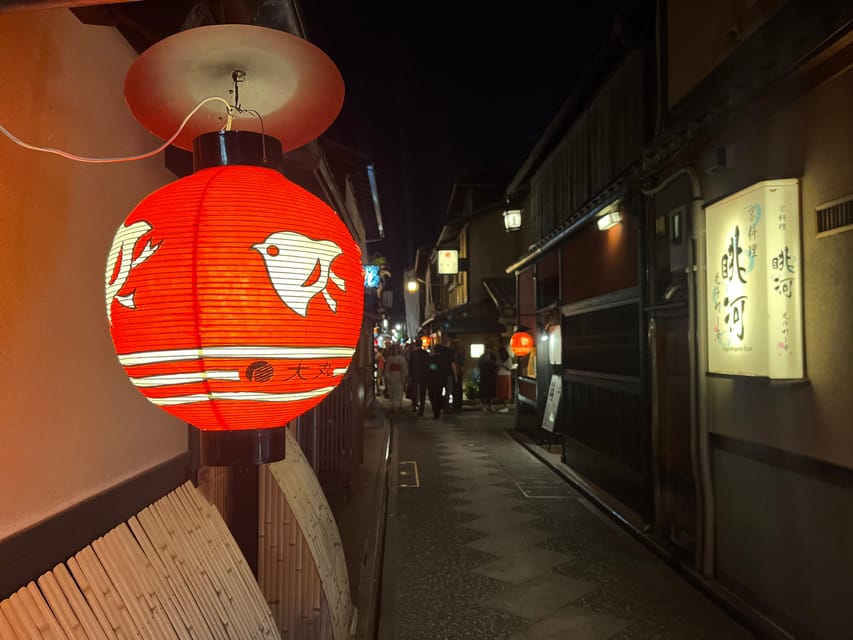
Tatsumi Shrine and Tatsumi Bridge provide smaller, quieter points along the Gion-Kobu section. These stops show how shrines and bridges are woven into the neighborhood rather than isolated as major attractions.
The guide may use photographs or an iPad to add background and show changes over time. This is especially useful for people who want more than a present-day snapshot. Kyoto’s traditional streets can look untouched, but their use, surrounding buildings, and role in city life have changed.
I also like the way this part of the route invites questions. You can ask about architecture, religion, local customs, Geisha terminology, or something you noticed five minutes earlier. With a maximum of six people, the guide can usually respond without holding up a large group.
Gion-Higashi and Yasaka Shrine
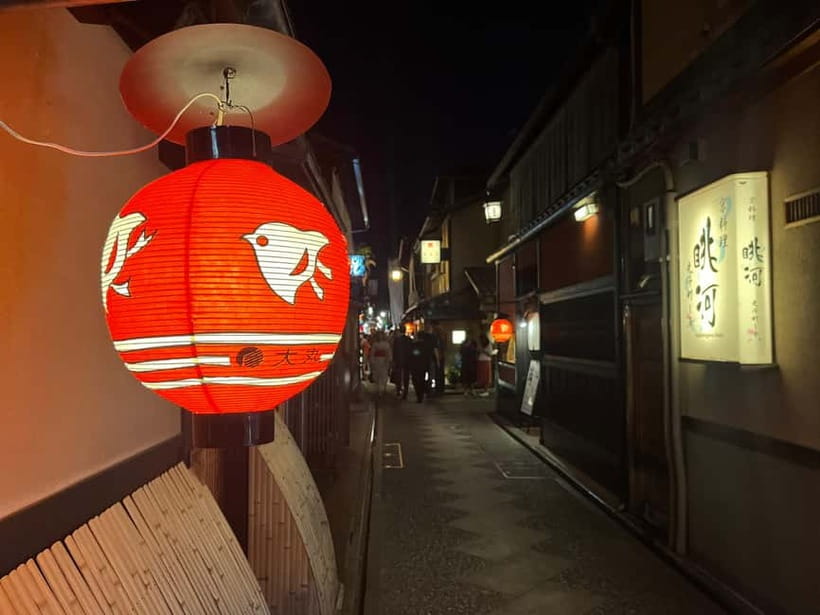
The walk continues into Gion-Higashi, another of Kyoto’s five hanamachi. Comparing it with Gion-Kobu helps you see that Gion is not one single uniform quarter. Different districts have their own traditions, boundaries, and character.
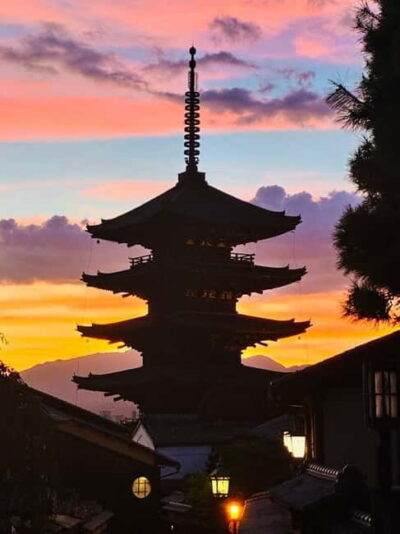
The final major stop is Yasaka Shrine, formerly known as Gion Shrine. The name Gion comes from this connection, and the shrine’s history reaches back more than 1,100 years. If time allows, the guide may explain the Gion Festival, one of Japan’s three major and most important festivals.
Yasaka Shrine gives the tour a useful closing point. You have moved through entertainment districts and old streets, then arrive at the religious site that helped shape the area’s identity. The shrine also offers a chance to talk about Japanese worship and local traditions in a way that connects to the streets you have just walked.
The route can include the shrine of beauty and the shrine of love. These smaller devotional sites add a personal touch, especially if you are curious about how people use shrines in everyday life. The visit is not presented as a long formal temple tour. It is part of a walking conversation about Kyoto.
The guides and their personal approach
The guide can make or break a walking tour, and this experience depends heavily on the individual leading it. Jose is often praised for his energy, humor, preparation, and ability to connect history with modern life. Saskia is especially useful if you want a tour in Dutch, and she also leads in English and other languages listed for the experience.
The guides are foreign residents of Japan rather than native Japanese guides, according to the details provided about the experience. That can be a plus if you prefer very clear English or want to discuss the experience of living in Japan as an outsider. It also means you should see the tour as a personal interpretation of Kyoto, not as an official academic lecture.
The strongest feature is the question-and-answer format. You can ask about Japanese daily life, meals, etiquette, transport, neighborhoods, or anything connected to the route. Guides have also offered restaurant suggestions at the end, which can be handy when you are still deciding where to eat in Kyoto.
The small group supports this style. A full coach group would make the frequent stops and informal exchanges much harder. Here, you can hear the guide, see photos on the iPad, and take part in the conversation without shouting across a crowd.
Price, pace, and what you receive
At $35 per person, this is not the cheapest way to walk around Gion, since you can explore the streets without paying. The question is what the fee adds. You are paying for structure, interpretation, language support, and the chance to ask a local guide questions for two hours.
I consider that fair value if you are new to Kyoto or want a clearer understanding of Geisha culture. The route visits several districts and historic points, and the guide helps you notice things that would otherwise remain background scenery.
The value is less obvious if you only want photographs, a guaranteed Maiko sighting, or a visit to Hanamikoji-Dori. Those are not what this tour promises. It is better for someone who wants to understand the area than for someone collecting a short list of famous photo locations.
The pace is described as sensible and manageable. The route is long enough to cover a lot, but the frequent stops prevent it from becoming a forced march. Still, it is outdoors and includes around two miles of walking, so comfortable shoes, sunscreen, a hat, water, and an umbrella are sensible.
Morning and midday departures can include a free visit to the Gion Gallery if you want to extend your time. The gallery is optional, and the tour itself remains two hours unless you choose to continue.
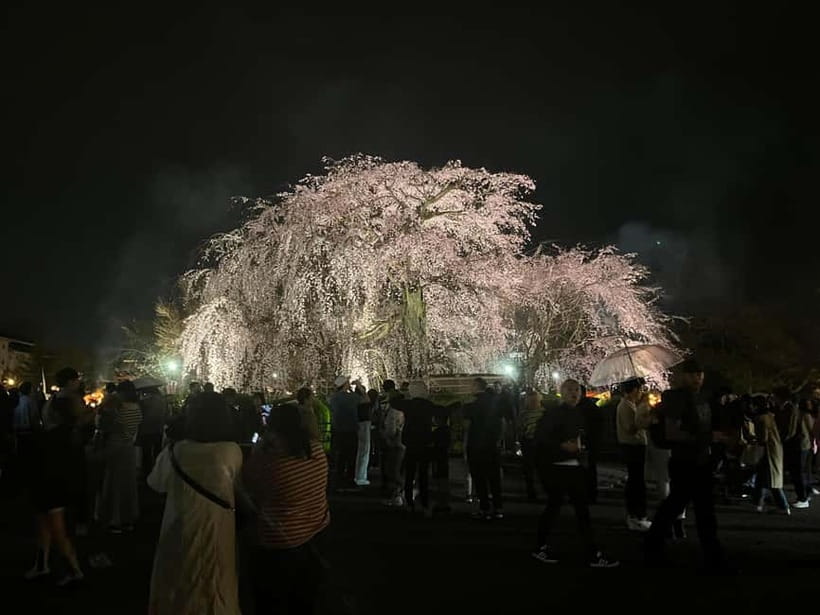
During cherry blossom season, roughly late March to early April, the route may change to show flowering trees around Gion. That can improve the scenery, but seasonal conditions are never guaranteed, so book for the walking and explanations rather than for blossoms alone.
Free cancellation is available up to 24 hours before the start time, and you can reserve now and pay later. Those terms are useful when your Kyoto schedule is still shifting.
Who should book this walk
I would choose this tour early in a Kyoto visit. It gives you a working map of central Kyoto and can help you return to Gion later with better eyes. It also suits families, couples, and solo visitors who prefer a conversation to a large guided group.
It is particularly good for you if:
- You want a clear introduction to Maiko and Geiko culture.
- You enjoy history, architecture, and small local details.
- You have many questions about Japan beyond the standard sightseeing script.
- You prefer a small group and a relaxed walking pace.
- You want a guide who can explain Kyoto in English, Spanish, Dutch, or French.
- You are happy to appreciate Gion without needing a guaranteed sighting.
I would think twice if you dislike walking, want lots of free time for photographs, or expect entry into several buildings. The tour is mainly outdoors, and no amenities are provided. It also does not focus on Hanamikoji-Dori.
Should you book the Gion Walking Tour?
Book it if you want Gion explained rather than simply photographed. The route brings together Pontocho, Gion-Kobu, Gion-Higashi, Tatsumi Shrine, bridges, preserved streets, and Yasaka Shrine, while the small group leaves room for real conversation.
The best reason to go is the guide’s ability to connect small details with everyday Japan. The best reason to skip it is if your main aim is a guaranteed Geisha sighting or a walk down Hanamikoji-Dori.
For $35, I see this as a strong first-day or early-trip orientation to Gion. Wear good shoes, bring water, and arrive ready to ask questions. The more curious you are, the more useful the two hours become.
FAQ
How long is the Kyoto Gion Walking Tour?
The tour lasts two hours and covers about 3.3 kilometers, or roughly two miles.
What areas does the tour visit?
The route includes Pontocho, Gion-Kobu, and Gion-Higashi, three of Kyoto’s five hanamachi. It also includes locations such as Pontocho Kabu-renjo, the Kamo River, Sanjo Ohashi, Yamato Dori, Gion-Shinbashi Dori, Gion Shirakawa, Tatsumi Shrine, Tatsumi Bridge, and Yasaka Shrine.
Is Hanamikoji-Dori included?
No. Hanamikoji-Dori is not included in the itinerary.
Will I see a Maiko or Geiko?
A Maiko or Geiko sighting cannot be guaranteed. The tour explains their lives, customs, routines, and the hanamachi districts where they work.
How large is the group?
The tour is limited to six participants, creating a small-group format with room for questions.
What languages are available?
The tour is available in English, Spanish, Dutch, and French.
Where is the meeting point?
Meet in front of the Disney Store at Kyoto Shijo-Kawaramachi. The guide will be seated outside with an iPad showing the Get Your Guide image and the tour name.
What should I bring?
Bring comfortable shoes, water, sunscreen, a sun hat, and an umbrella. No amenities are provided as part of the tour.
New routes in Kyoto
- Kyoto : Private Custom Walking Tour With A Local Guide★ 4.6 · 144 reviews
- Kyoto: Private 2.5 Hour Historical Walking Tour★ 4.9 · 121 reviews
- Kyoto: Gion Sunset Walking Tour with Local Guide★ 4.7 · 351 reviews
- Kyoto: Private Walking Tour with a Local★ 4.6 · 118 reviews
- Kyoto: Izakaya Bars Guided Walking Tour★ 4.9 · 815 reviews
- Kyoto Fushimi-Inari Night Walking Tour★ 4.8 · 171 reviews
- Kyoto Gion Cultural Walk & Geisha Show with Dining Options★ 5.0 · 518 reviews
- Kyoto: Imperial Palace & Nijo Castle Guided Walking Tour★ 4.7 · 453 reviews
Kyoto Walking Tours, compared.
Kyoto Geisha Walking Tour: Gion District & Hidden Gems
Read our review →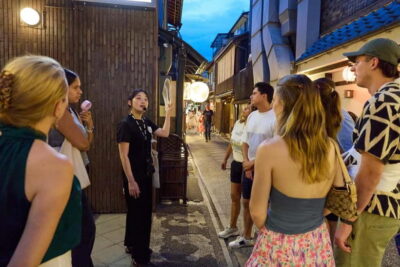
Gion Geisha District Walking Tour – Stories of Geisha
Read our review →
Best of Kyoto: Gion, Geisha, Pagodas & Cobblestones
Read our review →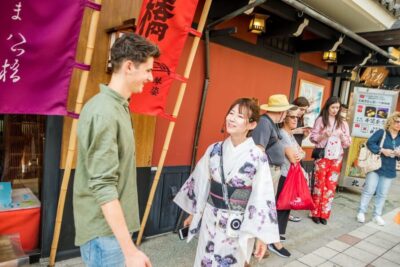
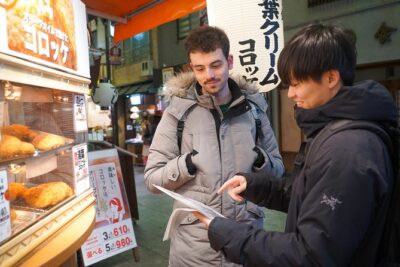
Nishiki Market Brunch Walking Tour (7 Tastings + Brunch)
Read our review →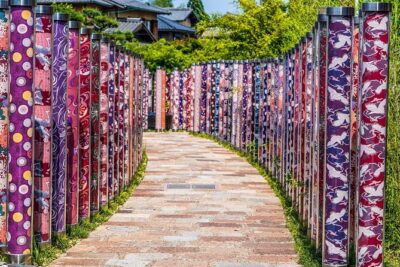
Kyoto Arashiyama Walking Tour: Bamboo, Monkeys, Gardens & Secrets
Read our review →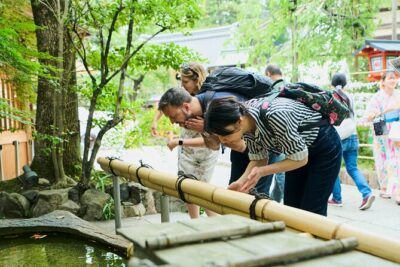
Kyoto Gion: 2-Hour Geisha Culture & History Walking Tour
Read our review →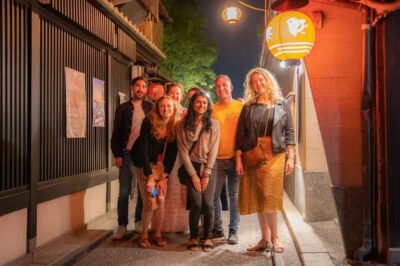
Browse the lists this tour appears in