

Review · KYOTO
Best of Kyoto: Gion, Geisha, Pagodas & Cobblestones
Kyoto’s Gion after dark is the main event here. Lanterns glow on wooden townhouses, stone lanes fall quiet, and the city’s old entertainment district feels far more atmospheric than it does in daylight. You’ll also visit Yasaka Shrine, Ninenzaka, Hōkan-ji’s pagoda, and Yasui Kompira-Gu Shrine while learning how geiko and maiko fit into Kyoto life.
I like two things in particular: the tour gives you a useful first look at Kyoto’s culture, and the late timing helps you avoid many of the daytime crowds. Guides such as Karim, Kevin, Janelle, Ben, and Salomé are often praised for clear explanations, good humor, and thoughtful answers. The main drawback is that nighttime lanes can be dark, and seeing a geiko or maiko is possible but never promised.
Key points to know before booking
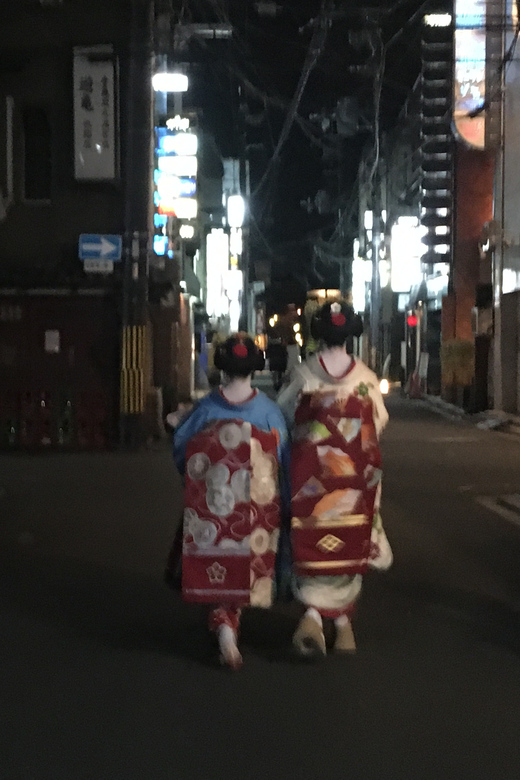
- Gion is best after sunset: Lanterns, wooden buildings, and quieter lanes create a more peaceful setting than a daytime visit.
- The route covers four important stops: Yasaka Shrine, Ninenzaka, Hōkan-ji Temple, and Yasui Kompira-Gu Shrine.
- Geisha culture is explained with care: Your guide discusses the work, training, customs, and daily life of geiko and maiko.
- A strong first-day activity: The tour gives you cultural context that can make later visits to Kyoto’s temples and old districts easier to understand.
- Small groups or private departures are available: This matters if you want more time for questions or a slower pace.
- Budget-friendly pricing: At $24 per person for two hours, the tour offers a useful introduction without taking up a full evening.
Why Gion works so well at night
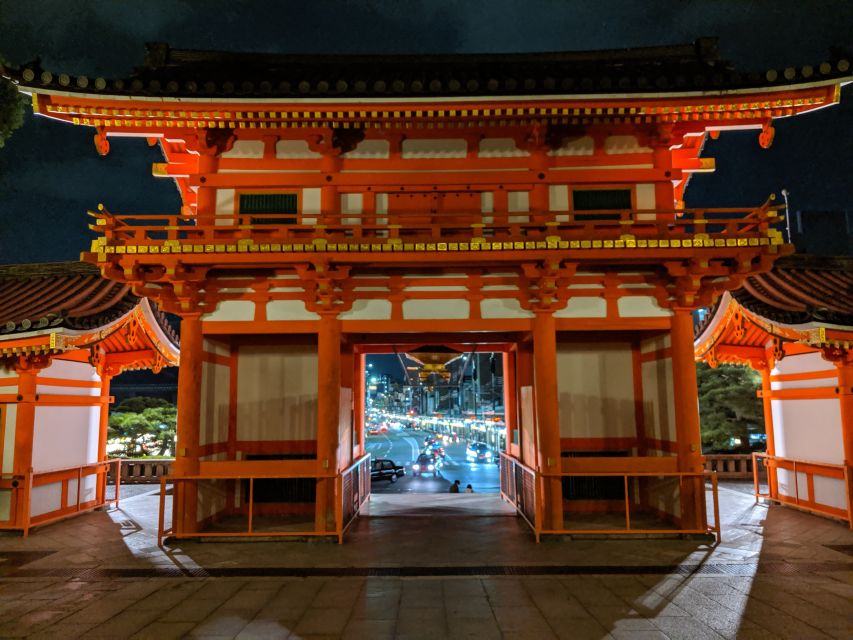
Gion is not simply a pretty collection of old streets. It developed as an entertainment district beside Yasaka Shrine, and its lanes still connect religious sites, traditional restaurants, tea houses, and wooden machiya buildings. At night, the district’s details become easier to notice because there is less visual noise.
The tour uses that mood well. You walk rather than ride, so you see the changes in the streets at walking speed. One moment you are near a shrine entrance, and a few minutes later you are on a narrow lane lined with dark wooden facades and softly lit signs.
I like this kind of introduction because it gives you a sense of place instead of only a list of monuments. Your guide can explain why certain streets matter, how the entertainment district developed, and how modern Kyoto still uses these historic areas.
The tour is especially useful on your first day. You get basic guidance on shrines, temples, local customs, and geisha terminology before exploring Kyoto on your own. Several guides, including Kevin and Karim, are praised for connecting the information to everyday Japanese life rather than delivering a dry history lecture.
Other routes people walk in Kyoto:
- Kyoto Geisha Walking Tour: Gion District & Hidden Gems
★ 4.7 · 3,273 reviews - Kyoto: Gion Magical Night Walking Tour with Geisha Trivia
★ 4.9 · 2,393 reviews - Kyoto: Gion Geisha District Walking Tour – Stories of Geisha
★ 4.7 · 2,187 reviews
Starting near Yasaka Shrine
The meeting point can vary by the option you book, with starting locations listed near Tsuruha Drug Yasaka Shrine Store and FamilyMart in Kyoto Gion. Check your confirmation carefully. This is the most important practical detail because late arrivals or people who cannot find the guide are not refunded.
Yasaka Shrine is the natural opening point. The shrine sits at the eastern edge of Gion and has long been tied to the district’s religious and social life. The guided visit lasts about 20 minutes, enough time to orient yourself and learn what you are looking at without turning the first stop into a full shrine study.
At night, the shrine has a different character than during the day. Lighting draws attention to gates, lanterns, and architectural details, while the reduced foot traffic makes it easier to listen. Your guide can also explain basic customs and the difference between visiting a Shinto shrine and a Buddhist temple.
This is a good place to ask questions. If you are unsure about bowing, purification, prayer, or photography, ask directly. Several guides are praised for helping people avoid accidental disrespect, which is one of the quiet benefits of joining a local-led walk.
Ninenzaka and the climb through old Kyoto
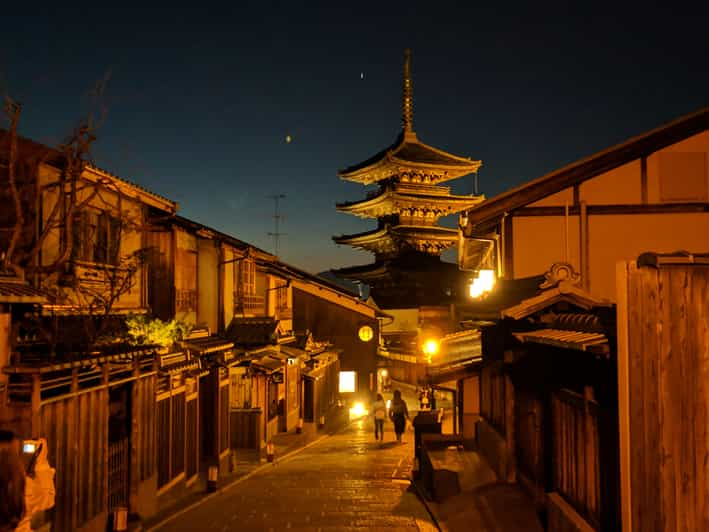
From Yasaka Shrine, the route continues toward Ninenzaka. This area is known for sloping lanes, traditional buildings, shops, and old Kyoto scenery. The walk gives you a first look at Higashiyama, the hillside district east of the city center.
Ninenzaka is highly photogenic, but it is also one of the places where timing matters most. Daytime can bring heavy foot traffic, while the evening generally feels calmer. The two-hour route does not give you unlimited time to browse shops, so think of this as an orientation walk rather than a shopping trip.
The guide-led portion here lasts around 20 minutes. That is enough for stories about the neighborhood, its buildings, and the role of the Higashiyama streets in Kyoto’s old city. A good guide can also point out where to return later if you want photos or a slower look.
The lanes are not flat. You should expect some walking on slopes and cobblestones, and nighttime lighting can be uneven. One person specifically noted that darker sections are worth considering when choosing an evening time. Comfortable shoes and a phone flashlight are sensible, though you should use the latter discreetly around other people.
Hōkan-ji and the Yasaka Pagoda photo stop
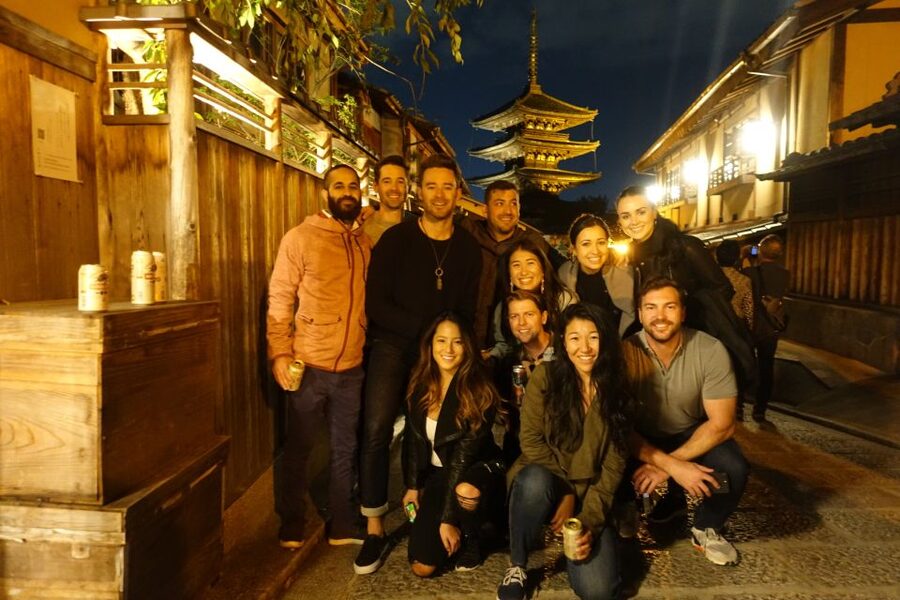
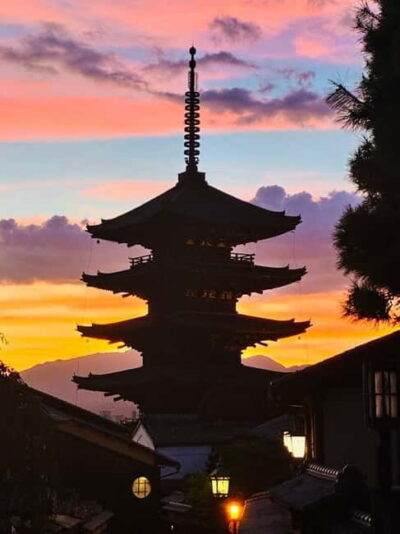
Hōkan-ji Temple is best known for the Yasaka Pagoda, a tall landmark that rises above the Higashiyama streets. The tour allows about 20 minutes for a photo stop, giving you time to frame the pagoda and hear why it has become one of Kyoto’s most recognizable views.
This part of the walk is more about atmosphere and composition than an extended temple visit. You should not expect a long interior tour. Instead, your guide helps you understand the setting and directs you toward useful photography points.
Night changes the image completely. The pagoda against the dark sky, framed by wooden buildings and narrow lanes, has a quieter look than the familiar daytime photographs. Guides have been praised for pointing out good photo opportunities, so keep your camera ready but remain aware that this is a residential and working district, not just a set for pictures.
The guide may also help you avoid blocking lanes or disturbing local businesses. That small bit of etiquette matters here. Gion and Higashiyama are living neighborhoods, and respectful behavior is part of seeing them properly.
Same streets, a different guide:
- Night Walk in Gion: Kyoto’s Geisha District
★ 4.5 · 2,003 reviews - Kyoto Gion Geisha District Walking Tour – The Stories of Geisha
★ 5.0 · 1,441 reviews - Nishiki Market Brunch Walking Tour (7 Tastings + Brunch)
★ 5.0 · 1,355 reviews - Kyoto Arashiyama Walking Tour: Bamboo, Monkeys, Gardens & Secrets
★ 5.0 · 1,216 reviews
Yasui Kompira-Gu Shrine and local customs
The next stop is Yasui Kompira-Gu Shrine, with about 15 minutes set aside for a visit. The shrine is known for its connection with relationships and cutting ties with harmful influences, giving the route another layer beyond the standard photo stops.
A short visit works well here because the shrine is compact compared with Yasaka Shrine. Your guide can explain how people use the site and how its customs fit into wider Japanese religious practice.
This is one of the moments when a guide adds real value. Without context, a small shrine can look like just another attractive stop. With an explanation, you begin to see the difference between the site’s purpose, the actions people take there, and the symbols around it.
The tour combines Shinto shrines with Buddhist temples and a former entertainment district. That mix is useful because Kyoto’s culture is not divided into neat sightseeing categories. Religion, architecture, seasonal events, food, performance, and neighborhood life overlap.
The main Gion walk and geisha culture
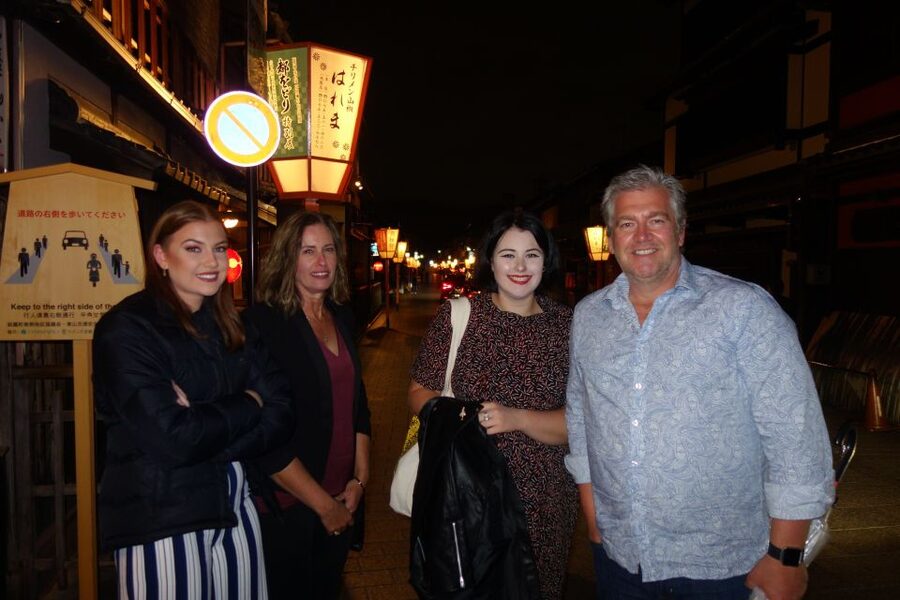
The final 45-minute section focuses on Gion. This is the longest part of the tour, and it is where the evening setting pays off most.
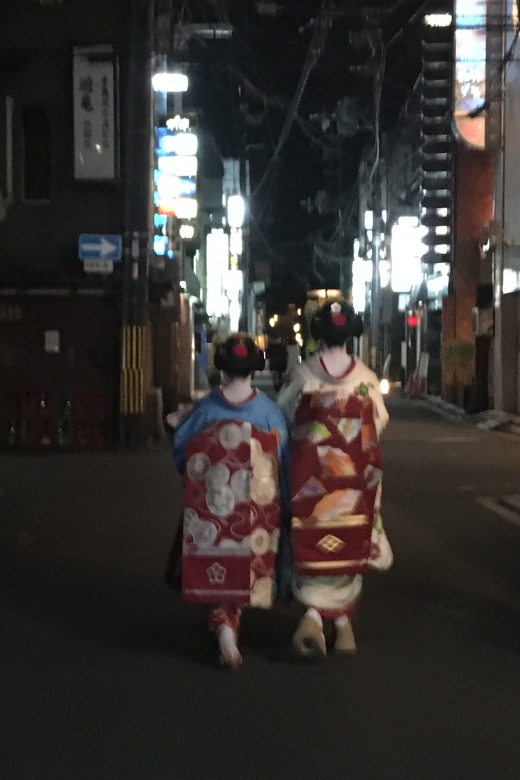
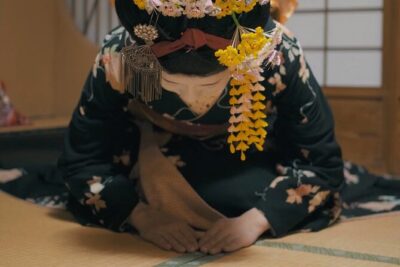
Your guide explains the world of geiko and maiko, the terms commonly used in Kyoto for fully trained entertainers and apprentices. You can expect discussion of their training, performance work, clothing, customs, and place in the district. The strongest guides handle this subject with respect, treating these women as highly trained professionals rather than mysterious figures put on display.
Several guides are praised for giving a fuller explanation of geiko life. Kevin, in particular, is noted for discussing the years of education and discipline involved. That context helps correct the shallow idea that geisha culture is only about elaborate makeup and kimono.
You might see a geiko or maiko traveling through the district, especially later in the evening, but there is no guarantee. Some groups report seeing several, while others should judge the tour by the walk and the cultural explanation rather than by a sighting.
If you do encounter one, follow your guide’s instructions. Do not block the lane, chase anyone for a photograph, or treat a working person like a street attraction. The best part of the experience is learning how the district functions, not collecting a forced picture.
Guides such as Karim, Kevin, Ben, Janelle, and Hina receive repeated praise for combining facts with relaxed conversation. That style suits Gion because you have time to notice the streets while still getting useful background. Ben has also used visual material on a tablet to explain Kyoto’s past, which can help if you learn better from images.
The guide makes the biggest difference
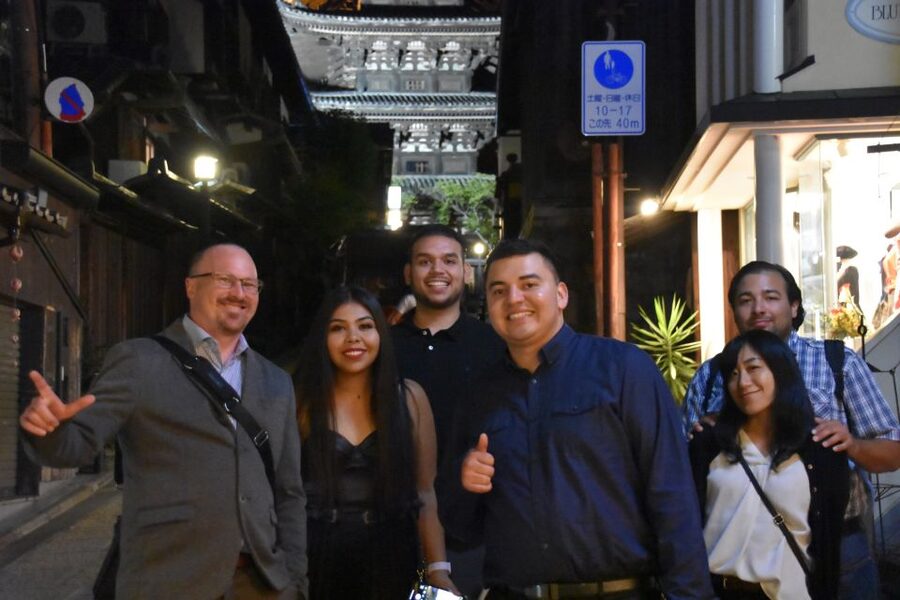
This tour depends heavily on the individual guide. The route is appealing on its own, but the meaning comes from the explanations, pacing, and willingness to answer questions.
The guide languages are English and French. The supplied guide names include Karim, Kevin, Janelle, Janiel, Ben, Salomé, Diana, Hina, Amir, Masu, and others. You cannot choose a particular guide from the information provided, but the repeated praise for several guides suggests a consistent focus on conversation and local context.
I would ask questions as you go. Good subjects include the difference between geiko and maiko, how shrine customs work, why Gion developed where it did, and where to eat or drink after the walk. The tour specifically offers recommendations for a post-tour bite or drink, though food and drinks themselves are not included.
The group format also matters. Private and small-group options are available. A smaller group usually makes it easier to stop for questions and adjust the pace, while a larger group may feel less personal. The route itself is only two hours, so a guide who keeps explanations focused is a real advantage.
Is $24 good value for two hours?
At $24 per person, this is a modestly priced way to get oriented in one of Kyoto’s most visited districts. You are paying for a live guide, not entrance tickets, a meal, or transportation. The value comes from the route and from learning what you are seeing.
I think the price works particularly well for first-time visitors. You cover several major sights, get practical cultural advice, and finish with food and drink suggestions. A private guide would normally cost more, so the small-group option is worth considering if it is available at a price you find acceptable.
The tour is less suitable if you want long temple visits, a formal geisha performance, or a food tour. It also cannot promise a geiko or maiko sighting. Think of it as a walking introduction to Gion and Higashiyama, not a complete evening program.
You can cancel up to 24 hours before the start for a full refund, and reserve now while paying later. Still, pay close attention to the meeting point and arrive early. If you have trouble locating the guide, the operator asks you to call the supplied phone number at least 10 minutes before the tour, with WhatsApp recommended.
Who should book this evening walk?
I would choose this tour if you are visiting Kyoto for the first time, want cultural context before sightseeing alone, or prefer historic streets to large indoor attractions. It also suits anyone who likes photography, shrine visits, and relaxed walking with time for questions.
It is a good match for couples, friends, solo visitors, and families with older children who can manage uneven streets. The evening timing helps if you want to keep your daytime open for Arashiyama, Fushimi Inari, or other parts of Kyoto.
You may want something else if you dislike walking on slopes and cobblestones, need bright streets at all times, or are mainly hoping for a guaranteed encounter with geisha. The tour can include a glimpse of geiko or maiko, but that should be treated as luck, not the product.
Should you book the Gion night tour?
Yes, if you want a low-cost, well-paced introduction to Kyoto’s old eastern districts. The strongest reasons to book are the quiet nighttime setting, the four-stop route, and the care taken to explain geiko and maiko culture without reducing it to a tourist spectacle.
Book it early in your Kyoto stay so you can use the guide’s advice for the rest of your visit. Arrive before the meeting time, confirm the exact starting point, wear shoes suited to slopes, and leave room afterward for the food or drink recommendation.
Skip it if you want a long temple tour or a guaranteed geisha sighting. For most first-time visitors, though, two hours and $24 is a sensible trade for a clearer understanding of Gion than you would likely gain by wandering alone.
FAQ
How long is the Gion and Higashiyama walking tour?
The tour lasts two hours. The listed route includes about 20 minutes at Yasaka Shrine, 20 minutes at Ninenzaka, 20 minutes at Hōkan-ji Temple, 15 minutes at Yasui Kompira-Gu Shrine, and 45 minutes in Gion.
What places does the tour visit?
The route includes Yasaka Shrine, Ninenzaka, Hōkan-ji Temple and its pagoda, Yasui Kompira-Gu Shrine, and the Gion district.
Is the tour available in English?
Yes. Live guides are available in English and French.
Can I choose a private or small-group tour?
Private and small-group options are available. The meeting point may vary depending on the option you book.
Will I definitely see a geisha or maiko?
No. You might see geiko or maiko toward the end of the tour, but sightings are not guaranteed.
Are food and drinks included?
No. Food and drinks are not included. Your guide can provide recommendations for a place to eat or have a drink afterward.
What happens if I cannot find the meeting point?
Your guide’s phone number is shared with you. If you have trouble locating the meeting point, call the guide at least 10 minutes before the tour begins. WhatsApp is recommended, and late arrivals or people unable to find the guide are not refunded.
New routes in Kyoto
- Kyoto : Private Custom Walking Tour With A Local Guide★ 4.6 · 144 reviews
- Kyoto: Private 2.5 Hour Historical Walking Tour★ 4.9 · 121 reviews
- Kyoto: Gion Walking Tour★ 5.0 · 195 reviews
- Kyoto: Izakaya Bars Guided Walking Tour★ 4.9 · 815 reviews
- Kyoto: Gion Sunset Walking Tour with Local Guide★ 4.7 · 351 reviews
- Kyoto: Private Walking Tour with a Local★ 4.6 · 118 reviews
- Kyoto Fushimi-Inari Night Walking Tour★ 4.8 · 171 reviews
- Kyoto Gion Cultural Walk & Geisha Show with Dining Options★ 5.0 · 518 reviews
Kyoto Walking Tours, compared.
Kyoto Geisha Walking Tour: Gion District & Hidden Gems
Read our review →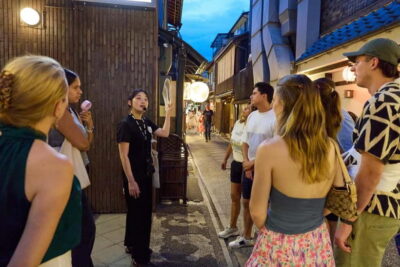
Gion Geisha District Walking Tour – Stories of Geisha
Read our review →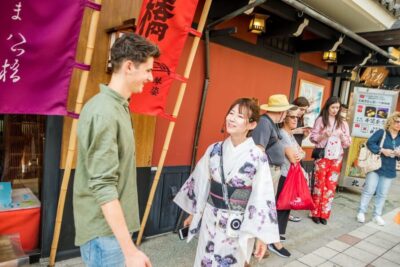
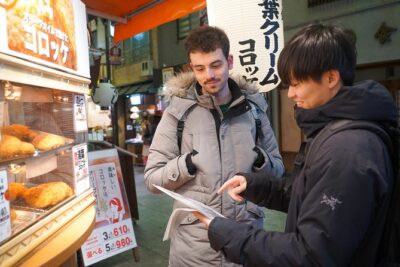
Nishiki Market Brunch Walking Tour (7 Tastings + Brunch)
Read our review →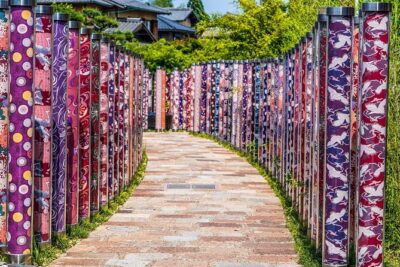
Kyoto Arashiyama Walking Tour: Bamboo, Monkeys, Gardens & Secrets
Read our review →
Kyoto Gion: 2-Hour Geisha Culture & History Walking Tour
Read our review →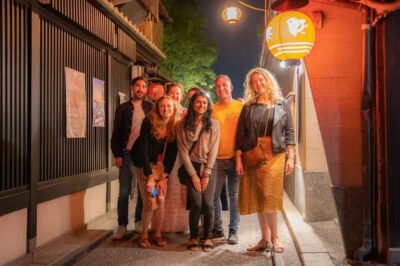
Kyoto Gion Cultural Walk & Geisha Show with Dining Options
Read our review →Browse the lists this tour appears in