
Review · JAPAN
Kyoto: Nishiki Market Brunch Walking Tour-7 Tastings+Brunch
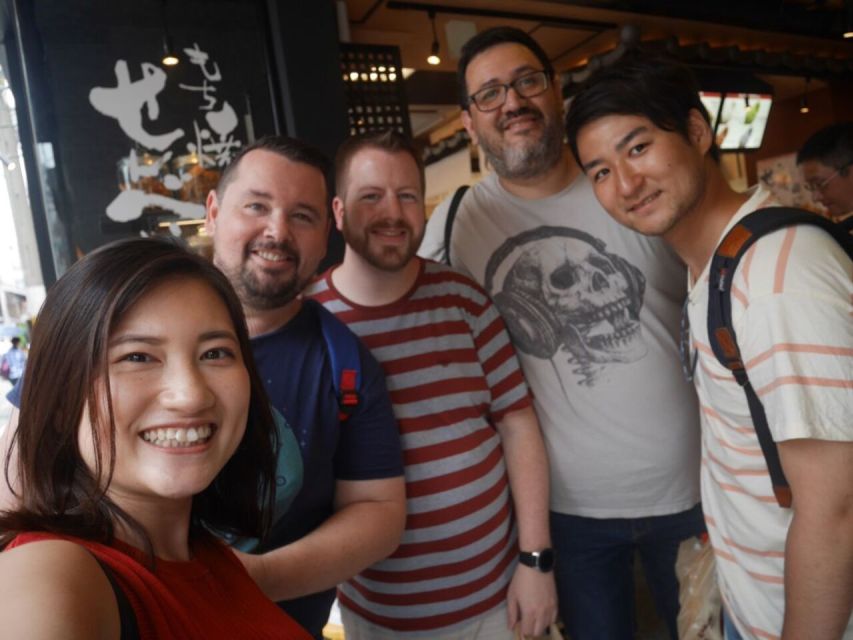
Nishiki Market is the star here, but the best part may be arriving before the crowds. You walk from Gion through Pontocho and quiet backstreets, visit a local shrine, then spend more than two hours tasting your way along Kyoto’s Kitchen. Seven tastings and a full brunch make this more than a quick market stroll.
I like the small groups, limited to seven people, and the way a good guide turns unfamiliar foods into a story about Kyoto. I also like the practical help: guides such as Chie, Hikaru, Yutaka, and Takaya are known for answering questions, taking photos, and suggesting places to eat after the tour. The main drawback is food flexibility. Vegan and gluten-free requests cannot be accommodated, and allergy-free meals are not guaranteed.
Key points at a glance
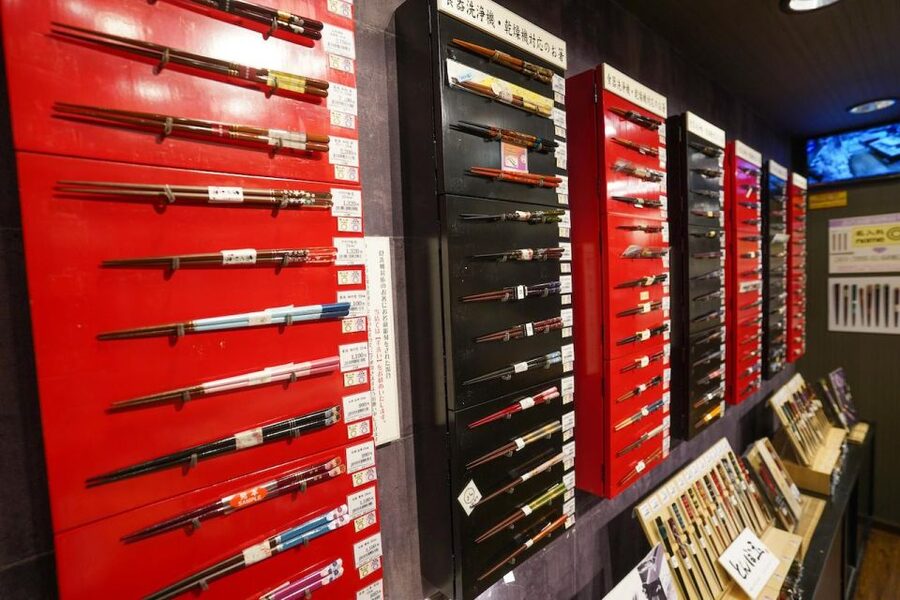
- Early access to Nishiki Market: The morning timing helps you see the market before it becomes harder to move through.
- Seven tastings plus brunch: You sample small portions along the market route and finish with a proper restaurant meal.
- A useful Kyoto introduction: Gion, Pontocho, a shrine, and Nishiki Market are covered in one three-hour walk.
- Small groups matter: With no more than seven participants, it is easier to hear your guide and stay together in crowded lanes.
- Food with cultural context: Guides explain local customs, shrine manners, market traditions, and the role of Kyoto cuisine.
- Cash is important: Bring cash for any extra food or drinks you decide to buy.
Why the morning timing works so well
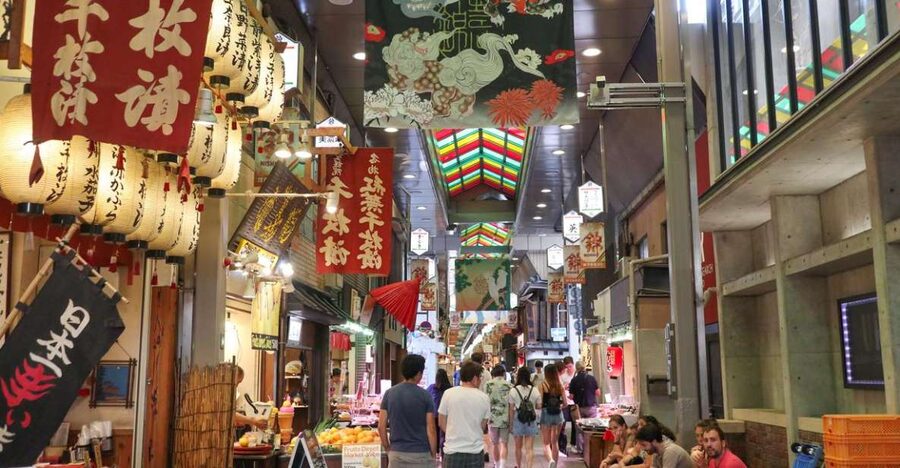
This tour begins outside Exit 5 at Gion-Shijo Station, beside the Statue of Izumo-no-Okuni. Look for the guide holding a MagicalTrip sign. From there, the route moves west toward the market, using Gion and nearby streets rather than sending you straight into Nishiki.
That timing is one of the tour’s strongest features. Kyoto’s famous lanes can feel very different in the morning than at night. You get cooler air, less street noise, and a calmer look at the old districts. The walk also gives you time to build an appetite before the serious eating begins.
The tour lasts three hours, with about two hours and fifteen minutes centered on Nishiki Market. That is a sensible balance. You do not spend the whole morning rushing between samples, but you also do not lose half a day to a single market.
Bring comfortable shoes. This is an easy walking tour for most people who can manage ordinary city streets, but parts of the route are not suitable for wheelchairs or strollers. Summer in Kyoto can reach 40°C, while winter temperatures can fall to about -5°C, so dress for the season rather than assuming the covered market will protect you from the weather.
More Food Walking Tours in Japan
- Tokyo Tsukiji Fish Market Food and Culture Walking Tour
★ 5.0 · 3,184 reviews - Tokyo: Tsukiji Fish Market Food and Walking tour
★ 5.0 · 1,724 reviews - Nishiki Market Brunch Walking Tour (7 Tastings + Brunch)
★ 5.0 · 1,355 reviews
From Shijo-ohashi Bridge to Pontocho
The first short stop is Shijo-ohashi Bridge, where you pause for roughly five minutes. The bridge gives your guide a chance to orient you to the area and explain how the streets around the Kamo River connect Gion, Pontocho, and central Kyoto.
Next comes Pontocho, a narrow district known for traditional restaurants and an association with Kyoto’s geisha culture. The walk here lasts about fifteen minutes. It is not a long historical lecture, and that is a good thing. You get a compact introduction while seeing the area at a quiet hour.
One detail matters: the advertised Gion portion does not mean a walk along every famous Gion street. The route starts near Gion-Shijo Station and passes through nearby areas, with Pontocho playing an important role. If your main goal is a full tour of Hanamikoji or the most photographed Gion lanes, you should arrange a separate visit.
Still, this opening walk earns its place. It helps you understand that Nishiki Market is not an isolated attraction. It sits within a network of old commercial lanes, entertainment districts, shrines, and food businesses that shaped central Kyoto.
A pause at Nishiki-Tenmangu Shrine
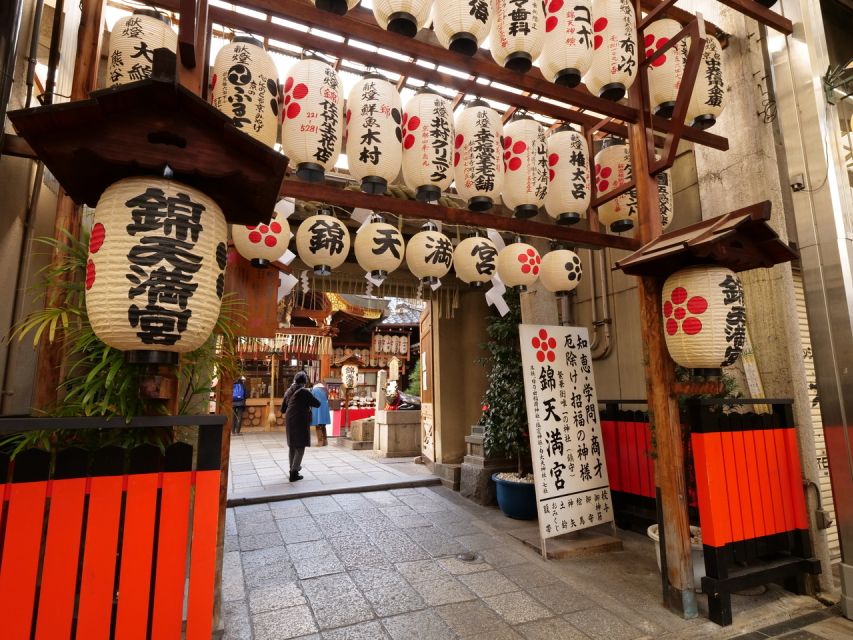
Before entering the market, the group visits Nishiki-Tenmangu Shrine for about fifteen minutes. This small shrine is especially useful for first-time visitors because your guide can explain basic shrine customs and help you tell a Shinto shrine from a Buddhist temple.
You may learn how to approach the grounds, where to wash your hands, and how to pray respectfully. The stop also gives the morning a quiet pause before the food tasting begins. Several guides, including Hikaru and Yuma, have been praised for explaining shrine rituals in a clear, practical way.
Do not expect a major temple complex or a long temple visit. This is a short cultural stop, not a separate sightseeing excursion. Its value comes from context. Afterward, the market feels less like a row of shops and more like part of Kyoto’s daily life.
Entering Nishiki Market, Kyoto’s Kitchen
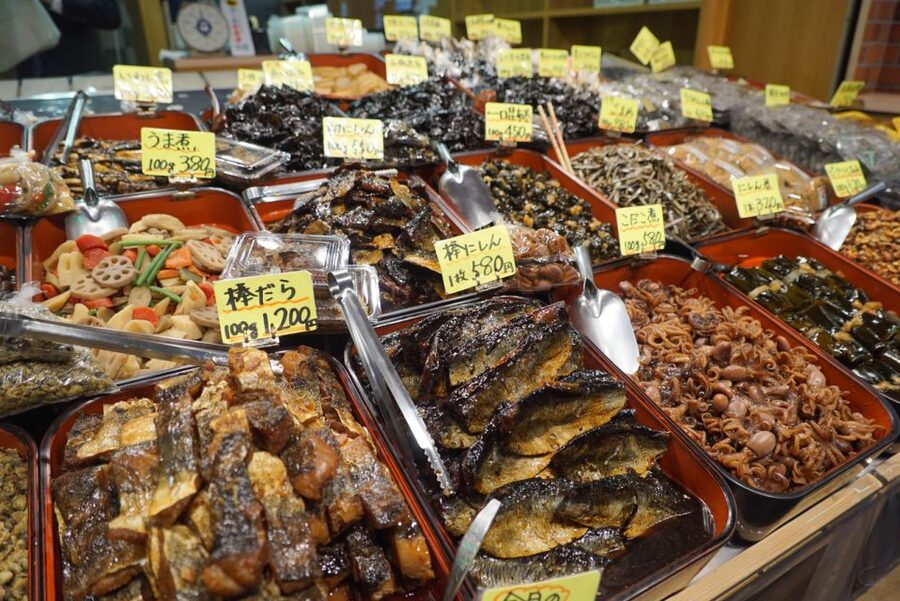
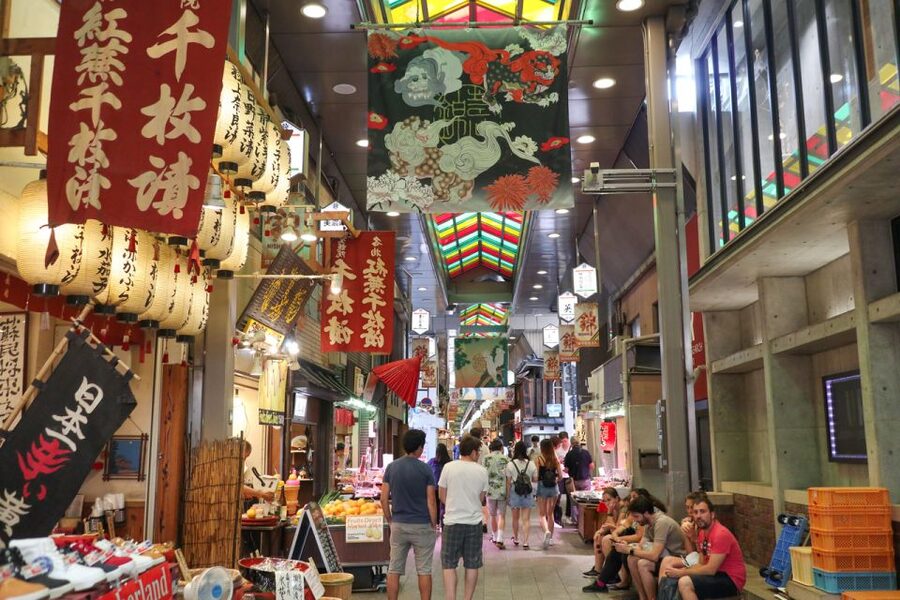
Nishiki Market stretches along one covered shopping street and has more than 400 years of history. The nickname Kitchen of Kyoto fits because the market is closely tied to the city’s food traditions, but you should picture a working retail street rather than a giant food hall.
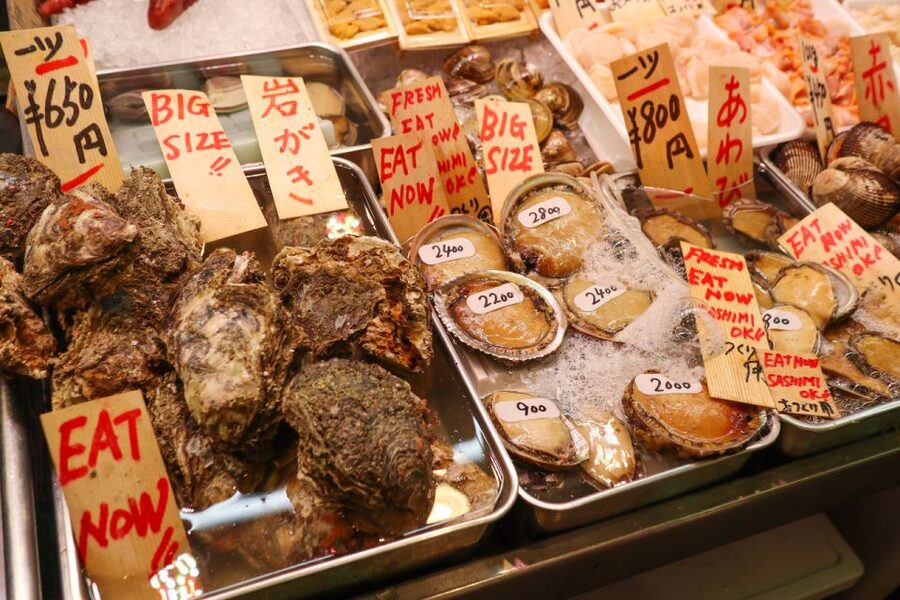
There are food stalls, seafood shops, sweets, seasonings, pickles, kitchen goods, soaps, honey, and souvenirs. Not every storefront sells something you eat on the spot. That mix is part of the appeal, but it can surprise people who expect wall-to-wall prepared food.
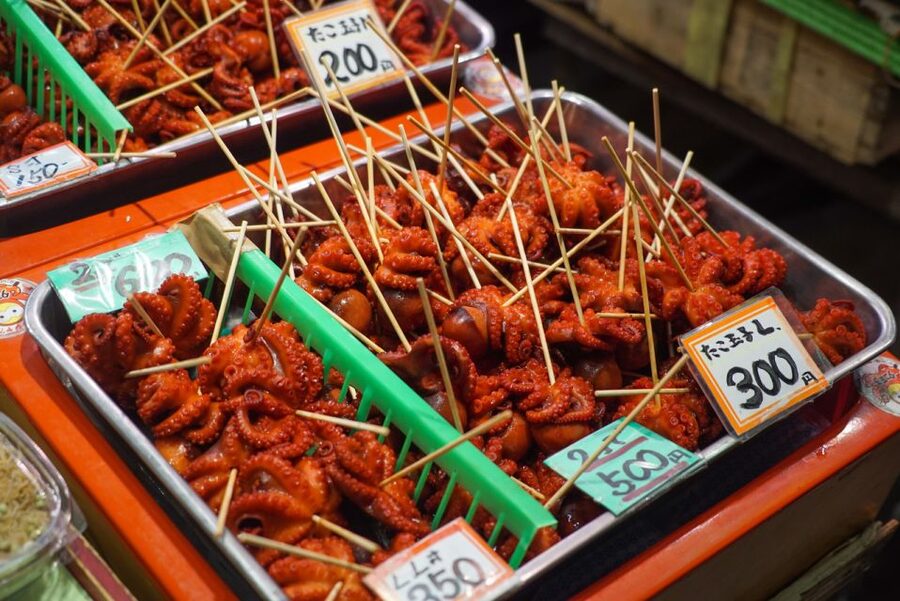
Your guide makes the market easier to read. Instead of guessing what a strange-looking snack is or trying to work out how to pay at several stalls, you follow someone who knows where to stop and what is worth trying. The exact selection can vary, but the experience includes seven kinds of tastings, usually a mixture of savory foods, sweets, snacks, and other local specialties.
The portions are designed for sampling, not for seven full meals. That matters because you also have brunch ahead. Come hungry, but do not arrive after a large breakfast. One past participant offered the practical tip to skip breakfast entirely, and that is sensible advice if you want to try everything comfortably.
More Market Walking Tours in Japan
- Tokyo: Tsukiji Fish Market Guided Walking Tour
★ 4.9 · 1,397 reviews - Tsukiji Fish Market Small-Group Food Walking Tour
★ 5.0 · 621 reviews - Osaka: Kuromon Market Food Walking Tour (6 stops, 6 tastes)
★ 4.6 · 272 reviews - Tokyo: Guided Walking Tour of Tsukiji Market with Breakfast
★ 4.4 · 134 reviews
What the seven tastings are really like
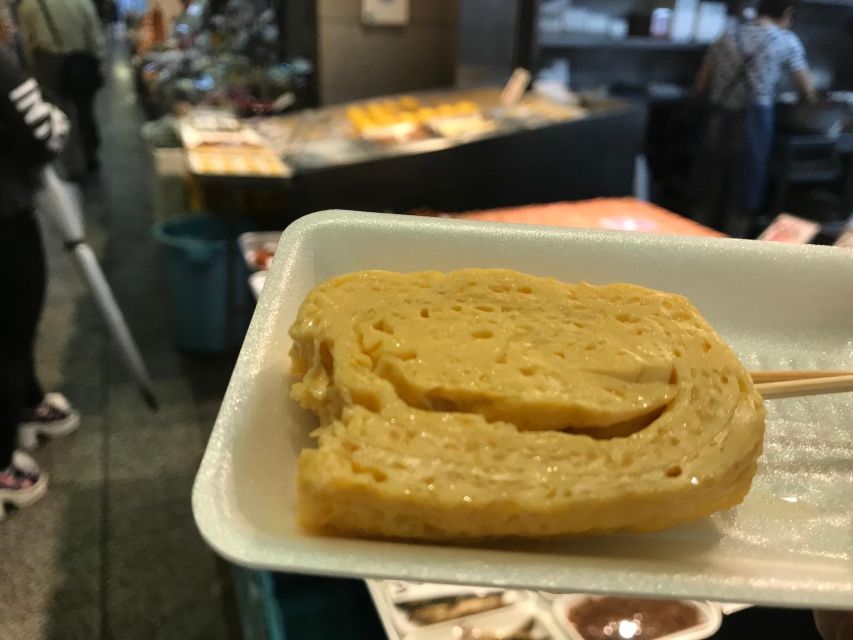
The attraction is variety. You might encounter foods you would overlook on your own because the name is unfamiliar, the preparation is not obvious, or the stall is crowded. A guide can explain what you are eating and point out how it fits into Kyoto’s food culture.
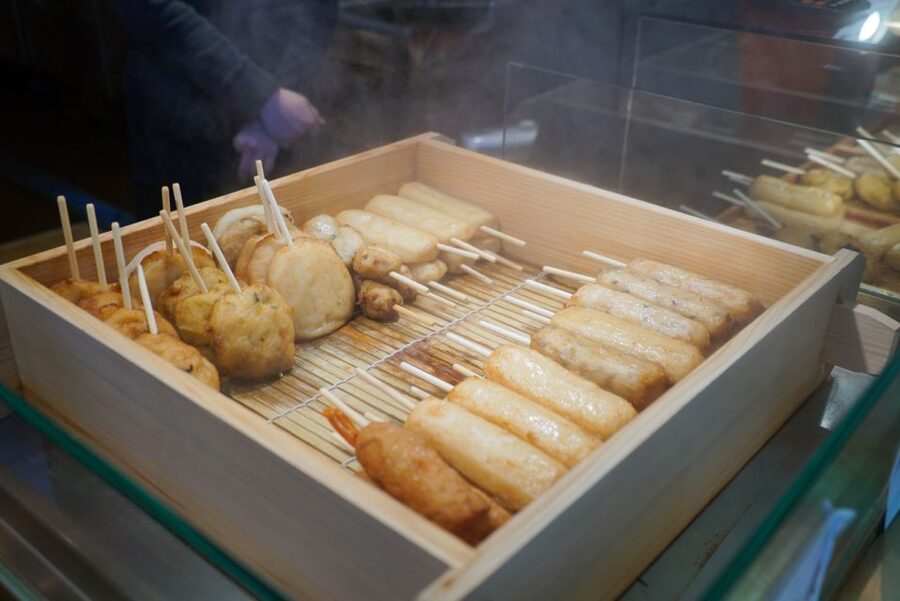
Some stops may include seafood, traditional snacks, sweets, or sake, depending on the day and the guide’s choices. The information provided does not promise one fixed menu, so do not book this expecting a precise list of seven named foods. The selection can change, and substitutions may not be possible at every stop.
That flexibility is usually an advantage. Guides such as Chie have adjusted choices when a group was curious about a particular item, while other guides have offered suggestions for foods to try later. The small group makes these conversations possible. With a maximum of seven people, you can ask why something is eaten, how it is prepared, or where to find more of it.
The guide also helps with market manners. Nishiki is a shopping street, not a place for careless eating while blocking the lane. Listen closely to instructions about where to stand and how to handle food. A considerate approach makes the experience better for everyone who works there.
The sit-down brunch is more than a final snack
After the market tastings, you sit down for brunch at a restaurant. This is a useful change of pace after walking and sampling from several stalls. The meal is included, and the restaurant offers several choices. Past tours have included traditional Kyoto-style meals, with yuba mentioned as one especially well-received option.
The exact restaurant and menu may vary, so the meal should be viewed as a substantial local lunch rather than a guaranteed signature dish. You get time to sit, talk with the guide, and ask questions that may not come up while standing beside a stall.
That shared table is one of the pleasant features of the experience. Guides such as Takaya and Yutaka have been praised for making the meal feel friendly and conversational, while still giving useful food and sightseeing advice. If you are traveling alone, this can be a comfortable way to meet a few people without joining a large coach group.
The restaurant setting also gives you a better sense of how Kyoto food works beyond market snacks. Nishiki is good for quick tastes and shopping. Brunch lets you see how a more complete meal is presented and enjoyed.
The guides make or break the experience
The route is straightforward, so the guide carries much of the tour’s value. The strongest guides do more than point at stalls. They explain why the market matters, connect the food to Kyoto customs, and adjust their pace to the group.
Several guide names appear repeatedly in the tour’s recent feedback. Chie is known for strong history explanations, warm energy, and taking many group photos. Hikaru has been praised for clear English, practical recommendations, and an easy way of talking with the group. Yutaka is noted for food customs, local history, humor, and help getting to a next activity. Takaya has been singled out for visual explanations, patience, and personal attention.
You are not guaranteed a particular guide, but the company sends an English-speaking certified local guide. The guide can also take photos during the tour, a useful perk when you would rather focus on the food and scenery than manage a phone or camera.
The small group limit of seven is important here. A larger group would make a narrow market harder to navigate and make questions less personal. Groups can be even smaller, especially in quieter seasons, which may make the outing feel almost private.
Price and value at $66
At $66 per person, this is not the cheapest way to walk through Nishiki Market. You could enter the market for free and buy a few snacks on your own. The price makes sense only if you value the guide, the included brunch, the seven tastings, and the time saved figuring out what to eat.
I see the value in the combination. You get a three-hour introduction to four connected parts of Kyoto: Gion, Pontocho, Nishiki-Tenmangu Shrine, and Nishiki Market. You also avoid paying separately for the included tastings and restaurant meal.
The tour is especially good early in a Kyoto visit. A guide can suggest foods, restaurants, and sightseeing stops for the rest of your stay. Several guides also offer practical recommendations beyond the route, which can help you make better choices later.
The value is weaker if you already know Nishiki well, dislike guided walks, or want to choose every dish yourself. It is also not a good match if dietary restrictions make spontaneous food sampling difficult.
Food restrictions need careful planning
This is the biggest practical concern. Vegan and gluten-free requests cannot be accommodated, and the tour is not suitable for people with gluten intolerance. The food is prepared in kitchens outside MagicalTrip’s control, so allergy-free meals cannot be guaranteed.
If you have an allergy or another dietary request, tell the operator at least one day before the tour. The guide and provider will try to help, but substitutions may not be possible at every stop. Do not assume that a request will turn the tour into a fully customized food itinerary.
For less serious preferences, the guide may be able to adjust some choices. Still, you should treat the seven tastings as a fixed part of a shared market experience, not a private menu designed around your diet.
Who should book this Kyoto food walk?
I would choose this tour for a first or second visit to Kyoto, especially if you want food and culture together. It suits solo visitors, couples, families with older children, and anyone who feels unsure about ordering unfamiliar Japanese foods.
It is also a smart choice for people who prefer a small group over a large city tour. You have enough company for conversation, but the guide can still hear your questions and keep an eye on the group in the market.
Families should note the walking and food pace. Children and teenagers who enjoy trying new foods may have a good time, but the route includes cultural explanations and market etiquette rather than nonstop entertainment.
I would skip it if you use a wheelchair or stroller, have gluten intolerance, require strict allergy control, or want a deep tour of Gion’s famous streets. I would also skip it if you need a completely predictable menu.
Booking details worth knowing
The meeting point is outside Exit 5 of Gion-Shijo Station, at the Statue of Izumo-no-Okuni. The guide will hold a MagicalTrip sign. The tour ends at Nishiki Market, so you can continue shopping or sightseeing there rather than returning to the station.
English is the listed tour language. Bring cash for additional food and drinks, since the included tastings and brunch do not cover extra purchases. The tour offers free cancellation up to 24 hours before departure, and you can reserve now and pay later, which is useful when your Kyoto schedule is still shifting.
The overall rating is 4.8 from 197 reviews, with especially strong praise for the guides, food variety, market explanations, and photo-taking. The clearest pattern is that the human side matters as much as the menu. A friendly guide can turn a short walk through one market street into a useful introduction to Kyoto.
Should you book the Nishiki Market Brunch Walking Tour?
Book it if you want a well-paced first taste of Kyoto food culture, prefer a small group, and like having someone explain what you are seeing and eating. The seven tastings, included brunch, shrine visit, and morning route offer solid value at $66.
Think twice if you need strict dietary control or want a detailed Gion sightseeing tour. For most food-curious visitors who can manage ordinary walking and enjoy trying unfamiliar dishes, this is a practical way to begin a Kyoto stay.
FAQ
Where does the Nishiki Market Brunch Walking Tour meet?
Meet outside Exit 5 of Gion-Shijo Station, at the Statue of Izumo-no-Okuni. Your guide will hold a sign saying MagicalTrip.
How long does the tour last?
The tour lasts three hours. About two hours and fifteen minutes are spent at Nishiki Market, including tastings and brunch.
What food is included?
The tour includes seven kinds of tastings and brunch at a restaurant. The exact tasting selection and restaurant menu are not fixed in the provided information.
Is brunch included in the price?
Yes. Restaurant brunch and seven kinds of tastings are included. Additional food and drinks are not included.
Can the tour accommodate vegan or gluten-free diets?
No. Vegan and gluten-free requests cannot be accommodated, and the tour is not suitable for people with gluten intolerance. Allergy-free meals also cannot be guaranteed.
Is the tour accessible by wheelchair or stroller?
No. Parts of the itinerary are not accessible by wheelchair or stroller, and wheelchair users are listed as unsuitable for this activity.
New routes in Japan
- Tokyo: Asakusa & Sensoji ー Oldest Temple Walking Tour (2hrs)★ 5.0 · 213 reviews
- Asakusa Cultural Walk & Matcha Making Tour★ 5.0 · 245 reviews
- Asakusa Senso-ji Temple and Old Tokyo Walking Tour★ 5.0 · 560 reviews
- Tokyo: Tsukiji Market Walking Tour & Sushi Cooking Class★ 4.6 · 122 reviews
- Tokyo: Shinjuku Nightlife & Secret Backstreets Walking Tour★ 4.8 · 229 reviews
- Tokyo: Shinjuku Bar Hopping & Night Walking Tour★ 4.6 · 137 reviews
- Tokyo: Dark Side of Tokyo Shinjuku Red Light Walking Tour★ 4.7 · 862 reviews
- Tokyo: Shibuya Highlights Walking Tour★ 4.8 · 601 reviews
Japan Walking Tours, compared.
Kyoto Geisha Walking Tour: Gion District & Hidden Gems
Read our review →
Tokyo Tsukiji Fish Market Food and Culture Walking Tour
Read our review →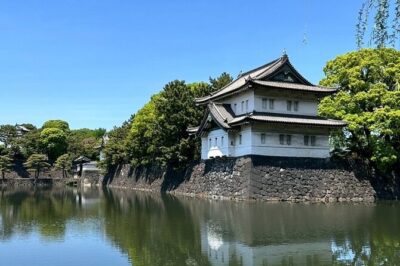
Imperial Palace and Shogun Historical Walking Tour
Read our review →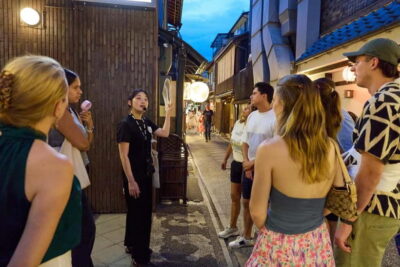
Gion Geisha District Walking Tour – Stories of Geisha
Read our review →
Best of Kyoto: Gion, Geisha, Pagodas & Cobblestones
Read our review →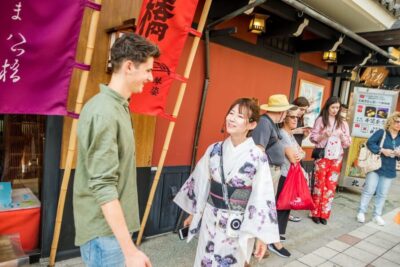
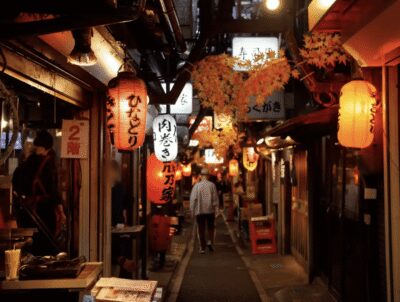
Shinjuku Local Bar and Izakaya Guided Walking Tour
Read our review →
Asakusa Walking Tour with Sensoji Temple Visit
Read our review →Browse the lists this tour appears in