
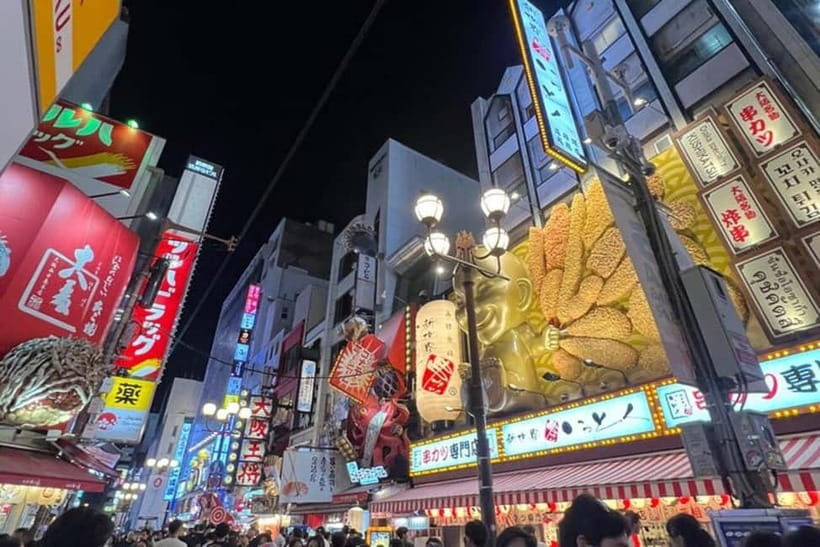
Review · OSAKA
Osaka: Walking Tour and Top Highlights
Osaka’s best introduction may be its contrast: a castle and temple in the morning, then retro Shinsekai, a food market, and Dotonbori’s giant neon signs. This four-hour city tour covers that whole sweep by subway and on foot, so you get far more than a single neighborhood walk.
I like the way the route mixes major sights with everyday Osaka. Kuromon Market gives you a taste of the city’s food culture, while guides such as Minori, Buchi, Tony, and Kenji have helped visitors understand the subway, choose restaurants, and make the most of later free time. The main drawback is pace: you cover a lot of ground, and Osaka Castle entry, subway fares, food, and drinks cost extra.
Key points at a glance
- Six major Osaka stops in four hours: Osaka Castle, Hokoku Shrine, Shinsekai, Shitennoji, Kuromon Market, and Dotonbori.
- A useful first-day route: You see historic landmarks, shopping streets, food districts, and modern Osaka in one outing.
- Subway travel keeps the route practical: Expect about 800 yen in fares, plus a fair amount of walking and standing.
- Guides help with more than history: They can take photos, explain local customs, suggest restaurants, and show you how Osaka residents shop.
- Small-group or private options are available: The experience can work well for solo visitors, couples, families, or a small group.
- The tour ends in Dotonbori: You can stay for dinner and nightlife instead of returning to the meeting point.
Why this route works for a first look at Osaka
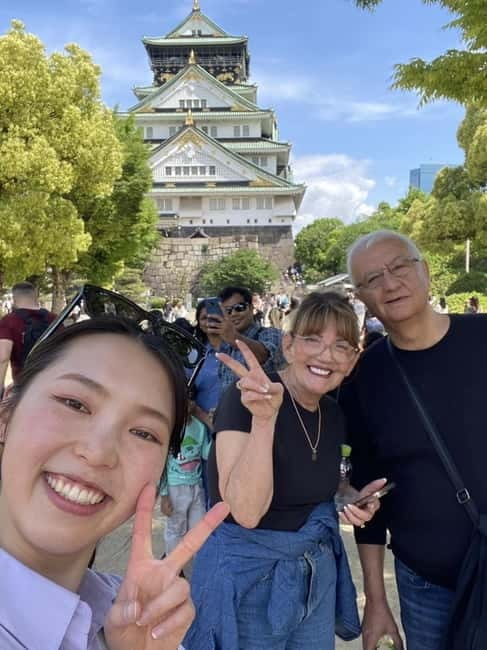
Osaka is spread out. Its castle, old temples, southern entertainment districts, and food streets do not sit in one compact historic center. Trying to connect them alone can mean repeated map checks, station changes, and lost time.
This route solves that problem with a simple pattern: short subway rides, guided sightseeing, brief walks, and a final finish in Dotonbori. The schedule is brisk, but the selection is smart. You see the city’s public face, its religious past, its casual food culture, and its famously playful nightlife district.
I would use this tour early in a visit. After four hours, you will know which areas deserve a longer return visit. You may want to go back to Osaka Castle’s grounds, eat more at Kuromon Market, or spend the evening around Dotonbori.
The tour is offered with a live English-speaking guide, in a private or small-group format. The guide can tailor parts of the route when the group is small. Kenji, for example, adjusted the experience for a two-person booking, while other guides have adapted stops to questions, weather, and the group’s energy.
More City Highlights Walking Tours in Japan:
- Tokyo: Shibuya Highlights Walking Tour
★ 4.8 · 601 reviews - Tokyo: Shibuya Highlights Walking Tour & Secret View Spot
★ 4.9 · 196 reviews - Hiroshima: Private City Highlights Walking Tour
★ 4.9 · 73 reviews
Osaka Castle and Hokoku Shrine: a strong historical opening
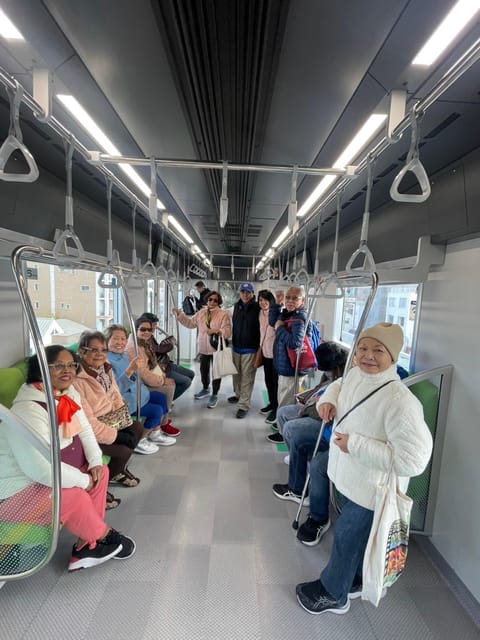
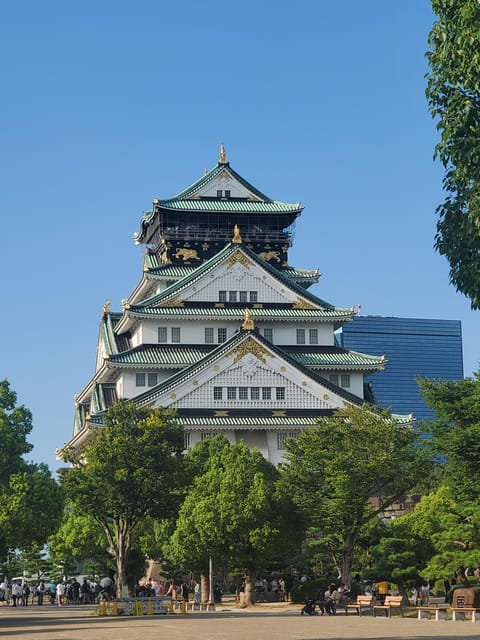
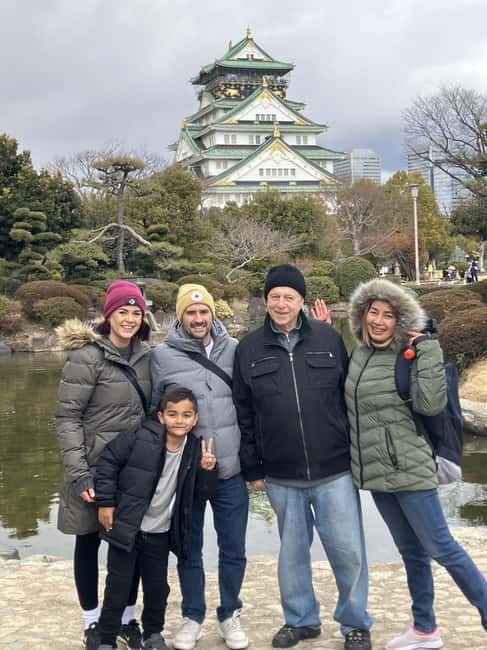
The tour begins with a subway ride of about 15 minutes, followed by roughly 50 minutes at Osaka Castle. The main value here is not simply checking off a famous building. Your guide gives context as you walk through the castle grounds and surrounding park, with time for photographs and views.
Osaka Castle is one of the city’s defining sights. The broad grounds give you room to see the structure from different angles, and the park offers a welcome break from Osaka’s busy streets. You should bring your camera, since photography is built into the tour and guides help take pictures for you.
Castle entry is not included and costs 1,200 yen. That matters when you compare the price of this tour with a basic walking route. You can still enjoy the grounds and exterior without paying the entry fee, but going inside gives you a fuller visit if you want museum displays and interior exhibits.
The schedule allows about 15 minutes at Hokoku Shrine. This is a smaller stop, but it adds useful context to the castle area. Instead of treating Osaka Castle as an isolated monument, you get a look at the religious and political world connected with the site.
Do not expect a long, quiet castle visit. Fifty minutes at the castle and 15 minutes at the shrine is enough for an overview, not a detailed study. If Osaka Castle is your main reason for booking, plan a separate return visit.
Shinsekai and Tsutenkaku: Osaka’s retro south side
After another subway ride, the route reaches Shinsekai. You have about 20 minutes for photographs, free time, shopping, and a short walk through this old-fashioned entertainment district.
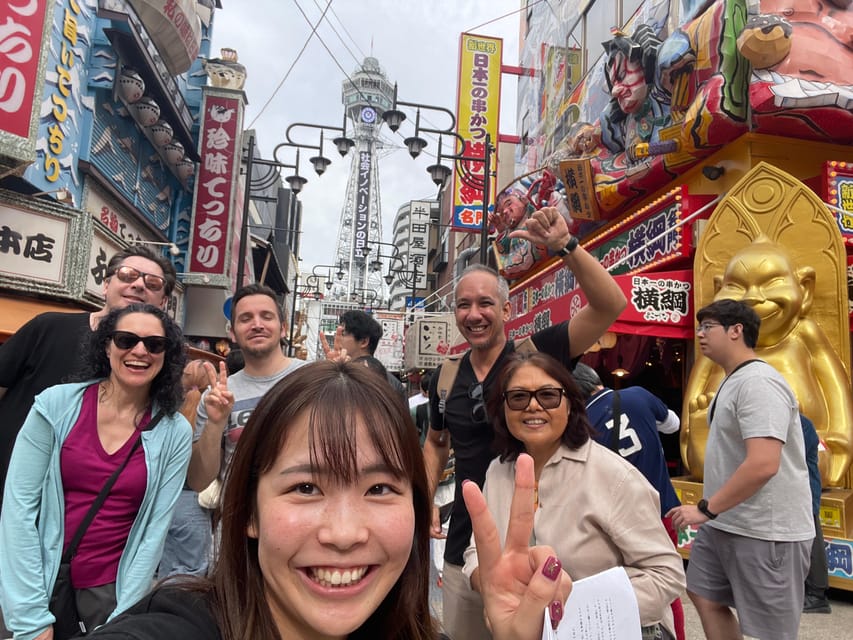
Shinsekai has a different feel from the polished shopping zones around Osaka Station. It is known for Tsutenkaku Tower, local food, and a retro character that makes it one of the more distinctive parts of the city. The stop gives you time to look around rather than simply pause for a photograph.
The schedule then includes about 15 minutes at Shinsekai Market, with tea and a tea ceremony experience when that option is selected. Check the booking choice carefully, since the matcha experience is not included with every version of the tour.
Tsutenkaku receives another 10-minute stop for sightseeing and photos. That is enough to see the tower and understand its place in the district, but not enough for an extended tower visit. The tour is showing you the area’s character rather than offering a full attraction ticket.
I like this part of the route because it breaks up the grand monuments. Shinsekai is about street life, food, signs, and local habits. Guides have also used stops like this to show visitors how people shop and eat in Osaka, which can be more useful than another long lecture about dates and buildings.
Shitennoji Temple and Osaka’s older religious side
A 15-minute subway ride leads to Shitennoji, with about 30 minutes for sightseeing and photographs. This is one of Japan’s oldest Buddhist temples, and its age gives the stop a different weight from Osaka Castle’s later political story.
The visit is short, so expect a guided look at the grounds and main features rather than an in-depth temple study. The temple’s architecture and gardens provide a calmer pause after Shinsekai’s signs and street food.
This is also a place where a guide adds practical value. A good explanation can help you understand what you are looking at, how the temple fits into Japanese religious life, and why the site matters. Guides including Halu, Minori, and Kenji have been praised for making historical information easy to follow while answering questions along the way.
Keep your expectations in line with the clock. Thirty minutes goes quickly, especially if you want photographs. If temples are your priority, use the tour as an introduction and return later with more time.
More Walking Tours in Japan:
- Kyoto Geisha Walking Tour: Gion District & Hidden Gems
★ 4.7 · 3,273 reviews - Tokyo Tsukiji Fish Market Food and Culture Walking Tour
★ 5.0 · 3,184 reviews - Kyoto: Gion Magical Night Walking Tour with Geisha Trivia
★ 4.9 · 2,393 reviews - Tokyo: Imperial Palace and Shogun Historical Walking Tour
★ 5.0 · 2,251 reviews
Kuromon Ichiba Market: the food stop
The next subway ride takes about 10 minutes, followed by the day’s most appealing stop for many people: Kuromon Ichiba Market. The schedule allows around 20 minutes for food tasting, shopping, a walk, and free time.
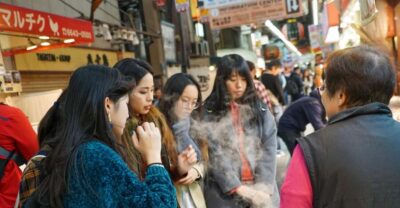
Kuromon is often called Osaka’s kitchen. Here you can look for fresh seafood, street food, and local snacks. Food is not included, so bring cash and decide how much you want to spend. Twenty minutes is enough to sample something and get oriented, but you should not expect to browse every stall at a relaxed pace.
This is where the tour’s food advice can pay off. Guides have suggested restaurants and later meal choices, including sushi recommendations. They can also explain what you are seeing and help you approach the market with more confidence.
I would not arrive hungry and assume the tour includes lunch. It does not. Instead, treat Kuromon as a guided introduction, buy one or two things that catch your eye, and return later if you want a full market meal.
The stop also gives you a practical look at Osaka’s food culture. You are not only hearing that Osaka is famous for eating. You are seeing how a market works, how products are presented, and how locals choose what to buy.
Dotonbori: finish beneath the neon
From Kuromon Market, you walk for about 10 minutes to Dotonbori. The formal visit lasts around 15 minutes, but the tour ends here, giving you the choice to remain in the area.
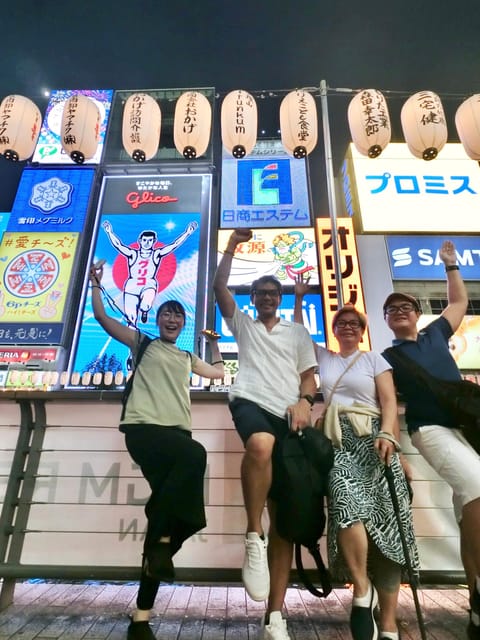
Dotonbori is Osaka’s most famous evening district, packed with neon signs, restaurants, shopping, and street food. The short guided portion focuses on orientation and photographs. Your guide can point out key spots, then you are free to stay for dinner or continue exploring.
Ending here is a real strength. You do not have to rush back across the city just as Osaka’s food scene comes alive. You can use the guide’s restaurant suggestions, keep walking, or settle in for the evening.
The tradeoff is that Dotonbori is crowded and loud, especially later in the day. Keep your belongings secure and stay aware of the group during the walk. One guide, Minori, was specifically praised for keeping a group together on and off the subway, which is useful in busy parts of the city.
What the subway rides and walking really mean
The itinerary includes several subway journeys of about 10 to 15 minutes. The total subway cost is around 800 yen and is not included. A Suica card can make the process easier, and one visitor found that using an existing card avoided buying a separate all-day ticket.
The tour is described as a walking experience, but it is really a walking and public transport tour. You will walk through stations, streets, temple grounds, castle grounds, markets, and shopping areas. There are brief stops, but you should still wear comfortable shoes.
The route is not suitable for people with mobility impairments, people over 75, or anyone recovering from recent surgery. Osaka’s stations and busy streets can make the pace tiring, especially in summer. Minori was praised for offering water breaks on a hot day, and guides have adjusted the pace when needed, but you should still judge your own stamina honestly.
Rain does not cancel the tour. Bring an umbrella or raincoat, and expect the same route to continue in wet weather. One group completed the full tour in steady rain, though good waterproof shoes would make the day easier.
Guides, group size, and the personal touch
The guide is central to the value here. The route itself is easy to find on a map, but a local guide turns a string of stops into a connected story and helps with the small problems that slow down a first day in Osaka.
Guides named in past bookings include Buchi, Tony, Halu, Lily, Kyoka, Minori, Sergio, Nagi, Victor, Ken, Miki, Kito, Kota, Satsuki, Sue, Haruka, Kenji, Taisei, Risa, and Ojiro. You cannot assume a particular guide will lead your booking, but the range of feedback points to a team that focuses on clear English, flexibility, photos, food advice, and personal attention.
Private and small-group choices are available. A solo booking may become a very personal outing, while a larger group may feel more social but leave less room for individual questions. If you care about a tailored pace, check the exact group option before paying.
The guide also meets hotel guests for optional pickup when arranged. For cruise passengers, pickup near the cruise terminal is available for an additional 5,000 yen, tax included, if requested at least one day before the tour. Otherwise, the standard meeting point is at Namba Walk.
Meeting at Namba Walk without getting lost
The meeting point is inside Namba Walk, an underground shopping area. The store sits between exits B21 and B23, between the DOCOMO and MIZUNO shops.
Namba Walk has two parallel walkways, so if you do not see the store between those businesses, check the other side. This is the kind of small detail that can save you from arriving late after wandering through the underground mall.
Hotel pickup is optional, not automatic for everyone. When arranged, the guide meets you in the hotel lobby about 10 minutes before the start and may hold a sign marked Osaka JOINER, though the sign is not guaranteed.
Bring cash. Subway fares, food, drinks, and castle entry are extra, and payment for the guide must be made in cash according to the tour instructions. The base price is $64 per person, with free cancellation up to 24 hours before departure and a reserve-now, pay-later option.
Is $64 a fair price?
At $64, this is not the cheapest way to walk around Osaka. You could visit the same districts alone for the cost of transportation and whatever you eat. The value comes from having someone manage the route, explain the sights, help with photographs, answer questions, and offer useful food and neighborhood advice.
The price makes the most sense if Osaka is new to you, your stay is short, or you want to learn the subway quickly. It is also useful for families and small groups that would rather follow one clear plan than work out several station transfers.
The value is weaker if you already know Osaka well or want long visits inside Osaka Castle and Shitennoji. The four-hour schedule gives you an overview, not leisurely time at every stop. Add roughly 800 yen for subway fares, 1,200 yen if you enter the castle, and extra money for food and drinks.
Who should book this Osaka tour?
Book it if you want a fast, well-organized first look at Osaka’s main sights. You will get history, food, shopping districts, temple grounds, photo opportunities, and practical help with getting around.
It suits solo visitors especially well when a small group or private option is available. Families can also benefit from the guided structure, though younger children may tire during the subway transfers and walking sections.
I would skip it if your priority is a slow temple visit, a full castle interior tour, or an unhurried food crawl. In that case, choose one or two districts and explore them on your own. But if you have only a day or two in Osaka, this tour gives you a useful map of the city and leaves you in Dotonbori with the evening still ahead.
FAQ
How long does the Osaka walking tour last?
The tour lasts four hours. It includes subway rides, walking, sightseeing, photo stops, free time, and visits to Osaka Castle, Shinsekai, Shitennoji, Kuromon Market, and Dotonbori.
Is Osaka Castle admission included?
No. Castle entry costs 1,200 yen and is paid separately. The tour includes a guided visit to the castle grounds and surrounding park.
Are subway fares included?
No. Subway fares cost about 800 yen and are paid separately. You can use a Suica card if you already have one.
Is food at Kuromon Market included?
No. Food and drinks are not included. You can buy seafood, street food, and local snacks during the free time at Kuromon Market.
Does every booking include the matcha tea experience?
No. The matcha tea experience is included only if you select that option when booking.
Where does the tour meet and finish?
The standard meeting point is the Osaka JOINER base inside Namba Walk, between exits B21 and B23, near DOCOMO and MIZUNO. The tour finishes in Dotonbori, where you can remain for dinner and further sightseeing.
New routes in Japan
- Tokyo: Asakusa & Sensoji ー Oldest Temple Walking Tour (2hrs)★ 5.0 · 213 reviews
- Asakusa Cultural Walk & Matcha Making Tour★ 5.0 · 245 reviews
- Asakusa Senso-ji Temple and Old Tokyo Walking Tour★ 5.0 · 560 reviews
- Tokyo: Tsukiji Market Walking Tour & Sushi Cooking Class★ 4.6 · 122 reviews
- Tokyo: Shinjuku Nightlife & Secret Backstreets Walking Tour★ 4.8 · 229 reviews
- Tokyo: Shinjuku Bar Hopping & Night Walking Tour★ 4.6 · 137 reviews
- Tokyo: Dark Side of Tokyo Shinjuku Red Light Walking Tour★ 4.7 · 862 reviews
- Tokyo: Shibuya Highlights Walking Tour★ 4.8 · 601 reviews
Osaka Walking Tours, compared.

Hotspots & Hidden Gems Walking Tour Private or Group
Read our review →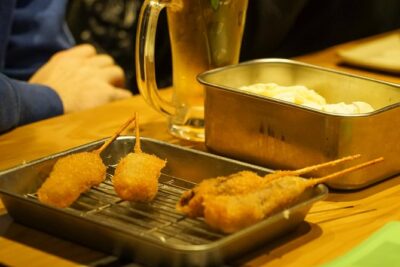
Osaka Local Foodie Walking Tour in Dotonbori and Shinsekai
Read our review →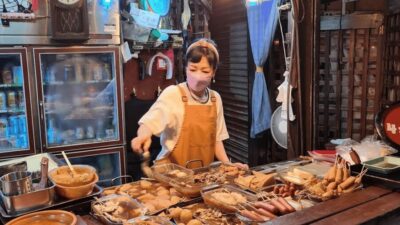
Deep Backstreets Walking Tour with Dinner Option
Read our review →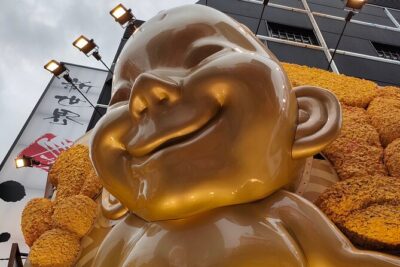
Ultimate Osaka Walking Tour: Castle, Dotonbori & Hidden Gems
Read our review →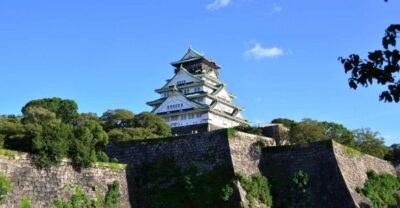
Main Sights and Hidden Spots Guided Walking Tour
Read our review →
Kuromon Market Food Walking Tour (6 stops, 6 tastes)
Read our review →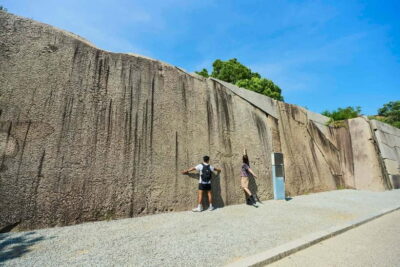
Castle History Walking Tour / Castle Tower Admission
Read our review →Browse the lists this tour appears in