
Review · OSAKA
Osaka Local Foodie Walking Tour in Dotonbori and Shinsekai
Osaka’s best-known foods arrive one after another on this three-hour walk, but the real setting is the point: you move from old-school Shinsekai to neon-lit Dotonbori, with local streets and shrines connecting the meals. Kushikatsu, okonomiyaki, and takoyaki give you a quick taste of Osaka’s famous kitchen culture.
I like the small group, capped at seven, which makes it easier to ask questions and keep together in crowded streets. I also like the mix of food and place: Jan-Jan Yokocho, Hozen-ji Temple, Doguyasuji, and the Glico sign give you useful bearings for the rest of your Osaka stay.
The main caution is value. At $111.42 per person, this is not a bargain if you want many small tastings at different shops. The food can be plentiful, but some people find the stops limited, the pace uneven, or the tour less food-focused than expected.
Key points before you book
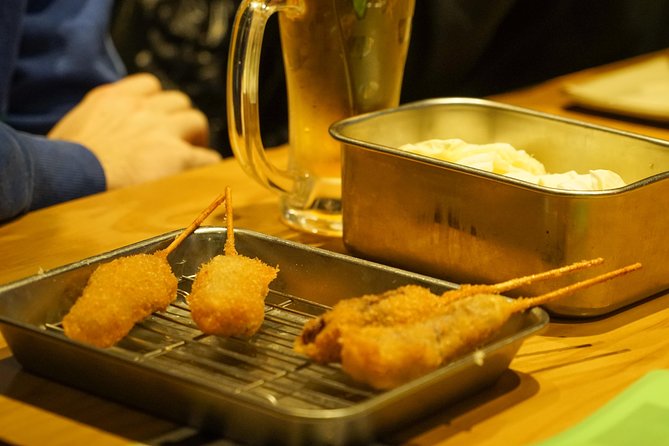
- Six kushikatsu skewers, okonomiyaki, takoyaki, and three drinks are included, with alcohol and non-alcoholic choices.
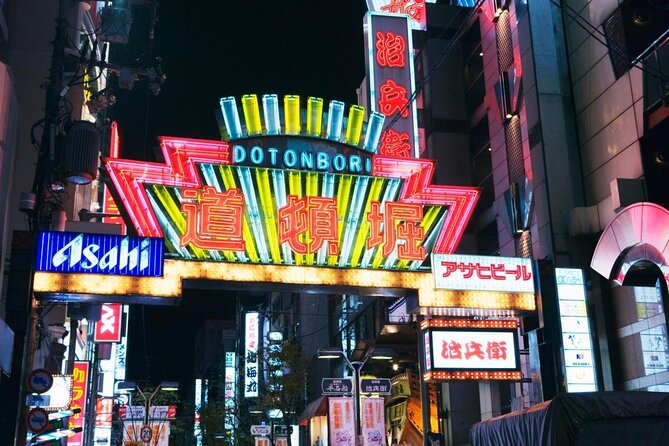
- The route links two very different Osaka districts, beginning near Tsutenkaku in Shinsekai and ending at the Glico sign in Dotonbori.
- Groups are limited to seven people, and families of six may effectively have a private experience.
- Guides make a major difference, with Aika, Yuma, Michiko, Justin, Emi, Kent, and Naru praised for food explanations, local tips, and help with photos or transport.
- Vegetarian requests must be made by the day before, and gluten-free and vegan diets cannot be accommodated.
- The meeting point can be awkward to reach, and the tour starts on time, so plan your route carefully.
A food walk from Tsutenkaku to Dotonbori
The tour begins at FamilyMart in Nishinari Ward, near Shinsekai, and ends at the Glico sign in Dotonbori. You are not simply sitting down for one long meal. The experience uses food as a reason to walk through Osaka’s older entertainment streets, shopping arcades, temple lanes, and restaurant districts.
That format works well on your first day in Osaka. A local guide can point out places you might otherwise pass without noticing, explain how dishes are eaten, and help you understand the difference between a famous tourist street and a place locals use for ordinary meals.
It also works later in a trip, especially if you already know the main sights and want help deciding what to eat. The route is compact, but the districts feel different enough to give you a useful contrast.
The group size matters here. Dotonbori can be noisy and crowded, and a seven-person maximum is far easier to manage than a large coach group. Several guides, including Aika and Yuma, received especially warm praise for their friendly manner and clear explanations. Justin even helped a first-night visitor navigate Osaka’s subway after the tour.
Still, the experience depends heavily on the individual guide. Some provide lively commentary as you walk, while others may answer questions rather than narrate every stretch of the route. If you want a nonstop food lecture, make a point of asking questions as you go.
More Food Walking Tours in Japan
- Tokyo Tsukiji Fish Market Food and Culture Walking Tour
★ 5.0 · 3,184 reviews - Tokyo: Tsukiji Fish Market Food and Walking tour
★ 5.0 · 1,724 reviews - Nishiki Market Brunch Walking Tour (7 Tastings + Brunch)
★ 5.0 · 1,355 reviews
Shinsekai and six skewers near Tsutenkaku
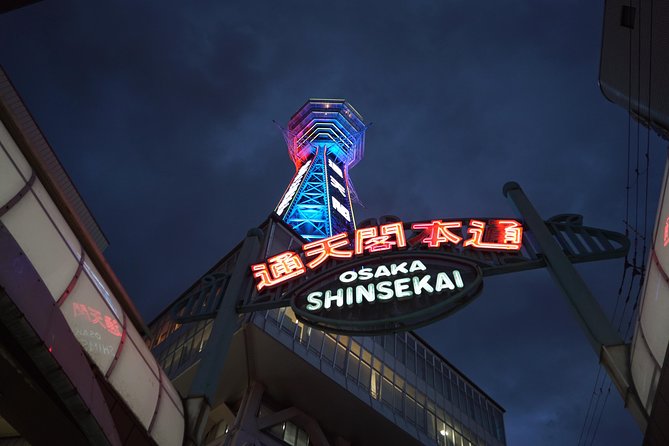
The first major stop is Tsutenkaku, the tower that watches over Shinsekai. You walk through Jan-Jan Yokocho, an old-fashioned alley with a strong local character, then sit down for kushikatsu.
Kushikatsu consists of meat and vegetables on skewers, coated and fried. The tour includes six pieces, enough to sample the style without turning the first stop into a huge meal. Three drinks are also included across the food stops, and you can choose alcoholic or non-alcoholic options.
This is one of the strongest parts of the experience for anyone new to Osaka food. Kushikatsu is tied closely to Shinsekai, so the dish makes more sense when eaten in the district where it is a familiar local specialty rather than ordered randomly in a shopping mall.
The tradeoff is that the menu leans toward fried food. If you prefer delicate preparations, seafood variety, or several tiny portions from independent stalls, this stop may feel basic. The food is designed to introduce classic Osaka comfort food, not to function as a high-end tasting menu.
The surrounding alley gives the meal useful context. Shinsekai has a nostalgic, older Osaka feel, and your guide may explain the district’s past and point out the Billiken statue, a familiar local figure associated with good fortune.
One practical note matters for vegetarians. Vegetarian kushikatsu may still use dashi made with pork broth. If you cannot eat dashi, you must tell the operator in advance so other vegetarian dishes can be prepared.
Jan-Jan Yokocho and the older face of Osaka
After the first meal, the walk continues through Shinsekai Market, Jan-Jan Yokocho, and the area around Tsutenkaku. One portion is described as a museum-like alley, offering a look at how central Osaka appeared more than 80 years ago.
That historical layer is valuable because Shinsekai is more than a food district. The narrow lanes, signs, small restaurants, and old entertainment atmosphere show a side of Osaka that you will not get from Dotonbori’s famous canal frontage alone.
The route is not a formal museum visit, and the emphasis remains casual. You may receive more detail if you ask your guide about the neighborhood, the tower, or the local customs around the food. Guides such as Emi and Naru have been especially appreciated for connecting everyday life, restaurants, and local practices.
At night, lighting can affect the experience. One part of the walk includes a temple or shrine visit that may be less impressive after dark, so you should set your expectations accordingly. The appeal is the atmosphere and the route, not an elaborate temple tour.
Doguyasuji and Osaka’s kitchen streets
The itinerary then moves toward Dotonbori and the Sennichimae Doguyasuji Shopping Street. Depending on the time of day, the tour may include souvenir shopping on Dōgu-ya-suji and a stop near the Hōchō-ya knife shop. On an evening version, the guide may explain the area near Namba Grand Kagetsu and allow time for shopping nearby.
Doguyasuji is a practical stop for anyone interested in Japanese cooking. The shops are associated with kitchen tools, knives, restaurant supplies, and food-related souvenirs. You may find this more rewarding than another generic shopping street, particularly if you want a useful object to take home.
The timing can vary, and this is one reason the tour is not identical for every group. Some people enjoy the shopping and local explanations. Others may prefer to reach the next food stop sooner, especially if they begin the tour hungry.
If you want the most from this section, tell your guide what interests you. Ask about knives, cooking tools, or Osaka dishes rather than waiting for a long explanation to begin. The strongest guides respond well to that kind of conversation.
Same streets, a different guide:
- Kyoto Geisha Walking Tour: Gion District & Hidden Gems
★ 4.7 · 3,273 reviews - Kyoto: Gion Magical Night Walking Tour with Geisha Trivia
★ 4.9 · 2,393 reviews - Tokyo: Imperial Palace and Shogun Historical Walking Tour
★ 5.0 · 2,251 reviews - Kyoto: Gion Geisha District Walking Tour – Stories of Geisha
★ 4.7 · 2,187 reviews
Hozen-ji Temple and the lanes around it
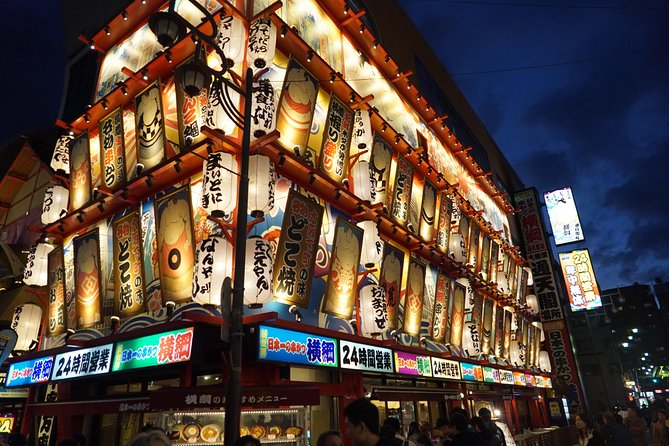
Hozen-ji Temple is a small atmospheric stop near Dotonbori. From there, you walk through Ukiyo-koji, also called Ukiyo Alley, before continuing with snacks and photos.
The temple provides a welcome change from restaurant signs and shopping streets. It is a compact visit, not a major religious complex, but it gives the walk a quieter pause and helps show how old religious sites remain woven into central Osaka.
The food portion around here may include takoyaki and sweets, with an approximate extra cost of ¥500 noted for snacks. The included food list promises one box of takoyaki, but the precise timing can vary. One useful tip is to avoid filling up too early if you want to enjoy the takoyaki later.
Takoyaki is Osaka’s famous round snack made from batter, tender octopus, and other ingredients. It is hot, soft inside, and easy to burn your mouth on if you rush. Your guide may explain how it is prepared and how locals handle the toppings.
This part of the walk has produced mixed expectations. Some people enjoy the food and temple combination. Others feel the walking comes before the next substantial meal, especially after a long day of sightseeing. If you arrive tired or very hungry, tell your guide politely at the start.
Okonomiyaki and the cooking experience
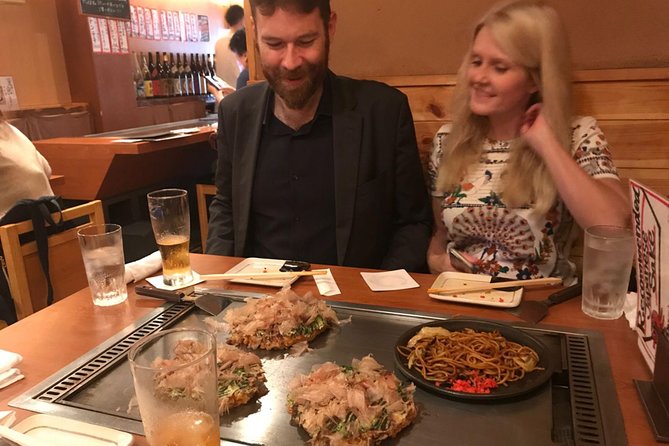
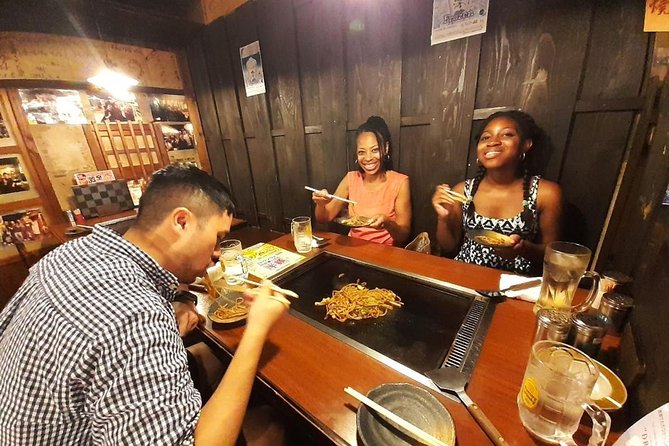
The final major food stop is okonomiyaki, Osaka’s savory pancake. The name comes from okonomi, meaning as you like, and yaki, meaning grilled. The dish is made with a batter and toppings, then cooked on a hot surface.
The tour includes one piece of okonomiyaki. At some venues, you may grill it yourself, which adds a hands-on element that several participants have enjoyed. It is a simple activity, but it makes the meal more memorable than receiving a finished pancake without explanation.
This is also where expectations need adjusting. One restaurant stop can provide a satisfying portion, but it reduces the number of different places you visit. If your ideal food tour means small bites at five or six stalls, this format may disappoint you.
On the other hand, a seated okonomiyaki meal gives you time to ask about ingredients, cooking methods, and Osaka’s fondness for hearty, affordable food. Some guides, including Michiko, have been praised for choosing a particularly good okonomiyaki restaurant and pairing the meal with plum wine.
The tour includes three drinks in total, with alcohol and non-alcoholic options. That helps with value if you plan to drink, but it may feel less useful if you do not want multiple beverages. The price does not drop for guests who skip them.
Dotonbori, the Glico sign, and the final photos
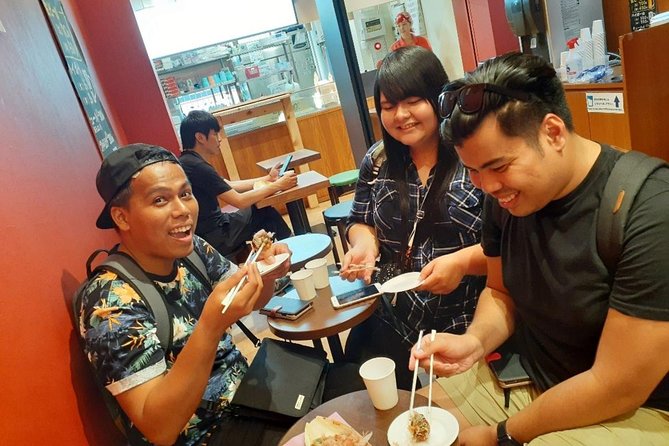
The route ends in Dotonbori, beside the famous Glico running man sign. The guide takes photos there, and this is a convenient place to continue your evening independently.
Dotonbori is Osaka at its most recognizable: bright signs, restaurant fronts, canal-side crowds, and a constant choice of places to eat. The tour does not attempt to cover every street. Instead, it gives you a working introduction, then leaves you in one of the city’s best-known areas.
The ending is useful because you can continue shopping, return to a restaurant you noticed, or use the guide’s suggestions for later meals. Aika, for example, has been praised for recommending additional places and snacks to take home.
The route ends at Dotonbori rather than returning you to the starting point. That is convenient if your evening plans are in Namba, but you need to arrange your own return transport. Transportation is not included, with ¥190 listed as an additional cost.
Price, portions, and what the $111.42 buys you
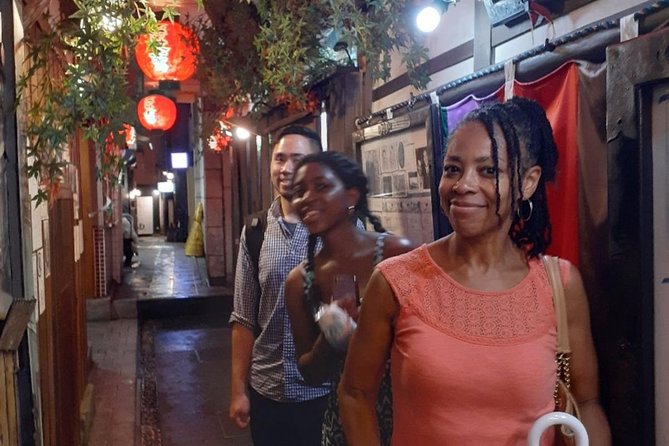
At $111.42, this is a paid introduction to Osaka rather than a cheap way to eat dinner. The included items are substantial: six kushikatsu pieces, one okonomiyaki, one box of takoyaki, three drinks, and approximately three hours of guiding.
The real value comes from the guide and the route. If your guide explains local customs, helps you order, shares useful neighborhood context, and takes you through places you would not confidently navigate alone, the price becomes easier to justify.
The value is weaker if you measure only food quantity. You may visit two principal food venues, with an optional third food stop in some versions. Some people find the portions generous, while others would prefer smaller servings at more locations.
I would book this for orientation, cultural context, and easy access to classic dishes. I would not book it as a serious food pilgrimage focused on rare ingredients, chef-led tastings, or a long list of independent restaurants.
Pace, weather, and practical planning
The tour lasts about three hours, but the actual rhythm can change. Some groups move quickly between stops, while others spend more time walking, shopping, or hearing local explanations. Wear comfortable shoes and leave room in your schedule afterward.
Summer in Osaka can reach 40°C, while winter temperatures may fall to -5°C. Heat, humidity, and crowded streets can make a quick pace tiring. Bring water and dress for the forecast.
Arrive early. The meeting point at FamilyMart in Sanno is not the simplest location for everyone to find, and the tour will not wait for late arrivals. If you miss the group, you cannot join later, reschedule, or receive a refund.
All ages are welcome, and most people can participate. The tour is near public transport, but you pay your own transport costs. Free cancellation is available until 24 hours before the start time. After that, changes and refunds are not accepted.
Dietary planning deserves special care. Gluten-free and vegan meals cannot be accommodated. Vegetarian food is possible only when requested by the day before, and the operator cannot guarantee an allergy-free meal because the food is prepared in kitchens it does not control. Smoking may also be allowed at some venues.
Who should book this Osaka food walk?
I would recommend it to a first-time Osaka visitor who wants a friendly introduction to Shinsekai and Dotonbori without planning every meal alone. It is also useful for families, couples, and small groups who want a guide, photos, and a clear route through busy districts.
It suits people who want the classic Osaka trio of kushikatsu, okonomiyaki, and takoyaki, along with drinks and neighborhood context. It is particularly appealing if you like learning how food fits into ordinary local life.
I would hesitate if you are a dedicated food enthusiast seeking many restaurants, unusual preparations, or a carefully sequenced tasting menu. I would also think twice if you dislike fried foods, need strict dietary control, or want a slow walk with extensive commentary at every turn.
Final verdict
Book this tour if you want a guided introduction to Osaka’s famous food districts, a small group, and enough local explanation to make Shinsekai and Dotonbori easier to explore afterward. Guides such as Aika, Yuma, Emi, Michiko, Justin, Kent, and Naru have shown how much warmth and practical help can add.
Skip it if the $111.42 price makes you expect a long list of food stops or a specialist culinary tour. The best way to judge this experience is to see it as a neighborhood walk with a solid meal and several Osaka classics, not as an all-day tasting adventure.
FAQ
How long does the Osaka food tour last?
The tour lasts approximately three hours.
Where does the tour begin?
It begins at FamilyMart Japan in Sanno, Nishinari Ward, Osaka.
Where does the tour finish?
The tour ends at the Glico sign in Dotonbori.
What food is included?
The included food is six kushikatsu skewers, one piece of okonomiyaki, and one box of takoyaki.
Are drinks included?
Yes. Three drinks are included, and both alcoholic and non-alcoholic options are available.
Is transportation included?
No. Transportation fees are not included. ¥190 is listed as an additional transportation cost.
How many people can join the tour?
The maximum group size is seven people.
Can vegetarians join?
Vegetarian food can be arranged if you choose the vegetarian option or request it by the day before. Kushikatsu may still use pork-broth dashi, so mention this restriction in advance.
Can the tour accommodate vegan or gluten-free diets?
No. Gluten-free and vegan diets cannot be accommodated.
What happens if I arrive late?
The tour starts on time. If you arrive too late and miss the group, you cannot join the tour, reschedule, or receive a refund.
Can I cancel for a full refund?
Yes, if you cancel at least 24 hours before the experience begins. Cancellations made less than 24 hours before the start time are not refunded.
New routes in Japan
- Tokyo: Asakusa & Sensoji ー Oldest Temple Walking Tour (2hrs)★ 5.0 · 213 reviews
- Asakusa Cultural Walk & Matcha Making Tour★ 5.0 · 245 reviews
- Asakusa Senso-ji Temple and Old Tokyo Walking Tour★ 5.0 · 560 reviews
- Tokyo: Tsukiji Market Walking Tour & Sushi Cooking Class★ 4.6 · 122 reviews
- Tokyo: Shinjuku Nightlife & Secret Backstreets Walking Tour★ 4.8 · 229 reviews
- Tokyo: Shinjuku Bar Hopping & Night Walking Tour★ 4.6 · 137 reviews
- Tokyo: Dark Side of Tokyo Shinjuku Red Light Walking Tour★ 4.7 · 862 reviews
- Tokyo: Shibuya Highlights Walking Tour★ 4.8 · 601 reviews
Osaka Walking Tours, compared.
Hotspots & Hidden Gems Walking Tour Private or Group
Read our review →
Deep Backstreets Walking Tour with Dinner Option
Read our review →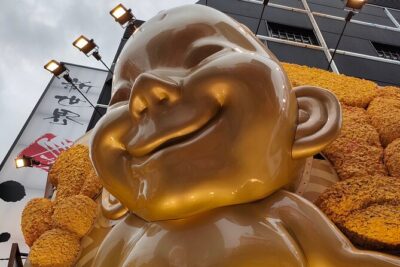
Ultimate Osaka Walking Tour: Castle, Dotonbori & Hidden Gems
Read our review →
Main Sights and Hidden Spots Guided Walking Tour
Read our review →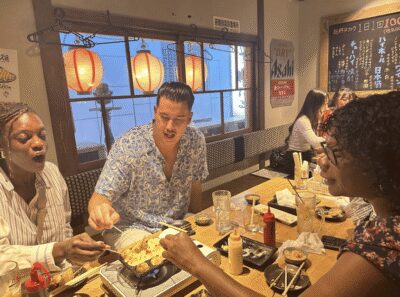
Kuromon Market Food Walking Tour (6 stops, 6 tastes)
Read our review →
Castle History Walking Tour / Castle Tower Admission
Read our review →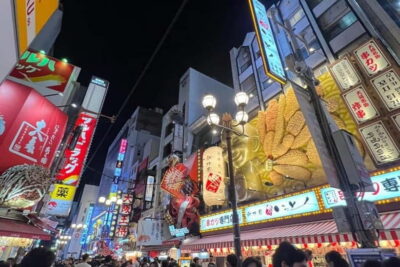
Browse the lists this tour appears in