
Review · JAPAN
Hiroshima: Private City Highlights Walking Tour
Hiroshima’s story is most powerful when you move through the places where it happened. This private walk connects the Peace Memorial Museum and Park with the Atomic Bomb Dome, memorials, and Hiroshima Castle, giving you both the facts of August 6, 1945, and a sense of the city that rose again afterward.
I like the one-to-one format, which lets you ask direct questions and adjust the pace. I also like the local focus: guides such as Maria, Ali, Ihsan, and Wajid have taken guests beyond the main monuments to schools, banks, gardens, food spots, and other places that are easy to miss. The main drawback is simple: four hours on foot can feel long, especially in Hiroshima’s heat, humidity, rain, or on a day when you want more quiet time in the museum.
Key points to know before booking
- The Peace Memorial Museum gets a full hour, enough time to see its central exhibits while keeping the wider walk moving.
- The private guide changes the feel of the visit, since you can ask about difficult subjects and request more or less detail.
- The route includes major memorials and less obvious sites, with some guides adding nearby schools, banks, gardens, or local food stops.
- Hiroshima Castle adds a different chapter, shifting the focus from wartime destruction to the city’s earlier past.
- The walk begins and ends at 1-2 Nakajimachō, with no transportation or meals included.
- The $90 price is strongest for small parties, families, and anyone who wants history explained rather than simply pointed out.
Why this private Hiroshima walk works
I see this experience as a guided introduction to Hiroshima rather than a simple checklist of monuments. The route gives you a clear sequence: begin with peace symbols, spend serious time in the museum, walk through the park’s memorials, then continue to the Atomic Bomb Dome and Hiroshima Castle.
That order matters. The museum can be emotionally heavy, and it is easier to process what you see when your guide has already explained the layout of the park and the purpose of its memorials. Afterward, the castle provides a change of pace and a reminder that Hiroshima is not only a place defined by 1945.
A private tour also gives you room to set the tone. If you want dates, military context, and city planning, ask for that. If you are traveling with children or teenagers, your guide can explain the material in simpler stages. Several guides, including Maria and Ihsan, are especially praised for adjusting their explanations and pacing to the group.
The stated length is four hours, though some bookings have run longer when the group wanted extra discussion or a food stop. That flexibility can be a benefit, but you should not plan a tight appointment immediately afterward.
More Private Walking Tours in Japan
- Osaka: Hotspots & Hidden Gems Walking Tour Private or Group
★ 4.9 · 1,300 reviews - Nara Half Day Trip Walking Tour (Private Option Available)
★ 5.0 · 937 reviews - Tokyo: Private Custom Walking Tour with Local Guide
★ 4.8 · 533 reviews
Starting at 1-2 Nakajimachō
The meeting point is at 1-2 Nakajimachō in Naka Ward, in the central Hiroshima area. From there, your guide leads you into the Peace Memorial Park on foot.
Because transportation is not included, you need to reach the starting point yourself. The tour also returns there at the end, which is useful if you want a fixed place to leave bags or continue planning your day from the same central area.
Wear comfortable shoes. This is a walking tour with repeated stops, not a short shuttle between sights. Hiroshima is often warm and humid, and one guide kept the group moving despite difficult heat. Rain is also possible, so a light rain layer and a small umbrella are sensible additions.
Gates of Peace and the Prayer Fountain
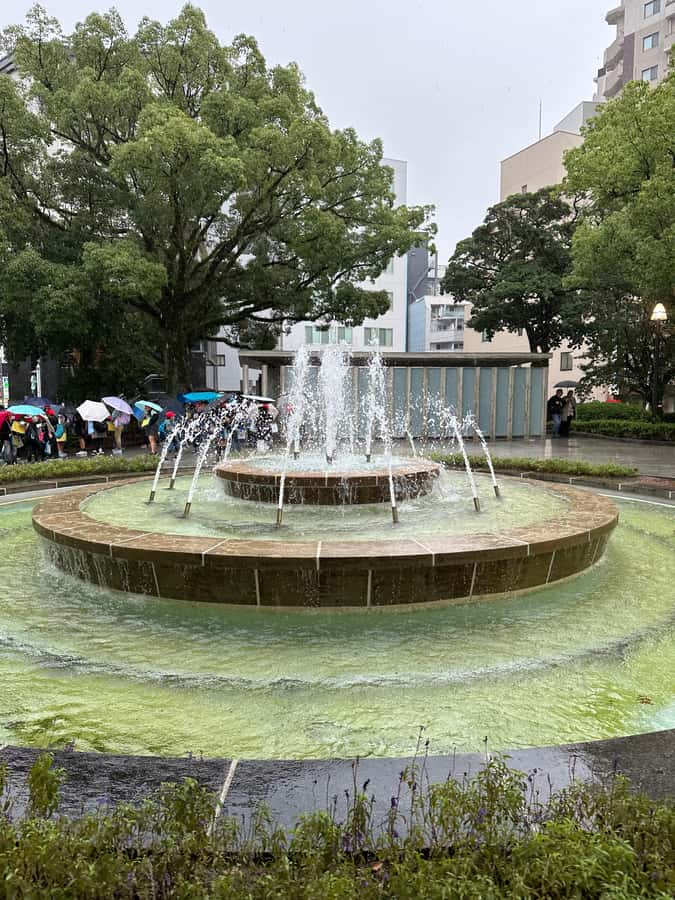
The first stops are the Gates of Peace and the Prayer Fountain. These are brief visits, about 15 minutes at the gates and 10 minutes at the fountain, but they help establish the mood of the park.
Your guide explains what these places represent rather than treating them as quick photo points. The Gates of Peace offer a visual entrance into the memorial area, while the Prayer Fountain connects to the human cost of the bombing and the basic need for water after the blast.
These early stops are also a useful test of your guide’s style. You can ask for more historical detail, request a slower pace, or let the guide keep the introduction short so you have more time later in the museum.
One hour inside the Peace Memorial Museum
The Hiroshima Peace Memorial Museum is the emotional center of the tour. The scheduled visit lasts about one hour, and admission is included in the $90 price.
Inside, you see objects and displays connected with the bombing of August 6, 1945. The museum is not a light attraction, and the experience can be difficult. Some people need time to pause, while others prefer to ask questions and keep moving. A private guide gives you more control than a large group would.
Your guide does not need to narrate every display. In fact, the museum is often most effective when you have quiet time to look. The useful role is helping you understand the wider setting, explaining references you might miss, and answering questions afterward.
I would not rush this stop. If the museum matters most to you, tell your guide at the beginning. One family found that the guide’s context inside the museum made the exhibits more understandable, particularly around the Children’s Peace Monument and the Atomic Bomb Dome.
Keep in mind that the one-hour schedule is a framework, not a guarantee that you will examine every display in detail. If you are a serious museum visitor, you may want a separate return visit.
More City Highlights Walking Tours in Japan:
- Tokyo: Shibuya Highlights Walking Tour
★ 4.8 · 601 reviews - Tokyo: Shibuya Highlights Walking Tour & Secret View Spot
★ 4.9 · 196 reviews - Osaka: Walking Tour and Top Highlights
★ 4.8 · 104 reviews - Ho Chi Minh City Street Food Tour & Sightseeing By Motorbike
★ 5.0 · 9,413 reviews
The Victims Memorial Cenotaph and Flame of Peace
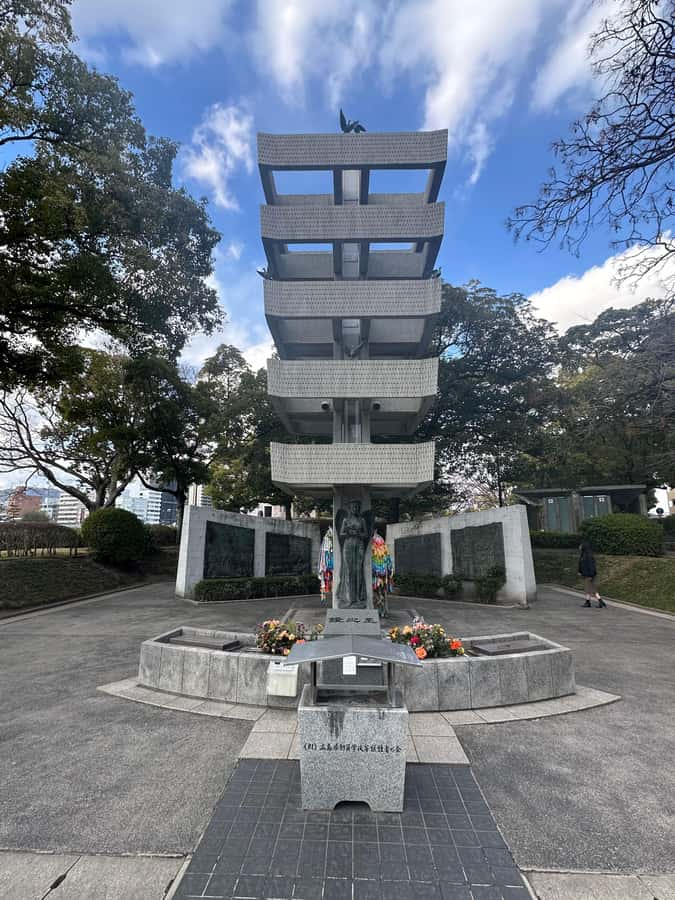
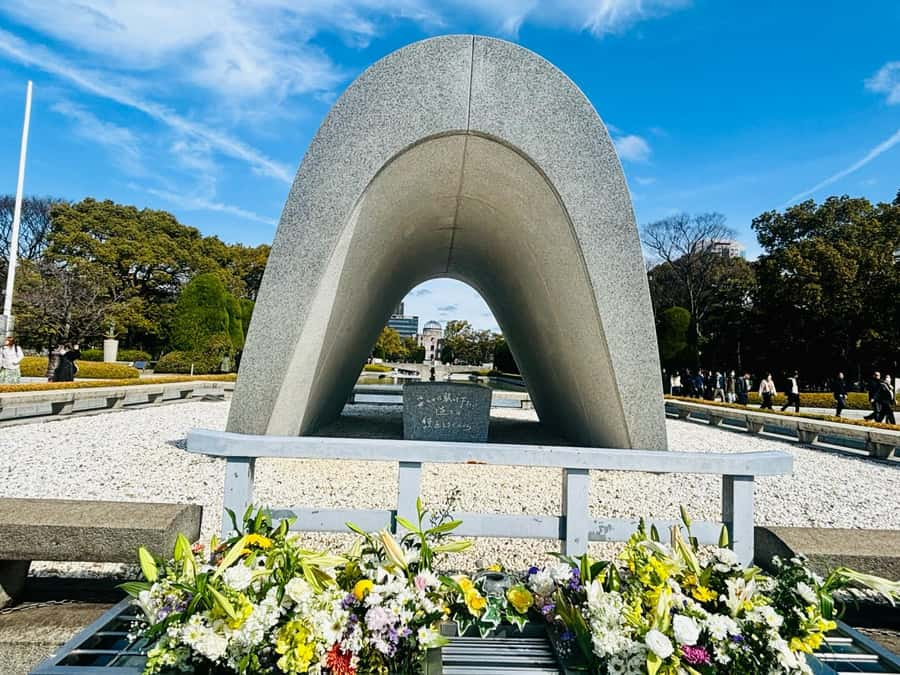
After the museum, the tour continues to the Hiroshima Victims Memorial Cenotaph and the Flame of Peace. The cenotaph receives about 15 minutes, while the flame is a shorter five-minute stop.
These pauses are not filler. The cenotaph is one of the park’s central memorials, and the flame gives your guide a chance to explain the park’s peace message and the connection between individual loss and the wider city.
The short time at the flame is helpful if you are trying to cover the entire route in four hours. It also means you should expect concise explanation rather than a long, uninterrupted lecture at every monument.
The Korean Atomic Bomb Victims Cenotaph
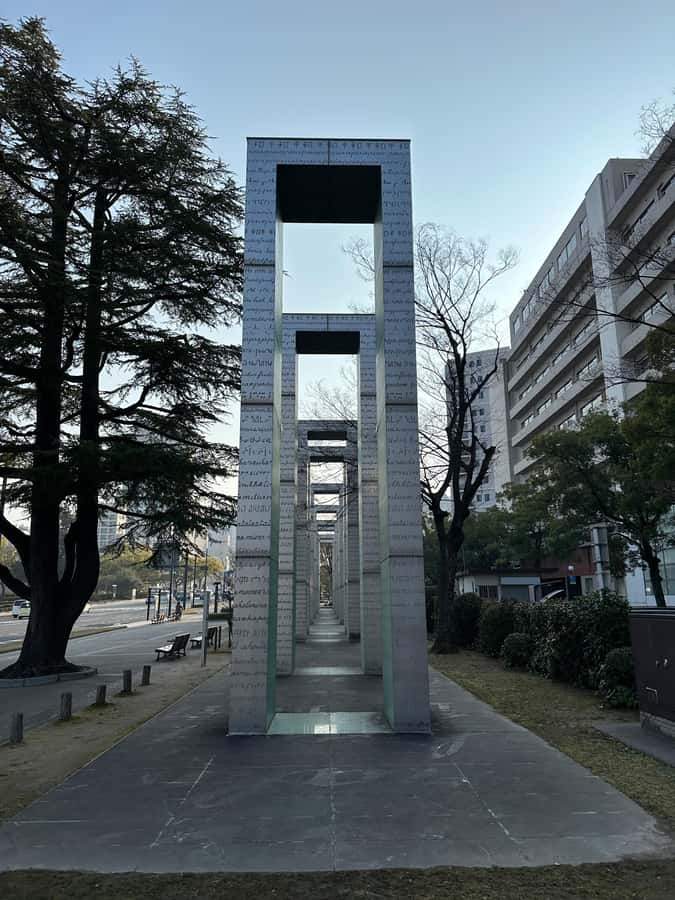
The Korean Atomic Bomb Victims Cenotaph is scheduled for about 15 minutes. This stop widens the story beyond the usual account of Hiroshima’s local population and points to the different communities affected by the bombing.
I value this part of the route because it discourages a narrow reading of the city’s past. Ask your guide about the memorial’s meaning and the people it represents. Guides such as Ali and Wajid are comfortable answering questions about the city’s wider history, culture, and communities.
The stop is close enough to fit naturally into the park walk, but it is easy to overlook without someone drawing your attention to it.
The Bell of Peace and Children’s Peace Monument
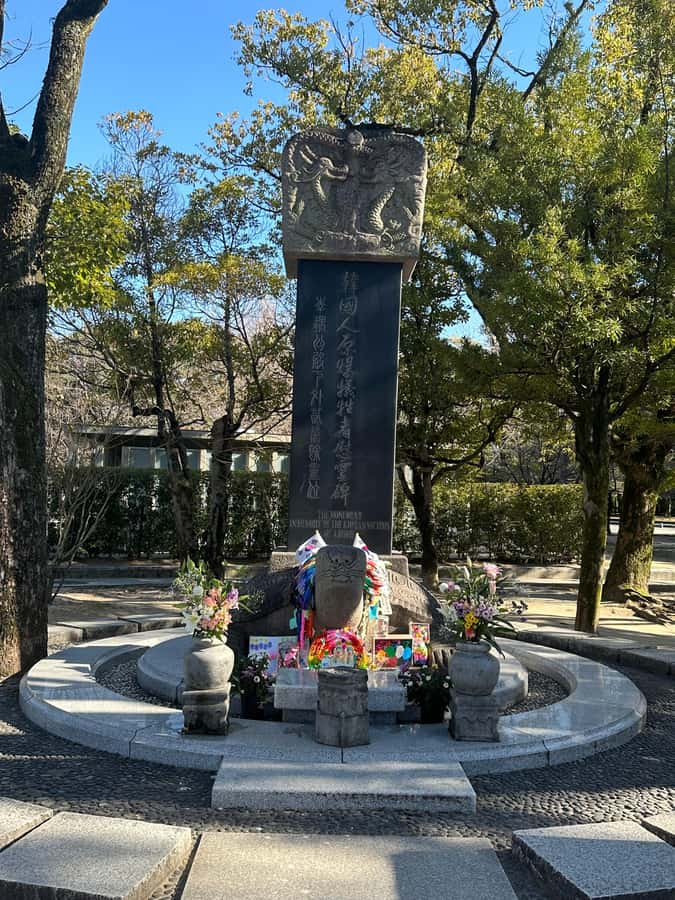
The Bell of Peace and the Children’s Peace Monument receive about 15 minutes each. Both are familiar symbols, yet they work differently.
At the Bell of Peace, your guide can explain the role of sound and participation in the park’s peace message. At the Children’s Peace Monument, the focus becomes more personal and emotionally direct. The monument is linked with children affected by the bombing and has become one of the most recognized places in the park.
This is where a guide’s tone matters. Maria, Ihsan, and other guides are praised for handling the subject with care rather than turning it into a rushed speech. You can ask questions, but you can also simply take a quiet moment.
Families may find this stop particularly useful, since the guide can adjust the explanation for younger listeners. Still, parents should know that the material across the park and museum is serious.
The Atomic Bomb Dome in a wider city context
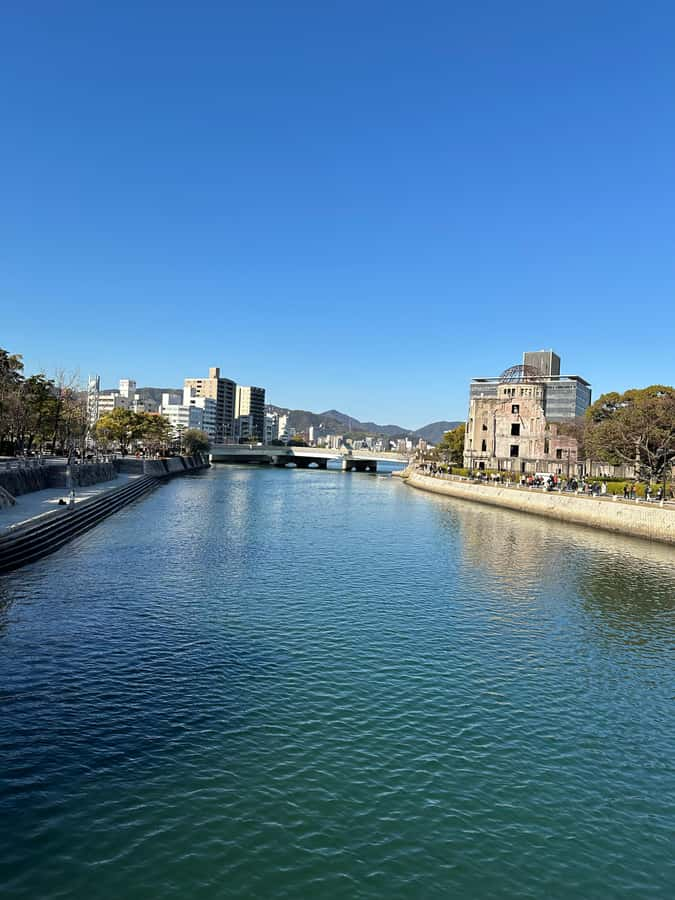
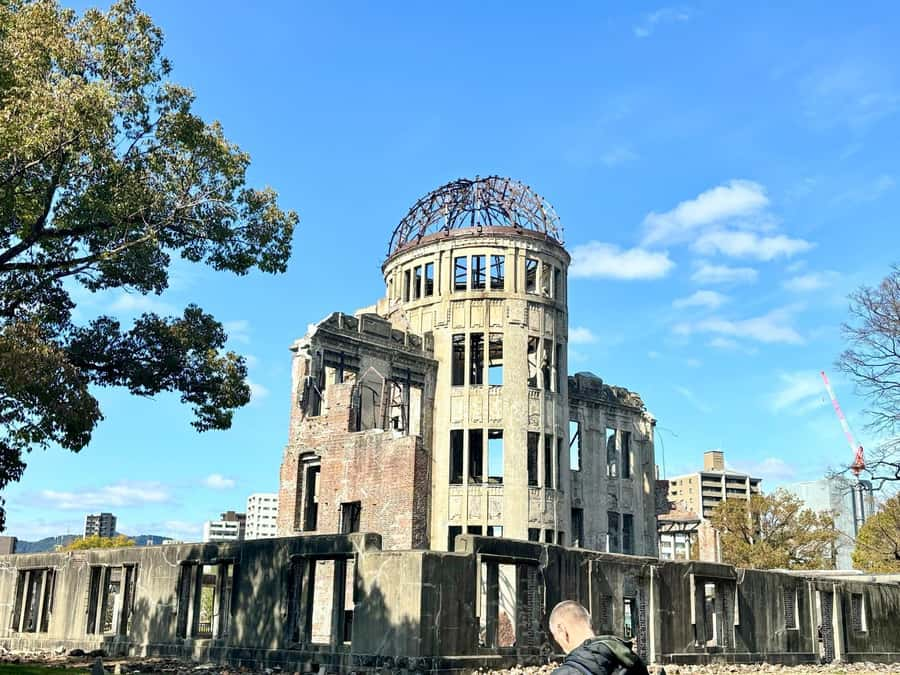
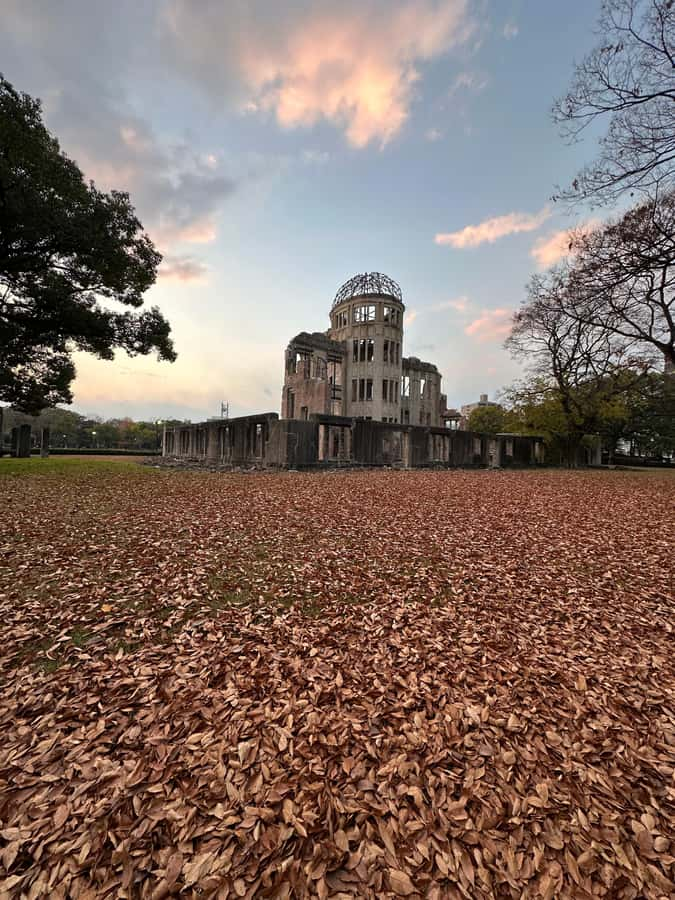
The walk then reaches the Atomic Bomb Dome, with about 20 minutes for viewing and explanation. The preserved structure is one of Hiroshima’s most recognizable sights, but it is more meaningful when you understand its place in the surrounding city.
The guide explains what the area looked like before and after the bombing, helping you connect the surviving building with the destruction that followed. Several guides also take guests outside the park to nearby places linked with that day, including a school and a bank. These additions are not guaranteed at every pace, but they show why a private walk can offer more than the standard central route.
The Dome is a photo stop, but I would avoid treating it as only a photograph. Look at the building, the open space around it, and the contrast between the ruin and the rebuilt city. The experience works best when you give yourself a quiet minute after the guide’s explanation.
Walking to Hiroshima Castle
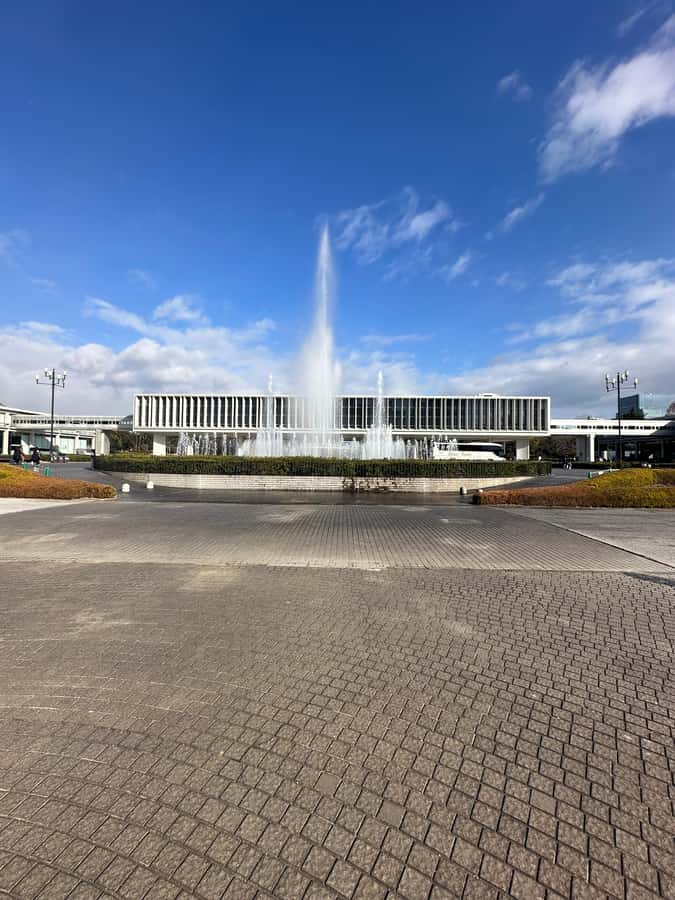
The final major section leads to Hiroshima Castle, a 16th-century landmark. The scheduled visit and walk take about 40 minutes, making this the longest stop after the museum.
The castle changes the subject. Instead of focusing only on the twentieth century, you move into Hiroshima’s earlier political and architectural past. That contrast helps you see the city as a place with a long story, not simply the setting of one terrible event.
Admission to the Atomic Bomb Dome and Peace Memorial Park is included, as is museum entry. The supplied details also list an entry ticket for the Atomic Bomb Dome, though much of what you do there is an exterior viewing stop. You should ask your guide what access is available on your date if entering the structure itself matters to you.
The castle portion is a walk, and the tour ends back at the original meeting point. One booking missed the castle interior because of a delayed train, but the guide still explained its background and helped the group finish the day well. That is a useful reminder to allow extra time before the tour if you are arriving by train.
The guides and the value of a private group
The available guides include Maria, Ali, Ihsan, Wajid, and others, with tours offered in English, Malay, Urdu, Hindi, and Punjabi. The strongest pattern is not a particular script, but the guides’ ability to respond to questions and adjust the walk.
Maria is described as warm, clear, and flexible, with strong English and a careful approach to Hiroshima’s history. Ali is praised for taking guests to places beyond the usual park route. Ihsan is especially suited to people who want to ask many questions about Japanese culture, history, and daily life. Wajid has also helped connect the tour with local food and nearby gardens.
A private group means you are not locked into the pace of strangers. You may be able to stop for a cold drink, ice cream, fresh orange juice, or a short rest. Some guides have recommended local restaurants serving Hiroshima-style okonomiyaki at the end, but food is not included and the meal is not a fixed part of the tour.
This flexibility is the main reason I would choose this experience over a cheaper large-group walk. At $90 per person, the value depends on group size. For one person or a couple, it is a significant outlay. For a family or small party, the private attention and chance to shape the visit make the cost easier to justify.
What the four hours feel like
The pace is steady. You will spend time standing at memorials, walking between sites, and concentrating inside the museum. The park route is not technically presented as difficult, and the activity is listed as wheelchair accessible, but you should still discuss mobility needs with the provider before booking because the day includes several hours outdoors and a walk to the castle.
The route can be affected by weather. Rain did not stop one group from enjoying the tour, but it changed the comfort level. Hot, humid conditions can also make the four hours feel longer. Build in water and wear shoes that suit pavement and extended walking.
The tour does not include food, drinks, or transportation. Those omissions are easy to manage, but they matter when you plan your day. A cold drink stop may happen if your guide and group agree, but it is not part of the listed inclusions.
Who should book this Hiroshima experience
I would choose this tour if you want Hiroshima explained in person and have limited time in the city. It is a strong fit for first-time visitors, families, couples, and anyone who prefers asking questions to reading every sign alone.
It also suits people with a specific interest in the city’s wartime history, memorial design, Japanese culture, or local food. Tell your guide what matters to you at the start. The private format is most useful when you make use of that freedom.
I would hesitate if you prefer to explore museums silently and independently, or if four hours of walking sounds tiring. You can see the park and Dome at your own pace, then spend much longer in the museum. This tour trades some independence for a clear route and personal explanation.
Is the $90 price fair?
For a private four-hour tour with a live guide, museum admission, and a route that includes both the Peace Park and Hiroshima Castle, $90 per person is reasonable, especially for a small group. The value rises when your guide takes you to less obvious places or helps with practical matters such as finding a local meal or navigating back to your hotel.
The price is less attractive if you plan to spend only a short time at each monument or if your main goal is a long, self-guided museum visit. You are paying for interpretation, pacing, and local help, not just entry tickets.
Free cancellation up to 24 hours before the tour and the option to reserve without paying immediately make planning easier. The activity is offered for a private group, so confirm the final group arrangement and meeting details when you book.
Should you book it?
Book this Hiroshima walking tour if you want the city’s memorials placed in context, prefer a private guide, and can manage four hours on foot. The best part is the combination of the major sites with personal explanations and occasional stops beyond the standard park route.
Choose another plan if you want to linger alone in the museum, avoid difficult historical material, or need a very short outing. For everyone else, this is a practical way to see Hiroshima’s essential places while leaving room for questions, reflection, and a taste of the city beyond its most famous monument.
FAQ
How long is the Hiroshima private walking tour?
The tour lasts four hours, though the pace can vary depending on questions, weather, and the interests of your private group.
Where does the tour begin and end?
You meet your guide at 1-2 Nakajimachō in Naka Ward, Hiroshima. The activity ends back at the same meeting point.
What languages are available?
Live guiding is available in English, Malay, Urdu, Hindi, and Punjabi.
Are museum and park admission included?
Yes. The tour includes entry to the Hiroshima Peace Memorial Museum, Hiroshima Peace Memorial Park, and the Atomic Bomb Dome.
Is food or transportation included?
No. Food, drinks, and transportation are not included. You are responsible for reaching the meeting point and returning from it after the tour.
Is the tour wheelchair accessible?
Yes, the activity is listed as wheelchair accessible. Because the tour includes several hours of walking and an outing to Hiroshima Castle, discuss your specific mobility needs when booking.
New routes in Japan
- Tokyo: Asakusa & Sensoji ー Oldest Temple Walking Tour (2hrs)★ 5.0 · 213 reviews
- Asakusa Cultural Walk & Matcha Making Tour★ 5.0 · 245 reviews
- Asakusa Senso-ji Temple and Old Tokyo Walking Tour★ 5.0 · 560 reviews
- Tokyo: Tsukiji Market Walking Tour & Sushi Cooking Class★ 4.6 · 122 reviews
- Tokyo: Shinjuku Nightlife & Secret Backstreets Walking Tour★ 4.8 · 229 reviews
- Tokyo: Dark Side of Tokyo Shinjuku Red Light Walking Tour★ 4.7 · 862 reviews
- Tokyo: Shinjuku Bar Hopping & Night Walking Tour★ 4.6 · 137 reviews
- Tokyo: Shibuya Highlights Walking Tour★ 4.8 · 601 reviews
Japan Walking Tours, compared.
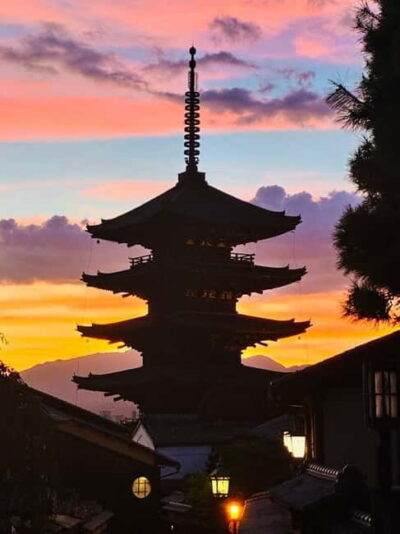
Kyoto Geisha Walking Tour: Gion District & Hidden Gems
Read our review →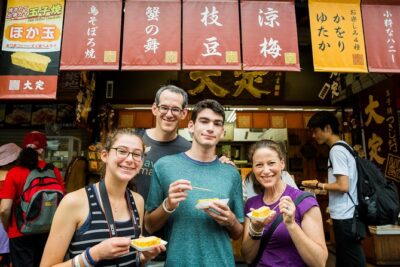
Tokyo Tsukiji Fish Market Food and Culture Walking Tour
Read our review →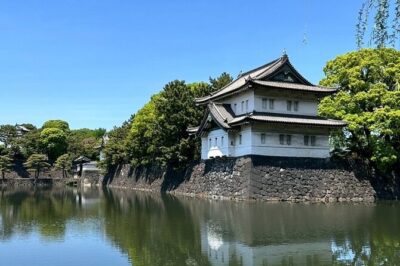
Imperial Palace and Shogun Historical Walking Tour
Read our review →
Gion Geisha District Walking Tour – Stories of Geisha
Read our review →
Best of Kyoto: Gion, Geisha, Pagodas & Cobblestones
Read our review →
Shinjuku Local Bar and Izakaya Guided Walking Tour
Read our review →
Asakusa Walking Tour with Sensoji Temple Visit
Read our review →Browse the lists this tour appears in