
Review · BERLIN
Berlin : Must-see attractions Walking Tour
Berlin’s biggest sights make the most sense when you connect them on foot. This three-hour private walk takes you from the Berlin Wall to the Brandenburg Gate, Reichstag, Checkpoint Charlie, and the Holocaust Memorial, linking Cold War division, Nazi Germany, reunification, and present-day Berlin in one route.
I like the private format, since you can ask direct questions and spend more time on the places that matter to you. I also like the chance to adjust the walk and get practical ideas for the rest of your stay. Guides such as Pierre and Bastian have been praised for clear explanations and friendly help.
The main consideration is pace. Five major sights in three hours means this is an orientation walk, not a full visit inside every site. You’ll see and discuss the landmarks, but you may need separate bookings and extra time for interior visits.
Key points to know before you book
- A focused three-hour route: Cover Berlin’s best-known landmarks without spending a full day on one subject.
- Private and adjustable: Shape the conversation around Cold War Berlin, Nazi history, architecture, or modern city life.
- Strong guide language choice: Tours are offered in English, French, Spanish, Italian, and German.
- Walking with public transport support: The experience is mainly on foot, with public transport included unless your selected option says otherwise.
- Guides who offer practical help: Pierre and Bastian are specifically praised for clear explanations, patience, and help with meeting-point directions.
- Good first-day activity: The route gives you a useful map of central Berlin and suggestions for what to do next.
Why this route works for seeing Berlin quickly
Berlin can feel scattered at first. Its major sights are spread across areas shaped by different eras, and a map does not always explain how they connect. This tour gives you a clear three-hour framework, moving through places tied to the Wall, the Nazi period, the Cold War, and German reunification.
At $44 per person, the price is reasonable if you value a private guide and want to make efficient use of limited time. You are not simply paying for a checklist of monuments. You are paying for a person who can explain what happened at each stop, answer follow-up questions, and alter the emphasis to suit your interests.
That value depends on your expectations. If you want a long interior visit at the Reichstag, an extensive Wall memorial visit, or a full museum program, this walk will not replace those plans. If you want a well-organized introduction before exploring on your own, it makes more sense.
The route is listed as beginning at Friedrichstraße 103, with the meeting point in front of Meliá Berlin. Since both descriptions are given, I would confirm the exact meeting spot and start time before setting out. That small check can save you a rushed start, especially if you are new to Berlin.
More City Highlights Walking Tours in Germany
- Berlin Historical Highlights Walking Tour
★ 4.9 · 657 reviews - Berlin: Sightseeing Walking Tour of the Top 20 Attractions
★ 4.5 · 196 reviews - Berlin: Walking Tour of the Top 10 Sightseeing Attractions
★ 4.7 · 150 reviews
Starting at Friedrichstraße 103 and meeting your guide
The walk begins near Meliá Berlin on Friedrichstraße. This is a practical central starting point, and the guide can help you get oriented before the route begins.
A private start matters here. You can explain what you already know, what you want to understand, and how much detail suits your group. Someone interested in Cold War politics may want more time on the Wall and Checkpoint Charlie. Someone focused on architecture may prefer more discussion of the Brandenburg Gate and Reichstag.
The tour is available in English, French, Spanish, Italian, and German. Pierre has been especially praised for excellent English, patient explanations, and helping a late-arriving group find the meeting point by phone. That detail is useful: if you are delayed, contact the provider rather than simply abandoning the meeting.
You will be walking for three hours, so comfortable shoes are sensible. The tour does not include food or drinks. Plan a snack or coffee before starting, or save a break for afterward.
Berlin Wall: beginning with the city’s division
The Berlin Wall is the right place to frame modern Berlin. Your guide explains why it was built, how it divided the city during the Cold War, and what its fall meant.
The Wall was not just a physical barrier. It cut through streets, neighborhoods, families, and daily routines. A guide can help you understand that the remaining sections and memorial areas are fragments of a much larger system. That context is more useful than taking a quick photograph and moving on.
The tour gives you a guided visit rather than a long museum session. You should expect explanation and questions, not an in-depth examination of every Wall-related site in Berlin. If the Wall is your main reason for booking, tell your guide at the start so the private format can work in your favor.
This is also where the tour begins to show Berlin’s unusual mix of absence and evidence. Some parts of the former border are marked by physical remains, while other parts are understood through signs, stories, and the shape of the city itself.
Brandenburg Gate: from royal gateway to unity symbol
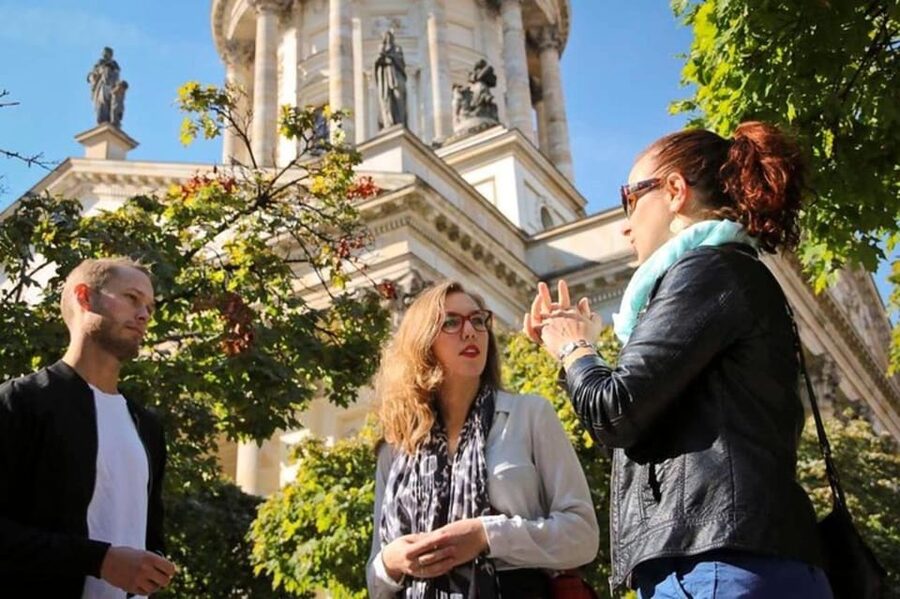
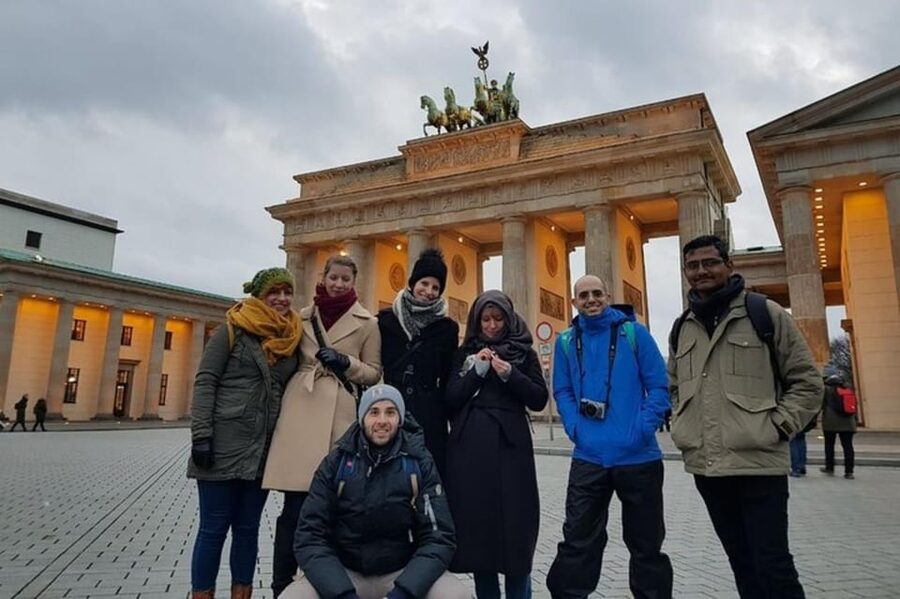
The Brandenburg Gate is one of Berlin’s essential stops, but it is more than a handsome neoclassical structure. Its meaning changed with the city around it, and your guide explains how it became a symbol of German unity.
The gate has been linked to Prussian power, wartime history, the divided city, and reunification. Its location makes the change especially easy to picture. What was once near the border between East and West Berlin now sits in the heart of a reunited capital.
I like this stop because it connects architecture with politics without requiring a long lecture. You can look closely at the gate, listen to the story, and then place it within the wider route.
Expect a busy public setting and limited time for quiet reflection. This is a major city landmark, not a private monument. The advantage of having a guide is that you can get the important background while you are there, rather than trying to piece it together from a short sign.
More City Highlights Walking Tours in Berlin:
- Ho Chi Minh City Street Food Tour & Sightseeing By Motorbike
★ 5.0 · 9,413 reviews - Historic Charleston Guided Sightseeing Walking Tour
★ 5.0 · 6,216 reviews - Dublin Highlights and Hidden Gems Guided Walking Tour
★ 5.0 · 6,020 reviews - Vienna: Guided Walking Tour of City Center Highlights
★ 4.7 · 4,989 reviews
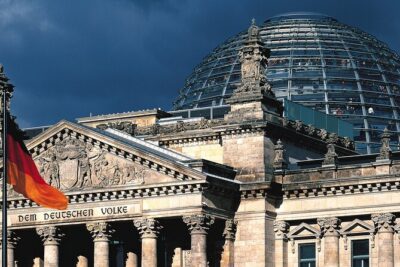
Reichstag: Germany’s political center
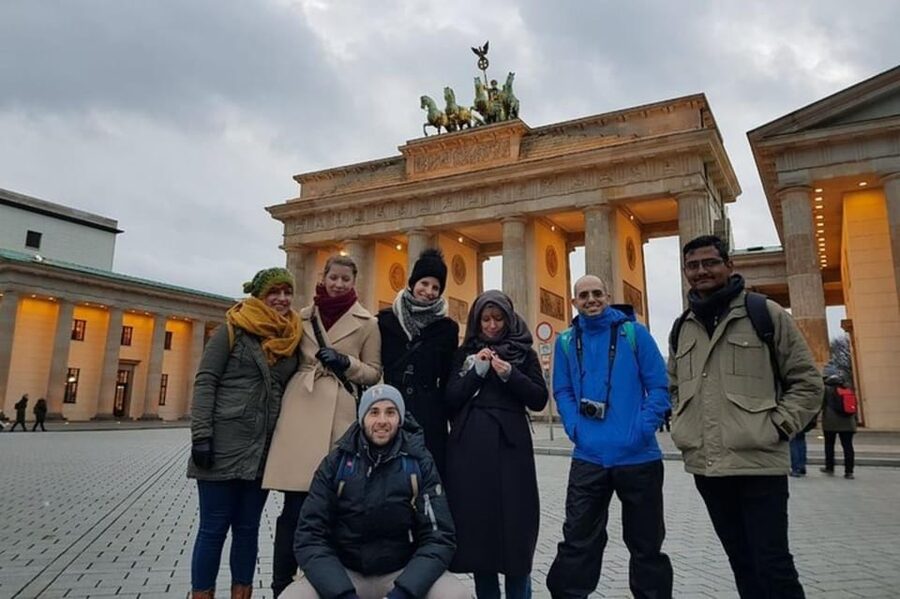
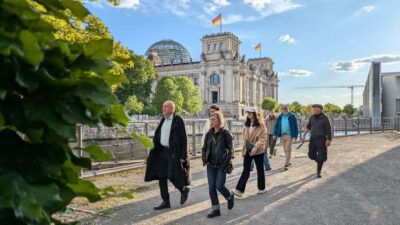
The Reichstag adds another layer to the walk. Your guide discusses its role in German political life and helps place it within the story of Berlin as the capital of the Nazi Third Reich and the modern Federal Republic.
The building’s value on this tour is mainly historical and visual. The supplied details do not promise an interior visit, a dome reservation, or a full parliamentary tour. If entering the Reichstag is important to you, ask the provider about tickets. The team can help book tickets for desired visits, but admission is not listed as part of the walking tour itself.
That distinction matters. You can see the building and learn why it matters during the walk, then decide if you want to return for a separate visit.
For many people, the Reichstag is also a useful pause in the route. It helps explain how Berlin moved from dictatorship and war toward a democratic capital. The guide can answer questions in the moment, which is particularly helpful if you want to understand the difference between the building’s historical role and its current political function.
Checkpoint Charlie: a famous Cold War crossing point
Checkpoint Charlie brings the Cold War into sharper focus. The name is familiar, but a guide helps explain why this crossing point became such a powerful symbol of the divided city.
You will hear about the border, the tension between East and West, and the role the checkpoint played in Berlin’s divided life. This stop works well after the Wall because it moves from the broad fact of division to a specific place where movement was controlled and political tension could become very real.
Checkpoint Charlie is also one of the route’s more commercial and heavily visited locations. Do not expect it to feel untouched or solemn in the same way as a memorial site. The point is to understand its historical role, not to mistake the present-day setting for the Cold War checkpoint itself.
Your guide’s explanation is particularly useful here. Without context, the site can seem like a quick photo stop. With context, it becomes part of the story of how Berlin was split and how that division shaped everyday life.
Holocaust Memorial: a place for careful attention
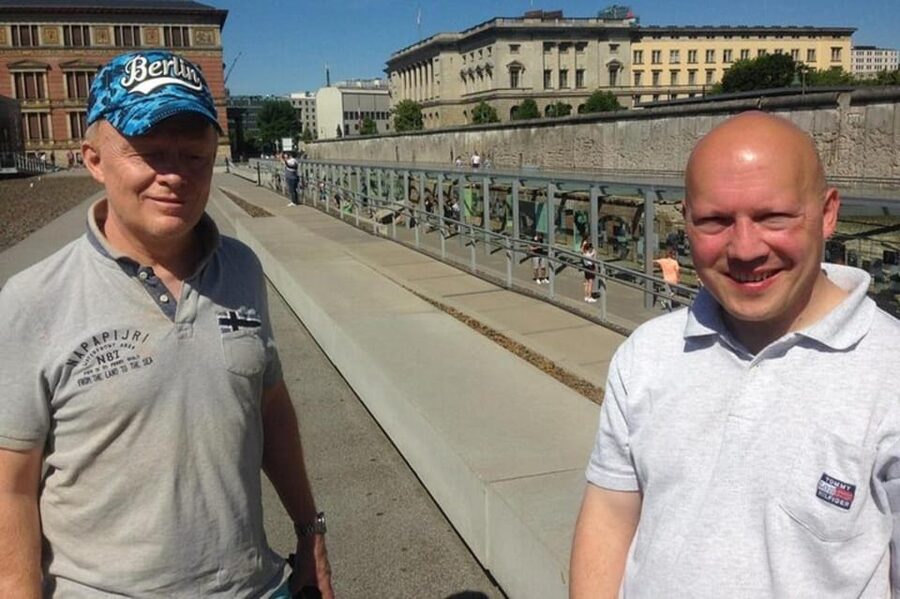
The Memorial to the Murdered Jews of Europe is the most solemn stop on the route. It commemorates Jewish victims of the Holocaust and places the crimes of Nazi Germany close to the center of today’s capital.
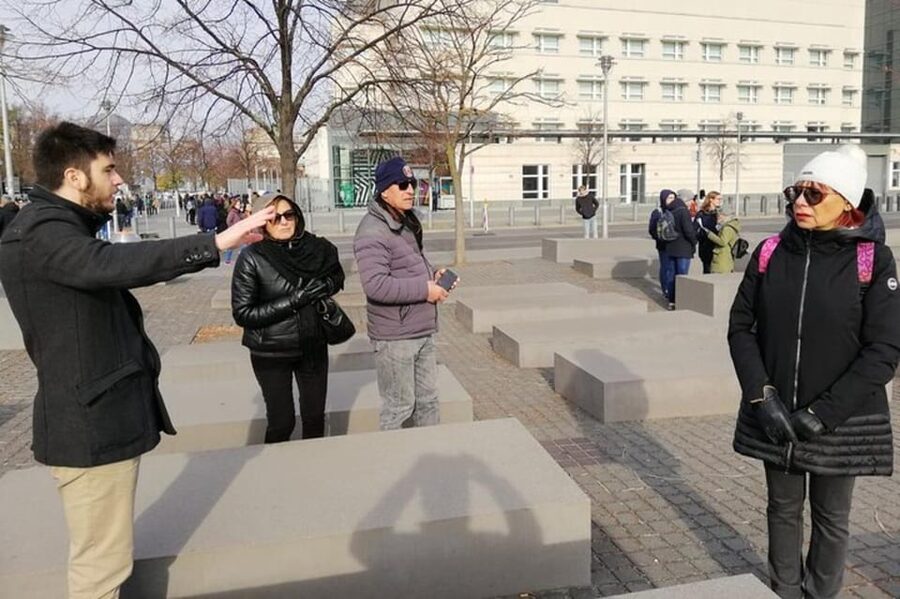
Your guide explains the memorial and its setting, including Berlin’s role as the capital of the Third Reich. This part of the tour deserves a slower, more respectful pace. You can ask questions, but you should also allow the place to speak through its design and atmosphere.
The tour does not promise an interior visit to the underground information center. If you want a longer examination of the memorial’s documentation and personal stories, ask about adding or arranging that separately. The walking tour provides the historical frame and the opportunity to see the memorial as part of central Berlin.
I appreciate that this stop gives the route moral weight. The day is not only about famous buildings and Cold War symbols. It also asks you to confront the crimes that shaped Germany’s twentieth century and the way Berlin remembers them.
What the private format changes
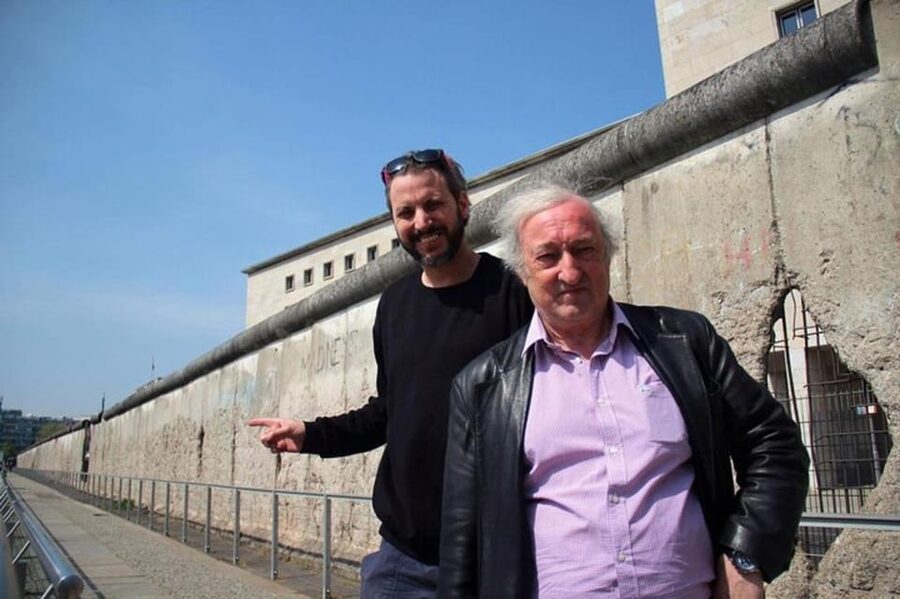
A private group is the main difference between this experience and a standard group walk. There is no larger party sharing the guide’s attention, and you can ask questions without waiting for a scheduled pause.
The customization is practical rather than unlimited. The listed route includes the Berlin Wall, Brandenburg Gate, Reichstag, Checkpoint Charlie, and Holocaust Memorial, but the description also allows the guide to adjust the focus and show other areas or venues of interest. You can use the three hours well by deciding in advance what matters most.
Pierre has shown flexibility with timing, including allowing extra time when a group wanted to explore additional points of interest. Bastian has been praised for telling the city’s story in a way that made the time pass quickly. Those examples suggest that the guide can respond to your interests, though you should not assume every tour will run substantially beyond three hours.
You also receive advice about other things to do in Berlin. That can be valuable early in your stay. Ask about which places deserve a separate visit, where to continue your historical exploration, or how to use the rest of your day.
Walking, transport, accessibility, and timing
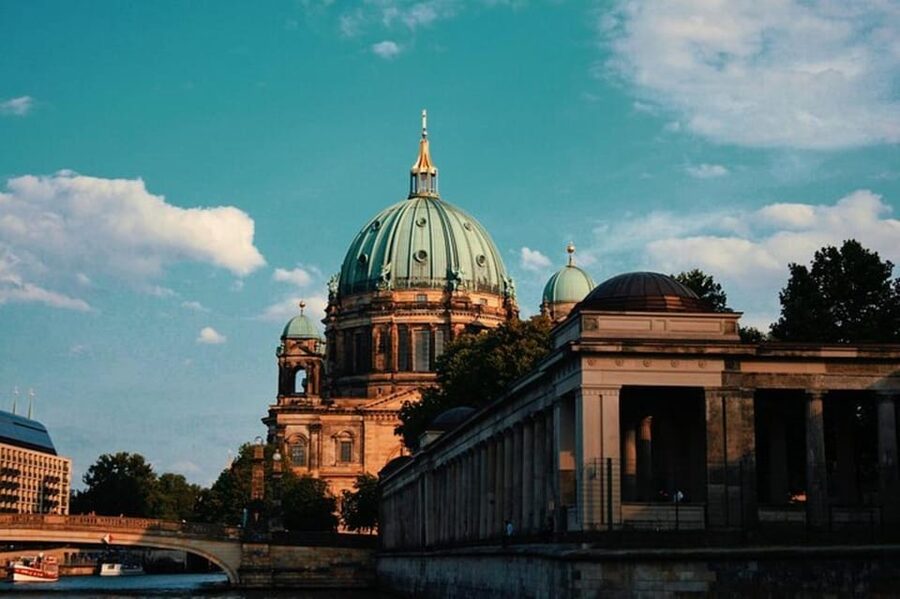
The experience lasts three hours and is primarily a walking tour. Public transport is included unless you choose an option that excludes it. That gives the guide some flexibility if the route needs a short ride, though the main experience remains on foot.
The tour is listed as wheelchair accessible. Since the exact route conditions and any transport details are not specified, it is still sensible to mention your needs when booking. A private format makes it easier to discuss practical concerns in advance.
Starting times vary, so check availability before booking. The activity includes free cancellation up to 24 hours in advance and allows you to reserve now and pay later. Those policies are useful if your Berlin schedule is still changing.
Food and drinks are not included. The tour is short enough to fit around lunch, but do not count on a planned refreshment stop.
Who will get the most from this Berlin walk?
I would recommend it most strongly for first-time visitors, short-stay visitors, families or couples who want a private pace, and anyone who prefers conversation to a recorded audio guide.
It also suits you if Berlin’s twentieth-century history feels confusing. The Wall, Reichstag, Brandenburg Gate, Checkpoint Charlie, and Holocaust Memorial can seem like separate attractions. This route gives you a single story that ties them together.
The walk is less suitable if you want extensive time inside museums or buildings. It is also not the best choice if you have already spent several days studying Berlin’s central sights and now want a narrow specialist subject.
Language choice is another advantage. You can book in English, French, Spanish, Italian, or German, which makes it easier to discuss sensitive historical subjects with precision and ask follow-up questions.
Is the $44 price good value?
At $44 per person, the value is strongest for a small private group that wants a guide’s full attention. A standard group tour may cost less, but it may also give you less control over the pace and questions. Here, the private setting and route adjustment are the main benefits.
The price does not cover food, drinks, or guaranteed entry to the Reichstag or other interiors. You should budget separately if you want to go inside sites or book additional visits.
For a first morning or afternoon in Berlin, I think the cost can be justified. You get the city’s main historical markers, an introduction to the layout of central Berlin, and advice for planning the rest of your stay. If you only want photographs of the landmarks, you may find a self-guided walk sufficient.
Should you book this tour?
Book it if you want a private introduction to Berlin’s major historical sights, especially if you have only a short stay or prefer to ask questions as you go. The route is well chosen, the language options are generous, and the ability to adjust the emphasis adds real value.
Before booking, confirm the precise meeting point at Meliá Berlin and decide which stop deserves the most attention. If you want interior visits, ask the provider about tickets rather than assuming they are included.
Skip it if you want a long museum visit, a specialized Wall tour, or a full day devoted to one period. For everyone else, this is a useful first look at Berlin’s difficult past and its present-day identity, delivered at a manageable pace.
FAQ
Where does the Berlin walking tour begin?
The meeting point is in front of Meliá Berlin, with the starting location listed as Friedrichstraße 103. Confirm the exact meeting details before the tour.
How long does the tour last?
The walking tour lasts three hours.
Is the tour private?
Yes. The tour is private and exclusive, with no one else added to your group.
Which languages are available?
You can take the tour in English, French, Spanish, Italian, or German.
Does the tour include public transport?
Walking and public transport are included unless you select an option that states otherwise.
Can I cancel the booking?
You can cancel up to 24 hours before the tour for a full refund. You can also reserve now and pay later.
New routes in Berlin
- Small Group Walking Tour: “Wild Kreuzberg”★ 4.8 · 199 reviews
- Sachsenhausen Memorial: Walking Tour from Berlin★ 4.7 · 132 reviews
- Berlin: Prenzlauer Berg District Guided Walking Tour★ 4.9 · 316 reviews
- Berlin: 2.5-Hour Walking Tour through Kreuzberg 61★ 4.9 · 525 reviews
- From Berlin: Potsdam & Sanssouci half day Walking Tour★ 4.9 · 85 reviews
- Explore Berlin: Walking Tour of All The Iconic Sites★ 4.9 · 855 reviews
- East Berlin and the Wall: Walking Tour★ 4.9 · 407 reviews
- Cold War, Berlin Wall, Spies and the East Side Gallery★ 4.8 · 254 reviews
Berlin Walking Tours, compared.
Berlin City walk Government District and Places of Democracy
Read our review →
Berlin’s Best: 2 Hour Walking Tour Third Reich and the Cold War
Read our review →
Explore Berlin: See All The Iconic Sights & Some Hidden Gems
Read our review →
Third Reich Berlin: Hitler and WWII Walking Tour
Read our review →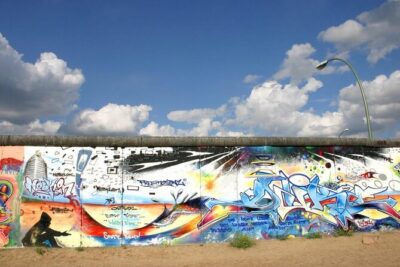
Berlin Center Food Tour with 8+ Authentic Local Tastings
Read our review →
Browse the lists this tour appears in