
Review · BERLIN
Berlin: Alternative Berlin Walking Tour
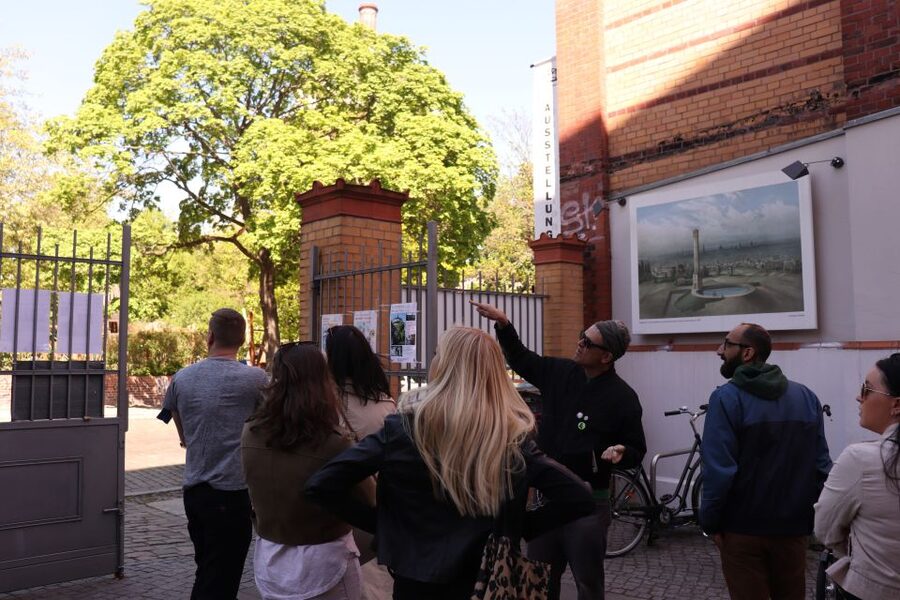
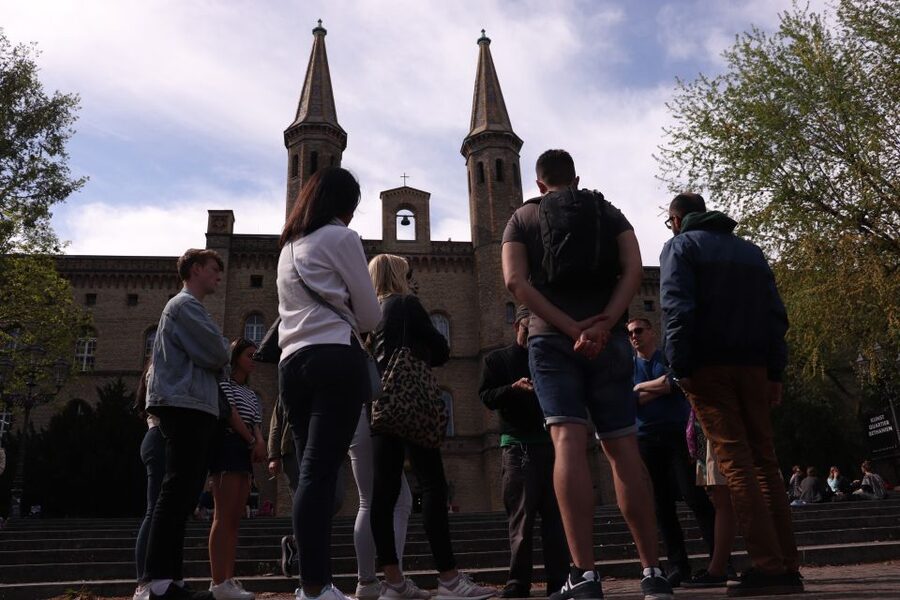
Berlin’s alternative identity is the real subject here. Over four hours, you move from Alexanderplatz through Mitte and Kreuzberg to Friedrichshain, following stories about graffiti, squats, punk, music, migration, art, and the city’s habit of turning old spaces into new ones. It is less a monument-by-monument walk than a lesson in how Berliners live and reshape their city.
I like the personal storytelling. Guides such as Rhys, Reece, Jake, Jonathan, Damien, and Ady have been praised for humor, energy, and clear explanations, with several bringing their own long connection to Berlin. I also like the range of neighborhoods, from cafés and galleries to Turkish streets, canals, urban farms, gay districts, African cultural spaces, and old counterculture sites.
The main caution is pace. Four hours on foot, with public transport possibly mixed in, can feel demanding, especially in cold rain or snow. You also need to sort out your AB transit ticket, unless you book the option that includes BVG transport.
Key points at a glance
- Alexanderplatz to Friedrichshain: The route begins by the TV Tower and ends in a different part of town, giving you a useful cross-city view of Berlin.
- Counterculture with context: Learn how squats, graffiti, punk, dance music, and political movements shaped modern Berlin.
- Mitte and Kreuzberg together: See how central Berlin and its Turkish and multicultural districts differ in feel and story.
- Local food connections: Hear the origins of currywurst and döner, with a possible stop for currywurst or another local fast-food bite.
- Guides make the difference: Rhys, Reece, Jake, Jonathan, Damien, and Ady have all led tours praised for humor, strong delivery, and personal insight.
- Plan for weather and walking: Tours run all year, in all weather, and the route can be brisk.
Why this is not a standard Berlin history walk
Berlin is often presented through the Brandenburg Gate, the Berlin Wall, the Holocaust Memorial, and Checkpoint Charlie. Those places matter. But they can leave you with a picture of Berlin that ends in reunification.
This tour picks up where the usual history lesson often stops. It asks what happened to the empty buildings, divided neighborhoods, immigrant communities, artists, musicians, and political groups that helped shape the city after the Wall fell. You hear about Berlin’s punk spirit, long-term squats, graffiti artists, nightlife, street culture, and the way former industrial or neglected areas found new uses.
That angle gives the city more texture. A painted wall is not just decoration. An unusual building may point to a housing struggle. A café district may reflect migration, gentrification, or a changing East Berlin neighborhood. The guide’s job is to connect those details rather than simply point at them.
You should not book this expecting a quiet stroll with long stops at major monuments. The appeal is movement, conversation, and interpretation. The best moments may be places you would pass without noticing on your own.
More Walking Tours in Berlin:
- Discover Berlin Half-Day Walking Tour
★ 5.0 · 9,624 reviews - Berlin City walk Government District and Places of Democracy
★ 4.7 · 8,467 reviews - Berlin: Third Reich & Cold War Guided Walking Tour
★ 4.9 · 8,378 reviews
Starting at Alexanderplatz and entering Mitte
Meet in front of Vapiano by the Alexanderplatz TV Tower. This is an easy place to find, but Alexanderplatz itself is large and crowded, so give yourself time to locate the meeting point. The tower provides a useful visual marker.
The first hour takes place in Mitte, the central district. Here, the tour begins comparing Berlin’s different sides: East and West, old and new, polished and improvised, conventional and alternative. You may pass café areas, shopping streets, creative spaces, and signs of the city’s continuing cultural change.
The value of this opening section is orientation. Instead of treating Berlin as one uniform city, you start to see how each district carries a different mood. Stories about the origins of currywurst, döner, and the Prater Beer Garden help ground the larger discussion in everyday life.
Food history is especially useful in Berlin because it reveals how migration and local habits meet. Currywurst is not just a quick snack. Döner is not just a familiar street-food choice. Both belong to the story of postwar Berlin and its changing communities. The exact food stop can vary, so think of this as a chance to connect the city’s social history with things people actually eat.
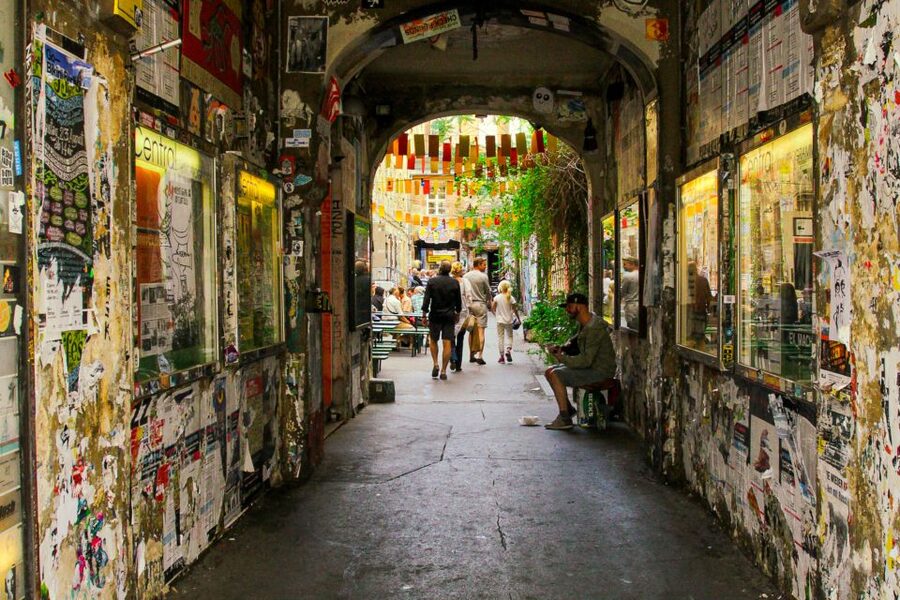
You may also get an early look at street art and graffiti. The guide explains why certain walls, buildings, or public spaces matter, rather than treating every colorful surface as a photo backdrop. Bring a camera, but listen for the story before taking the picture.
Kreuzberg: migration, art, and alternative Berlin
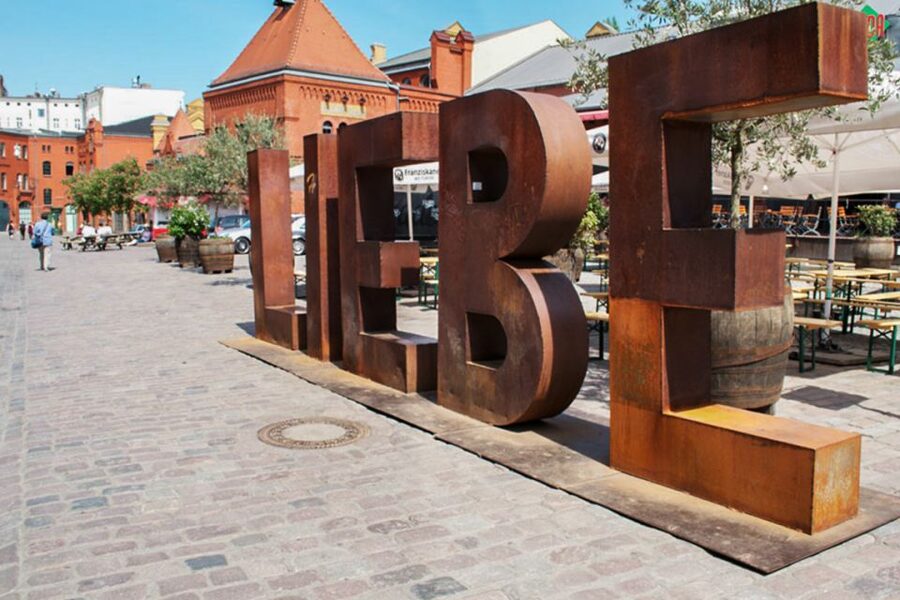
The Kreuzberg section takes about two hours, making it the core of the tour. This is where the route turns more strongly toward multicultural Berlin, especially Turkish neighborhoods, former Jewish communities, African cultural connections, music, political activism, and gay life.
Kreuzberg is often reduced to nightlife and street art. This tour tries to show the forces behind those labels. You may hear how migration changed the district, how political movements used buildings and public space, and how alternative communities shaped the area’s identity.
The Turkish connection is central. Kreuzberg has long been associated with Turkish Berlin, and the tour uses the neighborhood to discuss cultural exchange and daily life. That makes the experience more useful than a quick look at a market street. You get a sense of how a district can be both strongly local and connected to wider traditions.
The route also touches on Berlin’s African communities and the city’s former Jewish presence. These subjects broaden the usual counterculture story. Berlin’s alternative side is not only white punk, club culture, and graffiti. It also includes migration, religion, memory, race, sexuality, and the ways communities make a place their own.
A stop connected with Berlin’s gay community adds another layer. The information provided describes one of the city’s more extravagant neighborhoods, but the exact stop may depend on the current route. Treat this as a cultural and social-history visit, not a dedicated LGBTQ nightlife tour.
Street art is one of the most visual parts of the walk. You can expect large murals, graffiti, and traces of artists who have helped make Berlin famous for public art. The best guides add a warning here: Berlin’s street art scene is tied to ownership, politics, fame, and changing property prices. Once a style becomes famous, the city’s alternative reputation can itself become a commercial product.
That tension is one of the tour’s strengths. Berlin can make underground culture look mainstream, while still allowing new forms of rebellion to appear. You do not need to be a punk fan or an activist to follow the discussion. The subjects are really about who gets to use a city and who decides what belongs there.
Canals, galleries, farms, and repurposed spaces

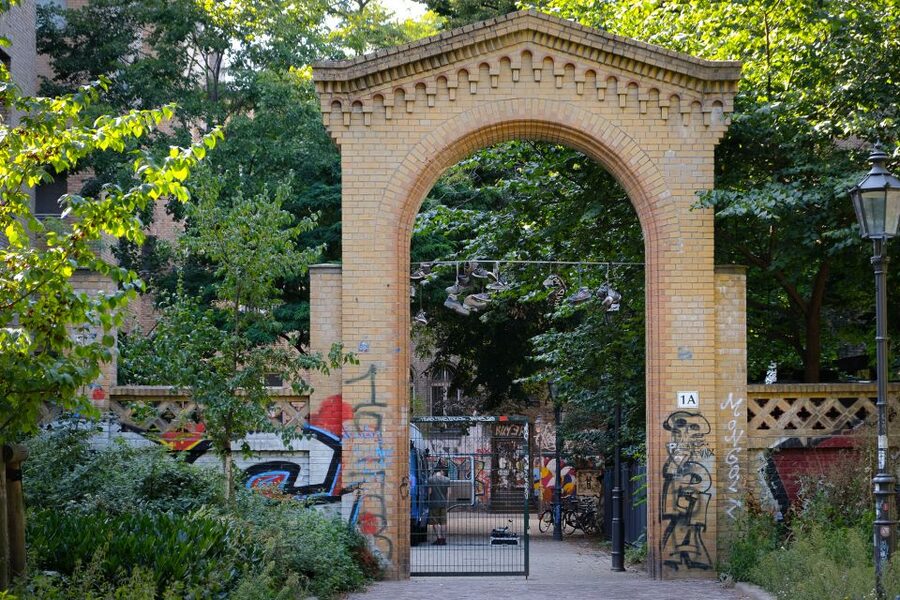
The tour also includes quieter pieces of Berlin. You may reach relaxing canals, underground galleries, community-funded urban farms, and other spaces that do not fit the usual sightseeing list.
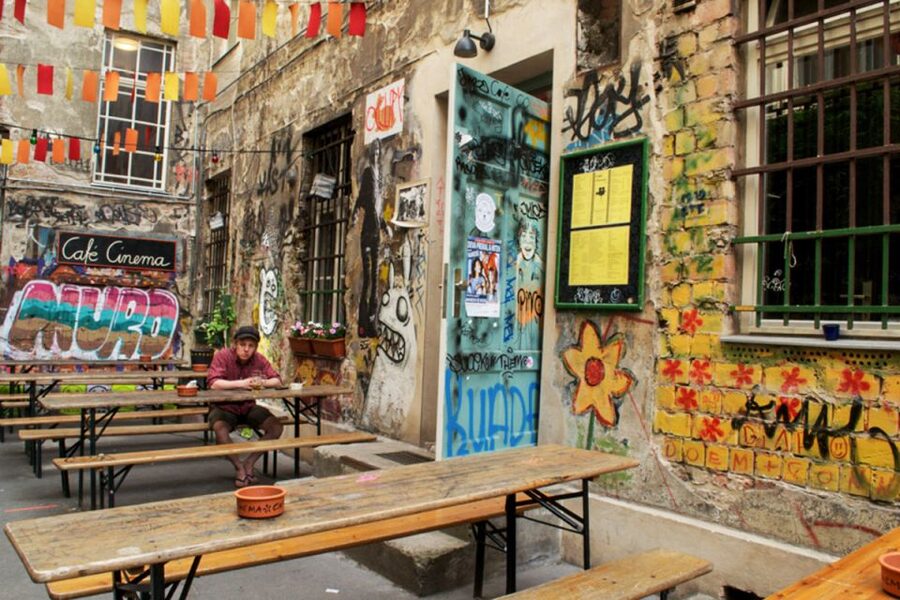
These stops help break up the street walking. They also show that alternative Berlin is not only loud. Some of the city’s creative life grows in overlooked corners, shared gardens, former industrial spaces, and places supported by local groups.
The word underground can mean several things here. It may refer to a gallery, a music scene, an informal community, or a political tradition. You should expect the route to compare these different uses rather than offer one narrow definition.
The urban farm element is especially telling. A community-funded project says something about how residents want to use open space, support local food, and build social ties. It is a small-scale example of the same repurposing theme that runs through the tour.
One especially strong way to understand Berlin is through this contrast: a canal beside a dense neighborhood, a garden beside old buildings, or an art space in a structure that once served another purpose. The tour uses those contrasts to explain how the city keeps changing without erasing every trace of what came before.
Same streets, a different guide:
- Berlin: Discover Berlin Walking Tour
★ 4.9 · 5,998 reviews - Berlin’s Best: 2 Hour Walking Tour Third Reich and the Cold War
★ 5.0 · 5,486 reviews - Berlin: Hidden Backyards Guided Walking Tour
★ 4.8 · 5,360 reviews - Explore Berlin: See All The Iconic Sights & Some Hidden Gems
★ 5.0 · 4,429 reviews
Music, markets, and Berlin after dark
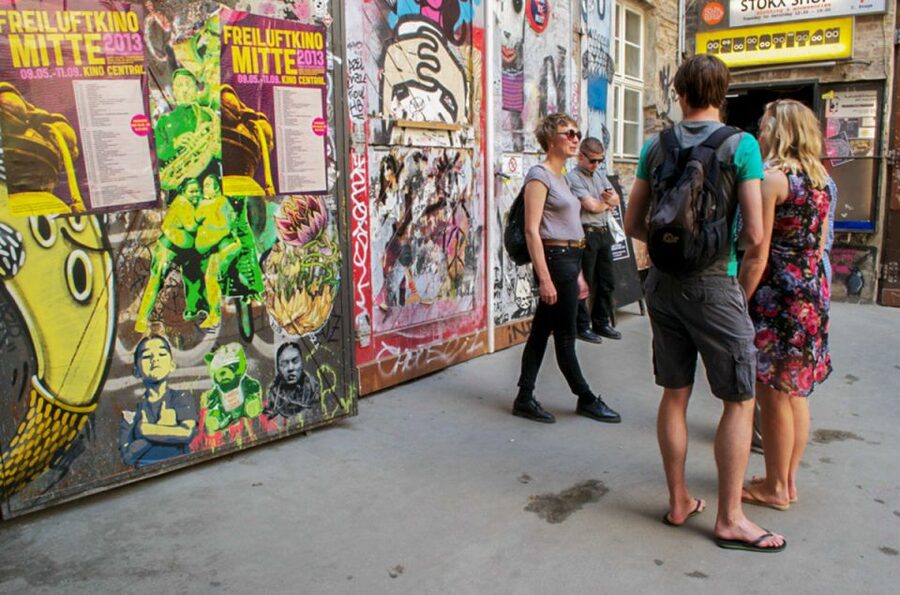
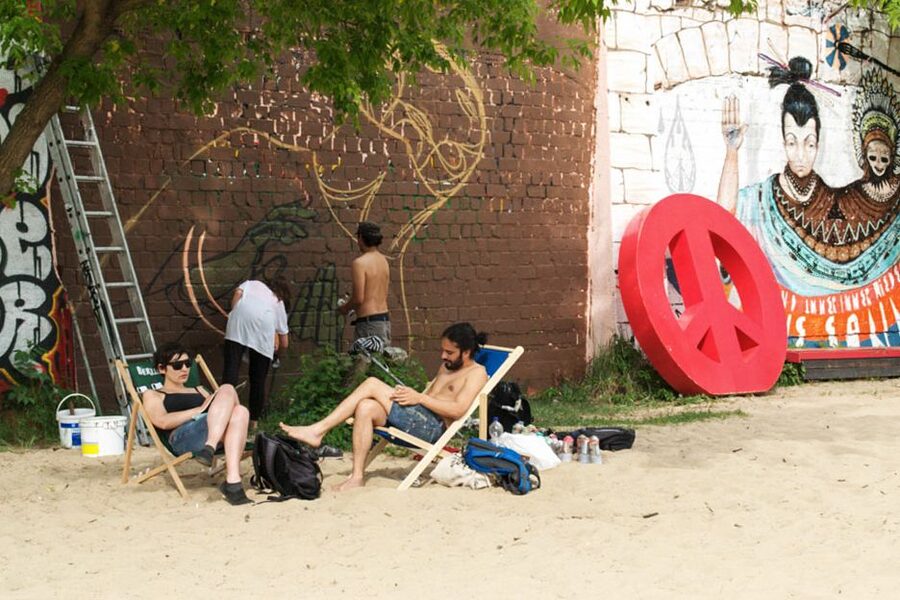
Berlin’s music scene receives substantial attention, including a stop at an African beach bar and market. The setting sounds more relaxed than a formal museum visit, and it gives the guide room to discuss music, migration, nightlife, and cultural exchange.
Do not confuse this with a club tour. You are learning how different music and social movements took hold in Berlin, not being promised entry to a famous venue or a night out. The stop is useful because music is one of the clearest ways Berlin’s postwar and post-Wall identities spread beyond individual neighborhoods.
The tour also connects artists and musicians to the physical city. Buildings, record shops, cafés, bars, murals, and gathering places can all carry a story. One guide was particularly praised for recommending places to eat and visit after the walk, which is useful if you want to continue exploring once the group finishes.
The route ends in Friedrichshain. That ending matters because you do not simply return to Alexanderplatz. You finish in an area associated with more of Berlin’s creative and alternative activity, giving you a practical starting point for the rest of your evening.
The guides are a major part of the value
The tour uses different guides, so the tone will not be identical every time. Rhys is repeatedly described as funny, engaging, and passionate, with a strong ability to hold attention for the full four hours. Reece is praised for humor, clear delivery, and useful local suggestions. Jake is known for adapting well to bad weather and mixing wit with serious context.
Jonathan, Damien, Ady, Ben, and Antonio have also led tours that left strong impressions. The common thread is not one fixed performance. It is the use of personal stories, city knowledge, humor, and a willingness to answer questions.
That matters because this subject could become a dry list of political groups and dates. A good guide makes the links clear: how government affected buildings, how migration changed districts, how music responded to politics, and how Berlin’s past still affects the way people live.
Group size can vary. One group mentioned 15 people, and the guide kept everyone involved despite freezing weather and snow. A larger group may make it harder to hear or ask questions, although strong voice projection helps. The tour is in English only.
Four hours on foot, plus public transport
This is a walking tour, but the route may also use trains or trams depending on the current art and tour route. An AB transit ticket is required when transport is used. You can buy one before the tour from BVG or a train station, or select the option that includes BVG.
Pay attention to this detail when booking. The basic description can make one AB ticket sound sufficient, but the exact number of journeys may vary. A day ticket may be simpler if you expect to use Berlin’s transport before or after the tour, though you should check the current fare and route needs yourself.
The walk is described as fast paced. If stairs, long periods of standing, or a steady four-hour route are difficult for you, this may not be the right fit. One practical weakness is that a formal mid-tour rest and bathroom break is not guaranteed. You may find refreshment stops, but plan ahead and use facilities when you can.
Wear shoes made for uneven city pavements. In winter, add warm layers, gloves, and footwear with a good grip. The tour runs in rain, snow, and cold, and one guide adapted well during a snowy outing. Still, your comfort depends more on clothing than on the guide’s energy.
Is $29 a fair price?
At $29 per person, this is fairly priced for a four-hour guided experience in central Berlin, especially if you want interpretation rather than a simple route through famous sights. The fee covers the guide and local tips, with selected photo opportunities and refreshment breaks included in the experience.
It does not automatically solve every extra cost. Food and public transport may require additional payment, depending on the stop and the option you choose. Factor in the AB ticket, a possible snack, and any drink you buy.
The value is strongest if you would otherwise spend hours trying to find the right neighborhoods, art, community projects, and cultural stories yourself. The route gives you a framework, then leaves you with ideas for places to revisit.
The value is weaker if you mainly want Berlin’s major memorials and headline landmarks. You will see the TV Tower at the start and may encounter parts of the Wall route, but this is not a replacement for a classic Berlin history tour.
You can cancel up to 24 hours before the start for a full refund, and the reserve-now-pay-later option keeps your plans flexible.
Who should book this Berlin walking tour?
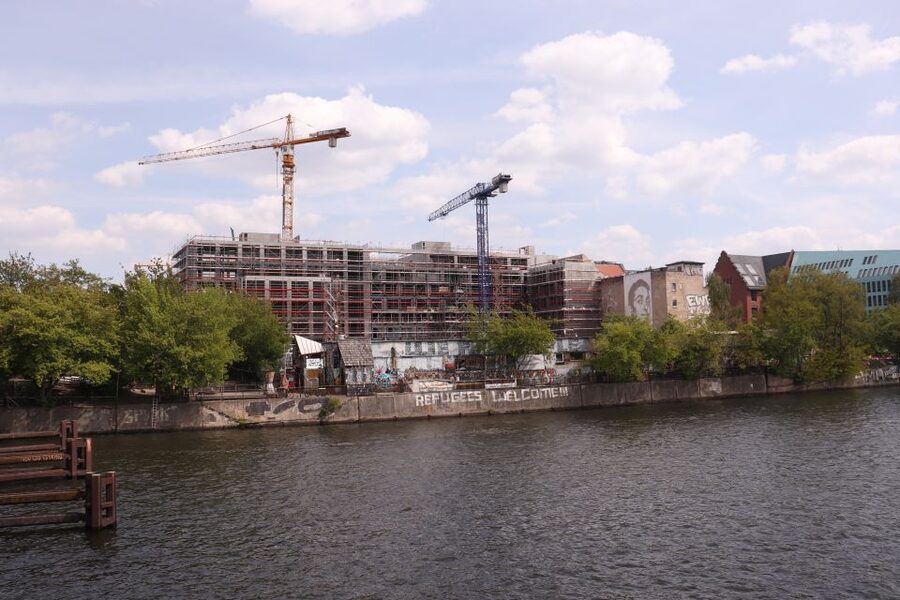
I would choose this tour early in a Berlin stay if you want help understanding the city’s neighborhoods before exploring them alone. It suits curious first-time visitors, repeat visitors who have already seen the main sights, solo travelers hoping to meet a mixed group, and anyone interested in music, street art, migration, architecture, or social change.
It is also a good match if you dislike standard sightseeing tours. Several guides have made seemingly ordinary or rough-looking places meaningful by explaining what happened there and why the site still matters.
I would skip it if you need a slow route, guaranteed indoor stops, a fixed food tasting, or a detailed tour of major wartime monuments. The four-hour pace, weather exposure, changing route, and public transport requirement call for some preparation.
Should you book it?
Book it if you want Berlin explained through its people, neighborhoods, music, art, and experiments in community life. At $29, the chance to see Mitte, Kreuzberg, and Friedrichshain through one connected story is good value.
Pick a warm, dry day if you can, wear sensible shoes, arrange the AB ticket, and leave room in your evening for a guide’s food or bar suggestions. If you want the city beyond the standard World War II and Cold War script, this is one of the more useful walks in Berlin.
FAQ
Where does the Alternative Berlin Walking Tour start?
It starts in front of Vapiano by the Alexanderplatz TV Tower in Berlin.
Where does the tour finish?
The tour finishes in Friedrichshain, Berlin.
How long does the tour last?
The walking tour lasts four hours.
Which neighborhoods does the tour visit?
The stated route includes Mitte and Kreuzberg, with the tour finishing in Friedrichshain. The wider route can also include other areas depending on the current art and tour plan.
What language is the tour in?
The tour is conducted in English with a live guide.
Is public transport used?
Public transport may be used depending on the current route. An AB metro ticket is required when transport is needed, unless you book the option that includes BVG.
Is food included?
The tour includes selected refreshment breaks, but the information provided does not state that food or drinks are included in the price. A guide may stop at a local fast-food place, including for currywurst, so bring money for anything you wish to buy.
Does the tour run in bad weather?
Yes. Tours run throughout the year and in all weather conditions.
Is the tour suitable for people with mobility issues?
The route is described as fast paced and lasts four hours. It may not suit anyone who finds extended walking or a brisk pace difficult.
Can I cancel for a refund?
You can cancel up to 24 hours in advance for a full refund. A reserve-now-pay-later option is also available.
New routes in Berlin
- Small Group Walking Tour: “Wild Kreuzberg”★ 4.8 · 199 reviews
- Sachsenhausen Memorial: Walking Tour from Berlin★ 4.7 · 132 reviews
- Berlin: Prenzlauer Berg District Guided Walking Tour★ 4.9 · 316 reviews
- Berlin: 2.5-Hour Walking Tour through Kreuzberg 61★ 4.9 · 525 reviews
- From Berlin: Potsdam & Sanssouci half day Walking Tour★ 4.9 · 85 reviews
- Explore Berlin: Walking Tour of All The Iconic Sites★ 4.9 · 855 reviews
- East Berlin and the Wall: Walking Tour★ 4.9 · 407 reviews
- Cold War, Berlin Wall, Spies and the East Side Gallery★ 4.8 · 254 reviews
Berlin Walking Tours, compared.
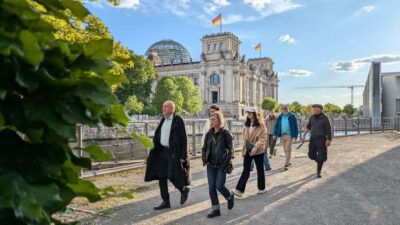
Berlin City walk Government District and Places of Democracy
Read our review →
Berlin’s Best: 2 Hour Walking Tour Third Reich and the Cold War
Read our review →
Explore Berlin: See All The Iconic Sights & Some Hidden Gems
Read our review →
Third Reich Berlin: Hitler and WWII Walking Tour
Read our review →
Berlin Center Food Tour with 8+ Authentic Local Tastings
Read our review →
Browse the lists this tour appears in