
Review · BERLIN
Small Group Walking Tour: “Wild Kreuzberg”
Kreuzberg is best understood from street level, where Turkish markets, Arabic restaurants, punk-era bars, old housing blocks, art spaces, and U-Bahn tracks all crowd into the same few blocks. This 2.5-hour walk takes you through that mix, from Kottbusser Tor and SO36 to Bethanien, Görlitzer Park, and the bridge that once marked the divide between East and West Berlin.
I like the route for two clear reasons: it connects famous sights with less polished corners, and it gives you useful historical context without requiring a full day. Guides such as Ferenz use old photographs and current background to explain how Kreuzberg changed. The main drawback is that the tour is German-language only, and the walk runs in all weather, so poor conditions can make the experience less comfortable.
Key reasons to consider the Wild Kreuzberg walk
- Kottbusser Tor begins the story: Turkish markets, Arabic eateries, cafés, clubs, and the elevated U1 tracks meet in one noisy square.
- Oranienstraße shows Kreuzberg’s everyday character: You pass the Berlin Home for the Blind, independent shops, comic stores, boutiques, bars, and the Museum of Objects.
- Bethanien and Rauchhaus reveal the district’s squat history: A former hospital and a neighboring house preserve Kreuzberg’s alternative side.
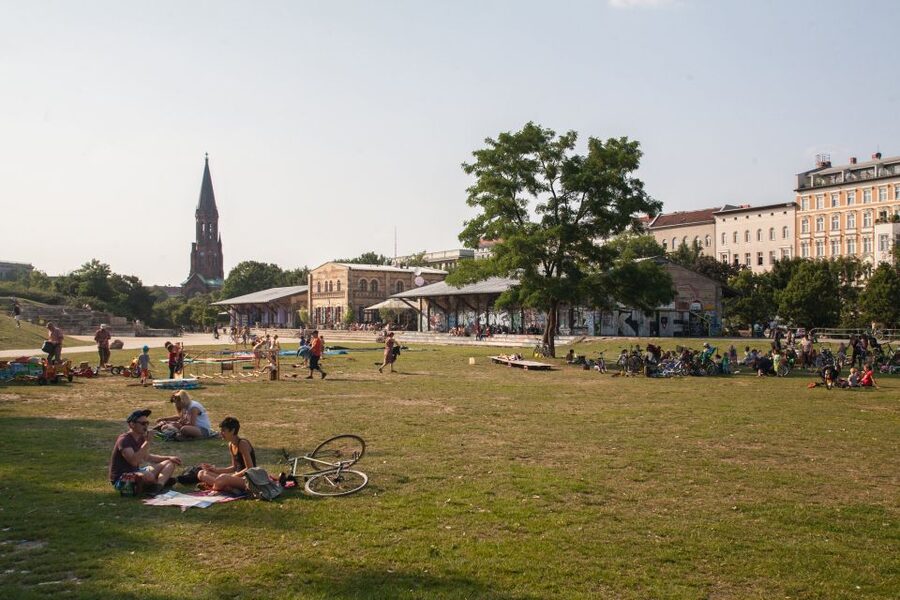
- Görlitzer Park has a surprising past: The park occupies the site of a former railway station.
- The route reaches major Berlin symbols: You see Oberbaumbrücke and the East Side Gallery after walking through Wrangelkiez.
- The price is modest: At $24 per person, the walk offers 2.5 hours of guiding for less than many large-city sightseeing tours.
Starting beneath the U1 at Kottbusser Tor
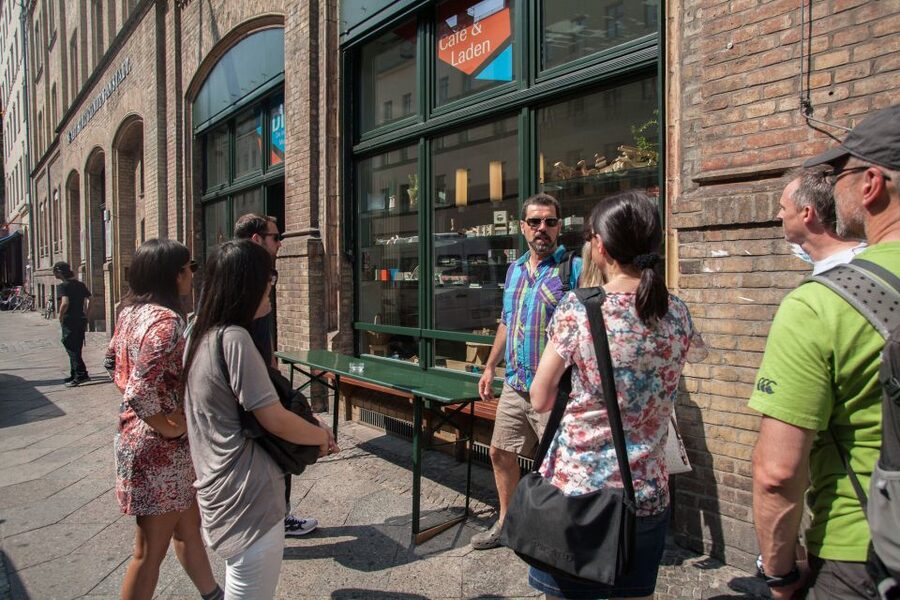
Meet at 137 Skalitzer Straße, in front of Gold Exchange and next to REWE. The nearest station is Kottbusser Tor, served by the U1 and U8. Use the Skalitzer Straße exit, then look for a guide holding a sign with the tour operator’s logo.
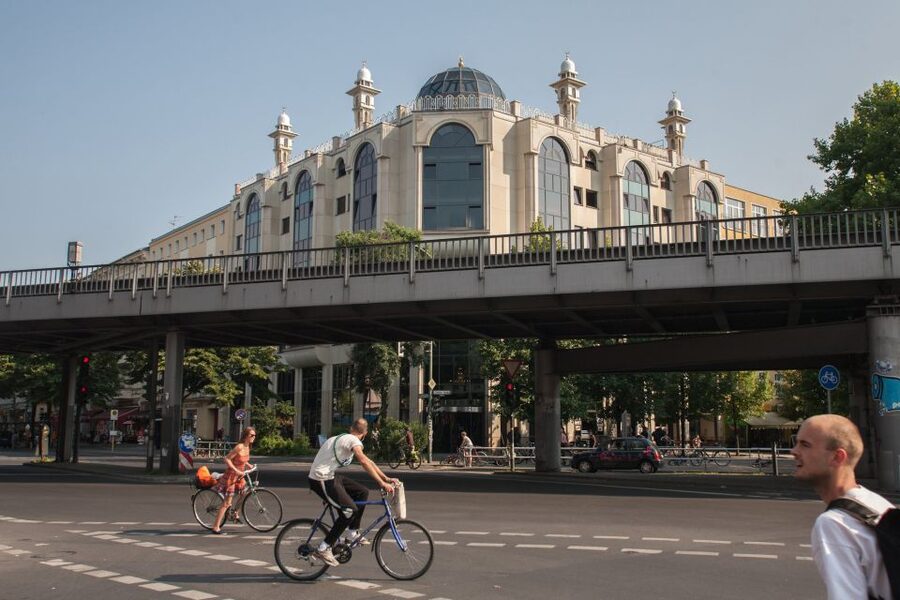
This is a useful starting point because Kottbusser Tor immediately gives you the Kreuzberg that people come to see. The elevated U1 line cuts across the square, while Turkish food shops, Arabic restaurants, small cafés, alternative bars, and nightclubs fill the surrounding streets. You do not begin with a polished monument. You begin with traffic, rail noise, daily errands, and a strong sense of place.
That opening matters. Kreuzberg is not one single attraction. It is a district shaped by immigration, working-class housing, nightlife, political movements, and creative life. Kottbusser Tor lets you see those layers before the walk moves into quieter streets.
The square can feel hectic, especially if you are unfamiliar with Berlin. Stay close to the guide while crossing roads and moving under the railway. Comfortable shoes are essential, since the route is entirely on foot and includes several hours of city pavement.
More Small-Group Walking Tours in Berlin:
- Amsterdam Anne Frank: Small-Group Walking Tour & Local Guide
★ 4.8 · 12,789 reviews - Boston: Freedom Trail History Small Group Walking Tour
★ 5.0 · 6,450 reviews - New Orleans Food Walking Tour of the French Quarter with Small-Group Option
★ 5.0 · 6,118 reviews
From old apartment blocks to Oranienstraße
The walk continues past imposing houses built at the beginning of the last century. These blocks help explain the physical character of Kreuzberg: dense streets, large façades, courtyards, and housing built before modern Berlin became a major international destination.
You also pass the Sozialpalast, an important piece of the district’s more recent urban story. The tour does not treat Kreuzberg as a museum frozen in the past. Instead, it connects the built environment with the people and movements that have shaped the area.
Oranienstraße is the next major focus. This was once part of the SO36 postal district, and the name remains closely linked with Berlin’s punk and alternative culture. Today, you find restaurants, bars, cafés, shops, comic stores, and boutiques along the street. The appeal is not any single sight. It is the way ordinary commercial life sits beside traces of counterculture.
I like this part of the walk because you can pause mentally between history and street observation. One building may suggest old Berlin housing, while the next storefront points to the district’s creative and independent side. The guide helps give those changes meaning instead of leaving you to guess what you are seeing.
Small places with unusual stories
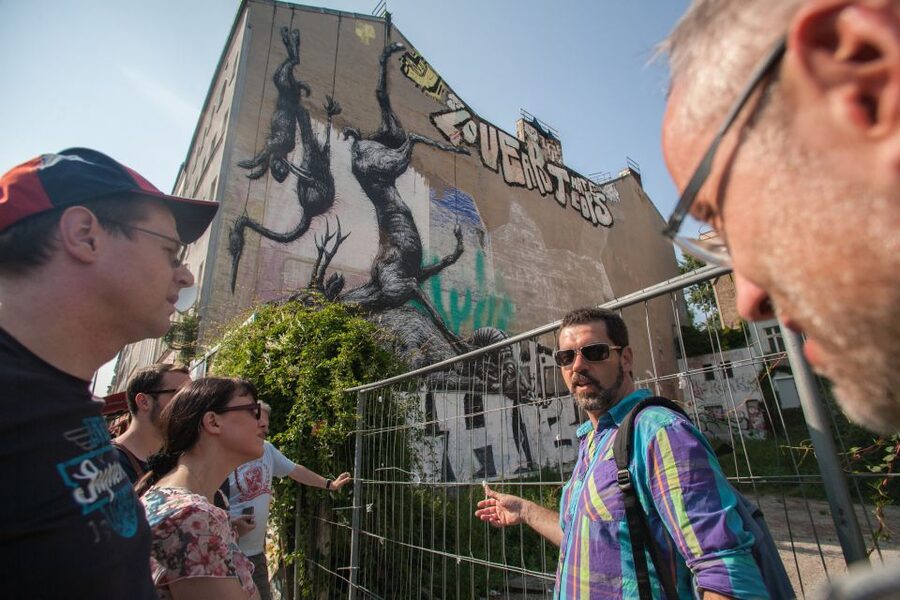
The Berlin Home for the Blind is one of the more distinctive stops. It is not the kind of place most visitors would find on a standard Berlin highlights tour, and that is exactly why it fits this walk. Kreuzberg’s identity comes through its institutions and local businesses as much as through its headline sights.
The route also allows for a coffee break in the Oranienhöfen. Food and drinks are not included, so budget separately for anything you buy. This stop gives you a chance to rest, warm up, and watch the neighborhood for a few minutes rather than rushing from one point to the next.
The Museum of Objects adds another unusual angle. It focuses on the history of mass production, giving you a way to think about everyday manufactured things and how they became part of modern life. This is a different kind of museum visit from the grand collections elsewhere in Berlin. You should expect a compact, idea-driven stop rather than a major institution that fills half a day.
The tour also includes the well-known Fontane-Apotheke. Its presence shows how the route pays attention to local landmarks that carry meaning within the neighborhood. If you prefer tours built only around famous monuments, this may feel too detailed. If you enjoy seeing how a district works at street level, it is a plus.
SO36 and Kreuzberg’s alternative past
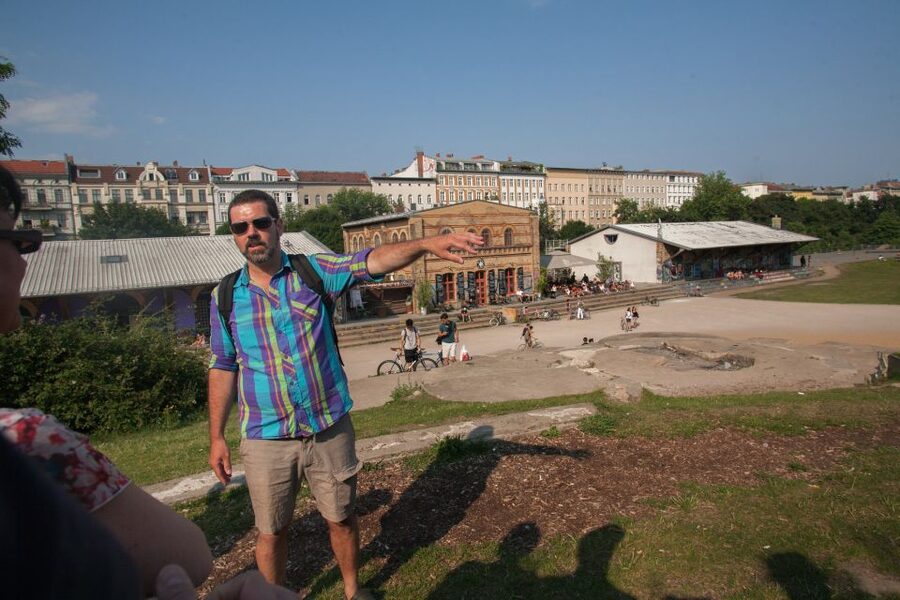
SO36 is one of the key names on the route. The district became associated with punk culture, alternative politics, squatting, and nightlife, and the tour uses its streets to explain that past.
The walk does not simply point at a club or bar and move on. It connects the area with the housing blocks, businesses, social institutions, and public spaces around it. That makes the story easier to understand. Alternative culture did not grow in an empty zone. It developed inside a dense neighborhood with strong immigrant roots and ongoing pressure from wider changes in Berlin.
This is also where the guide’s quality matters most. Ferenz received especially strong praise for explaining the history in an entertaining and interesting way. Another useful feature is the use of older photographs to show how places looked in earlier decades. A good guide can help you compare the current street with its former role, rather than giving you a string of dates.
The experience appears to work well for people who want context but do not want a lecture. Its overall rating is 4.8 from 199 reviews, and the most consistent positive points are the guide’s storytelling, the amount of information, and the well-judged length.
More Walking Tours in Berlin:
- Discover Berlin Half-Day Walking Tour
★ 5.0 · 9,624 reviews - Berlin City walk Government District and Places of Democracy
★ 4.7 · 8,467 reviews - Berlin: Third Reich & Cold War Guided Walking Tour
★ 4.9 · 8,378 reviews - Berlin: Discover Berlin Walking Tour
★ 4.9 · 5,998 reviews
Mariannenplatz, Bethanien, and Rauchhaus
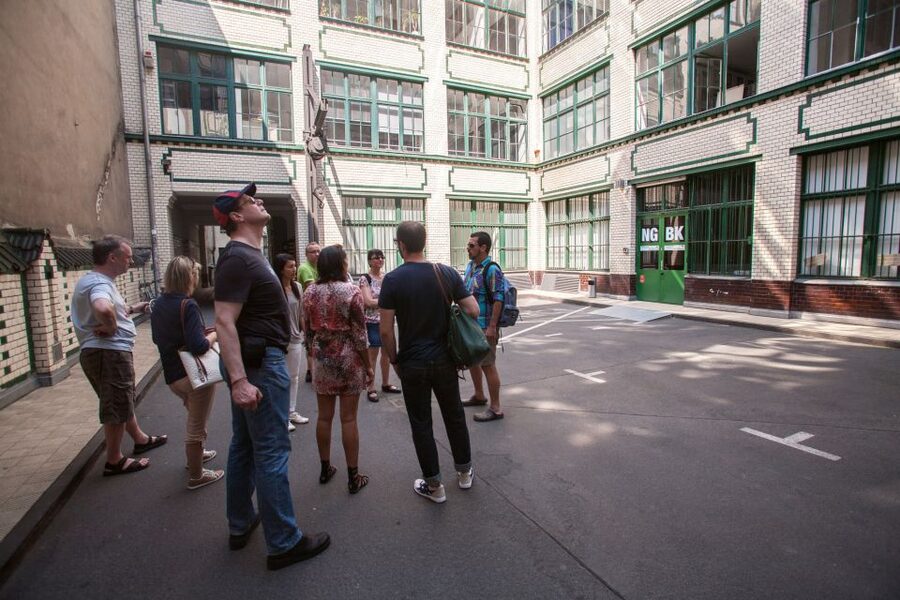
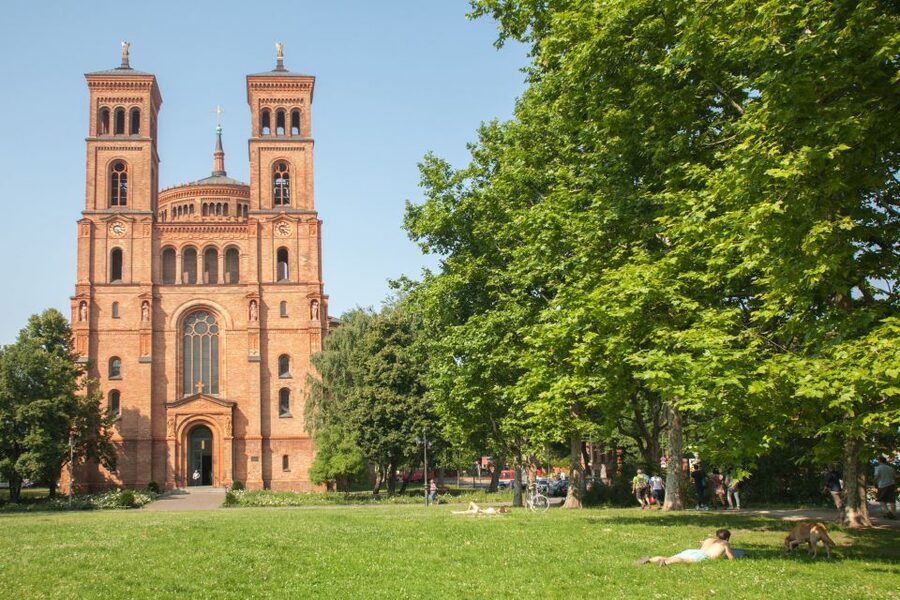
After Heinrich-Platz, the route reaches Mariannenplatz. This open space leads to Bethanien, a former hospital now associated with art and alternative culture. The building’s change from hospital to art squat reflects the wider pattern of Kreuzberg: older structures gain new uses as the district changes around them.
Bethanien is one of the strongest stops for understanding Kreuzberg’s creative side. You are not only seeing an art venue. You are seeing how a former institutional building became linked with a different kind of community and public life.
Next door, Rauchhaus offers more traces of the area’s squatter history. Together, Bethanien and Rauchhaus give the tour a clear center. You see the buildings, hear about the people who occupied and reshaped them, and connect those stories with the alternative identity of SO36.
This portion should appeal to you if you are interested in urban change, social movements, and Berlin’s postwar counterculture. It may be less satisfying if you expect extensive interior access, since the supplied details describe these as sightseeing stops rather than a dedicated building tour.
St. Thomas Church and the route toward the park
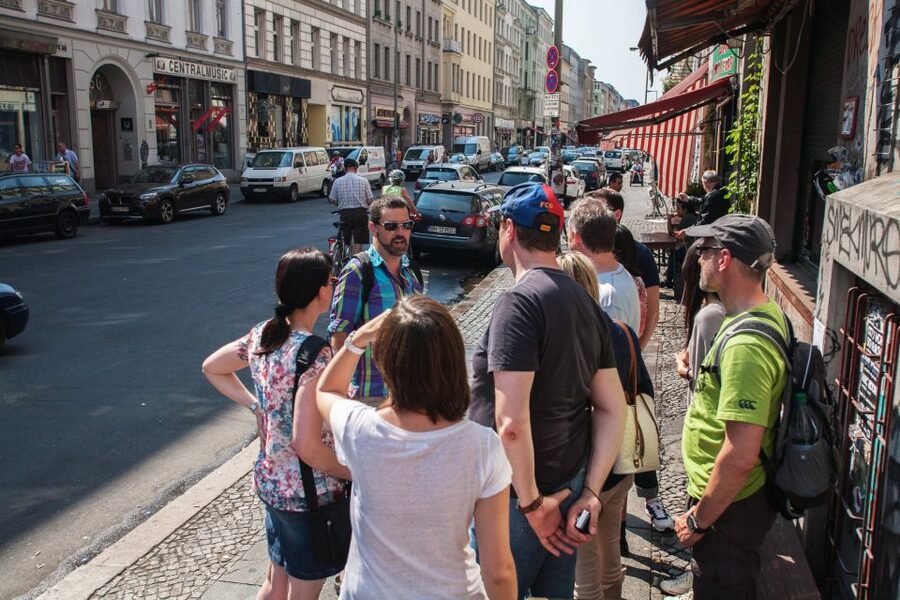
St. Thomas Church appears later in the walk, adding a religious landmark to a route otherwise focused on housing, commerce, art, and alternative culture. Its inclusion keeps the tour from presenting Kreuzberg as only a nightlife or punk district.
The sequence of stops also helps you notice how quickly the setting changes. You move from streets lined with shops and older buildings toward larger public areas and the route around Görlitzer Park. The tour’s many points of interest are close enough to form one connected story, but varied enough to keep the walk from feeling repetitive.
The tour lasts about 2.5 hours, which is a sensible length for this material. You get enough time for explanation and a coffee pause without giving up an entire day. A winter booking can be more demanding, though. One January tour took place in snow and below-freezing temperatures, yet the group still received a highly positive account of the experience. That is a reminder to dress for the forecast, not the calendar.
Görlitzer Park and a former railway station
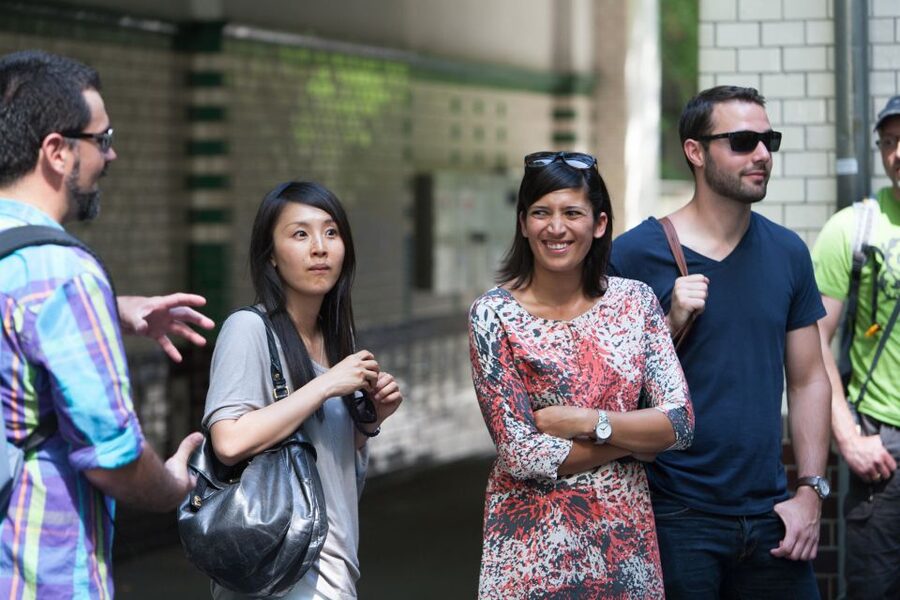
Görlitzer Park is one of the route’s most interesting changes of scene. The park was previously a train station, so what you see today is tied to Berlin’s railway past as well as its present-day public life.
The park works best as a place to understand how cities reuse former transport spaces. The tour gives you a chance to consider what has disappeared, what has been retained, and how a former rail site now serves as open space.
The walk then continues through Wrangelkiez, another part of Kreuzberg known for its neighborhood character. By this point, you have seen several versions of the district: the major interchange at Kottbusser Tor, the commercial and nightlife streets around Oranienstraße, the art and squat sites near Bethanien, and the former railway ground at Görlitzer Park.
This variety is the central value of the experience. You are not repeating the same kind of attraction for two and a half hours. You are moving through different pieces of one district and seeing how they fit together.
Oberbaumbrücke and the East Side Gallery
The route reaches Oberbaumbrücke, the famous bridge that symbolically links East and West Berlin. It is a fitting later stop because the walk has already shown you how Kreuzberg changed through immigration, divided-city politics, alternative movements, and reunified Berlin.
The tour also includes the East Side Gallery. These are major Berlin sights, but they arrive after the neighborhood walk rather than serving as the entire focus. That order is useful. You first get a sense of Kreuzberg’s streets, then reach places that connect the district to the city’s larger political story.
The listed finish is Görlitzer Bahnhof. Because Oberbaumbrücke and the East Side Gallery are also included, check the exact route details and starting time when booking if your onward plans are tight. The route clearly covers this part of the city, but you should allow a little flexibility after the scheduled end.
What the $24 price gets you
At $24 per person, this is a good-value introduction to Kreuzberg. You receive a live city guide, about 2.5 hours of walking, and a route that combines local streets with major Berlin sights. The price is particularly fair if the guide gives the kind of historical explanation associated with Ferenz and uses old photographs to make the past easier to see.
You do not receive food or drinks, so the coffee stop is at your own expense. You also should not expect a private tour by default. The minimum is two people, and group size beyond that is not specified.
There is one unusual possibility: in very poor weather, you may end up with a nearly private experience if few people book. A January walk took place with only the guide and one couple because of heavy snow and freezing temperatures. That can mean more time for questions, but it also shows why clothing and footwear matter.
The operator supplies a rain poncho when needed. Still, a poncho will not replace warm layers or sensible shoes. The tour runs in all weather, and the cancellation deadline for groups of three or more is three days before the scheduled tour. For a smaller booking, free cancellation is available up to 24 hours in advance, and you can reserve now and pay later.
Who should book this Kreuzberg walk?
I would choose this tour if you want to understand Kreuzberg rather than simply photograph its best-known sights. It suits you if you enjoy neighborhood history, social change, old buildings, independent shops, art spaces, and the less polished side of Berlin.
It is also a good first-day activity for a visitor who wants a sense of direction. Starting at Kottbusser Tor and finishing around the Görlitzer Bahnhof area gives you a practical introduction to several parts of the district.
You should think twice if you need an English-language tour, since the guide language is German. You may also prefer a shorter sightseeing route if you dislike walking in rain or cold. The itinerary is not built around long museum visits, and the appeal comes from the streets, buildings, stories, and transitions between neighborhoods.
Should you book Wild Kreuzberg?
Book it if you want a low-cost, story-led walk through the Kreuzberg most standard city tours skip. The combination of Kottbusser Tor, Oranienstraße, SO36, Bethanien, Rauchhaus, Görlitzer Park, Oberbaumbrücke, and the East Side Gallery gives you both local detail and major Berlin context.
The strongest reason to go is the guiding. Ferenz has been praised for clear historical storytelling, current background, and an engaging style. Just confirm that German suits you, wear shoes made for pavement, and expect the weather to be part of the experience.
FAQ
Where does the Wild Kreuzberg tour start?
The tour starts at 137 Skalitzer Straße, in front of Gold Exchange and next to REWE. The nearest U-Bahn station is Kottbusser Tor on the U1 and U8 lines. Use the Skalitzer Straße exit.
How long does the tour last?
The walking tour lasts approximately 2.5 hours.
What language is the tour conducted in?
The live tour guide speaks German. The listed tour language is German.
What sights are included?
The route includes Kottbusser Tor, Oranienstraße, SO36, the Berlin Home for the Blind, the Museum of Objects, Mariannenplatz, Bethanien, Rauchhaus, St. Thomas Church, Görlitzer Park, Wrangelkiez, Oberbaumbrücke, and the East Side Gallery.
Is food or drink included?
No. Food and drinks are not included. You may buy a coffee during the stop in the Oranienhöfen.
Does the tour run in bad weather?
Yes. The tour operates in all weather conditions. A rain poncho is provided when necessary.
What happens if too few people book?
At least two people are required for the tour. If that minimum is not reached, the operator may cancel at short notice and notify you. Groups of three or more must cancel at least three days before the scheduled tour for the stated cancellation terms.
New routes in Berlin
- Sachsenhausen Memorial: Walking Tour from Berlin★ 4.7 · 132 reviews
- Berlin: Prenzlauer Berg District Guided Walking Tour★ 4.9 · 316 reviews
- Berlin: 2.5-Hour Walking Tour through Kreuzberg 61★ 4.9 · 525 reviews
- From Berlin: Potsdam & Sanssouci half day Walking Tour★ 4.9 · 85 reviews
- Explore Berlin: Walking Tour of All The Iconic Sites★ 4.9 · 855 reviews
- East Berlin and the Wall: Walking Tour★ 4.9 · 407 reviews
- Cold War, Berlin Wall, Spies and the East Side Gallery★ 4.8 · 254 reviews
- Berlin: The Time of National Socialism Walking Tour★ 5.0 · 220 reviews
Berlin Walking Tours, compared.
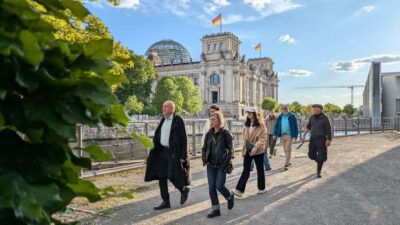
Berlin City walk Government District and Places of Democracy
Read our review →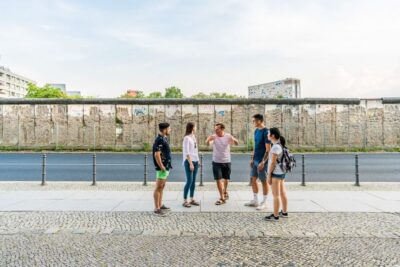
Berlin’s Best: 2 Hour Walking Tour Third Reich and the Cold War
Read our review →
Explore Berlin: See All The Iconic Sights & Some Hidden Gems
Read our review →
Third Reich Berlin: Hitler and WWII Walking Tour
Read our review →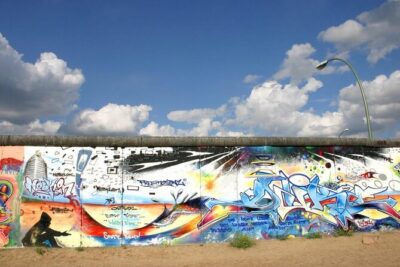
Berlin Center Food Tour with 8+ Authentic Local Tastings
Read our review →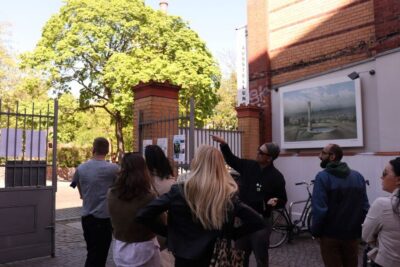
Browse the lists this tour appears in