
Review · BERLIN
Explore Berlin: Walking Tour of All The Iconic Sites
Berlin’s most important sights are scattered across the center, but this three-hour walking tour ties them together with one clear story: how Berlin moved from imperial capital to Nazi headquarters, divided Cold War city, and reunited European capital. You’ll walk across the former Death Strip, stand at Hitler’s Bunker, and finish beneath the Brandenburg Gate.
I like the way the tour mixes famous stops with places that can be easy to miss, especially Bebelplatz and the former SS and Gestapo headquarters. I also like the guide-led approach. Guides including Hannah, Daniel, Xavier, Ru, Tina, and Rohan are praised for making difficult subjects understandable, adding humor when appropriate, and offering useful restaurant and transport tips.
The main consideration is simple: you cover a lot of ground in three hours. The frequent stops make the pace manageable, but you’ll still want comfortable shoes, water, and weather protection. This is an outdoor tour, and it runs in rain or shine.
Key points to know before you book
- The route covers Berlin’s essential historical center: Museum Island, Bebelplatz, Gendarmenmarkt, Checkpoint Charlie, the Berlin Wall, Hitler’s Bunker, the Holocaust Memorial, Reichstag, and Brandenburg Gate.
- The strongest feature is the storytelling: Guides explain how Nazi rule, Cold War division, and reunification shaped the same streets you are walking.
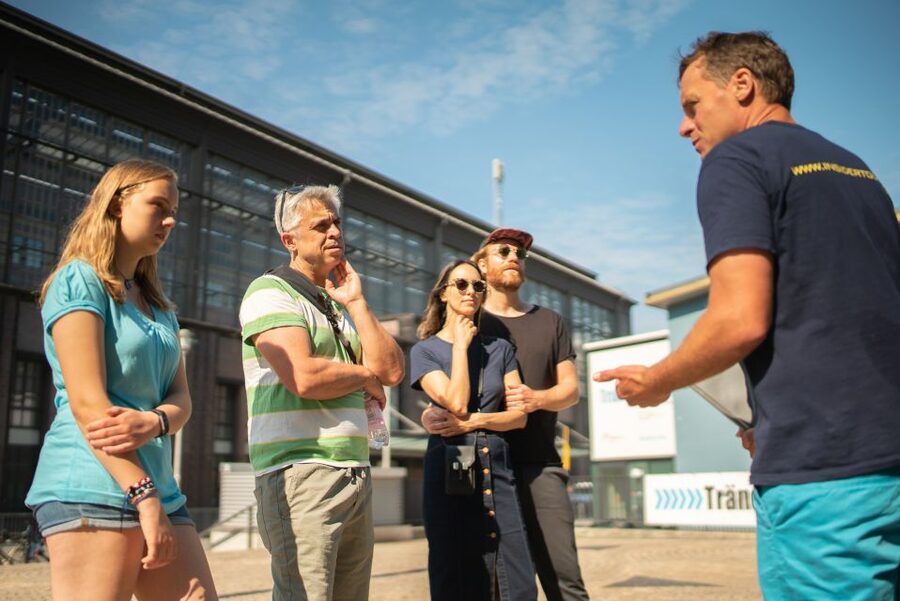
- The starting point is easy to find: Meet outside Friedrichstrasse station beside the Traenenpalast, looking for guides with yellow umbrellas.
- You see the sights from outside: This is a walking and photo tour, not a ticketed visit inside the Reichstag, museums, or memorial buildings.
- The price is modest for the coverage: At $17 per person, you get a useful orientation to central Berlin in one compact outing.
- You can choose the format that suits you: English, German, and Spanish tours are available, with private and small-group options.
Why this route works for a first Berlin visit
Berlin can feel confusing at first. Its major sights are not gathered around one old town square, and many important places look ordinary until someone explains what happened there. This walk gives you that framework.
The route moves through several eras without treating them as separate museum chapters. You might begin with Berlin’s royal and cultural center, pass through the sites of Nazi terror, then follow the Cold War boundary and finish at the symbols of modern Germany. That sequence helps you understand why Berlin looks the way it does today.
At $17, the value is strong if you want a broad introduction rather than a specialist tour of one subject. You are paying for a live guide and a well-planned route, not entrance tickets. The tour does not include museum admission, food, or transport, so think of it as a city orientation with serious historical content.
I would schedule it near the beginning of your stay. Several guides, including Hannah and Tina, are noted for giving practical suggestions about restaurants, bars, and public transport. Those tips can help you make better use of the rest of your time.
More Walking Tours in Berlin:
- Discover Berlin Half-Day Walking Tour
★ 5.0 · 9,624 reviews - Berlin City walk Government District and Places of Democracy
★ 4.7 · 8,467 reviews - Berlin: Third Reich & Cold War Guided Walking Tour
★ 4.9 · 8,378 reviews
Starting beside the Palace of Tears
The standard meeting point is outside Friedrichstrasse train station, on the square beside the Traenenpalast, or Palace of Tears, at Reichstagufer 17. Look for the guide holding a yellow umbrella.
That meeting point is useful because Friedrichstrasse is a major transport hub. If you choose a private option, pickup from your Berlin accommodation is available. You should wait in the hotel lobby five minutes before the scheduled pickup, and the guide will wear a yellow name tag.
The tour ends back at the meeting point, with the route also taking you toward Pariser Platz by the Brandenburg Gate. Check the exact option when you book, since starting arrangements depend on the selected tour type.
Museum Island and Berlin’s cultural center
The route begins around Museum Island, where Berlin’s major museums sit along the River Spree. You receive about 15 minutes of guided explanation here, enough to understand why this area matters without turning the tour into a museum visit.
This is a good early stop because it shows another side of Berlin. The tour is not only about war and division. Museum Island represents the city’s cultural and imperial ambitions, while the later stops show the damage and political upheaval that followed.
You will not go inside the museums on this walk. If you want to visit them, plan a separate half-day or longer. The guide’s role here is to give you a map of the area and help you decide which museums deserve your time later.
Bebelplatz and the warning beneath the square
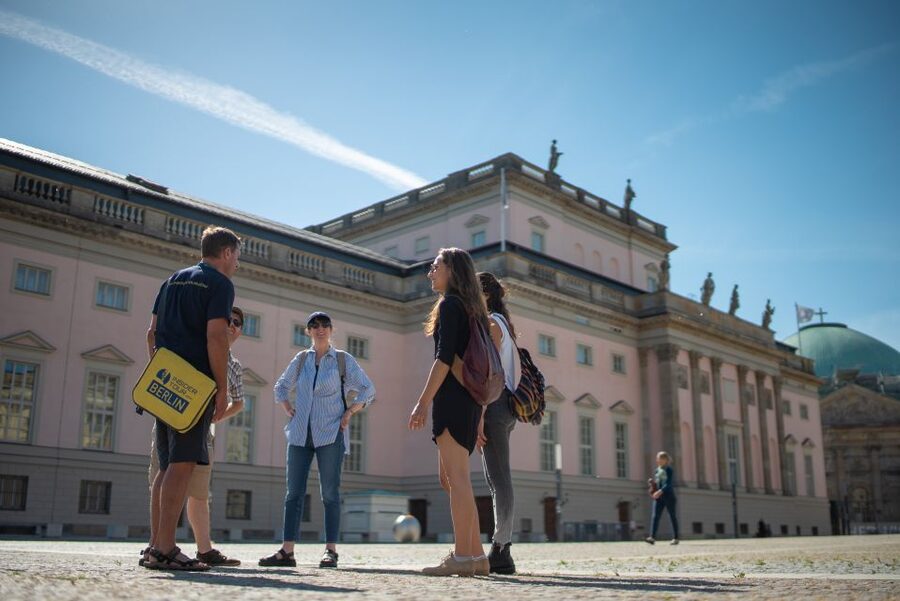
Bebelplatz is one of the most meaningful stops on the route. The square is linked to the Nazi book burning, and the tour gives you time to consider how public space was used for political theater and intimidation.
This stop works best with a guide because the key detail is not always obvious from a quick glance. You may see a square surrounded by grand buildings, but the site carries a warning about censorship and state power.
The planned talk lasts about 10 minutes. That is enough for a clear explanation, but anyone wanting a detailed study of Nazi cultural policy will need additional time elsewhere. I appreciate that the tour includes this location rather than limiting the route to postcard sights.
Same streets, a different guide:
- Berlin: Discover Berlin Walking Tour
★ 4.9 · 5,998 reviews - Berlin’s Best: 2 Hour Walking Tour Third Reich and the Cold War
★ 5.0 · 5,486 reviews - Berlin: Hidden Backyards Guided Walking Tour
★ 4.8 · 5,360 reviews - Explore Berlin: See All The Iconic Sights & Some Hidden Gems
★ 5.0 · 4,429 reviews
Gendarmenmarkt and the older Berlin
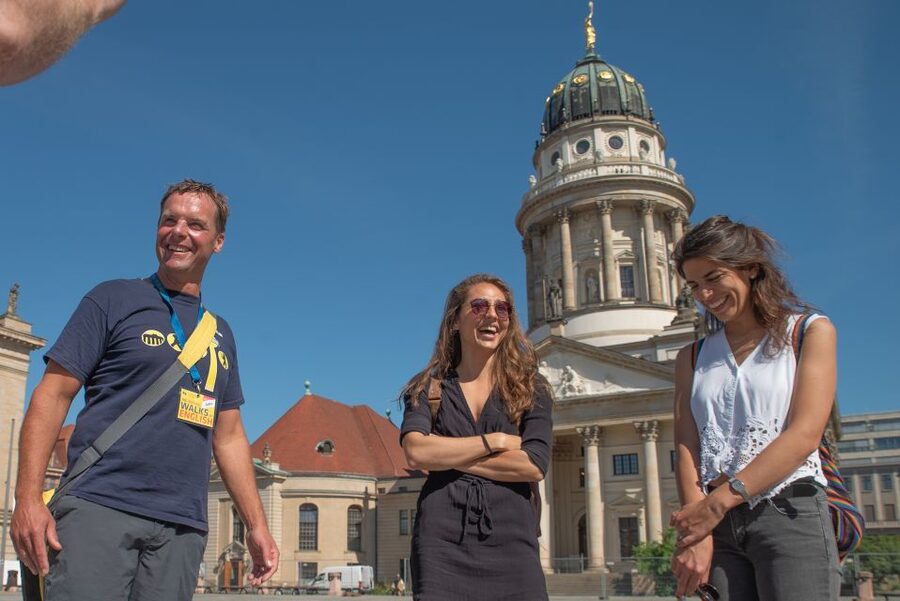
Gendarmenmarkt brings you back to Berlin’s architectural and civic past. The guided stop lasts about 10 minutes, giving you a chance to see one of the city center’s formal squares and place it within the wider story of Berlin.
This section also provides a change of mood. After Bebelplatz, the square’s orderly design and grand buildings remind you that Berlin was a major European capital long before the twentieth century’s dictatorships and division.
The tour is moving through public spaces, so the experience depends on the guide’s explanation rather than admission to a particular building. If architecture is your main interest, you may want to return later for a slower look.
Checkpoint Charlie and the Cold War city
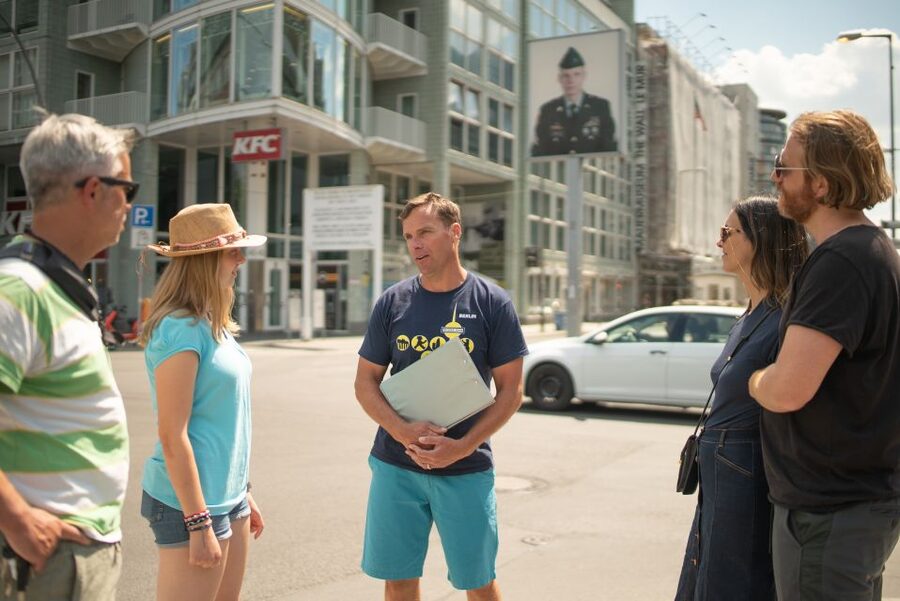
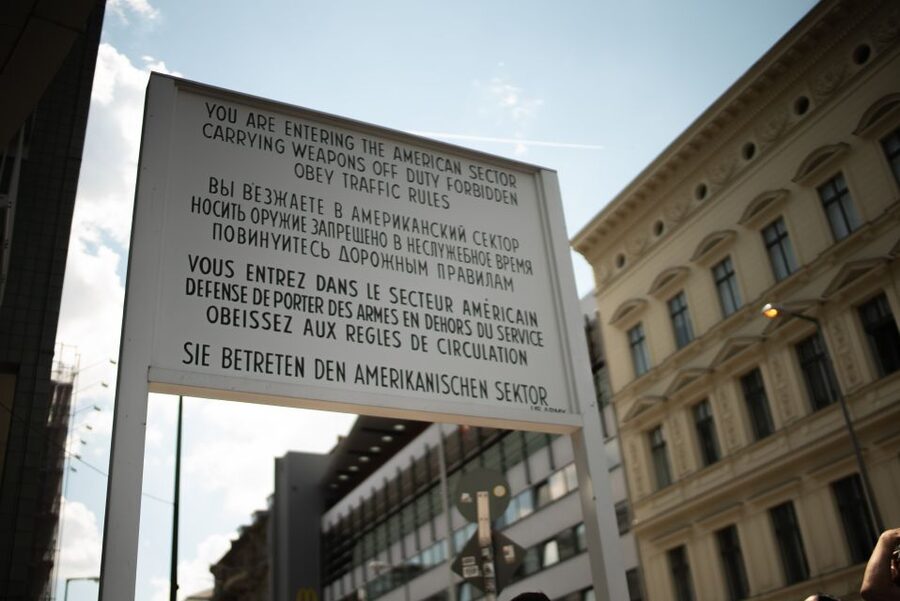
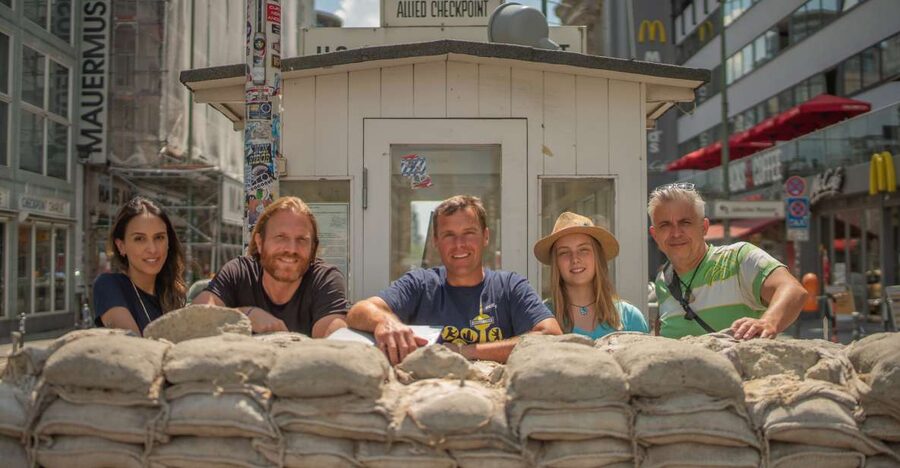
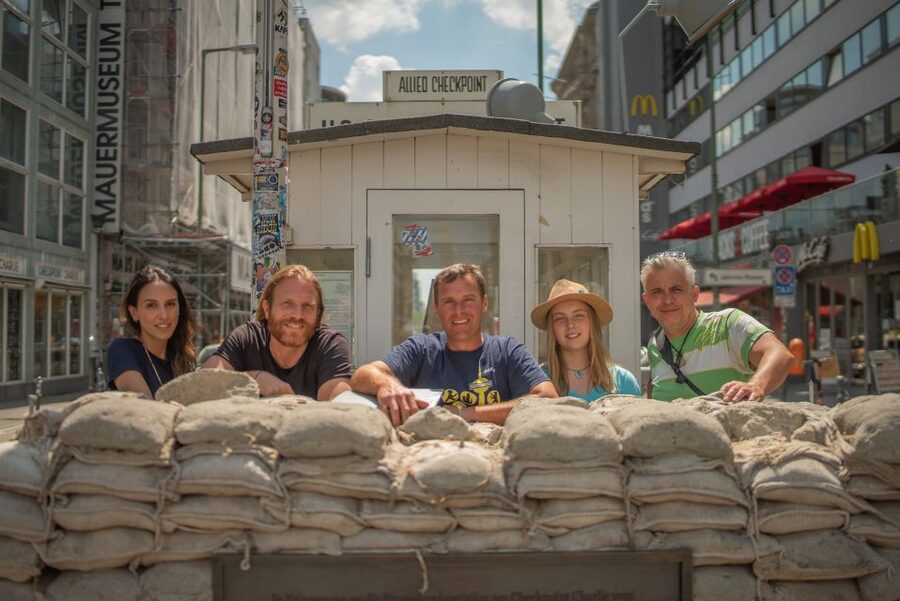
Checkpoint Charlie is one of Berlin’s best-known Cold War sites. Here, the tour includes a photo stop and about 10 minutes of explanation.
You’ll learn how East and West met at this crossing and hear about the tension, surveillance, and escape attempts tied to the divided city. This is an important place, but it can also feel more commercial and crowded than the historical weight suggests. A guide helps separate the genuine history from the modern souvenir setting.
The stop is especially useful if you have little background on the Berlin Wall. It gives you a concrete point of reference before the route moves to another section of the former border.
Touching the Berlin Wall
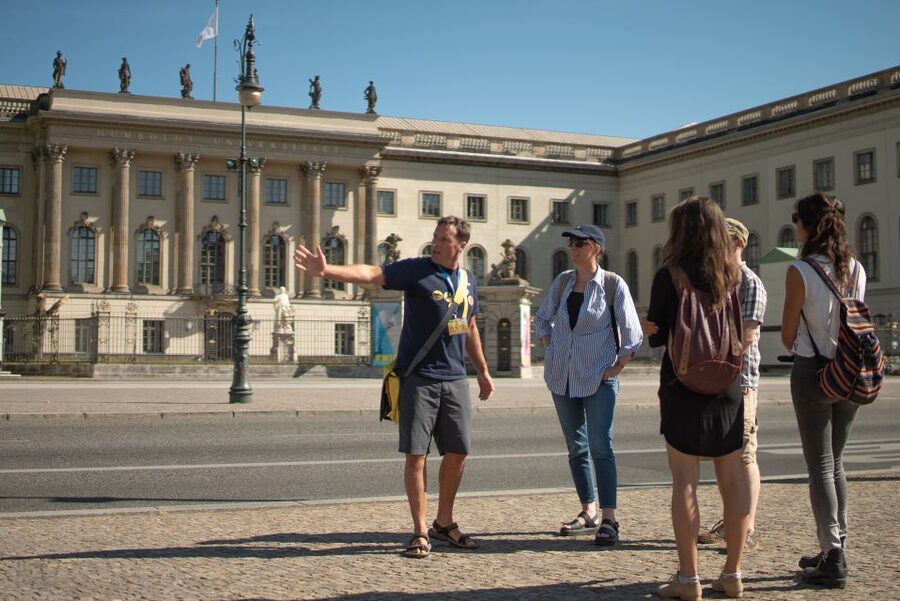
The Berlin Wall stop includes time for photographs and a guided explanation. The route presents the Wall not only as a concrete barrier, but as part of a wider system that divided families, neighborhoods, workplaces, and political lives.
The experience is strongest when the guide connects the physical remains to personal stories of escape and surveillance. Guides such as Ru and Giles are praised for bringing together landmarks and the different periods Berlin has passed through. That sort of linking is valuable here, since the remaining Wall fragments alone cannot explain the full scale of the division.
Bring a camera if you want photographs, but give yourself time to listen. This is one of the points where the meaning matters more than the picture.
Hitler’s Bunker and the former Nazi center
The stop at Hitler’s Bunker is deliberately sobering. The site is now marked without a dramatic monument, and the guide explains what took place beneath the ground and how the area changed afterward.
You’ll also hear about the former SS and Gestapo headquarters, another reminder that the Nazi government’s machinery of terror operated from ordinary-looking offices in central Berlin. The tour handles these places as historical evidence rather than spectacle.
This part can be difficult, especially for children, but the guides are described as clear and sensitive. Hannah is praised for presenting serious material in a reflective way while still keeping younger members of a family engaged. If you prefer a tour focused only on architecture or food, this is not that kind of outing.
The Holocaust Memorial and the former Death Strip
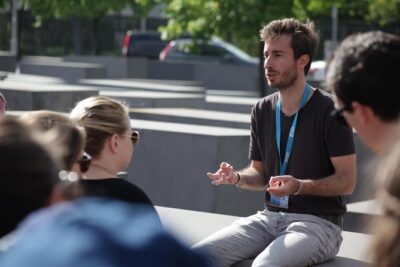
The Memorial to the Murdered Jews of Europe is one of the route’s most important stops. You’ll walk among the concrete slabs and hear why the memorial’s design invites a personal response rather than giving you a simple explanation.
The tour also refers to the former Death Strip, placing the memorial and surrounding streets within the changing geography of Berlin. This is a place to slow down and avoid treating the visit as a quick photo opportunity.
The planned guided time is about 15 minutes. That is enough to introduce the memorial’s purpose and setting, but not enough for a full discussion of the Holocaust. If you want more context, the nearby Information Centre requires separate time and planning, which is not included in this activity.
Reichstag and the road to reunification
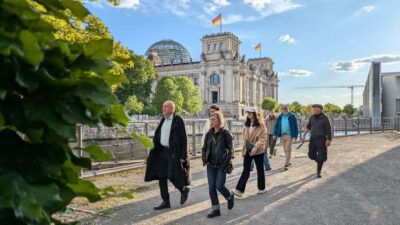
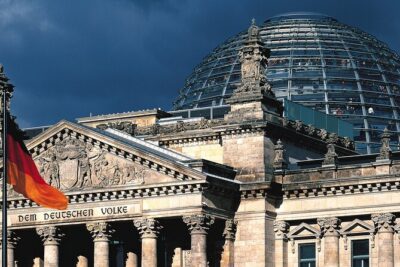
The Reichstag is a natural part of this route because it represents Germany’s political center and the country’s transformation after reunification. You’ll see the building from outside and receive about 10 minutes of explanation.
The guide connects the Reichstag to the story of Berlin’s divided years and its return as the seat of parliament. This helps you understand the contrast between the building’s earlier political role, its damaged past, and its place in today’s united capital.
The tour does not include entry to the Reichstag. If you want to visit inside, including the famous glass dome, arrange that separately. The walking tour gives you the context, but it is not a substitute for an interior visit.
Brandenburg Gate and Pariser Platz
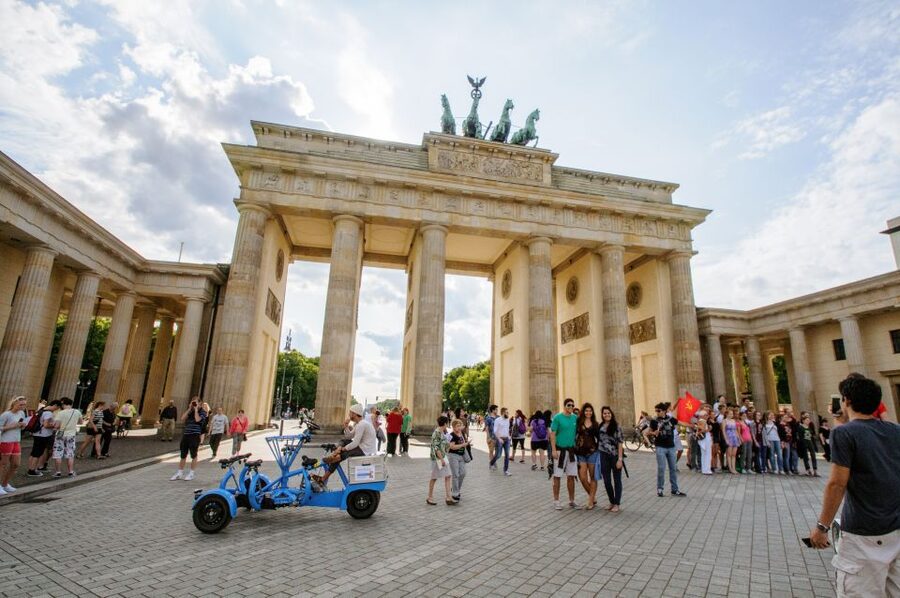
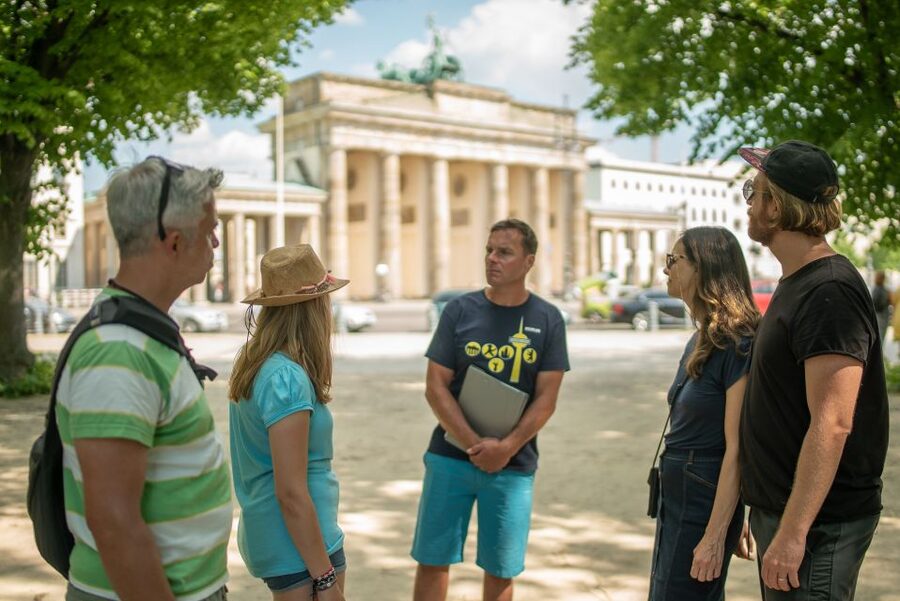
The walk finishes at Brandenburg Gate, one of Berlin’s clearest symbols of division and reunification. You’ll pass beneath the gate, hear how it came to represent a divided city, and see the public square at Pariser Platz.
This makes a satisfying ending because the route has moved from imperial Berlin through dictatorship and division to a reunited capital. The gate is not just a grand neoclassical photo backdrop. Its meaning changed with each political era.
The stop lasts about 10 minutes and includes time for photographs. Since the square is open and exposed, it can feel cold or wet in poor weather. Your guide can point out nearby sights, but the tour does not include a separate visit to the Reichstag dome or other buildings around the square.
Guides who make difficult subjects manageable
The guide can shape this experience more than any individual stop. The strongest feedback centers on clear explanations, humor used with care, and a genuine interest in Berlin.
Hannah is praised for working well with families and children, answering questions, and using printed material to explain certain details. Daniel is described as both entertaining and thorough, with one tour running beyond the scheduled time because the group remained engaged. Xavier is praised for an interactive style and an open approach to questions.
Other guide names associated with strong experiences include Maria, Martha, Rohan, Tina, Eran, Ru, Giles, Glen, Emma, Paul, Natalie, and Arte. The common thread is a guide who can make a complex subject understandable without flattening it into a list of dates.
The available languages are English, German, and Spanish. Private and small-group formats are available if you want more room for questions or a more personal pace.
Practical details that affect your day
Plan on walking for three hours, with frequent stops for explanations and photographs. The route is described as manageable for most people, but it is still a city walk, so wear comfortable shoes.
Bring water, a camera, and an umbrella or other rain protection. The tour operates every day in all weather. Alcohol and drugs are not permitted.
The activity is wheelchair accessible. Since the tour moves through public streets and squares, you should still confirm the exact selected option if you have particular mobility needs.
Free cancellation is available up to 24 hours before the activity for a full refund. You can also reserve now and pay later, which is useful if your Berlin schedule is still changing.
Who should book this Berlin walk?
I would recommend it to first-time visitors who want to understand how Berlin’s main sights fit together. It suits families, older visitors, and anyone who prefers learning outdoors instead of spending the first day inside museums.
It is also a good choice if you have only a short stay. In three hours, you cover many central landmarks and gain enough context to choose what deserves a second visit.
You may want something else if you dislike walking, want extensive time inside museums, or prefer a narrow specialist subject. The tour gives you an overview, not a detailed architectural study or a full Holocaust education program.
Should you book Explore Berlin?
At $17 per person, this is an unusually efficient way to get your bearings in Berlin. You see the major symbols, but the real value comes from the links between them: Bebelplatz connects to Nazi control, Checkpoint Charlie to Cold War division, and Brandenburg Gate to reunification.
Book it early in your stay if you want practical city advice and a strong historical framework. Choose a private or small-group option if personal questions matter to you. If you want museum interiors or the Reichstag dome, add those separately.
For a modest price and a serious three-hour walk, this tour gives you the clearest first look at Berlin’s past and present.
FAQ
How long does the Berlin walking tour last?
The tour lasts three hours. Starting times depend on availability when you book.
How much does the tour cost?
The listed price is $17 per person.
Where does the standard tour begin?
Meet outside Friedrichstrasse train station, on the square beside the Traenenpalast, or Palace of Tears, at Reichstagufer 17, 10117 Berlin.
How will I recognize the guide?
Look for guides holding yellow umbrellas at the standard meeting point. For private pickup, the guide wears a yellow name tag.
What languages are available?
The live tour guide is available in English, German, and Spanish.
Is hotel pickup available?
Pickup from your accommodation in Berlin is available when you choose the private option. You should wait in the hotel lobby five minutes before the scheduled pickup time.
Is the tour wheelchair accessible?
Yes, the activity is listed as wheelchair accessible.
What happens if it rains?
The tour operates every day in rain or shine. Comfortable shoes, water, a camera, and an umbrella are useful items to bring.
New routes in Berlin
- Small Group Walking Tour: “Wild Kreuzberg”★ 4.8 · 199 reviews
- Sachsenhausen Memorial: Walking Tour from Berlin★ 4.7 · 132 reviews
- Berlin: Prenzlauer Berg District Guided Walking Tour★ 4.9 · 316 reviews
- Berlin: 2.5-Hour Walking Tour through Kreuzberg 61★ 4.9 · 525 reviews
- From Berlin: Potsdam & Sanssouci half day Walking Tour★ 4.9 · 85 reviews
- East Berlin and the Wall: Walking Tour★ 4.9 · 407 reviews
- Cold War, Berlin Wall, Spies and the East Side Gallery★ 4.8 · 254 reviews
- Berlin: The Time of National Socialism Walking Tour★ 5.0 · 220 reviews
Berlin Walking Tours, compared.
Berlin City walk Government District and Places of Democracy
Read our review →
Berlin’s Best: 2 Hour Walking Tour Third Reich and the Cold War
Read our review →
Explore Berlin: See All The Iconic Sights & Some Hidden Gems
Read our review →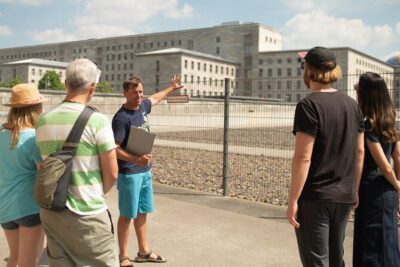
Third Reich Berlin: Hitler and WWII Walking Tour
Read our review →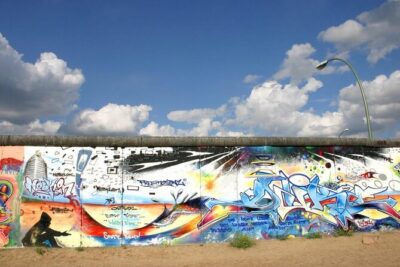
Berlin Center Food Tour with 8+ Authentic Local Tastings
Read our review →
Browse the lists this tour appears in