
Review · MUSEUMS
Cold War, Berlin Wall, Spies and the East Side Gallery
Berlin’s Cold War story feels most real when you leave the museum and walk the old border itself. This tour links the Palace of Tears, Alexanderplatz, Karl-Marx-Allee, the former death strip, and the East Side Gallery into one clear route through a city once split by concrete and fear.
I like the way the tour connects grand socialist buildings with ordinary escape stories. I also like the guides’ strong storytelling, with Paul, Xavier, Klaus, Tina, Nikolai, and others praised for bringing daily life in East Germany into focus. The main drawback is pace: three hours, several walks, and two short train rides leave little time to linger at each stop.
Key points to know before you go
- The Palace of Tears sets the emotional tone: This former border crossing helps explain how families and friends were separated by the Berlin Wall.
- Karl-Marx-Allee shows propaganda in brick and stone: The broad boulevard was built to present socialism as orderly, grand, and successful.
- You cover a lot of East Berlin: The route uses public transport between sites, so you need an AB day pass in addition to the tour price.
- The death strip makes the border’s danger clear: You hear how escape attempts used tunnels, rooftops, and other desperate routes.
- The East Side Gallery ends the tour on a changed note: The Wall becomes an open-air art gallery, shifting the story from control to public expression.
- Guide quality is a major strength: The company has used guides including Paul, Xavier, Klaus, Tina, Nikolai, Jim, and Eran, with strong emphasis on clear explanations and personal stories.
A three-hour walk through divided Berlin
At $18 per person, this is an inexpensive way to organize several Cold War sites that are spread across the city. The price covers a three-hour English or German guided tour, but not the public transport you need to move between locations.
That extra cost matters. An AB day pass is required, and you can buy one on the day with help from the staff. The tour is not a single long walk from start to finish. You walk between nearby sights, then use Berlin’s trains for short transfers.
You should plan on comfortable shoes and clothing suited to the weather. The tour runs in rain or shine, and some parts take place outdoors without much shelter. Bring a camera, but also bring patience if the group is large. Some past groups have been big enough that guides needed to speak loudly.
The route is best for you if you want a guided introduction to Cold War Berlin rather than a quiet, self-paced museum visit. It suits first-time visitors, history fans, and anyone who wants the Wall placed into the wider story of East German society.
More Museum Stops in Berlin:
- Berlin: Berlin Wall & East Side Gallery Walking Tour
★ 4.9 · 264 reviews - Acropolis monuments & Parthenon Walking Tour with Optional Acropolis Museum
★ 5.0 · 2,678 reviews - Frida Kahlo VIP [Museum Tickets Included] Walk, Markets & Churros
★ 5.0 · 982 reviews
Starting beside the Palace of Tears
The usual meeting point is outside Friedrichstrasse train station, on the square beside the Tränenpalast, or Palace of Tears. Look for a guide with a yellow name badge and yellow umbrella.
That meeting point is more than a convenient landmark. The Tränenpalast was a border crossing used for departures between East and West Berlin. Its name comes from the tearful farewells that took place there, since people could cross temporarily or leave East Germany, but relatives could not simply come and go as they pleased.
You spend about 20 minutes here. That is enough for an introduction and a strong sense of the human cost of the border, though not enough for a long museum visit. The stop works well at the beginning because it gives the later sites an emotional frame. The Wall was not only a political structure. It affected families, friendships, work, travel, and the simple act of saying goodbye.
If you choose the optional pickup service, the arrangement differs. You wait in your hotel lobby five minutes before the scheduled time, and after the tour you meet in front of the Tourist Information at Brandenburg Gate. Confirm the pickup details when booking, since the standard meeting point is Friedrichstrasse station.
Alexanderplatz and the public face of East Berlin
A short train ride of about five minutes takes you toward Alexanderplatz. The square is one of the clearest places to see how East Berlin wanted to present itself.
Alexanderplatz was reshaped as a major public space under East German rule. The surrounding GDR-era buildings, broad paving, and large-scale planning give you a feel for the official city. The tour spends around 20 minutes here, explaining how the square functioned in daily life and political theatre.
I find this stop useful because it keeps the tour from becoming only a story about border guards and escape tunnels. You also see the planned environment in which East Berliners worked, shopped, gathered, and watched the state’s message take shape around them.
The guide’s explanation matters here. A quick look at Alexanderplatz on your own can leave you with a few imposing buildings and little context. A good guide points out what the architecture was meant to communicate and how the space related to the wider socialist project.
The stop may feel brief if you want photographs or a longer look at the architecture. Keep your camera ready before the explanation begins, then stay close to the group. The tour has several sites still ahead.
Walking Karl-Marx-Allee, the socialist showpiece
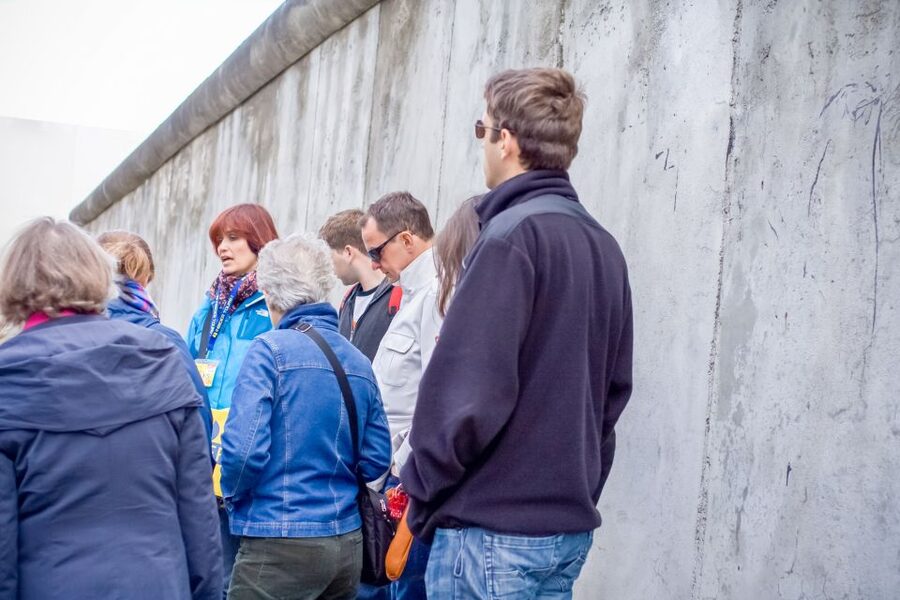
From Alexanderplatz, the group walks down Karl-Marx-Allee for about 20 minutes. This is one of the most revealing stretches of the route.
The boulevard was designed as a grand socialist showcase. Its huge scale, formal layout, and monumental apartment blocks were intended to show the strength and order of the East German state. The buildings were not merely housing. They were part of a political message, presenting a model socialist city to residents and visitors.
Your guide explains how to read that message in the architecture. Look up at the repeated forms, the broad road, and the deliberate sense of ceremony. The avenue was built to make the state appear permanent and powerful, yet the tour also connects it to ordinary people who lived under that system.
Karl-Marx-Allee is especially valuable after Alexanderplatz because the two stops work together. Alexanderplatz shows the public square and civic center. The boulevard shows the grand residential and ceremonial setting that extended the same message into everyday life.
This is also where you hear about the 1953 workers’ uprising. East German workers protested against increased work demands, and the unrest spread. The uprising shook the communist regime and became a key early sign that official claims of unity did not match life on the ground.
You will spend around 20 minutes here, not the whole length of the avenue. That is enough to understand its purpose, but you should not expect a full architectural tour of every building. The strength is the connection between buildings, politics, and human behavior.
Same streets, a different guide:
- Discover Berlin Half-Day Walking Tour
★ 5.0 · 9,624 reviews - Berlin City walk Government District and Places of Democracy
★ 4.7 · 8,467 reviews - Berlin: Third Reich & Cold War Guided Walking Tour
★ 4.9 · 8,378 reviews - Berlin: Discover Berlin Walking Tour
★ 4.9 · 5,998 reviews
Friedrichshain and the route toward the Wall
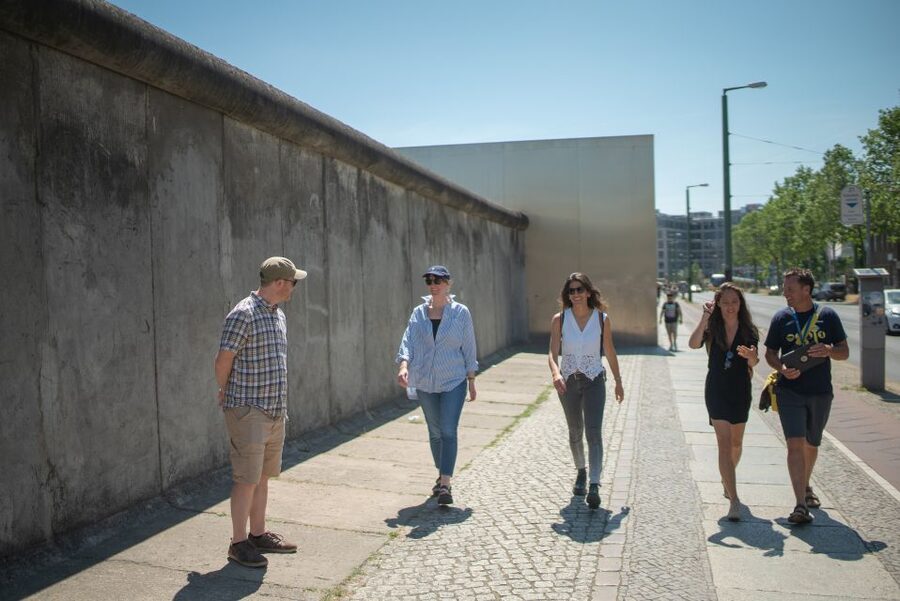
Another short train ride, listed at about six minutes, takes the group toward Friedrichshain. This part of the tour helps bridge the gap between the official center of East Berlin and the remaining Wall sites.
You spend roughly 20 minutes walking and listening in the area. The focus returns to surveillance, escape attempts, and the way the border cut through neighborhoods. The guide explains how the Stasi, East Germany’s secret police, monitored people and used informants to protect the state.
The stories here are often the tour’s most gripping material. Escape attempts involved tunnels, rooftops, forged plans, and extraordinary risks. The point is not to turn these events into adventure tales. The people attempting to leave faced armed guards, barriers, surveillance, and the danger of arrest or death.
A strong guide also keeps the story balanced. The tour is about repression, but it also deals with the decisions made by ordinary people living inside the system. That human scale is one reason guides such as Paul, Xavier, Klaus, Tina, Nikolai, and Jim receive such strong praise for their delivery. Their role is to explain the political facts without losing the personal stories.
Seeing the former death strip
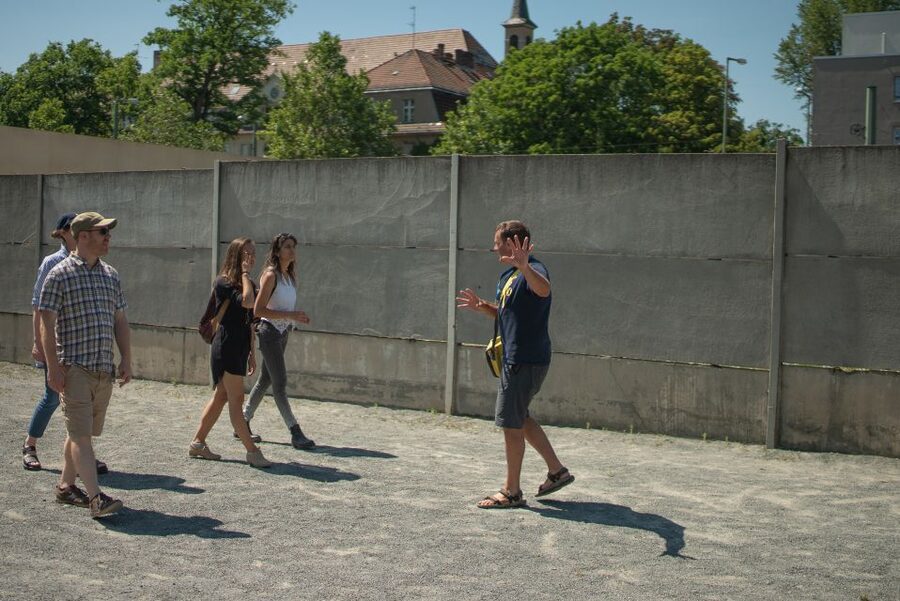
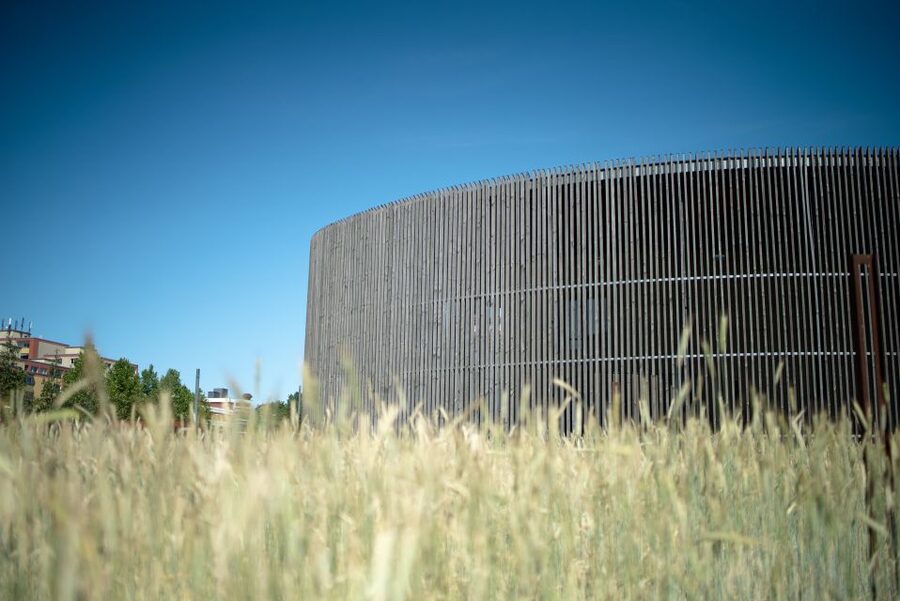
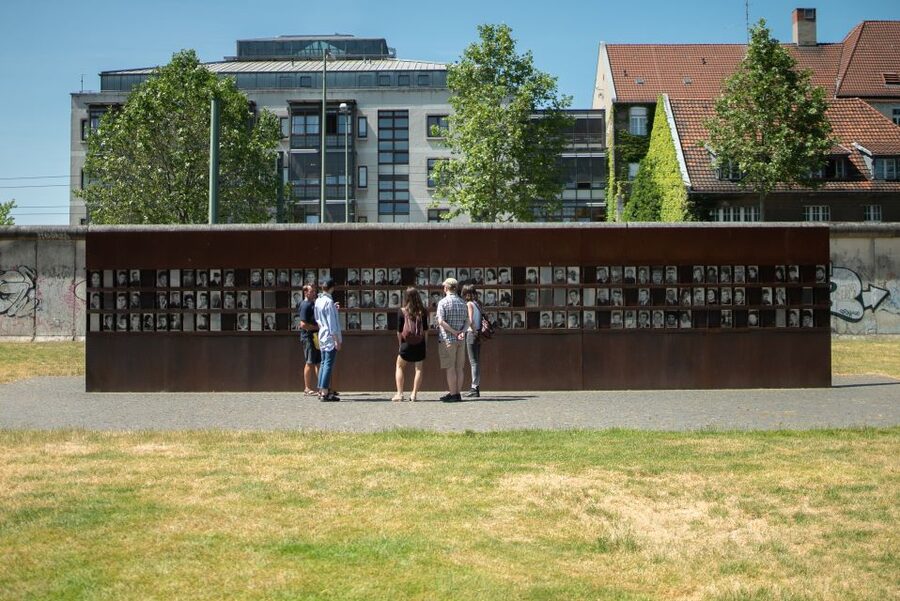
The Wall was never just one slab of concrete. The border system included multiple barriers, patrol routes, watchtowers, lights, fencing, and open ground between controlled areas. The former death strip is where that system becomes easiest to picture.
The exact viewing points can vary with the day’s route, but you should expect a guided walk beside surviving sections and traces of the border. The guide explains how the zone worked and why crossing it was so dangerous.
This is a sobering stop. You hear about people who tried to flee East Germany and the methods they used. Some dug tunnels. Others crossed from rooftops or attempted to get over the Wall. The state’s surveillance system made even planning an escape dangerous.
The physical remains are uneven. Berlin has preserved important sections, but much of the old border has disappeared beneath roads, buildings, and modern development. That can disappoint you if you expect one continuous Wall. The advantage of having a guide is that the missing pieces are explained rather than ignored.
The East Side Gallery, where the Wall changed meaning
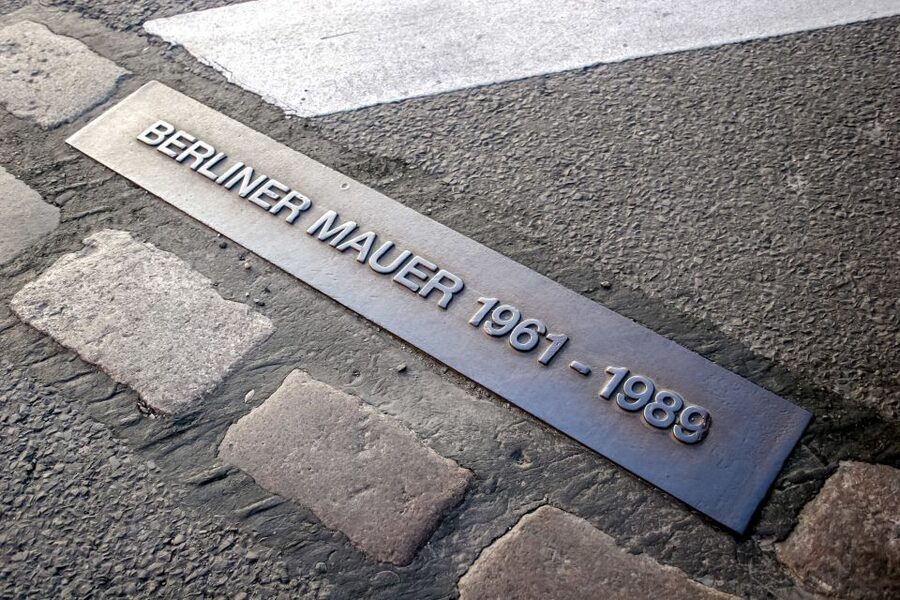
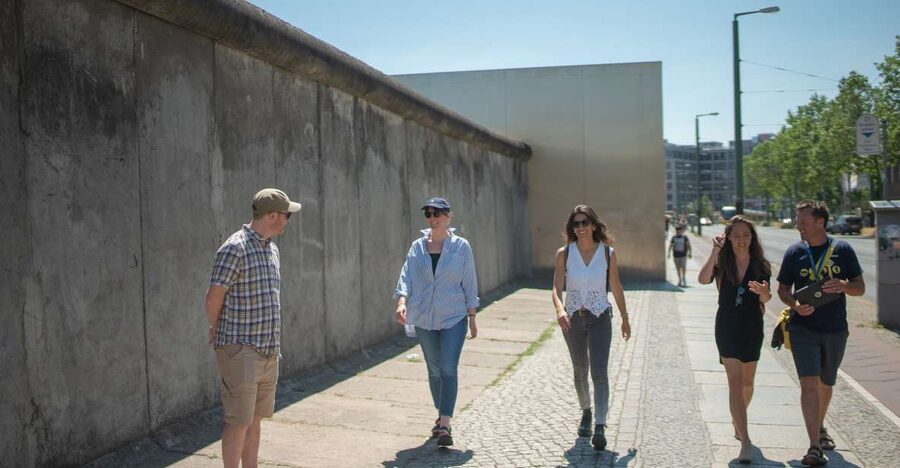
The final major stop is the East Side Gallery, where the group walks along a long surviving section of the Berlin Wall for about 20 minutes.
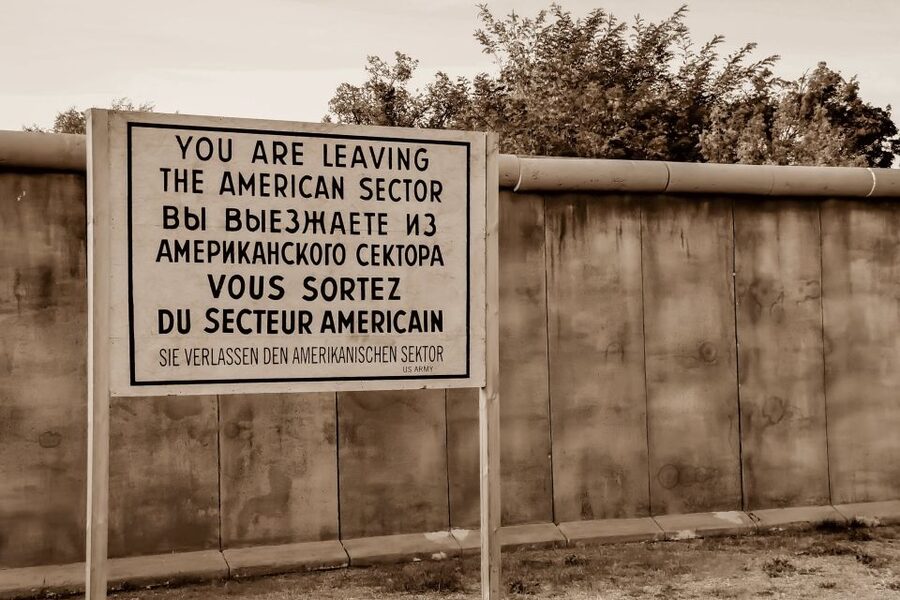
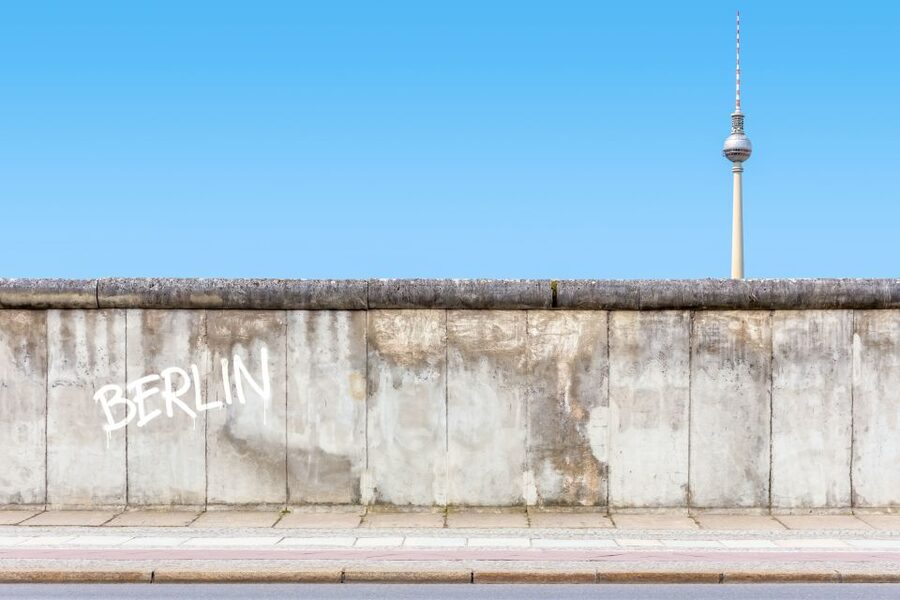
Here the Wall no longer functions as a barrier. It has become an open-air art gallery covered with murals. The art does not erase the structure’s original purpose, but it changes the mood of the visit. A concrete border built to control movement now carries public images, political ideas, and messages of hope.
You have time to walk beside the artwork and hear how the Wall shifted from a symbol of oppression into a public canvas. This is a fitting ending because it connects the Cold War past with Berlin after reunification.
Do not expect a long, leisurely art walk. Twenty minutes passes quickly, especially if you want to stop for photographs. The guide keeps the group moving and explains the larger meaning of the site. If the East Side Gallery is your main reason for booking, you may want to return alone later for more time.
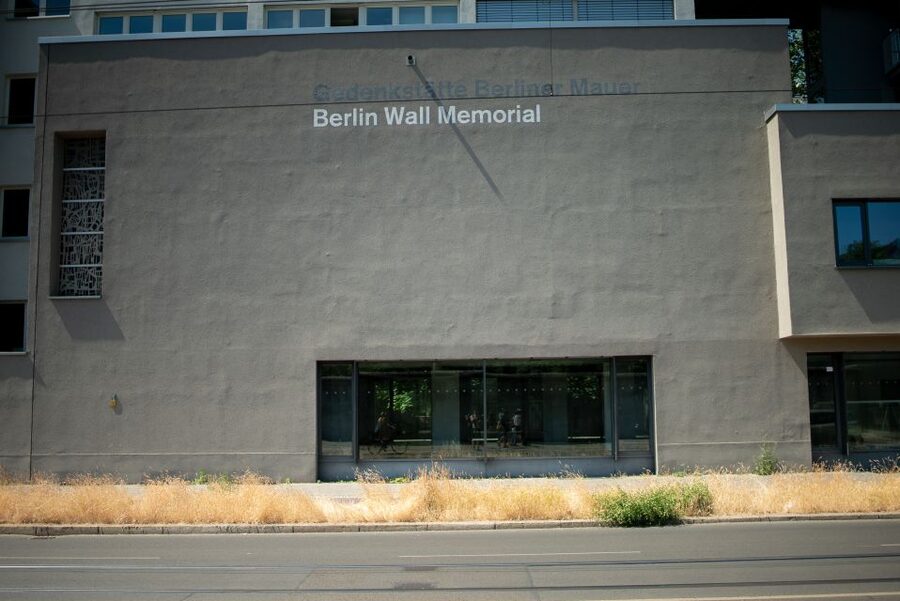
The tour may finish with drop-off options at Bernauer Straße. Confirm your final location before setting up your next activity, particularly if you need to reach a train or timed attraction.
How the guide shapes the experience
This tour depends heavily on the guide. The subjects are serious and sometimes complicated, and the best explanations turn dates and political terms into stories you can follow.
Paul has been praised for making the subject clear to people who arrived with very little background. Xavier is known for a thoughtful style, humor, and care with group members, including during bad weather. Klaus has been valued for personal insight, while Tina has been praised for answering questions and sharing detailed stories.
Other named guides include Nikolai, Jim, Eran, Maria, Jamie G, Cian, Josh, and Glen. Their reported strengths vary, but the repeated pattern is clear: the tour works best when the guide adds everyday detail to the larger political story.
You should ask questions as you go. The route covers a lot in three hours, so a question can help you focus on the parts that matter most to you, from the Stasi and escape attempts to the 1953 uprising or daily life in the GDR.
What the $18 price really buys you
At $18, the tour offers good value if you want structure and explanation. You are paying for a guide who links five different parts of Berlin and handles the route between them. You also avoid spending your first hours trying to work out how the Palace of Tears, Alexanderplatz, Karl-Marx-Allee, Friedrichshain, and the East Side Gallery fit together.
The public transport pass is extra, as are food and drinks. There is no standard hotel transfer, though pickup may be available as an optional arrangement. The real cost remains modest, but you should include the day pass when comparing it with other guided tours.
The tradeoff is depth at each stop. This is a compact city tour, not a full museum day. You get a useful framework, vivid stories, and a broad route. You do not get long independent visits at every location.
The tour is wheelchair accessible, and private or small-group options are available. Check the exact option before booking, since group size can affect how easy it is to hear the guide and ask questions.
Who should book this Berlin tour?
Book it if you want a clear introduction to Cold War Berlin and prefer stories tied to real streets and surviving structures. It is particularly useful if you know little about the period, since the route starts with basic context and builds toward the Wall and East Side Gallery.
It also suits repeat visitors. Berlin changes quickly, and a guide can point out traces you might pass without noticing. The mix of architecture, politics, personal stories, and public art gives you more than a single Wall viewpoint.
Skip it if you want a slow art tour, a full museum visit, or a detailed military study of the Cold War. One past participant expected more war and political history and less focus on the Wall. That is a fair warning: this experience is centered on divided Berlin, border control, escape, and life behind the Wall.
FAQ
How long does the tour last?
The tour lasts three hours.
What language is the tour offered in?
The live guide can lead the tour in English or German.
Where does the standard tour meet?
The standard meeting point is outside Friedrichstrasse train station, on the square beside the Palace of Tears. Look for the guide with a yellow name badge and yellow umbrella.
Is public transportation included?
No. You need an AB public transport day pass to travel between the sites. Staff can help you buy it on the day.
Which places does the tour visit?
The route includes the Palace of Tears, Alexanderplatz, Karl-Marx-Allee, Friedrichshain, surviving Berlin Wall areas, and the East Side Gallery.
Is hotel pickup available?
Pickup is optional. If arranged, you wait in your hotel lobby five minutes before the scheduled start. The drop-off meeting point is in front of the Tourist Information at Brandenburg Gate.
Does the tour run in bad weather?
Yes. The tour proceeds regardless of the weather, so bring weather-appropriate clothing and comfortable shoes.
Is the tour wheelchair accessible?
Yes, the activity is listed as wheelchair accessible.
Can I cancel for a refund?
You can cancel up to 24 hours in advance for a full refund. You can also reserve now and pay later, keeping your plans flexible.
Should you book it?
I would book this tour if you want Berlin’s Cold War story explained in place, with enough walking to make the history physical but not so much that the day becomes exhausting. The strongest reason to go is the guide. With a good storyteller, Karl-Marx-Allee becomes more than impressive buildings, and the Wall becomes more than a photo stop.
Bring a day pass, wear good shoes, and leave room in your schedule for the East Side Gallery or Bernauer Straße afterward if you want more time with the surviving sites. At $18, it is a sensible choice for a first look at divided Berlin, especially if you want human stories rather than a list of dates.
New routes in Berlin
- Small Group Walking Tour: “Wild Kreuzberg”★ 4.8 · 199 reviews
- Sachsenhausen Memorial: Walking Tour from Berlin★ 4.7 · 132 reviews
- Berlin: Prenzlauer Berg District Guided Walking Tour★ 4.9 · 316 reviews
- Berlin: 2.5-Hour Walking Tour through Kreuzberg 61★ 4.9 · 525 reviews
- From Berlin: Potsdam & Sanssouci half day Walking Tour★ 4.9 · 85 reviews
- Explore Berlin: Walking Tour of All The Iconic Sites★ 4.9 · 855 reviews
- East Berlin and the Wall: Walking Tour★ 4.9 · 407 reviews
- Berlin: The Time of National Socialism Walking Tour★ 5.0 · 220 reviews
Museums, compared.
Acropolis monuments & Parthenon Walking Tour with Optional Acropolis Museum
Read our review →
Frida Kahlo VIP [Museum Tickets Included] Walk, Markets & Churros
Read our review →
Sydney Cricket Ground (SCG) and Museum Walking Tour
Read our review →
Bogotá City Tour with Monserrate, Gold and Botero Museums
Read our review →
Guided Walking Tour and Chocolate Museum Ticket
Read our review →
The Acropolis, Athens Walking City Tour and Acropolis Museum
Read our review →
Walking Tour with David, Duomo & Uffizi Gallery
Read our review →
Siena Walking Tour with Cathedral and Crypt & Museum Option
Read our review →Browse the lists this tour appears in