
Review · BERLIN
Berlin: Third Reich & Cold War Guided Walking Tour
Berlin’s hardest history is spread across ordinary streets, office blocks, memorials, and scraps of wall. This two-hour walk connects those places in a sensible route, from Brandenburg Gate to Checkpoint Charlie, so you can see how Nazi rule, war, occupation, and Cold War division shaped the same small part of central Berlin.
I like two things right away: the tour gives you real places to anchor the history, and the guides make room for questions rather than simply reciting dates. Guides such as Maria, Maggie, Rohan, and Mikey have been praised for making difficult subjects clear, human, and sometimes even lightly humorous when the moment allows.
The main drawback is the pace. You cover about 2 kilometers and several major sites in only two hours, so some stops are viewed from outside and none receives the attention of a dedicated museum tour. Cold, rain, crowds, or slippery pavement can also make the walk more demanding.
Key points at a glance

- Brandenburg Gate to Checkpoint Charlie: A well-planned route through Berlin’s central political and historic district.
- A 200-meter section of wall: You get a physical sense of the former border, not just a photo of a preserved fragment.
- Hitler’s bunker site: The guide explains the location without turning it into a place of fascination.
- Soviet tanks in Tiergarten: A striking memorial to roughly 80,000 Soviet soldiers killed in the Battle of Berlin.
- Strong guide-led storytelling: Guides including Maria, Maggie, Rohan, Mikey, and Ciaran have been praised for clear explanations, energy, and thoughtful answers.
- Good value at $23: The price is modest for a live introduction to several of Berlin’s most important historic sites.
Starting at Brandenburg Gate, where Berlin’s story comes together
Meet in front of the tourist information point at Brandenburg Gate, Pariser Platz 1. Look for the guide carrying a pink umbrella. The easiest public transport connection is Brandenburger Tor station, served by S-Bahn lines S1, S2, S25, and S26, plus U5. Buses 100 and 245 also stop nearby.
Brandenburg Gate is an excellent place to begin because its meaning changed so sharply over time. It was used for Nazi parades, sat near the Cold War divide, and became a symbol of reunification after the wall fell in 1989. The guide uses the gate to set up the central idea of the tour: Berlin’s buildings did not simply survive history, they were repeatedly given new political meaning.
You’ll spend about 15 minutes here, including a photo stop. It is a busy public square, so pay attention to the guide’s position and stay close enough to hear. The open setting also means there is little shelter if the weather turns unpleasant.
More Guided Walks in Berlin:
- Berlin: Hidden Backyards Guided Walking Tour
★ 4.8 · 5,360 reviews - Berlin: City Street Art Guided Walking Tour
★ 4.8 · 1,051 reviews - Berlin: History of the Third Reich Guided Walking Tour
★ 4.7 · 791 reviews
The Reichstag and the fire that helped Hitler take power
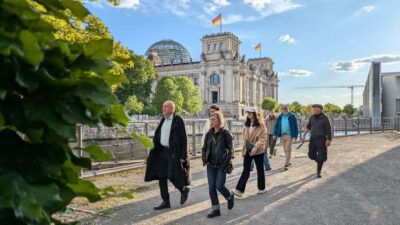
The walk continues past the Reichstag, Germany’s parliament building. The guide explains the 1933 Reichstag Fire and how it became a turning point in Hitler’s rise to power.
The useful lesson here is not simply that a fire happened. You’ll hear how a dramatic event was used to justify measures that weakened civil rights and helped the Nazi government tighten its hold on Germany. That context makes the Reichstag more than a grand photo stop.
You spend about 16 minutes at this section. The building itself has survived war, destruction, division, and reconstruction, and it now houses the German parliament. The quick visit cannot cover every stage of that story, but it gives you a strong reason to return for a longer look at the building and its democratic role.
Soviet tanks and the Battle of Berlin in Tiergarten
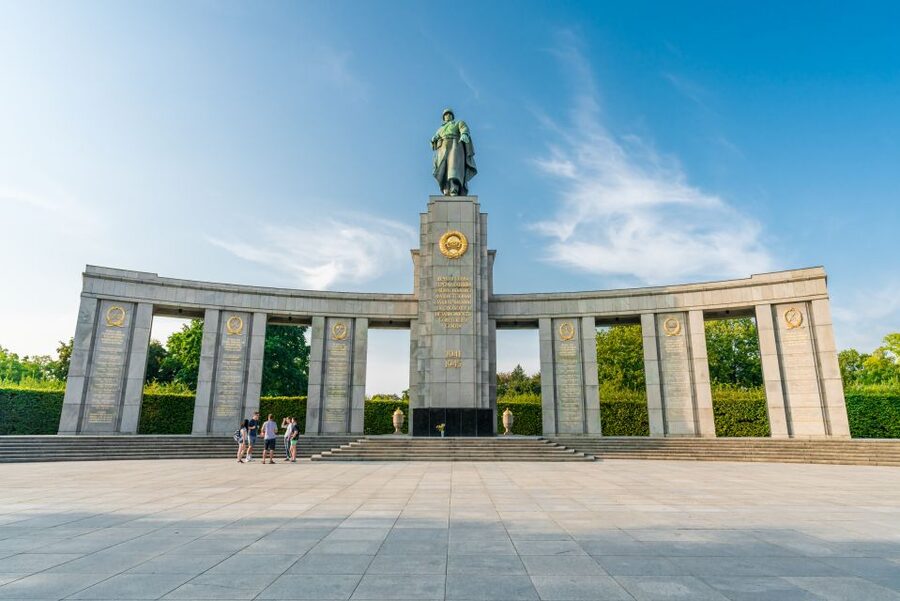
The Soviet War Memorial in Tiergarten is one of the walk’s more striking stops. Preserved Red Army tanks and monumental stonework honor about 80,000 Soviet soldiers who died during the Battle of Berlin.
This location helps you understand the final stage of the Second World War from the Soviet perspective. It also shows how Berlin’s public spaces carried the marks of the victorious powers after 1945. The memorial is not tucked away in a museum. It sits in the city, with traffic, trees, and daily life moving around it.
The guide allows about 15 minutes here. You’ll have time for photographs and an explanation of the memorial’s purpose, but not for a full study of Soviet wartime memory. If military history is your main interest, you may want to spend more time at the site after the tour.
The Holocaust Memorial and the danger of easy answers
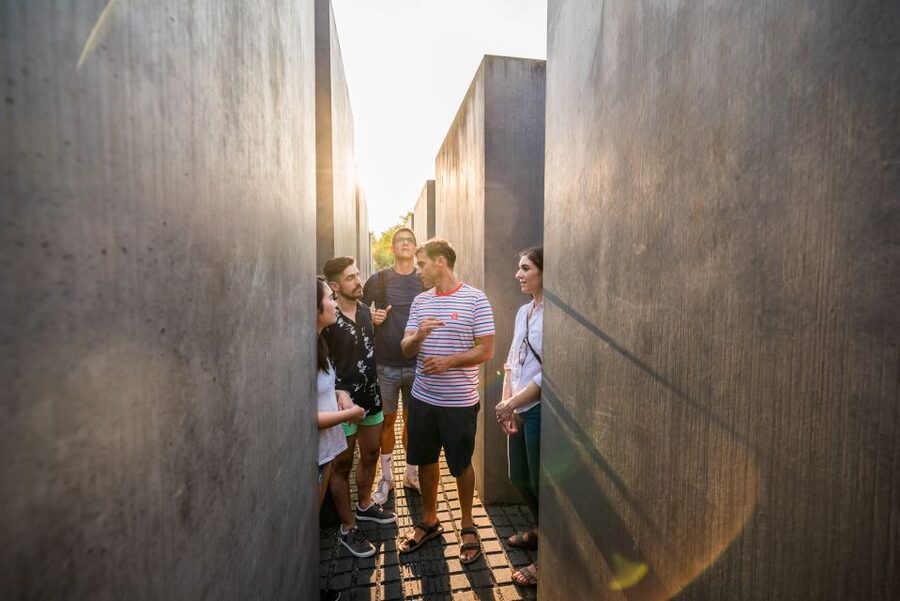
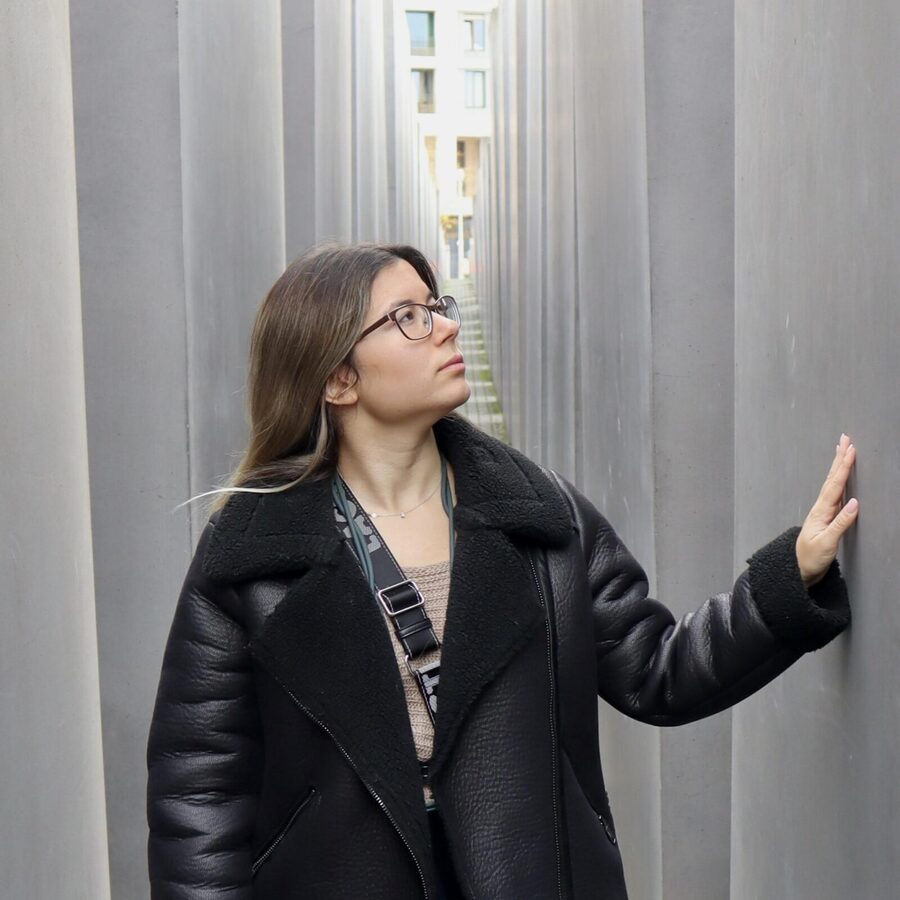
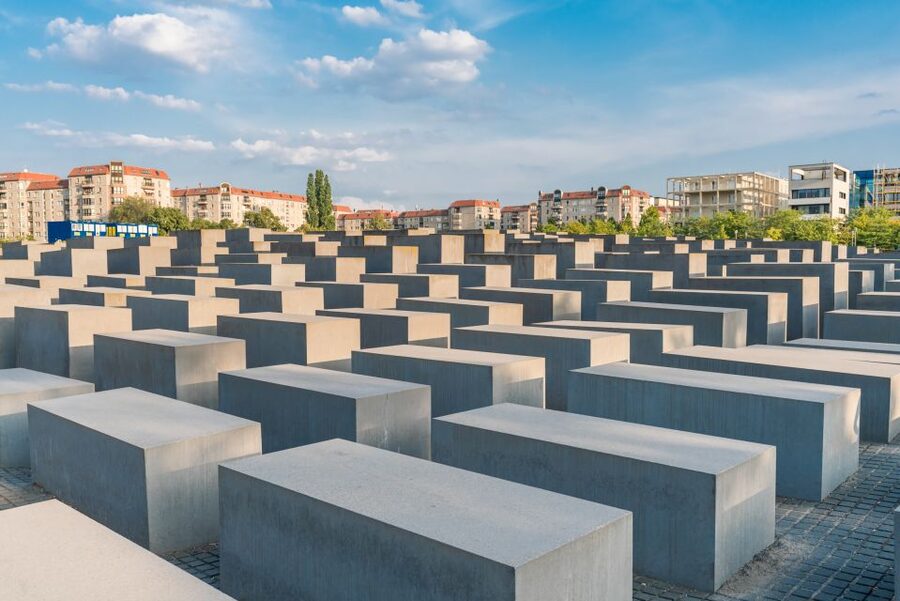
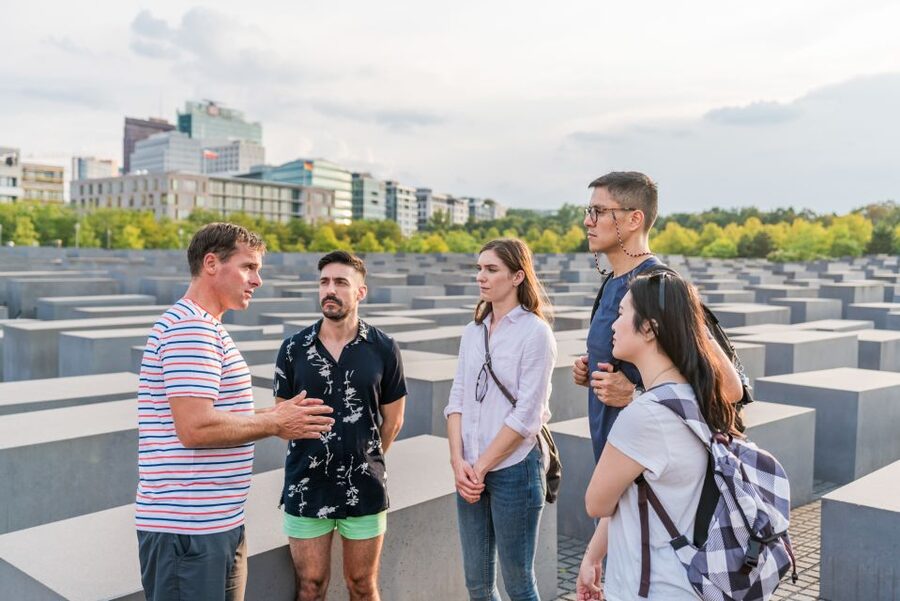
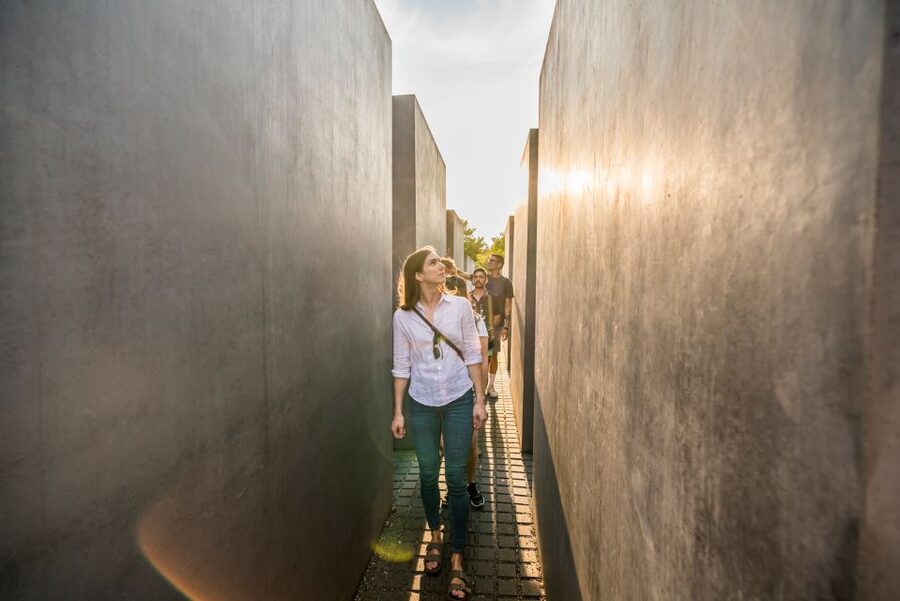
The Memorial to the Murdered Jews of Europe is a short but important stop. Its field of concrete slabs creates a changing sense of scale, direction, and uncertainty as you look across it.
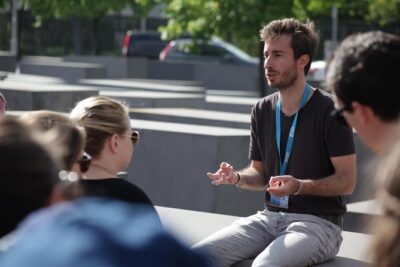
The guide places the memorial within the history of the Holocaust and honors the six million Jewish people murdered by Nazi Germany and its collaborators. This is one of the points where a good guide matters most. The design does not tell you exactly what to feel, and a brief explanation can help you approach it with care rather than treating it as a dramatic photo background.
Expect a photo stop and guided discussion rather than a long visit inside the memorial’s information centre. The subject is painful, so the tone here is serious. You should allow yourself time later to return quietly if you want to read more.
More Walking Tours in Berlin:
- Discover Berlin Half-Day Walking Tour
★ 5.0 · 9,624 reviews - Berlin City walk Government District and Places of Democracy
★ 4.7 · 8,467 reviews - Berlin: Discover Berlin Walking Tour
★ 4.9 · 5,998 reviews - Berlin’s Best: 2 Hour Walking Tour Third Reich and the Cold War
★ 5.0 · 5,486 reviews
Hitler’s bunker site, marked by absence
Near the Holocaust Memorial, the tour reaches the site of Hitler’s bunker. There is no grand entrance to explore. The site is marked in a low-key way, and the surrounding area looks much like any other part of central Berlin.
That ordinariness is part of the point. You’ll hear about Hitler’s final days there and the fall of the Third Reich, while also learning why the location is not presented as a shrine. The guide keeps the emphasis on the consequences of the regime and the human cost of its decisions.
This stop works best when you are prepared for a place defined by what is no longer visible. If you expect underground rooms or a preserved bunker interior, you may find the stop brief. Its value comes from connecting the location to the wider story around it.
Detlev-Rohwedder-Haus and the changing face of power
The next stop is Detlev-Rohwedder-Haus, formerly Hermann Göring’s Ministry of Aviation. The building later became the birthplace of East Germany in 1949, giving it an unusual link to both Nazi rule and the creation of the German Democratic Republic.
This is a useful reminder that Berlin’s political buildings often changed hands and purpose without changing location. A ministry built under the Nazi regime could later become tied to the founding of a socialist state. You’ll see how the tour links architecture to political power rather than treating each era as a separate chapter.
The visit is mainly an outside explanation. It is not designed as an interior tour, so you’ll rely on the guide to explain what happened here and why the building matters.
Topography of Terror and the machinery of repression
At the former headquarters of the SS and Gestapo, the tour reaches one of the clearest locations for understanding Nazi terror. The Topography of Terror site documents how persecution and violence were organized through state institutions.
The guide explains the role of the SS and Gestapo and how the Nazi regime’s system of control operated. This stop adds an important layer to the earlier discussion of Hitler and the Reichstag Fire. It shifts the focus from a few leading figures to the offices, officials, and systems that carried out repression.
About 15 minutes is allotted here. That is enough for orientation, but not enough to properly explore the nearby documentation centre. I recommend returning on your own if you want photographs, documents, and a slower look at the evidence.
The Berlin Wall, escape stories, and a city cut in two
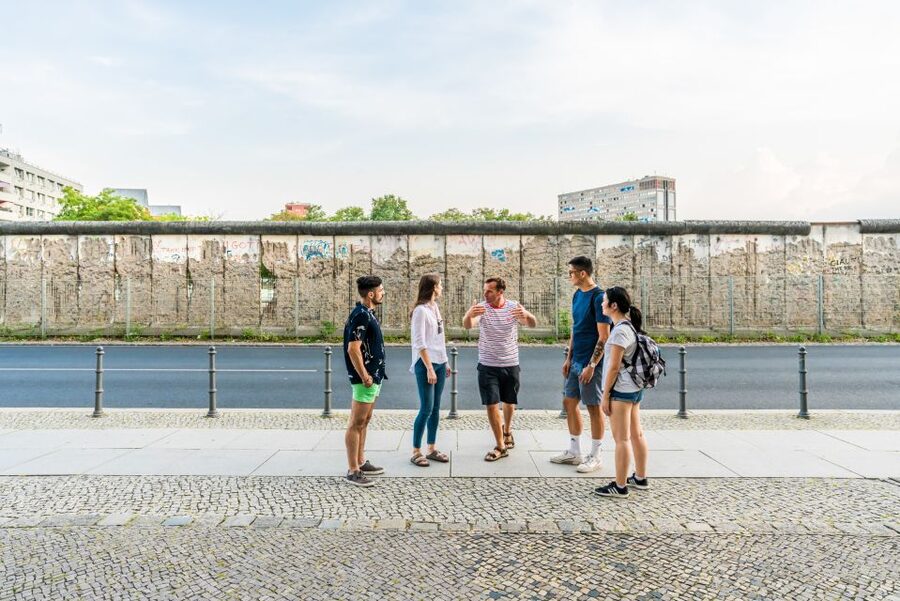
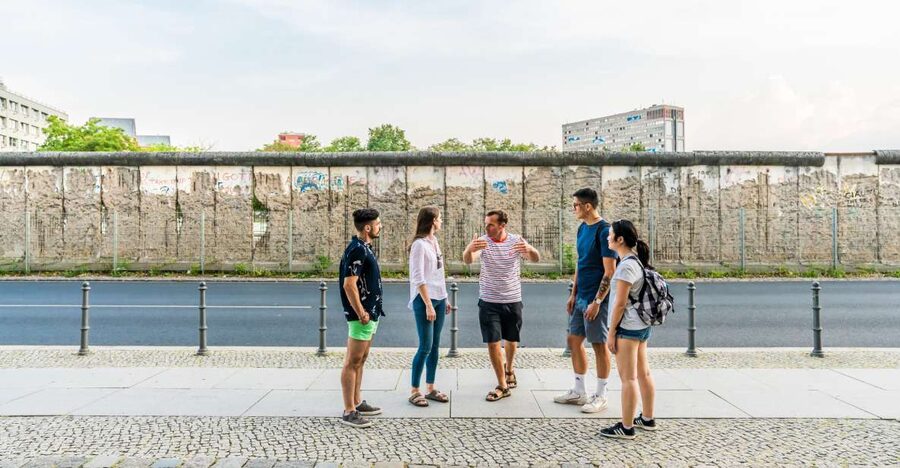
The route then reaches a preserved 200-meter section of the Berlin Wall. This is where the Cold War becomes especially physical. You can see the wall as a barrier built to control movement, not merely as a painted remnant used for souvenirs.
The guide tells stories of people who risked imprisonment, injury, or death to escape from East Berlin. You’ll also hear how the wall affected families, work, neighborhoods, and daily routines across the city. The walk connects those personal stories to the larger political struggle between East and West.
This is one of the strongest parts of the tour because the distance is easy to walk, but the meaning is difficult to ignore. The preserved section is only part of the former border system, so do not expect to see every feature of the old frontier. Still, 200 meters gives you a useful sense of scale.
The Cold War material also helps explain why Berlin is not simply a Nazi history destination. The city was divided for decades after the war, and the effects of that division still shape how you read its streets and monuments.
Checkpoint Charlie and the final hours before reunification
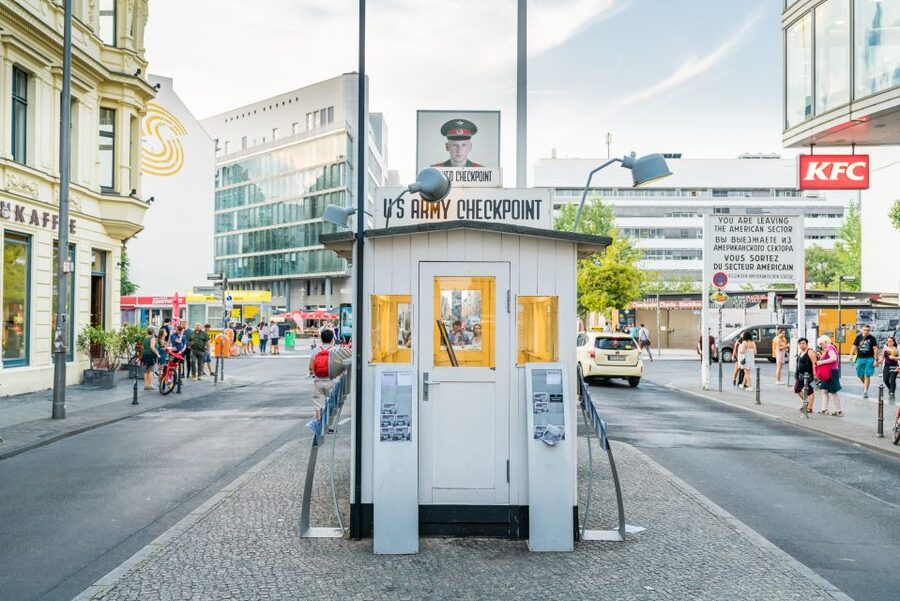
The tour ends at Checkpoint Charlie, the former crossing point where American and Soviet tanks faced each other during a tense Cold War confrontation. Today it is a busy and commercial place, which can make the historic setting feel less solemn than you might expect.
The guide restores the context by explaining escape attempts, border controls, and the final events before the wall came down. You’ll hear how the crossing became a symbol of the wider conflict and how the wall’s fall reunited East and West Germany.
Finishing here works well. The route begins with a symbol of German unity and ends at a symbol of division, while the story moves from Nazi dictatorship through occupation and Cold War tension to reunification. It is a neat structure for a short introduction to modern Berlin.
How the $23 price holds up
At $23 per person, this is good value if you want a clear first look at Berlin’s major 20th-century history sites. You are paying for a live guide who can explain connections, answer questions, and adjust the emphasis for the group. You are not paying for museum entry, private transport, or long indoor visits.
The strongest value comes from the number of places covered in two hours. On your own, you could walk between these sites, but you might miss the links between the Reichstag Fire, Nazi terror offices, the bunker site, the Berlin Wall, and Checkpoint Charlie.
The tradeoff is depth. A private tour may give you more room to ask questions, but the standard walk still has a lot to cover. Some departures have run beyond the advertised two hours, though you should not count on extra time when planning your day.
Timing, weather, and walking comfort
The walk covers approximately 2 kilometers on city streets. It is not described as a strenuous hike, but you will be on your feet for the full experience, with repeated stops and short moves between landmarks.
Wear comfortable shoes and bring water. An umbrella is useful because the tour runs in all weather and on public holidays. Winter conditions deserve extra care: one January group dealt with temperatures around minus 8 degrees Celsius, while another faced snowy, slippery pavements. Warm layers, gloves, and shoes with good grip can make a big difference.
The open-air format is part of the appeal, but it also means that weather affects the experience. On a bright day, the photos and views are easier. In cold or wet conditions, the guide may keep the group moving more quickly, even if the history itself remains strong.
The tour is wheelchair accessible, and you can choose a shared group or private group option. English and German are available, but language choices can differ between group and private departures, so check the specific option before booking.
Who will get the most from this walk?
I would choose this tour early in a first Berlin visit. It helps you get your bearings and gives you a framework for later visits to museums such as the Topography of Terror. You will understand why certain sites matter instead of seeing them as isolated monuments.
It suits adults and older children who can engage with serious subjects. One family specifically valued a guide who answered children’s questions, while other groups appreciated guides who welcomed discussion rather than shutting down questions.
It is also a good fit if you have only a weekend in Berlin. The route covers a lot without requiring a full day, and you finish near Checkpoint Charlie, where you can continue exploring central Berlin.
You may want another type of experience if you prefer indoor museums, a slow photographic walk, or a detailed military history tour. This is an overview with human stories and political context, not a specialist seminar.
Which guide style should you expect?
Your guide will shape the experience. Recent departures have included Rohan, Paul, Ben, Maggie, Lucas, Maria, Ariel, Ciaran, Mikey, Jasper, and others. The most praised traits are clear explanations, personal energy, answers to questions, and the ability to make difficult history understandable without making it trivial.
Some guides add family photographs or personal connections to Berlin. Others use humor carefully to keep the group alert during a long sequence of dark subjects. That variety means the exact tone may differ from one departure to another, but the route and subject matter remain the same.
I especially value the reports of guides answering questions and offering ideas for the rest of a Berlin visit. That turns the walk into more than a fixed script. Still, if you want a particular language or private format, verify the departure details before paying.
Should you book this Berlin history tour?
Book it if you want a well-priced introduction to Nazi and Cold War Berlin, especially on a first visit. The route is logical, the sites are important, and the guide adds the connections that plaques and quick internet searches often miss.
Go in with realistic expectations. You will not enter every building, spend an hour at each memorial, or study the Berlin Wall in full detail. You will walk about 2 kilometers, spend much of the time outdoors, and hear a fast but thoughtful account of the forces that shaped modern Germany.
For $23, that balance is hard to fault. I would book this near the start of your stay, wear proper shoes, and leave time afterward for the Topography of Terror or Holocaust Memorial if you want a quieter, more detailed visit.
FAQ
How long does the Berlin Third Reich and Cold War tour last?
The tour lasts two hours, though some departures may run longer.
How far will I walk?
You should expect to walk approximately 2 kilometers.
Where does the tour begin?
It begins in front of the tourist information point at Brandenburg Gate, Pariser Platz 1. Look for a guide with a pink umbrella.
Where does the tour finish?
The tour ends at Checkpoint Charlie.
Which languages are available?
The tour is available in English and German. Group and private options may not offer the same language choices, so check the specific departure.
Is the tour wheelchair accessible?
Yes, the activity is listed as wheelchair accessible.
Does the tour run in bad weather?
Yes. Tours run in all weather conditions and on public holidays. Bring suitable clothing and an umbrella.
What should I bring?
Bring comfortable shoes, water, an umbrella, and a camera. Warm clothing is especially important in winter.
New routes in Berlin
- Small Group Walking Tour: “Wild Kreuzberg”★ 4.8 · 199 reviews
- Sachsenhausen Memorial: Walking Tour from Berlin★ 4.7 · 132 reviews
- Berlin: Prenzlauer Berg District Guided Walking Tour★ 4.9 · 316 reviews
- Berlin: 2.5-Hour Walking Tour through Kreuzberg 61★ 4.9 · 525 reviews
- From Berlin: Potsdam & Sanssouci half day Walking Tour★ 4.9 · 85 reviews
- Explore Berlin: Walking Tour of All The Iconic Sites★ 4.9 · 855 reviews
- East Berlin and the Wall: Walking Tour★ 4.9 · 407 reviews
- Cold War, Berlin Wall, Spies and the East Side Gallery★ 4.8 · 254 reviews
Berlin Walking Tours, compared.
Berlin City walk Government District and Places of Democracy
Read our review →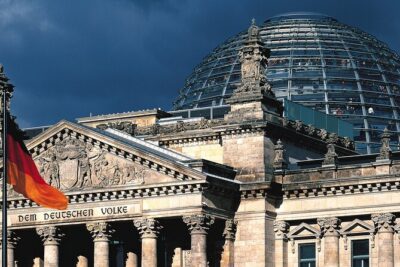
Berlin’s Best: 2 Hour Walking Tour Third Reich and the Cold War
Read our review →
Explore Berlin: See All The Iconic Sights & Some Hidden Gems
Read our review →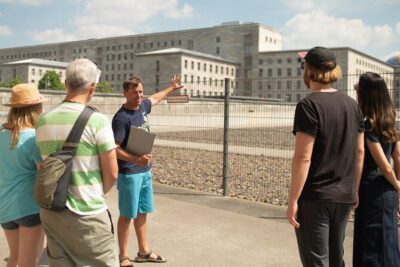
Third Reich Berlin: Hitler and WWII Walking Tour
Read our review →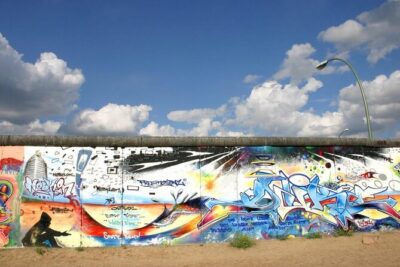
Berlin Center Food Tour with 8+ Authentic Local Tastings
Read our review →

Browse the lists this tour appears in