

Review · BERLIN
Berlin: City Street Art Guided Walking Tour
Berlin’s street art makes the city feel like an open-air gallery, but you need a trained eye to read it. This three-hour walk takes you beyond the famous murals to illegal graffiti, stencils, tags, posters, and small-scale pieces, explaining who made them, how they were produced, and what they are trying to say.
I especially like the way the tour connects art with Berlin’s East-West divide and neighborhood changes. I also like that guides such as Rob and Ben work as street artists themselves, so you get practical insight into technique, style, and the unwritten rules of the scene. The main consideration is stamina: three hours on foot can feel long, especially in cold or rainy weather, and the route may require an AB public transport ticket.
Key points
- Local artists lead the walk: Guides including Rob and Ben bring first-hand experience from Berlin’s graffiti and street art culture.
- Friedrichshain and Kreuzberg feature prominently: The route links two of Berlin’s best-known areas for painted walls, tags, and independent art.
- You learn how to look: The guide explains the difference between graffiti writing and street art, along with styles, tools, methods, and intent.
- The route can change: Current works, neighborhood conditions, and spontaneous discoveries may shape the walk.
- Three hours offers real context: This is not a quick photo stop tour. You have time to understand artists, messages, and local history.
- Budget carefully for transport: An AB ticket may be needed, unless you book the option that includes BVG transport.
Reading Berlin one wall at a time
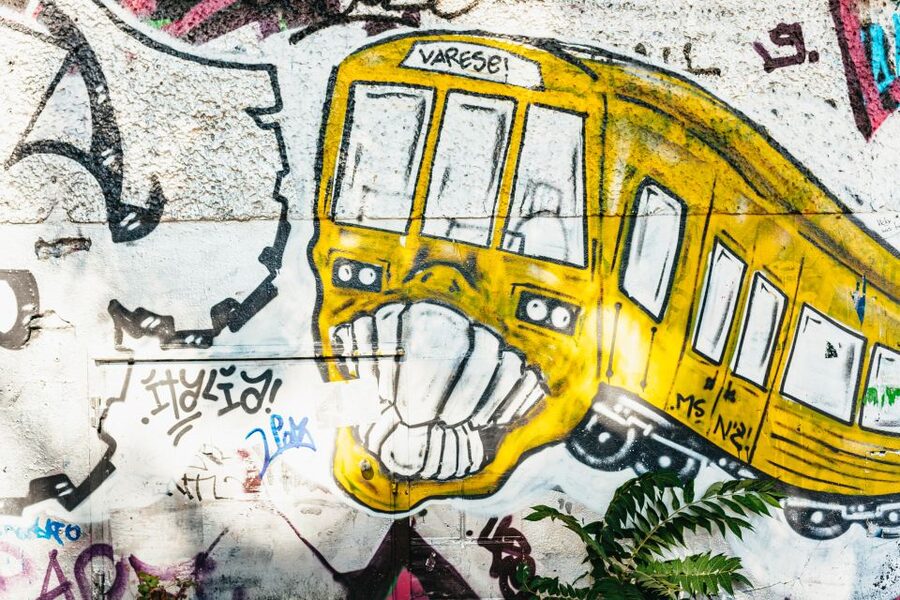
The first thing this tour changes is your attention. Without guidance, you may notice a huge mural, take a photograph, and move on. After three hours with a street artist, you start spotting smaller details: a repeated tag, a pasted poster, a stencil tucked beside a doorway, or a piece placed high above eye level.
That shift matters because Berlin’s street art is not one single style. A large commissioned mural and an illegal graffiti piece may share the same wall, but they come from different traditions and serve different purposes. The guide helps you separate those forms without treating one as automatically better than the other.
I like that the tour does not stop at colorful decoration. You learn how artists use walls to comment on politics, social issues, money, identity, neighborhood change, and Berlin’s past. Some works may be playful, some angry, and some hard to interpret without context.
The aim is not to turn every painting into a lecture. The strongest part of the experience is the balance between visual details and the stories behind them. Rob is described as animated and funny, while Ben is noted for his personal experience and clear storytelling. Other guides, including Steven, Antonio, and Marnie, have also led tours, so your guide will depend on the date.
More Street Art Walking Tours in Berlin:
- London: Street Art and Graffiti Guided Walking Tour
★ 4.9 · 1,354 reviews - Naples Spanish Quarters Walking Tour Street Art, Folklore & Sweet
★ 5.0 · 797 reviews - Lisbon: Kickstart Street Art Walking Tour
★ 4.9 · 717 reviews
Meeting near Smack Burger

The stated meeting point is in front of Smack Burger. That gives you a clear place to begin, but I would still arrive a little early and check the exact booking details before setting out. In a city as spread out as Berlin, a few minutes spent finding the right starting point can save needless stress.
The walk is conducted in English. It is aimed at people who want explanation as well as photographs, so expect the guide to pause often while discussing a wall or group of works. You are not simply following a fixed sightseeing loop with a list of landmarks.
The group begins together before moving through selected parts of the city. The route can shift because street art changes constantly. A piece may be painted over, removed, blocked by construction, or replaced by something new. That flexibility is useful, since a rigid route would quickly become outdated.
One practical detail deserves attention: an AB public transport ticket may be needed. You can buy one before the tour through BVG or at a train station, or select the option that includes BVG transport. I would not assume that the standard booking automatically covers the ticket.
Friedrichshain: where style, history, and neighborhood life meet
Friedrichshain is one of the main areas associated with the walk. Here, the art is part of the everyday setting rather than an isolated museum display. You may see large murals beside layers of smaller writing, posters, stickers, and quick marks that change the character of a wall.
The guide’s job is especially useful in this kind of setting. A large painting is easy to identify, but the smaller works can look like visual clutter until someone explains their place in graffiti culture. You learn to notice lettering, placement, repetition, scale, and the difference between a personal signature and a larger public artwork.
The Friedrichshain section also helps connect the art to Berlin’s divided past and its later changes. The city’s East and West histories are not just background information here. They affect how neighborhoods developed, how artists used public space, and why certain parts of Berlin became important to the scene.
You should expect some walking between pieces, not a continuous line of wall-to-wall murals. That is part of the point. The guide shows how art appears across ordinary streets, side paths, building fronts, and less obvious corners.
Kreuzberg: from famous walls to smaller works
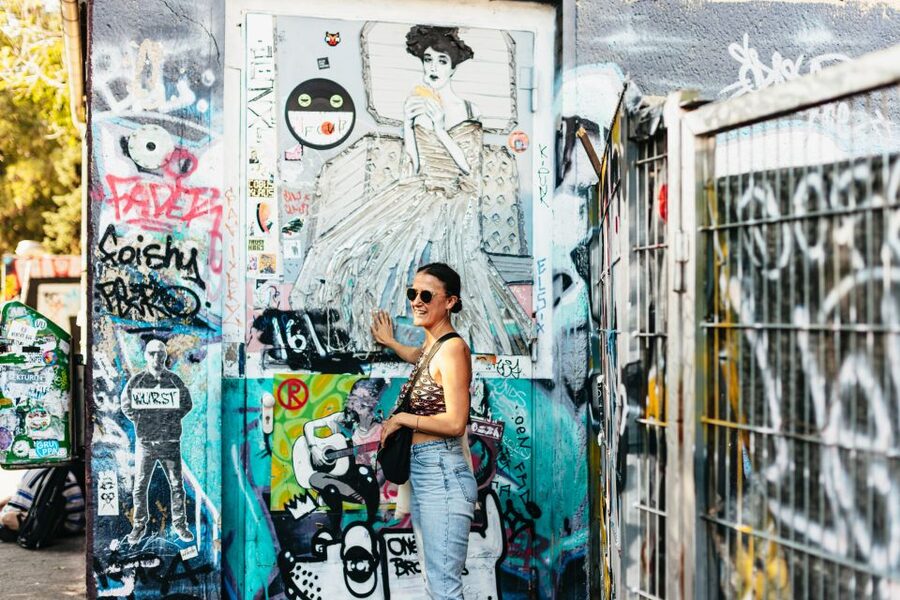
The route often continues into Kreuzberg, another major center for Berlin’s street art. You may encounter better-known murals here, but the tour is not limited to the pieces that appear in standard city photographs.
Kreuzberg is useful for understanding the range of the art form. One stop might focus on a large painted image and its social message. Another might deal with a tag, stencil, poster, or tiny object that says more about street practice than visual polish.
This is where the guide’s explanations become more valuable than a simple map. You learn why an artist chooses a particular surface, how a work was made, and what kind of response it may be seeking. You also hear about artists and the community around them, rather than treating every piece as an anonymous attraction.
The route may include tourist areas and quieter streets. That mix is a strength. Famous walls give you the big visual moments, while less obvious works show how much of Berlin’s street art exists outside the usual photo stops.
Do not expect every piece to remain exactly as described in advance. Street art is temporary by nature. The work may be painted over, tagged, damaged, or altered. The guide’s ability to adjust the route is therefore a practical advantage, not a flaw.
More Guided Walks in Berlin:
- Berlin: Third Reich & Cold War Guided Walking Tour
★ 4.9 · 8,378 reviews - Berlin: Hidden Backyards Guided Walking Tour
★ 4.8 · 5,360 reviews - Berlin: History of the Third Reich Guided Walking Tour
★ 4.7 · 791 reviews - Berlin: Kreuzberg Guided Walking Evening Tour
★ 4.7 · 555 reviews
The difference between graffiti writing and street art
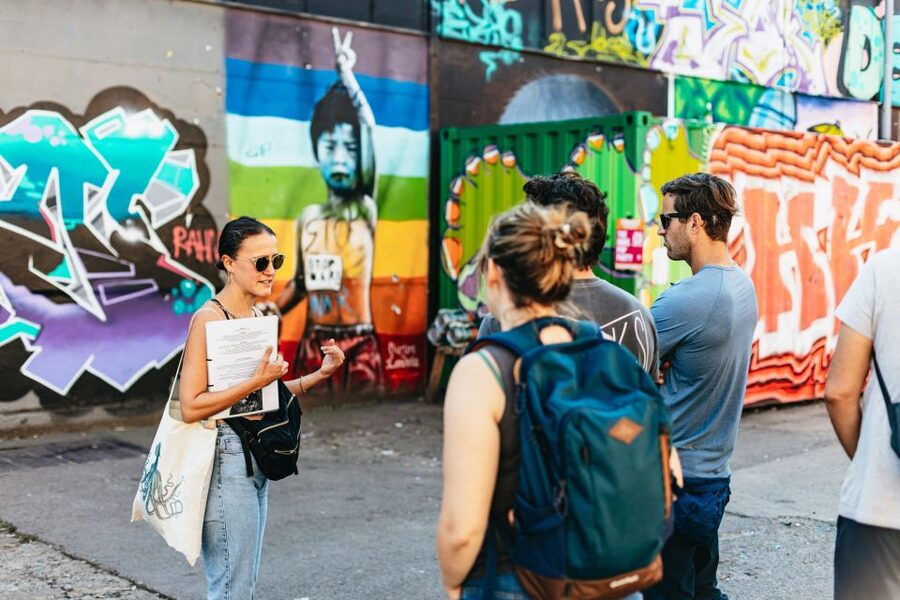
One of the most useful lessons is learning that graffiti writing and street art are not interchangeable terms. The exact distinctions can be complicated, but the guide gives you a working vocabulary for understanding what you see.
Graffiti writing often places strong emphasis on lettering, tags, style, repetition, and recognition within a community. Street art may use figurative images, stencils, posters, sculpture, or large painted scenes to communicate with a wider public.
The boundaries are not fixed. Artists can work in several forms, and one wall may contain pieces from different traditions. Still, knowing the basic difference helps you avoid treating every mark as the same kind of expression.
The walk also looks at methods. One visitor specifically noted examples including tags, stencils, posters, and small polystyrene sculptures. You may learn about the tools and techniques behind a work, not just the name of the artist or the subject of the image.
That practical detail is one reason this tour suits beginners and people who already know a little about street art. If you are new to the subject, you gain a starting point. If you have already seen murals in other cities, you may still pick up new ways to judge technique, intent, and placement.
Stories, politics, and the people behind the walls
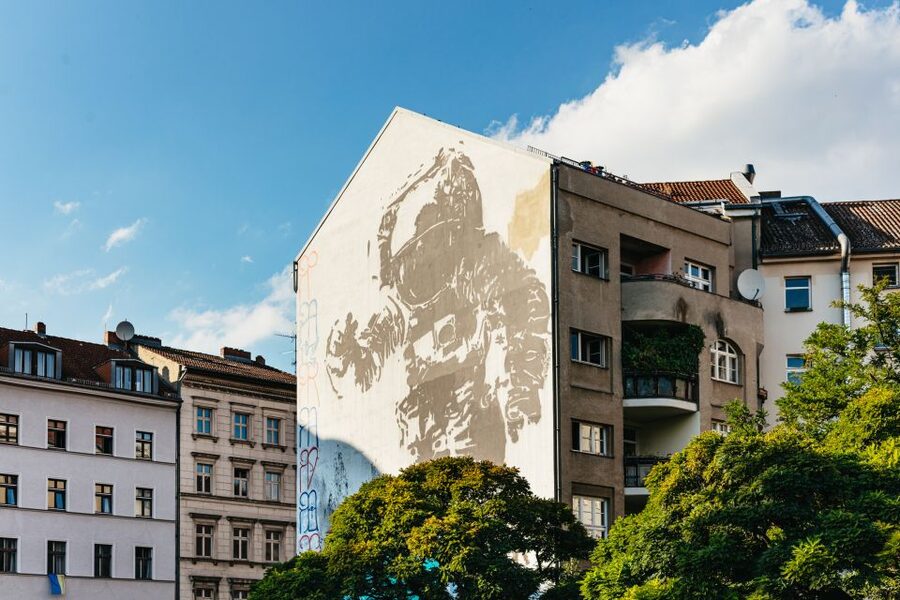
Berlin’s walls often carry social commentary, but the meaning is not always obvious. A guide can explain the background of an artist, a neighborhood, or a movement that would otherwise remain invisible to you.
The tour presents street art as part of a living community. Artists respond to each other, borrow methods, mark territory, challenge accepted ideas, and use public space to say something that may not fit inside a gallery.
That does not mean every piece has a single correct interpretation. A good guide gives you context without pretending that all ambiguity can be removed. Rob, Ben, and the other guides are praised for combining personal experience with humor, which should make difficult subjects easier to discuss.
I also value the informal tone. Several guide descriptions point to an inclusive manner, with questions welcomed and the group kept involved. That matters on a three-hour walk. A guide who simply delivers facts can make even good art feel distant, while a guide who tells stories helps you remember why a piece matters.
The tour can also add useful background about Berlin’s people, economics, and changing neighborhoods. The art becomes a way to understand the city, not just an excuse to walk around taking pictures.
How much walking and public transport to expect
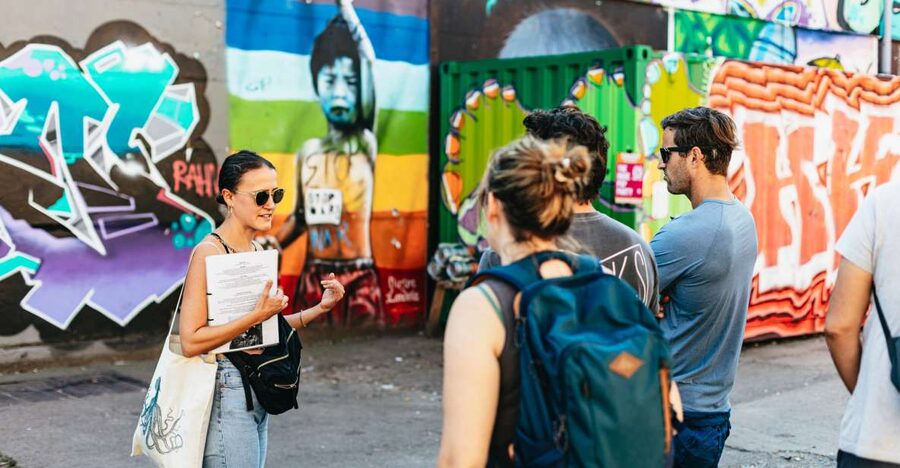
The experience lasts three hours and is described as a walking tour. You should wear comfortable shoes and be ready to spend much of the time outdoors. The route may cross between different parts of Berlin, and an AB ticket might be needed depending on the day’s selection of works.
This is not a hop-on, hop-off experience. You will likely walk from one piece to another, pause for explanations, and continue through ordinary streets. The exact distance is not provided, so I would not book it immediately before another tightly timed activity.
Weather is another real factor. The walk runs in cold and rainy conditions, and the guide’s enthusiasm can help, but it cannot keep you dry. Bring suitable clothing and consider the season when choosing a start time.
The positive side of a longer route is variety. You are not seeing one cluster of similar murals. You are comparing neighborhoods, formats, scales, and purposes. The drawback is that anyone looking for a short introduction may find the full three hours more than necessary.
Is $23 a fair price?
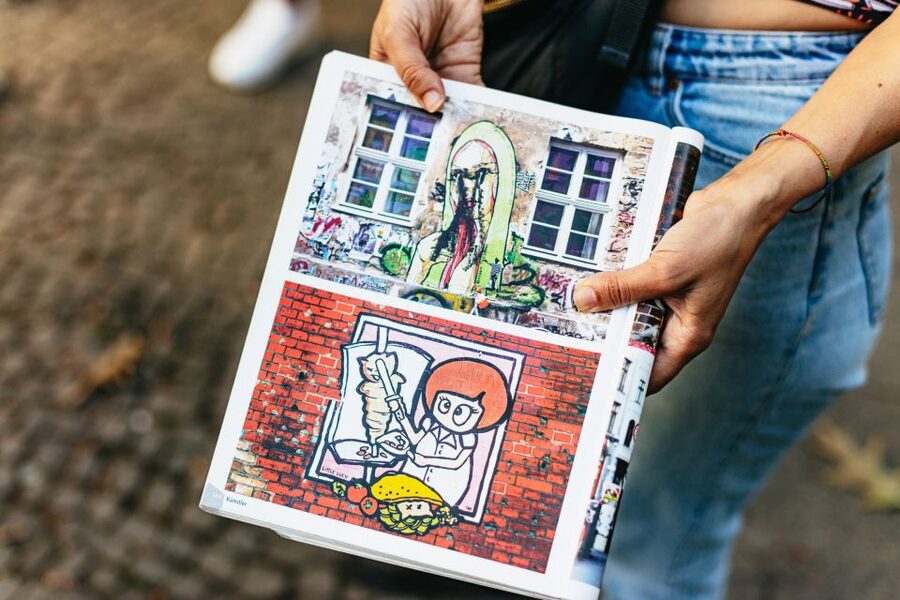
At $23 per person, this is reasonably priced for a three-hour guided experience in Berlin. You are paying for a guide, a planned route, and access to interpretation that you would struggle to reproduce by simply walking around with a phone map.
The value depends on your interest. If you only want a few large murals for photographs, you can probably find them without paying for a tour. If you want to understand tags, techniques, artists, social messages, and the connection between street art and Berlin’s past, the fee makes more sense.
A local guide also saves research time. Street art changes quickly, and online information can be scattered or outdated. The guide selects works that can tell a broader story, then adapts the route when conditions change.
Transport is the main extra cost to watch. The booking may require an AB ticket, unless you choose the BVG-included option. Check that detail before comparing the headline price with other tours.
Flexible booking adds some practical value. You can cancel up to 24 hours before the start for a full refund, and the reserve-now, pay-later option lets you keep your schedule open. Those policies are useful when Berlin weather or your wider itinerary is uncertain.
Who will enjoy this walk most?
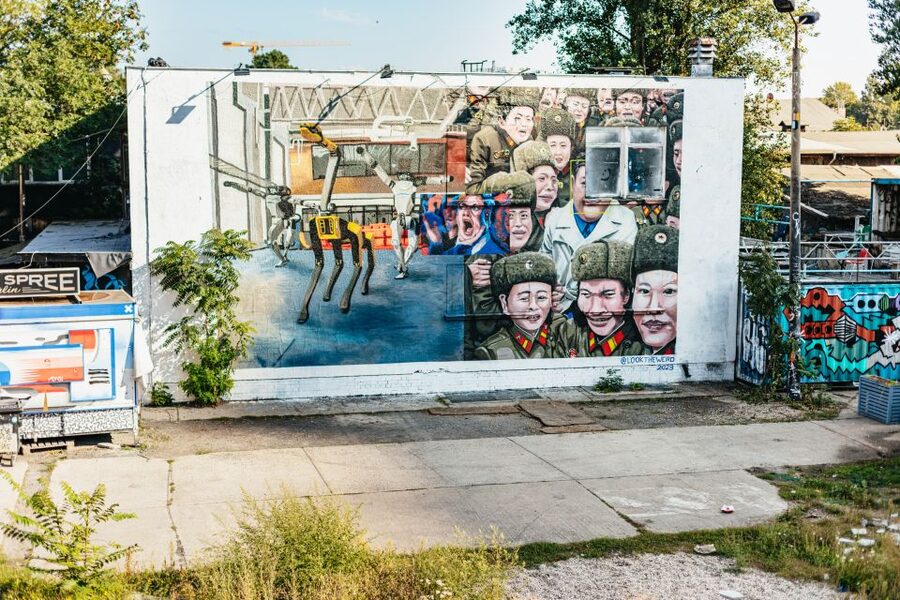
I would recommend this tour to anyone curious about how cities communicate through public art. It works particularly well for first-time visitors who want a different view of Berlin than the standard museum and landmark route.
It also suits people who already like graffiti. The guides explain technique, terminology, and artist practice in enough detail to offer more than a basic mural tour. The mix of major works and small pieces should keep the walk interesting for people with different levels of background.
Families with older children and teenagers may enjoy the visual format, though the three-hour length requires attention and energy. Art students, photographers, and anyone interested in urban culture should find plenty to examine.
I would be less likely to choose it if you dislike walking, need a tightly timed schedule, or want a short tour focused only on famous locations. It is also not the best choice if you expect a museum-style presentation with permanent works and controlled conditions. The streets are unpredictable, and the art can change.
Booking advice and final verdict
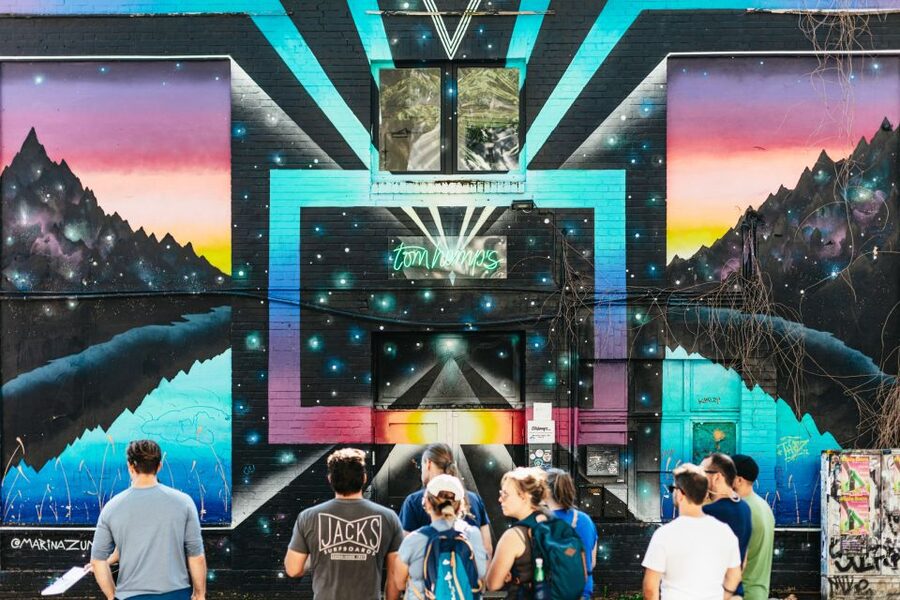
Book this tour if you want Berlin to become more legible. Afterward, you are likely to notice techniques, tags, posters, and layers of meaning that you would have walked past before.
When choosing your date, check the guide and transport option carefully. Rob and Ben receive especially strong praise for their personal experience, humor, and storytelling, but several other guides lead the walk as well. Bring an AB ticket unless you select the BVG-included option, wear comfortable shoes, and allow the full three hours.
At $23, the tour offers good value for anyone who wants context rather than a quick photo stop. I would choose it early in a Berlin visit, since the lessons will sharpen your eye for the rest of your stay.
FAQ
How long does the Berlin street art walking tour last?
The tour lasts three hours.
What language is the tour conducted in?
The live tour guide speaks English.
Where does the tour meet?
You meet your guide in front of Smack Burger.
Which parts of Berlin does the tour visit?
The route can cover areas in East and West Berlin. Friedrichshain and Kreuzberg are specifically associated with the walk, though the exact route may change.
Do I need a public transport ticket?
You might need an AB metro ticket, depending on the current route. You can bring your own ticket or book the option that includes BVG transport.
What kinds of street art will I see?
The tour can include murals, illegal graffiti, tags, stencils, posters, and small sculptural works. The guide explains styles, techniques, artists, and social meaning.
Can I cancel the booking?
Yes. You can cancel up to 24 hours in advance for a full refund. The reserve-now, pay-later option is also available.
New routes in Berlin
- Small Group Walking Tour: “Wild Kreuzberg”★ 4.8 · 199 reviews
- Sachsenhausen Memorial: Walking Tour from Berlin★ 4.7 · 132 reviews
- Berlin: Prenzlauer Berg District Guided Walking Tour★ 4.9 · 316 reviews
- Berlin: 2.5-Hour Walking Tour through Kreuzberg 61★ 4.9 · 525 reviews
- From Berlin: Potsdam & Sanssouci half day Walking Tour★ 4.9 · 85 reviews
- Explore Berlin: Walking Tour of All The Iconic Sites★ 4.9 · 855 reviews
- East Berlin and the Wall: Walking Tour★ 4.9 · 407 reviews
- Cold War, Berlin Wall, Spies and the East Side Gallery★ 4.8 · 254 reviews
Berlin Walking Tours, compared.
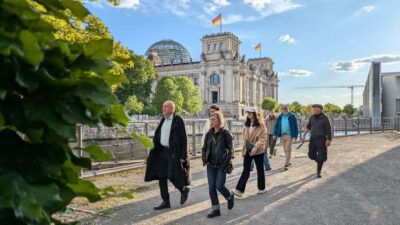
Berlin City walk Government District and Places of Democracy
Read our review →

Berlin’s Best: 2 Hour Walking Tour Third Reich and the Cold War
Read our review →
Explore Berlin: See All The Iconic Sights & Some Hidden Gems
Read our review →
Third Reich Berlin: Hitler and WWII Walking Tour
Read our review →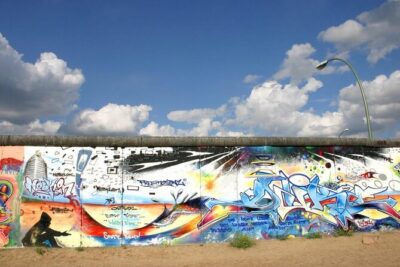
Berlin Center Food Tour with 8+ Authentic Local Tastings
Read our review →
Browse the lists this tour appears in