
Review · BERLIN
Private Walking Tour Berlin Third Reich Hitler and World War II
Berlin’s Nazi past is not tucked away in one museum. It is spread across ordinary streets, government buildings, memorials, railway ruins, and empty spaces where major events took place. This private tour connects those places, from the Soviet Memorial in Tiergarten to the Führerbunker site and the former Nazi government quarter.
I like the private format, since your guide can adjust the pace and answer questions without a large group moving on. I also like the way the route includes less familiar sites such as the T4 memorial and Moltkebrücke, not just the Holocaust Memorial and Führerbunker.
The main consideration is pace. With up to 12 stops in three to four hours, some visits are short, often around 10 or 15 minutes. This is a strong overview, not a series of long museum visits.
Key points about this Berlin history tour
- Twelve major sites in three to four hours: You cover Nazi government buildings, war memorials, resistance sites, deportation history, and Holocaust remembrance.
- Private hotel pickup and drop-off: The day begins and ends at your hotel, a useful perk when you are still finding your way around Berlin.
- Guides tailor the route: Guides including Emma, Daniel, Jimmy, Jasper, Simon, and Georgia have adjusted pacing and content to suit families, history lovers, and returning visitors.
- Several difficult subjects are handled together: The route covers dictatorship, persecution, resistance, euthanasia, deportation, and the final battle for Berlin.
- The price reflects personal attention: At $192.97 per person, the tour costs more than a group walk, but the private guide and flexible route can make the difference for a small group.
- Not every stop is an indoor visit: The Reichstag entrance is not included, and several locations are viewed from outside or explored briefly.
Why this route matters in Berlin
A good Third Reich tour should do more than point at buildings and repeat dates. It should show how a dictatorship worked, how ordinary places became tools of repression, and how Berlin remembers the damage today.
This route does that by moving between political power, military defeat, organized murder, resistance, and public memory. You begin with the Soviet victory over Nazi Germany, pass the former ministries that helped run the regime, then visit memorials connected to victims and opponents.
The private setup matters here. You can ask why the Reichstag Fire helped the Nazis crush political opposition, how a government office supported wartime policy, or why Berlin marks the Führerbunker only with a plain sign and an empty patch of ground. Your guide can spend more time on the questions that matter most to you.
The experience is offered in English and lasts about three to four hours. Hotel pickup and drop-off are included, which helps simplify a route spread across central Berlin. Since the tour operates in all weather, wear shoes suitable for several hours outside and bring clothing for rain, cold, or wind.
More Private Walking Tours in Berlin
- Berlin Private Complete History All Day Walking Tour
★ 5.0 · 474 reviews - Private Berlin: Iconic Sights and Hidden Gems Walking Tour
★ 5.0 · 292 reviews - Berlin Private Half-Day Walking Tour: Discover the German Capital’s History
★ 5.0 · 244 reviews
Soviet Memorial Tiergarten and the cost of victory
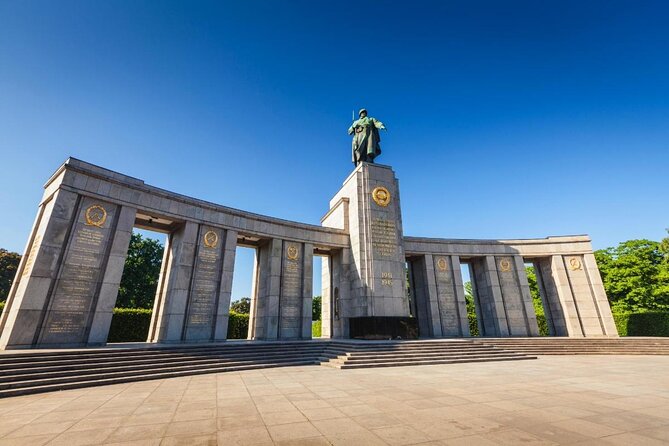
The Soviet Memorial in Tiergarten provides a fitting first chapter. Opened in 1949, it commemorates Soviet soldiers killed in the Battle of Berlin in 1945, the final fight that brought down the Nazi regime.
The large soldier with sword and shield gives the site a formal, imposing feel. Your guide can explain the memorial’s design, the Soviet role in defeating Germany, and the complicated place this monument holds in both Soviet and German memory.
The stop is scheduled for about 10 minutes, so expect an introduction rather than a long study of the grounds. I like it as an opening because it puts the end of the war before you begin examining how Nazi power operated.
Wilhelmstraße and the machinery of Nazi rule
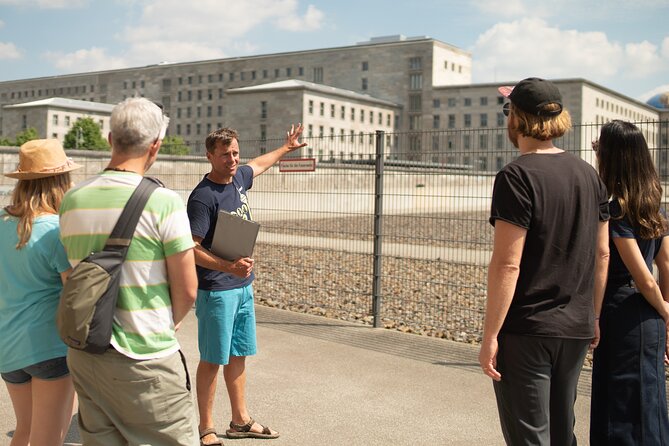
At the Detlev-Rohwedder-Haus on Wilhelmstraße, you see a surviving government building with several layers of history. Built in the 1930s as the Reichsbank, it later housed the Ministry of Aviation under Hermann Göring. After the war, it became the German Federal Treasury.
The building helps you understand that Nazi rule depended on offices, budgets, ministries, and officials as much as on speeches and uniforms. The surrounding Wilhelmstraße was the heart of the Nazi government, lined with offices where military, political, and economic decisions were made.
You will spend about 10 minutes at the Aviation Ministry stop, followed by a longer walk along Wilhelmstraße later in the route. Do not expect a full interior tour. The value is in having a guide explain what these buildings did and how the street functioned as a center of power.
Topography of Terror: documents instead of myths
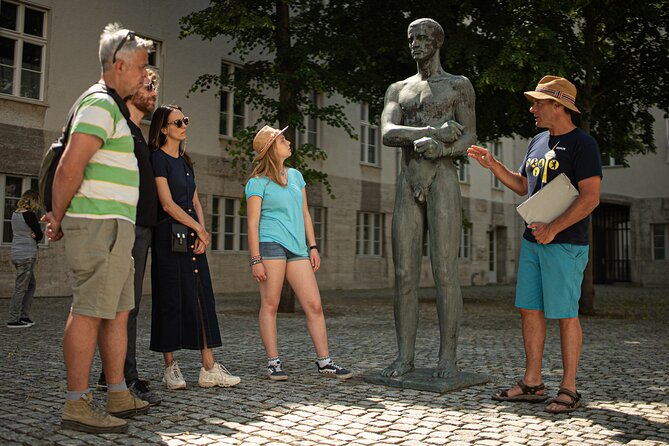
The Topography of Terror occupies the former site of the SS and Gestapo headquarters. Its indoor and outdoor exhibitions use photographs, documents, and personal accounts to explain political repression and state terror.
This is one of the most important stops because it moves the subject beyond Hitler himself. You learn about the organizations that arrested, interrogated, imprisoned, and terrorized people who opposed the regime.
The planned visit lasts about 20 minutes. That is enough for an introduction, but not enough to read the entire exhibition carefully. I would treat this as a useful first look, then return on another day if you want time with the displays. One sensible approach is to ask your guide which section deserves your attention, then revisit the museum independently.
More Private Walking Tours in Germany
- Hamburg: Private Tour Red Light District Walking Tour
★ 4.7 · 227 reviews - Hamburg: Private Couples’ Photoshoot and Walking Tour
★ 4.9 · 212 reviews - Frankfurt: Private or Shared Walking Tour
★ 4.5 · 158 reviews - Rothenburg ob der Tauber: Private Old Town Walking Tour
★ 4.8 · 155 reviews
Bendlerblock and the German Resistance
The German Resistance Memorial Center at the Bendlerblock focuses on Germans who opposed Hitler. The site is closely linked to Claus von Stauffenberg and the July 20, 1944, attempt to assassinate Hitler.
This stop adds moral complexity to the story. Resistance members had different motives, beliefs, and levels of courage, but they all faced severe danger under a regime that punished dissent. The memorial asks you to consider what it means to oppose injustice when the personal cost is high.
The visit lasts about 20 minutes. That short window works well if your group wants a broad route, but history-minded visitors may want to return for a longer look at the exhibits. The private format lets you ask about individuals and resistance networks rather than settling for a quick list of names.
Bebelplatz and the destruction of ideas
Bebelplatz is one of Berlin’s most powerful small stops. On May 10, 1933, Nazi-organized book burnings destroyed works deemed unacceptable or un-German. The event showed how quickly censorship became public ritual.
Look down through the square to the memorial of empty bookshelves. The shelves are intentionally out of reach, a stark image of the literature that disappeared from public life. Around the square, the State Opera House and Humboldt University add an important setting. This was not an isolated field. It was a central civic space.
The stop takes about 10 minutes. Your guide can explain the book burning and point out the memorial, but you will have limited time to study the square on your own. It is an ideal location for questions about propaganda, censorship, and the relationship between universities, culture, and political control.
The Reichstag Fire and the modern parliament
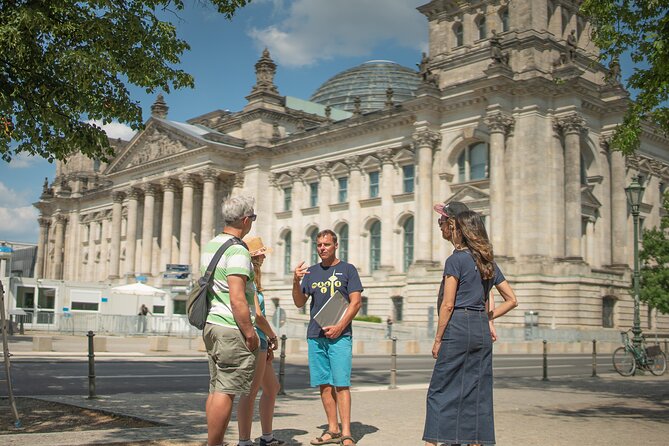
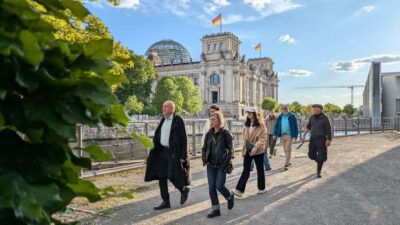
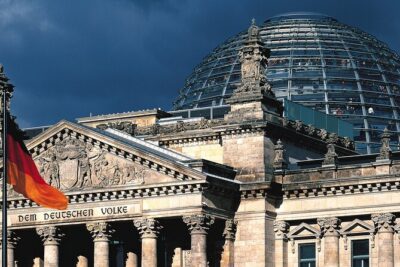
The Reichstag Building links the Nazi period with present-day German democracy. Completed in 1894, it became central to the political crisis after the Reichstag Fire in 1933. The Nazis used the fire to suppress opposition and strengthen their hold on power.
Your guide explains how the damaged building became part of the Nazi claim that Germany faced an internal enemy. You also hear how the structure was damaged during World War II and later restored as a symbol of democratic government.
The stop lasts about 15 minutes, and admission is not included. This is important: the experience focuses on the building’s exterior and history rather than a visit to the dome or parliamentary interior. If you want to enter the Reichstag separately, plan that as another activity.
The Holocaust Memorial and the challenge of remembrance
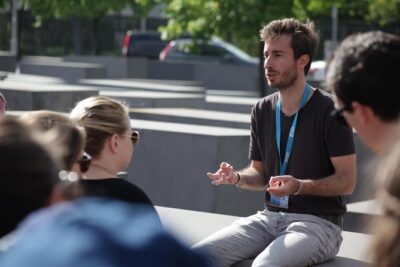
The Memorial to the Murdered Jews of Europe covers a large open area with 2,711 concrete slabs of different heights. Walking between them can feel disorienting. The design does not tell you exactly what to think, but it creates a physical sense of uncertainty and unease.
Your guide places the memorial within the history of Nazi persecution and the murder of European Jews. This is a place for quiet attention, not a quick photo stop. You can walk into the grid yourself and notice how the level of the ground and the height of the slabs change your view.
About 15 minutes is allocated here. That gives you an introduction and a moment to reflect, but it is brief for such a major memorial. I recommend returning later if you want to visit the underground information center or spend more time with the names and personal stories. The route gives you context; a second visit gives you space.
The Führerbunker site and the end of the regime
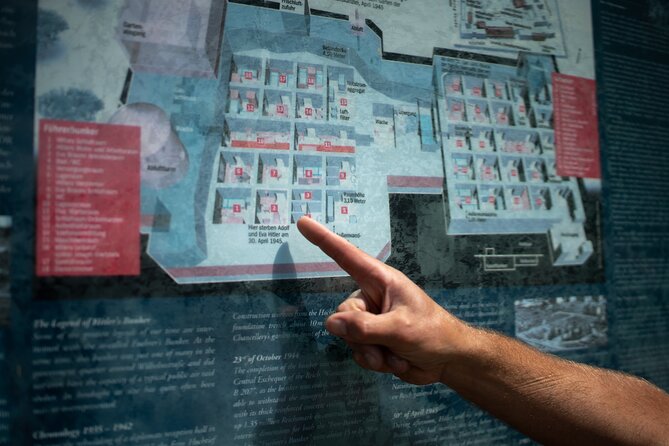
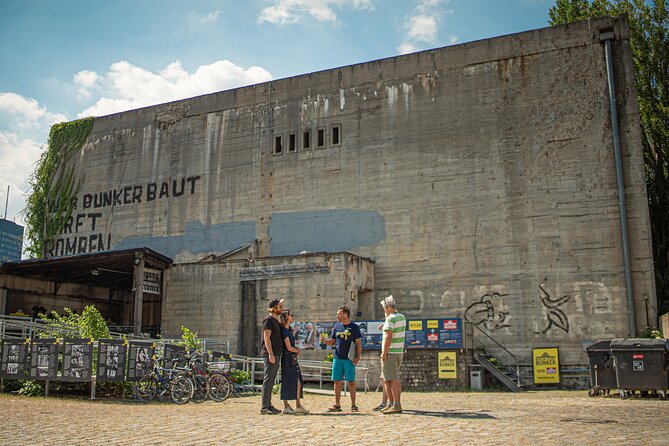
The Führerbunker is not an underground attraction. Most of the original complex was destroyed, and the site is marked above ground near the former Reich Chancellery.
Your guide explains the bunker’s layout, Hitler’s final weeks, and the collapse of Nazi leadership as Soviet forces closed in. The plainness of the location is part of its value. There is no grand entrance or preserved command room to turn the place into a spectacle.
The stop lasts about 10 minutes. You will hear about the decisions made there and the atmosphere inside during the final days, then move on. For many people, the absence of visible remains makes the history harder to grasp. A good guide is especially useful here, since the story must be reconstructed from evidence rather than viewed in a preserved room.
Anhalter Bahnhof and the human cost of deportation
Anhalter Bahnhof was once one of Berlin’s major railway terminals. During the Nazi period, trains leaving Berlin carried Jewish families toward concentration camps and the machinery of the Holocaust.
Today, the surviving façade and ruined station area give the subject a physical setting. You can imagine the station as a place of ordinary travel, then understand how it became part of a system that tore families apart.
The stop takes about 10 minutes. It is short, but it adds something the government buildings cannot: a sense of movement and departure. Ask your guide about the people who passed through the station, since individual stories help connect the railway site to the larger history.
Tiergartenstraße 4 and the Nazi euthanasia program
The T4 memorial marks the address where officials organized the Nazi euthanasia program. The program targeted people with disabilities and mental illnesses, labeling them unworthy of life and killing them through a systematic campaign.
This is one of the route’s most important additions. Many visitors know about the Holocaust and the war, but fewer understand how medical institutions, administrators, and state policy were used against disabled people before and during the mass murders of Europe’s Jews.
The memorial’s design and information panels introduce the victims and the ethical questions raised by the program. The stop lasts around 10 minutes, so it is an introduction rather than a full museum visit. I value its place in the route because it shows that persecution did not begin with one single policy. It grew through exclusion, bureaucracy, propaganda, and the denial of human dignity.
Moltkebrücke and the final battle for Berlin
Moltkebrücke is tied to the Soviet assault on Berlin in April 1945. Soviet troops crossed the bridge as they advanced toward the government quarter, while fierce fighting continued around the city.
Walking across it gives you a direct connection to the final battle. The bridge is not simply an architectural feature. It was a route through which the balance of power changed, leading to the defeat of Nazi Germany.
The visit takes about 10 minutes. It works best when your guide explains what the surrounding area looked like during the fighting and why the bridge mattered. This is another place where the physical setting is more ordinary than the history, which makes the explanation essential.
Returning to Wilhelmstraße with the full picture
The final Wilhelmstraße walk ties the route together. By this point, you have seen the government buildings, the sites of resistance, the memorials to victims, and the locations connected to the final battle.
Your guide can point out former ministries, explain military parades and propaganda events, and show how Nazi control was presented in public. You also see how much of the old government quarter has changed or disappeared.
This final 20-minute segment is useful because it turns scattered stops into a working map. You leave with a clearer idea of how political power, propaganda, military planning, and persecution operated within the same central district.
Guides, pace, and the private advantage
The strongest part of this experience is the guide-to-group relationship. Guides named in past bookings include Emma, Daniel, Jimmy, Jasper, Simon, Georgia, Oren, Tobi, Martin, Maria, and Callum. Their approaches differ, but the service is designed around a personal route rather than a fixed lecture.
Daniel has met groups at their hotels, asked what they wanted to see, and shaped the day around those interests. Emma has adjusted both route and pace. Georgia has started at a hotel and offered ideas for the rest of a visitor’s Berlin stay. Jimmy has been praised for engaging children and making a four-hour history tour feel manageable.
That flexibility is useful if you have already seen some central sights, are traveling with children, or want to connect the Third Reich with the Cold War. One guide, Mikhaïl, has connected the Nazi period to the later division of Berlin, while other guides have included places such as Museum Island, the Berlin Wall, or a synagogue when the group’s interests called for it.
You should still speak up early. Tell the guide your knowledge level, mobility needs, preferred pace, and any places you have already visited. The tour works best when you treat it as a conversation, not a fixed script.
Price, timing, and what you receive
At $192.97 per person, this is a premium experience. A public group tour will usually cost less, so the price makes sense mainly when you value hotel pickup, a private guide, flexible pacing, and the ability to focus on your own questions.
For a small family or group of friends, the cost can be easier to justify because the guide’s attention stays with you. It also removes the common problem of trying to hear a guide while standing in a large crowd. One group covered about 10,000 steps, so the private setup does not make the day physically light. It simply makes the walking more personal.
The itinerary covers a lot. Twelve stops in three to four hours means you should expect movement and short explanations at several sites. Food and drinks are not included, and the tour can operate in poor weather, so bring your own water and dress sensibly.
Free cancellation is available if you cancel at least 24 hours before the start time. Confirmation is normally issued at booking, though bookings made within two days of departure may take up to 48 hours and remain subject to availability.
Who should book this tour
I would choose this tour if you want a clear first framework for Berlin’s Nazi and World War II history, especially if you are visiting for only a few days. It suits families, couples, and small groups who prefer asking questions instead of following a large crowd.
It is also a good choice if you want the route adjusted around your interests. History lovers can ask for more detail on resistance, the Holocaust, or the final battle. Families can request a pace that keeps younger people involved. Returning visitors can skip sites they have already seen.
I would not choose it as your only museum time. The short stops at the Topography of Terror, Bendlerblock, and Holocaust Memorial give you orientation, but you may want to return to those places later. Nor should you book it expecting to enter the Reichstag or Führerbunker. The Reichstag admission is not included, and the bunker is viewed from above ground.
Should you book it?
Book this private Berlin Third Reich and World War II tour if you want context, flexibility, and a personal guide across a wide range of sites. Its best feature is the connection between places that can otherwise feel scattered: ministries, memorials, railway history, resistance, and the final battle.
The price is high, and the pace is brisk. Still, hotel pickup and drop-off, a private English-speaking guide, and an adjustable route make it worthwhile for a small group that wants a serious introduction without spending the day inside one museum. Plan to return independently to the Topography of Terror or Holocaust Memorial if those subjects matter most to you.
FAQ
How long does the private Berlin Third Reich tour last?
The tour lasts approximately three to four hours.
Is hotel pickup included?
Yes. Hotel pickup and hotel drop-off are included.
Is the tour private?
Yes. Only your group participates in the private activity.
Is the tour offered in English?
Yes. The tour is offered in English.
Does the tour include food and drinks?
No. Food and drinks are not included.
Is admission to the Reichstag included?
No. Admission to the Reichstag Building is not included.
Can I cancel for a full refund?
Yes, if you cancel at least 24 hours before the experience start time. Cancellations made less than 24 hours in advance are not refunded.
New routes in Berlin
- Small Group Walking Tour: “Wild Kreuzberg”★ 4.8 · 199 reviews
- Sachsenhausen Memorial: Walking Tour from Berlin★ 4.7 · 132 reviews
- Berlin: Prenzlauer Berg District Guided Walking Tour★ 4.9 · 316 reviews
- Berlin: 2.5-Hour Walking Tour through Kreuzberg 61★ 4.9 · 525 reviews
- From Berlin: Potsdam & Sanssouci half day Walking Tour★ 4.9 · 85 reviews
- Explore Berlin: Walking Tour of All The Iconic Sites★ 4.9 · 855 reviews
- East Berlin and the Wall: Walking Tour★ 4.9 · 407 reviews
- Cold War, Berlin Wall, Spies and the East Side Gallery★ 4.8 · 254 reviews
Berlin Walking Tours, compared.
Berlin City walk Government District and Places of Democracy
Read our review →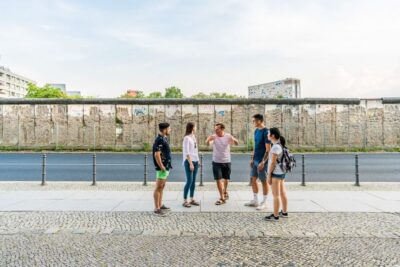
Berlin’s Best: 2 Hour Walking Tour Third Reich and the Cold War
Read our review →
Explore Berlin: See All The Iconic Sights & Some Hidden Gems
Read our review →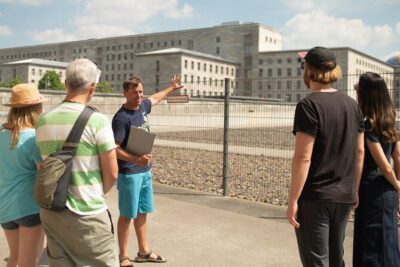
Third Reich Berlin: Hitler and WWII Walking Tour
Read our review →
Berlin Center Food Tour with 8+ Authentic Local Tastings
Read our review →
Browse the lists this tour appears in