Review · FULL-DAY
Berlin Private Complete History All Day Walking Tour
Berlin’s past is packed into this long walk. In one day, you move from the Brandenburg Gate and Hitler’s bunker site to the Berlin Wall, Bebelplatz, Museum Island, and the former East Berlin center at Alexanderplatz. It is a brisk lesson in how power reshaped one city again and again.
I like the private format, which lets you ask questions and adjust the pace instead of following a fixed group. I also like the range: Nazi Berlin and the Cold War get the most attention, but you also see royal Prussia, churches, museums, universities, and modern Berlin.
The trade-off is simple: six hours on foot is a lot. One booking covered about 5.5 miles, and the $253.95 per-person price makes the tour best for couples, families, or small groups who want personal attention rather than a budget introduction.
Key points to know before you book
- Twenty-two central Berlin stops: The route covers Brandenburg Gate, the Reichstag, the Holocaust Memorial, Checkpoint Charlie, Museum Island, and Alexanderplatz.
- A private guide for your group: You can ask questions freely and adjust the pace or emphasis to suit your interests.
- Strong focus on WWII and the Cold War: The former Gestapo headquarters, Führerbunker site, Berlin Wall, and Soviet memorial all receive careful attention.
- No vehicle is used: Pickup and sightseeing happen on foot, with the tour ending at Alexanderplatz.
- Six hours and roughly five to six miles: Wear comfortable shoes and plan for a full day outside.
- A useful first-day orientation: The route helps you decide which museums and memorials deserve a longer return visit.
Why this six-hour walk works for Berlin
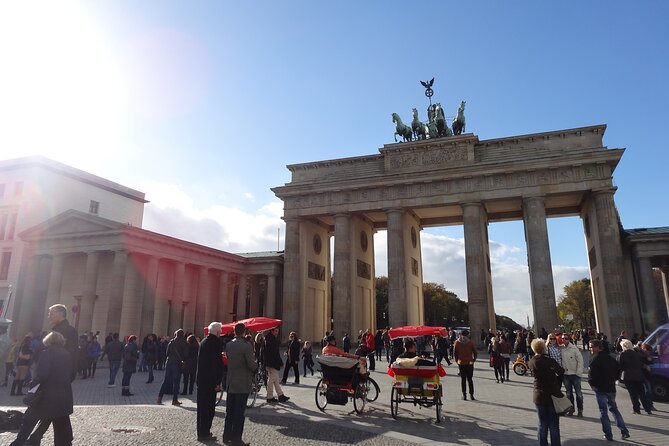
Berlin can feel scattered at first. The major sights are not gathered around one old town square. They stretch from the Tiergarten and Brandenburg Gate through Mitte, across former Cold War borders, and toward Alexanderplatz.
This tour gives that spread a clear thread. You are not simply collecting photographs. You are following the political story of Berlin from Prussian kings and imperial Germany through Nazi dictatorship, Soviet victory, divided Berlin, reunification, and the modern capital.
The private setting matters most here. Berlin’s memorials often raise hard questions, and a private guide gives you room to stop, ask, and discuss. Guides associated with this experience include Rhys, Paul, Ciaran, Beth, Ken, Eugen, Darren, Julian, and Francisco. The individual guide you receive will vary, but the strongest feedback consistently points to clear storytelling, flexibility, and a strong command of Berlin and European history.
The route is also useful for orientation. You pass many places you may want to revisit, including the Topography of Terror, the Holocaust Memorial, Museum Island, and the Humboldt Forum. I would schedule it early in your stay if you want help choosing what to explore in greater detail later.
More History Walking Tours in Berlin
- Berlin: History of the Third Reich Guided Walking Tour
★ 4.7 · 791 reviews - Berlin Historical Highlights Walking Tour
★ 4.9 · 657 reviews - Berlin: Charité Hospital Walking Tour of Medical History
★ 4.9 · 276 reviews
Brandenburg Gate, Reichstag, and the Soviet memorial
The day begins at Ebertstraße, near the Brandenburg Gate. This is a good starting point because the gate connects several versions of Berlin in one view.
Built as a grand entrance to the city, it later became a symbol of Prussian power, a backdrop for Nazi ceremony, and a Cold War image of division. Your guide explains why a structure that once marked an entrance came to represent a city cut apart, then reunited.
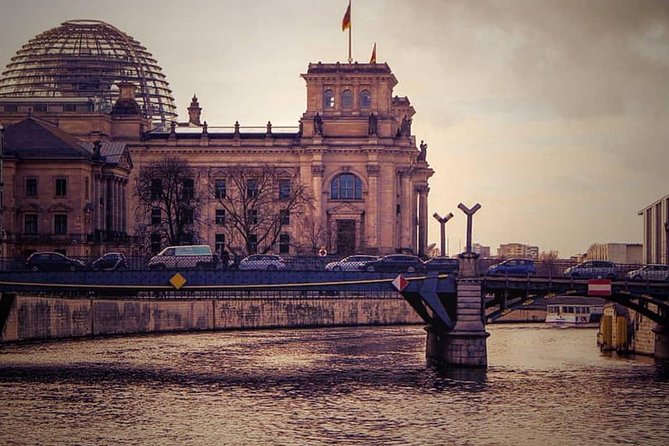
The Reichstag is nearby. You view the building from outside and hear how the Hohenzollern era, the fire of 1933, the Nazi seizure of power, the Soviet assault on Berlin, and reunification are tied to this place.
The tour does not include a private vehicle or a guaranteed interior visit to the Reichstag. You should think of this stop as historical interpretation and exterior viewing, not a dome tour.
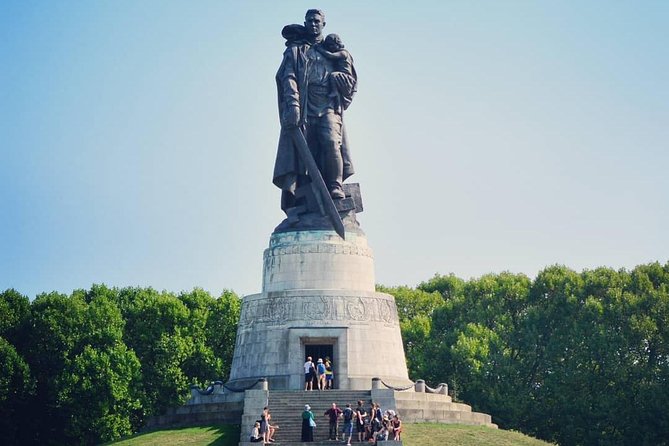
From there, the route enters the Tiergarten and reaches the Soviet Memorial. This memorial is especially interesting because it was built in West Berlin after the war, even though the western part of the city was controlled by the Western Allies. Its building materials and symbolism give your guide plenty to explain, including why its presence could be politically awkward during the Cold War.
You also walk through part of the Tiergarten, Berlin’s large central park, and view the Victory Column from a distance. The column was moved to its present location, a detail that helps explain how Berlin’s grand avenues and monuments were rearranged over time.
Holocaust Memorial and the Führerbunker site
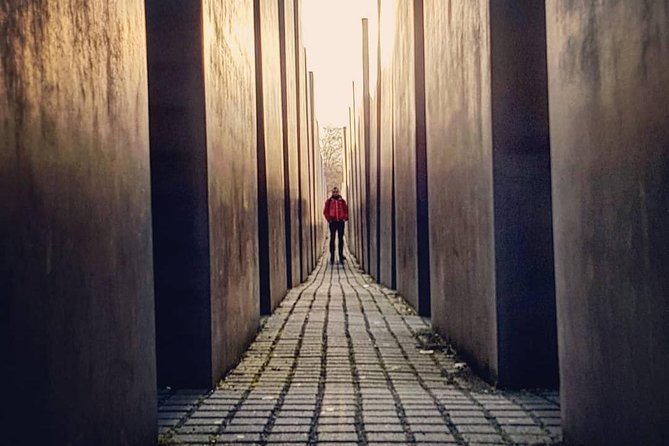
The Memorial to the Murdered Jews of Europe is one of the most important stops. Its field of concrete blocks creates an experience that changes as you walk through it. Your guide can provide the historical setting and discuss how Berlin handles public memory.
The route then reaches the former Führerbunker site, now an ordinary parking area. There is no dramatic structure to enter, and that is part of the point. The plain setting resists turning the site into a shrine or spectacle.
You learn about Hitler’s final days and the battle for Berlin, but the focus remains on historical facts rather than theatrical storytelling. I appreciate that approach. A place connected to mass murder and dictatorship does not need decoration to feel serious.
Nearby, the Johann Georg Elser sculpture recalls the carpenter who attempted to kill Hitler in 1939. His story adds a needed reminder that resistance existed inside Germany, even though it was dangerous and often isolated. This short stop breaks up the better-known story of Nazi leaders and military commanders.
Nazi Berlin from the Aviation Ministry to the Topography of Terror
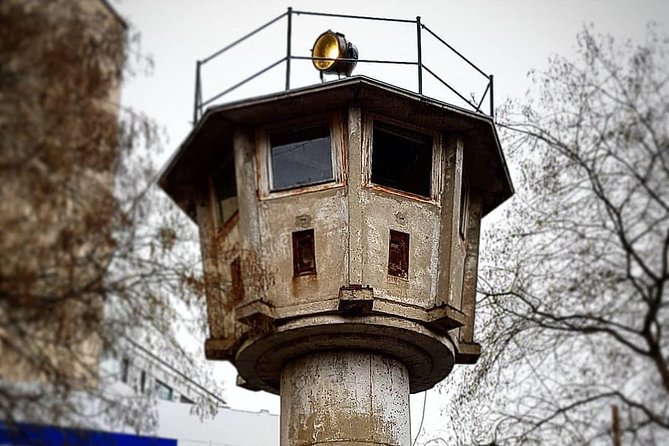
The former Aviation Ministry is an imposing building with an unusually long period of continuous use beginning in 1936. Your guide explains its role during Nazi rule and how the building survived the destruction around it.
The stop is valuable because it shifts your attention from famous monuments to the machinery of government. Buildings can reveal how a dictatorship operated, not just where its leaders lived or died.
At the Topography of Terror, you visit the former headquarters of the SS, Gestapo, and SD. This is one of the most serious parts of the walk. The site deals with persecution, state violence, and the people and agencies responsible for it.
The location also raises an important postwar question: what should happen to a place associated with terrible crimes? The tour discusses how the site was treated after the war rather than presenting Nazi Berlin as a closed chapter.
Most stops are listed at 10 to 20 minutes. That gives you enough time for explanation and questions, but it is not enough for a full museum visit. If you want to read every panel at the Topography of Terror, plan to return later.
More History Walking Tours in Germany
- Berlin Private Half-Day Walking Tour: Discover the German Capital’s History
★ 5.0 · 244 reviews - Berlin: Historic Center Walking Tour with a Real Berliner
★ 5.0 · 134 reviews - Leipzig: 1.5-Hour Historical Walking Tour in German
★ 4.7 · 2,217 reviews - Trier: Guided Old Town Highlights and History Walking Tour
★ 4.7 · 687 reviews
Berlin Wall stories at Checkpoint Charlie
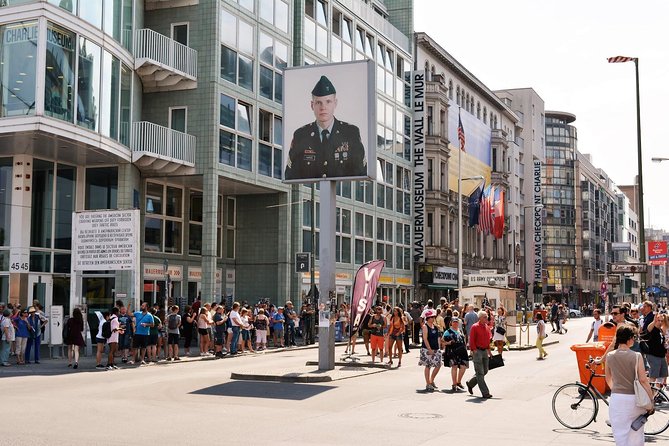
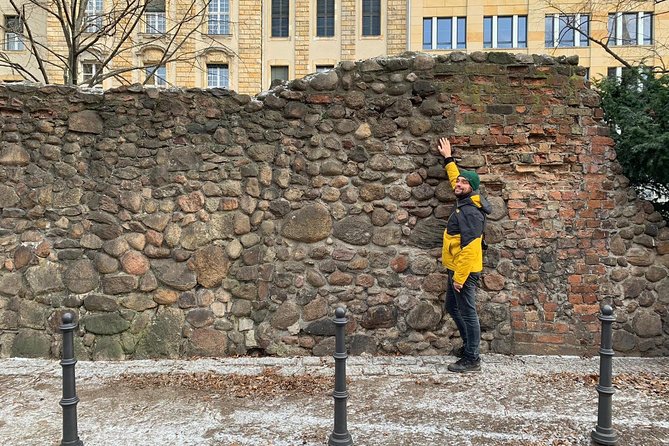
The route next turns toward a remaining section of the Berlin Wall and its memorial area. Here you learn why the wall was built, how it divided families and neighborhoods, and how people tried to escape across it.
This section works best when the guide connects the physical barrier to individual stories. Great escapes and tragic deaths make the political division easier to understand without reducing it to a simple Cold War timeline.
Checkpoint Charlie follows. It is Berlin’s most famous checkpoint and one of the city’s most photographed Cold War sites. The crossing point carries real historical weight, but the area today can feel highly commercial and theatrical compared with the quieter wall memorial sites.
Your guide helps separate the original function from the modern presentation. That context is useful. You can take the photograph, then understand what the checkpoint meant for American, Soviet, and German relations.
The route continues along Friedrichstrasse, once known for cabarets and nightlife. This gives you a short change of mood before the tour returns to architecture, politics, and memory.
Gendarmenmarkt, Bebelplatz, and Humboldt University
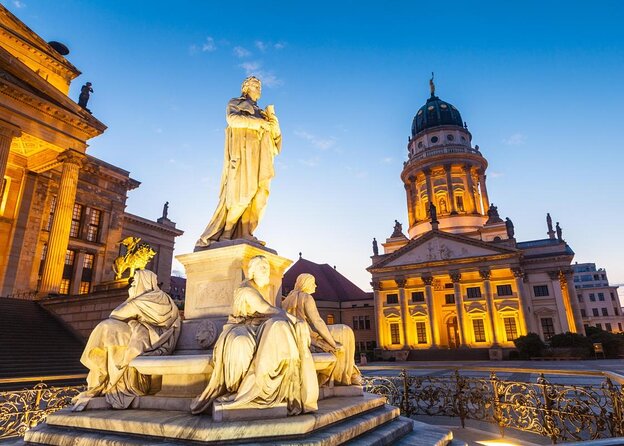
Gendarmenmarkt is one of central Berlin’s most handsome squares. The surrounding buildings and twin church facades create a strong architectural contrast with the stark memorials earlier in the day.
Your guide explains how the square developed and why it became such an important urban setting. This is a useful reminder that Berlin’s story is not only about war and dictatorship. The city also has a long tradition of royal planning, civic ambition, music, religion, and public architecture.
At Bebelplatz, the focus turns again to Nazi persecution. You see the square surrounded by major 18th-century buildings, including St. Hedwig’s Cathedral, the opera house, and Humboldt University’s law faculty.
This was also the site of a major Nazi book burning. The memorial in the square is intentionally restrained and thought-provoking. It asks you to consider censorship and the destruction of ideas rather than offering a large monument with an easy message.
Humboldt University adds another layer. You hear about the institution, the building, and the Humboldt family. This part of the route helps connect Berlin’s intellectual tradition with the city’s political past.
Neue Wache, Museum Island, and the Humboldt Forum
Neue Wache is one of the most moving interiors on the route. The building has served different political purposes and now functions as a memorial. Its changing meaning makes it a kind of political weather gauge, reflecting how Germany remembered war and sacrifice under different governments.
The tour then passes the German Historical Museum, housed in the oldest surviving building on Unter den Linden. The guide discusses the building from outside, so you will need a separate visit if you want to see the museum’s collections.
Museum Island is a major highlight. The island is a UNESCO World Heritage site and includes several museums, the Berlin Cathedral, and important architectural work. A guide can help you understand the overall plan and the relationship among the buildings, which is difficult to grasp when you visit each museum separately.
You also visit the Humboldt Forum and hear about its complicated, fairly recent history. This is a place where architecture, museum practice, colonial questions, and the rebuilding of Berlin’s historic center come together. The visit is brief, so treat it as an introduction rather than a complete examination of the forum.
St. Mary’s Church comes next. It is described as the oldest church in Berlin with continuous use, and you may be able to go inside. The wording matters: interior access is not guaranteed, so do not book this tour solely for a church visit.
Alexanderplatz and the former East Berlin center
The final stop is Alexanderplatz, rebuilt after the war as a major center of the German Democratic Republic. It gives the tour a strong ending because you finish in a part of Berlin shaped by East German planning rather than imperial or Nazi ambition.
By this point, you have crossed through several political versions of the city. Alexanderplatz helps complete the story of divided Berlin and the former East German capital.
Ending here is practical. The square is near public transportation, and you can continue exploring on your own. It is also a natural place to pause for food after six hours of walking.
How personal is the private format?
You and your own group participate, rather than joining a large public departure. That changes the rhythm of the day. You can ask about family history, architecture, religion, military history, or daily life in divided Berlin without worrying about holding up a busload of people.
The guides have adapted to mixed-age groups, including a group ranging from age 14 to 82. One guide even allowed teenagers a short break to use a slide in a shopping center. That small detail captures the practical advantage of a private tour: the day can bend when your group needs a pause.
The route is described as paced around the group, and several bookings included a lunch break. Food and drinks are not included, so discuss a stopping point with your guide or carry water and snacks.
The private setup also lets you spend longer at a place that catches your interest. The basic stop times range from five to 20 minutes, but a guide can adjust the balance when possible.
Price, walking demands, and who gets good value
At $253.95 per person, this is not a cheap sightseeing walk. The value depends heavily on group size. For two people, you are paying a premium for a full day of personal guiding. For a family or small group, the cost may compare more favorably with several separate tours.
You are paying for time, route planning, and the ability to ask questions throughout the day. You are not paying for transport, meals, museum admission, or a special interior access package. All listed stops are free to visit, but some museums and attractions may require separate admission if you return to explore them properly.
The physical demand deserves equal attention. One person covered about 5.5 miles, and the itinerary includes 22 stops. Most travelers can take part, but this is not a gentle hop-on, hop-off alternative. Wear good walking shoes, bring water, and expect to spend much of the day outdoors.
I would choose this tour if you want a serious first look at Berlin and enjoy learning through conversation. It suits couples, families with older children, and small groups with different interests. It is less suitable if you want long museum visits, a short introduction, or a vehicle between distant areas.
The tour is offered in English, includes mobile ticketing, offers pickup on foot, and is near public transportation. Service animals and pets are allowed according to the tour information. Free cancellation is available when you cancel at least 24 hours before the start time.
My verdict on this Berlin history walk
I would book this tour early in a Berlin stay if I wanted one day to establish the city’s political and cultural map. The route covers an unusually wide range of places, and the private guide gives you a better chance to connect them into one story.
The strongest reason to book is the guide relationship. Names such as Rhys, Paul, Ciaran, Beth, and Ken are associated with lively, flexible explanations, and the tour can adjust to your pace and questions. The main caution is the cost and the distance on foot.
Book it if you want WWII and Cold War history explained at the actual sites, with enough flexibility to ask follow-up questions. Skip it if you prefer to wander slowly, spend hours inside museums, or see Berlin by public transport. For a first full day in the city, this is a demanding but useful way to get your bearings fast.
FAQ
How long does the Berlin private history tour last?
The tour lasts approximately six hours.
Is this a private tour?
Yes. Only your group participates, and the guide gives attention to your group rather than combining you with a larger public tour.
Does the tour use a vehicle?
No. This is a walking tour, and pickups take place on foot. Private transportation is not included.
Where does the tour start and end?
The listed starting point is Ebertstraße 24, 10117 Berlin, near the Brandenburg Gate area. The tour ends at Alexanderplatz, 10178 Berlin.
Is food or drink included?
No. Food and drinks are not included, though the schedule can include a lunch break.
What is the cancellation policy?
You can cancel for a full refund up to 24 hours before the experience start time. Cancellations or changes made less than 24 hours before the start time are not accepted for a refund.
More Private Walking Tours in Germany
- Hamburg: Private Tour Red Light District Walking Tour
★ 4.7 · 227 reviews - Hamburg: Private Couples’ Photoshoot and Walking Tour
★ 4.9 · 212 reviews - Frankfurt: Private or Shared Walking Tour
★ 4.5 · 158 reviews - Rothenburg ob der Tauber: Private Old Town Walking Tour
★ 4.8 · 155 reviews
More Private Walking Tours in Berlin
- Private Walking Tour Berlin Third Reich Hitler and World War II
★ 5.0 · 360 reviews - Private Berlin: Iconic Sights and Hidden Gems Walking Tour
★ 5.0 · 292 reviews
New routes in Berlin
- Small Group Walking Tour: “Wild Kreuzberg”★ 4.8 · 199 reviews
- Sachsenhausen Memorial: Walking Tour from Berlin★ 4.7 · 132 reviews
- Berlin: Prenzlauer Berg District Guided Walking Tour★ 4.9 · 316 reviews
- Berlin: 2.5-Hour Walking Tour through Kreuzberg 61★ 4.9 · 525 reviews
- From Berlin: Potsdam & Sanssouci half day Walking Tour★ 4.9 · 85 reviews
- Explore Berlin: Walking Tour of All The Iconic Sites★ 4.9 · 855 reviews
- East Berlin and the Wall: Walking Tour★ 4.9 · 407 reviews
- Cold War, Berlin Wall, Spies and the East Side Gallery★ 4.8 · 254 reviews
Full-Day, compared.

Khao Lak: Full-Day Khao Sok Jungle Walk and Canoeing Tour
Read our review →