
Review · KYOTO
Night Walk in Gion: Kyoto’s Geisha District
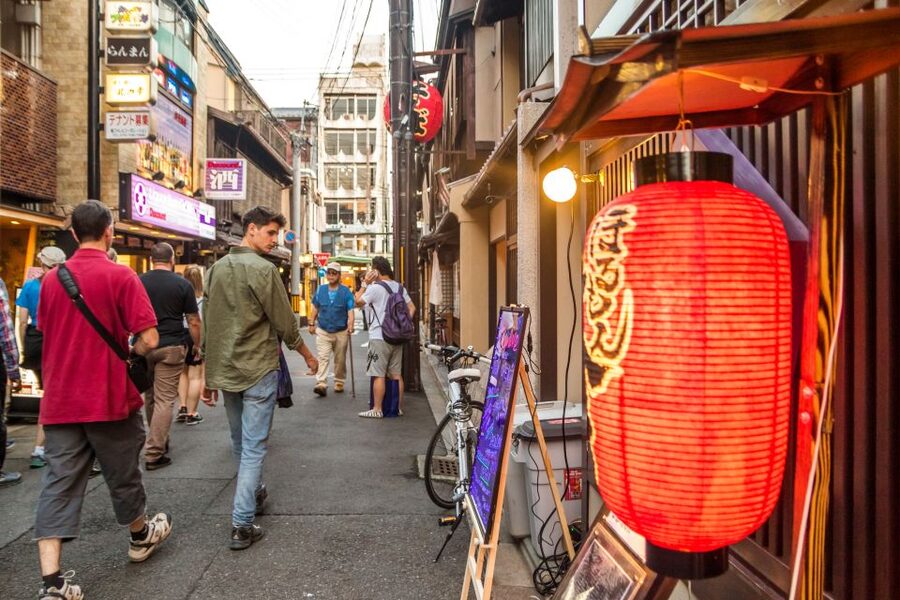
Gion becomes a different place after sunset. Lanterns glow beside old wooden buildings, a quiet stream cuts through the district, and you may catch sight of a geiko or maiko heading to an evening appointment. This 100-minute night walk explains what you are seeing instead of leaving you to guess.
I like the tour for two clear reasons: the guides explain the difference between geiko and maiko in useful detail, and they teach you how to behave if you meet one on the street. Guides including Mia, Mie, Chako, and Mai have been praised for their humor, English, and strong respect for the people who live and work here.
The main drawback is simple: seeing a geiko or maiko is not promised. The walk is also less suitable if you have mobility problems, and the strict rules about recording and respectful observation may disappoint anyone hoping for close-up photographs.
Key points to know before you book
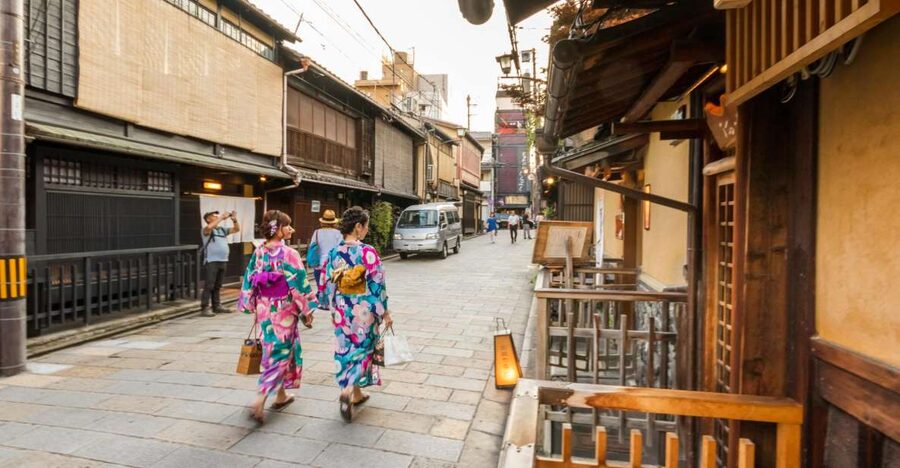
- Gion after dark: Walk classic streets and a streamside route when the district takes on a quieter, more atmospheric feel.
- Clear cultural context: Learn about geiko and maiko training, kimono, hairstyles, tea-house customs, and daily work.
- Respect comes first: Your guide explains how to observe quietly and avoid disturbing people heading to appointments.
- Strong guide team: Mia, Mie, Chako, Mai, Toko, and others are praised for clear English, humor, and local insight.
- Good price for a short tour: At $21, the walk costs less than many Kyoto activities and gives you useful context for exploring Gion afterward.
- Sightings are possible, not certain: Some walks see several geiko and maiko, while others may focus mainly on streets, history, and etiquette.
Meeting the guide near Gion Shijo Station
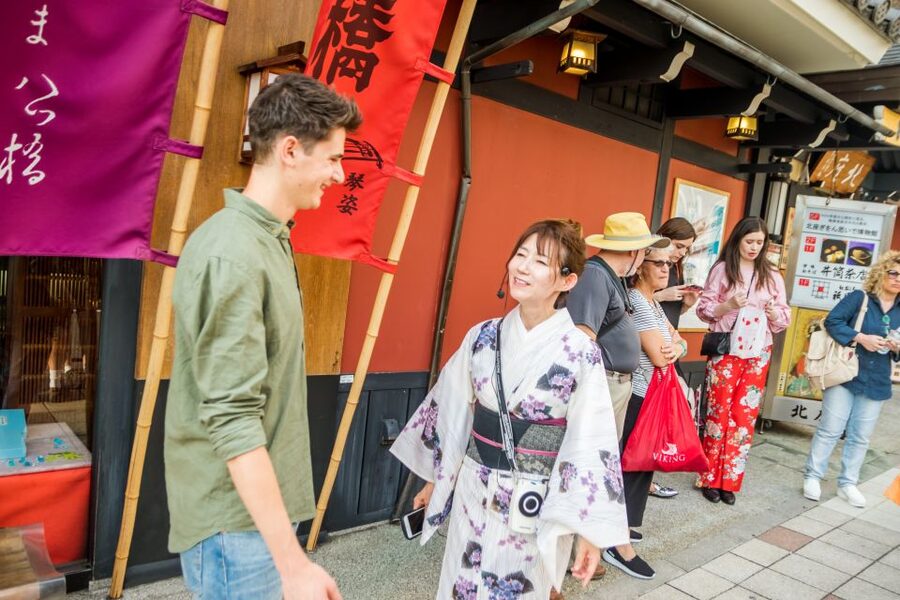
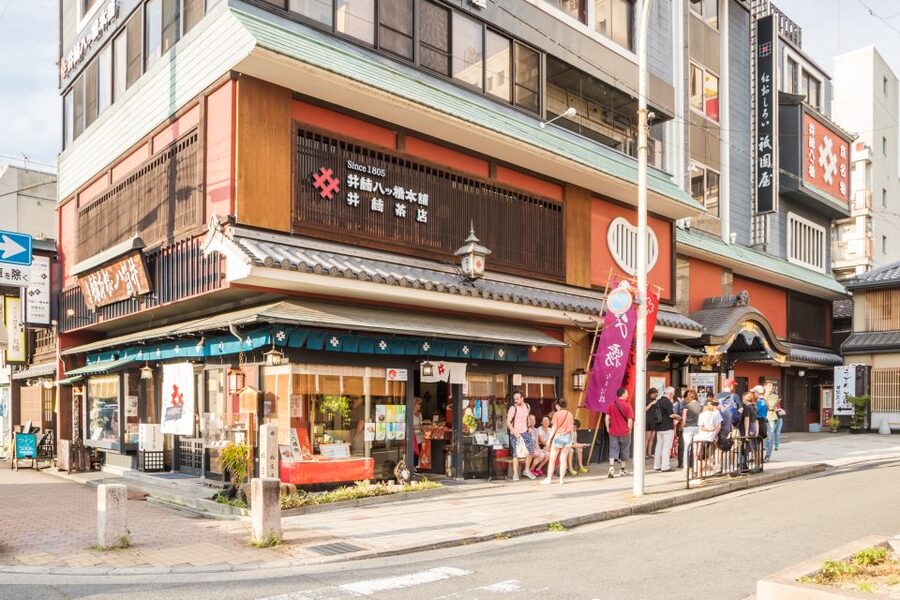
The tour begins in front of the Gion Omoide Museum, connected to the Izutsu Yatsuhashi pastry shop. The meeting point is near Gion Shijo Station, at coordinates 35.0044519, 135.7723814.
That pastry shop connection matters because Gion has plenty of narrow streets, hotel entrances, and traditional buildings that can look similar after dark. I would arrive a little early, check the name of the museum and shop, and keep the meeting details on your phone.
Your professional English-speaking guide leads the walk. The guide team changes, but names that appear often include Mia, Mie, Chako, Chaco, Mai, Toko, and Miya. Do not book expecting one particular guide unless your reservation specifically confirms that person.
The advertised duration is 100 minutes. The description also refers to it as a two-hour guided walk, so allow roughly two hours around the activity rather than planning a tight dinner reservation immediately afterward. Transportation and hotel pickup are not included. You make your own way to Gion and back.
More Night Walking Tours in Kyoto
- Kyoto: Gion Magical Night Walking Tour with Geisha Trivia
★ 4.9 · 2,393 reviews - Kyoto Gion Night Walk & Geisha District Guided Tour
★ 5.0 · 786 reviews - Gion Walking Tour by Night
★ 4.5 · 429 reviews
Walking the classic streets of Gion
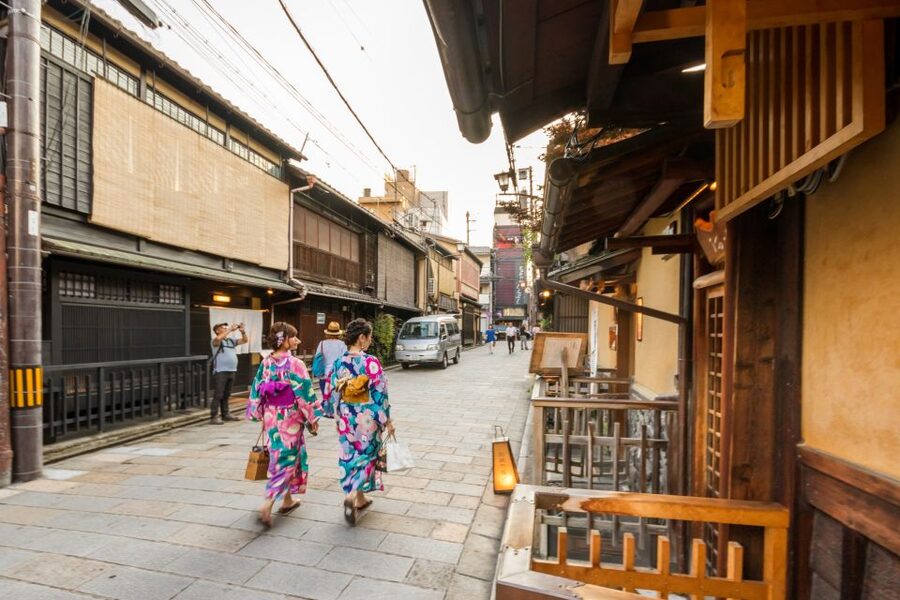
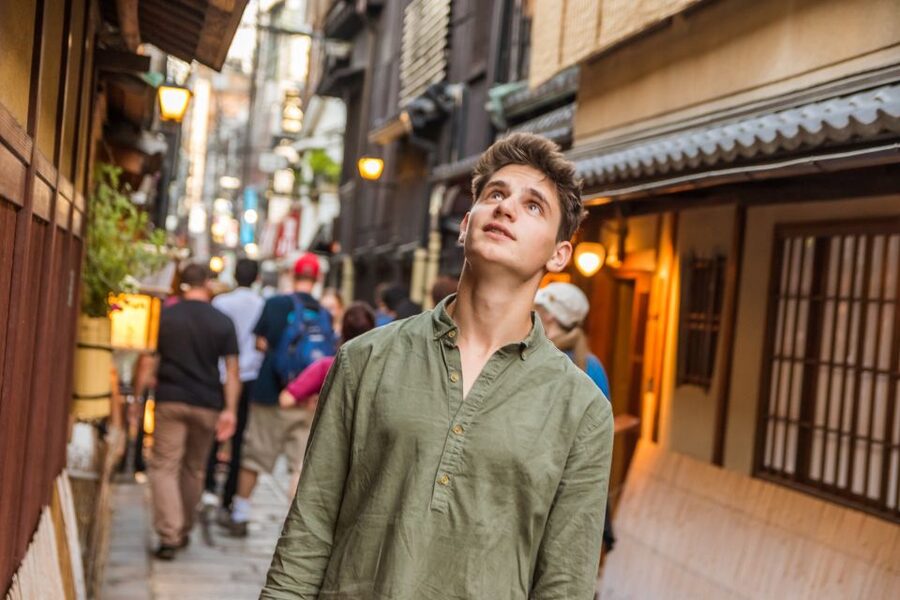
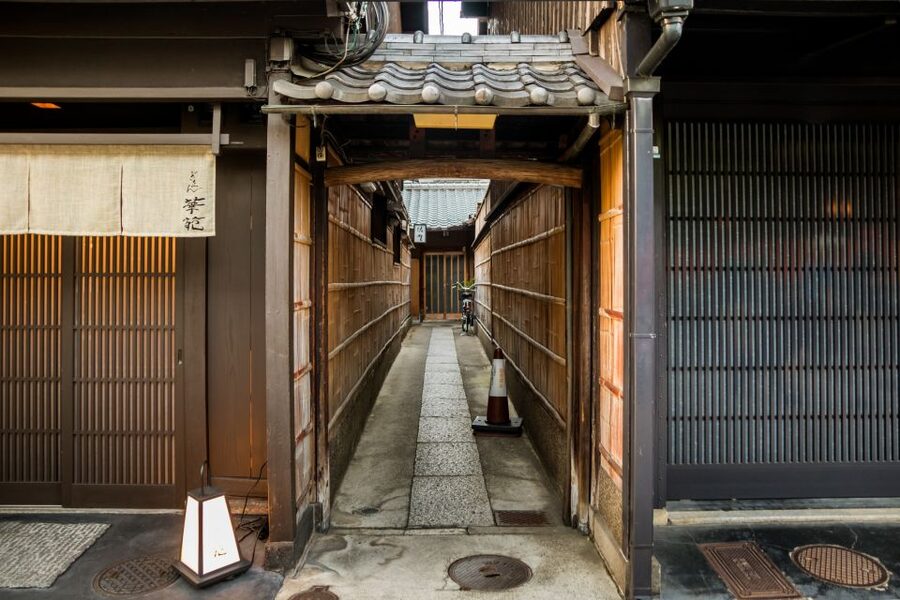
The first part of the walk takes you through Gion’s traditional streets. This is the setting many people picture when they think of old Kyoto: wooden facades, narrow lanes, small entrances, and subdued evening light.
The scenery has also been associated with Memoirs of a Geisha, which helps explain why the area attracts so much attention. Still, the best reason to walk here is not to copy a film scene. It is to understand that Gion is a working district, not an outdoor stage set.
Your guide adds the missing context. Instead of simply pointing out attractive buildings, the walk explains how the geisha world fits into Kyoto life. The terms geiko and maiko are used in Kyoto for professional women who perform traditional arts, with maiko generally referring to apprentices and geiko to established performers. The tour discusses their training, clothing, hair, work, and daily routines.
The exact route can vary with the evening and local conditions. Reviews describe visits to less crowded corners and picturesque streets, as well as time around the stream. That flexibility is useful. A guide who adjusts the route can help the group avoid adding pressure to a busy doorway or a narrow lane.
Understanding kimono, hairstyles, and training
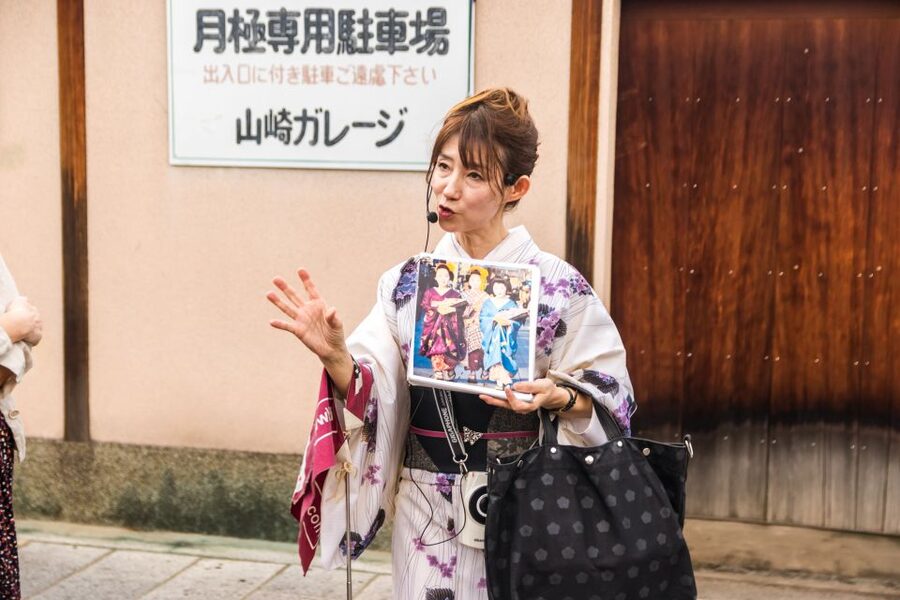
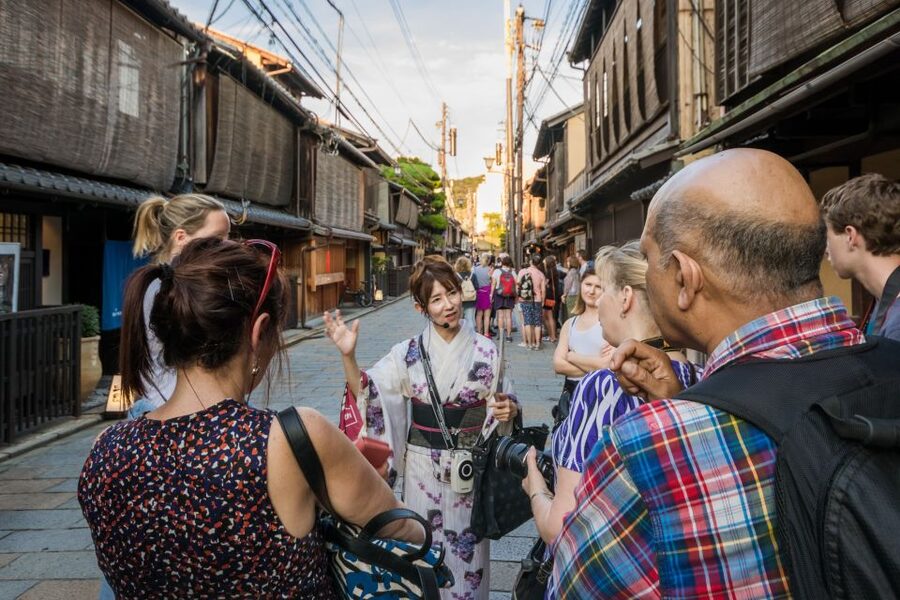
A major strength of this tour is the attention to visible details. At first glance, it can be hard to tell what you are looking at. A guide helps you notice the differences between geiko and maiko through their clothing, hairstyle, makeup, and accessories.
You learn why a kimono is not just a costume for the evening. The clothing, hair, and formal presentation connect to age, training, status, and the setting in which the performer works. The guide also explains traditional rules and what daily life is like behind the polished appearance.
Several guides have used photographs and charts to make these points easier to follow. Mie, for example, has been praised for bringing a file of photographs and explaining small details that are difficult to find in a standard guidebook. That sort of visual aid is especially useful if you know little about Kyoto’s geiko and maiko traditions.
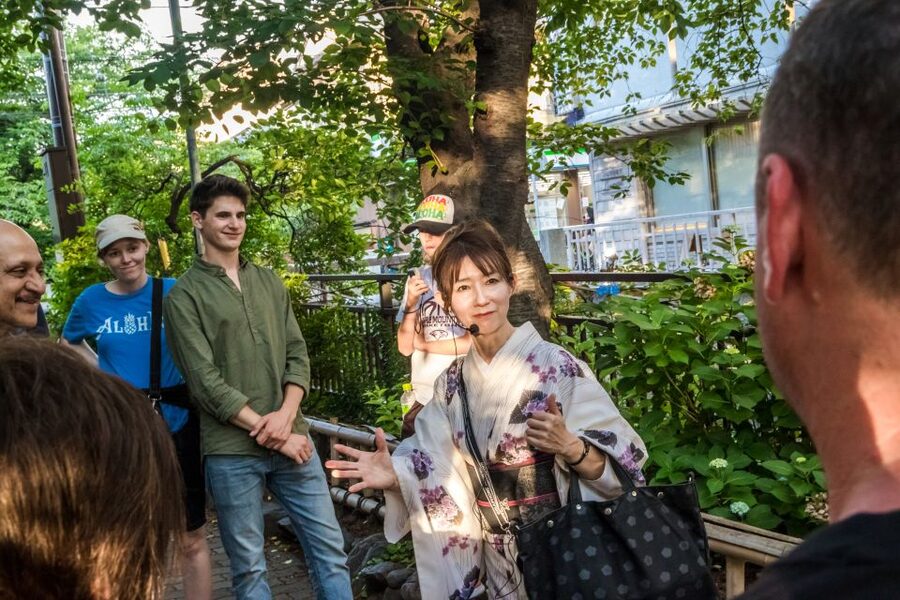
The information is presented during a walk, not in a lecture hall. You may be listening beside a stream, moving between streets, or pausing while the guide answers questions. This keeps the subject connected to the real neighborhood, though street noise and group movement can occasionally make it harder to hear every word.
Learning the rules for a respectful encounter
This is where the tour earns its price. Gion has faced problems caused by visitors chasing, blocking, touching, or photographing geiko and maiko. A responsible guide makes clear that a person walking to an appointment is not there to entertain passersby.
You are taught to watch from a respectful distance, stay quiet, avoid obstructing the street, and follow the guide’s instructions. Some groups have been asked to avoid taking photographs during encounters. Video recording is specifically not allowed, so you should keep your phone away when a geiko or maiko passes.
That may feel strict if you imagined a close-up photo. I see it as one of the more valuable parts of the experience. You get a better understanding of Gion when you see geiko and maiko as working people with private lives, not as characters placed in the street for tourists.
The guides are often especially careful here. Some people have found that the guide kept the group farther away than expected. That can feel disappointing in the moment, but it protects the people you came to learn about and helps keep the walk from adding to the district’s problems.
Same streets, a different guide:
- Kyoto Geisha Walking Tour: Gion District & Hidden Gems
★ 4.7 · 3,273 reviews - Kyoto: Gion Geisha District Walking Tour – Stories of Geisha
★ 4.7 · 2,187 reviews - Best of Kyoto: Gion, Geisha, Pagodas & Cobblestones
★ 4.9 · 2,058 reviews - Kyoto Gion Geisha District Walking Tour – The Stories of Geisha
★ 5.0 · 1,441 reviews
The chance to see geiko and maiko
Sightings are possible because the tour takes place in the evening, when geiko and maiko may be traveling to tea-house appointments. Several walks have reported sightings of multiple people, including groups that saw four, six, or even more than eight maiko and geiko.
Other experiences may bring only a glimpse, a person entering a taxi, or no sighting at all. The activity does not guarantee an encounter, and you should not judge the tour only by how many people you see.
If a sighting happens, your guide may identify what you are seeing and explain details about the person’s clothing or role. Guides such as Mia and Mie have been praised for knowing the area well and, in some cases, recognizing local geiko and maiko by name. That personal familiarity can add context, but it should never be treated as access to private spaces or a promise that anyone will stop to talk.
The most memorable part may be the few quiet seconds when someone passes under the lanterns. Keep your expectations sensible. You are joining a cultural walk through a working neighborhood, not buying a backstage meeting.
Why the guide makes the difference
The route itself is easy to walk independently. You can visit Gion’s streets without paying for a guide. What you cannot easily recreate is the explanation of etiquette, the historical background, and the ability to connect small visual details with the wider culture.
The strongest praise goes to guides who combine information with personality. Mia is frequently described as funny, warm, and deeply respectful. Mie is praised for precise English, photographs, unusual anecdotes, and even bits of Japanese slang. Chako and Chaco are described as patient, lively, and clear. Mai has been credited with keeping children interested.
That range matters because a good guide needs to suit the group. Families may appreciate a lighter style and a steady pace. Adults who already know something about Japanese culture may prefer the smaller details and current local perspective. One Japanese participant still found the tour worthwhile, which suggests the material is not aimed only at first-time visitors.
There is some variation between guides, as you would expect. One person’s energetic style may be another person’s overly theatrical presentation. The overall focus remains consistent: history, current life, etiquette, and the visual signs of geiko and maiko culture.
A useful evening activity for families
The walk has worked well for families, including children. One family brought three children, with one in a stroller, and found the experience manageable. Other parents said children who were unsure at the start became interested once the guide added humor and stories.
The 100-minute length is long enough to cover real material without taking up a whole evening. Still, it is a walking tour through streets rather than an indoor show. You should be comfortable standing and walking for the duration, and the activity is not suitable for people with mobility impairments.
Rain does not automatically stop the experience. Guides have continued with groups in wet weather, though you should dress for conditions. Kyoto evenings can feel warm in some seasons and cool in others, so practical shoes and weather-ready clothing make sense.
Is $21 a fair price?
At $21 per person, this is a strong-value introduction to Gion. You are paying for a professional English-speaking guide, not entrance tickets or transport. The price is modest compared with many organized Kyoto activities, especially if you want cultural explanation rather than a simple stroll.
The value depends on what you want. If you only need attractive streets for your camera, you can walk Gion on your own. If you want to understand the difference between geiko and maiko, learn the rules for encounters, and ask questions in English, the fee is easier to justify.
The tour can also improve the rest of your Kyoto visit. Once you understand the role of tea houses, the clothing, and the etiquette, you will notice more when you return to Gion independently. Several people wished they had taken the walk earlier in their trip, since it helped them make sense of the district afterward.
Flexible booking adds practical value. You can reserve now and pay later, and cancellation is free up to 24 hours before the activity for a full refund. A child discount is available, but you need valid identification to receive it.
What this tour does not include
There is no hotel pickup or drop-off, and transport to the meeting point is your responsibility. The activity includes the English-speaking guide only.
You also do not enter a geisha boarding house or tea house. That is not a flaw. These are private working spaces, and the walk is designed to explain the culture from public streets while protecting privacy.
Do not book if your main goal is a guaranteed meeting, close contact, or unrestricted photography. Video recording is not allowed, and respectful behavior is central to the activity.
Who should book the Gion night walk?
I would choose this tour if you are curious about Kyoto’s geiko and maiko traditions but do not want a staged performance. It is particularly useful for first-time visitors, families with older children, and anyone who wants a local guide to explain what is happening around them.
It also suits people who have already seen Gion by day and want a different mood. The evening setting, streamside streets, lanterns, and possible movement toward tea-house appointments give the district a different feel.
I would skip it if you dislike walking, need guaranteed accessibility, or want a private tour. I would also reconsider if you are mainly chasing photographs. The best attitude is quiet curiosity: listen, observe, and accept that the most respectful encounter may be a brief glimpse from a distance.
Should you book it?
For $21, I think this is an easy recommendation for most visitors interested in Gion. The guide’s cultural explanation and etiquette advice give the walk real purpose, while the evening streets provide the setting.
Book it with realistic expectations. You may see several geiko and maiko, or you may see none. Either way, you will leave with a clearer understanding of the people, clothing, rules, and working life behind one of Kyoto’s most famous districts. That is a better souvenir than a rushed photograph.
FAQ
How long does the Gion night walk last?
The activity is listed as 100 minutes. The description also refers to it as a two-hour walk, so allow about two hours when planning the rest of your evening.
How much does the tour cost?
The listed price is $21 per person.
Where does the tour meet?
The meeting point is in front of the Gion Omoide Museum, connected to the Izutsu Yatsuhashi pastry shop, near Gion Shijo Station. The coordinates are 35.0044519, 135.7723814.
Is the tour conducted in English?
Yes. A professional, licensed English-speaking guide leads the walk.
Will I definitely see a geiko or maiko?
No. Encounters often happen during the evening walk, but they are not guaranteed.
Can I record video during the tour?
No. Video recording is not allowed.
Is hotel pickup included?
No. Transportation to and from the attractions, as well as hotel pickup and drop-off, is not included.
Can I cancel the booking?
Yes. You can cancel up to 24 hours in advance for a full refund. You can also reserve now and pay later.
New routes in Kyoto
- Kyoto : Private Custom Walking Tour With A Local Guide★ 4.6 · 144 reviews
- Kyoto: Private 2.5 Hour Historical Walking Tour★ 4.9 · 121 reviews
- Kyoto: Gion Walking Tour★ 5.0 · 195 reviews
- Kyoto: Private Walking Tour with a Local★ 4.6 · 118 reviews
- Kyoto: Izakaya Bars Guided Walking Tour★ 4.9 · 815 reviews
- Kyoto: Gion Sunset Walking Tour with Local Guide★ 4.7 · 351 reviews
- Kyoto Fushimi-Inari Night Walking Tour★ 4.8 · 171 reviews
- Kyoto Gion Cultural Walk & Geisha Show with Dining Options★ 5.0 · 518 reviews
Kyoto Walking Tours, compared.
Kyoto Geisha Walking Tour: Gion District & Hidden Gems
Read our review →
Gion Geisha District Walking Tour – Stories of Geisha
Read our review →
Best of Kyoto: Gion, Geisha, Pagodas & Cobblestones
Read our review →
Nishiki Market Brunch Walking Tour (7 Tastings + Brunch)
Read our review →
Kyoto Arashiyama Walking Tour: Bamboo, Monkeys, Gardens & Secrets
Read our review →
Kyoto Gion: 2-Hour Geisha Culture & History Walking Tour
Read our review →

Kyoto Gion Night Walk & Geisha District Guided Tour
Read our review →Browse the lists this tour appears in