
Review · KYOTO
Kyoto Fushimi-Inari Night Walking Tour
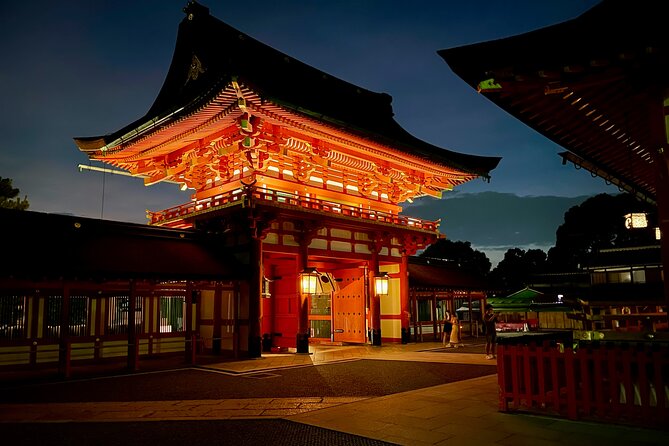
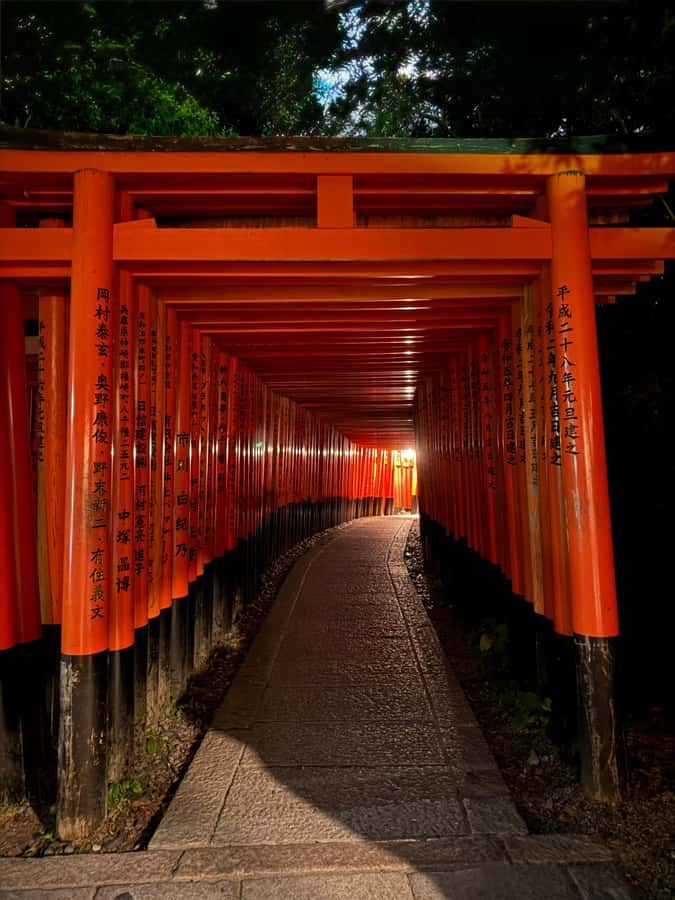
Fushimi Inari is a different place after sunset. The crowds thin, the air cools, and the vermilion gates take on a soft orange glow beneath the shrine lanterns. You get the famous torii tunnel without the daytime crush, then hear the meaning behind the fox statues, offerings, and small mountain shrines.
I like the quieter timing and the way guides such as Hiro, Jem, Tammy, and Vincent turn a beautiful walk into a cultural lesson. I also like the practical pace: guides stop for photographs, answer questions, and adjust the walk for the group.
The catch is simple: this is an uphill walk, and the tour does not reach the top of Fushimi Inari mountain. If you want the full hike and summit view, you will need to continue alone after the guided portion.
Key points to know before booking
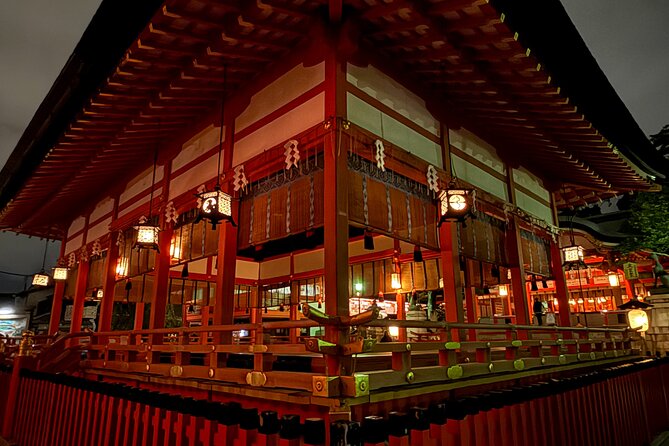
- Lantern-lit torii gates: See Fushimi Inari after dark, when the shrine feels calmer and more atmospheric.
- A cooler alternative: Evening departures help you avoid Kyoto’s daytime heat, especially from spring through autumn.
- Part of the mountain only: The route explores the main shrine and lower mountain paths, but it does not cover the full hike.
- Strong English guiding: Guides including Hiro, Jem, Tammy, Vincent, and Caleb explain Shinto customs and local history in clear English.
- Small-group feel: Group size can be around 10 people, though private or very small departures may also occur.
- Bring cash and good shoes: Public transportation costs about 300 yen, and the route includes uphill walking.
Why Fushimi Inari works so well at night
Fushimi Inari Taisha is free to enter, yet the $41 price can still make sense if you want context, company, and an easier way to find the most rewarding section of the shrine. You are not paying for admission. You are paying for two hours with an English-speaking guide who can explain what you are seeing instead of leaving you to guess.
During the day, the first torii gates can be packed. At night, the walk has more breathing room. It is not empty, especially near the entrance, but the difference can be large. You have a better chance of stopping for a photograph without a stream of people passing through the frame.
The evening also changes the mood. Daylight shows the bright vermilion paint clearly. After sunset, lanterns and building lights create a softer, more mysterious setting. The fox statues appear in sharper relief, and the long rows of gates feel more enclosed and quiet.
The tour is especially useful if you want to visit Fushimi Inari without getting up early. One winter booking option is offered during the day because sunset comes earlier, but in the warmer months the tour is timed around the evening light. Sunset is generally about 7:00 PM in the season when this evening option runs.
More Night Walking Tours in Kyoto
- Kyoto: Gion Magical Night Walking Tour with Geisha Trivia
★ 4.9 · 2,393 reviews - Night Walk in Gion: Kyoto’s Geisha District
★ 4.5 · 2,003 reviews - Kyoto Gion Night Walk & Geisha District Guided Tour
★ 5.0 · 786 reviews
Meeting the guide at the fox statue
Your meeting point is in front of the fox statue at the main entrance of Fushimi Inari Shrine. The listed coordinates are 34.9669313, 135.7710506. This is a useful detail because the shrine grounds contain many gates, paths, and side entrances, and you do not want to wander uphill looking for the group.
The guide sends detailed meeting instructions through WhatsApp. Make sure you can use WhatsApp before the tour and watch for messages on the day. If no message has arrived at least four hours before the start, contact the operator directly.
The meeting point puts you right at the shrine entrance, so you can begin with the most familiar symbols: the fox statues. Foxes are associated with Inari, the Shinto deity connected with rice, prosperity, and business. Your guide can explain why these animals appear throughout the shrine and how their objects and poses differ.
Arrive with comfortable shoes. This is not a flat stroll around a city block. You will walk uphill on steps and sloping paths, and the group may pause often for explanations and photographs. Cash is also useful for the roughly 300 yen public transportation fare and any drinks from vending machines along the route.
The lower shrine: start with meaning, not just photos
The first part of the tour covers the main shrine area and the lower approach. This is where Fushimi Inari can feel most crowded during daylight, so the evening start gives you an early advantage.
A guide adds value here because the shrine is full of details that are easy to overlook. You will learn how to behave in a Shinto setting, what the gates represent, and why so many businesses and individuals have paid for torii. The signs and structures can seem decorative at first, but the explanations connect them to worship, gratitude, and hopes for success.
The guides also bring a wider view of Japanese culture. Hiro, for example, has been praised for clear English and for explaining both the shrine and broader Japanese traditions. Other guides, including Tammy and Vincent, are noted for turning historical facts into stories rather than delivering a dry list of dates.
This part suits families and first-time visitors particularly well. One group with a 10-year-old found that Caleb kept the walk engaging and answered questions easily. Another guide, Yessi, helped a family understand the site through stories and details along the way. The tour is not built only for serious history fans.
Walking under thousands of vermilion gates
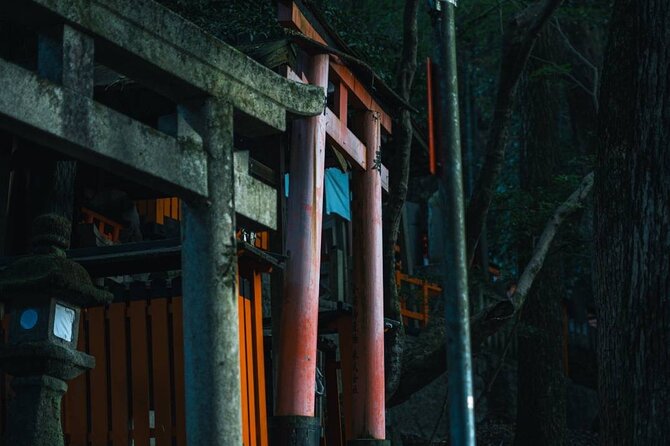
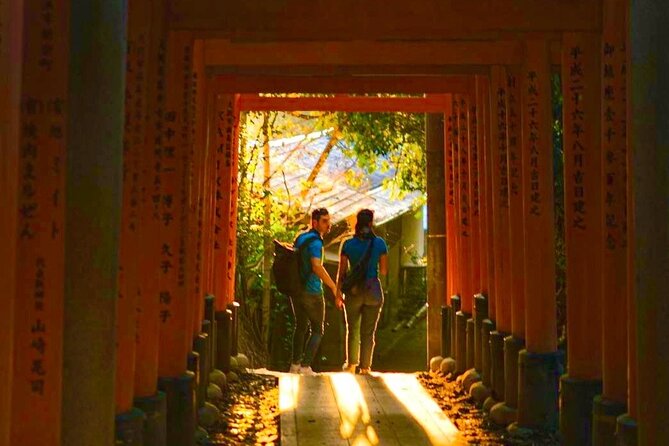
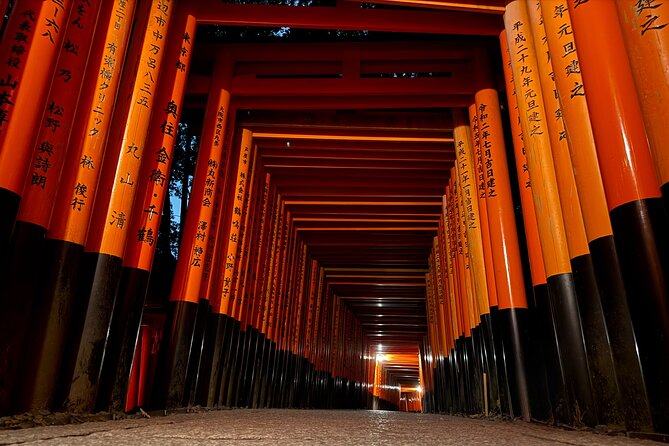
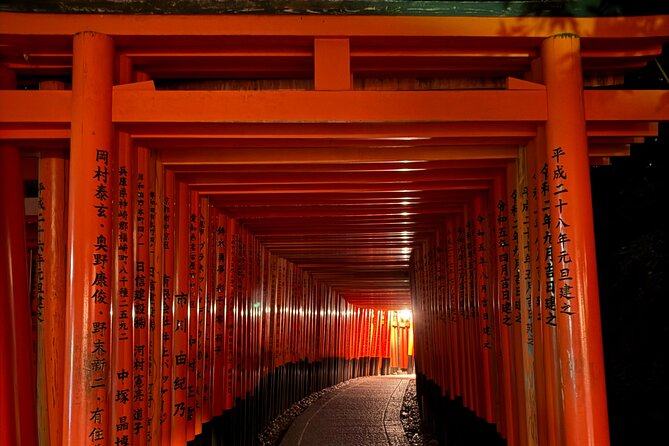
The torii gates are the heart of the experience. They form long covered passages up the wooded slopes, with each gate marking a donation to Inari. The repeated color and rhythm make the walk memorable, but the repetition also means that a guide is helpful. Without one, it is easy to see a series of attractive gates without grasping why they are there.
Your guide will point out photo spots and explain details you might otherwise pass. Guides have also adjusted the pace for people who wanted more pictures or shorter stops. That flexibility matters because the best evening photographs often require a little patience, especially when another group is moving through the tunnel.
The walk is not a race. You stop at shrines and viewpoints, hear stories, and continue upward. The route can feel intimate at night, but you should still expect other people on the path. The promise is fewer crowds, not private access to the entire mountain.
The uphill grade is the main physical concern. You do not need specialist hiking gear, but sandals or stiff city shoes will make the steps less pleasant. If you have already spent the day walking around Kyoto, the two-hour route may feel more demanding than its length suggests.
Same streets, a different guide:
- Kyoto Geisha Walking Tour: Gion District & Hidden Gems
★ 4.7 · 3,273 reviews - Kyoto: Gion Geisha District Walking Tour – Stories of Geisha
★ 4.7 · 2,187 reviews - Best of Kyoto: Gion, Geisha, Pagodas & Cobblestones
★ 4.9 · 2,058 reviews - Kyoto Gion Geisha District Walking Tour – The Stories of Geisha
★ 5.0 · 1,441 reviews
Small shrines, paper cranes, and the turn back
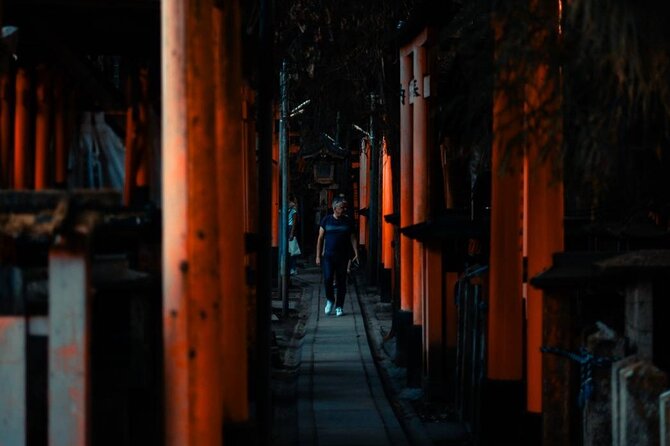
Fushimi Inari is more than the main torii tunnel. Smaller shrines, stone markers, offerings, and paper cranes appear along the route. A guide can show you how the busy entrance gives way to quieter sacred spaces and explain why people leave different kinds of offerings.
The guided walk does not go all the way to the summit. A group described reaching about one third of the way before looping back down, though the exact route can vary with the group, timing, and guide. Think of this as a focused introduction to Fushimi Inari, not a complete mountain hike.
That design is sensible for a two-hour evening tour. You see the most recognizable gates, learn how the shrine works, and return without committing to a much longer climb in the dark. It also leaves you the option of continuing independently after the tour if you still have energy.
One practical warning: vending machines are available along the route, but there are no washrooms open after 8:00 PM once you pass the temple at the bottom. Use the facilities before going higher. This is the sort of small detail that can save you an uncomfortable walk back.
Sunset, lanterns, and the best time for photos
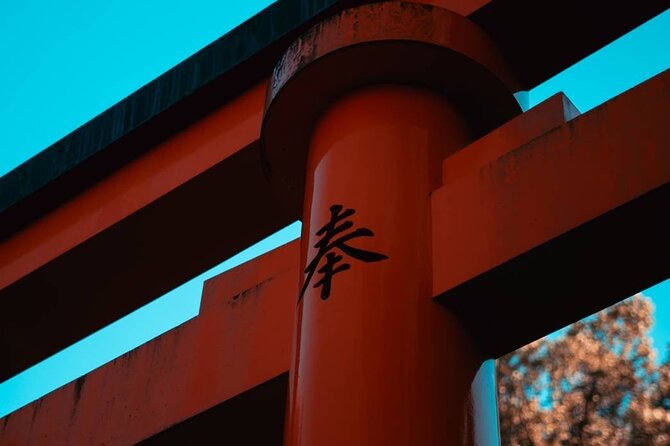
The timing is one of the strongest reasons to choose this experience. Around sunset, you get a transition from warm evening light to the illuminated shrine. This gives you two visual moods in one walk, provided the start time lines up with the season.
After dark, the gates and buildings glow with a muted orange light. The result is less bright and postcard-like than a sunny daytime visit, but more atmospheric. If you like photographs with shadow, repetition, and warm light, this timing is excellent.
Guides often help with the practical side of photography. Several have taken pictures for people or shown them better places to stop. Still, do not expect a photo workshop. The main purpose is walking and cultural explanation, with time for pictures built into the route.
Summer evenings should be more comfortable than midday, but the walk can still be warm. In winter, the operator provides a daytime option because the evening arrives early. Check the available start time for your date rather than assuming every season follows the same schedule.
The guides make the difference
The strongest part of this tour is the guiding. The individual names that come up repeatedly include Hiro, Jem, Tammy, Vincent, Caleb, Cade, and Yessi. Their styles differ, but the pattern is clear: expect a friendly guide who can explain the shrine in English and respond to questions.
Hiro is a good fit if you enjoy a lively cultural exchange. He has helped people understand the deeper meaning of the shrine, spoken Italian with an Italian visitor, and offered practical food suggestions after the walk. Tammy is known for clear communication, humor, and a strong grasp of the site’s history. Vincent has combined shrine explanations with useful Kyoto advice, including dinner suggestions and transit tips.
Cade has handled very small departures well, including a day when he guided just one person. That can make the experience feel more personal rather than awkward. The guides also appear comfortable with families, teenagers, and mixed-age groups.
Guide quality can vary from person to person, as it does on any tour. Still, the range of positive feedback and the repeated praise for English, warmth, and clear explanations make this a safer choice than booking a generic walk and hoping for a good match.
Is $41 a fair price?
At $41 per person, this is not the cheapest way to see Fushimi Inari. You can enter the shrine without paying, walk part of the route by yourself, and spend only the transportation fare of about 300 yen.
The real question is what you want from the visit. If you already know Shinto customs, enjoy exploring alone, and plan to hike the mountain independently, save the money. The free visit gives you access to the same gates and paths.
I think the price is fair for a first visit if you value explanation and a well-timed evening route. You get two hours of guiding, help with meeting the right person, cultural context, photo suggestions, and a cooler visit at a time when the shrine is generally less crowded.
It is also good value for solo visitors who want company. Some departures may be very small, while one group was about 10 people. A small group makes it easier to ask questions and hear the guide, though the exact group size is not fixed.
Free cancellation is available up to 24 hours before the start, and you can reserve now and pay later. Those policies make the booking less risky if your Kyoto schedule is still changing.
Who should book this evening walk?
Book it if you want Fushimi Inari at a calmer hour but do not want an early-morning start. It works well for first-time visitors, couples, families with older children, solo visitors, and anyone who wants the site explained in clear English.
It is also a smart choice if Kyoto heat is a concern. The evening does not remove the uphill effort, but it avoids the worst of the daytime sun. You still need shoes suited to steps and enough energy for a steady climb.
Skip it if your main goal is reaching the summit. The guided route stops well before the top, and the tour description is clear about that. You can continue on your own afterward, but that will add time and require more walking in the dark.
FAQ
How long does the Fushimi Inari night tour last?
The tour lasts two hours.
What language is the tour conducted in?
It is an English-guided walking tour.
Does the tour hike to the top of Mount Inari?
No. The tour does not hike the entire Fushimi Inari mountain. It explores part of the route before returning.
Where is the meeting point?
Meet in front of the fox statue at the main entrance of Fushimi Inari Shrine. The coordinates are 34.9669313, 135.7710506.
How will the guide contact me?
The guide will contact you through WhatsApp. Make sure WhatsApp is available before the tour.
Is transportation included?
No. Public transportation is not included. The expected fare is about 300 yen.
What should I bring?
Bring comfortable shoes and cash.
Can I cancel for a full refund?
Yes. You can cancel up to 24 hours in advance for a full refund. You can also reserve now and pay later.
Should you book the Kyoto Fushimi Inari Night Walking Tour?
Book it if you want the atmosphere of Fushimi Inari without the worst daytime crowds, and if you want the shrine’s customs and stories explained as you walk. The lantern light, cooler air, flexible photo stops, and strong English guides make this more than a simple nighttime stroll.
Just set the right expectation. This is a two-hour guided introduction to part of the mountain, not a summit hike. Wear good shoes, use the washroom before climbing, keep WhatsApp ready, and budget about 300 yen for transportation. For a first visit to Kyoto’s most recognizable torii gates, the evening timing makes the $41 worthwhile.
New routes in Kyoto
- Kyoto : Private Custom Walking Tour With A Local Guide★ 4.6 · 144 reviews
- Kyoto: Private 2.5 Hour Historical Walking Tour★ 4.9 · 121 reviews
- Kyoto: Gion Walking Tour★ 5.0 · 195 reviews
- Kyoto: Izakaya Bars Guided Walking Tour★ 4.9 · 815 reviews
- Kyoto: Gion Sunset Walking Tour with Local Guide★ 4.7 · 351 reviews
- Kyoto: Private Walking Tour with a Local★ 4.6 · 118 reviews
- Kyoto Gion Cultural Walk & Geisha Show with Dining Options★ 5.0 · 518 reviews
- Kyoto: Imperial Palace & Nijo Castle Guided Walking Tour★ 4.7 · 453 reviews
Kyoto Walking Tours, compared.
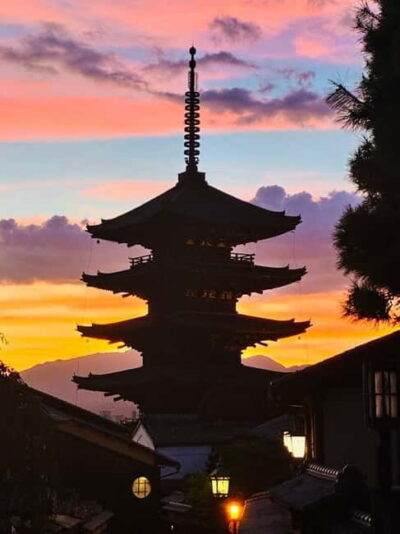
Kyoto Geisha Walking Tour: Gion District & Hidden Gems
Read our review →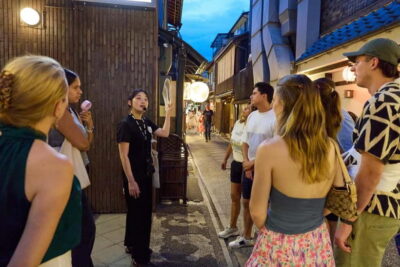
Gion Geisha District Walking Tour – Stories of Geisha
Read our review →
Best of Kyoto: Gion, Geisha, Pagodas & Cobblestones
Read our review →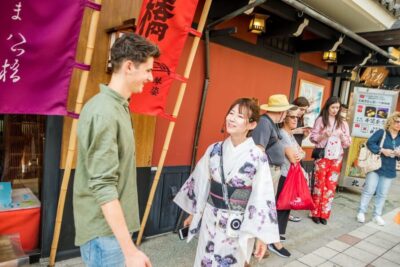
Nishiki Market Brunch Walking Tour (7 Tastings + Brunch)
Read our review →
Kyoto Arashiyama Walking Tour: Bamboo, Monkeys, Gardens & Secrets
Read our review →
Kyoto Gion: 2-Hour Geisha Culture & History Walking Tour
Read our review →
Browse the lists this tour appears in