
Review · BERLIN
Berlin: walking tour about Charité
Berlin’s Charité began as an 18th-century plague house and grew into one of Europe’s major university hospitals. This two-hour walk brings that long, often unsettling story to life through doctors, Nobel Prize winners, medical breakthroughs, and the institution’s cooperation with the Nazi regime. The final stop, the Animal Anatomical Theatre, gives the tour its strangest and most memorable setting.
I like the focus on medical people and ideas, not just hospital buildings. I also like the small, atmospheric finish inside Berlin’s oldest surviving teaching building. The main drawback is clear: you do not enter the Charité Bed House or the hospital grounds, and the tour is conducted in German.
Key points to know before booking

- Three centuries of medicine: Trace Charité from a plague house to a major university hospital.
- Famous names: Learn about Rudolf Virchow, Emil von Behring, Robert Koch, and Ferdinand Sauerbruch.
- A difficult past: The tour addresses doctors who worked with the Nazi regime.
- A rare interior visit: Enter the Animal Anatomical Theatre, Berlin’s oldest surviving teaching building.
- An outside look at Charité: See the Bed House from the street, but do not go inside the hospital.
- German-language guiding: The two-hour tour costs $27 per person and returns to its starting point.
Why Charité makes an unusual Berlin walking tour

Berlin has plenty of tours about kings, walls, war, and Cold War politics. This one follows a different thread: how the city treated disease, taught medicine, trained doctors, and sometimes used science for grim political ends.
That makes the Charité a strong subject for a walking tour. A hospital is not only a place of treatment. It is also a place where medical theories are tested, students are trained, new tools are introduced, and public policy meets private suffering. The Charité’s story lets you see Berlin through those changes.
The tour covers about 300 years, beginning in the 18th century. What started as a plague house later became a major university hospital. Along the way, you hear about famous figures in Berlin medicine and the discoveries that made them important.
The focus is not simply on dates. The guide connects people and institutions to the practical question of what medicine could actually do at different points in time. That is the part I find most useful. You get a sense of medicine as a changing profession, not a fixed body of facts.
The tour is rated 4.4 out of 5 from 537 ratings, and the strongest appeal is easy to understand: it offers substantial medical background in a short, organized walk. If you have an interest in science, hospitals, anatomy, or the darker side of professional ethics, the subject matter gives you plenty to think about.
More Walking Tours in Berlin:
- Discover Berlin Half-Day Walking Tour
★ 5.0 · 9,624 reviews - Berlin City walk Government District and Places of Democracy
★ 4.7 · 8,467 reviews - Berlin: Third Reich & Cold War Guided Walking Tour
★ 4.9 · 8,378 reviews
Starting at Charitéplatz and the Bed House
Meet your guide in front of the Charité Tower at the crossroads of Schumannstraße, Charitéplatz, and Charitéstraße. The tour starts on time, so arrive a little early rather than trying to find the group at the last minute.
The first major sight is the Charité Bed House. You view it from outside. This detail matters because the building remains an active hospital facility, with protection and hygiene rules that prevent ordinary group access.
That outside view may feel modest if you expect a conventional building tour. The value comes from the explanation around it. The Bed House represents the working hospital in its current form, while the guide sets it against the institution’s much longer past.
You should approach this opening as an orientation rather than a grand architectural reveal. The walk is about the people, institutions, and ideas connected with Charité. The building gives you a physical starting point, but the story quickly moves beyond its walls.
Following Luisenstraße through medical Berlin

From Charitéplatz, the route continues along Luisenstraße and across the university campus. This is where the experience becomes a proper city walk rather than a single-site visit.
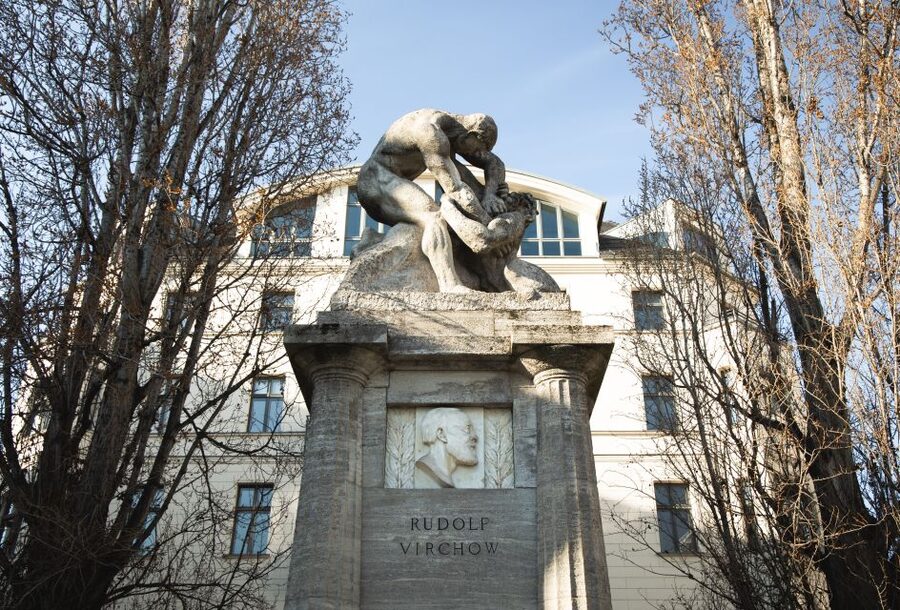
As you walk, the guide introduces the doctors and scientists linked to Berlin medicine. Rudolf Virchow, Emil von Behring, Robert Koch, and Ferdinand Sauerbruch are central names. You learn why these figures mattered and how their work connects with the development of modern medicine.
The appeal here is the mixture of recognizable names and less familiar detail. Robert Koch and Emil von Behring are associated with Nobel Prize winning medical work, while Virchow and Sauerbruch represent other important chapters in medical science and clinical practice.
I like this part because you are not asked to memorize a list of achievements. The guide uses the streets and university setting to explain how Berlin became an important center for medical teaching and research. The walk gives those names a place in the city instead of leaving them as textbook figures.
Still, the experience depends heavily on your ability to follow German. The advertised language is German, and no other guiding language is given. If you do not understand German well, the visual sights alone will not provide the full value of the tour.
The doctors behind Charité’s reputation
The tour’s medical focus is its main reason to book. It is not a general introduction to Berlin, and it does not try to cover every famous city landmark. You are spending two hours with a small, specific part of Berlin’s past.
Rudolf Virchow is especially important to the story because he represents the close relationship between medical research and public health. Emil von Behring and Robert Koch bring the world of infectious disease and laboratory science into the discussion. Ferdinand Sauerbruch adds the perspective of surgery and hospital practice.
The guide also presents these doctors as people working within their own time. That is important. Scientific progress does not happen in a vacuum. It depends on buildings, universities, students, professional rivalries, public funding, and the medical tools available at the time.
You can expect stories about life and death, not only triumphs. Medicine has always included uncertainty, failed treatments, poor conditions, and hard choices. The tour’s best moments are likely to come when it shows those tensions rather than presenting every famous doctor as a spotless genius.
If your interest is limited to architecture, this section may feel too talk-heavy. If you enjoy the history of science, it gives the walk its purpose.
Same streets, a different guide:
- Berlin: Discover Berlin Walking Tour
★ 4.9 · 5,998 reviews - Berlin’s Best: 2 Hour Walking Tour Third Reich and the Cold War
★ 5.0 · 5,486 reviews - Berlin: Hidden Backyards Guided Walking Tour
★ 4.8 · 5,360 reviews - Explore Berlin: See All The Iconic Sights & Some Hidden Gems
★ 5.0 · 4,429 reviews
The darker chapter under Nazi rule
A useful feature of the tour is its attention to Charité’s darker years. The guide discusses how doctors collaborated with the Nazi regime.
This is not a side note. It changes the way you think about medical authority. Doctors and scientists can improve lives, but their training and status do not automatically make their choices ethical. An institution with a proud scientific reputation can also take part in serious wrongdoing.
For me, this is one of the most valuable parts of the experience because it avoids a simple progress story. You do not hear only about discoveries, Nobel Prizes, and surgical advances. You also confront the damage that can occur when medicine serves an abusive political system.
The subject may be difficult, especially when placed beside stories of medical achievement. That discomfort is appropriate. It gives the tour a moral dimension and asks you to consider how professional knowledge can be used.
The information provided does not describe the exact case studies or length of this section, so you should expect the guide to set the broad historical context rather than assume a full museum-style treatment of Nazi medicine. Even so, including the topic makes the tour more honest and worthwhile.
Entering the Animal Anatomical Theatre
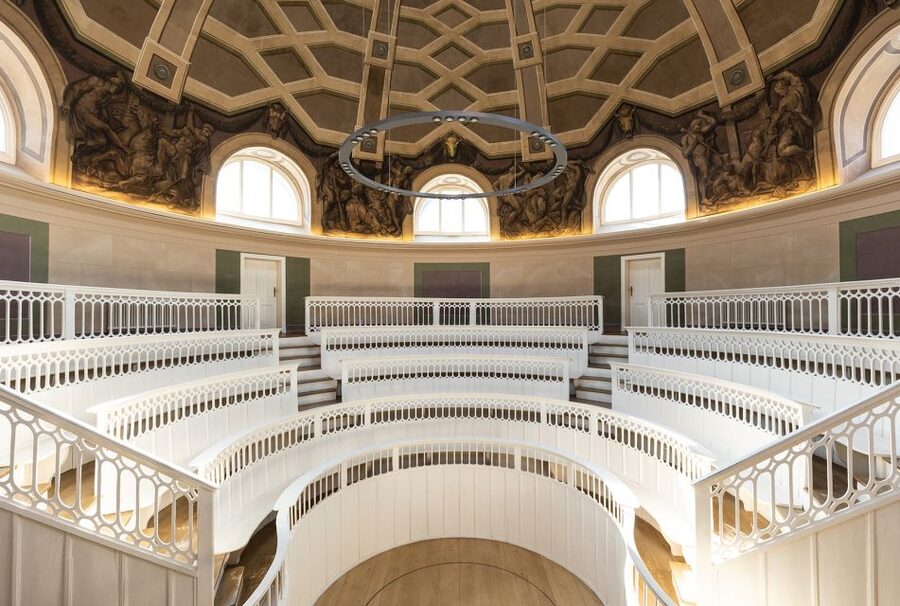
The final stop is the Animal Anatomical Theatre, also called the TAT. It is described as a mysterious medicine temple and Berlin’s oldest surviving teaching building. Unlike the Charité Bed House, this building is visited from inside.
This is the tour’s most atmospheric stop. A working hospital can feel closed off and modern, but an old teaching building offers a direct link to the way medical education once took place. The building’s unusual character gives the walk a strong finish.
The name may sound unusual today, but it reflects the building’s connection to anatomical teaching. You are not simply looking at an old facade. You enter a place associated with medical instruction and the study of bodies, anatomy, and professional training.
The interior visit also adds variety. After walking along streets and across the university campus, you get a defined indoor stop where the guide can bring the history together. It is a good reason to choose this tour over a talk that stays entirely outside.
There is one practical warning. The TAT can change its opening hours at short notice for closed events, and it is closed on public holidays. If this building is the main reason you want to book, check the date carefully and understand that access can occasionally change.
What you do not see inside Charité
The tour’s limits are worth stating plainly. You do not enter the Charité Bed House, and the hospital grounds at Charité Campus Mitte are not accessible to group tours.
That means this is not a behind-the-scenes hospital visit. You will not be touring wards, treatment rooms, laboratories, or the active campus as part of the group walk.
Some people may find this disappointing, especially if the name Charité suggests an indoor hospital tour. I think the restriction is sensible. A functioning hospital needs privacy, hygiene controls, and quiet for patients. The outside route also lets the guide discuss the institution without disrupting medical work.
Think of the experience as a history walk around Charité, not an access tour of the hospital. The combination of the outside Bed House, Luisenstraße, the university campus, and the interior TAT gives you several settings without pretending that an active hospital is a normal sightseeing site.
Is two hours enough for the story?
Two hours is a useful length for this subject. The Charité’s past is too large for a short introduction, but a full-day treatment would require museums, exhibitions, and much more reading.
The timed format forces the tour to select its main figures and turning points. You get an organized account of the institution’s origins, its major doctors, its scientific achievements, its political failures, and its old teaching building.
A two-hour walk also fits well into a Berlin day. You can schedule it between other central sights without giving up an entire afternoon. Since the activity begins and ends at the same meeting point, it is simple to combine with other plans.
The route does involve walking along streets and across a campus. The supplied information does not give a distance or detailed accessibility guidance, so you should be prepared for a walking tour rather than a seated lecture. Wear practical shoes and allow the full two hours, since the guide starts on time.
Is $27 a fair price?
At $27 per person, the tour is reasonably priced for a two-hour guided experience, especially because it includes a live guide and entry to the Animal Anatomical Theatre when that visit is operating as planned.
The value depends on your interest. If you want a broad Berlin introduction, this is not the best use of your money. You will spend the entire tour on Charité, medicine, and connected university history.
If you enjoy specialized subjects, the price makes more sense. You get a focused narrative that would be difficult to assemble from casual sightseeing. The guide links several major medical figures, the hospital’s origins, scientific achievements, and its Nazi-era record in one route.
The German-only format also affects value. German speakers can get the full experience. If you understand only a little German, you may be paying for information you cannot follow. Check the language before booking rather than assuming an English departure is available.
The free cancellation policy gives you some flexibility. You can cancel up to 24 hours in advance for a full refund, and the reserve-now, pay-later option means you do not need to pay immediately. Those policies are useful if your Berlin plans are still shifting, though they do not change the tour’s subject or language.
Who should book this Charité walk?
I would recommend it to you if you like:
- Medical history and the development of modern hospitals
- Famous scientists and Nobel Prize winners
- Difficult discussions about professional ethics
- Unusual historic buildings
- Focused walking tours rather than broad city sightseeing
- German-language cultural experiences
It also suits repeat visitors who have already seen Berlin’s major landmarks and want a more specialized story. The tour gives you a reason to walk through a part of central Berlin with fresh attention.
Families should decide based on age and interest. The subject includes life, death, anatomy, and cooperation with the Nazi regime. It is not presented as a light entertainment walk, and younger children may not find the material engaging.
You should skip it if you need English guiding, want to enter the active hospital, or prefer a tour with lots of major city monuments. The Charité Bed House is viewed from outside, and the hospital campus is off limits to group tours.
Should you book the Charité tour?
Book this tour if you want a focused, serious look at Berlin medicine and can follow German comfortably. The strongest reasons are the clear medical theme, the famous doctors, the honest treatment of the Nazi period, and the chance to enter the Animal Anatomical Theatre.
Do not book it expecting an ordinary Charité building tour. You will not go inside the Bed House or walk through the hospital grounds. The experience is better understood as a guided history walk that uses Charité as its subject and the TAT as its unusual final room.
At $27, it offers good value for people who care about science, hospitals, and the choices made in the name of medicine. Check the date because the TAT may close for public holidays or private events, meet at the Charité Tower before the scheduled start, and remember that the tour returns to the same meeting point.
FAQ
Where does the Charité walking tour start?
It starts in front of the Charité Tower at the crossroads of Schumannstraße, Charitéplatz, and Charitéstraße.
Where does the tour end?
The activity ends back at the meeting point in front of the Charité Tower.
How long does the tour last?
The walking tour lasts two hours. Starting times vary, so check availability for the date you want.
What language is the tour conducted in?
The live tour guide conducts the tour in German.
Can I enter the Charité Bed House?
No. The Charité Bed House is viewed from outside because it is an active hospital facility with protection and hygiene regulations.
Can group tours enter the Charité hospital grounds?
No. The hospital grounds at Charité Campus Mitte are not accessible for group tours.
Is the Animal Anatomical Theatre always open during the tour?
Not always. The Animal Anatomical Theatre may adjust its opening hours for closed events, and it is closed on public holidays.
New routes in Berlin
- Small Group Walking Tour: “Wild Kreuzberg”★ 4.8 · 199 reviews
- Sachsenhausen Memorial: Walking Tour from Berlin★ 4.7 · 132 reviews
- Berlin: Prenzlauer Berg District Guided Walking Tour★ 4.9 · 316 reviews
- Berlin: 2.5-Hour Walking Tour through Kreuzberg 61★ 4.9 · 525 reviews
- From Berlin: Potsdam & Sanssouci half day Walking Tour★ 4.9 · 85 reviews
- Explore Berlin: Walking Tour of All The Iconic Sites★ 4.9 · 855 reviews
- East Berlin and the Wall: Walking Tour★ 4.9 · 407 reviews
- Cold War, Berlin Wall, Spies and the East Side Gallery★ 4.8 · 254 reviews
Berlin Walking Tours, compared.

Berlin City walk Government District and Places of Democracy
Read our review →

Berlin’s Best: 2 Hour Walking Tour Third Reich and the Cold War
Read our review →
Explore Berlin: See All The Iconic Sights & Some Hidden Gems
Read our review →
Third Reich Berlin: Hitler and WWII Walking Tour
Read our review →
Berlin Center Food Tour with 8+ Authentic Local Tastings
Read our review →
Browse the lists this tour appears in