
Review · BERLIN
Berlin: Hitler’s Berlin The Rise & Fall Guided Walking Tour
Berlin makes Nazi history unusually tangible. On this 150-minute walk, you move from the Reichstag and Brandenburg Gate to the bunker site, the former Gestapo and SS headquarters, and memorials that force you to pause. The route explains not only what happened, but how democracy was dismantled and how ordinary life was shaped by fear, propaganda, and repression.
I like two things here: the guides build one clear story instead of handing you a jumble of dates, and they use historic maps and Then & Now photographs to show how Berlin changed. The main drawback is simple: it is an outdoor walk with a considerable amount of time on your feet, so bad weather and uncomfortable shoes can spoil the experience.
Key points to know before booking
- The route covers the full Nazi period, from Hitler’s rise in 1933 to Berlin’s defeat in 1945.
- You visit the bunker site, but there is no bunker interior open to explore on this tour.
- The guides are the main strength, with recurring names including Scott, Hannah, Matt, Mark, Jörg, and Ben.
- The Holocaust Memorial and Sinti and Roma Memorial give the walk a serious human focus, not just a military one.
- The Soviet War Memorial in Tiergarten helps explain the Battle of Berlin and the city’s final days.
- The $47 price is fair if you want expert interpretation, but less appealing if you only want quick photo stops.
Why this walk matters in Berlin
Berlin has plenty of Nazi-era sites, but they are spread across busy streets, government buildings, memorials, and ordinary blocks of apartments and offices. Without context, you can easily pass the location of a major event and see nothing more than a pavement plaque or a modern building.
This walk gives those places an order. You begin with the political rise of the Nazis, move through the machinery of dictatorship and persecution, and finish at the institutions that helped run terror and repression. The story then turns to the collapse of the regime and the physical destruction of Berlin.
That structure is useful. You are not simply told that Hitler ruled Germany from Berlin. You see how symbolic sites such as the Reichstag and Brandenburg Gate were tied to power, how the Gestapo and SS operated, and how the city became a final battlefield.
The guides also appear to be comfortable with difficult questions. Scott is often praised for making complicated points clear and encouraging questions. Hannah is noted for bringing personal stories and different perspectives into the discussion. Matt is described as especially good at answering detailed questions, while Mark has led tours that worked well for families with teenagers.
That variety matters because the subject can become dry or overwhelming. A good guide must explain ideology, law, military events, and human suffering without turning the walk into a lecture. The strongest guide comments suggest this team does that well.
More Guided Walks in Berlin:
- Berlin: Third Reich & Cold War Guided Walking Tour
★ 4.9 · 8,378 reviews - Berlin: Hidden Backyards Guided Walking Tour
★ 4.8 · 5,360 reviews - Berlin: City Street Art Guided Walking Tour
★ 4.8 · 1,051 reviews
Starting at Brandenburg Gate and the Reichstag
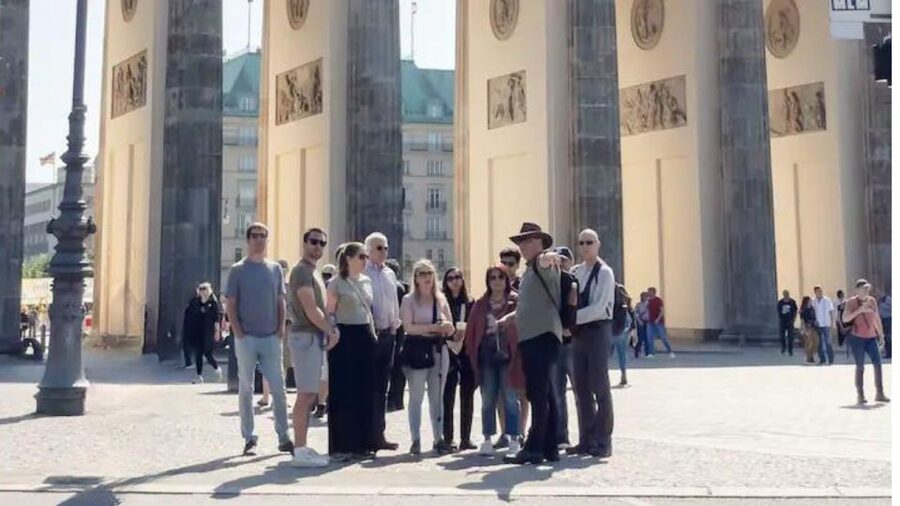
Meet at the Tourist Office by Brandenburg Gate and look for the blue umbrella. The tour begins near the Pferdedroschke, then moves toward Brandenburg Gate, one of Berlin’s most recognizable landmarks.
The gate is a useful starting point because it links the older Prussian city with the modern German capital. Here, the guide can set up the political story before the tour moves into the Nazi period. Do not expect the gate itself to explain the dictatorship. Its value is as a symbol of the city and as an opening point for understanding how Berlin was used for public power, ceremony, and propaganda.
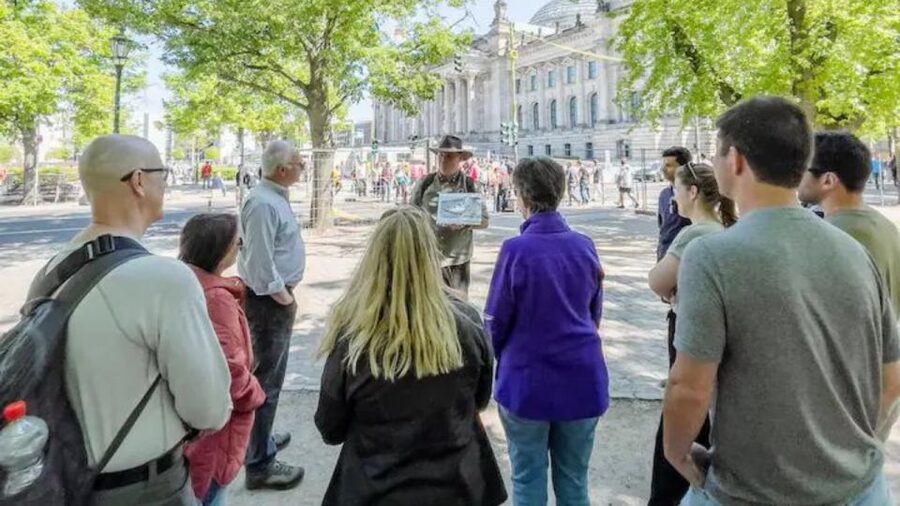
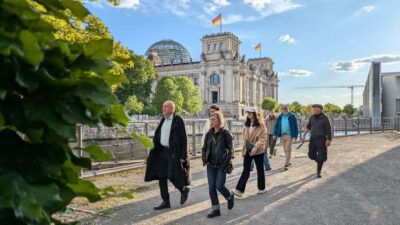
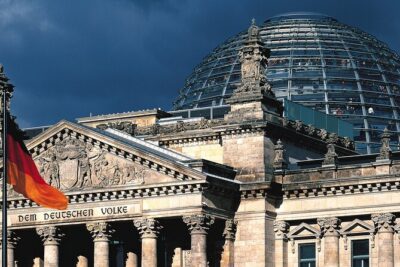
The Reichstag receives about 20 minutes. This building is especially useful for explaining the fragile state of German democracy in the early 1930s. The tour connects the Reichstag with the transition from elected government to dictatorship, rather than treating it as just another grand building.
The visit is primarily outdoors. Indoor museum access is not included, so you should not book this expecting a visit beneath the glass dome or a full interior tour. Still, the building works well from the outside, especially when the guide uses photographs and maps to explain how its meaning changed from parliament to a symbol caught up in dictatorship, war, division, and reunification.
Two memorials, two different human stories
The stop at the Memorial to the Sinti and Roma Victims of National Socialism helps widen the story beyond the most familiar landmarks. It recognizes a group persecuted and murdered under the Nazi regime, and it gives the guide a chance to explain how Nazi racial policy affected more than one community.
This is one of the places where a clear guide matters. The memorial is quiet and easy to overlook if you walk past alone. A short guided visit gives it weight without requiring a long museum stop.
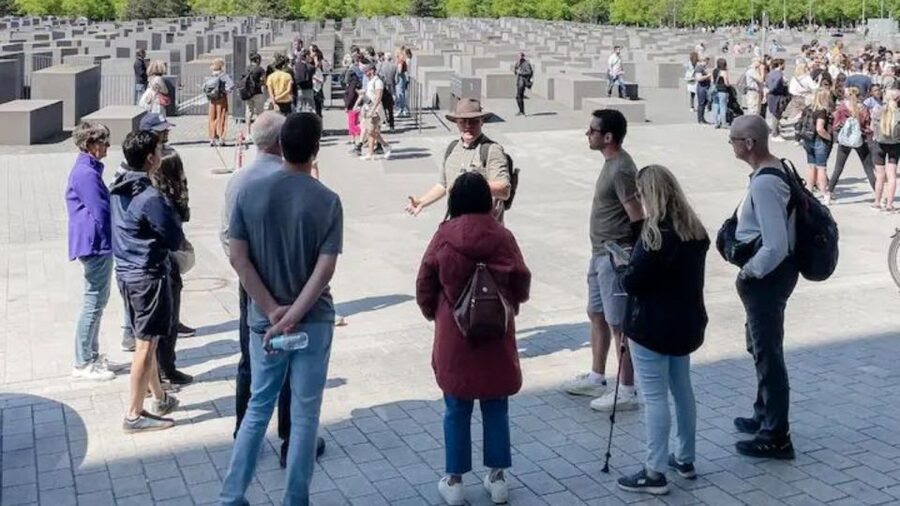
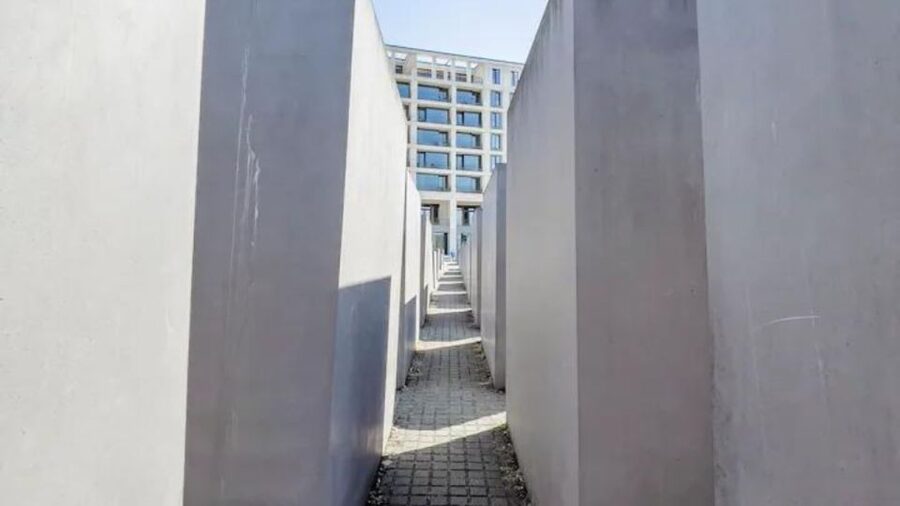
The Holocaust Memorial comes later and receives around 20 minutes. Its field of concrete blocks is not a place to rush through for a photograph. You can use this pause to think about how public memory works in modern Berlin and how the city addresses the murder of Europe’s Jews.
The route treats the memorial as a space for reflection, not as a dramatic backdrop. That is an important distinction. You will hear about the systematic targeting of Jewish people, but the stop also leaves room for silence and personal thought.
The two memorials work well together. One shows the need to remember different victim groups, while the Holocaust Memorial confronts the scale and central place of the murder of Europe’s Jews in Nazi policy. If you want a tour focused only on generals, battles, and weapons, this walk may feel more serious and reflective than expected.
The Soviet War Memorial and Berlin’s final battle
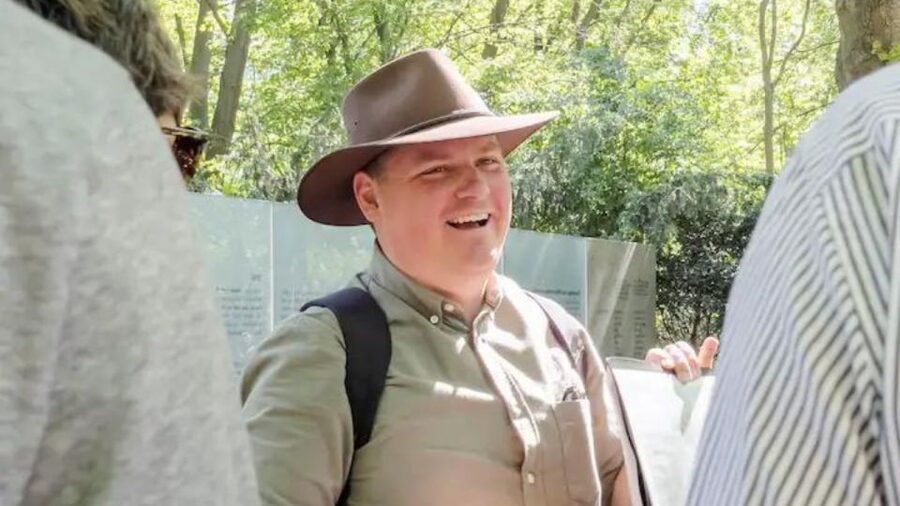
The Soviet War Memorial in Tiergarten receives roughly 20 minutes, including time for photographs and explanation. It brings the war story into view, particularly the brutal Battle of Berlin in 1945.
This is not a stop about Nazi power alone. The memorial points to the Soviet role in defeating Germany and to the cost of the fighting that destroyed much of the city. It helps you understand that Berlin’s collapse was not a clean political ending. It came through street fighting, bombardment, military defeat, and enormous loss of life.
The stop also adds balance to the route. A tour about Hitler’s Berlin could easily focus too heavily on his headquarters and speeches. The Soviet memorial shifts attention toward the forces that entered the city and the violent final stage of the European war.
Bring a coat or rain protection if the forecast is uncertain. The walk continues regardless of the weather, and one person described being caught in a sudden downpour during the tour. Some guides have supplied umbrellas, but you should bring your own rather than count on that.
More Walking Tours in Berlin:
- Discover Berlin Half-Day Walking Tour
★ 5.0 · 9,624 reviews - Berlin City walk Government District and Places of Democracy
★ 4.7 · 8,467 reviews - Berlin: Discover Berlin Walking Tour
★ 4.9 · 5,998 reviews - Berlin’s Best: 2 Hour Walking Tour Third Reich and the Cold War
★ 5.0 · 5,486 reviews
The bunker site and the end of the regime
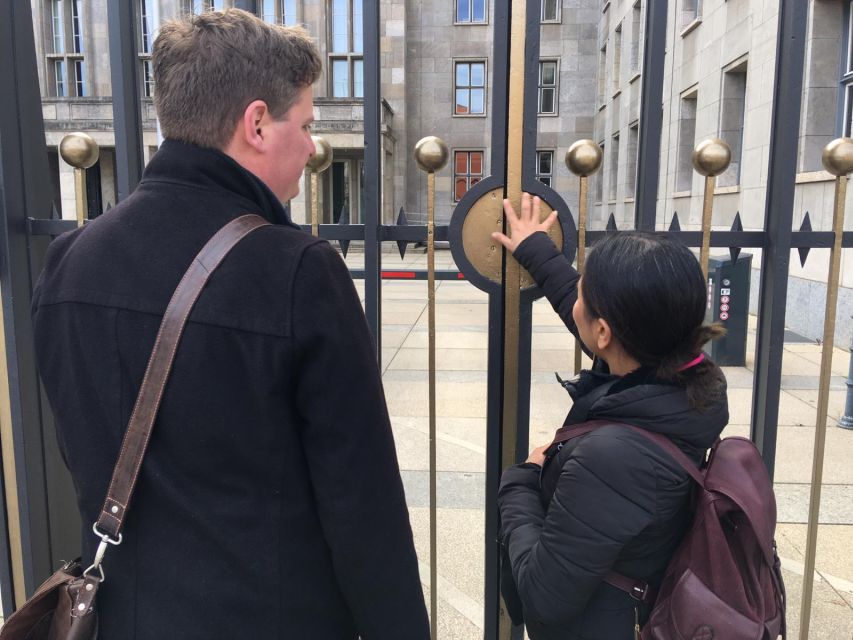
The stop at Hitler’s bunker site lasts about 15 minutes. The bunker itself is not presented as an underground attraction, and you should not expect to walk through a preserved command center. The point is to understand the location where Hitler spent his final days and where the war in Europe reached its end.
Today, the site is easy to miss. That is part of its interest. The ordinary surroundings underline how little remains above ground to match the importance of the events that took place there. Your guide supplies the missing context, explaining the final collapse of the regime and the decisions made in Berlin as defeat became unavoidable.
The stop is brief, but it can be one of the most useful parts of the walk. The Nazi period did not end in a grand ceremony. It ended in a wrecked capital, a collapsing government, and a leadership hiding below ground.
This is also a point where expectations matter. If you want a preserved bunker interior, choose a museum visit separately. If you want to understand where the final days unfolded and how the dictatorship ended, the outdoor stop fits the tour well.
Johann Georg Elser and the question of resistance
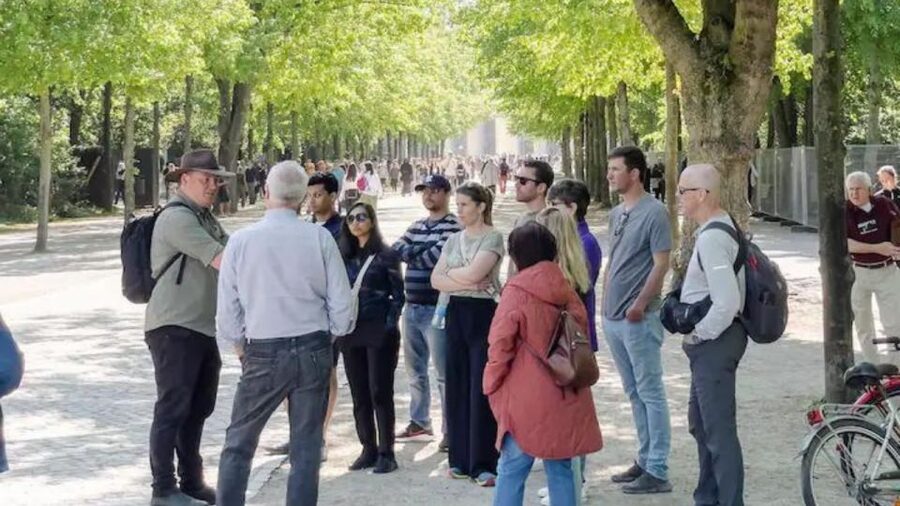
The Johann Georg Elser Memorial receives about 10 minutes. Elser attempted to kill Hitler with a bomb in 1939, before the war had reached its later stages. His story adds a needed reminder that opposition existed inside Germany, even though the Nazi state worked hard to silence it.
This stop changes the rhythm of the walk. Until now, much of the route has focused on institutions, mass persecution, and military events. Elser’s memorial brings attention to an individual who acted against Hitler and paid with his life.
You may find this especially useful if you assume resistance began only when Germany was clearly losing. The memorial helps show that the regime faced opposition at different points, though opposition was dangerous and often isolated.
The stop is short, so it cannot cover every form of resistance. Still, it gives the guide a clear opening to discuss personal choice, courage, and the limits faced by people who opposed the dictatorship.
From government offices to the Topography of Terror
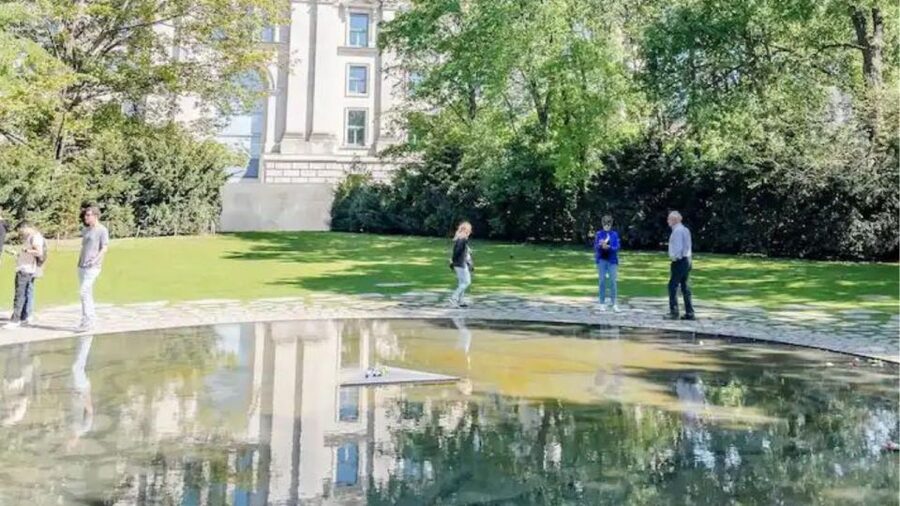
The German Finance Ministry is a brief five-minute stop. On its own, the building may not seem like a major sightseeing point, but it helps connect Nazi government to the working machinery of the state. The tour uses these less obvious locations to show that dictatorship depended on offices, officials, orders, and paperwork as well as speeches and uniforms.
The final major stop is the Topography of Terror, with about 15 minutes of guided discussion. This location was once associated with the Gestapo and SS, the agencies central to surveillance, imprisonment, and repression.
It is a fitting end because it brings the story back to systems. The tour begins with the destruction of democracy and ends with the institutions that enforced Nazi rule. You leave with a better sense of how terror operated through organized agencies, not only through battlefield violence.
The tour itself stays outdoors and does not include access to indoor museum exhibitions. That is both a limit and a planning tip. If you have time, you can treat the Topography of Terror as a useful place to continue independently after the guide finishes, but you should confirm current museum details separately before visiting.
What the guides do best
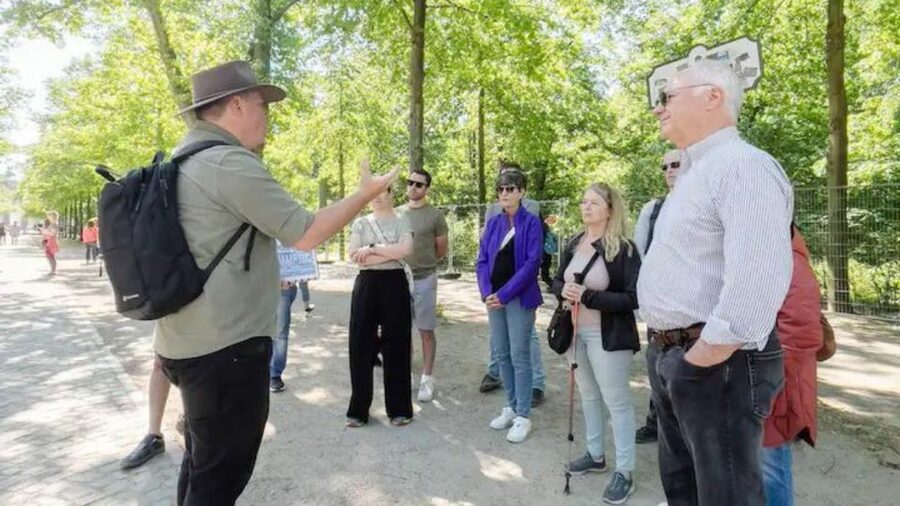
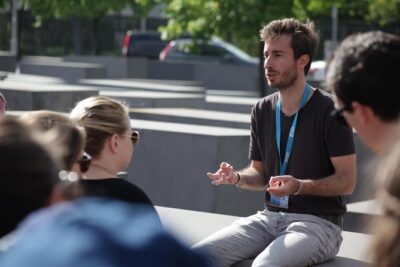
The strongest feature of this experience is the guiding. Across different dates, guides including Scott, Hannah, Matt, Mark, Jörg, and Ben are praised for clear explanations, warmth, and an ability to answer questions without losing the group.
Scott is repeatedly described as engaging and precise. Hannah is noted for personal stories, a thoughtful approach, and presenting more than one angle. Matt receives particularly strong praise for making complex material easy to remember and for spending extra time with questions. Mark has been a good fit for groups that include teenagers.
I would pay close attention to this if you are comparing walking tours. The route itself is important, but most of these sites can be visited without paying an admission fee. What you are buying is the explanation between the sites.
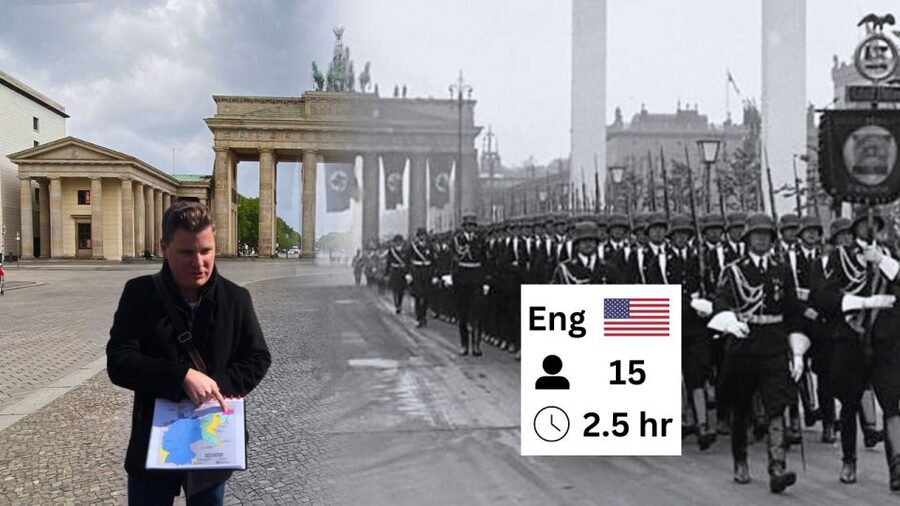
The use of Then & Now photographs and historic maps adds real value. Berlin changed so much through war, rebuilding, division, and reunification that present-day streets can hide what once stood there. A visual comparison can make the changes much easier to grasp.
The guides also seem willing to adjust their pace. Some sessions have gone beyond the scheduled time so the group could finish a discussion or ask more questions. You should not assume every tour will run long, but the format appears to allow conversation rather than forcing every stop into a rigid script.
Is $47 a fair price?
At $47 per person, this is not the cheapest way to walk around central Berlin. The main question is how much interpretation you want.
If you already know the Nazi period well and only want to photograph Brandenburg Gate, the Reichstag, and the bunker site, you can visit many of the locations on your own for less. You would, however, lose the connected story and the guide’s explanation of what happened at each place.
For me, the price is reasonable for a small-group, specialist tour with an academic WWII background, historic visual aids, and time for questions. It is particularly good value if you are visiting Berlin once and want a structured introduction before exploring museums independently.
The tour does not include food, drinks, public transport, hotel pickup, or indoor museum access. Those omissions are normal for a walking tour, but they affect your planning. Eat beforehand, carry water, and leave room in your schedule if you want to continue at the Topography of Terror afterward.
Free cancellation up to 24 hours before the start and the option to reserve now and pay later make it easier to fit into a changing Berlin schedule. The tour is in English and is listed as wheelchair accessible, though the considerable amount of walking means you should consider your own comfort and stamina.
Who should book this Berlin walk?
I would choose this tour if you want a serious introduction to Nazi Germany that connects political change, persecution, daily life, resistance, and military defeat. It suits adults, older children, and teenagers who can manage a thoughtful discussion over two and a half hours.
It also works well for people who know some WWII history already. The guides appear able to answer detailed questions rather than stopping at basic facts.
You may want something else if you prefer indoor museums, a shorter route, or a tour centered mainly on military technology. This is not a light sightseeing stroll. The subject is grim, the walking is substantial, and several stops ask you to slow down and reflect.
Wear comfortable shoes and dress for the forecast. Bring water, rain protection, and anything you need for a long outdoor walk. The blue umbrella at the Tourist Office is the key meeting-point marker.
FAQ
How long does the Hitler’s Berlin walking tour last?
The tour lasts 150 minutes, or two and a half hours.
Where does the tour meet?
Meet at the Tourist Office by Brandenburg Gate and look for the blue umbrella. The starting point is listed as Pferdedroschke.
Where does the tour finish?
The tour finishes at the Topography of Terror.
Is the tour conducted in English?
Yes. The live guide speaks English.
Does the tour enter Hitler’s bunker?
No indoor bunker access is included. The tour visits the bunker site and explains its role in the final days of the war.
Are museum admissions included?
No. The experience is outdoors, and access to indoor museum exhibitions is not included.
Is the walking tour wheelchair accessible?
Yes, the activity is listed as wheelchair accessible. It also includes a considerable amount of walking, so plan around your own comfort and mobility needs.
Should you book it?
Book this tour if you want Berlin’s Nazi history explained as one connected story rather than as a list of landmarks. The best parts are the clear political timeline, the memorial stops, the bunker site, and guides such as Scott, Hannah, and Matt, who are known for answering questions and making hard material understandable.
Skip it if you want a relaxed photo walk or a mostly indoor experience. For everyone else, $47 buys useful context at places that can otherwise feel quiet, ordinary, or confusing. Bring good shoes, expect serious subject matter, and give yourself time afterward at the Topography of Terror to continue the story.
New routes in Berlin
- Small Group Walking Tour: “Wild Kreuzberg”★ 4.8 · 199 reviews
- Sachsenhausen Memorial: Walking Tour from Berlin★ 4.7 · 132 reviews
- Berlin: Prenzlauer Berg District Guided Walking Tour★ 4.9 · 316 reviews
- Berlin: 2.5-Hour Walking Tour through Kreuzberg 61★ 4.9 · 525 reviews
- From Berlin: Potsdam & Sanssouci half day Walking Tour★ 4.9 · 85 reviews
- Explore Berlin: Walking Tour of All The Iconic Sites★ 4.9 · 855 reviews
- East Berlin and the Wall: Walking Tour★ 4.9 · 407 reviews
- Cold War, Berlin Wall, Spies and the East Side Gallery★ 4.8 · 254 reviews
Berlin Walking Tours, compared.
Berlin City walk Government District and Places of Democracy
Read our review →
Berlin’s Best: 2 Hour Walking Tour Third Reich and the Cold War
Read our review →
Explore Berlin: See All The Iconic Sights & Some Hidden Gems
Read our review →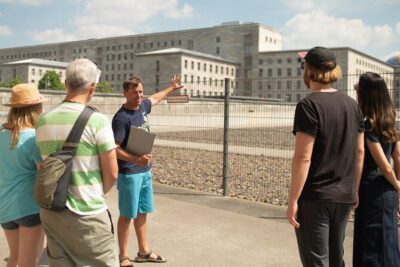
Third Reich Berlin: Hitler and WWII Walking Tour
Read our review →
Berlin Center Food Tour with 8+ Authentic Local Tastings
Read our review →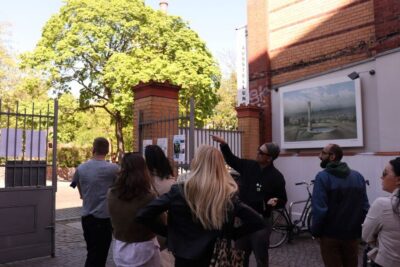
Browse the lists this tour appears in