
Review · BERLIN
Berlin: Third Reich, Hitler, and WWII Walking Tour
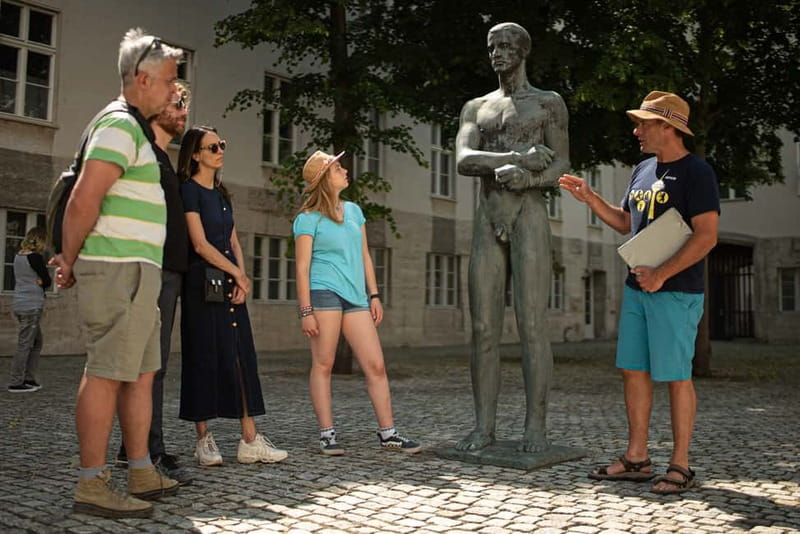
Berlin’s Nazi past is easiest to grasp when you connect the buildings, streets, and ruins to the decisions made there. This three-hour walking tour takes you from the Reichstag and Brandenburg Gate to the site of Hitler’s bunker, the former SS and Gestapo headquarters, and the Soviet War Memorial.
I like the route’s clear story, from Nazi power and propaganda to the final Soviet assault. I also like the guides’ approach: Maggie, Campbell, Emma, Nikolai, and others are praised for explaining difficult material plainly, answering questions, and keeping children and teenagers involved. The main drawback is simple: you will walk outdoors for three hours, and the subject is grim. Cold, wind, rain, or snow can make the day feel long.
Key points to know before you book
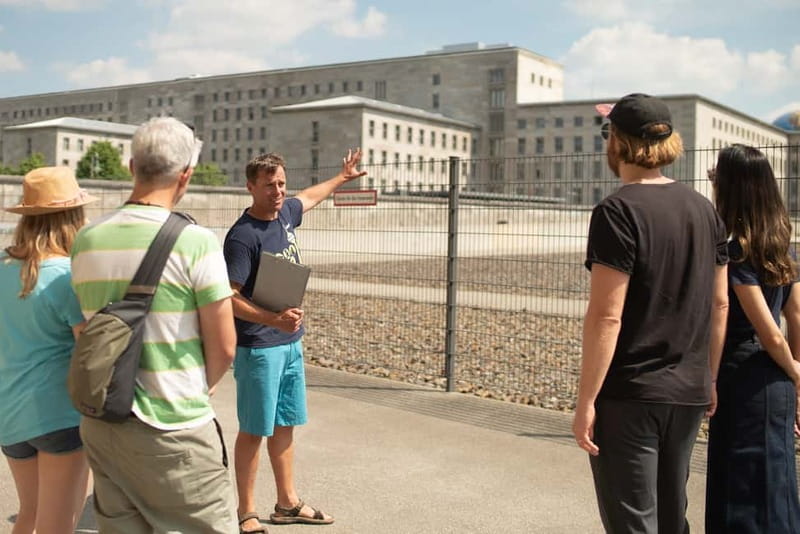
- Hitler’s bunker site: You stand above the location of the Führer’s Bunker, where Hitler died in the final days of the war.
- Nazi power centers: The route passes the former sites of Goebbels’ Propaganda Ministry and Himmler’s SS and Gestapo headquarters.
- The final battle: The Reichstag and Soviet War Memorial help explain the Soviet assault on Berlin.
- A serious but lively guide style: Guides use questions, personal stories, humor where suitable, and clear explanations to hold your attention.
- Good value at $19: For three hours of guided walking through central Berlin, the price is modest, though you should budget for outdoor time rather than museum admission.
- Flexible booking: You can cancel up to 24 hours ahead for a full refund and reserve without paying immediately.
What this Berlin history walk is really about
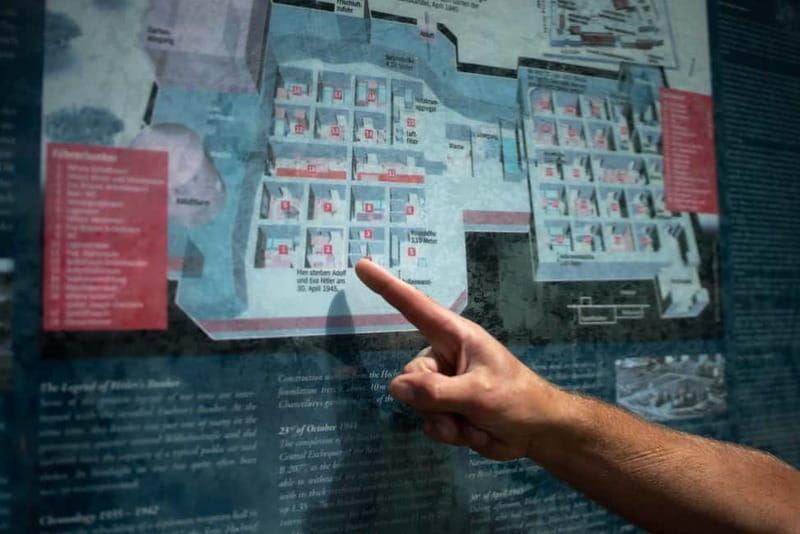
This is not a tour of grand Nazi monuments. Most of the regime’s central buildings were destroyed, altered, or replaced after the war. What you see today is a city where the past is often marked by an ordinary street corner, a modest plaque, an open space, or a building with a changed purpose.
That makes a guide especially useful. Without help, you could walk past the site of the New Reich Chancellery or the former Gestapo headquarters without realizing what happened there. The guide gives the places a timeline and explains how the Nazi state worked, from propaganda and air defense to the SS, Gestapo, and military command.
The route also avoids treating Hitler as a mysterious figure removed from ordinary history. Instead, it follows the machinery of government, the people who carried out policy, the destruction of Berlin, and the city’s postwar memory. That wider view is one of the tour’s strengths.
You should expect a sober presentation. The subject includes dictatorship, mass persecution, war, death, and the Holocaust. Guides use humor to keep a group alert, but the tone remains respectful. Several guides are praised for being direct without making the material feel cold or abstract.
More Walking Tours in Berlin:
- Discover Berlin Half-Day Walking Tour
★ 5.0 · 9,624 reviews - Berlin City walk Government District and Places of Democracy
★ 4.7 · 8,467 reviews - Berlin: Third Reich & Cold War Guided Walking Tour
★ 4.9 · 8,378 reviews
Starting at Friedrichstraße and the Palace of Tears
The meeting point is outside Friedrichstraße train station, on the square between the station and the Tränenpalast, also called the Palace of Tears. Look for a guide wearing a blue lanyard and yellow name tag, usually with a yellow umbrella.
This is a practical meeting point because Friedrichstraße is easy to reach by public transport. Arrive early enough to find the correct side of the station and identify the group. The Palace of Tears is a useful visual marker, but the tour information does not list an interior visit there, so treat it as the starting landmark rather than a museum stop.
The opening section takes place around Friedrichstraße and lasts about 15 minutes. Your guide begins to place Berlin in context before the group moves toward the government quarter. This early orientation matters. You are not simply collecting famous sights. You are learning how Nazi authority was concentrated in the center of the capital.
The tour is offered in English, German, or Spanish. Private and small-group versions are available, and hotel pickup is offered only with private options. For a regular group, you meet at Friedrichstraße rather than being collected at your hotel.
The Reichstag and the Soviet attack on Berlin
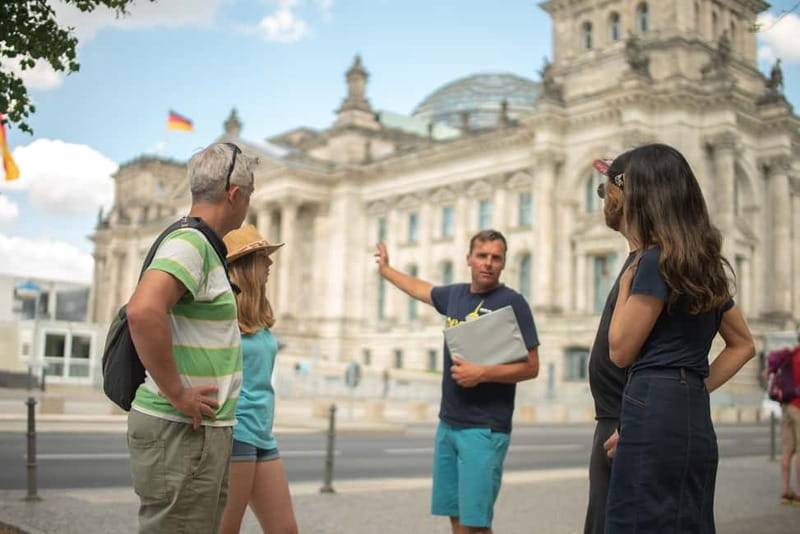
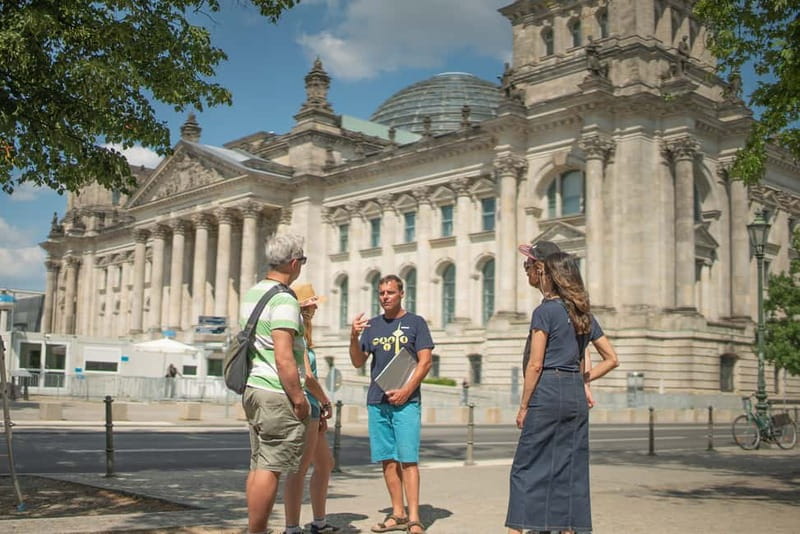
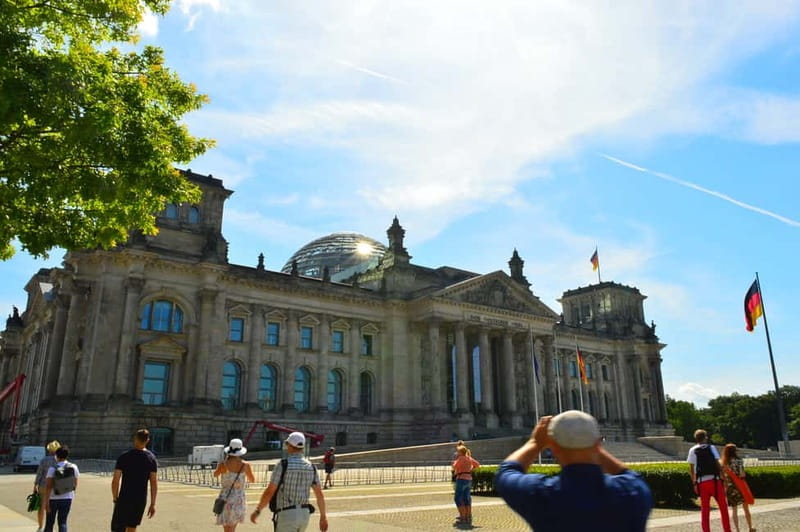
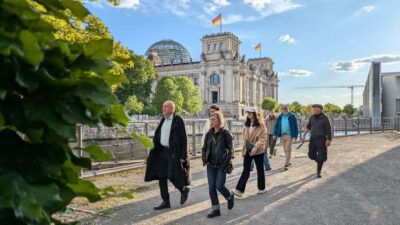
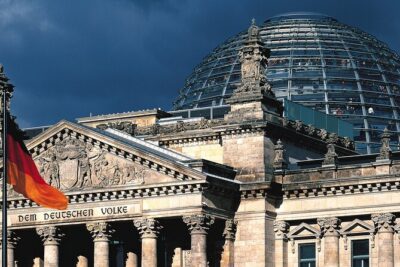
The Reichstag is one of the most important stops because it links German democracy, Nazi rule, and the war’s final days. The building became the symbolic final battlefield of Nazi Germany as Soviet forces fought their way into Berlin.
You stop for about 15 minutes of explanation and photos. The guide connects the building to the Soviet advance and helps you picture why the Reichstag mattered so much during the final assault. The building you see today is not a preserved Nazi headquarters, so the guide’s account is essential.
This is also a good place to ask questions. Several guides, including Maggie, Emma, Nikolai, and JR, are praised for inviting questions rather than delivering a fixed speech. That is useful if your knowledge begins and ends with the famous photograph of the Soviet flag over the Reichstag. You can ask about the fighting, the symbolic value of the building, or how Berlin changed after the war.
Brandenburg Gate and the changing meaning of Berlin
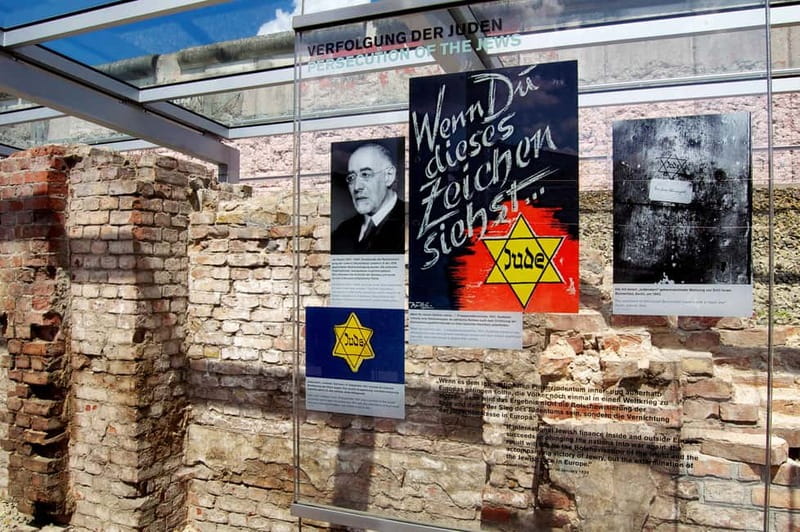
The route passes through Brandenburg Gate, one of Berlin’s most recognizable landmarks. Its meaning changed sharply over time. It was used as a symbol of Nazi power and later became associated with the Cold War division of Berlin.
The gate is not simply a photo stop on this walk. It helps your guide explain how political symbols get reused. A structure can be presented as proof of state power by one government, then become a reminder of division, and later serve as a marker of reunification.
You may already visit Brandenburg Gate on your own, but seeing it within this route gives it a more difficult and useful context. The tour asks you to look past the postcard view and consider what the site represented to people living under different governments.
Same streets, a different guide:
- Berlin: Discover Berlin Walking Tour
★ 4.9 · 5,998 reviews - Berlin’s Best: 2 Hour Walking Tour Third Reich and the Cold War
★ 5.0 · 5,486 reviews - Berlin: Hidden Backyards Guided Walking Tour
★ 4.8 · 5,360 reviews - Explore Berlin: See All The Iconic Sights & Some Hidden Gems
★ 5.0 · 4,429 reviews
The Soviet War Memorial in Tiergarten
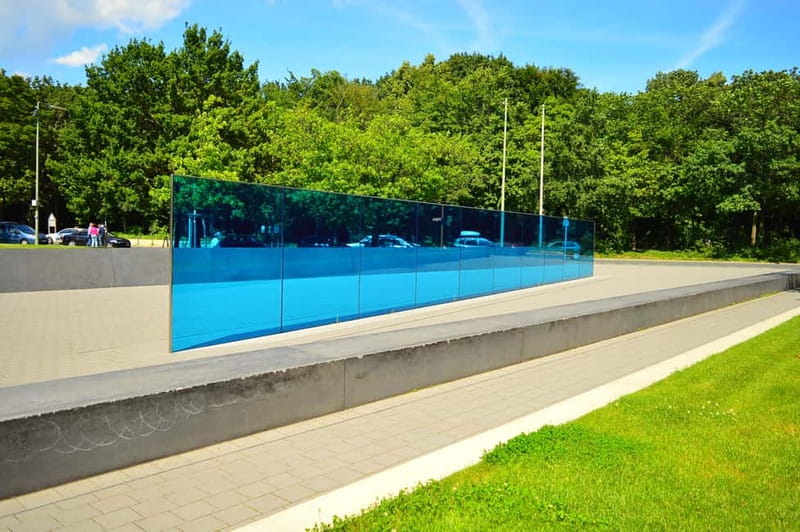
The Soviet War Memorial in Tiergarten is one of the more striking outdoor stops. It is flanked by T-34 tanks and Red Army howitzers, which give the site a direct military presence that many visitors do not expect in the middle of Berlin.
The guide explains the memorial in relation to the Soviet assault and the defeat of Nazi Germany. This stop helps balance the earlier focus on Nazi institutions. You see not only where the regime planned and ruled, but also how the war ended in the capital.
The stop lasts about 15 minutes. It is another open-air location, so weather matters. In winter, the cold can become a real issue, especially if you are standing still while listening. Wear proper layers, gloves, and shoes with good grip. A January group completed the walk in freezing conditions, and another did it in snow, but that should encourage preparation, not poor planning.
The Holocaust Memorial and the cost of abstraction
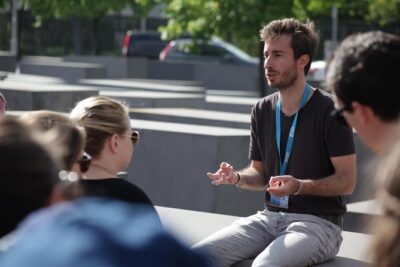
The Holocaust Memorial provides a shift in tone. The concrete blocks create a powerful public place of remembrance, but the tour’s value here comes from the guide’s explanation of what memorial spaces can and cannot communicate.
The listed schedule allows about 15 minutes for a guided stop and photos. This is not presented as a full museum visit, and you should not expect a long indoor exhibition here. Your guide helps connect the memorial to the broader history of Nazi persecution and the human cost hidden behind government offices, military plans, and official speeches.
This is a point where clear language matters. Guides such as Jasper and Jamie G are praised for combining respect with accessible storytelling. That approach can help younger people follow the subject without reducing it to a simple school lesson.
If you want extended time at the memorial, plan to return on your own. The walking tour has several other stops to cover, so the group cannot linger indefinitely.
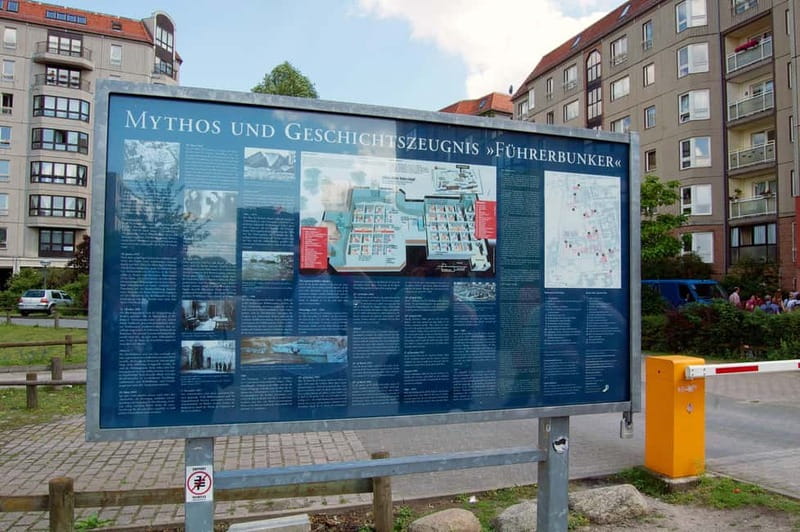
Standing above Hitler’s Führer Bunker
The bunker site is the tour’s most anticipated stop, but it is also one of the easiest places to misunderstand. The bunker was destroyed, and the site is not a preserved underground attraction. You stand above the former location, near an ordinary modern setting, while the guide explains Hitler’s final days and what happened to his remains.
That contrast is the point. There is no grand entrance and no dramatic ruin to photograph. The absence of a visible bunker makes the guide’s account more important, while the plain surroundings discourage the kind of theatrical treatment that this subject does not deserve.
The guide describes the end of the Nazi regime step by step. You learn how Hitler’s final days unfolded and how the bunker became the last center of power as Berlin collapsed around it. This section is likely to interest anyone who has read about the war, but it also works for first-time visitors because it places the end of the regime in physical space.
Keep your expectations realistic. This is a location explanation and photo stop, not an underground tour. The schedule allows roughly 15 minutes.
Detlev-Rohwedder-Haus and former Nazi administration
The Detlev-Rohwedder-Haus is an important reminder that Nazi power depended on ministries and officials, not only on Hitler. The building is associated with the former Air Ministry, where the Luftwaffe planned operations including the Blitz.
The guide uses the building to explain how military administration functioned. You see a surviving piece of the government quarter, but the central value is the connection between the architecture and the decisions made inside.
This stop also helps break up the route. After the bunker and memorial sites, a building connected with air power brings the story back to the wider war. It shows how the Nazi state organized violence through offices, paperwork, commands, and public institutions.
Because this is an exterior stop, you should not expect a standard indoor building tour. The guide’s explanation is what turns the location into a meaningful part of the route.
The Topography of Terror and the Nazi terror system
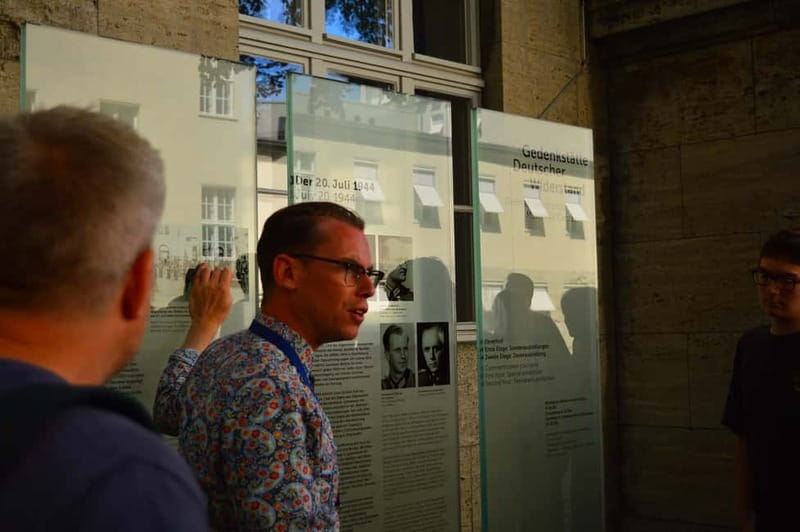
The tour ends at the Topography of Terror, a documentation center located at the former headquarters area of the Gestapo and SS. This is one of the strongest stops for understanding the machinery of Nazi repression.
The route also identifies the former locations of Goebbels’ Propaganda Ministry and Himmler’s SS and Gestapo headquarters. These were not random offices. They were key centers of propaganda, policing, surveillance, and terror.
You spend about 16 minutes at the Topography of Terror stop. The supplied tour details describe a guided visit and photo stop, but they do not promise a full indoor museum visit or admission time. If you want to read the displays at length, return separately and allow more time.
The outdoor documentation area is especially useful because it makes the geography of Nazi terror visible. The buildings may be gone or changed, but the location remains part of the story. Your guide can help you understand how the different agencies worked together and how power moved from speeches and propaganda to arrests and persecution.
The tour ends here, with the listed drop-off at the Dokumentationszentrum Topographie des Terrors. The exact ending arrangement can vary by option, so check your booking details if the final location matters to your plans.
How the guides shape the experience
The guide is the key variable in a history walk. The tour has received strong praise for guides including Maggie, Campbell, Hannah, Emma, Nikolai, JR, Jasper, Jamie G, Rebecca, Callum, Pete F, and others.
The most useful qualities are not theatrical performance or speed. You want someone who can explain a complicated subject in plain language, answer questions accurately, and keep the group together. Maggie is praised for asking questions that involve the group. Emma is noted for balancing humor and emotion. Nikolai is praised for extra detail and side stories, while Rebecca is described as using individual people and groups to explain the larger picture.
That range tells you what the tour is designed to do well. It is not a silent procession from one photo point to another. The guide interprets the sites and adjusts to the group. Families may appreciate this, since several guides have kept pre-teens and teenagers interested, including a 13-year-old studying Nazi Germany at school.
The subject can feel heavy by the final hour. One guide ended by reminding the group not to carry the mood through the rest of the day. That is a sensible way to handle difficult material: take it seriously, then give yourself permission to continue with Berlin.
Three hours of walking, weather, and comfort
The tour runs for three hours and operates rain or shine. You should wear comfortable shoes, comfortable clothing, and weather-appropriate layers.
This is a walking tour with repeated stops, not three hours of nonstop marching. Still, the route covers a large part of central Berlin, and several points are outdoors. A refreshment break has been included on at least some departures, with nearby cafés, bathrooms, and public buildings pointed out during the pause, but you should not treat that as guaranteed for every option.
Winter needs special planning. Some departures have taken place in temperatures below freezing, with snow and strong wind. Gloves, a warm hat, and a hot drink can make the difference between an absorbing history lesson and a long wait for the finish.
Summer brings the opposite concern. There is no promise of shade or indoor shelter at every stop, so carry water and dress for sun. The tour information does not list accessibility details, so contact the provider before booking if you need specific mobility arrangements.
Is $19 a fair price?
At $19 per person, this is a good-value way to get a guided introduction to Nazi Berlin. You receive about three hours with a live guide and a route covering the Reichstag, Brandenburg Gate, Soviet War Memorial, Holocaust Memorial, bunker site, former Nazi ministries, and Topography of Terror.
The price is especially fair if you are new to Berlin or want a clear first look before visiting museums on your own. A private or small-group option may cost more, but it can make questions and discussion easier.
The value is not in admission tickets. The tour does not promise an underground bunker visit or a long indoor museum session. You are paying for route planning, historical context, and the guide’s ability to connect sites that otherwise look unrelated.
You can cancel up to 24 hours before the tour for a full refund, and the reserve-now, pay-later option helps if your plans are still shifting. Check available starting times before booking, since the duration is fixed at three hours but the departure schedule can vary.
Who should book this tour?
I would choose this tour if you want Berlin’s Nazi and World War II history explained in place rather than through a museum alone. It suits first-time visitors, history students, families with older children, and anyone who wants a structured introduction before exploring the Topography of Terror or other museums independently.
It is also a good choice for people who know the broad story but want to understand where events happened. The route links political symbols, government offices, military planning, the bunker, memorials, and the final battle.
I would think twice if you dislike outdoor walking, need a fully indoor activity, or want long uninterrupted time at each museum and memorial. This is a serious overview with many stops. You will learn more from it if you arrive ready to listen, ask questions, and accept that several locations are marked by absence rather than dramatic ruins.
Should you book the Third Reich, Hitler, and WWII Walking Tour?
Yes, if you want a well-priced, guide-led account of Berlin’s Nazi past and can manage three hours outside. The strongest reason to book is the route itself: it connects the Reichstag, Nazi ministries, the bunker site, memorials, and the Soviet advance in a single story.
Book it early in your Berlin stay so the geography helps with later visits. Bring warm or rainproof clothing, wear sensible shoes, and remember that the bunker is a site explanation, not an attraction you enter. For $19, it offers a serious amount of context and a useful foundation for understanding the city.
FAQ
Where does the tour meet?
The regular meeting point is outside Friedrichstraße train station, on the square between the station and the Tränenpalast, also called the Palace of Tears. Look for a guide with a blue lanyard, yellow name tag, and yellow umbrella.
How long does the walking tour last?
The tour lasts three hours. Individual stops generally take about 15 minutes, with the Topography of Terror stop listed at about 16 minutes.
Which languages are available?
Live guides are available in English, German, and Spanish.
Does the tour visit inside Hitler’s bunker?
No. The tour takes you to the location above the former Führer’s Bunker. The guide explains Hitler’s final days and the fate of his remains, but the bunker itself is not presented as an underground attraction.
Does the tour include the Topography of Terror museum?
The route ends at the Topography of Terror documentation center and includes a guided stop. The provided details do not promise a long indoor museum visit, so plan a separate visit if you want time to study the displays.
Is hotel pickup available?
Hotel pickup is available only with private tour options. For those options, wait in your hotel lobby five minutes before the scheduled pickup time and look for the guide’s yellow name tag.
What should I wear?
Wear comfortable shoes and comfortable clothing suitable for the weather. The tour operates rain or shine, and much of it takes place outdoors.
Can I cancel or pay later?
You can cancel up to 24 hours in advance for a full refund. The reserve-now, pay-later option lets you hold a place without paying immediately.
New routes in Berlin
- Small Group Walking Tour: “Wild Kreuzberg”★ 4.8 · 199 reviews
- Sachsenhausen Memorial: Walking Tour from Berlin★ 4.7 · 132 reviews
- Berlin: Prenzlauer Berg District Guided Walking Tour★ 4.9 · 316 reviews
- Berlin: 2.5-Hour Walking Tour through Kreuzberg 61★ 4.9 · 525 reviews
- From Berlin: Potsdam & Sanssouci half day Walking Tour★ 4.9 · 85 reviews
- Explore Berlin: Walking Tour of All The Iconic Sites★ 4.9 · 855 reviews
- East Berlin and the Wall: Walking Tour★ 4.9 · 407 reviews
- Cold War, Berlin Wall, Spies and the East Side Gallery★ 4.8 · 254 reviews
Berlin Walking Tours, compared.
Berlin City walk Government District and Places of Democracy
Read our review →
Berlin’s Best: 2 Hour Walking Tour Third Reich and the Cold War
Read our review →
Explore Berlin: See All The Iconic Sights & Some Hidden Gems
Read our review →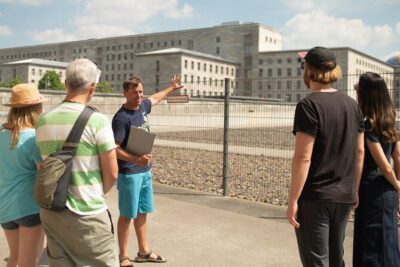
Third Reich Berlin: Hitler and WWII Walking Tour
Read our review →
Berlin Center Food Tour with 8+ Authentic Local Tastings
Read our review →
Browse the lists this tour appears in