
Review · BERLIN
Berlin: The Time of National Socialism Walking Tour
Berlin’s Nazi past is not tucked away in a distant museum. It runs through the center of town, from the Brandenburg Gate to the former government quarter, with memorials, surviving buildings, and empty sites marking places tied to dictatorship and war. This walking tour connects those locations in a compact two-hour route.
I like the way the tour pairs major sights with less obvious stops, especially the Soviet T-34 tanks in Tiergarten and the memorial to resistance figure Johann Georg Elser. I also like the small group limit of 10, which gives guide Carlo room to answer questions. The main drawback is that two hours moves quickly, and the tour is offered in German only.
Key points to know before booking
- Hitler’s bunker site appears as an empty place: You learn how to read an ordinary-looking part of Berlin where the bunker and New Reich Chancellery once stood.
- The route links famous and overlooked locations: Brandenburg Gate and the Holocaust Memorial are joined by the Elser Memorial, Detlev-Rohwedder-Haus, and wartime government sites.
- The Soviet War Memorial includes real T-34 tanks and artillery: This gives the war’s final phase a physical presence in the middle of Tiergarten.
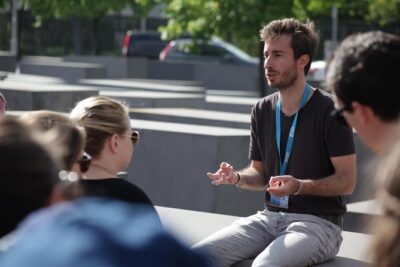
- Guide Carlo brings local perspective: He is a native Berliner, and the tour focuses on place-based stories rather than a general lecture.
- The group is capped at 10 people: That matters on a history tour, since you can ask questions without shouting across a crowd.
- You walk in every kind of weather: Wear practical clothing and shoes, and take the cold seriously in winter.
Start at Pariser Platz and the Brandenburg Gate
Meet your guide at the exit of S+U Brandenburger Tor station, exit B, in the direction of Pariser Platz and Straße des 17. Juni. Look for the Get Your Guide, You in Berlin flag. This is an easy starting point because the station sits right beside one of Berlin’s most recognizable landmarks.
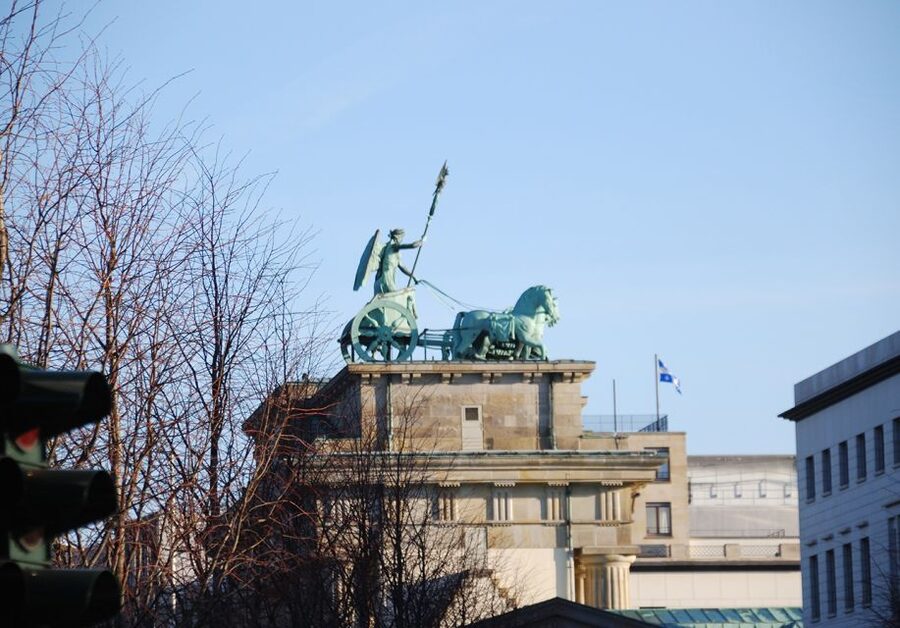
The Brandenburg Gate is often introduced as a symbol of German unity, but this tour first looks at its use during the National Socialist period. The gate provided a grand backdrop for propaganda marches and public displays of power. That shift in meaning is important: the building itself did not change, but the regime used its familiar image to suggest authority and national strength.
I find this a useful way to begin a difficult subject. You are not starting with a list of dates. You are standing at a place that was turned into political theater. The guide can show how architecture, ceremony, and propaganda worked together.
Pariser Platz also gives you a quick sense of the old government center. The route is central and easy to reach by public transportation, but the open square can feel exposed in bad weather. Since the tour continues on foot, bring a coat, rain protection, or sun protection as needed.
More Walking Tours in Berlin:
- Discover Berlin Half-Day Walking Tour
★ 5.0 · 9,624 reviews - Berlin City walk Government District and Places of Democracy
★ 4.7 · 8,467 reviews - Berlin: Third Reich & Cold War Guided Walking Tour
★ 4.9 · 8,378 reviews
The Reichstag and the Nazi rise to power
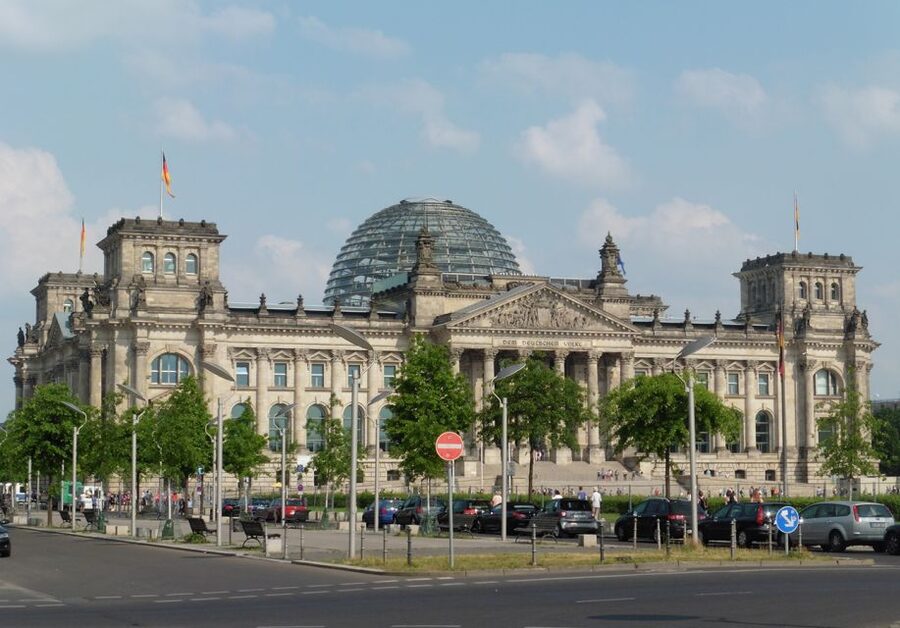
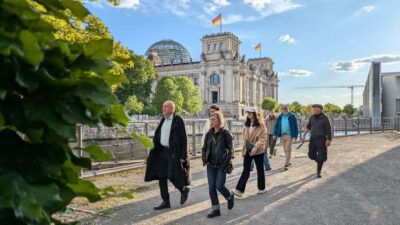
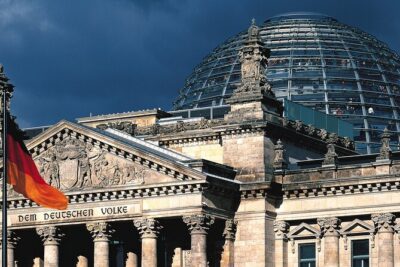
From the gate, you walk toward the Reichstag, now home to the German Parliament. The building is one of Berlin’s most recognizable political landmarks, and its connection to 1933 makes it more than a photo stop on this tour.
Here, the guide explains the political setting in which the NSDAP and Adolf Hitler came to power. The Reichstag helps you connect the physical seat of government with the collapse of democratic rule. You also begin to see how close together Berlin’s symbolic and administrative centers were.
This is one of the strongest parts of the route for visitors who know the broad outline of the period but want to understand the setting. You can look at the modern parliament while hearing about the earlier government district. The contrast is plain and useful.
The visit is sightseeing from outside, not a parliamentary interior tour. If you want to explore the Reichstag dome or go inside the parliament building, that is a separate activity and is not included here.
T-34 tanks in the middle of Tiergarten
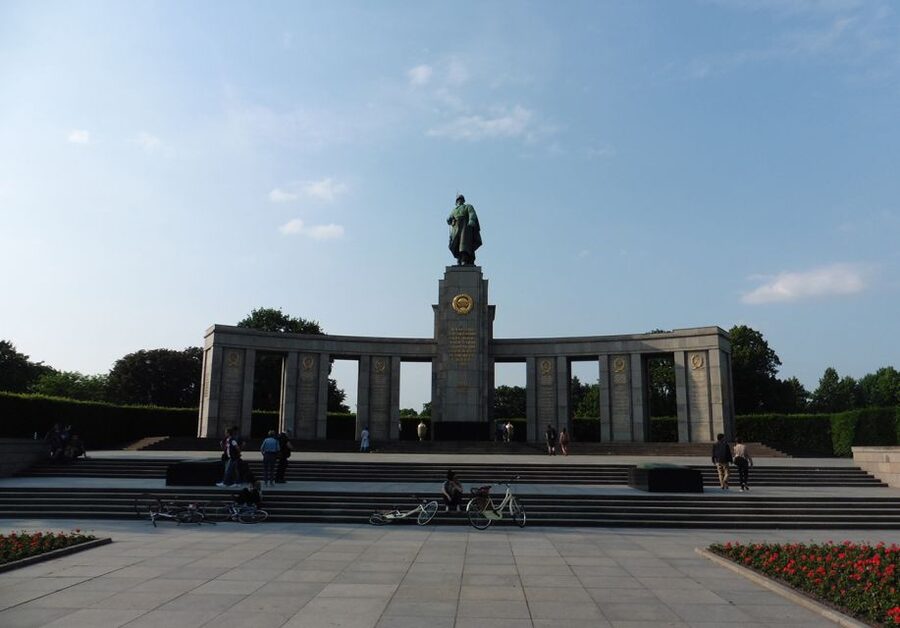
The next stop takes you into Tiergarten, Berlin’s large inner-city park, for the Soviet War Memorial. Its most striking feature is not subtle: Soviet T-34 tanks and artillery from World War II are displayed at the site.
I appreciate this stop because it makes the final stage of the war concrete. The tanks are not an abstract reference in a book. They are large, heavy objects placed in a park that many people otherwise associate with trees, paths, and city recreation.
The memorial also adds a Soviet perspective to a tour that otherwise concentrates on Nazi institutions and German resistance. That wider view matters. Berlin’s wartime story includes the dictatorship, the destruction it caused, the military defeat of Germany, and the arrival of Soviet forces.
Your guide explains the site during a walking stop, so you have time to look at the memorial and its military displays. The route through Tiergarten is part of the value, though the outdoor setting means you will feel the weather. In January, one small group had icy streets and very cold conditions, and Carlo paid close attention to helping the group move safely. Take that as practical advice, not just a footnote.
The Holocaust Memorial and the cost of state policy
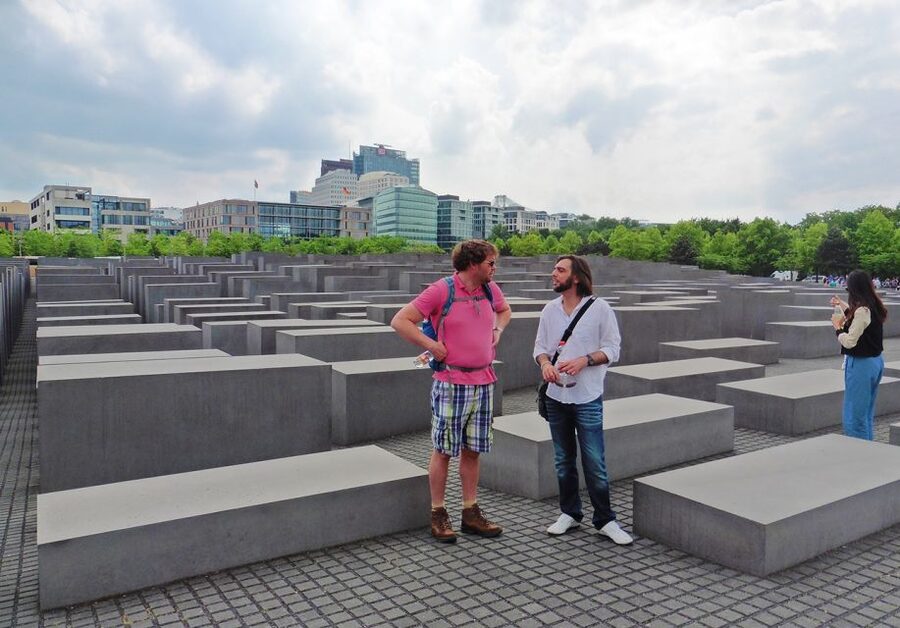
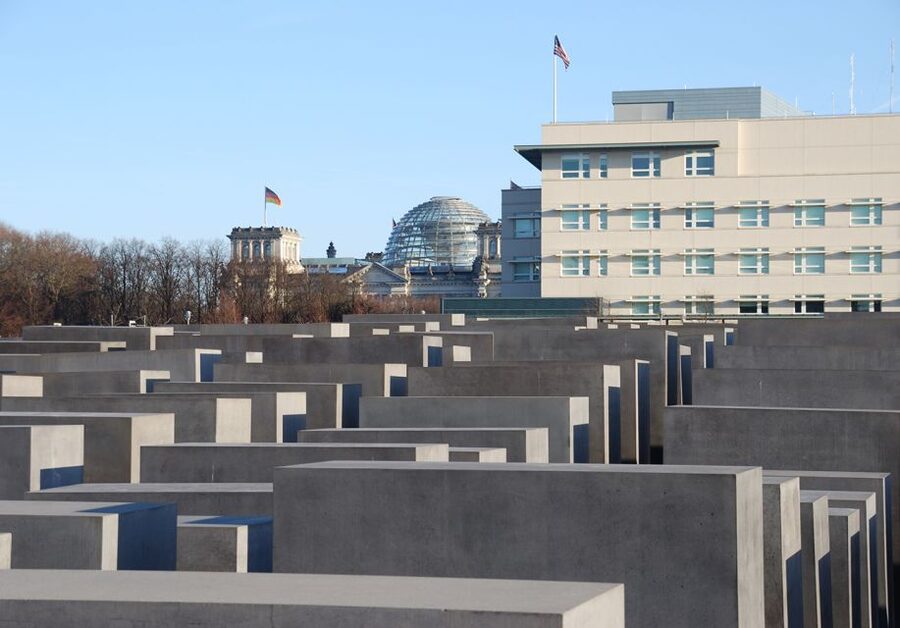
The route then reaches the Memorial to the Murdered Jews of Europe, usually called the Holocaust Memorial. Its field of concrete slabs is one of Berlin’s most familiar modern memorials, but a guide can help place it within the wider story of Nazi persecution and mass murder.
This is a stop where I would slow down mentally, even if the schedule does not allow a long independent visit. The memorial is deliberately open to interpretation, and a good explanation can keep it from becoming just another photograph in the city center.
The tour treats the site as part of the political geography of Nazi Berlin. You are close to former government buildings, the Reich Chancellery area, and the bunker site. That proximity helps show how persecution and murder were directed from the same central district where government work, ceremonies, and public life continued.
Do not expect a full museum visit here. The tour is outdoors and moves on to additional locations. If you want extended time with the memorial’s underground information center, plan that separately and check its current opening arrangements.
Same streets, a different guide:
- Berlin: Discover Berlin Walking Tour
★ 4.9 · 5,998 reviews - Berlin’s Best: 2 Hour Walking Tour Third Reich and the Cold War
★ 5.0 · 5,486 reviews - Berlin: Hidden Backyards Guided Walking Tour
★ 4.8 · 5,360 reviews - Explore Berlin: See All The Iconic Sights & Some Hidden Gems
★ 5.0 · 4,429 reviews
Johann Georg Elser and the story of resistance
One of the most worthwhile stops is the Johann Georg Elser Memorial. Elser attempted to kill Hitler in 1939 with a bomb at the Bürgerbräukeller in Munich. The supplied tour details identify the memorial as a stop and emphasize stories of German resistance, so the guide uses it to broaden the picture beyond the regime’s leaders and institutions.
That matters because a tour about National Socialism can easily become a march from one Nazi building to another. The resistance stories show that the dictatorship was opposed by individuals and groups, even though resistance was dangerous and often unsuccessful.
I especially like having a resistance memorial in the middle of the route. It gives you another human scale. Instead of seeing only official power, you hear about someone who made a personal decision to act against it.
The stop is guided sightseeing rather than a separate museum admission. You should expect a concise explanation within the larger route, not a long biography of Elser.
The bunker site and the former government quarter
The tour next deals with the place where Hitler’s bunker and the New Reich Chancellery were located. The bunker site is significant partly because it is not presented as a dramatic ruin. Much of what you see today is an ordinary part of modern Berlin, and that can feel surprising.
I think this is one of the most useful lessons in Berlin. Important history does not always leave a photogenic building behind. Sometimes the task is to understand what occupied the space, why it mattered, and why little visible evidence remains.
The guide then moves through the former government district, explaining how the administrative center of the Nazi state was arranged. This helps connect the Reichstag, Chancellery, security offices, and aviation administration into one working system.
Do not come expecting preserved Nazi architecture at every turn. The value here comes from explanation and orientation. Without a guide, you could walk through this area and miss the meaning entirely.
Detlev-Rohwedder-Haus and traces of wartime administration
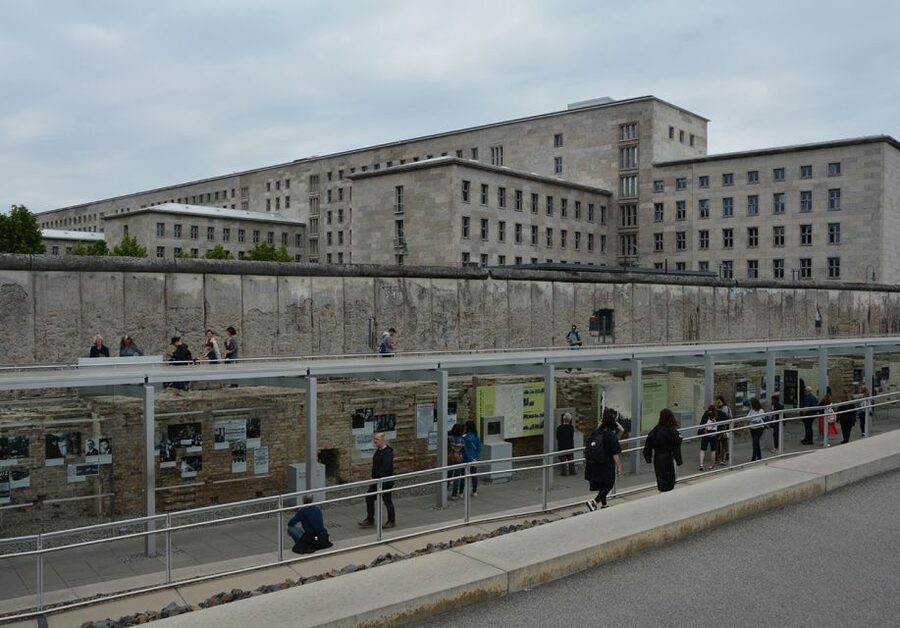
Detlev-Rohwedder-Haus is another important building on the route. The supplied information places it among the locations of interest from World War II and connects the surrounding area with the government district of that time.
This part of the walk is especially useful for understanding how broad the Nazi state’s physical presence was. Berlin was not only about rallies and monuments. Offices, ministries, security departments, and military administration filled the center.
The building also gives the tour a more grounded feel. You move from famous public landmarks to a structure whose importance depends on knowing what happened there and nearby. I would pay close attention here, since this is the kind of stop that can pass unnoticed without a guide.
Topography of Terror and the SS headquarters
The walk ends at the Topography of Terror Documentation Center, a fitting final stop. The site explains the former headquarters of the SS, the Secret State Police, and the Reich Security Main Office. The Reich Aviation Ministry was also located in this wartime district.
Even if you only visit the center as the endpoint of the guided walk, the location pulls together the tour’s main ideas: propaganda, government power, surveillance, persecution, war, and resistance. The route ends not with a grand ceremonial building but with the machinery of repression laid out in a place you can visit and study.
The tour itself lasts two hours, so the guide cannot cover every part of the documentation center in detail. I would treat the ending as a useful handoff. You finish with enough context to decide if you want to spend more time inside the center afterward.
The endpoint is also practical. You do not have to retrace the entire route to return to the starting station, and the central location makes it easy to continue sightseeing.
What the $43 price buys you
At $43 per person, this is not the cheapest way to walk through central Berlin. You are paying for a focused route, a professional guide, and historical interpretation at places that can be hard to understand on your own.
The value is strongest if you want a connected story rather than a list of monuments. A guide such as Carlo can explain why a site matters, answer questions, and point out traces that are easy to miss. Several recent tours with Carlo were private in practice because only one or two people booked, which gave those groups extra time for questions and local tips. You should not assume that will happen on your date, but the limit of 10 keeps the normal group manageable.
The price is less attractive if you want long visits inside museums or a broad survey of all Berlin history. This is a concentrated Nazi-era walk, and the two-hour schedule keeps the pace moving.
The booking terms also reduce some risk. You can cancel up to 24 hours ahead for a full refund, and you can reserve now and pay later. Those details are helpful when Berlin weather or a changing itinerary makes advance planning uncertain.
Language, weather, and who should book
The tour information identifies German as the live tour language. The general description refers to a multilingual guide, but you should book on the understanding that this particular departure is in German.
The route is listed as wheelchair accessible. It is still an outdoor walking tour, so suitable clothing matters. The tour runs in all weather and on public holidays. Cold, wet, or icy conditions can change how comfortable the experience feels, even when the guide takes care with the group.
I would recommend it to:
- People who want a focused introduction to Nazi-era Berlin
- Visitors who prefer sites and places over a long indoor lecture
- German-speaking visitors who want local context from a native Berliner
- Families with older children and teenagers who can handle serious subject matter
- Repeat visitors who have seen central Berlin but want to understand its political history
I would choose something else if you need an English-language tour, want a slower museum visit, or would rather avoid walking outdoors in poor weather.
Should you book this Berlin history tour?
Book it if you want Berlin’s famous center to make more sense. Brandenburg Gate, the Reichstag, the Holocaust Memorial, the bunker site, the Soviet tanks, and Topography of Terror can feel like separate stops when visited alone. This tour ties them together in a clear two-hour route.
The strongest reasons to go are the small group size, the resistance stories, and Carlo’s lively, careful guiding style. The main checks are just as clear: the tour is in German, the schedule is compact, and you will walk in whatever weather Berlin provides.
For a first serious look at Nazi-era Berlin, I think the $43 fee is fair, especially if you use the final stop as a starting point for further time at Topography of Terror. For German-speaking visitors, families with teens, and anyone who wants more than surface-level sightseeing, this is a sensible booking.
FAQ
Where does the tour start?
Meet at the exit of S+U Bhf. Brandenburger Tor, exit B, toward Pariser Platz and Straße des 17. Juni. Look for the guide with the Get Your Guide, You in Berlin flag.
Where does the tour finish?
The tour finishes at the Topography of Terror Documentation Center.
How long does the walking tour last?
The tour lasts two hours.
What language is the tour in?
The live tour guide language is German.
How large is the group?
The tour is limited to 10 participants.
Is the tour wheelchair accessible?
Yes, the activity is listed as wheelchair accessible.
Does the tour run in bad weather or on public holidays?
Yes. The tour takes place in all weather conditions and on all public holidays, so wear suitable clothing for an outdoor walking tour.
New routes in Berlin
- Small Group Walking Tour: “Wild Kreuzberg”★ 4.8 · 199 reviews
- Sachsenhausen Memorial: Walking Tour from Berlin★ 4.7 · 132 reviews
- Berlin: Prenzlauer Berg District Guided Walking Tour★ 4.9 · 316 reviews
- Berlin: 2.5-Hour Walking Tour through Kreuzberg 61★ 4.9 · 525 reviews
- From Berlin: Potsdam & Sanssouci half day Walking Tour★ 4.9 · 85 reviews
- Explore Berlin: Walking Tour of All The Iconic Sites★ 4.9 · 855 reviews
- East Berlin and the Wall: Walking Tour★ 4.9 · 407 reviews
- Cold War, Berlin Wall, Spies and the East Side Gallery★ 4.8 · 254 reviews
Berlin Walking Tours, compared.
Berlin City walk Government District and Places of Democracy
Read our review →
Berlin’s Best: 2 Hour Walking Tour Third Reich and the Cold War
Read our review →
Explore Berlin: See All The Iconic Sights & Some Hidden Gems
Read our review →
Third Reich Berlin: Hitler and WWII Walking Tour
Read our review →
Berlin Center Food Tour with 8+ Authentic Local Tastings
Read our review →
Browse the lists this tour appears in