
Review · OSAKA
Osaka: Izakaya Bars Guided Walking Tour
Osaka’s best nightlife is often found behind an unmarked door, up a narrow staircase, or inside a tiny izakaya where menus may not be written for foreign visitors. This three-hour walk takes you from the Dotonbori Humanity Song Monument into Uranamba, with a local guide handling the route, ordering, and introductions.
I like the chance to try several kinds of sake, beer, spirits, and local food without spending the night guessing where to go. I also like the small groups and the social side, especially for solo visitors. The catch is important: the $19 price covers the guide and walking tour, not food or drinks, so bring enough cash for the evening.
Key points at a glance
- Three hours across Dotonbori and Uranamba: Begin beneath the famous Glico sign area, then move into smaller streets and local drinking spots.
- Small groups with named local hosts: Guides including Taiga, Seina, Kosuke, Naoko, Hitomi, Karin, and Daichi have led groups through the neighborhood.
- Food and drinks cost extra: Budget separately for izakaya dishes, sake, beer, cocktails, spirits, and any karaoke afterward.
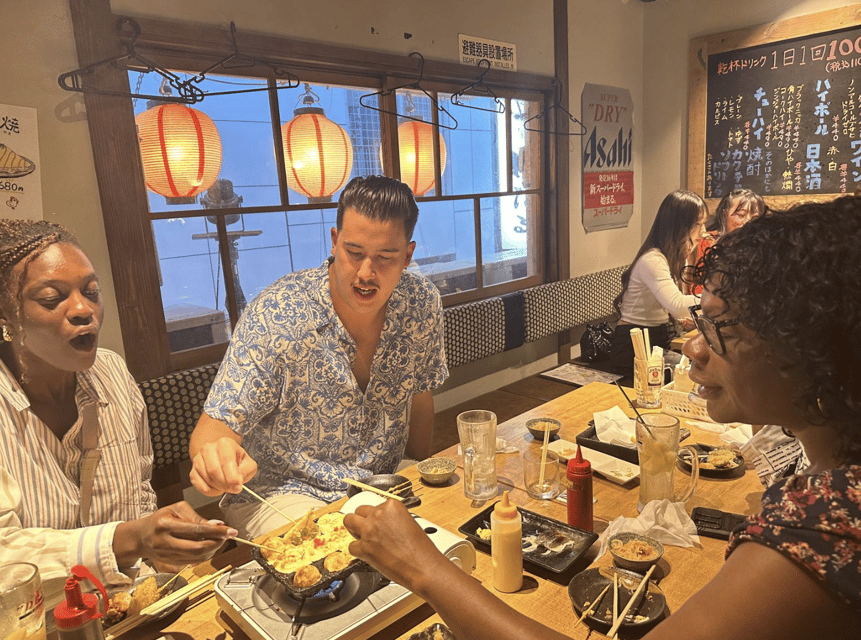
- Hands-on food and drink experiences: Depending on the evening, you might make takoyaki, sample several sakes, or learn about Japanese whisky and drinking customs.
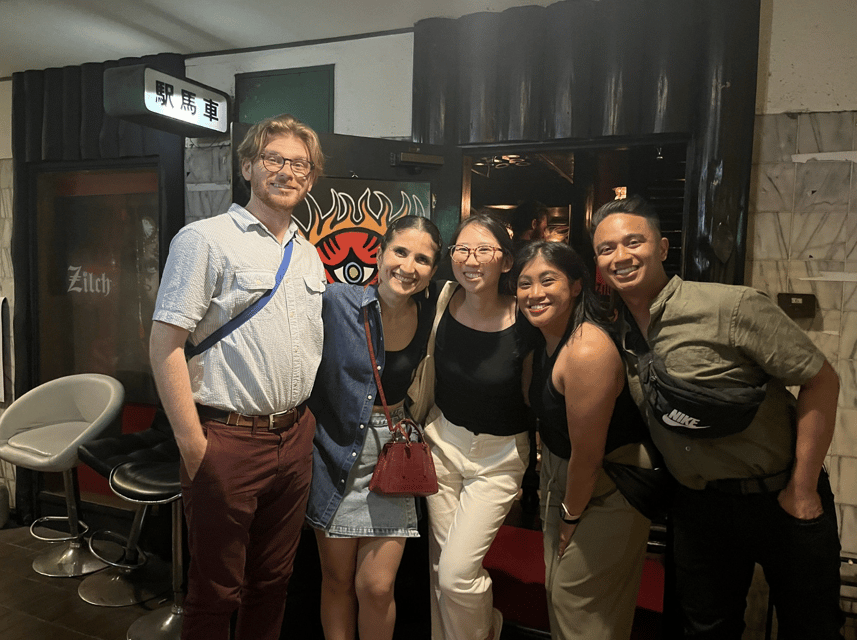
- A strong option for solo visitors: The guide brings people together quickly, and groups commonly include people from several countries.
- A walking nightlife tour, not a sightseeing bus trip: Wear comfortable shoes and expect narrow alleys, stairs, and several stops.
Why this Osaka night works better with a local guide
Dotonbori is easy to find but not always easy to understand. The main canal, neon signs, restaurant displays, and Glico running man are built for first impressions. The more interesting side streets begin just beyond that familiar scene, where small bars and izakayas can be difficult to identify from outside.
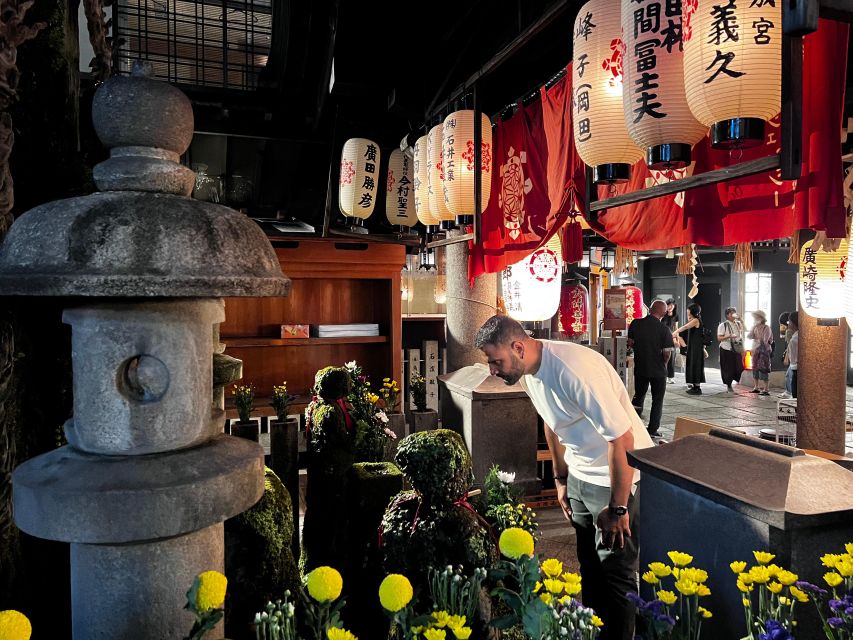
That is where this tour earns its keep. Your guide does not simply lead you from one famous drinking street to another. The route uses local connections in Uranamba, including bars that may not normally welcome walk-in foreign customers. The guide also explains the setting as you go, pointing out temples, back lanes, shops, and details of Osaka’s food and drinking culture.
I would not book this for a formal history lesson. The cultural information is woven into a social evening, with explanations about sake, local customs, food, and Osaka life between drinks. Guides such as Kosuke have explained where different sakes come from, while Seina and Taiga have been praised for explaining local history and customs in an easygoing way.
The strongest part is the human contact. You are not left to solve the language, seating, ordering, or etiquette questions alone. A good guide can help you choose a drink, explain what you are eating, and keep the group together while Osaka gets busier around you.
More Guided Walks in Japan:
- Tokyo: Shinjuku Local Bar and Izakaya Guided Walking Tour
★ 4.9 · 1,794 reviews - Tokyo: Tsukiji Fish Market Guided Walking Tour
★ 4.9 · 1,397 reviews - Kyoto: Izakaya Bars Guided Walking Tour
★ 4.9 · 815 reviews
Starting under the Glico sign in Dotonbori
The meeting point is in front of the Glico sign, at the Dotonbori Humanity Song Monument. Check this location carefully before setting out, since Dotonbori has several landmarks and crowded streets can make a short walk feel confusing.
The first guided portion lasts about 15 minutes. This is less about checking off major sights and more about getting your bearings. You can expect a short look at Dotonbori’s streets, temples, shops, alleys, and local character before the evening turns toward food and drink.
That short introduction matters because the tour is not only a pub crawl. Dotonbori is one of Osaka’s best-known areas, but the guide helps connect the loud signs and restaurant fronts to the neighborhood’s older social life. You may notice small temples and side streets that are easy to pass when walking alone toward the canal.
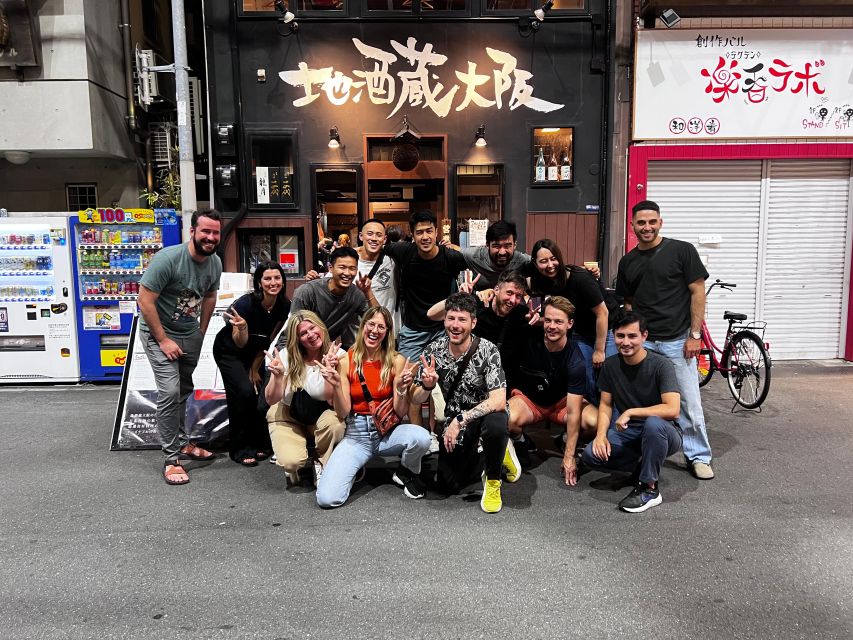
The group usually has 5 to 10 people. That is large enough to create conversation but small enough for the guide to keep an eye on everyone. Some departures have been smaller, and a very small booking can become almost a private tour. That can be excellent if you want more questions answered, though the group energy may be quieter.
Uranamba brings the local bar experience
After Dotonbori, the route continues into Namba and Uranamba for about two and a half hours. This is the main part of the evening, with sightseeing, food, drinks, and conversation spread across several venues.
The precise bars can vary, which is a good thing for a nightlife tour. You are not simply being sent to a fixed restaurant with a standard menu. The guide’s local contacts help shape the evening around the group, the size of the party, and the venues available that night.
Several experiences describe three stops, often with an izakaya first, a sake-focused venue next, and a final bar for whisky or another drink. The first stop may include a shared meal and hands-on takoyaki making. Making your own takoyaki gives you something to do besides sit with a drink, and it offers a friendly way for strangers to start talking.
Food can include local izakaya dishes, sushi, sashimi, and other small plates, though the exact menu is not fixed in the tour information. If you arrive hungry, that is sensible, since one evening included enough food for a participant to advise skipping a meal beforehand. Still, do not assume dinner is fully included. You pay for food and drinks as they are ordered.
The sake stop is another strong feature. You may taste several kinds and learn how they differ, rather than simply ordering one large glass without context. Kosuke has explained the origins of particular sakes, and other guides have used the tasting to discuss Japanese drinking culture and the way people share food and drinks in an izakaya.
Take the alcohol seriously. Sake can taste light and gentle while still adding up quickly, especially when combined with beer or spirits. One participant described the tasting as surprisingly strong, and another suggested that smaller whisky samples would suit people who are new to whisky. You can ask your guide for help choosing drinks and tell them your comfort level.
Food, sake, and the value of making things yourself
The food side is a major reason to choose this experience instead of a simple nightlife walk. Osaka is famous for casual food, and an izakaya is built around ordering several dishes for the table rather than treating dinner as one large course.
The takoyaki activity is especially useful for first-time visitors. You get a small lesson in a food strongly associated with Osaka, then share the result with the group. It is simple, social, and more memorable than receiving another plate without knowing how it was prepared.
Food restrictions should be sent in advance. The tour information specifically asks you to provide dietary details before the activity, and the guide can then take your needs into account. Do not wait until you are seated to mention a serious restriction.
The $19 price needs a clear explanation. It is very low for three hours of local guiding in central Osaka, particularly when the guide is taking you to multiple venues and helping with language and local customs. But it is not a $19 all-inclusive night. Your final cost depends on what you order at each stop, and food and drinks are separate.
That structure can work well if you want control over your spending. You can choose modest drinks and share food, or order more generously if the evening suits you. Bring cash, since it is specifically listed as necessary. The bill is split among the group, and amounts of 99 yen or less are rounded up to make the accounting easier.
More Walking Tours in Japan:
- Kyoto Geisha Walking Tour: Gion District & Hidden Gems
★ 4.7 · 3,273 reviews - Tokyo Tsukiji Fish Market Food and Culture Walking Tour
★ 5.0 · 3,184 reviews - Kyoto: Gion Magical Night Walking Tour with Geisha Trivia
★ 4.9 · 2,393 reviews - Tokyo: Imperial Palace and Shogun Historical Walking Tour
★ 5.0 · 2,251 reviews
Guides make the difference
This activity depends heavily on the individual guide, and the names associated with it include Taiga, Seina, Kosuke, Naoko, Hitomi, Karin, Daichi, Yui, Haruka, Towa, Mikey, Shota, and others. The repeated strengths are warmth, attention, local knowledge, and the ability to make people from different backgrounds talk to one another.
Taiga has been especially effective at keeping the mood lively, explaining drinks, and even joining karaoke. Seina has helped solo participants feel comfortable, kept groups together on crowded nights, and offered useful suggestions for places to visit after the tour. Kosuke has been praised for his explanations of Osaka, Japan, language, sake, and local food.
Karin’s strength has been group connection. That matters more than it may sound. A room full of strangers can remain a room full of strangers unless someone starts the conversation. The best guides do that naturally, without forcing everyone into loud party games.
Naoko and Hitomi have also been praised for attentive hosting and flexible conversation. One very small departure became a private outing, with Hitomi taking one participant to local bars and helping with takoyaki. That kind of flexibility is a benefit of a small operation, though you should remember that the route and atmosphere can change with the group size.
English is the listed tour language. The guides are not just translators. They help you ask questions, understand what you are ordering, and take part in the social rhythm of the night.
The final bar and the question of karaoke
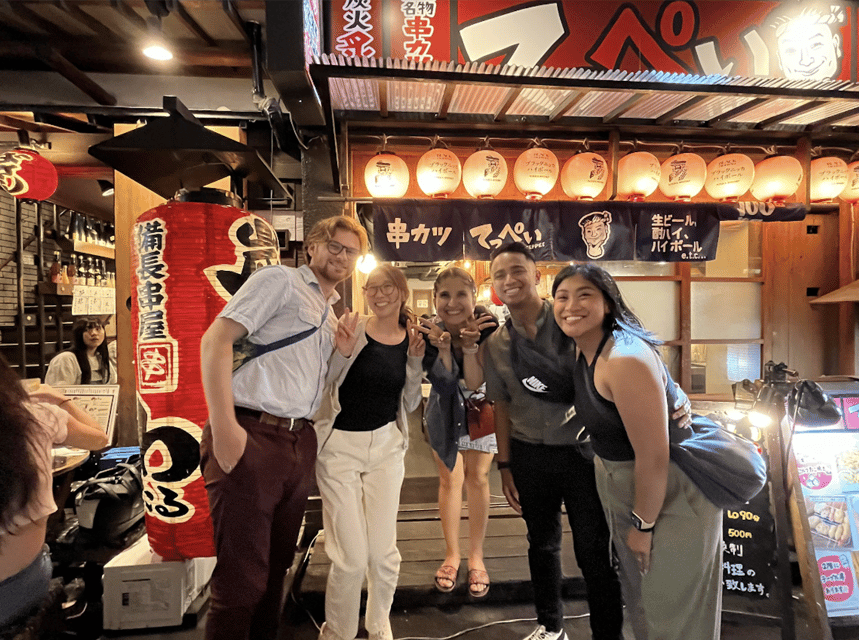
The tour ends at a less obvious bar in a building that many visitors would not find on their own. The point is discovery rather than a famous name. It gives the evening a clear finish and lets you see how small-scale Osaka nightlife differs from the large signs along the canal.
The final drink may involve whisky or another spirit. This is where preferences matter most. Some people enjoy choosing one whisky and settling in for a quieter final stop. If you are new to whisky, a tasting flight would be easier, but the current format may require you to choose a single glass. Ask about the available options before ordering.
Karaoke sometimes becomes part of the night, either at the last stop or afterward. It is not presented as a guaranteed included activity, so treat it as a possible extension rather than part of the fixed tour. The guides, particularly Taiga and Seina, have helped groups continue the evening, and singing can be a natural finish after several shared stops.
You are free to extend the night into the early morning, but extra drinks and any additional venues are your responsibility. I would decide your budget and alcohol limit before the tour begins.
Who will enjoy this most
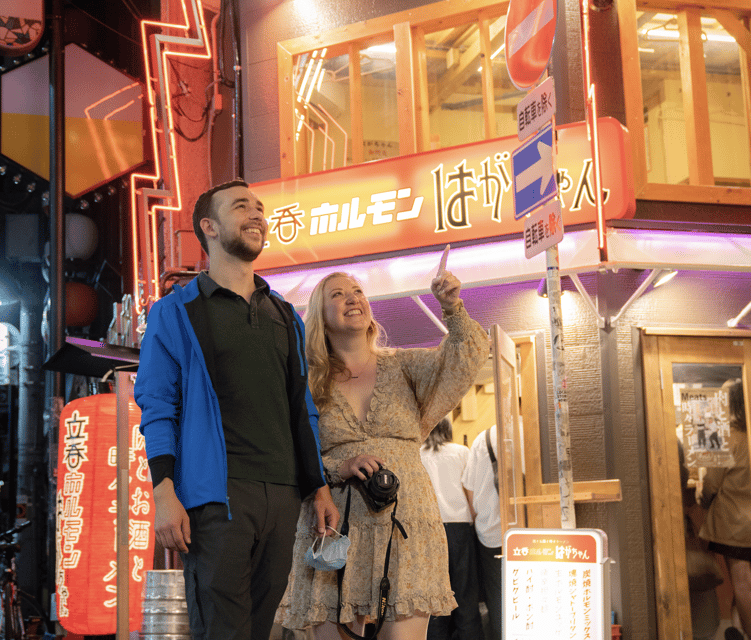
This is a good fit for a solo visitor who wants company without joining a huge party group. The guide gives you an easy introduction to other people, and the shared food creates conversation without requiring you to be outgoing from the first minute.
It also suits couples and friends who want local direction but still prefer a relaxed evening. You can enjoy the route together while meeting people from different countries. The smaller group size makes it easier to ask about Japanese food, Osaka culture, drinking customs, and places to visit later.
It is less suitable if you want a quiet meal, a fixed restaurant menu, or a fully prepaid package. It is also not for anyone under 20, and minors under 20 should not consume alcohol. Guests who dislike walking between venues, narrow nightlife streets, or group socializing may prefer a restaurant reservation instead.
The tour is conducted in English, so it is best for people comfortable taking part in an English-speaking group. You do not need expert knowledge of sake or Japanese food. Curiosity is enough, and the guide can help with the rest.
Practical details before you reserve
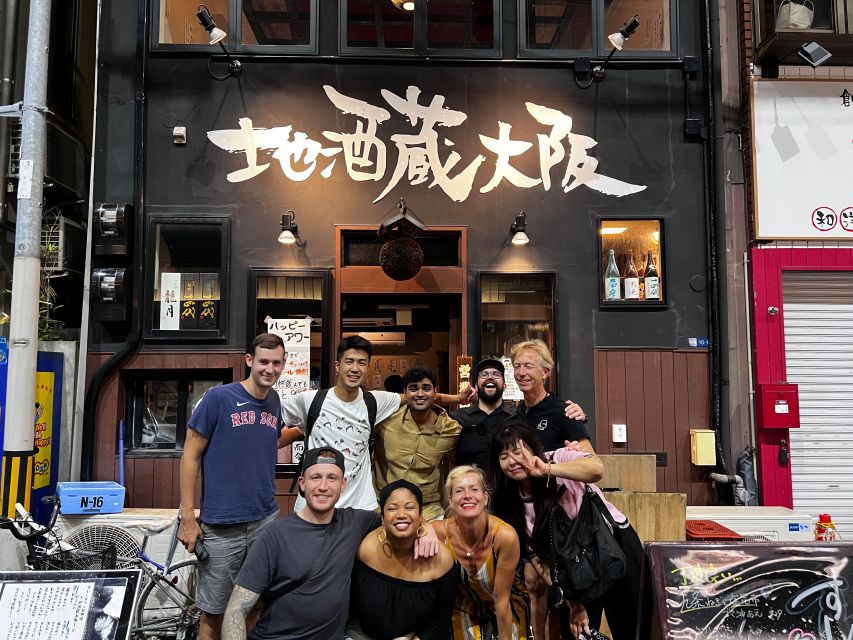
Wear comfortable shoes. The tour is on foot and moves through central Osaka streets and alleys for three hours, with several venue changes.
Bring cash for food and drinks. The $19 fee pays for the local guide and walking tour, not the items consumed at the bars. The final amount will depend on your choices, so ask the guide about prices if you need to keep spending controlled.
Send dietary restrictions in advance. This is particularly important because the evening may include shared dishes, takoyaki, sushi, sashimi, and other food that is not easy to identify at a glance.
The activity offers free cancellation up to 24 hours before departure and allows you to reserve now and pay later. Starting times vary, so check availability for your date. The listed rating is 4.9 from 385 reviews, which fits the consistent picture of a well-run, social night, though your exact venues and guide may differ.
Should you book the Osaka izakaya tour?
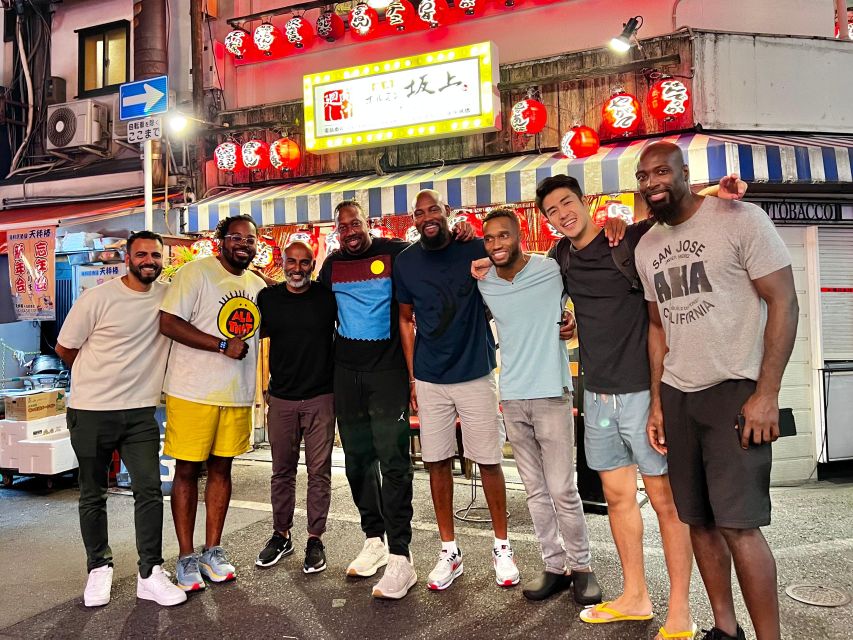
I would book this if you want an easy way into Osaka’s nightlife, especially on your first evening in the city. The price is excellent for the guiding, the route, and the local introductions, as long as you remember to budget separately for drinks and food.
Book it for the guide’s local access, the small-group setting, and the mix of eating, drinking, walking, and conversation. Choose another activity if you want a silent tasting, a fixed premium menu, or a fully inclusive price.
For the best experience, arrive ready to talk, wear good shoes, eat lightly beforehand, and tell the guide how much alcohol you want. If you do that, this can be one of the simplest ways to move beyond Osaka’s famous signs and experience the smaller social world behind them.
FAQ
Where does the Osaka izakaya tour begin?
Meet in front of the Glico sign at the Dotonbori Humanity Song Monument.
How long does the activity last?
The walking tour lasts three hours. About 15 minutes is spent touring Dotonbori, followed by roughly two and a half hours in Namba and the Uranamba area.
What is included in the $19 price?
The price includes a local English-speaking guide and the walking tour. Food and drinks are not included.
Do I need to bring cash?
Yes. Cash is specifically recommended because you pay separately for food and drinks during the evening.
How many people are usually in the group?
The usual group size is 5 to 10 people. Some departures can be much smaller, depending on the bookings.
Is the tour available in English?
Yes. The listed tour language is English.
Can people under 20 join?
No. The activity is not suitable for people under 20, and minors under 20 should not consume alcoholic drinks.
Can I share dietary restrictions before the tour?
Yes. You should provide dietary restrictions in advance so the guide can take them into account.
Can I cancel the booking for a full refund?
Yes. You can cancel up to 24 hours in advance for a full refund. The activity also offers a reserve now and pay later option.
New routes in Japan
- Tokyo: Asakusa & Sensoji ー Oldest Temple Walking Tour (2hrs)★ 5.0 · 213 reviews
- Asakusa Cultural Walk & Matcha Making Tour★ 5.0 · 245 reviews
- Asakusa Senso-ji Temple and Old Tokyo Walking Tour★ 5.0 · 560 reviews
- Tokyo: Tsukiji Market Walking Tour & Sushi Cooking Class★ 4.6 · 122 reviews
- Tokyo: Shinjuku Nightlife & Secret Backstreets Walking Tour★ 4.8 · 229 reviews
- Tokyo: Shinjuku Bar Hopping & Night Walking Tour★ 4.6 · 137 reviews
- Tokyo: Dark Side of Tokyo Shinjuku Red Light Walking Tour★ 4.7 · 862 reviews
- Tokyo: Shibuya Highlights Walking Tour★ 4.8 · 601 reviews
Osaka Walking Tours, compared.
Hotspots & Hidden Gems Walking Tour Private or Group
Read our review →
Osaka Local Foodie Walking Tour in Dotonbori and Shinsekai
Read our review →
Deep Backstreets Walking Tour with Dinner Option
Read our review →
Ultimate Osaka Walking Tour: Castle, Dotonbori & Hidden Gems
Read our review →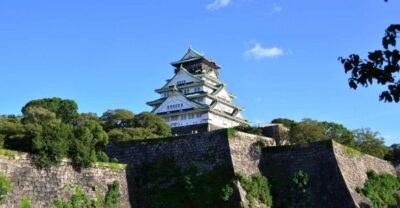
Main Sights and Hidden Spots Guided Walking Tour
Read our review →
Kuromon Market Food Walking Tour (6 stops, 6 tastes)
Read our review →
Castle History Walking Tour / Castle Tower Admission
Read our review →
Browse the lists this tour appears in