
Review · BERLIN
Berlin: 2.5-Hour Walking Tour through Kreuzberg 61
Kreuzberg 61 is the part of Berlin that rewards you for slowing down. In 2.5 hours, this walking tour moves from the grand military history around Platz der Luftbrücke to quiet courtyards, old apartment blocks, a waterfall, and the lively streets near Bergmannstrasse. Viktoriapark’s hilltop view and the graceful buildings around Chamissoplatz are the big visual payoffs.
I like two things here. First, the route looks beyond Berlin’s usual Cold War and major-monument circuit, giving you a better feel for how an actual neighborhood was built and lived in. Second, guides such as Tobias Schwabe bring together architecture, politics, local life, and personal stories. The main consideration is simple: this is a continuous neighborhood walk, not a stop-and-go sightseeing bus tour, and there is no planned refreshment break.
Key points before you book
- Kreuzberg beyond the clichés: See more than artists, bars, and Turkish restaurants as the route examines housing, urban planning, monuments, and daily life.
- A strong architecture focus: Look closely at 19th-century apartment blocks, military buildings, restored courtyards, and the Fachwerkhof.
- The best city view comes mid-tour: Viktoriapark and the Prussian Monument for the Liberation Wars give the walk its finest outlook over Berlin.
- Quiet corners make the route special: Sixtusgarten, Riehmers Hofgarten, and Chamissoplatz offer calmer scenes away from the main streets.
- A guide-led history lesson: The tour is available in English or German, with Tobias Schwabe among the named guides.
- Good value at $23: For 2.5 hours of focused guiding, the price is modest, especially if you want context rather than a checklist of famous sights.
Why Kreuzberg 61 feels different from central Berlin
Kreuzberg 61 refers to the western part of the district, a section shaped by older apartment construction, Prussian institutions, immigrant communities, political change, and later cultural shifts. This tour makes that variety the subject rather than treating the neighborhood as a backdrop.
You begin around Platz der Luftbrücke, near buildings and open spaces tied to Berlin’s military and postwar story. From there, the route turns toward the hill called Kreuzberg, which gives the district its name. The walk then passes through residential streets and garden spaces before finishing around Bergmannstrasse and Marheineke Markthalle.
That sequence matters. You see the neighborhood change in texture as you walk. Large public structures give way to courtyards, small gardens, residential facades, local businesses, and market life. The tour is less about collecting famous photographs and more about learning to read the city block by block.
I especially like this approach if you have already seen the Brandenburg Gate, Museum Island, and the Berlin Wall sites. It gives you a second picture of Berlin, one based on housing, streets, local commerce, and the small details that most general city tours pass by.
More Walking Tours in Berlin:
- Discover Berlin Half-Day Walking Tour
★ 5.0 · 9,624 reviews - Berlin City walk Government District and Places of Democracy
★ 4.7 · 8,467 reviews - Berlin: Third Reich & Cold War Guided Walking Tour
★ 4.9 · 8,378 reviews
Starting at Platz der Luftbrücke
The walk begins with Platz der Luftbrücke, one of the more fitting places to discuss Berlin’s 20th-century story. The square is associated with the former airport and the Berlin Airlift, but the tour does not stop at a single dramatic episode. The surrounding military buildings and urban setting help explain how this part of the city developed.
Allow about 25 minutes here for guided sightseeing and walking. That is enough time for a proper introduction without letting the opening history lesson take over the entire afternoon.
The value of starting here is contrast. The square feels broad and formal, while later stops become more intimate. You can expect the guide to connect the architecture and institutions around the square with the changes that shaped Kreuzberg. This is also where you begin to see why the route is described as an open-air history lesson.
The meeting point can vary according to the option you book, and a special place, date, and time can be arranged for a group by request. Check the exact instructions before setting out. The supplied starting information also gives Mehringdamm 129 as a starting location, so confirm whether that is the point attached to your booking.
From the printers’ memorial to Sixtusgarten
The next section moves through less obvious pieces of local history. The Verband der deutschen Buchdrucker monument, or Association of German Printers monument, receives about 10 minutes of guided attention. It is the sort of stop you could easily walk past without knowing what it represents.
That is one of the tour’s main strengths. The guide does not simply point at the grandest building on the street. You learn why a smaller memorial, a courtyard, or a particular facade matters. The route trains your eye to notice the social and working history built into the neighborhood.
Sixtusgarten follows as a short photo stop and guided visit. It offers a change of pace before the route reaches Viktoriapark. Do not expect each stop to be a major attraction with an entrance hall or formal exhibit. Several are brief outdoor observations, and their appeal depends on the guide’s explanation.
This is where a strong guide makes a real difference. Tobias Schwabe has been praised for linking architecture and local history with stories about German life, politics, and the city. The information is not limited to dates and names. You get a sense of how places fit into the wider character of Kreuzberg.
Viktoriapark and the hill called Kreuzberg
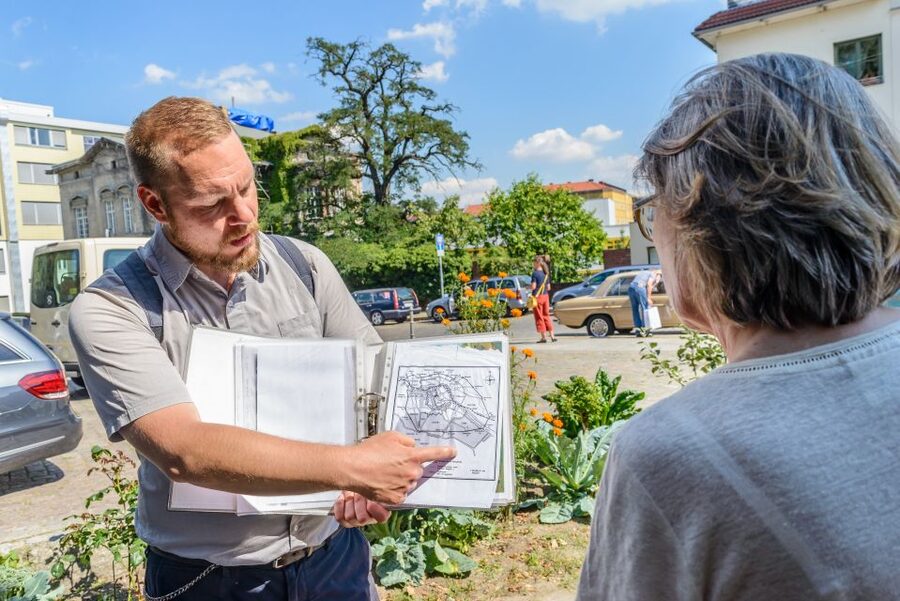
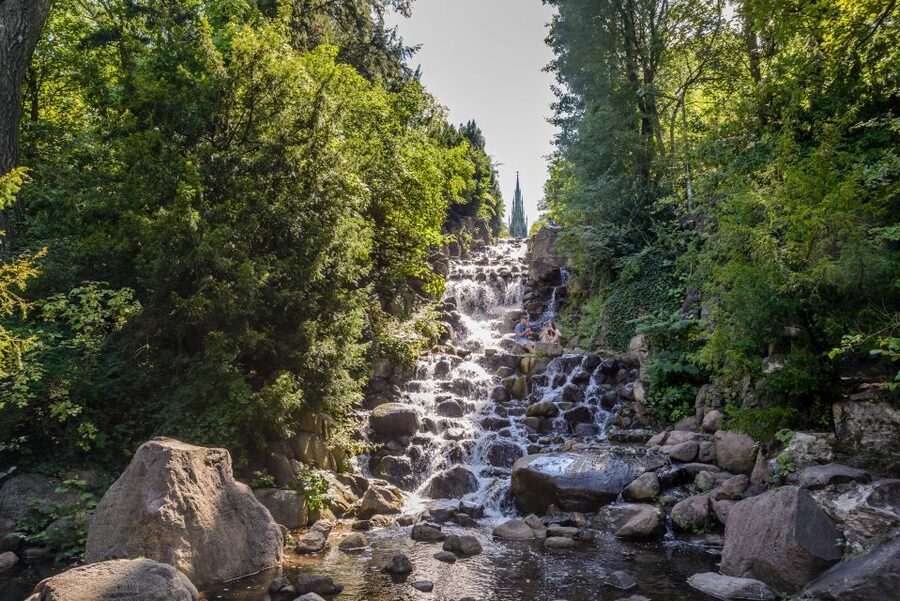
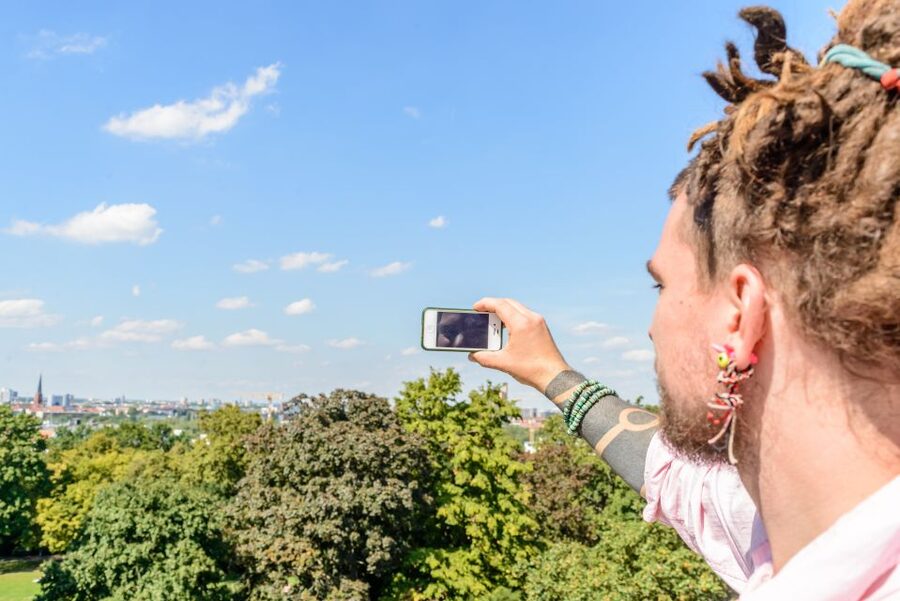
Viktoriapark is the scenic center of the walk. The route allows about 35 minutes here, including a photo stop, guided sightseeing, and views along the way. The park provides an oasis of calm, with the waterfall as its most recognizable feature.
The hill is not just a pleasant green pause. It explains the district’s name and gives the tour its best chance to show Berlin from above. From the high ground, you can take in a broad city view and understand the position of Kreuzberg within Berlin.
The park is also a useful reminder that Berlin is not only grand avenues and heavy monuments. A waterfall in a city park, a sloping path, and a quiet view can tell you as much about the city’s design ambitions as a famous landmark. The tour uses the park to connect nature, public space, and the history of the hill.
You should wear comfortable shoes and be ready for a proper walk. The total duration is 2.5 hours, and Viktoriapark is only one section of the route. The tour information does not promise a rest stop or refreshments here, so bring what you may need before starting.
Same streets, a different guide:
- Berlin: Discover Berlin Walking Tour
★ 4.9 · 5,998 reviews - Berlin’s Best: 2 Hour Walking Tour Third Reich and the Cold War
★ 5.0 · 5,486 reviews - Berlin: Hidden Backyards Guided Walking Tour
★ 4.8 · 5,360 reviews - Explore Berlin: See All The Iconic Sights & Some Hidden Gems
★ 5.0 · 4,429 reviews
Schinkel’s monument and the view over Berlin
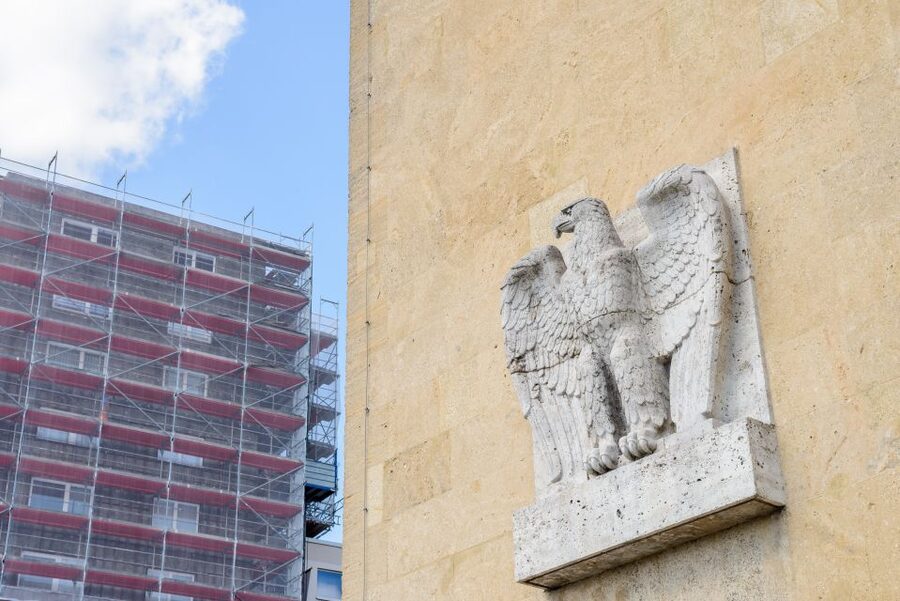
At the top of Kreuzberg is the Prussian Monument for the Liberation Wars, designed by Karl Friedrich Schinkel. The monument is one of the tour’s most important historical and visual stops, with about 10 minutes set aside for a photo stop, explanation, and views.
Schinkel’s work gives the hill a formal, national character. The setting also makes clear how monuments can shape a city’s identity. You are not only looking at a structure. You are looking at the relationship between a monument, a public park, and the city spreading out below.
This is a good place to ask questions. The tour is built around live explanation, and the guides have been praised for welcoming discussion rather than delivering a rigid speech. If you are interested in architecture, nationalism, urban design, or Berlin’s many layers of political memory, this section should hold your attention.
The stop is fairly short, so do not expect an extended museum-style treatment. Its strength comes from the setting and from the guide’s ability to place the monument in context.
Riehmers Hofgarten and the beauty of the courtyard
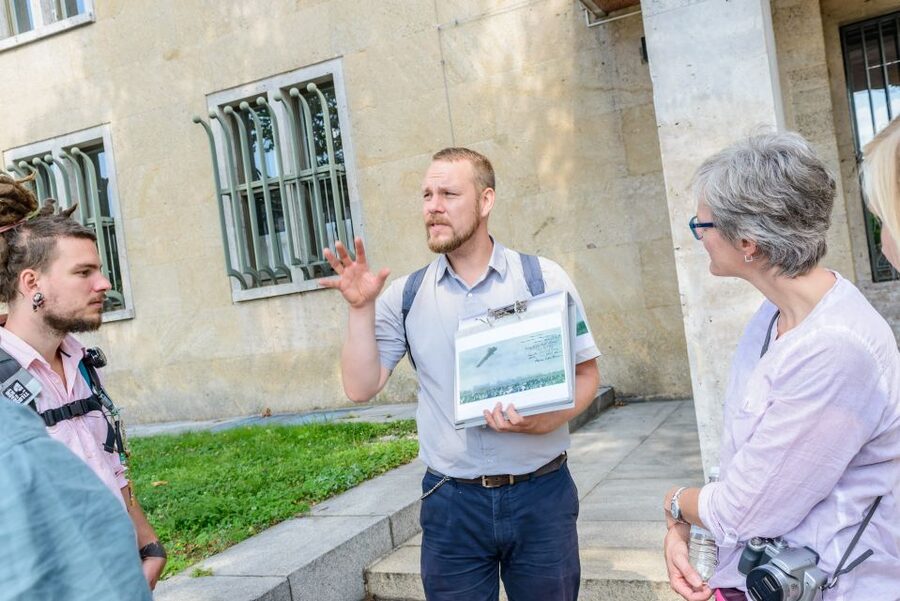
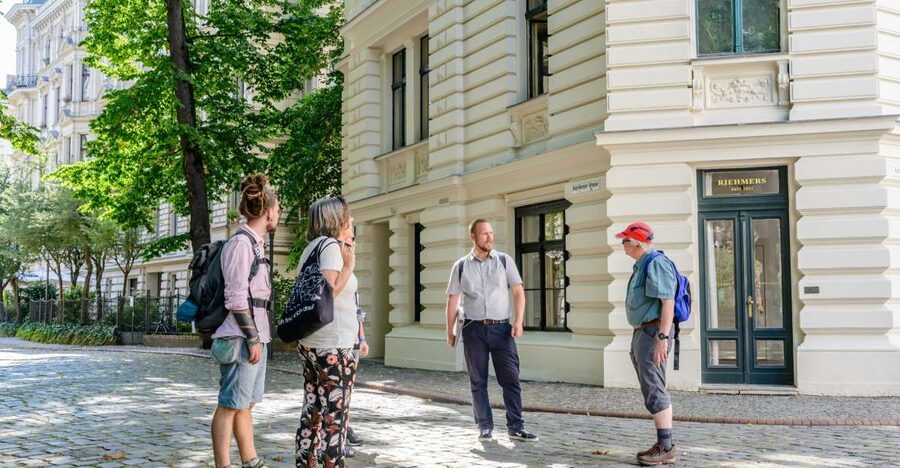
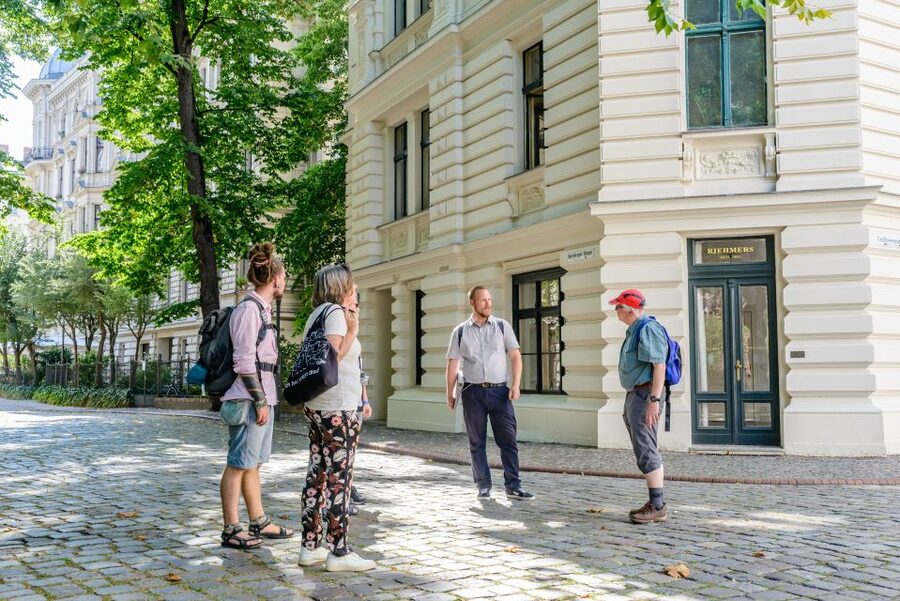
After the hill, the walk returns to the residential side of Kreuzberg at Riehmers Hofgarten. About 10 minutes are planned here for walking, sightseeing, and a photo stop.
The name points to the courtyard form that helps define much of Berlin’s older apartment construction. Instead of seeing only the street facade, you get a look at the quieter spaces behind it. These courtyards reveal how dense urban housing could still include light, greenery, and shared outdoor areas.
This is one of the places where an architecture-minded guide earns the $23 price. A casual stroll might show you an attractive building. A guided visit can explain why the layout matters, how the blocks relate to one another, and what details separate a well-preserved structure from a modern imitation.
The stop is not long, and the route continues through the Sarottihöfe. That pace keeps the experience moving, though anyone hoping to linger over every facade may find the schedule brisk.
Schmelzwerk and the Sarottihöfe
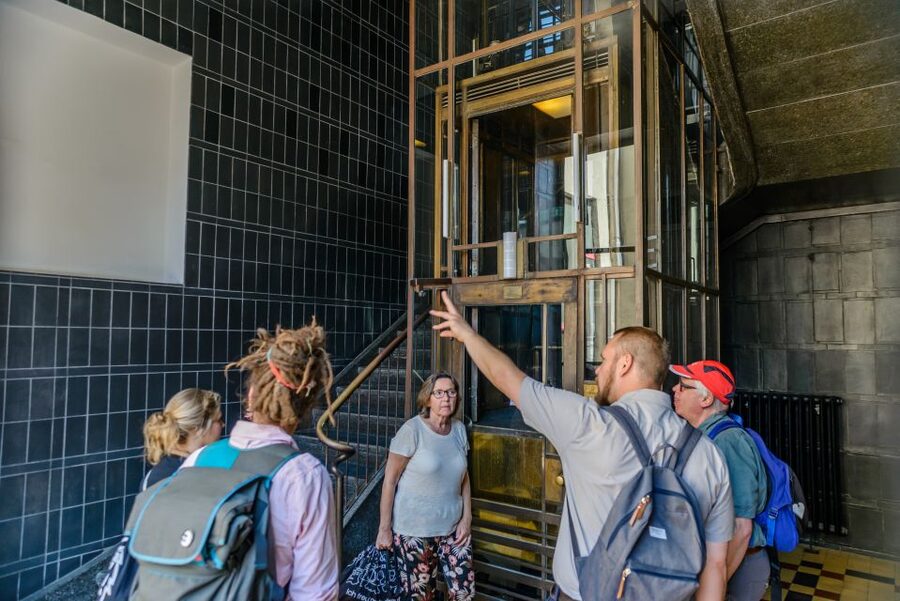
Schmelzwerk in den Sarottihöfen is another short photo and sightseeing stop, planned for about 10 minutes. It adds a former industrial and courtyard setting to the tour’s mix of monuments, parks, and residential architecture.
This change in building type is important. Kreuzberg is not just a district of handsome old homes. Workplaces, commercial sites, and later uses have all shaped its appearance. The tour gives you enough time to understand the site and see its details without turning the visit into an indoor industrial museum experience.
The route’s recurring theme is adaptation. Military buildings, monuments, apartment courtyards, market spaces, and industrial sites all sit within the same district. The guide helps you connect those pieces, which is more useful than treating each location as an isolated photo opportunity.
Bergmannstrasse and the neighborhood at street level
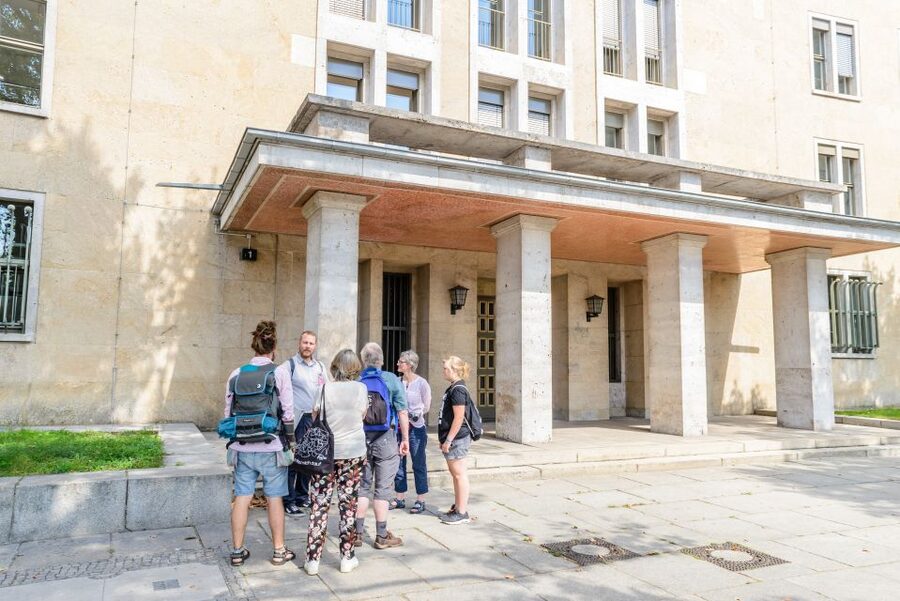
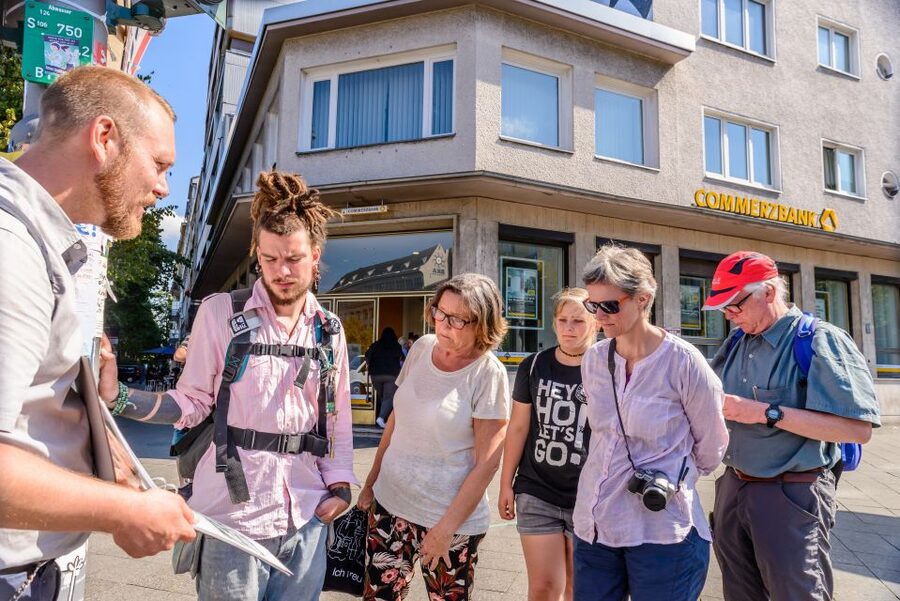
The tour spends about 20 minutes around Bergmannstrasse, combining guided sightseeing, walking, and a look at local shopping. This is where the route becomes more social and commercial.
Bergmannstrasse is a natural place to discuss the modern character of Kreuzberg. The street brings together local businesses, food, shopping, and the multicultural atmosphere that many visitors associate with the district. The tour does not reduce Kreuzberg to that one image. Instead, it shows how the present-day street scene sits on top of older layers of planning, housing, work, and migration.
You will have time to notice the atmosphere, but this is not presented as a dedicated food tour or shopping excursion. The focus remains on the neighborhood and its development. If you want to browse every shop or stop for a full meal, save that for after the walk.
The route also includes the Fachwerkhof in Berlin Kreuzberg, a very brief five-minute photo and sightseeing stop. Its timber-framed character gives you another architectural contrast. Coming after the more formal apartment blocks and industrial courtyards, it shows just how varied Kreuzberg’s built environment can be.
Chamissoplatz and Marheineke Markthalle
Chamissoplatz receives about five minutes of guided sightseeing. It is a charming square with well-preserved architecture, and it offers one of the clearest examples of the quieter residential side of western Kreuzberg.
This is the kind of place that rewards attention to proportion, facades, and the way buildings frame public space. You may not need a long stop to appreciate it, but the guide’s comments help turn a pleasant square into a meaningful part of the neighborhood story.
The final stop is Marheineke Markthalle, with about five minutes listed for a break, shopping, and sightseeing. The market hall makes a practical ending because it returns you to everyday Berlin. After monuments, parks, and courtyards, you finish among food, commerce, and local activity.
The schedule only allows a short break, so treat the market as an orientation point rather than a full meal stop. If you want to shop or eat, plan to stay afterward.
The guide makes the difference
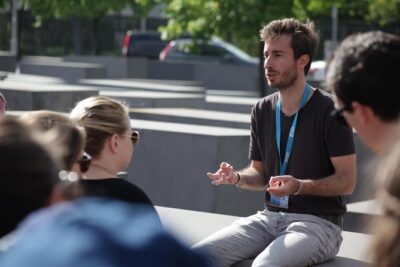
The strongest part of this experience is the guiding. Tobias Schwabe is specifically associated with the tour, and the guide may also be another English or German speaker. The feedback attached to the experience repeatedly emphasizes friendly delivery, detailed local knowledge, and the ability to reveal places that are easy to miss.
That matters because several stops are modest in size. A monument to printers, a courtyard, or a small garden does not explain itself. You need someone who can connect it to Berlin’s architecture, politics, social life, and urban growth.
The tone also appears to suit people who like a conversation. Several past participants praised the guides for sharing personal stories and exchanging ideas, not just reciting facts. That can make the walk feel more like a thoughtful neighborhood lesson than a formal lecture.
The language choice is English or German. If you have a particular language preference, select it when booking. The tour is suitable for solo visitors, couples, groups, and Berlin residents who want to see a familiar district with fresh context.
Is $23 a fair price?
At $23 per person, the tour offers good value if you care about interpretation. You receive 2.5 hours with a professional guide and a route covering parks, monuments, housing, courtyards, commercial streets, and a market hall. Comparable value is hard to measure in the number of sights because many of these places are free to enter. You are paying for the explanation and the route design.
The price is especially reasonable for first-time visitors who want something beyond the central landmarks. It can also work well for repeat visitors. One person who had lived in Berlin for four years still found unfamiliar corners on the walk, which says a lot about how easily this part of Kreuzberg can escape a standard itinerary.
The tradeoff is that the tour does not include food, admissions, or a substantial scheduled rest. You also do not get a private vehicle or a short, compact route. The value comes from walking and paying attention.
Cancellation is flexible if your plans change: you can cancel up to 24 hours before the start for a full refund. You can also reserve now and pay later, which helps if your Berlin schedule is still shifting.
Who should book this Kreuzberg walk?
I would choose this tour if you like architecture, urban history, local politics, or the everyday structure of a city. It is also a good choice after you have covered Berlin’s best-known sights and want to understand how a real neighborhood works.
It suits visitors who prefer smaller details to major attractions. You should be happy with a guided walk that includes short stops, outdoor explanations, and several places you might not recognize on your own.
It may be less suitable if you want a food-focused outing, a Berlin Wall tour, a museum visit, or a relaxed café crawl. The route is educational and fairly full, with the most scenic pause at Viktoriapark and the liveliest section around Bergmannstrasse.
Should you book it?
Book it if you want to see Kreuzberg 61 as more than a famous nightlife district. The route gives you a thoughtful mix of city views, Prussian monuments, old housing, gardens, industrial courtyards, local shopping, and market life. At $23, it is a sensible way to spend an afternoon with a guide who can explain the details you would likely miss alone.
Skip it only if you strongly dislike walking tours or want free time for food and shopping at every stop. For architecture fans, repeat Berlin visitors, and anyone curious about how history appears in ordinary streets, this is one of the more useful neighborhood walks in the city.
FAQ
How long does the Kreuzberg 61 walking tour last?
The tour lasts 2.5 hours.
What languages are available?
The live tour guide is available in English or German.
What places does the tour visit?
The route includes Platz der Luftbrücke, the Verband der deutschen Buchdrucker monument, Sixtusgarten, Viktoriapark, the Prussian Monument for the Liberation Wars, Riehmers Hofgarten, Schmelzwerk in the Sarottihöfen, Bergmannstrasse, the Fachwerkhof, Chamissoplatz, and Marheineke Markthalle.
Where does the tour meet?
The meeting point can vary depending on the option booked. Mehringdamm 129 is given as a starting location, and a special meeting point can be arranged for a group by request. Check your booking details before arrival.
How much does the tour cost?
The listed price is $23 per person.
Can I cancel or pay later?
You can cancel up to 24 hours in advance for a full refund. The reserve now and pay later option lets you book without paying immediately.
New routes in Berlin
- Small Group Walking Tour: “Wild Kreuzberg”★ 4.8 · 199 reviews
- Sachsenhausen Memorial: Walking Tour from Berlin★ 4.7 · 132 reviews
- Berlin: Prenzlauer Berg District Guided Walking Tour★ 4.9 · 316 reviews
- From Berlin: Potsdam & Sanssouci half day Walking Tour★ 4.9 · 85 reviews
- Explore Berlin: Walking Tour of All The Iconic Sites★ 4.9 · 855 reviews
- East Berlin and the Wall: Walking Tour★ 4.9 · 407 reviews
- Cold War, Berlin Wall, Spies and the East Side Gallery★ 4.8 · 254 reviews
- Berlin: The Time of National Socialism Walking Tour★ 5.0 · 220 reviews
Berlin Walking Tours, compared.
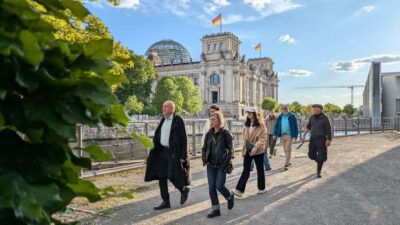
Berlin City walk Government District and Places of Democracy
Read our review →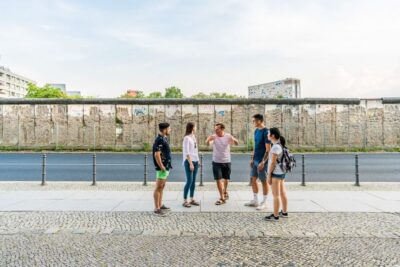
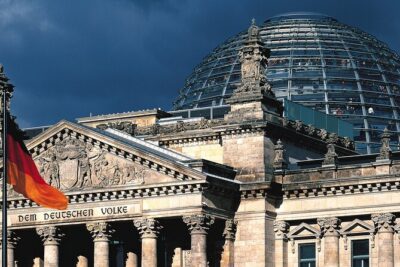
Berlin’s Best: 2 Hour Walking Tour Third Reich and the Cold War
Read our review →
Explore Berlin: See All The Iconic Sights & Some Hidden Gems
Read our review →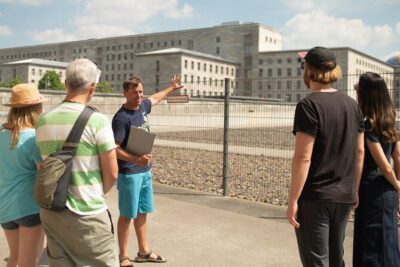
Third Reich Berlin: Hitler and WWII Walking Tour
Read our review →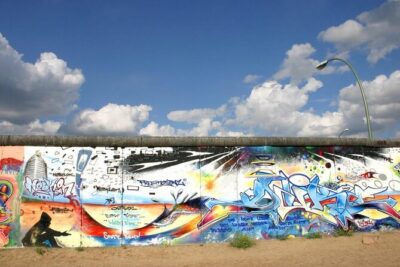
Berlin Center Food Tour with 8+ Authentic Local Tastings
Read our review →
Browse the lists this tour appears in