
Review · KYOTO
Kyoto: Meet the Geisha Maiko with Gion Walking Tour
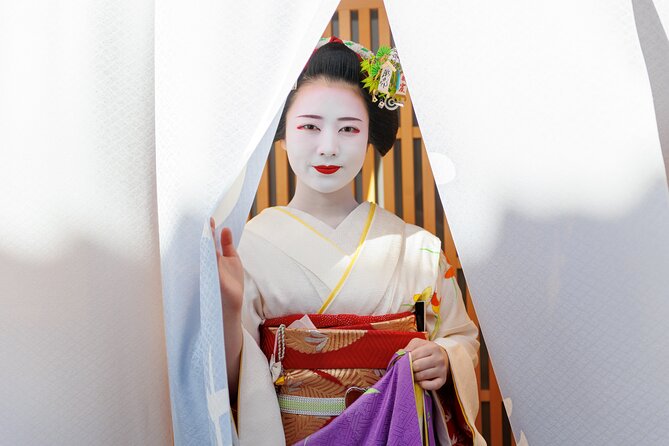
Kyoto’s geisha world is usually kept behind closed doors. This tour gives you a rare, respectful look inside an ochaya, or traditional teahouse, where you meet a maiko and a former geiko, watch a live dance, and ask direct questions about training, work, and daily life. The performance is graceful and brief, but the conversation is what turns it into a real cultural exchange.
I like the combination of a Gion walking tour and the private visit. You first see the streets where maiko and geiko work, then understand more of what you are seeing. I also like the small-group feel, the English interpretation, and the chance to take a photograph with the maiko. The main consideration is timing: the dance may last less than five minutes, while the full experience can run longer than expected.
Key points to know before booking
- A private ochaya visit gives you access to a setting most people cannot enter without special connections.
- The live performance is short but memorable, with one or two traditional dances by a maiko and, in some sessions, a former geiko present for conversation.
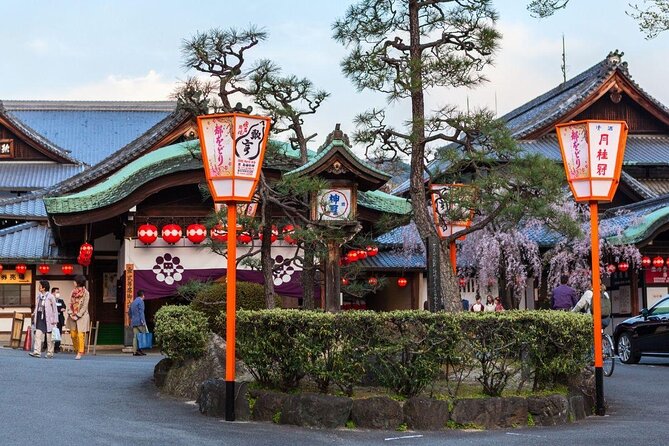
- The 70 to 80 minute walk covers Shirakawa Canal, Tatsumi-jinja Shrine, Hanamikoji Street, Gion Corner, Kenninji Temple, and nearby Miyagawasuji.
- Guides such as Mika, Naomi, Tom, Takuma, Yuko, and Chiko are praised for clear English, patience, translation, and local insight.
- Bring socks, since you must wear them inside the performance venue, which is reached by stairs.
- Kimono rental can be added, but you must walk from the rental shop to the Izumo-no-Okuni statue before meeting the guide.
Why the maiko meeting is the heart of the experience
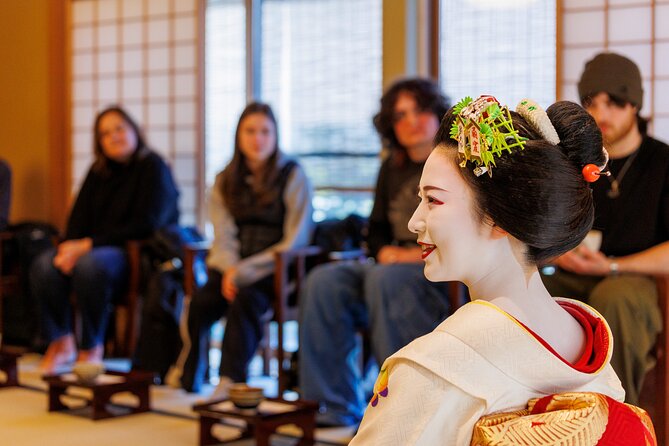
A maiko is an apprentice geiko, still in training in dance, music, manners, dress, and traditional arts. In Kyoto, the word geiko is commonly used for a fully trained performer often called a geisha elsewhere in Japan.
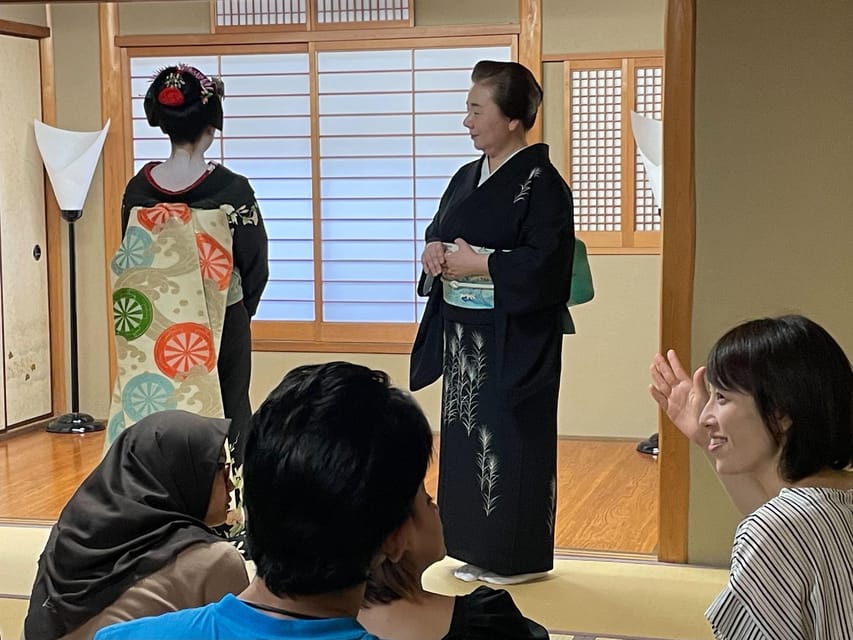
The value of this experience is not simply seeing an elaborately dressed performer. You get to hear about the people behind the makeup, hairstyle, kimono, and formal movements. A former geiko and the ochaya owner help explain how this world works, while the maiko answers questions about her own path.
The setting matters. You are not watching from a large stage with a crowd around you. The performance takes place on the second floor of a private house, and the group then has time for conversation and photographs. That closeness makes the visit feel personal, though it also means you must follow house rules carefully.
The dance itself may be only a few minutes. Do not book this expecting a long stage show. The performance is the visual centerpiece, but the roughly 90-minute meeting also includes introductions, questions, translation, and photo time. I see that as a strength if you want context. If you mainly want an extended dance program, this may feel too talk-heavy.
More Walking Tours in Kyoto:
- Kyoto Geisha Walking Tour: Gion District & Hidden Gems
★ 4.7 · 3,273 reviews - Kyoto: Gion Magical Night Walking Tour with Geisha Trivia
★ 4.9 · 2,393 reviews - Kyoto: Gion Geisha District Walking Tour – Stories of Geisha
★ 4.7 · 2,187 reviews
Walking through Gion before entering the ochaya
The tour begins at one of two possible meeting points: the Izumo-no-Okuni statue or the wargo Kyoto Kimono Rental Gion-Shijo store, depending on the option you choose.
The walking portion takes about 70 to 80 minutes. It is not a broad Kyoto sightseeing tour. Instead, it gives you a focused introduction to Gion and the nearby flower districts before the private meeting.
Shirakawa Canal
The walk usually begins around the Shirakawa Canal, one of Gion’s most atmospheric areas. The waterway, traditional buildings, and narrow lanes help you picture the old entertainment district without needing a long lecture.
This is also a useful place for photographs. Your guide can point out details you might otherwise pass without noticing and explain how the area connects with maiko and geiko life.
Tatsumi-jinja Shrine
The brief stop at Tatsumi-jinja Shrine lasts about five minutes. It is a small pause rather than a full shrine visit, so keep your expectations in check.
The shrine adds cultural context to the walk, but it is not a major sightseeing stop. If you want to study the grounds at length, plan to return on your own.
Same streets, a different guide:
- Best of Kyoto: Gion, Geisha, Pagodas & Cobblestones
★ 4.9 · 2,058 reviews - Night Walk in Gion: Kyoto’s Geisha District
★ 4.5 · 2,003 reviews - Kyoto Gion Geisha District Walking Tour – The Stories of Geisha
★ 5.0 · 1,441 reviews - Nishiki Market Brunch Walking Tour (7 Tastings + Brunch)
★ 5.0 · 1,355 reviews
Hanamikoji Street
Hanamikoji Street is one of Gion’s best-known lanes, with traditional facades and entrances to restaurants and teahouses. Your guide explains how the district functions and where performers live and work.
This is an area where respectful behavior matters. Do not block doorways, chase people for photos, or assume that anyone in traditional dress is available to pose. The tour is valuable partly because it teaches you how to look without treating Gion as a stage set.
Gion Corner
You also pass Gion Corner, a venue associated with traditional Japanese arts. The stop helps place the private ochaya visit within Kyoto’s wider performing arts scene.
The walk may include information that overlaps with things you hear later at the teahouse. That repetition is not a major problem, but it is worth knowing if you have already taken another Gion walking tour.
Kenninji Temple
Kenninji Temple is listed as a photo stop and sightseeing point for about 15 minutes. In practice, you may see only part of the temple area rather than take a full temple tour.
One thing I would keep in mind: do not book this outing primarily for Kenninji. The temple is a supporting stop, while the maiko meeting is the reason to choose this experience.
Miyagawasuji
The walk ends in Miyagawasuji, another flower district near the private venue. This transition is important because it takes you away from the most familiar Gion streets and toward the place where the meeting occurs.
The tour finishes at Miyagawasuji after the indoor visit, so you are not returned to the original meeting point. That is useful if you plan to continue exploring southern Gion, but allow extra time if you have a train to catch.
What happens inside the private teahouse
You enter the ochaya by stairs, then settle in for the meeting. The room is on the second floor, and there is no elevator access mentioned, so the experience is not suitable for wheelchair users or people with mobility impairments.
The host setting is part of the appeal. A former geiko or venue owner explains the customs of the district, and the guide translates questions and answers in English. Guides such as Tom have also translated in several languages during the broader tour, but the listed tour language is English.
You can ask about:
- Training and life as a maiko
- The path from maiko to geiko
- Performance arts and traditional dances
- Clothing, makeup, and hairstyles
- The role of the ochaya
- Changes in Kyoto’s geiko districts
- Everyday experiences within this demanding profession
The tone is generally warm and conversational. Reports of guides such as Naomi, Mika, Chiko, Ayako, and Takuma point to the importance of the interpreter. Even when the maiko and former geiko speak openly, the guide makes sure the meaning comes across clearly.
Some sessions also include matcha and traditional sweets, with the maiko serving and the former geiko or host explaining the setting. Treat that as part of the welcome rather than a formal tea ceremony lesson unless your booking details say otherwise.
The dance, questions, and photo session
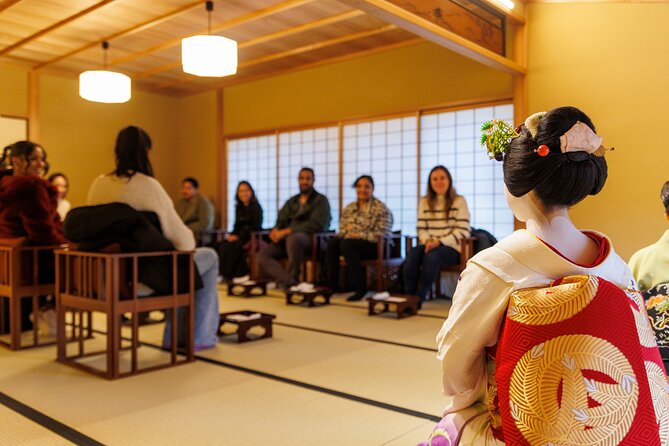
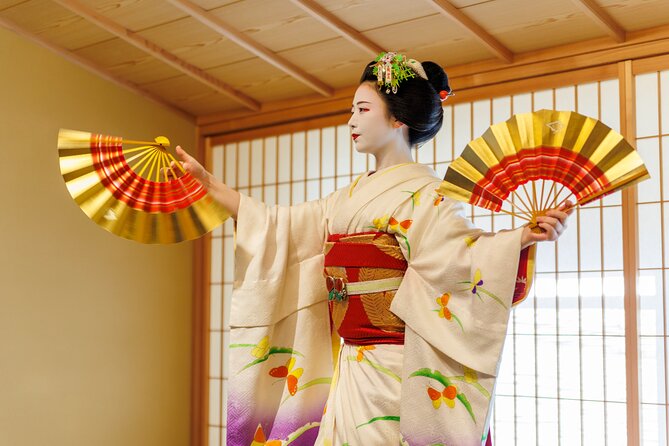
The maiko performs one or two dances accompanied by traditional music. The formal movements, costume, and controlled pace make a strong impression even if you know little about Japanese dance.
The performance may be shorter than you expect. One account placed it at under five minutes, with most of the indoor time devoted to conversation and questions. I think that is a fair trade for this type of access. The dance gives you a concentrated look at the art, while the discussion explains the years of practice behind it.
After the performance, you have a Q&A session and a photo opportunity. Photography and video are allowed only during the performance and the photo session. You cannot record freely throughout the visit, and videos may not be uploaded online.
If you want to post a photograph of the maiko on the internet, ask her directly for permission first. This is more than a technical rule. The people you meet are working professionals, not props for a holiday album.
The guides make a practical difference
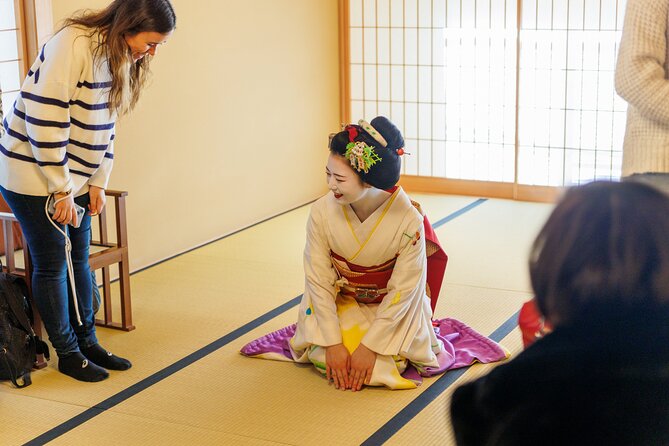
The quality of the English guide matters here because translation shapes the whole exchange. A guide who can explain customs simply, relay questions accurately, and keep the group moving makes the visit much easier to follow.
Several guides receive especially warm praise in the supplied experiences:
- Mika is described as patient, gentle, friendly, and helpful, including on a very hot day.
- Naomi is noted for clear English, storytelling, and strong explanations of history and customs.
- Tom is praised for fluent English and for translating questions carefully.
- Takuma is described as energetic, polite, and engaging.
- Yuko is noted for patience and respectful explanations.
- Chiko and Ayako are also praised for making the cultural material easy to understand.
Guide assignments can vary, so you cannot assume a particular person will lead your tour. Still, the pattern is clear: this activity depends on more than getting to the teahouse. The guide gives you the background needed to understand the meeting.
Is the $106 price fair?
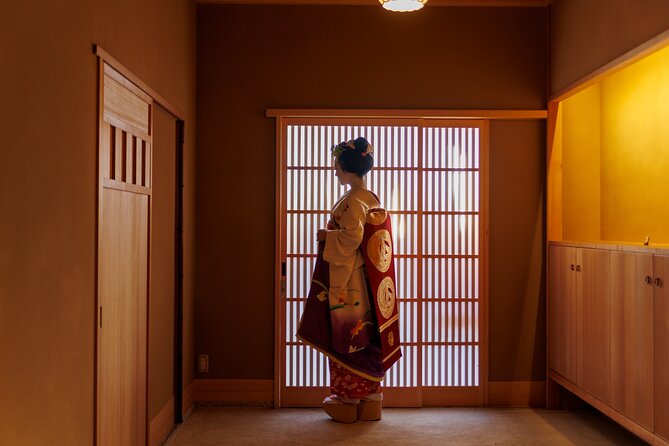
At $106 per person, this is not a cheap walking tour. You are paying for a local guide, about 70 to 80 minutes of Gion touring, a private venue, one or two dances, translation, Q&A, and a photo session.
The price makes sense if you value access. Ordinary sightseeing lets you walk past teahouse doors, but it does not normally put you inside an ochaya with a maiko and former geiko. The private setting and personal questions are what separate this from a standard Gion stroll or a public cultural show.
The value is weaker if you mainly want photographs or a long performance. You can take photos only at set times, and the dance itself may be brief. I would choose this for conversation and cultural understanding first, with the performance as the highlight.
A kimono rental option can make the outing feel more special and gives you a traditional outfit for the walk and photo session. It also adds a little logistics: after changing, you must walk about three minutes to the Izumo-no-Okuni statue on your own, where the guide waits.
Timing, comfort, and small details
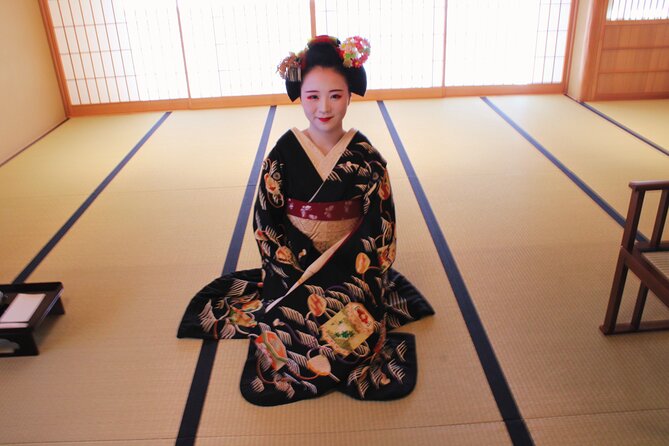
The advertised duration is three to five hours, depending on the selected option and the day. Some sessions may run longer than expected, so do not schedule a tight train connection afterward.
Summer can be uncomfortable during the walking portion. One practical improvement is to leave room for heat, water, and a slower pace. In rain, the tour still operates, so bring an umbrella and keep your clothing and socks dry.
Socks are required at the performance venue. On rainy days, wet socks and wet clothing are not permitted inside. This is easy to overlook, especially if you spend the morning sightseeing in sandals, so pack a clean spare pair.
The tour is not suitable for children under 10, wheelchair users, or people with mobility impairments. You need to manage the street walk and the stairs to the second-floor performance room.
The cancellation policy is flexible: you can cancel up to 24 hours before the start for a full refund, and you can reserve now and pay later. If the organizer cancels, the activity is refundable, but related hotel or bullet train costs are not covered.
Who will get the most from this Kyoto experience?
I would choose this tour if you have a genuine interest in Japanese performing arts, Kyoto customs, or the modern life of maiko and geiko. It suits visitors who want to ask questions rather than simply watch a staged presentation.
It is also a good fit if you have already seen Kyoto’s major temples and want an experience tied closely to one neighborhood. The walk is manageable for many people, but the total time and stairs require a reasonable level of comfort.
I would be more cautious if your schedule is tight, if you dislike group activities, or if you expect an elaborate meal and a long dance program. Small groups are available, but the exact group size depends on the booking. One small group had only seven people, which allowed a more personal exchange.
Should you book the Gion maiko experience?
Book it if meeting a maiko, hearing firsthand stories, and entering a private ochaya appeal to you. The dance is beautiful, but the real value comes from the setting, the questions, and the chance to connect Gion’s streets with the people who keep its arts alive.
Skip it if you only want a quick photo or a full-length stage performance. For the right visitor, $106 buys far more than a walk: it buys rare access, careful interpretation, and a glimpse of a Kyoto tradition that is usually closed to casual visitors.
FAQ
How long does the Kyoto maiko and Gion tour last?
The activity takes about three to five hours in total. The Gion walking portion lasts about 70 to 80 minutes, and the maiko meeting takes about 90 minutes. The day can run a little longer than expected.
What is included in the experience?
The activity includes an English-speaking local guide, the Gion walking tour, a visit with a maiko and venue owner, one or two live dances, a Q&A session, and a photo session with the maiko.
Where does the tour start?
The meeting point depends on the option booked. Starting points include the Izumo-no-Okuni statue and the wargo Kyoto Kimono Rental Gion-Shijo store.
Do I need to bring anything special?
Bring socks. You must wear socks inside the performance venue. On rainy days, your clothing and socks must be dry before entering.
Can I take photographs and videos?
Photography and video are allowed during the performance and photo session only. Videos cannot be uploaded online. Ask the maiko directly for permission before posting any photographs online.
Is the venue accessible for wheelchair users?
No. The performance takes place on the second floor of a private house, and access is by stairs. The activity is not suitable for wheelchair users or people with mobility impairments.
Can children join the tour?
Children under 10 cannot join this activity.
Can I cancel for a refund?
Yes. You can cancel up to 24 hours before the activity for a full refund. Reservations can also be made with payment later. If the organizer cancels, the activity is refundable, but incidental hotel or bullet train costs are not covered.
New routes in Kyoto
- Kyoto : Private Custom Walking Tour With A Local Guide★ 4.6 · 144 reviews
- Kyoto: Private 2.5 Hour Historical Walking Tour★ 4.9 · 121 reviews
- Kyoto: Gion Walking Tour★ 5.0 · 195 reviews
- Kyoto: Izakaya Bars Guided Walking Tour★ 4.9 · 815 reviews
- Kyoto: Gion Sunset Walking Tour with Local Guide★ 4.7 · 351 reviews
- Kyoto: Private Walking Tour with a Local★ 4.6 · 118 reviews
- Kyoto Fushimi-Inari Night Walking Tour★ 4.8 · 171 reviews
- Kyoto Gion Cultural Walk & Geisha Show with Dining Options★ 5.0 · 518 reviews
Kyoto Walking Tours, compared.
Kyoto Geisha Walking Tour: Gion District & Hidden Gems
Read our review →
Gion Geisha District Walking Tour – Stories of Geisha
Read our review →
Best of Kyoto: Gion, Geisha, Pagodas & Cobblestones
Read our review →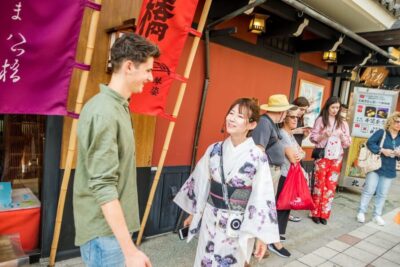
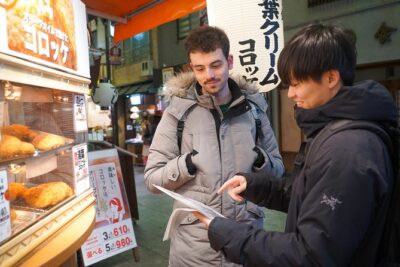
Nishiki Market Brunch Walking Tour (7 Tastings + Brunch)
Read our review →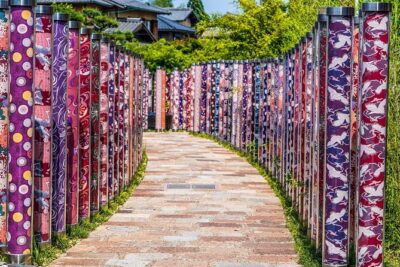
Kyoto Arashiyama Walking Tour: Bamboo, Monkeys, Gardens & Secrets
Read our review →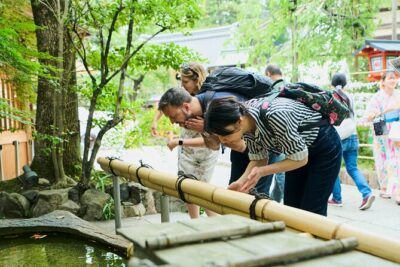
Kyoto Gion: 2-Hour Geisha Culture & History Walking Tour
Read our review →
Browse the lists this tour appears in