
Review · BELFAST
Belfast: Best of Belfast History, Culture & Art Walking Tour
Belfast’s story is much bigger than the Titanic and the Troubles. This three-hour walk connects medieval beginnings, linen wealth, Victorian buildings, punk, Irish music, public art and modern Belfast, with local guides who know how to make streets speak. The small historic Entries are especially good at showing how much of the city’s past can sit just off the main road.
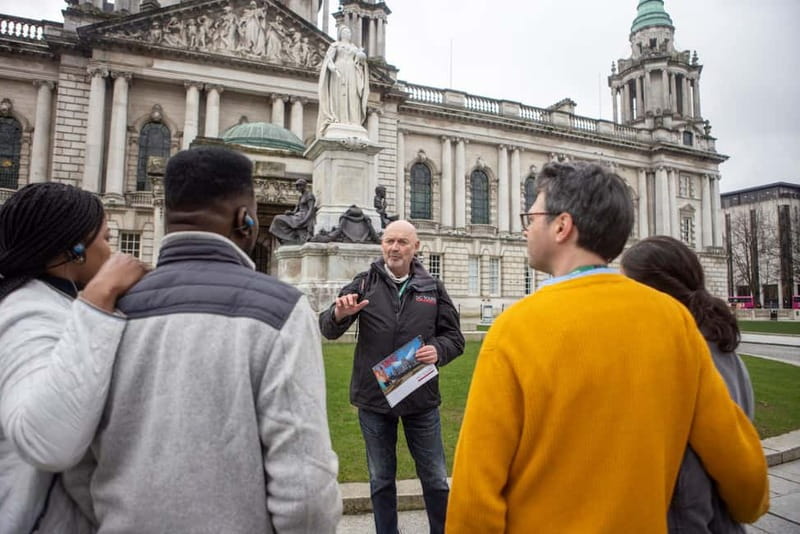
I like the tour’s broad view and its practical feel. You get a clear city orientation without walking an exhausting distance, and the headsets mean you can hear the guide even when the group pauses on a busy street. Guides including Mark, Steve, James, Chris, Mylie and Colin have been praised for warmth, humour and a calm treatment of difficult history.
The main consideration is pace. Less than two miles sounds easy, and it is not a strenuous walk, but three hours is a long time to spend standing outdoors. One person felt the tour ran too long and missed some highlights, so this suits you best if you enjoy stories and discussion more than a quick checklist of sights.
Key points to know before booking
- Fourteen stops in under two miles: You cover central Belfast at an easy pace, with plenty of time for stories.
- A wider story than the Troubles: Religion and conflict receive context, but so do industry, trade, music, reform and everyday life.
- The historic Entries: These narrow lanes reveal details many people miss while walking between bigger sights.
- Headsets are supplied: You can follow the guide clearly without crowding around each stop.
- A useful first-day tour: Expect suggestions for food, pubs, music, shops and free things to do later.
- Rain does not cancel the walk: Bring comfortable shoes and weather-ready clothing.
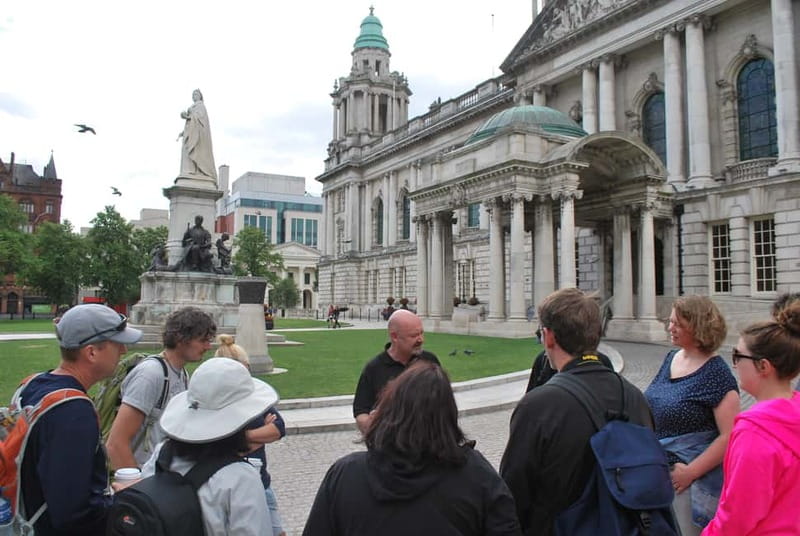
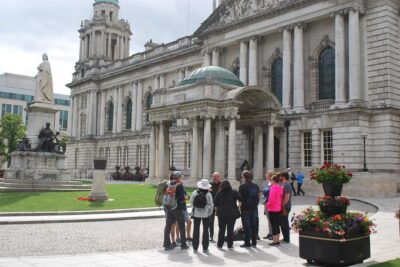
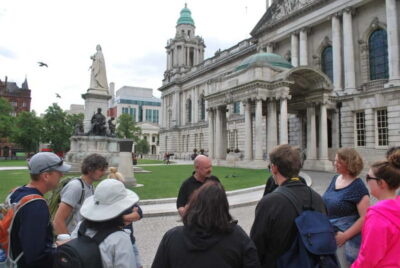
Starting at Belfast City Hall
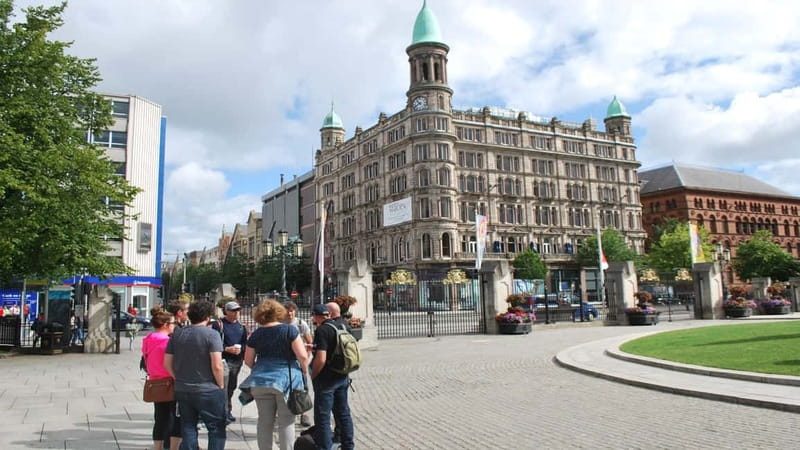
The tour begins at the front gates of Belfast City Hall in Donegall Square North. Look for a guide wearing a black jacket or T-shirt with the DC Tours logo on the left breast.
This is a sensible meeting point for a first visit. City Hall gives you a central reference point, and the walk soon spreads into parts of Belfast that are easy to pass without understanding. You are not simply shown a building and sent on your way. The guide uses the streets around it to explain how Belfast grew from a river settlement into an industrial city with global connections.
The guides bring different personalities to the same broad subject. Mark is often praised for keeping information clear and well judged. Steve is known for humour, energy and a strong command of Belfast’s past and present. James has a friendly, personal style, while Chris is especially good at stories and small details. Mylie and Colin have also been singled out for clear, engaging delivery.
You cannot normally request a particular guide, so treat these names as examples of the style you may encounter, not a promise. The common thread is a local voice rather than a dry recital of dates.
More History Walking Tours in the UK
- A History of Terror – Belfast City Centre Walking Tour
★ 5.0 · 2,883 reviews - Edinburgh: Old Town History and Tales Walking Tour
★ 4.8 · 2,361 reviews - Old Town Walking Tour History and Tales in Edinburgh
★ 5.0 · 2,168 reviews
How Belfast grew through trade and industry
Early in the walk, you get the framework needed to understand the city. Belfast began as a small settlement by the River Lagan, then changed quickly as trade and industry brought money, workers and ambition.
The linen trade is a key part of that story. Belfast’s industrial growth shaped its buildings, streets and social structure, and the guide connects those forces to the people who lived and worked here. That matters because grand façades can otherwise look like isolated decoration. On this walk, Victorian architecture becomes evidence of a city trying to announce its success.
You hear about merchants, reformers, rebels, artists and other people who helped shape Belfast. The approach gives attention to citizens rather than only famous landmarks. Small acts of kindness and ordinary lives are part of the story too, which helps keep the city from feeling like a museum of powerful men and major events.
This is one of the tour’s strongest features. You are given enough detail to understand the main themes, but the guide does not try to unload every fact in Belfast’s past. Several guides have been praised for offering just enough information to remember, rather than showing off.
The Entries and the details beside the main streets
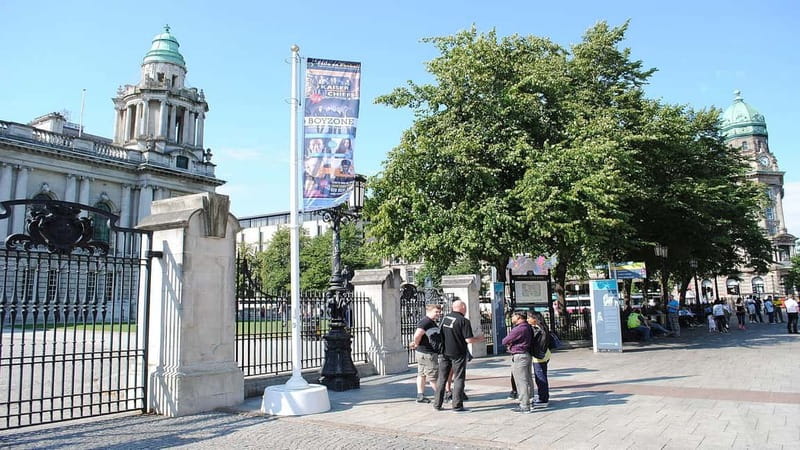
Belfast’s historic Entries are narrow lanes and passages that many people would walk past without a second look. The tour points them out and explains why they matter, turning small gaps in the city plan into clues about older Belfast.
These lanes are valuable because they bring the history down to street level. Grand civic buildings tell you how a city wanted to present itself. The Entries suggest how people moved through it, worked in it and found shortcuts through its older quarters.
The walk also draws attention to architectural details that are easy to miss. You may see Victorian grandeur beside newer designs, with the guide explaining how each period reflects a different idea of Belfast. Modern architecture and public art are not treated as decoration added after the history ended. They show a city still changing its public identity.
This part of the tour rewards curiosity. If you like looking above shopfronts, checking old doorways or wondering why a lane has its name, you will get more from it than someone focused only on taking photos of major buildings.
Cathedral Quarter, music and the creative city
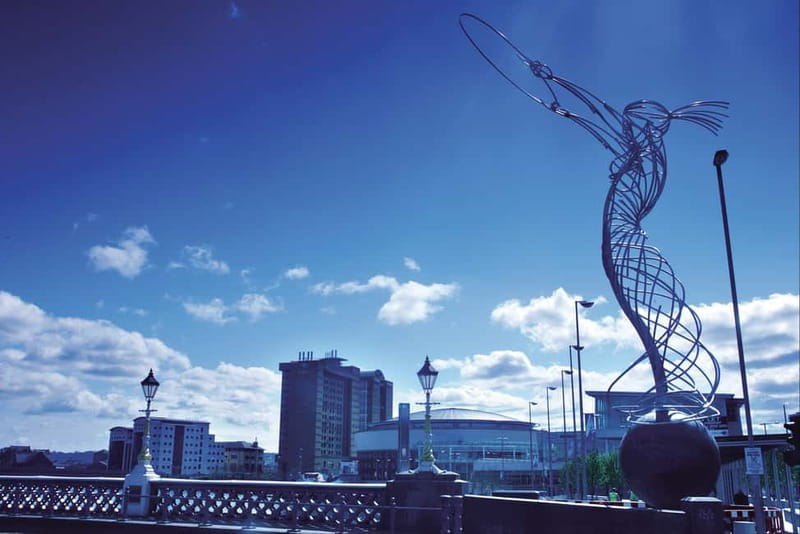
The Cathedral Quarter is one of the central stops and one of the clearest examples of Belfast’s newer cultural life. The guide explains how this part of town became associated with art, music, nightlife and creative work.
The tour includes local music culture, including where to find good Irish traditional music. It also explains why punk matters in Belfast. That is a useful correction to the idea that the city’s culture can be reduced to one musical tradition or one political story.
The mix is practical as well as historical. Guides offer suggestions for places to eat, drink, shop and hear music, and some have included advice on free things to do. I would make a note on your phone as you walk. Recommendations are easier to use when you are already standing in the part of town being discussed.
A short café and comfort break has been included on some outings. It is a smart touch during a three-hour walk, especially in poor weather, though the exact stop can vary. The break also gives you a chance to ask questions without trying to keep up with the group.
Same streets, a different guide:
- Magical London: Harry Potter Guided Walking Tour
★ 4.7 · 22,044 reviews - Edinburgh: Harry Potter Magical Guided Walking Tour
★ 4.8 · 11,944 reviews - Edinburgh Castle: Guided Walking Tour with Entry Ticket
★ 4.7 · 11,699 reviews - Underground Vaults Walking Tour in Edinburgh Old Town
★ 4.5 · 8,506 reviews
The Waterfront and the River Lagan
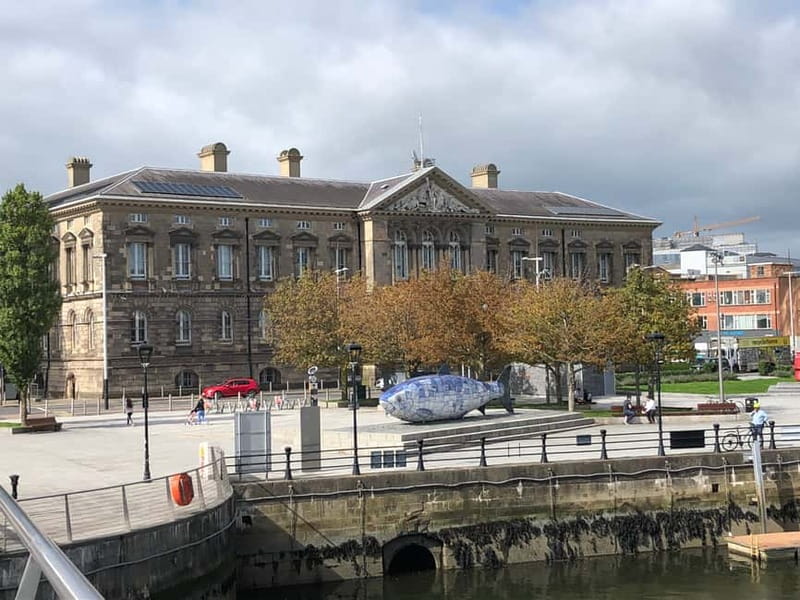
The route includes Belfast’s Waterfront and the River Lagan, adding a different view of the city. Here, the story shifts toward trade, industry, movement and Belfast’s relationship with water.
This is also where the Titanic can be placed in a wider setting. The tour does not ignore Belfast’s most famous shipbuilding story, but it avoids making the entire city a prelude to Titanic Belfast. That balance is important. You learn why the subject matters while also seeing how it fits into Belfast’s industrial and social development.
The walk’s modern side appears here too, through public art and newer architecture. The guide uses these places to discuss how Belfast presents itself today. You are encouraged to notice the contrast between older industrial ambition and a more recent effort to create public spaces shaped by culture, design and civic life.
The Waterfront section may feel more open than the Entries and Cathedral Quarter. That change gives the three-hour route some variety, though wind and rain can make it feel exposed. Belfast weather is part of the bargain. The tour runs rain or shine, so a waterproof layer is a better idea than trusting a bright morning.
The Troubles, religion and a balanced account
The Troubles are covered, but they are not allowed to swallow the entire tour. You hear how religion, politics, social divisions and economic conditions shaped Belfast, along with the effects on ordinary people.
This subject requires care, and the tour’s value lies in giving context without turning the walk into a political argument. Guides have been praised for staying measured and neutral while explaining how Northern Ireland was established and how the conflict affected the city.
You may also hear about transgenerational trauma, meaning the way the effects of conflict can continue through families and communities. That adds a human layer without pretending that a short city walk can explain every part of the subject.
The treatment is best for visitors who want a foundation before choosing a more focused Troubles tour. If your main goal is murals, peace walls and conflict sites, this is not a specialist replacement. If you want to understand how the Troubles fit within a longer story of Belfast, it gives you a useful starting point.
Legends, famous citizens and modern Belfast
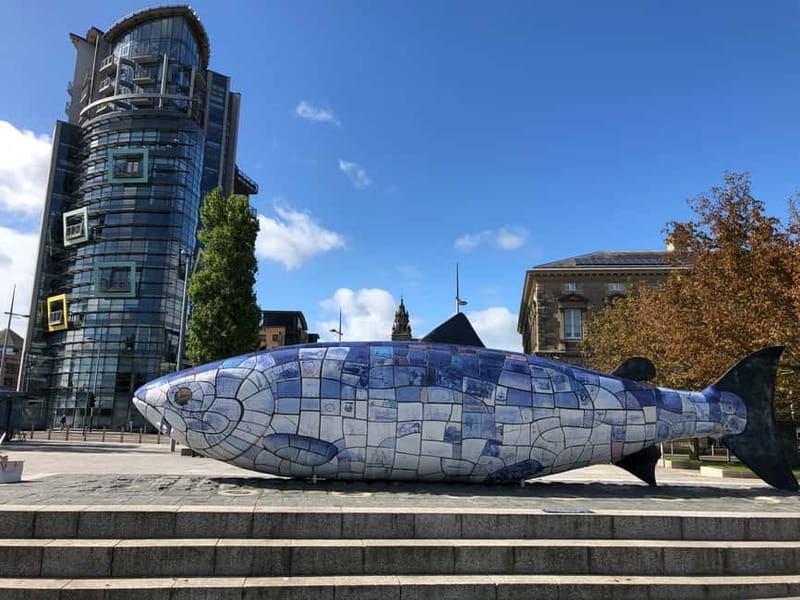
The tour includes local legends such as the Salmon of Knowledge. Details like this prevent the walk from becoming a straight line of industrial statistics and political dates. Legends show how a place tells stories about itself, even when those stories are symbolic rather than strictly historical.
You also hear about notable people connected with Belfast, from merchants and rebels to reformers and artists. The best guides link names to places and choices, so history feels connected to the pavement beneath you.
Modern references can appear too. One tour included Line of Duty characters brought into the conversation, an entertaining reminder that Belfast continues to appear in popular culture. The point is not celebrity spotting. It is seeing how the city’s identity is shaped by old stories, new art, television, music and the way local people talk about home.
This combination is why the walk works well for adults and teenagers who can handle light historical themes. It does not offer a children’s fantasy tour, but the stories, humour and short stops help hold attention better than a lecture would.
The headsets, walking distance and group experience
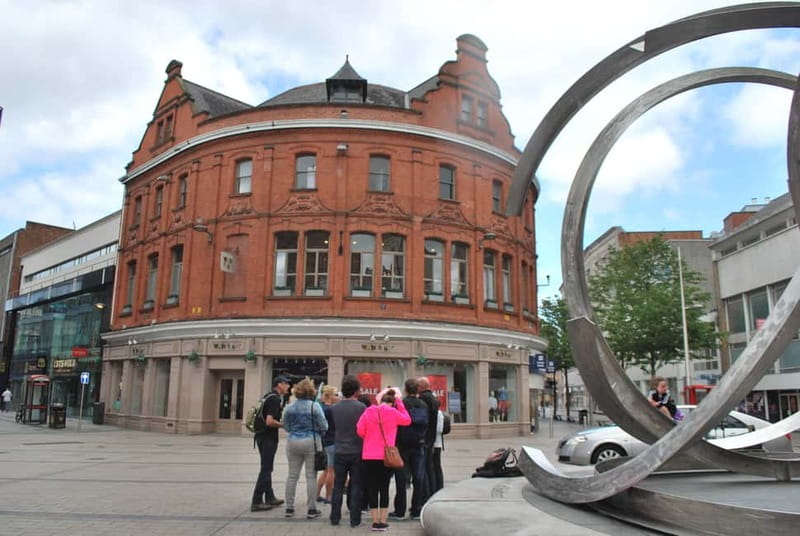
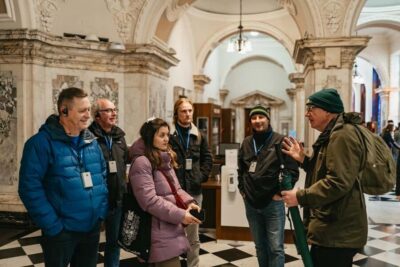
The supplied headsets are one of the most useful practical features. You do not need to stand shoulder to shoulder with the guide, and you are less likely to miss a sentence when traffic or wind cuts across the street.
Small groups have occurred, including one outing with eight people. Group size can affect how personal the experience feels, but the guides make an effort to answer questions and check that everyone is keeping up. One guide was praised for learning names, which is a small touch that can make a public tour feel less anonymous.
The full route is under two miles and includes 14 stops. That is not a strenuous distance, but the three-hour length comes from the talking, not the walking. You will stop often, stand for explanations and move at a pace designed for learning rather than exercise.
Wear comfortable shoes. Bring clothing suited to the forecast, and remember that the walk continues in rain. The tour is wheelchair accessible, though historic streets and outdoor conditions can still make comfort dependent on the day and the exact route.
Is $35 a fair price?
At $35 per person, the tour is good value if you want a substantial introduction to Belfast rather than a quick highlights stroll. You get three hours with a local guide, headsets, 14 stops and a route that joins architecture, culture, industry and politics.
The value improves if you take it early in your stay. Food, pub, music, shopping and sightseeing tips are more useful before you have already made all your plans. You also gain a map in your head, which can save time later.
It is less compelling if you dislike long explanations or already know central Belfast well. The tour is built around context and storytelling, so a person who wants only a few major photo stops may find it slow.
Free cancellation up to 24 hours before the start and the option to reserve now and pay later make it easier to fit into a changeable schedule. Those are booking conveniences, not reasons by themselves to choose the tour, but they reduce the risk when your plans are still moving.
Who should book this Belfast walk?
I would choose this tour for a first visit, especially if you want to understand Belfast before exploring it on your own. It is also a good fit for history and culture fans who like buildings, music, public art and local characters mixed together.
You should book it if you want:
- A broad account of Belfast from medieval beginnings to today
- Context for the Titanic and the Troubles without making either the whole subject
- Suggestions for food, drink, music, shops and free activities
- A manageable route with clear audio
- A guide who can answer questions and add local stories
I would look elsewhere if you want a dedicated Troubles tour, a museum visit or a fast sightseeing circuit. The tour’s strength is its range, and range means no single topic receives the depth of a specialist experience.
Should you book it?
Yes, if this is your first full day in Belfast or you want the city to make sense before you explore further. For $35, the combination of local storytelling, useful orientation, headsets and a route under two miles gives you a fair return.
Book with realistic expectations. You are signing up for three hours of standing, listening and walking in changing weather, not a rapid list of attractions. If that sounds right, this tour should leave you better prepared to enjoy Belfast’s buildings, music, food and difficult past with more understanding.
FAQ
Where does the tour meet?
It meets at the front gates of Belfast City Hall in Donegall Square North. Your guide wears a black jacket or T-shirt with the DC Tours logo on the left breast.
How long is the walking tour?
The tour lasts three hours. The full walk is less than two miles and includes 14 stops.
What language is the tour in?
The live tour is conducted in English.
Is the tour wheelchair accessible?
Yes, the activity is listed as wheelchair accessible.
Does the tour run in bad weather?
Yes. The tour takes place rain or shine, so bring weather-appropriate clothing.
What should I wear?
Wear comfortable shoes and clothing suited to the weather.
Are headsets included?
Yes. Headsets are provided so you can hear the guide clearly during the walk.
What parts of Belfast are included?
The tour visits the Cathedral Quarter, the Waterfront and historic Entries. It also covers architecture, public art, Belfast’s industries, music, Titanic, the Troubles and notable local people.
Can I cancel for a full refund?
Yes. You can cancel up to 24 hours in advance for a full refund. You can also reserve now and pay later.
More Cultural Walking Tours in the UK
- Savannah First Squares Culinary & Cultural Walking Food Tour
★ 5.0 · 3,229 reviews - Tokyo Tsukiji Fish Market Food and Culture Walking Tour
★ 5.0 · 3,184 reviews - New Orleans French Quarter, Voodoo and Culture Walking Tour
★ 4.5 · 2,961 reviews - Amsterdam: Cultural Highlights Walking Tour
★ 4.9 · 2,629 reviews
New routes in the UK
- Aberdeen City Centre Walking Tour (2pm)★ 5.0 · 217 reviews
- German London : The Ultimate Walking tour★ 4.8 · 400 reviews
- London: Medieval History Walking Tour from The Tower★ 4.9 · 318 reviews
- Oxford: Official University and City Walking Tour★ 4.7 · 618 reviews
- The Beatles London Walking Tour★ 4.2 · 147 reviews
- Stratford-Upon-Avon’s Town Walking Tour (10:30am & 2pm)★ 4.8 · 143 reviews
- The Sinister Side of Shakespeare’s Stratford Walking Tour★ 4.8 · 547 reviews
- Stratford-Upon-Avon: The Famous Walk Talk Show★ 4.9 · 342 reviews
Belfast Walking Tours, compared.
A History of Terror – Belfast City Centre Walking Tour
Read our review →
The Troubles Walls & Bridges Guided Walking Tour
Read our review →
Belfast Walking Tour with a Local – History & Craic
Read our review →Browse the lists this tour appears in