
Review · UK
Stratford-Upon-Avon’s Town Walking Tour (10:30am & 2pm)
Stratford-upon-Avon makes a strong first impression, but its story is easier to follow with someone who can connect the dots. This 90-minute town walk links Shakespeare’s homes, theatres, church, canals, and old streets with the less obvious story of how Stratford grew from a medieval market town into a theatre capital.
I like the relaxed pace and the way guides such as Peter, Rachel, Tabitha, and Jack mix solid history with local anecdotes. I also like that the walk helps you get your bearings before spending money on individual attractions. The main consideration is simple: you see the sights from outside, so you’ll need separate admission if you want to enter Shakespeare’s Birthplace, New Place, Hall’s Croft, or the theatres.
Key points to know before you book

- The route starts and ends at Gower Memorial, making it easy to find and convenient for continuing your day.
- Shakespeare is central, but not the whole story, with Viking invasions, medieval buildings, canals, theatres, and local life included.
- Peter is a frequent guide, praised for his humour, local insight, clear explanations, and willingness to answer questions.
- The pace suits a wide range of walkers, including an older visitor in her 80s and a 75-year-old who found the walk comfortable.
- The tour runs in rain or shine, so comfortable shoes and weather-ready clothing matter.
- At $16 per person, it is good value if you want a useful town orientation before choosing which paid sights to visit.
Starting beside the River Avon at Gower Memorial

Meet your guide at Gower Memorial in Bancroft Gardens. Look for an orange jacket or lanyard. This clear meeting point beside the river is much easier than trying to find a guide among the town’s busy streets, and the tour returns here at the end.
The memorial itself gives you an immediate introduction to Stratford’s Shakespeare connection. From here, you are close to the river, the theatres, the canal area, and the central streets, so the walk begins with the town’s main parts within easy reach.
The guide sets the tone early. Peter is often mentioned by name, but the guide may also be Rachel, Tabitha, or Jack. The best descriptions of their style point to a friendly, conversational walk rather than a formal lecture. You can ask questions as you go, and guides have been willing to spend extra time when the group is interested.
That matters because Stratford can feel like a collection of separate Shakespeare attractions. This opening helps you see the town as one connected place. You learn where the river, historic centre, theatre district, canal basin, and main shopping streets sit in relation to one another.
More Walking Tours in the UK:
- Magical London: Harry Potter Guided Walking Tour
★ 4.7 · 22,044 reviews - Edinburgh: Harry Potter Magical Guided Walking Tour
★ 4.8 · 11,944 reviews - Edinburgh Castle: Guided Walking Tour with Entry Ticket
★ 4.7 · 11,699 reviews
Shakespeare’s Birthplace and Henley Street
The route continues toward Shakespeare’s Birthplace, one of the town’s most important addresses. The tour gives you the setting and context, but entry to the house is not included. That separation is useful: you can decide later if you want to pay for the full interior visit or simply enjoy the exterior and move on.
Henley Street adds a lively contrast to the more solemn Shakespeare sites. It is one of the best-known streets in Stratford, and the preserved buildings help explain why the town attracts people interested in historic architecture as much as theatre fans.
You should expect several stops where the guide talks rather than walks. This keeps the pace manageable and gives you time to look closely at building fronts, notice details above street level, and take photographs. It also means the tour does not feel like a forced march from one address to another.
One useful feature is the practical advice that can come out of these early stops. Peter has helped people decide which attractions to return to and has suggested places to eat and drink. If you are visiting for a full weekend, take notes when the guide points out anything you want to revisit.
Holy Trinity Church and the Stratford of Shakespeare’s time
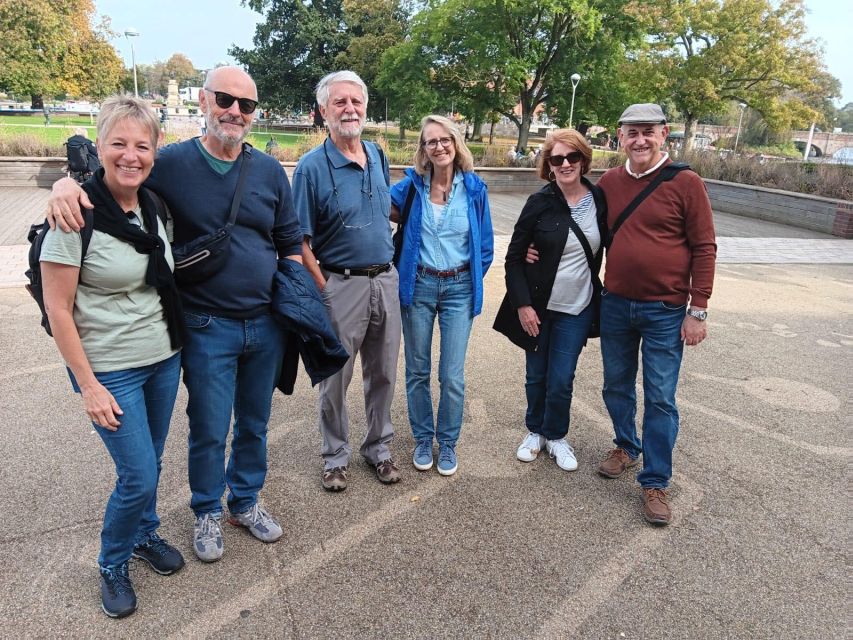
Holy Trinity Church is one of the emotional high points of the route. Shakespeare was baptised and buried here, and the church sits at the end of a long, tree-lined approach that gives the visit a calmer feel than the central streets.
The walk does not include admission details for the church, and the main purpose here is to place Shakespeare in the town where he lived and worked. The setting helps balance the commercial side of Stratford. Instead of seeing only famous names and ticketed attractions, you get a sense of the town’s older religious and civic life.
The route also reaches Hall’s Croft, associated with Shakespeare’s daughter Susanna and her husband, John Hall. Like the Birthplace and New Place, it is a separate attraction rather than part of the walking tour. From the outside, though, it helps broaden the story beyond Shakespeare himself.
This is where the tour’s mix of history works well. You get the playwright, his family, the church, and the town around them. A guide who can explain those links makes the streets more meaningful than a simple checklist of photo stops.
New Place, the Almshouses, and Stratford’s quieter corners
Shakespeare’s New Place marks the site of the home where Shakespeare spent his later years. The original building is gone, but the location remains important. The guide helps you understand why it matters without asking you to treat every stop as a grand monument.
The Almshouses offer a change of subject. Historic almshouses are a reminder that Stratford’s story includes charity, housing, and ordinary town life, not just famous residents. This is the sort of stop you could easily miss if you followed only the main Shakespeare signs.
The tour also aims to show lesser-known corners and surprising local stories. Exact tales can vary with the guide, but the strength of the walk lies in the human details: anecdotes, unusual facts, and explanations of how the town changed over time.
The best guides keep these stories short enough to remember. One visitor described the commentary as clear and easy to absorb, with facts delivered without becoming too detailed. That is the right approach for a first visit. You leave with enough information to understand the town and enough gaps to encourage further reading.
Same streets, a different guide:
- Underground Vaults Walking Tour in Edinburgh Old Town
★ 4.5 · 8,506 reviews - London: The Original Jack the Ripper Walking Tour
★ 4.7 · 7,833 reviews - Oxford University Walking Tour With University Alumni Guide
★ 5.0 · 6,905 reviews - Edinburgh Castle: Guided Walking Tour with Entry Ticket
★ 5.0 · 5,540 reviews
From the Memorial Fountain to the Town Hall
The Shakespeare Memorial Fountain is another central landmark on the route. It is a convenient place to connect the public celebration of Shakespeare with the town’s everyday streets. Stratford has turned its most famous son into a major part of its identity, and the fountain helps show how that public image developed.
The Town Hall brings in the civic side of the story. Here, the focus moves from private homes and family connections to local government and public life. You begin to see Stratford as a working town, not simply an outdoor museum dedicated to one writer.
The tour’s balance is one of its main strengths. Shakespeare remains the thread running through the walk, but the guide also covers earlier periods, including ancient origins and Viking invasions. That wider frame keeps the commentary from becoming repetitive.
I would pay attention to how the guide describes the town’s changes over time. The route is not only about what happened in the sixteenth and seventeenth centuries. It also follows Stratford’s later rise as the home of the Royal Shakespeare Company, which transformed its theatre identity.
Canals, the Swan Theatre, and the Royal Shakespeare Theatre
The Canal Basin provides a useful pause from the historic centre. Canals helped shape trade and movement in Britain, and the basin gives Stratford another kind of atmosphere. It also reminds you that the town’s appeal is not limited to old houses and Shakespeare plaques.
From there, the route reaches the Swan Theatre and Royal Shakespeare Theatre. These are essential stops for understanding modern Stratford. The Royal Shakespeare Company helped turn the town into an international theatre destination, and the theatres remain central to its cultural life.
You should not expect a behind-the-scenes theatre visit. The tour is about orientation, history, and exterior views. If you plan to attend a performance, the walk can help you understand where the venues are and how they fit into the town before you arrive for the show.
The theatre section also makes the walk useful for visitors who are not Shakespeare specialists. You can enjoy the architecture, the river setting, and the town’s performance tradition without knowing every play. The guide’s job is to make the subject approachable rather than assume you already care deeply about Shakespeare.
Broad Street, Victoria Square, and Centenary Square
Broad Street is one of the most attractive parts of the central route. Walking here gives you a chance to admire preserved buildings while moving between the town’s major sights. The architecture is a major part of the experience, and the guide can point out details you might otherwise pass without noticing.
The walk also reaches Victoria Square and Centenary Square. These open public spaces help you understand the shape of central Stratford and make good reference points for later exploring. After the tour, you can return here easily while choosing a café, shop, theatre, or museum.
This is also where the practical value of the tour becomes clear. A map can show you where attractions are, but it cannot explain which streets connect naturally, which sights belong together, or where to return for a closer look. By the end, you should have a mental plan for the rest of your visit.
What the pace is really like over 90 minutes
The advertised duration is 90 minutes, though the walk may run slightly longer when questions are flowing or the guide wants to add something. That happened often enough to be useful, but you should still allow extra time afterward rather than schedule another attraction immediately.
The pace is steady, with frequent stops. Feedback from older walkers suggests that the route is manageable, and one visitor in her 80s found it comfortable. Another person aged 75 described walking a long way without noticing because the commentary kept the route interesting.
That said, this is still a walking tour. Wear comfortable shoes, especially if you plan to continue exploring afterward. Bring clothing suited to the weather because the tour operates in rain or shine. There is no hotel pickup, so you need to make your own way to Bancroft Gardens.
The tour is wheelchair accessible, which makes it a practical option for many visitors. The supplied information does not describe every surface or restroom arrangement, so anyone with specific mobility needs should confirm details before booking.
Is $16 good value in Stratford?
At $16 per person, this is a modest outlay for a local introduction lasting about an hour and a half. The value is strongest if you are new to Stratford and want to decide which paid attractions deserve your time and money.
The walking tour does not include entry to Shakespeare’s Birthplace, Holy Trinity Church, Hall’s Croft, New Place, or any theatre performance. That may disappoint you if you expect a full attraction pass. I see it differently: the lower price lets you choose your own follow-up visits instead of paying for sights you may not want.
The guide also adds value by giving current local suggestions. Peter has advised people about eating and drinking, while other guides have helped visitors work out what to do during a longer stay. That kind of practical information can save time and make the rest of your day easier.
Free cancellation up to 24 hours before the start and a reserve-now, pay-later option add flexibility. They are useful if your plans depend on weather or changing day-trip arrangements.
Who will enjoy this walk most?
I would choose this tour at the beginning of a Stratford visit. It gives you the layout before you commit to individual attractions, and you can return to the places that interest you most.
It suits:
- First-time visitors who want the main sights explained clearly.
- Shakespeare fans who want to connect homes, church, family, and theatre.
- Visitors with only a short stay who need an efficient overview.
- Families and mixed-age groups who prefer stories and stops over a long formal talk.
- Older walkers who want a steady route with regular pauses.
- People who enjoy local anecdotes, town history, and small details beyond the famous names.
It may be less suitable if you want a private tour focused only on Shakespeare’s work, or if you want to enter every major attraction during the same outing. The experience is an outdoor introduction, not a substitute for museum and house visits.
My verdict on Stratford’s town walking tour
I would book this as a first activity, especially at 10:30am. You get the rest of the day to revisit Shakespeare’s Birthplace, Holy Trinity Church, Hall’s Croft, New Place, or the theatres with a better sense of where you are and what each place means.
The strongest part is the guiding. Peter’s humour and local affection receive particular praise, while Rachel, Tabitha, and Jack are also described as friendly and well informed. Guide quality can vary from one departure to another, but the repeated pattern is clear: expect a personal, question-friendly walk rather than a dry recital.
Book it if you want a well-paced introduction for $16, local stories, and help planning the rest of your Stratford visit. Skip it only if you already know the town well or prefer to explore entirely alone. For most first-time visitors, the short route, central sights, and useful context make it money well spent.
FAQ
How long is the Stratford-upon-Avon walking tour?
The tour lasts 90 minutes, though it may run a little longer if there are questions or the guide adds extra commentary.
What time does the tour start?
The listed start times are 10:30am and 2pm. You should check availability for the date you want.
Where does the walking tour meet?
Meet at Gower Memorial in Bancroft Gardens. The guide will wear an orange jacket and/or lanyard.
Is the tour conducted in English?
Yes. It has a live English-speaking guide.
Are attraction entry tickets included?
No. The price includes the walking tour and guide only. Entry to sights such as Shakespeare’s Birthplace, Hall’s Croft, New Place, Holy Trinity Church, and theatre performances is not included.
Does the tour operate in bad weather?
Yes. The tour runs rain or shine, so bring weather-appropriate clothing and comfortable shoes.
Can I cancel the booking?
Yes. You can cancel up to 24 hours in advance for a full refund. A reserve-now, pay-later option is also available.
New routes in the UK
- Aberdeen City Centre Walking Tour (2pm)★ 5.0 · 217 reviews
- German London : The Ultimate Walking tour★ 4.8 · 400 reviews
- London: Medieval History Walking Tour from The Tower★ 4.9 · 318 reviews
- Oxford: Official University and City Walking Tour★ 4.7 · 618 reviews
- The Beatles London Walking Tour★ 4.2 · 147 reviews
- The Sinister Side of Shakespeare’s Stratford Walking Tour★ 4.8 · 547 reviews
- Stratford-Upon-Avon: The Famous Walk Talk Show★ 4.9 · 342 reviews
- Stirling: Daily Guided Walking Tour with a Local Guide★ 4.7 · 108 reviews
UK Walking Tours, compared.

Magical London: Harry Potter Guided Walking Tour
Read our review →

Edinburgh Castle: Guided Walking Tour with Entry Ticket
Read our review →
Underground Vaults Walking Tour in Edinburgh Old Town
Read our review →

Oxford University Walking Tour With University Alumni Guide
Read our review →
Tour for Muggles The Ultimate Harry Potter Walking Tour in London
Read our review →
Edinburgh Darkside Walking Tour: Mysteries, Murder and Legends
Read our review →Browse the lists this tour appears in