
Review · UK
Stratford-Upon-Avon: The Famous Walk Talk Show
Stratford-upon-Avon’s story is bigger than Shakespeare, and this walk makes that clear from the start. In 90 minutes, you trace 1,400 years of local history, from the town’s early settlers to the Tudor world that shaped Shakespeare’s England. Along the way, you pass buildings dating to 1269 and places tied directly to the playwright’s life.
I like the compact circular route, which covers the key sights without sending you marching across town. I also like the guides’ lively approach. Kate, Marcus, and Dwayne are repeatedly praised for clear storytelling, good humor, and the ability to answer questions without turning the walk into a lecture. The main drawback is the weather: the tour runs in rain or shine, and there are few chances to warm up on a cold day.
Key points before you book

- A 1.4-kilometre history lesson: The circular route includes about a dozen stops and finishes where it begins.
- Shakespeare beyond the birthplace: You see his home, schoolroom, church, taverns, and New Place, helping connect the man to the town.
- Buildings from 1269 onward: The Guild Chapel and nearby almshouses reveal how medieval and Tudor Stratford developed.
- Guides who keep it lively: Kate, Marcus, Dwayne, and Chris are praised for humor, warmth, and strong storytelling.
- Easy timing for a day trip: The 90-minute walk works well before or after a visit to the Royal Shakespeare Theatre.
- Accessible route: The walk is suitable for wheelchairs and mobility scooters, though weather-appropriate clothing and comfortable shoes still matter.
Starting beside the Royal Shakespeare Theatre
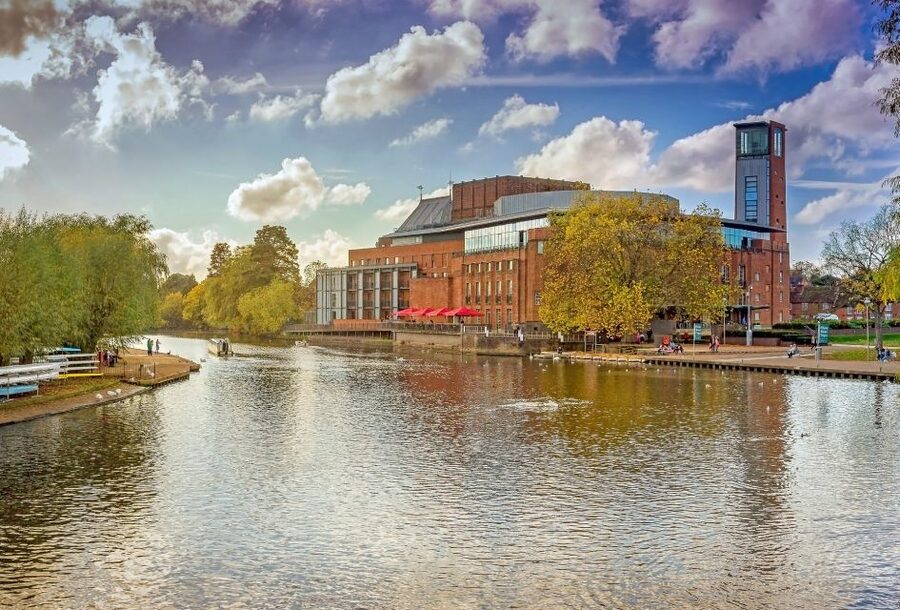
Meet outside the main entrance of the Royal Shakespeare Theatre, at the base of its large viewing tower. Do not go inside near the start time. Your guide waits outside with a laminated WalkTalkShow.co.uk badge, and at busy times a red umbrella helps you spot the group.
This is a useful starting point. The theatre gives you an immediate link between Stratford’s historic past and its living Shakespeare tradition. You are not simply touring old houses. You are beginning beside a working cultural institution devoted to Shakespeare’s plays.
The route is circular, so you return to the same place at the end. That makes planning easy. You can leave luggage or extra planning for later and focus on the walk itself.
The advertised duration is 90 minutes, although the timing can stretch when questions and stories take over. That is worth noting if you have a tightly timed theatre booking. The walk is not a race, but some groups have found the pace fairly brisk. Comfortable shoes are a must.
More Walking Tours in the UK:
- Magical London: Harry Potter Guided Walking Tour
★ 4.7 · 22,044 reviews - Edinburgh: Harry Potter Magical Guided Walking Tour
★ 4.8 · 11,944 reviews - Edinburgh Castle: Guided Walking Tour with Entry Ticket
★ 4.7 · 11,699 reviews
The Market Hall and Stratford’s working town
The first part of the route moves toward the Market Hall at Market Cross. This is where the tour begins to show Stratford as a real town rather than only a Shakespeare shrine.
Markets shaped daily life, trade, and local power. As you walk, you get a sense of how the town functioned before modern transport and tourism changed its streets. The guide places Shakespeare’s family within that setting, which makes his success easier to understand.
This approach is one of the tour’s strengths. Instead of treating Shakespeare as a floating literary genius, the walk shows him as a man born into a specific town, family, church, school system, and political age.
Shakespeare’s birthplace and Rother Street Market
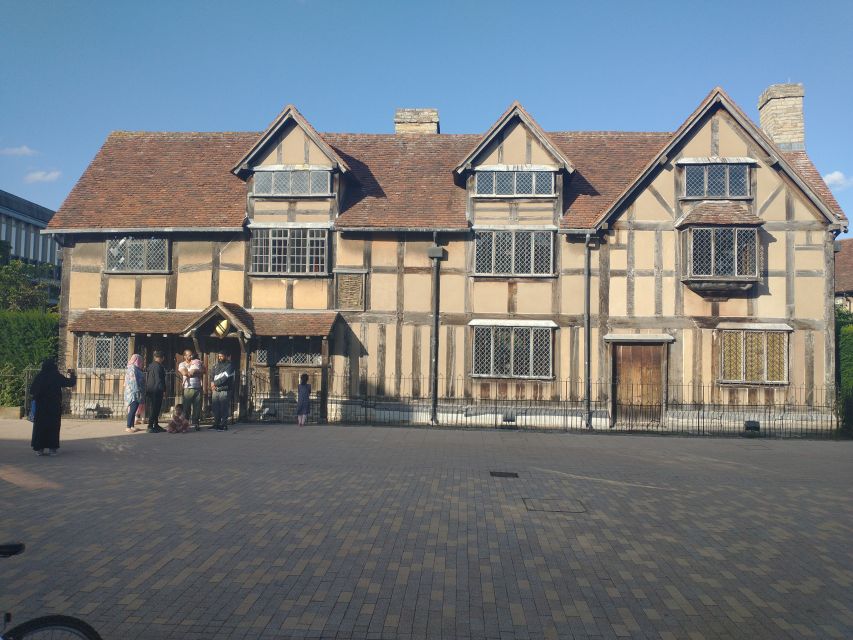
Shakespeare’s Birthplace is one of Stratford’s best-known sights, but seeing it from the street as part of a wider route gives it more context. The walk explains its connection to Shakespeare and his family while keeping the focus on the town around it.
You should not expect admission to the interior of the house. The guide leads the outdoor walking experience, and entrance fees, food, and drinks are not included. If you want to tour the interiors, you will need to arrange that separately.
The route continues toward Rother Street Market. Here, the emphasis shifts from one famous house to the town’s pattern of trade and movement. The walk remains grounded in visible places, so you are constantly looking at buildings and streets while hearing the story.
That makes this a good first activity in Stratford. You get your bearings quickly and learn which sites deserve more of your time afterward.
Bell Court and the Tudor world
At Bell Court, the guide turns your attention to the Tudor period. This is the era of Henry VIII through Elizabeth I, when religious and political changes altered daily life across England.
The tour explains the forces that shaped the country’s churches, schools, communities, and literature. The story is not limited to Shakespeare’s personal biography. It also covers the iconoclastic changes that affected religious buildings and helped reshape English life.
This section adds useful depth. Shakespeare’s plays came from a period of sharp change, and the guide connects those changes to the streets around you. You begin to see why questions of power, faith, monarchy, family, and social order appear so often in his work.
The outdoor format suits this material. You move through the same town where those changes played out, rather than hearing the period described in a sealed room.
Same streets, a different guide:
- Underground Vaults Walking Tour in Edinburgh Old Town
★ 4.5 · 8,506 reviews - London: The Original Jack the Ripper Walking Tour
★ 4.7 · 7,833 reviews - Oxford University Walking Tour With University Alumni Guide
★ 5.0 · 6,905 reviews - Edinburgh Castle: Guided Walking Tour with Entry Ticket
★ 5.0 · 5,540 reviews
History Corner and John Harvard’s birthplace
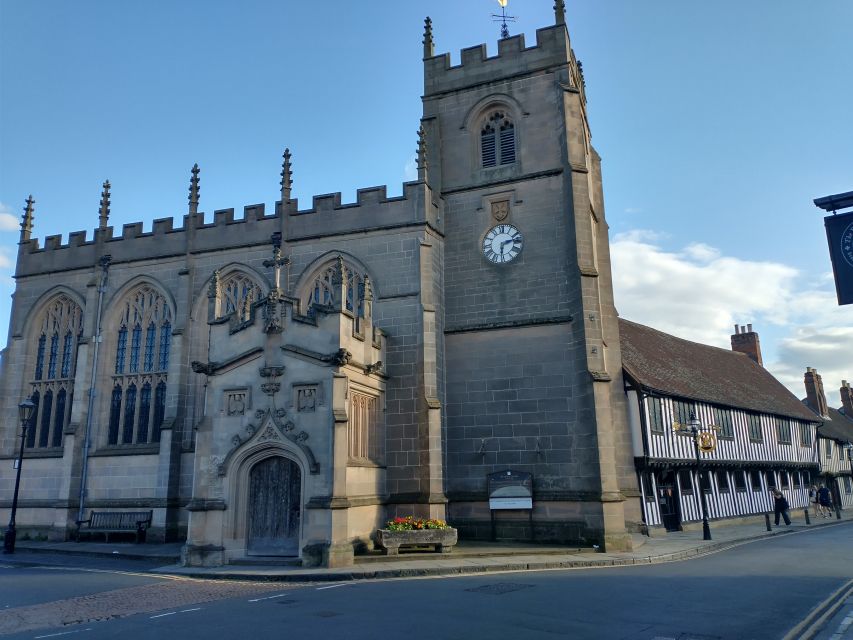
One of the most memorable stops is the area called History Corner, near the Town Hall. From one corner, you can see buildings that span roughly five centuries.
That concentration is unusual and makes the history easy to read. Instead of visiting isolated monuments, you can compare different periods within a few steps of one another. The guide points out the house where John Harvard, later associated with the founding of Harvard University, was born in 1607.
This detail widens the story beyond Shakespeare. Stratford was connected to people and events with influence far beyond Warwickshire. It also gives you a useful reminder that famous places often contain several stories at once.
The stop works especially well for anyone interested in architecture or urban history. You can see how timber-framed buildings, civic structures, religious sites, and later changes sit close together.
New Place and Shakespeare’s life after London
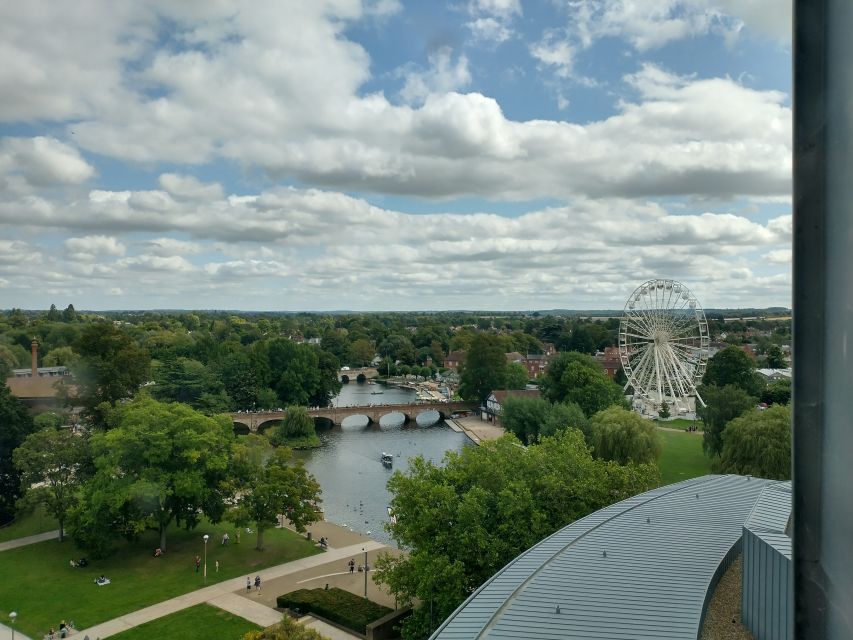
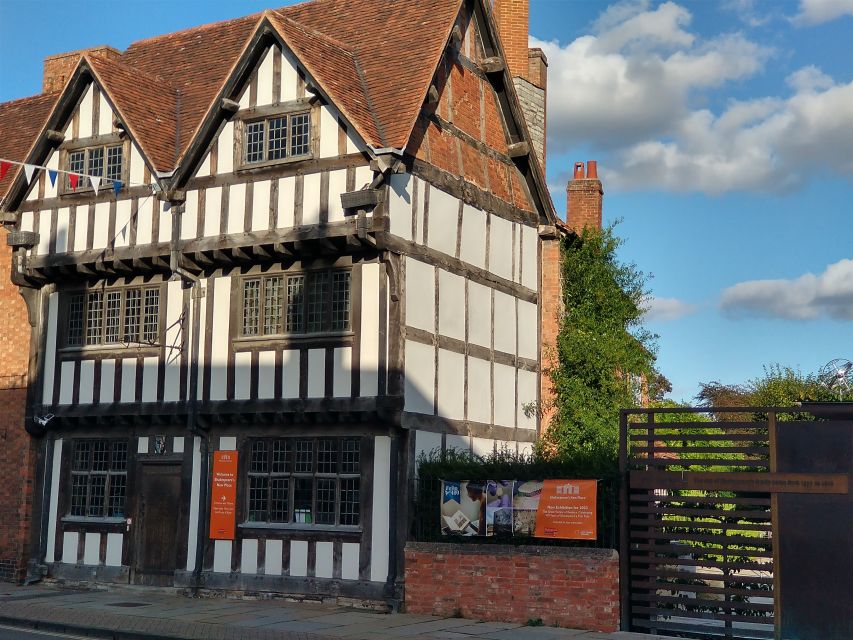
The tour then reaches Shakespeare’s New Place. This was Shakespeare’s home later in life and helps balance the more familiar story of his birth.
Shakespeare is often presented through the narrow frame of birthplace, childhood, and literary fame. New Place shifts the focus to his return to Stratford and his standing in the town. It gives you a clearer sense of the connection between the playwright’s London career and his Warwickshire home.
The stop also helps explain why Stratford remains so closely tied to Shakespeare. His relationship with the town did not end when he left to pursue his career. His family, property, church, and local reputation remained part of Stratford’s story.
Again, this is primarily an outdoor viewing stop. If you want a detailed museum-style treatment of Shakespeare’s possessions or manuscripts, you will need other attractions as well.
The Guild Chapel, dating from 1269
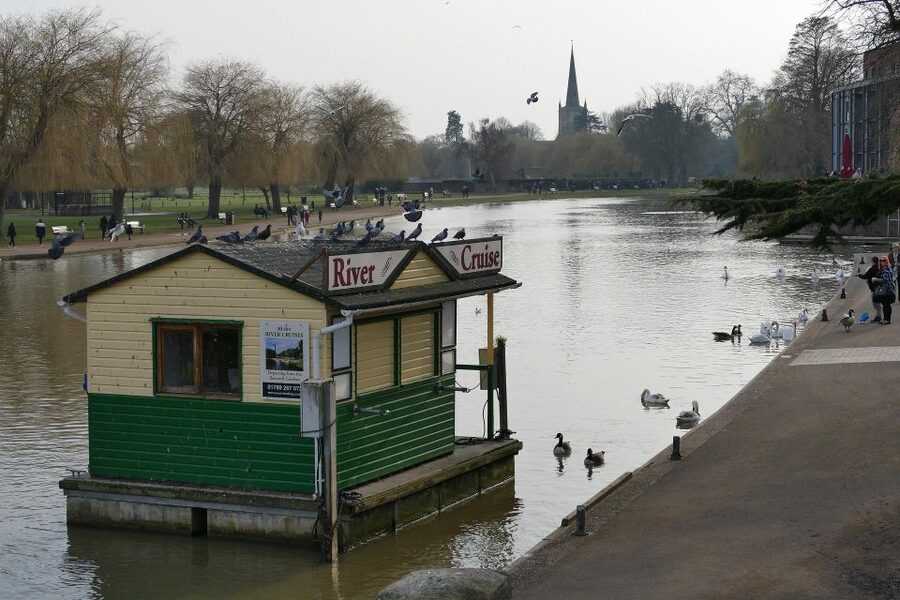
The Guild Chapel is one of the most important stops on the route. Its chapel dates from 1269, and the Guild of the Holy Cross held power in Stratford for centuries.
This is where the walk reaches farthest back before Shakespeare. The chapel helps you understand how religious institutions also acted as centers of civic influence. Its story continues through the upheavals of Henry VIII and his successors, when religious reform and destruction affected churches across England.
The guide also points out the early 16th-century almshouses built by the Guild. Together, the chapel and almshouses show how one organization shaped the town’s religious, social, and political life.
You may find this stop especially rewarding if you want more than a greatest-hits tour of Shakespeare’s homes. It gives the town a longer timeline and shows that Stratford was already an established center before Shakespeare was born.
Shakespeare’s schoolroom and KES
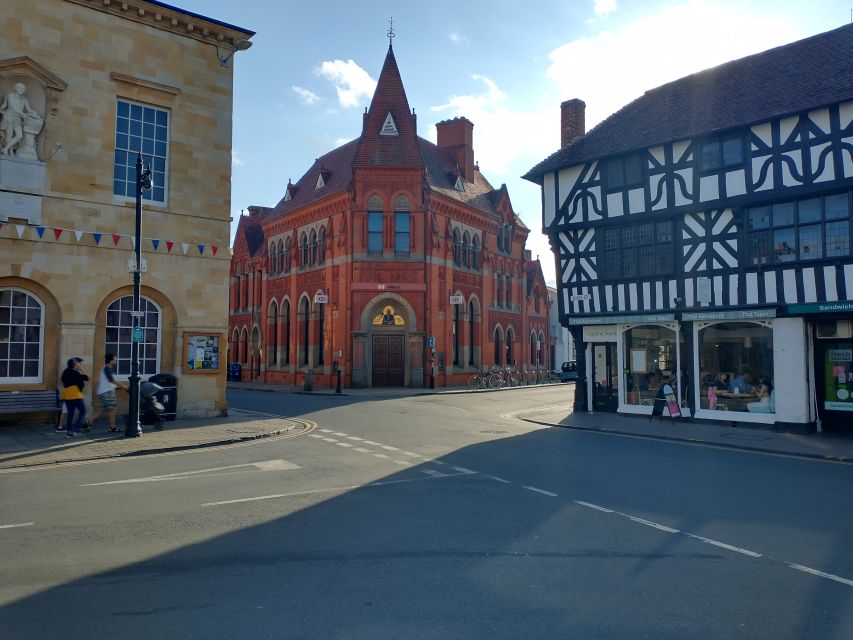
Next door is Shakespeare’s schoolroom, followed by the building associated with what is now KES. These stops bring the playwright’s education into view.
A schoolroom can tell you a great deal about the world behind the plays. Education, Latin, religion, discipline, and classical texts all formed part of the Tudor setting. The guide uses the buildings to explain how Shakespeare’s early surroundings may have shaped his later work.
You are not simply being shown a birthplace and a burial place. You are following a life through important stages: family, school, work, property, church, and local society.
The route is short enough to keep the information manageable. One guide is praised for presenting facts at a steady pace without giving too much at once. That balance matters because Stratford offers a lot of names, dates, and connections in a small area.
The old taverns and the Swan Theatre
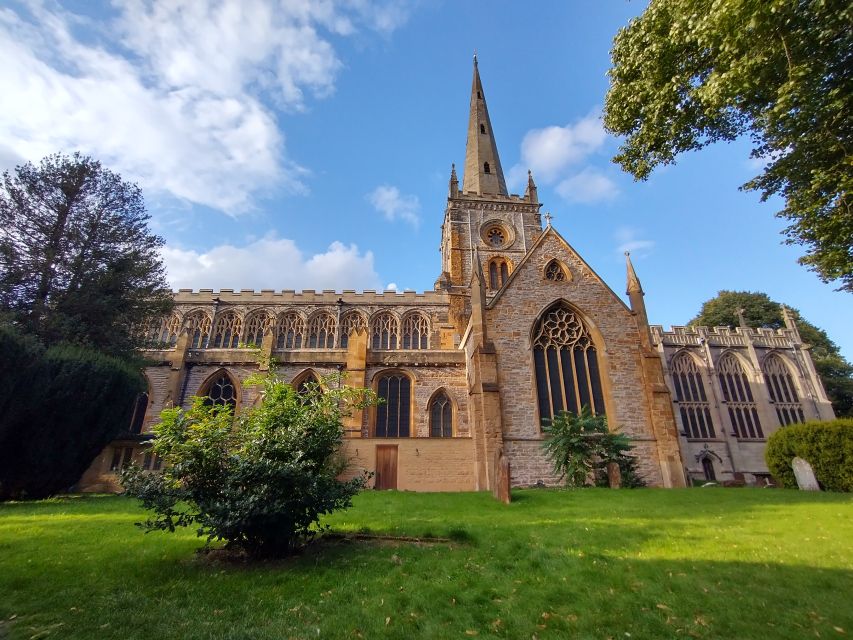
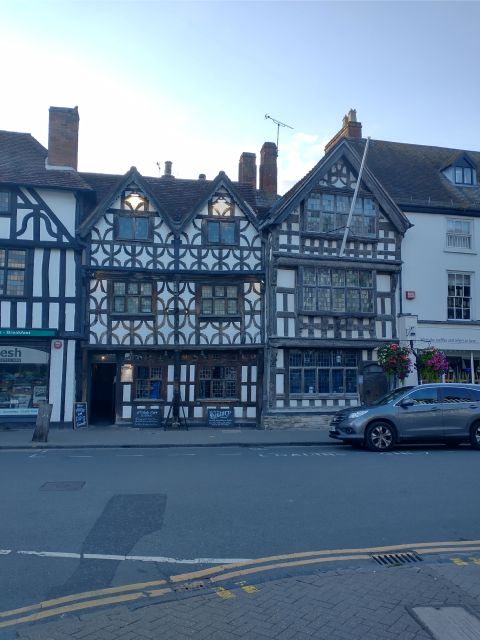
The route includes surviving taverns that served Shakespeare and his friends in the late 16th century. These buildings help turn the past into something more ordinary and human.
Shakespeare’s Stratford was not made only of churches, schools, and grand houses. People ate, drank, argued, met friends, and conducted business in taverns. Seeing places that still serve a similar purpose today creates a direct link between Tudor daily life and modern Stratford.
The guide may also point out an interior mural at the Swan pub, discovered during renovation. This is a small detail, but it shows why a local guide can add value. You might walk past a pub without realizing that its walls contain a piece of the town’s past.
The route then reaches the Swan Theatre before returning to the Royal Shakespeare Theatre. The two theatres reinforce Stratford’s continuing relationship with Shakespeare, while the older taverns remind you that his world was not only literary or ceremonial.
The River Avon and the final walk back
The route includes scenic views toward the River Avon, adding a quieter stretch to the town-center walk. The river gives you a break from close-packed historic buildings and helps explain Stratford’s setting.
This is not a countryside hike. Most of the experience focuses on streets, buildings, and public spaces. Still, the combination of water, gardens, shops, and old architecture keeps the walk varied.
The final return to the Royal Shakespeare Theatre makes the route simple to remember. You can continue with a theatre performance, visit another attraction, have lunch, or use the new orientation to explore independently.
Guide style, pace, and group experience
The guide is the heart of this activity. Kate is praised for infectious enthusiasm and for bringing Shakespeare, his family, and the Tudor period to life. Marcus is noted for clear explanations, historical detail, and jokes that keep the walk relaxed. Dwayne is described as friendly, entertaining, and willing to spend extra time answering questions.
Chris is also praised for making the history feel like an unfolding story. The exact guide depends on the departure, so you should not book expecting one named person unless the operator confirms it.
The tone is informative but not stiff. You can expect anecdotes, jokes, practical explanations, and time for questions. A few guides have continued beyond the scheduled 90 minutes when the group wanted more detail.
That flexibility can be a benefit, but it also means the finish time may not be exact. If you have a train, meal reservation, or theatre curtain to catch, leave a little space.
The route covers just under 1.4 kilometres and is wheelchair and mobility scooter-friendly. The walk takes place outdoors, and the operator runs it in normal rain as well as fair weather. Bring a coat, suitable shoes, and clothing for the forecast. On cold days, the lack of sheltered pauses may be uncomfortable.
Is the $16.16 price good value?
At $16.16 per person, this is a reasonable price for a guided introduction to Stratford. You are paying for a live English-speaking guide, not admission to the houses, chapel, or museums.
The value comes from the connections. You can see many of these places on your own, but it is harder to understand how they fit together. The guide links Shakespeare’s life to the Guild, the Tudor Reformation, local trade, John Harvard, historic taverns, and the modern theatre scene.
For a first visit, I think the price works well. You cover the central sights in 90 minutes and can then choose which interiors deserve a separate visit. It is also a useful option for a day trip from London, since the tour gives you a clear overview without taking the entire day.
If you already know Stratford well, or mainly want to spend time inside Shakespeare’s houses, the walk may be less useful. In that case, put the money toward admission to the individual sites instead.
You can cancel for a full refund up to 24 hours before the activity, and the reserve-now, pay-later option makes planning easier if your schedule is still changing.
Who should book this Stratford walking tour?
I would choose this walk if you are visiting Stratford for the first time, want Shakespeare explained in context, or prefer a guide to a self-guided map. It suits couples, families with older children, theatre fans, history students, and anyone who wants a useful introduction before exploring alone.
It is also a strong choice if you have only a few hours. The short distance keeps the physical effort modest, while the number of stops gives you plenty of background.
You may want to skip it if you dislike outdoor tours in poor weather, need a completely fixed finish time, or want a private, in-depth literary seminar. The tour is a broad introduction, not a specialist examination of every play or manuscript.
Should you book the Famous Walk Talk Show?
Book it if you want Stratford’s major Shakespeare sites placed inside a much longer story. The best parts are the 1269 Guild Chapel, the five-century view around History Corner, Shakespeare’s schoolroom, the old taverns, and the way guides such as Kate, Marcus, and Dwayne connect those places to the playwright’s life.
Go prepared for changing weather and a walk that may run beyond 90 minutes if the conversation is lively. At $16.16, this is a practical first look at Stratford, especially before a Royal Shakespeare Theatre performance or a longer day of sightseeing.
FAQ
Where does the tour start?
Meet outside the main entrance of the Royal Shakespeare Theatre, at the base of the large viewing tower. The guide waits outside, so do not enter the building just before the start time.
How long is the walk?
The advertised duration is 1.5 hours, or 90 minutes. The route covers just under 1.4 kilometres and may last longer when the guide spends extra time answering questions.
Where does the tour finish?
The circular walk finishes back at the Royal Shakespeare Theatre, where it began.
Is the tour wheelchair accessible?
Yes. The route is described as wheelchair and mobility scooter-friendly.
What language is the tour in?
The live tour guide speaks English, and English is the only language listed for the activity.
Does the tour run in bad weather?
Yes. The walk operates in rain or shine and is canceled only when extreme weather creates a safety concern. Bring weather-appropriate clothing and comfortable shoes.
Are food, drinks, and hotel transfers included?
No. The price includes the guide only. Hotel pickup, hotel drop-off, food, and drinks are not included.
New routes in the UK
- Aberdeen City Centre Walking Tour (2pm)★ 5.0 · 217 reviews
- German London : The Ultimate Walking tour★ 4.8 · 400 reviews
- London: Medieval History Walking Tour from The Tower★ 4.9 · 318 reviews
- Oxford: Official University and City Walking Tour★ 4.7 · 618 reviews
- The Beatles London Walking Tour★ 4.2 · 147 reviews
- Stratford-Upon-Avon’s Town Walking Tour (10:30am & 2pm)★ 4.8 · 143 reviews
- The Sinister Side of Shakespeare’s Stratford Walking Tour★ 4.8 · 547 reviews
- Stirling: Daily Guided Walking Tour with a Local Guide★ 4.7 · 108 reviews
UK Walking Tours, compared.

Magical London: Harry Potter Guided Walking Tour
Read our review →

Edinburgh Castle: Guided Walking Tour with Entry Ticket
Read our review →
Underground Vaults Walking Tour in Edinburgh Old Town
Read our review →
Oxford University Walking Tour With University Alumni Guide
Read our review →
Tour for Muggles The Ultimate Harry Potter Walking Tour in London
Read our review →
Edinburgh Darkside Walking Tour: Mysteries, Murder and Legends
Read our review →Browse the lists this tour appears in