
Review · BELFAST
Belfast: Political Conflict 3-Hour Walking Tour
Belfast’s political story comes alive when two former participants in The Troubles guide you through the streets where they grew up. One guide explains the Republican and Nationalist experience around Falls Road, then another presents the Loyalist and Unionist view on Shankill Road.
I especially like the two-guide format, since you hear opposing memories in the places where events happened. I also like the chance to read Belfast’s murals with local context, rather than treating them as colorful photo stops. The main consideration is emotional: discussions may include extreme violence, and some viewpoints are strongly held.
Key points to know before you go
- Two communities, two guides: The tour is split between a Republican or Nationalist guide and a Loyalist or Unionist guide, with the lineup varying by date.
- Falls Road and Shankill Road: You walk about 4 kilometers through both neighborhoods, not just past a few central murals.
- Personal accounts: Guides may describe childhood memories, prison experiences, family injuries, and the way the conflict still affects daily life.
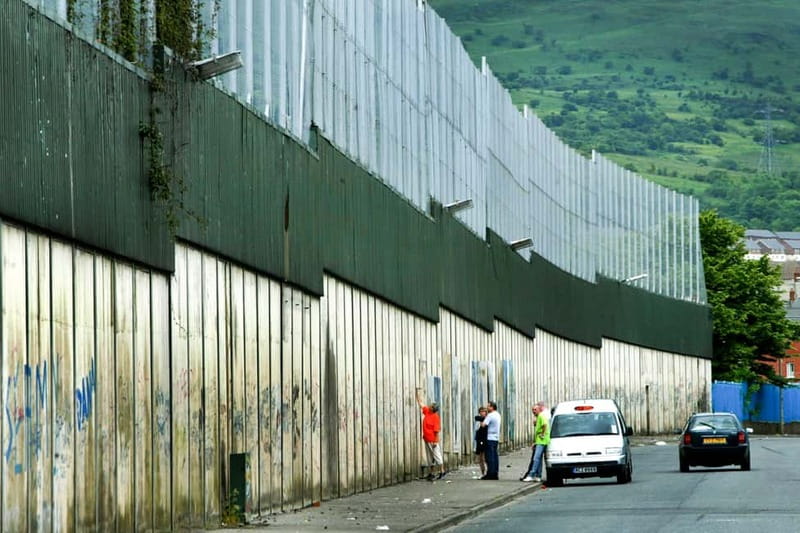
- Peace Wall access: You pass through electronically controlled gates and can sign the wall alongside messages from public figures including Bill Clinton and the Dalai Lama.
- No planned meal stop: There may be chances for a restroom break or a hot drink, but bring water and wear proper walking shoes.
- A serious afternoon: The tour is aimed at people aged 15 and over, at a guardian’s discretion, because the subject matter can be graphic and upsetting.
Why this Belfast walking tour feels different
Many Belfast tours explain The Troubles from a distance. This one puts you in West Belfast with people who were directly involved or deeply affected. That changes the tone. A mural is no longer just a painted wall, and a gate in the Peace Line is no longer just an urban curiosity.
The tour is built around two separate sections. You begin with a Republican ex-political prisoner at Divis Tower and walk through the Falls area. Later, you cross into the mainly Protestant Shankill district and meet a Loyalist ex-prisoner or someone connected with the security forces.
That structure is the chief reason to book. You are not handed one tidy version of a very untidy conflict. You hear how each community understood fear, identity, injustice, loyalty, and survival. The guides speak from personal positions, so this is not a neutral university lecture. It is a living account shaped by memory and conviction.
That can be uncomfortable, but it is also the point. The tour helps you understand why peace in Belfast is not simply the absence of shooting. The divisions remain visible in murals, memorials, flags, housing patterns, and the continued presence of gates and walls.
More Three-Hour Walks in the UK:
- Westminster 3 Hour Walking Tour and Visit of Churchill War Rooms
★ 5.0 · 967 reviews - Edinburgh: 3-Hour Guided Walking Tour
★ 4.8 · 773 reviews - Edinburgh: 3-Hour Historical Walking Tour in Italian
★ 4.7 · 734 reviews
Starting at Divis Tower and entering Falls Road
Meet in front of Divis Tower on Divis Street. This is a useful starting point because the tower is an unmistakable landmark and places you directly in the Republican side of West Belfast. Do not expect a long introduction in a hotel lobby or a coach ride. The story starts on the pavement.
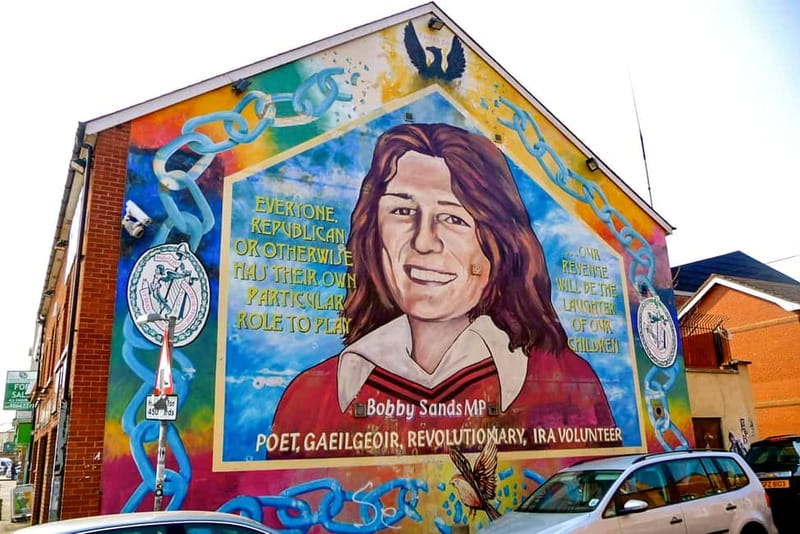
The first part follows Falls Road and nearby streets with a Republican guide. You learn about the community’s desire for a united Ireland and the experiences that shaped Nationalist opposition to British rule. The guide also explains how local people understood discrimination, policing, housing, voting rights, and the growth of resistance.
The strength here is local memory. A guide who grew up in the area can connect a mural, memorial, or street corner with events that a printed timeline cannot explain. Several guides who have led the tour, including names such as Robert, Jack, Peter, Gerard, and Paul, have been praised for speaking openly about their own pasts. The exact guide depends on the day.
The Falls section is not simply a political argument. It is also a walk through a working neighborhood, where the murals reflect community identity, international causes, remembrance, and changing political messages. You will see why Belfast is often described as having one of the world’s largest outdoor art galleries, but the paintings are not decoration alone. They are public statements.
Allow yourself to listen carefully here. The guide may speak with warmth and humor, then shift into descriptions of loss or prison. The change can be abrupt. That is one reason the tour is not ideal for young children.
Reading the murals instead of just photographing them
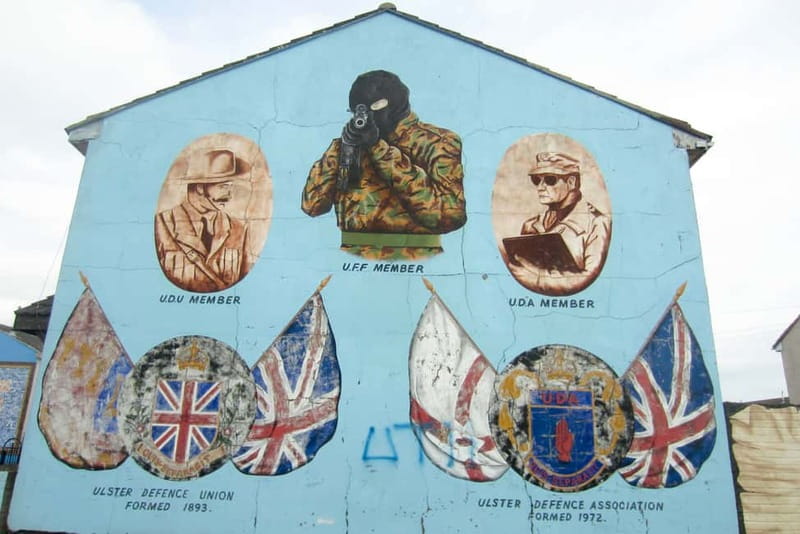
Belfast’s murals are easy to see and easy to misunderstand. A quick self-guided walk can leave you with photographs but little sense of what the symbols mean. The guide supplies the names, dates, causes, and local disagreements behind the images.
On Falls Road, murals often express Irish identity, Republican memory, solidarity with other political struggles, and the effects of state force. On Shankill Road, images focus on British identity, Loyalist history, military remembrance, and the defense of the union with the United Kingdom.
You should not expect every mural to be presented as settled fact. The guides are explaining their own community’s reading of the past. That is valuable, but it also means you should listen for tone and emphasis. One guide may stress oppression and civil rights, while the other gives more weight to threats against Protestant families and the fear of being forced into a united Ireland.
The most useful question to ask is not which mural is right. Ask what the image meant to people who lived beside it, and why it is still displayed. The answer helps you understand how memory remains part of everyday politics.
Crossing the Peace Line into Shankill Road
The transition between the two areas is one of the tour’s most striking moments. You pass through electronically controlled gates in the Peace Wall before entering the predominantly Protestant Shankill area.
This is not a dramatic border in the way a national frontier is. It is a city street with barriers, access points, and a history of separation. That ordinary appearance can make it more unsettling. You are looking at a reminder that two communities still need physical measures to manage contact.
On Shankill Road, the Loyalist guide explains the wish to remain part of the United Kingdom. The guide may be a former Loyalist political prisoner or an ex-member of the security forces from the area. You hear about British identity, loyalty to the Crown, community defense, and the fear produced by Republican attacks.
This section gives the tour its necessary tension. The second guide is not there to repeat the first speaker in different colors. The emphasis changes, and the emotional temperature may change with it. Some guides are highly expressive, while others are more reserved. That variation is part of the experience, though it can make the two halves feel uneven.
Listen for what the second account adds, not just what it contradicts. The conflict was not a simple argument between Catholics and Protestants. Religion often marked community identity, but the central questions involved sovereignty, national identity, civil rights, security, and control. A good guide helps separate those threads.
More Walking Tours in the UK:
- Magical London: Harry Potter Guided Walking Tour
★ 4.7 · 22,044 reviews - Edinburgh: Harry Potter Magical Guided Walking Tour
★ 4.8 · 11,944 reviews - Edinburgh Castle: Guided Walking Tour with Entry Ticket
★ 4.7 · 11,699 reviews - Underground Vaults Walking Tour in Edinburgh Old Town
★ 4.5 · 8,506 reviews
Peace Walls, memorials, and the unfinished present
The Peace Walls are more than a final photo stop. They show how the end of large-scale violence did not erase mistrust. The tour presents the ceasefire and peace process as an achievement, but not as a complete solution.
You get the chance to sign the wall and leave a message beside those associated with public peace efforts, including Bill Clinton and the Dalai Lama. It is a small act, but it gives you a moment to think about what you have heard. Keep it respectful. This is not a theme park attraction, and the wall is tied to painful memories for local people.
The walk also includes memorials and, depending on timing, places where the group may pause around significant sites. One practical point: the schedule can feel tight at some memorials or at the Shankill graveyard. If a particular site matters to you, ask your guide a question rather than trying to photograph every plaque.
The most important lesson is that the past has not disappeared. The violence has stopped on the scale seen during The Troubles, yet the political divide remains real. Some guides speak with hope about reconciliation and community support. Others sound less certain about how quickly trust can grow. You should expect both confidence and frustration.
What the three-hour format gives you
Three hours is long enough to cover the two neighborhoods without turning the experience into a rushed bus commentary. The total walking distance is about 4 kilometers, or 2.5 miles. That is manageable for most people who are comfortable on foot, but the subject matter and pauses make the afternoon feel fuller than the distance suggests.
The format also gives each guide time to develop a story. You are not simply receiving a list of dates. The guides connect political events with schooldays, family life, work, injuries, prison, and neighborhood change. That personal detail is what many people value most.
There is no scheduled food stop, and you should not count on a proper meal break. Some departures include opportunities for a restroom stop or a small shop where you can buy a hot drink or snack, but this is not guaranteed as a formal part of the program. Use the restroom before meeting and bring water.
Comfortable shoes are essential. Belfast weather can turn damp, and the walk takes place outdoors on ordinary city streets. An umbrella or waterproof layer is sensible. The tour is wheelchair accessible, though you should still consider the 4-kilometer route, street conditions, gates, and the need to remain with the group.
The tour starts at Divis Tower and ends on Lower Shankill Road. From there, you are about a 15-minute walk from the starting point. That matters when planning your day. You will not finish back at Divis Tower, so leave room for the walk onward.
Is $35 a fair price?
At $35 per person, the tour sits at a reasonable price for a three-hour guided experience with two specialist speakers. You are paying for more than transport between sights. The value comes from access to personal interpretation in the neighborhoods themselves.
A self-guided walk costs less, of course. You can see many murals and the Peace Wall without paying anything. But you will miss the background, the connections between sites, and the chance to ask a person who lived through the period how it felt.
A bus tour may cover more ground with less walking, but it cannot offer the same street-level exchange. The two-guide arrangement is especially useful for visitors who want to understand why the same event can carry opposite meanings.
The price feels strongest if you are interested in politics, modern Irish history, conflict resolution, or the way communities remember violence. If you only want colorful murals and quick photographs, this tour may feel too serious for the money.
How to handle the two perspectives fairly
The tour’s greatest strength can also be its main limitation. Two opposing guides do not automatically create a perfectly balanced account. Each person brings a community position, personal memories, and choices about what to emphasize.
That is not a reason to avoid the tour. It is a reason to listen with care. One recent account found that a Unionist explanation gave less attention to Republican grievances involving jobs, housing, and voting rights. Another guide placed more stress on reconciliation and hope. These differences show why you should treat the experience as two lived viewpoints, not a final verdict on the conflict.
You can ask respectful questions. Ask what changed after the peace process, which divisions remain, and how younger people see the area. Avoid treating either guide as a spokesperson for every person in the community. The tour works best when you remain curious without expecting a simple answer.
Who should book this experience?
I recommend it to adults and older teenagers who want to understand Belfast beyond the city center. It suits people who enjoy political history, oral history, murals, and serious conversations. It is also helpful early in a Belfast visit because it gives you context for what you will see elsewhere.
It may not suit children under 15, especially if they are sensitive to accounts of violence. The age guidance is left to a guardian, but I would take it seriously.
You should also think about your energy and mood. This is not a light afternoon activity. You may leave thoughtful, unsettled, or less certain than when you arrived. That is a fair result for a tour about a conflict that still shapes the city.
The English-speaking format is straightforward, and the walking pace allows time for questions. Still, city traffic can make it hard to hear at times. One useful improvement would be wireless microphones, especially for larger groups or noisy streets.
Should you book the Belfast Political Conflict Tour?
Book it if you want personal accounts, clear exposure to both Republican and Loyalist viewpoints, and a close look at the places where Belfast’s divisions remain visible. The two-part format gives you more than a standard mural walk, and the guides’ firsthand experiences make the subject immediate.
Skip it if you want a relaxed sightseeing stroll, a broad survey of Northern Ireland, or a tour with frequent food and restroom stops. You will walk several kilometers, hear difficult material, and encounter strong opinions.
For most people interested in Belfast’s modern story, $35 is a fair price for three hours of direct local perspective. Go with comfortable shoes, an open mind, and enough time afterward to think about what you heard.
FAQ
How long is the Belfast Political Conflict walking tour?
The tour lasts approximately three hours.
How far do you walk?
The route covers about 4 kilometers, or 2.5 miles.
Where does the tour start?
It starts in front of Divis Tower on Divis Street in Belfast.
Where does the tour finish?
It ends on Lower Shankill Road, about a 15-minute walk from the starting point.
Which neighborhoods does the tour visit?
The route includes Falls Road, Shankill Road, and the Peace Walls between the two communities.
Do I hear both Republican and Loyalist perspectives?
Yes. The experience includes two different perspectives, with one guide connected to the Republican or Nationalist community and another connected to the Loyalist or Unionist community.
Who leads the tour?
The guides are former political prisoners, former combatants, or, in some cases, former security force members. The names can vary by departure. Guides who have led recent tours include Paul, Jake, Jack, Mark, Robert, Peter, and Gerard.
Is the tour suitable for children?
It may not be suitable for children under 15 because the discussion can include extreme violence. The final decision is left to the guardian.
Is the tour wheelchair accessible?
Yes, the activity is listed as wheelchair accessible.
Can I cancel the booking?
You can cancel up to 24 hours before the tour for a full refund. Reserve now and pay later is also available.
New routes in the UK
- Aberdeen City Centre Walking Tour (2pm)★ 5.0 · 217 reviews
- German London : The Ultimate Walking tour★ 4.8 · 400 reviews
- London: Medieval History Walking Tour from The Tower★ 4.9 · 318 reviews
- Oxford: Official University and City Walking Tour★ 4.7 · 618 reviews
- The Beatles London Walking Tour★ 4.2 · 147 reviews
- Stratford-Upon-Avon’s Town Walking Tour (10:30am & 2pm)★ 4.8 · 143 reviews
- The Sinister Side of Shakespeare’s Stratford Walking Tour★ 4.8 · 547 reviews
- Stratford-Upon-Avon: The Famous Walk Talk Show★ 4.9 · 342 reviews
Belfast Walking Tours, compared.
A History of Terror – Belfast City Centre Walking Tour
Read our review →
The Troubles Walls & Bridges Guided Walking Tour
Read our review →
Best of Belfast History, Culture & Art Walking Tour
Read our review →
Belfast Walking Tour with a Local – History & Craic
Read our review →Browse the lists this tour appears in