
Review · NEW ORLEANS
New Orleans French Quarter, Voodoo and Culture Walking Tour
New Orleans voodoo is far more complicated than movie clichés about dolls and curses. This two-hour walk connects the subject to slavery, African traditions, jazz, local architecture, and figures such as Marie Laveau. You will also see Congo Square, Jackson Square, St. Louis Cathedral, and the former Storyville district.
I like the way the tour puts voodoo into historical context, and I like the manageable one-mile route. Guides such as William, Logan, Jimmy, and James are praised for strong storytelling and friendly conversation. The main drawback is that the tour may feel too calm or academic if you expect jump scares, dramatic rituals, or extensive cemetery access.
Key points to know before you book
- Voodoo with context: Learn how African traditions, slavery, music, and New Orleans life shaped the religion.
- A compact walking route: The tour covers about one mile at a leisurely pace over roughly two hours.
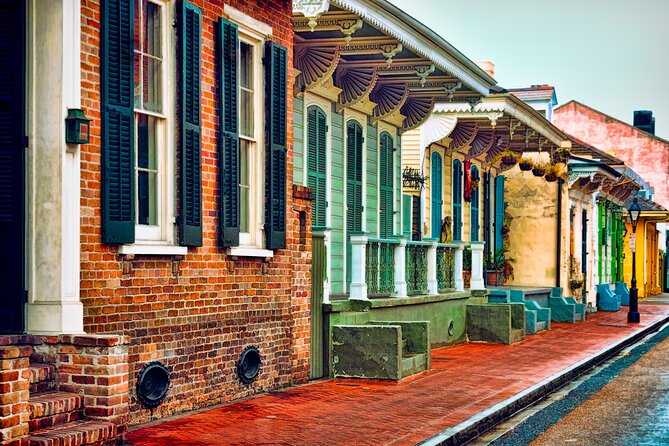
- Architecture is part of the story: See Creole townhouses, shotgun homes, Spanish and French influences, and entresol houses.
- Congo Square matters: Louis Armstrong Park provides a setting for understanding gatherings, music, dance, and spiritual practice.
- No cemetery entry: The official tour does not enter cemeteries, despite occasional confusion about this point.
- Best for curious adults and older children: It is informative and mildly mysterious rather than a full-on scare show.
What this New Orleans walk is really about
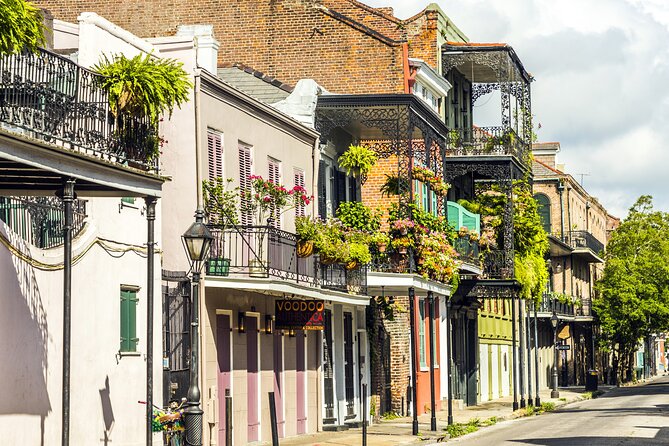
The title promises voodoo, but the tour is also a short introduction to how New Orleans was built and how its cultures met. You begin near the French Quarter and spend much of the walk looking closely at streets, buildings, public squares, and places tied to local traditions.
That broader approach is a strength. If you want to understand why New Orleans feels unlike other American cities, architecture and social history matter just as much as ghost stories. Your guide explains how French and Spanish influences appear in the Quarter, points out Creole townhouses, and identifies shotgun homes, a common Southern style from the 1860s.
The voodoo portion aims to correct common misunderstandings. You hear about rituals, spiritual figures, herbs, oils, amulets, and Marie Laveau. At Voodoo Authentica, you can look into a small shop devoted to ritual materials, giving the subject a physical setting rather than leaving it as a string of legends.
I would approach the tour with an open mind and realistic expectations. This is not presented as a staged ceremony, and it does not promise frightening encounters. It is best understood as a guided cultural walk with a supernatural edge.
More Cultural Walking Tours in New Orleans:
- Savannah First Squares Culinary & Cultural Walking Food Tour
★ 5.0 · 3,229 reviews - Tokyo Tsukiji Fish Market Food and Culture Walking Tour
★ 5.0 · 3,184 reviews - Amsterdam: Cultural Highlights Walking Tour
★ 4.9 · 2,629 reviews
Starting in the French Quarter
The meeting point is Witches Brew Gallery and Haunted Sanctuary at 311 Exchange Place, directly across from the Pelican Club Restaurant. Check-in begins 30 minutes before departure, and the guide leaves on time. That timing matters in the French Quarter, where a late arrival can quickly lose the group among narrow streets and busy sidewalks.
The route begins with the Quarter itself. You will pass buildings that show the city’s French and Spanish roots, along with Creole townhouses and shotgun homes. Your guide may point out an entresol house, a building with a partial floor between the ground and main levels, and a cloistered courtyard whose original purpose was practical rather than simply decorative.
This is one of the tour’s best features. You are not only looking at pretty façades. You are learning how people used these buildings and how New Orleans adapted to heat, crowded streets, commerce, and changing populations.
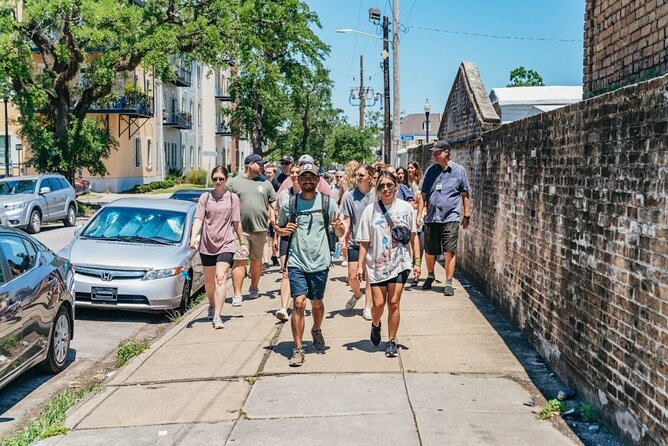
The route is about one mile, but allow the full two hours because the guide stops often to explain details and invite questions. Comfortable shoes are important. Bring water, especially in summer, when the heat can make a slow walk feel much longer.
Jackson Square and St. Louis Cathedral
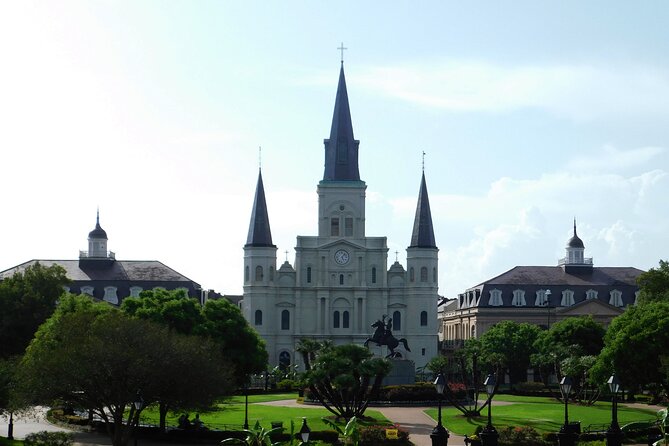
Jackson Square gives the tour a useful change of scale. Here, the guide discusses the earliest settlements in New Orleans and points out historic buildings around the square, including St. Louis Cathedral and early apartment buildings.
You will spend about 15 minutes at Jackson Square and another 10 minutes around the cathedral. That is enough time for an explanation and a close look, but it is not a formal cathedral tour. The attraction here is the way the guide connects the buildings to the city’s early development.
St. Louis Cathedral also introduces one of New Orleans’ recurring themes: destruction and rebuilding. You hear about the fire that burned much of the city and how those disasters influenced what survived and what was rebuilt. The story helps explain why the French Quarter contains such a mix of architectural styles.
If you are hoping to spend a long time inside the cathedral, this walk may feel brief. Its purpose is to give you context and point out details you can revisit later on your own.
Marie Laveau, ritual practice, and Voodoo Authentica
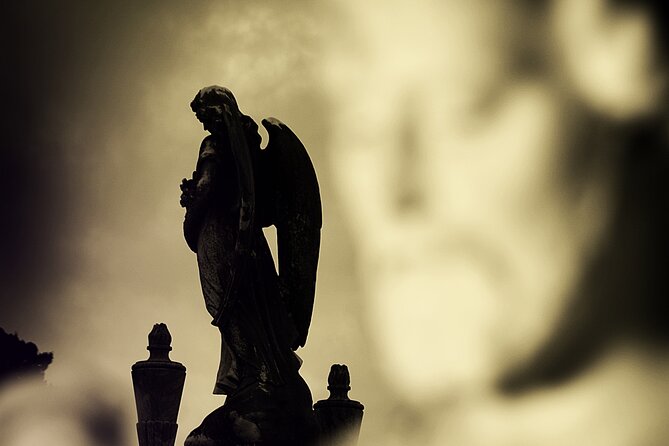
Marie Laveau is central to the tour, but the better guides treat her as a historical and spiritual figure rather than a cartoon character. William, in particular, is often praised for explaining voodoo in relation to slavery, resistance, and the development of jazz. That connection gives the subject weight.
At Voodoo Authentica, you learn about New Orleans voodoo, its traditions, and its association with Marie Laveau. The stop lasts about 10 minutes, so think of it as an introduction rather than a workshop or shopping session.
You may see ritual materials such as herbs, oils, and amulets. The value of this stop is that it shows voodoo as a living religious practice with objects, beliefs, and traditions, not just a collection of spooky tales.
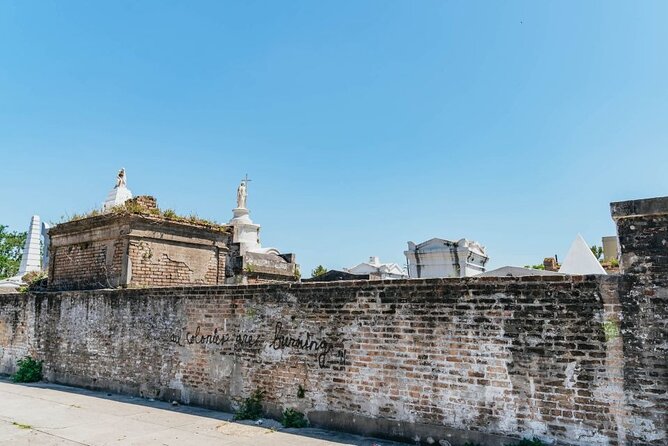
One point deserves care: some descriptions of the tour can leave people expecting a cemetery visit. The official information says cemeteries are not entered. You may hear cemetery-related stories or see sites connected with New Orleans burial traditions from outside, but do not book this walk if cemetery access is essential.
More Walking Tours in New Orleans:
- New Orleans Premier Ghost, Voodoo and Vampire Walking Tour
★ 4.5 · 12,856 reviews - New Orleans Food Walking Tour of the French Quarter with Small-Group Option
★ 5.0 · 6,118 reviews - St. Louis Cemetery No. 1 Official Walking Tour
★ 4.5 · 3,941 reviews - New Orleans Garden District History Walking Tour
★ 5.0 · 2,879 reviews
Congo Square in Louis Armstrong Park
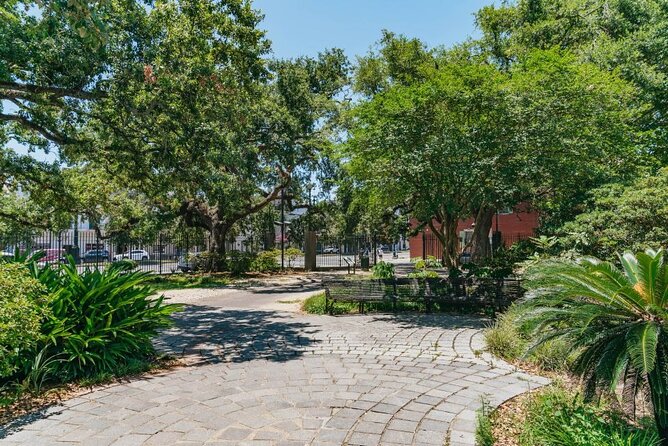
Louis Armstrong Park is the emotional center of the tour. The guide explains how Congo Square served as a gathering place in the 1800s, when enslaved people and free people met on Sundays to trade, socialize, play music, dance, and practice spiritual traditions.
This stop helps you see why the voodoo story cannot be separated from African cultural memory. It also points toward the development of jazz. Several guides use books or visual material to explain African gods and goddesses, which can make an unfamiliar subject easier to follow.
The park is not simply a backdrop for a ghost story. It is a place where music, community, religion, and freedom overlapped under difficult conditions. That is why this part of the route is more meaningful than a quick stop at a supposedly haunted address.
Expect to spend about 15 minutes here. If your guide is especially engaging, the discussion may feel like the heart of the walk. You will have time for questions, but the tour must keep moving to finish the route.
Storyville and the edge of the Quarter
The final listed stop is Storyville, the former red-light district just outside the French Quarter. You spend around 10 minutes learning how this area fit into New Orleans’ social and musical life.
Storyville adds another layer to the city’s identity. The tour is not limited to grand churches and famous squares. It also considers nightlife, vice, music, and the less polished parts of the city’s past.
Because this is a walking tour, the explanation is more important than a preserved district. Do not expect a large open-air museum. You are being shown where the former district was and given the background needed to understand its place in New Orleans history.
The route ends at Jackson Square, in the middle of the French Quarter. That is convenient for continuing your day. You can stay in the area for food, shopping, museums, or a second look at the buildings you passed earlier.
The guides make the difference
Guide quality matters greatly on a story-based walk. William receives repeated praise for being informative, engaging, and able to explain voodoo without leaning too hard on movie stereotypes. He is also credited with connecting voodoo to slavery, African spirituality, music, and jazz.
Logan is praised for filling the walk with useful information, while Jimmy is remembered for giving a small group a more personal experience. James has been noted for sharing local suggestions, including places to eat.
The group can include up to 28 people, though some departures may be smaller. A small group makes it easier to ask questions and hear the guide, but group size can affect the feel of the walk. With a full departure, you may need to stay near the guide and speak up if you are at the back.
There is one practical warning: one person found a guide difficult to understand because he spoke too quickly. If you have hearing concerns or need a slower pace, stand near the front and ask the guide to repeat important points. The guide’s delivery is a major part of the value here.
Is $27.99 a fair price?
At $27.99 per person, this is reasonably priced for a licensed, two-hour guided walk in central New Orleans. You are paying for local interpretation, not admission to a major attraction. The listed stops do not charge separate entry fees, and food and drinks are not included.
The value is strongest if you want orientation early in your visit. You see several important areas in one compact route, learn what to notice, and finish in Jackson Square, where you can continue exploring independently.
The price is less attractive if you mainly want a theatrical voodoo show or a cemetery tour. You might prefer a museum visit or a more explicitly spooky activity for that purpose. This walk gives you explanation, setting, and local stories rather than spectacle.
Children under five are free. Older children can participate, but the tour is not designed as a high-energy family attraction. One family found it informative but not exciting enough, while other parents found the storytelling held teenagers’ attention. Your child’s interest in history and unusual beliefs will matter more than age alone.
Weather, comfort, and timing
The tour operates in most weather, including rain, cold, snow, and sleet. It is canceled only for serious conditions such as flooding, tropical storms, hurricanes, fires, or cloud-to-ground lightning within the French Quarter.
Dress for the forecast and carry water. Summer heat is the main comfort issue, but rain can also make the historic paving unpleasant. A rain jacket or umbrella and shoes with good support are sensible choices.
The terrain of the French Quarter can challenge people with mobility limitations. The company tries to accommodate different needs, but the historic streets are not always easy to navigate. Service animals are allowed, and the activity is near public transportation.
Free cancellation is available up to 24 hours before the start time. Inside that window, changes and refunds are not accepted unless the operator cancels because of weather or an unmet minimum group size.
Who should book this walking tour?
I would choose this tour if you want a grounded introduction to New Orleans culture, architecture, and spiritual traditions. It suits first-time visitors who want to get their bearings, solo visitors who prefer a group for exploring the Quarter, and couples or families with older children who enjoy stories more than staged scares.
It is also useful for anyone who has only encountered voodoo through films. The strongest parts explain what the religion means in practice and how it connects with African traditions, slavery, music, and community life.
I would skip it if you want a cemetery entry, a ritual you can join, or a frightening night out. The pace is leisurely, the route is short, and the mood is educational with some mystery. Even the most atmospheric stories are balanced by architecture and documented local history.
Should you book it?
Book it if you want a thoughtful cultural walk with voodoo at its center, not a haunted-house performance. The combination of Congo Square, Marie Laveau stories, French Quarter architecture, Voodoo Authentica, and Storyville gives you a useful first look at several sides of New Orleans.
Before reserving, make sure everyone in your group is comfortable walking about a mile, carrying water, and spending two hours listening outdoors. Arrive 30 minutes early, wear good shoes, and keep your expectations realistic about cemetery access. If that sounds right, $27.99 buys a practical introduction led by guides who can make the city’s complicated stories easier to understand.
FAQ
Where does the tour begin?
The tour begins at Witches Brew Gallery and Haunted Sanctuary, 311 Exchange Place, New Orleans, Louisiana 70130. It is directly across from the Pelican Club Restaurant.
Where does the tour end?
The tour ends at Jackson Square in the heart of the French Quarter.
How long is the tour?
The walk lasts approximately two hours and covers about one mile at a leisurely pace.
Does the tour enter cemeteries?
No. Cemetery entry is not included in this tour.
Is the tour suitable for children?
Children under five are free. Most people can participate, but the walk is better suited to children who enjoy history, culture, and storytelling rather than a highly theatrical scare experience.
What should I bring?
Wear comfortable walking shoes and bring bottled water. Dress appropriately for the weather because the tour operates outdoors in most conditions.
What happens if the weather is bad?
Tours generally operate in rain, cold, snow, sleet, and other ordinary poor weather. The experience may be canceled for flooding, tropical storms, hurricanes, fires, or cloud-to-ground lightning in the French Quarter. If it is canceled, you will be offered another date or a full refund.
New routes in New Orleans
- New Orleans: Witches Coven Garden District Walking Tour★ 4.9 · 113 reviews
- New Orleans: French Quarter Ghost and Legends Walking Tour★ 4.3 · 129 reviews
- New Orleans: 2-Hour Homes of the Rich & Famous Walking Tour★ 4.6 · 115 reviews
- New Orleans: French Quarter Photo Shoot and Walking Tour★ 5.0 · 74 reviews
- New Orleans: Garden District Guided Walking Tour★ 4.9 · 514 reviews
- New Orleans: Five-in-One City Walking Tour★ 3.8 · 272 reviews
- New Orleans: 2 or 3 Day Hop-On Hop-Off Bus with Walking Tour★ 4.5 · 291 reviews
- New Orleans: Drunk History Walking Tour★ 4.2 · 165 reviews
New Orleans Walking Tours, compared.

New Orleans Premier Ghost, Voodoo and Vampire Walking Tour
Read our review →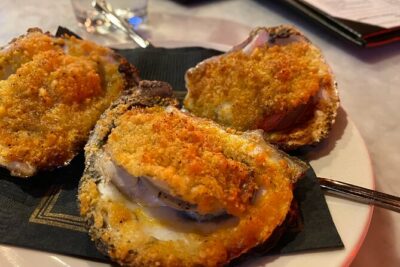
New Orleans Food Walking Tour of the French Quarter with Small-Group Option
Read our review →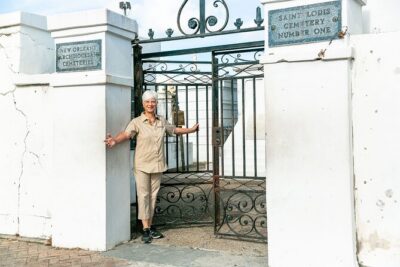
St. Louis Cemetery No. 1 Official Walking Tour
Read our review →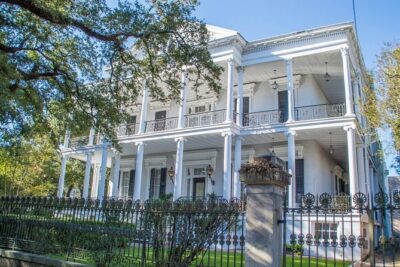
New Orleans Garden District History Walking Tour
Read our review →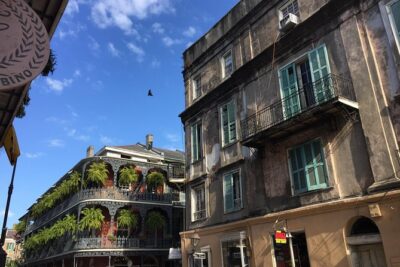
French Quarter Historical Sights and Stories Walking Tour
Read our review →
Ghost and Vampire Walking Tour Of The French Quarter
Read our review →
New Orleans Adults-Only True Crime and Ghost Walking Tour
Read our review →
Browse the lists this tour appears in