
Review · NEW ORLEANS
French Quarter Historical Sights and Stories Walking Tour
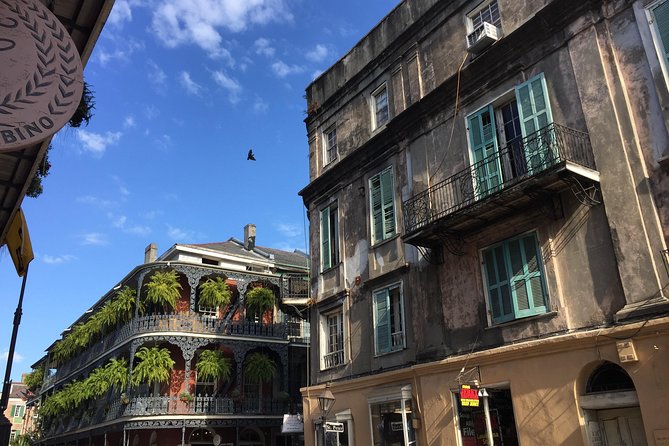
The most useful way to see New Orleans’ French Quarter is on foot, with someone explaining why the buildings, streets, churches, and riverfront matter. This tour packs the district’s French, Spanish, Caribbean, and American threads into two hours, while adding practical tips on food, shopping, and what to see next.
I especially like the small group limit of 12 and the range of guide personalities, including Scott, Tim, Libby, Renee, Lesley, and Yvonne. I also like that the tour reaches both famous places and quieter corners that are easy to miss alone. The main tradeoff is simple: two hours goes quickly, so you will see a selected portion of the Quarter rather than every street and building.
Key points at a glance
- Small groups make the stories easier to hear: The stated maximum is 12 people, a useful advantage on narrow streets and busy squares.
- Six central stops cover the basics: You visit the French Quarter, French Market, St. Louis Cathedral, Mississippi River, Royal Street, and Jackson Square.
- Guides add more than dates: Expect architecture, religion, local politics, food, music, and personal recommendations.
- Three daily departures offer useful flexibility: You can fit the walk around meals, museums, or other plans.
- Best early in your visit: The advice and orientation can help you choose restaurants, shops, and sights for the rest of your stay.
- Plan for weather and walking: Bring water, wear sturdy comfortable shoes, and dress for the forecast.
Why two hours can change your view of the French Quarter
The French Quarter is compact, but it is not simple. A casual walk may show you iron balconies, old courtyards, restaurants, street performers, and handsome churches. It will not necessarily explain how French and Spanish rule, Caribbean influence, religion, commerce, local politics, and the Mississippi River shaped what you are seeing.
That is where this tour earns its $35 price. You are paying for a guide who can connect details that otherwise look unrelated. An architectural feature becomes a clue about the people who built a house. A church becomes part of a larger story about the city. A recommendation for lunch or dinner becomes more useful because you have already learned something about local culture.
The tour is also a practical first-day activity. Several guides, including Renee and Lesley, are praised for giving useful suggestions about places to visit and eat. If you take the walk near the start of your stay, you can use those ideas during the days that follow.
The pace appears designed for conversation rather than a race through landmarks. One guide was especially appreciated for allowing questions, and several guides were praised for explaining stories in an engaging way. That matters because New Orleans history can become a blur of names and dates if it is delivered too quickly.
You should still set your expectations correctly. This is a walking introduction, not a full architectural survey or museum visit. Admission is free at the listed stops, but the tour does not include food, drinks, hotel pickup, or drop-off.
More History Walking Tours in New Orleans
- New Orleans Garden District History Walking Tour
★ 5.0 · 2,879 reviews - New Orleans Food and History Walking Tour
★ 5.0 · 1,544 reviews - New Orleans: French Quarter Food History Walking Tour
★ 4.9 · 713 reviews
Starting on Dumaine Street
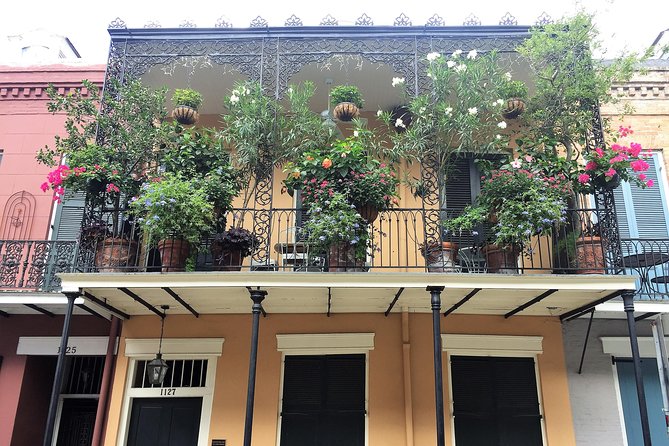
The walk begins at 400 Dumaine Street in the French Quarter. The meeting point is close to the district’s central sights and near public transportation, so it fits reasonably well into a day of exploring without a car.
From the start, expect to be outdoors for about two hours. The tour operates in all weather, so your comfort depends on how well you prepare. New Orleans heat can make even a moderate walk tiring, which is why bringing water is particularly important in warmer months.
Comfortable walking shoes are essential. The route includes several streets and public areas, and the tour is not designed for sitting indoors between stops. Most people can take part, and service animals are allowed.
A small group can make a real difference here. With no more than 12 people, you have a better chance of hearing the guide and asking questions than you would in a large crowd. The group size also helps the guide respond to the interests of the people present. If one person wants more architecture and another wants food or local politics, the conversation can move in several directions.
French Quarter stories beyond the postcard view
The opening portion focuses on the French Quarter itself, with about 30 minutes devoted to the oldest neighborhood in New Orleans. This is the heart of the experience, because the Quarter is not just a collection of attractive buildings.
Expect attention to architecture and heritage, along with the people and events that shaped the district. The guides are described as strong storytellers, and names such as Scott, Tim, Libby, Renee, Lesley, and Yvonne appear repeatedly in the tour feedback. Their styles differ, but the common thread is clear: you are there to hear context, not simply to be pointed toward a building.
The architecture section is especially useful. New Orleans’ buildings reflect more than one European influence, and the walk helps you notice how those influences appear in the Quarter. One guide was praised for explaining architectural details as part of the city’s wider story rather than treating them as decoration.
You may also hear about food, music, religion, and local politics. That mix gives the tour a more current feel. It does not leave New Orleans frozen in the past. The guides connect old buildings to the city people live in today.
The possible drawback is that the district contains more stories than any two-hour route can hold. One guide received praise for being informative, but the person taking the tour wished there had been time to cover more ground and see more buildings. If you want every street explained, you will need to keep exploring after the walk.
The French Market and the city’s working side

The French Market portion lasts about 15 minutes. This stop shifts the focus from grand public buildings to commerce and daily activity.
The market is a useful place to hear about the city amid the movement of people, vendors, and shoppers. It gives the tour a different texture from the formal architecture around Jackson Square and the cathedral. You are not simply looking at the French Quarter as a historic display. You are seeing a place tied to buying, selling, eating, and local life.
Because food is not included, you should not arrive expecting a tasting tour. The guide can offer dining suggestions, but you pay for anything you choose to eat or drink. That arrangement keeps the base price at a reasonable $35 while allowing you to choose your own meal later.
The short stop also shows the limits of the itinerary. Fifteen minutes is enough for orientation and stories, but not for an extended market visit. If the market interests you, plan to return on your own after the tour.
More History Walking Tours in the USA
- New Orleans: Drunk History Walking Tour
★ 4.2 · 165 reviews - History and Hauntings of Salem Guided Walking Tour
★ 5.0 · 14,564 reviews - Boston: Freedom Trail History Small Group Walking Tour
★ 5.0 · 6,450 reviews - Historic Charleston Guided Sightseeing Walking Tour
★ 5.0 · 6,216 reviews
St. Louis Cathedral and the role of faith
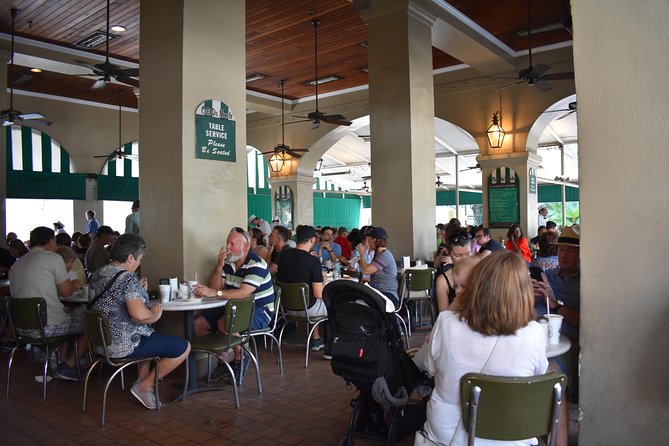
The 15-minute stop at St. Louis Cathedral introduces one of the Quarter’s most important landmarks. The basilica was built in the late 18th century and has witnessed both painful and triumphant moments in New Orleans history.
This is more than a photo stop. The cathedral helps explain the role of religion in the city and adds another piece to the French and Spanish influence that appears throughout the district. Several tour descriptions and guide comments point to religion as one of the subjects covered, alongside architecture and food.
You will not be spending a long period inside the building as part of the stated schedule. The value comes from the guide’s explanation of why the cathedral matters and how it fits into the city’s story.
For visitors who like architecture, this stop should be one of the highlights. For visitors who prefer a faster-moving sightseeing route, the historical explanation may feel more important than the building visit itself.
The Mississippi River and New Orleans survival
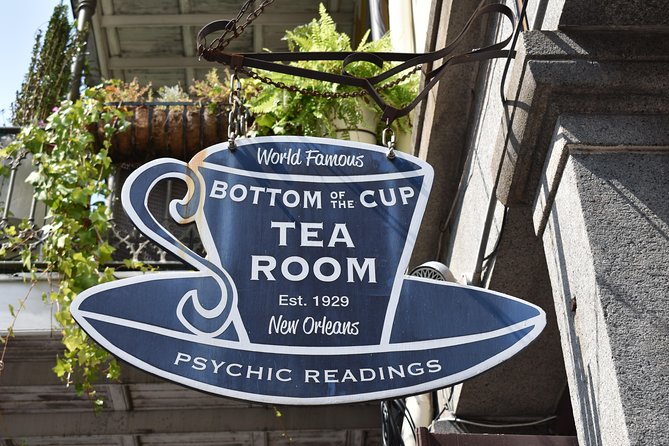
The route then reaches the Mississippi River for about 15 minutes. The river gave New Orleans its life, but it also presents an ongoing challenge. The tour frames the river as both a source of opportunity and a force the city must constantly manage.
This stop helps you understand why New Orleans developed where it did. The river is not just scenery at the edge of the Quarter. It is tied to trade, movement, growth, and the city’s struggles with water.
The tour description calls the Mississippi the third largest river in the world. More important for your visit, the guide uses the river to explain New Orleans as a working city shaped by its location. That wider view keeps the French Quarter from feeling like an isolated historic zone.
The riverfront is also a natural pause in the walk. After several streets and buildings, you get a different view and a chance to place the neighborhood in the larger geography of New Orleans. Bring water and protect yourself from the weather, since this portion remains outdoors.
Royal Street, shopping, music, and local advice
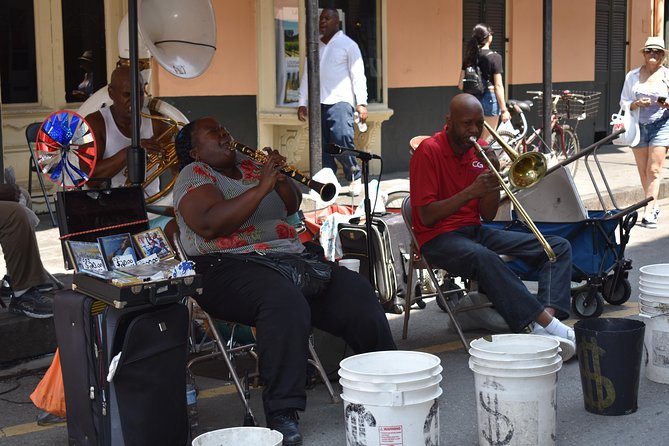
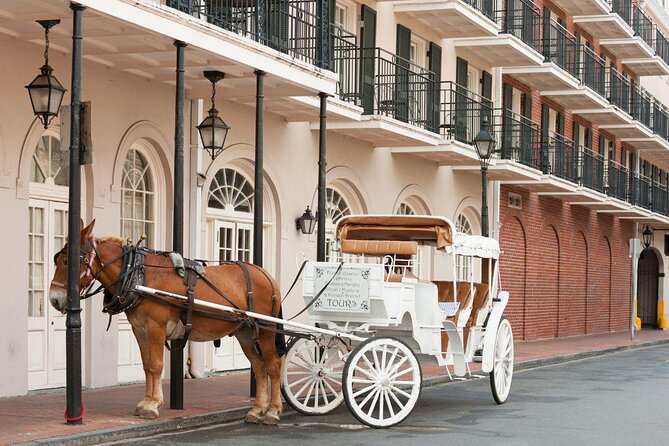
Royal Street receives about 30 minutes, making it one of the longer stops. Here the tour turns toward shopping, restaurants, street performers, and stories tied to one of the Quarter’s best-known thoroughfares.
This is where the practical side of the tour becomes especially useful. You can ask guides about places to eat and shop, and several guides were praised for recommendations that went beyond standard sightseeing. The advice is most helpful when you take notes or save suggestions on your phone for later.
Royal Street also shows how the French Quarter works as a living district. Historic architecture shares space with restaurants, retail shops, and performers. The tour does not ask you to choose between old New Orleans and present-day New Orleans. It explains how both occupy the same streets.
Scott was praised for mixing facts with entertaining stories, while Tim was noted for being friendly and easy to talk with. Those qualities matter on Royal Street, where a list of building dates would not be enough. You want a guide who can make the street feel connected to the wider city.
The 30-minute allotment gives you time to look around, but it is not a dedicated shopping session. If you find a shop you want to enter, save it for after the walk unless the guide allows a brief pause.
Jackson Square, the natural finish
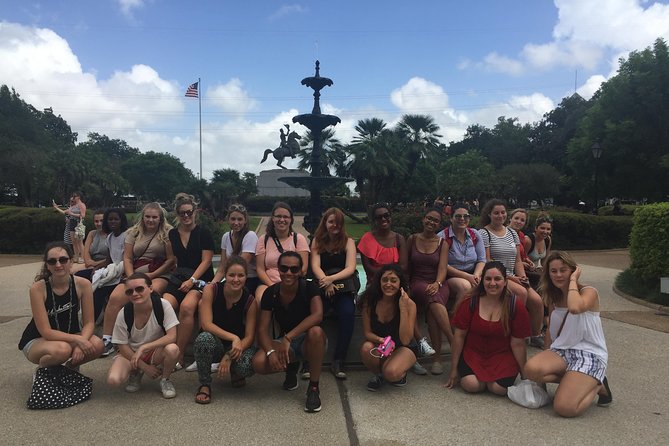
The tour ends at 701 Decatur Street in Jackson Square, the symbolic center of the French Quarter. The square brings together many of the ideas introduced during the walk: French and Spanish roots, American development, Caribbean influence, religion, architecture, and public life.
This is a strong place to finish because you can continue exploring immediately afterward. The square is close to the cathedral, the riverfront, the French Market, Royal Street, and other Quarter sights. You are not left at an out-of-the-way endpoint.
The final 15 minutes are used to explain why Jackson Square matters to New Orleans. It is more than an attractive open space. It helps tell the story of a city shaped by different cultures and changing political forces.
Ending here also makes the tour practical for the rest of your day. You can use the guide’s suggestions for lunch, dinner, shopping, or further sightseeing. If this is your first visit, Jackson Square gives you a useful reference point for finding your way around the Quarter.
What the $35 price delivers
At $35 per person, this is a modestly priced guided walk for two hours. The included service is the professional guide. You do not pay separately for admission to the listed stops, though the tour does not include food or drinks.
The strongest value comes from saving time and gaining context. You could walk these streets alone, but you would likely miss the meaning behind many buildings and pass by places that look ordinary. The guides also provide recommendations you can use after the tour, which adds practical value beyond the scheduled route.
The price is less attractive if you want a long route, indoor attractions, food samples, or hotel transportation. You will need to reach the starting point yourself and arrange your own way back after finishing in Jackson Square.
Three daily departure times make it easier to fit the walk into your plans. Confirmation arrives when you book, and you can cancel up to 24 hours before the experience for a full refund.
Who will get the most from this walk
I would choose this tour early in a first New Orleans visit. It gives you a working map of the French Quarter and helps you decide which restaurants, shops, and sights deserve more of your time.
It also suits repeat visitors. One person who had visited New Orleans many times still learned new things about the Quarter. That makes sense: the district is small enough to explore on foot but layered enough to reward a second look.
Families can use it as an introduction, though younger children need to be comfortable walking and listening for two hours. Solo visitors may appreciate the small group size and the chance to ask questions without being lost in a crowd.
It is a good fit if you care about:
- Architecture and historic buildings
- New Orleans food and restaurant advice
- French, Spanish, Caribbean, and American influences
- Religion and public life
- Local stories and anecdotes
- A calm introduction before exploring alone
It is less suitable if you want a ghost tour, a food tour, a private guide, or a route covering every part of the French Quarter. Those are different experiences.
Practical advice before you book
Wear shoes you can walk in for two hours. Bring water, especially in warm weather, and dress for rain or heat because the walk operates in all weather.
Arrive ready to listen and ask questions. Guides such as Scott, Tim, Libby, Renee, Lesley, and Yvonne have been praised for being friendly, funny, flexible, and willing to explain details. The quality of the experience will depend partly on your guide’s style, but the overall format allows plenty of room for questions.
Book this near the beginning of your stay if you can. You will be able to use the recommendations and return to places that caught your attention. If you take it late in your trip, it can still fill in gaps, but you lose some of its value as a starting point.
Should you book the French Quarter Historical Sights and Stories Walking Tour?
Yes, if you want a reasonably priced introduction to New Orleans that combines famous landmarks with architecture, food advice, religion, local politics, and stories about the people who shaped the city. The small group cap and strong guide lineup make it a particularly sensible choice for first-time visitors and solo visitors.
Book it knowing that this is a selected two-hour walk, not a complete tour of every corner. If you want context more than checklists, and you are prepared to walk outdoors in the weather, the $35 cost is well justified.
FAQ
How long is the French Quarter walking tour?
The tour lasts approximately two hours.
How much does the tour cost?
The price is $35 per person.
Where does the tour start?
The tour starts at 400 Dumaine Street in New Orleans, Louisiana.
Where does the tour end?
The tour ends at 701 Decatur Street in Jackson Square, in the heart of the French Quarter.
What places are included on the route?
The route includes the French Quarter, French Market, St. Louis Cathedral, the Mississippi River, Royal Street, and Jackson Square.
Are food and drinks included?
No. Food and drinks are not included in the tour price.
Is hotel pickup included?
No. Hotel pickup and drop-off are not included.
How large is the tour group?
The maximum group size is 12 people.
What should I bring and wear?
Wear comfortable walking shoes and bring water, especially during warmer months. The tour operates in all weather, so dress appropriately for the forecast.
New routes in New Orleans
- New Orleans: Witches Coven Garden District Walking Tour★ 4.9 · 113 reviews
- New Orleans: French Quarter Ghost and Legends Walking Tour★ 4.3 · 129 reviews
- New Orleans: 2-Hour Homes of the Rich & Famous Walking Tour★ 4.6 · 115 reviews
- New Orleans: French Quarter Photo Shoot and Walking Tour★ 5.0 · 74 reviews
- New Orleans: Garden District Guided Walking Tour★ 4.9 · 514 reviews
- New Orleans: Five-in-One City Walking Tour★ 3.8 · 272 reviews
- New Orleans: 2 or 3 Day Hop-On Hop-Off Bus with Walking Tour★ 4.5 · 291 reviews
- New Orleans: Drunk History Walking Tour★ 4.2 · 165 reviews
New Orleans Walking Tours, compared.

New Orleans Premier Ghost, Voodoo and Vampire Walking Tour
Read our review →
New Orleans Food Walking Tour of the French Quarter with Small-Group Option
Read our review →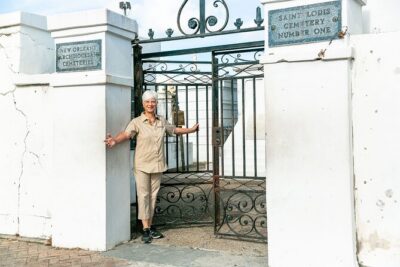
St. Louis Cemetery No. 1 Official Walking Tour
Read our review →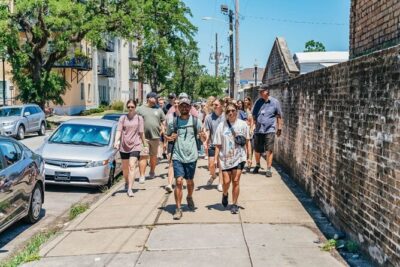
New Orleans French Quarter, Voodoo and Culture Walking Tour
Read our review →
New Orleans Garden District History Walking Tour
Read our review →
Ghost and Vampire Walking Tour Of The French Quarter
Read our review →
New Orleans Adults-Only True Crime and Ghost Walking Tour
Read our review →
Browse the lists this tour appears in