Review · NEW ORLEANS
New Orleans Food and History Walking Tour
New Orleans food tells the city’s story one plate at a time. On this three-hour walk, you move through the French Quarter while tasting gumbo, hot sauces, pralines, po-boys, muffulettas, boudin, red beans and rice, and dessert. It is a generous progressive lunch, not a quick nibble between sightseeing stops.
I like the way the tour links each dish to the people and places that shaped it. I also like the small maximum group of 16, which gives guides such as Beth, Meg, Dylan, John, Sarah, and Ben room to answer questions and keep the walk social.
The main catch is the food policy. Vegetarian meals can be requested, but vegan, gluten-free, and dairy-free diets cannot be accommodated, and the route is not built for people with walking problems. The stops can also change with availability.
Key points at a glance
- Five food stops make this a full lunch: Come hungry, because the portions add up quickly.
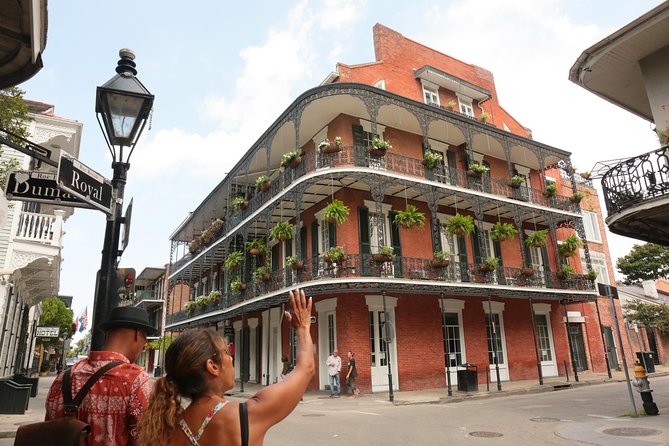
- French Quarter setting: You begin at 3rd Block Depot on Chartres Street and finish at New Orleans Creole Cookery on Toulouse Street.
- Food comes with context: Your guide explains Creole cooking, Louisiana geography, immigrant influences, and the origins of dish names.
- Several guides have earned strong praise: Beth, Meg, Dylan, John, Sarah, and Ben are among the guides who have led recent tours.
- Morning or afternoon departures: You can fit the walk around other plans, though an early booking is wise since it is often reserved about 26 days ahead.
- Price and practical limits: At $85 per person, lunch, tastings, and restaurant gratuities are included, but drinks and your guide’s tip cost extra.
Why this food walk works as a first taste of New Orleans
This is less a formal architecture tour with snacks and more a progressive lunch through the French Quarter. You walk from stop to stop, eating a substantial dish at each one while your guide explains where the food came from and why New Orleans cooks use particular ingredients.
That distinction matters. If you want a long look at balconies, courtyards, and historic buildings, this tour may leave you wishing for more sightseeing. You will see the French Quarter as you move through it, but the food remains the main subject.
For a first day in town, I like the format. You get a working introduction to the dishes that appear again and again on New Orleans menus. You also learn enough about regional cooking to make better choices at later meals. A few people have returned to stops from the tour later in their visit, which is a useful sign that the route can help you find places worth revisiting.
The guide makes a big difference. Guides named Beth and Meg are praised for humor, clear explanations, and an easy way with questions. Dylan, sometimes called Dr. Gumbo, has led tours with a strong focus on the links between food and city history. John, Sarah, and Ben have also guided groups along the route. Your guide is assigned by the operator, so you should not book expecting one particular person.
The experience has a 4.9 rating from 1,544 reviews, with 98 percent of customers recommending it. Those numbers fit the clearest strengths here: good food, generous servings, an engaging guide, and a route that gives you a useful introduction to New Orleans cooking.
More Food Walking Tours in the USA
- New Orleans Food Walking Tour of the French Quarter with Small-Group Option
★ 5.0 · 6,118 reviews - New Orleans: French Quarter Food History Walking Tour
★ 4.9 · 713 reviews - Little Havana Food and Walking Tour in Miami
★ 5.0 · 8,882 reviews
Starting with gumbo at 3rd Block Depot
Meet at 3rd Block Depot, 310 Chartres Street, in the French Quarter. This is your first food stop and sets the tone with rustic Cajun gumbo made with chicken and andouille sausage.
The gumbo uses a dark roux, chicken stock, and a little warm potato salad served country style. That potato salad is a small but useful detail. Gumbo varies widely across Louisiana, and the addition gives your guide a natural opening to explain regional habits and family recipes.
The first serving is intended as part of the lunch, and you can buy a drink at the bar if you want one. Beverages beyond water are not included, so budget for them separately. One practical point: the first stop can take longer than the others, depending on the group and service. That is not necessarily bad, since it gives your guide time to explain the dish, but you should keep the full three-hour schedule in mind.
The temperature and service may not be perfect every time. One past account noted that the gumbo was flavorful but not as hot as expected, and another felt there was too much time at this opening stop. I would treat this as a minor risk rather than a reason to skip the tour, but it is useful to know that the meal is served in working restaurants, not from a private tasting kitchen.
The hot sauce stop is more useful than it sounds
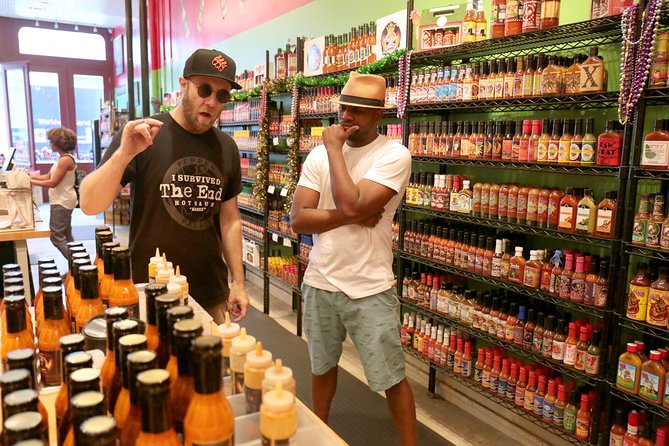
Next comes a hot sauce and seasoning shop with dozens of samples. You can try hot sauces, dry rubs, barbecue sauces, marinades, Buffalo-style sauces, and other seasonings.
This stop adds playfulness to the tour, but it also explains an important part of the New Orleans table: heat is not one single flavor. Some sauces bring vinegar, some bring sweetness, and others rely on peppers or spice blends. You can compare them instead of treating every bottle as simply hot.
The drawback is that this is not another full restaurant course. If you would prefer a smaller taste of another classic dish, time spent at the hot sauce shop may feel less valuable. One person wanted more dishes such as jambalaya and étouffée, and would have preferred another restaurant stop. That is a fair point, since no three-hour food walk can cover the full range of New Orleans cooking.
Still, this stop has practical value if you want edible gifts. You may find sauces or seasonings to take home, and the guide can explain how they fit into local cooking. Go easy on the samples, too. You still have a great deal of food ahead.
Pralines and the sweet side of Creole cooking
At Leah’s Pralines, you sample a traditional praline made with local brown sugar, dairy, and pecans. You may also encounter a newer variation, such as bacon pecan brittle.
Pralines are a good reminder that the city’s food is not only about sausage, seafood, and dark roux. The candy reflects the use of sugar and pecans in Southern cooking, while the newer flavors show how old recipes keep changing.
This is a short stop, but it helps break up the savory courses. You can also pick up gifts here if you want something small and easy to pack. Because the tour includes several filling dishes, the praline may be all you need at this point.
If you have a serious nut allergy, tell the operator during checkout. The instructions specifically ask you to report food allergies, not simple dislikes. Since pralines and brittle contain nuts, this is one of the places where clear communication matters.
More History Walking Tours in New Orleans
- New Orleans Garden District History Walking Tour
★ 5.0 · 2,879 reviews - French Quarter Historical Sights and Stories Walking Tour
★ 5.0 · 2,724 reviews - New Orleans: Drunk History Walking Tour
★ 4.2 · 165 reviews
Fried catfish and the New Orleans po-boy
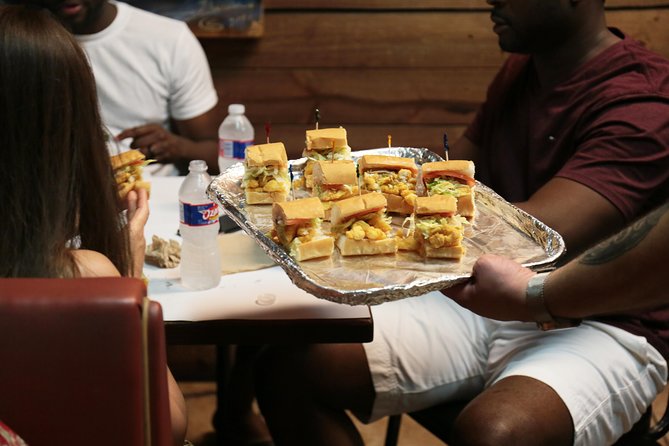
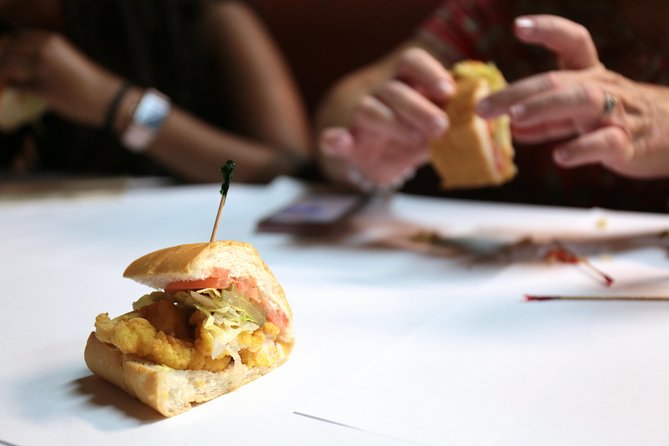
At NOLA Poboys, the main event is a fried catfish po-boy on local French bread. It comes dressed with lettuce, tomato, mayonnaise, and pickles, with hot sauce available if you want more heat.
This is one of the best parts of the route for understanding how local ingredients meet everyday sandwich culture. Your guide also talks about seafood harvesting in Louisiana and the many ethnic traditions that helped shape Creole food.
The po-boy is filling, especially when combined with the gumbo and praline. The bread, fried fish, dressing, and pickles give you several textures in one bite. You may be tempted to save room by eating lightly earlier, but the tour’s servings are meant to form a real lunch.
A vegetarian option is available, but you must request it at checkout. The published sample menu is heavily based on meat and seafood, so do not assume that a vegetarian substitution will be automatic once the tour begins. There is no gluten-free, dairy-free, or vegan option.
Muffuletta, boudin, and the Italian and Cajun threads
The route may include a muffuletta, an Italian-style sandwich on Sicilian bread. It is layered with smoked ham, mortadella, Genoa salami, provolone, mozzarella, and local olive salad.
The muffuletta is especially useful for showing that New Orleans food is not just French or Spanish in origin. Italian immigrants added their own breads, cured meats, cheeses, and sandwich traditions. The olive salad gives the sandwich its sharp, salty character and keeps it from becoming just a stack of meat and cheese.
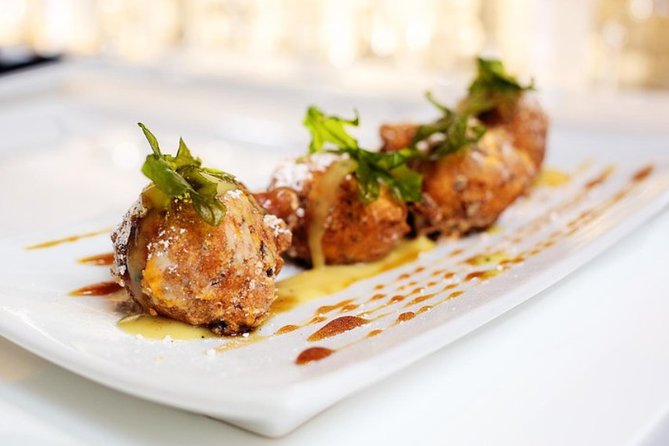
Boudin balls offer a very different texture. This Cajun fried sausage ball combines smoked pork, rice, and spices, served with Creole remoulade. It is compact but rich, and it shows how rice became a practical part of Cajun cooking.
You may also receive red beans and rice with smoked ham, andouille sausage, and scallions. It is slow-cooked comfort food, with a softer texture than the fried items. Together, these dishes show why the menu can feel heavy even when individual portions seem manageable.
One of the tour’s strengths is that the guide does not treat these dishes as isolated samples. You hear about the people who settled in New Orleans, the ingredients they brought, and the way recipes shifted in a city shaped by trade, migration, and wetlands. You also learn the linguistic roots of names such as étouffée and jambalaya.
The route cannot promise every dish on every departure. Stops depend on availability, so the exact mix may change. If tasting as many different dishes as possible is your top priority, ask what is planned when you meet the guide. The tour is designed to provide a broad introduction, not a complete catalog of New Orleans food.
Dessert closes the meal with bread pudding
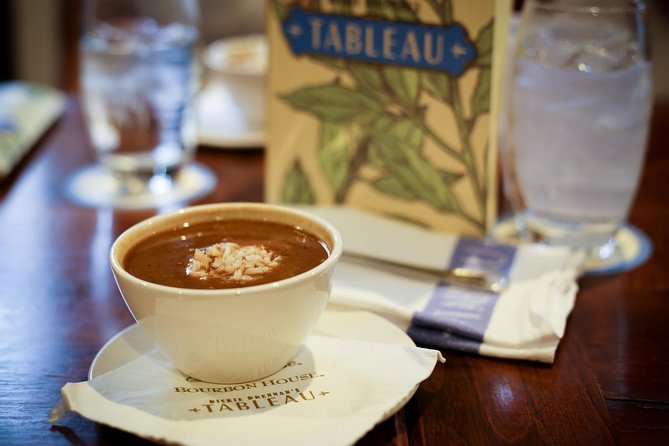
Dessert may be seasonal bread pudding, served baked or fried. The sample menu also lists bananas Foster bread pudding, which has been a favorite part of the route for some diners.
After the savory courses, bread pudding gives the meal a soft, sweet finish. The fried version can be especially rich, so you will be glad you did not eat a large breakfast.
Dessert also shows how the route balances traditional dishes with newer interpretations. You get a familiar local dessert, but the preparation may vary. Since the menu depends on what each venue can serve, do not expect one fixed dessert every time.
You finish at New Orleans Creole Cookery, 508 Toulouse Street. That location gives you a clear endpoint in the French Quarter, and you can continue exploring from there rather than returning to the starting point.
How much food do you actually get?
Plan on a full meal. The listed menu includes gumbo, hot sauce samples, praline, catfish po-boy, muffuletta, boudin ball, red beans and rice, and bread pudding. The exact combination may shift, but the portions are substantial enough that many people do not leave hungry.
This is why I would schedule the tour as lunch, not as a warm-up before a large midday meal. A light breakfast makes sense, especially for the morning departure. For an afternoon tour, eat a modest lunch beforehand or you may arrive at the first stop already full.
The tour suits adventurous eaters who want to try meat, seafood, dairy, spice, and rich sauces. It is less suitable for picky eaters or people who want tight control over every ingredient. You can report true allergies at checkout, but food aversions are not something the route is set up to handle.
Price, timing, and the walking pace
The price is $85 per person for about three hours. Lunch tastings and gratuities for the servers at each establishment are included. Water is included, but other drinks are not, and your guide’s tip is optional.
I consider that fair value if you would otherwise pay for several separate dishes and want the explanations that connect them. The value is weaker if you plan to eat only a few bites or if you prefer to choose every restaurant yourself. You are paying for food, access to several stops, and a guide who turns lunch into a lesson about the city.
You can choose a morning or afternoon departure. The tour is often booked about 26 days ahead, so reserve early if your schedule is fixed. The mobile ticket makes arrival simple, and confirmation is provided when you book.
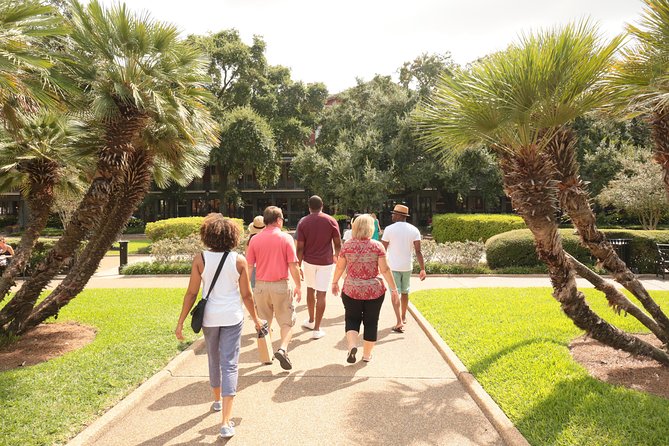
The walk is generally manageable for people who are comfortable on foot, but do not mistake it for a seated tasting. Some groups move at a brisk pace, and the operator does not recommend it for people with walking or mobility problems. Wear comfortable shoes.
The tour runs in all weather conditions and can take place in rain. Bring a jacket or umbrella when the forecast calls for wet weather. If poor weather forces a cancellation, you are offered another date or a full refund. The same applies if the minimum number of participants is not met.
Who should book this French Quarter food tour?
I would choose this tour if you are visiting New Orleans for the first time and want to get your bearings through food. It is also a good fit for solo participants, since the small group and question-friendly guides make it easy to join in.
You will get the most from it if you like hearing why a dish exists, not just eating it. The guide may discuss Louisiana geography, seafood, immigrant communities, recipe changes, and the origins of food names while you walk between stops.
Families can enjoy the format, though the food is bold and the three-hour length requires patience. Couples and friends who want a shared lunch will find plenty to compare, from hot sauces to pralines. It also works well early in a visit, since you can return to favorite stops later.
Skip it if you need vegan, gluten-free, or dairy-free food. Think twice if you dislike walking, rich dishes, seafood, sausage, or uncertain menus. You should also choose another kind of tour if your main goal is a detailed study of French Quarter architecture.
Should you book it?
Book this tour if you want a generous introduction to New Orleans cooking with history folded into every stop. The guide quality is a major strength, and the names attached to the route, including Beth, Meg, Dylan, John, Sarah, and Ben, suggest a strong bench of hosts who can make the food engaging rather than merely filling.
The best plan is to take it near the start of your stay, arrive hungry, wear good walking shoes, and keep dinner light. At $85, it is worthwhile for anyone who values context, several local dishes, and an easy way to find places worth returning to.
Skip it only if your diet rules out the menu or if you want a longer architecture walk with just a few food samples. For most food-focused visitors, this is a practical and tasty way to meet New Orleans one dish at a time.
FAQ
How long is the New Orleans Food and History Walking Tour?
The tour lasts about three hours.
Where does the tour start and finish?
It starts at 3rd Block Depot, 310 Chartres Street, in the French Quarter. It finishes at New Orleans Creole Cookery, 508 Toulouse Street.
What foods are included?
The sample menu includes chicken and andouille gumbo, hot sauce and seasoning samples, a praline, a fried catfish po-boy, muffuletta, boudin ball, red beans and rice with andouille sausage, and bread pudding. Stops and dishes may change based on availability.
Is a vegetarian option available?
Yes. A vegetarian option is available, but you must request it at checkout. Gluten-free, dairy-free, and vegan options are not offered.
Are drinks included?
Water is included. Other beverages are not included and must be purchased separately.
Can I cancel for a full refund?
Yes. You can cancel at least 24 hours before the experience start time for a full refund. Changes or cancellations made less than 24 hours before the start time are not accepted for a refund.
More Food Walking Tours in New Orleans
- Reykjavik Food Walk – Local Foodie Adventure in Iceland
★ 5.0 · 18,952 reviews - Ho Chi Minh City Street Food Tour & Sightseeing By Motorbike
★ 5.0 · 9,413 reviews - Naples: Street Food Walking Tour with Local Guide
★ 4.9 · 4,976 reviews - Authentic Parisian Gourmet Food Tour with 10 Local Dishes & Wines
★ 5.0 · 4,754 reviews
More History Walking Tours in the USA
- History and Hauntings of Salem Guided Walking Tour
★ 5.0 · 14,564 reviews - Boston: Freedom Trail History Small Group Walking Tour
★ 5.0 · 6,450 reviews - Historic Charleston Guided Sightseeing Walking Tour
★ 5.0 · 6,216 reviews - Savannah History and Haunts Candlelit Ghost Walking Tour
★ 5.0 · 3,235 reviews
New routes in New Orleans
- New Orleans: Witches Coven Garden District Walking Tour★ 4.9 · 113 reviews
- New Orleans: French Quarter Ghost and Legends Walking Tour★ 4.3 · 129 reviews
- New Orleans: 2-Hour Homes of the Rich & Famous Walking Tour★ 4.6 · 115 reviews
- New Orleans: French Quarter Photo Shoot and Walking Tour★ 5.0 · 74 reviews
- New Orleans: Garden District Guided Walking Tour★ 4.9 · 514 reviews
- New Orleans: Five-in-One City Walking Tour★ 3.8 · 272 reviews
- New Orleans: Drunk History Walking Tour★ 4.2 · 165 reviews
- New Orleans: 2 or 3 Day Hop-On Hop-Off Bus with Walking Tour★ 4.5 · 291 reviews
New Orleans Walking Tours, compared.

New Orleans Premier Ghost, Voodoo and Vampire Walking Tour
Read our review →
New Orleans Food Walking Tour of the French Quarter with Small-Group Option
Read our review →
St. Louis Cemetery No. 1 Official Walking Tour
Read our review →
New Orleans French Quarter, Voodoo and Culture Walking Tour
Read our review →
New Orleans Garden District History Walking Tour
Read our review →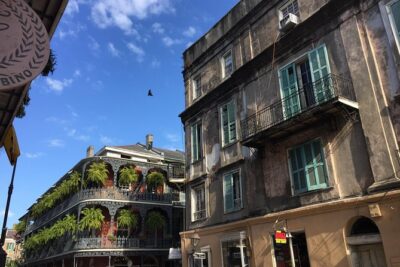
French Quarter Historical Sights and Stories Walking Tour
Read our review →
Ghost and Vampire Walking Tour Of The French Quarter
Read our review →