
Review · AMSTERDAM
Amsterdam: Cultural Highlights Walking Tour
Amsterdam’s story comes into focus quickly on this two-hour walk, which links Dam Square, the canals, Begijnhof, and Amsterdam’s major memorials. You’ll hear how a trading town became a global city, how the Golden Age shaped its art and buildings, and how war and migration changed daily life.
I like the mix of past and present-day Amsterdam, rather than a tour that only points at pretty canal houses. I also like the practical advice about bitterballen, restaurants, shopping, and districts worth exploring by bike. The main consideration is that this is an overview, not an indoor museum tour, and the busy city center can make meeting your guide tricky.
Key points to know before you book
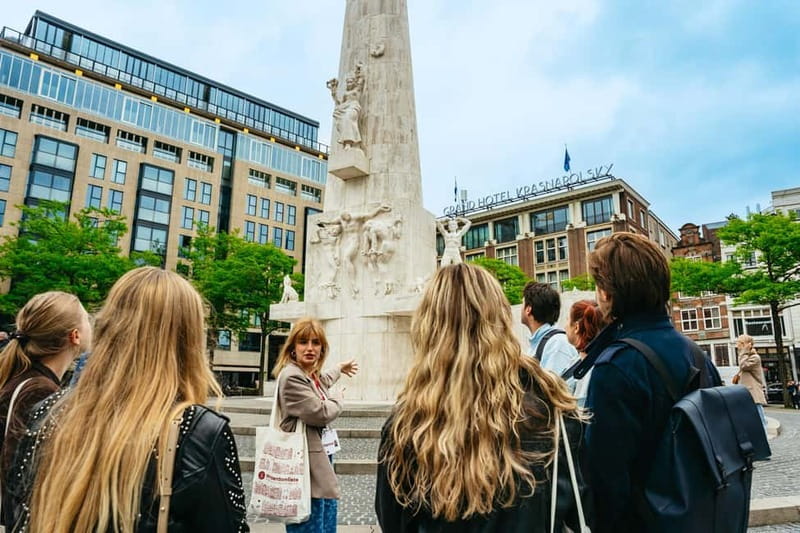
- Dam Square is both the meeting point and the historical starting line: Meet beside the white National Monument, where Amsterdam’s center comes together.
- The route covers major cultural contrasts: You’ll pass the Royal Palace, Begijnhof, the Anne Frank Monument, the Homomonument, and canal-side streets.
- Guides make the difference: Alex, Deborah, Francesco, Stephanie, Lili, Josh, and others have been praised for clear storytelling, humor, and useful local advice.
- The walking is broken up by frequent stops: Most of the two hours is spent listening, looking, and asking questions rather than marching nonstop.
- You pay $30 per person and no admission fees are needed: The value is in orientation, context, and recommendations for the rest of your stay.
- It works well as a first-day activity: You’ll finish with a clearer sense of where to return for museums, food, shopping, and independent exploring.
Starting where Amsterdam began at Dam Square
The tour meets at the National Monument on Dam Square, a large white pillar that is hard to miss once you are in the square. Look for your guide wearing a red name tag around the neck. Because several guides may gather in this busy part of town, allow a few minutes to identify the right person.
Dam Square is a useful place to begin because it is not simply a grand open space for photographs. It marks the center of Amsterdam’s early development, where the Amstel was dammed and the settlement grew around trade, transport, and commerce. Your guide uses the square to explain how merchants, salesmen, workers, and poor residents occupied the medieval city.
The first stop lasts about 15 minutes. That is long enough to get the main story without turning the opening into a lecture. You’ll also have time to look around at the National Monument, which was first built to remember those who died in World War II and now honors people killed in wars around the world.
This early explanation gives the rest of the walk a useful frame. Amsterdam’s canals and narrow houses can look decorative, but they were built for practical reasons: moving goods, creating living space, and supporting a city shaped by water.
More City Highlights Walking Tours in the Netherlands
- Amsterdam Highlights Walking Tour: Small Group Experience
★ 5.0 · 1,132 reviews - Amsterdam: Highlights & History Walking Tour
★ 4.8 · 266 reviews - Amsterdam Highlights Small-Group Walking Tour
★ 4.5 · 227 reviews
Royal power and Amsterdam’s commercial center
From Dam Square, the walk pauses at the Royal Palace of Amsterdam. The palace is one of the city’s most recognizable buildings, and the guide explains its role in Amsterdam’s civic and royal story. You should think of this stop as an exterior orientation rather than a palace visit. There is no admission included because the tour does not enter paid attractions.
The Royal Palace is followed by the Beurs van Berlage, another stop of about 15 minutes. Here, the focus shifts from royal display to trade and commerce. This change helps explain why Amsterdam became so influential: its success depended on business, shipping, finance, and international connections as much as on rulers or monuments.
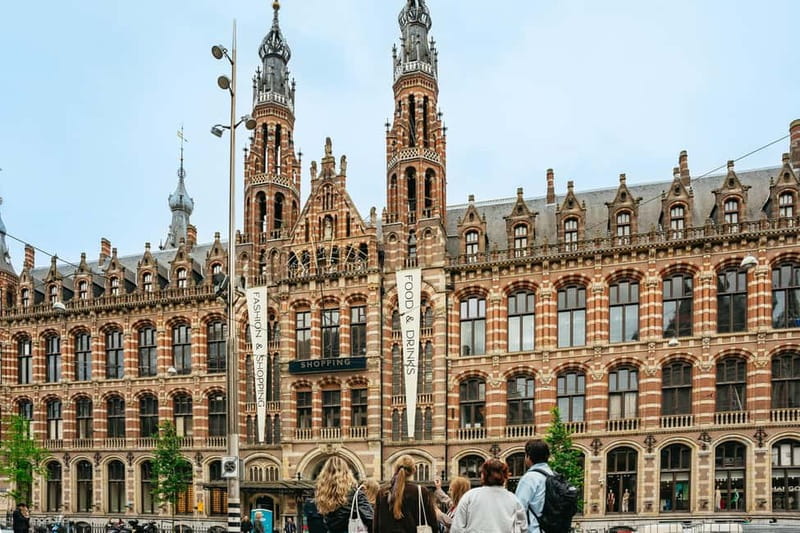
The former main post office, now Magna Plaza, receives a shorter stop. Its architecture gives you another look at how the city reused important historic buildings. You’ll hear about design styles that were popular in earlier periods and see how the commercial center has changed over time.
I like this sequence because it avoids treating Amsterdam as one tidy historical period. In a few blocks, you move from the city’s founding to royal power, then to trade, public services, and modern retail. It is a useful lesson in how layers of the city sit on top of one another.
The Torensluis, Multatuli, and the city’s colonial story
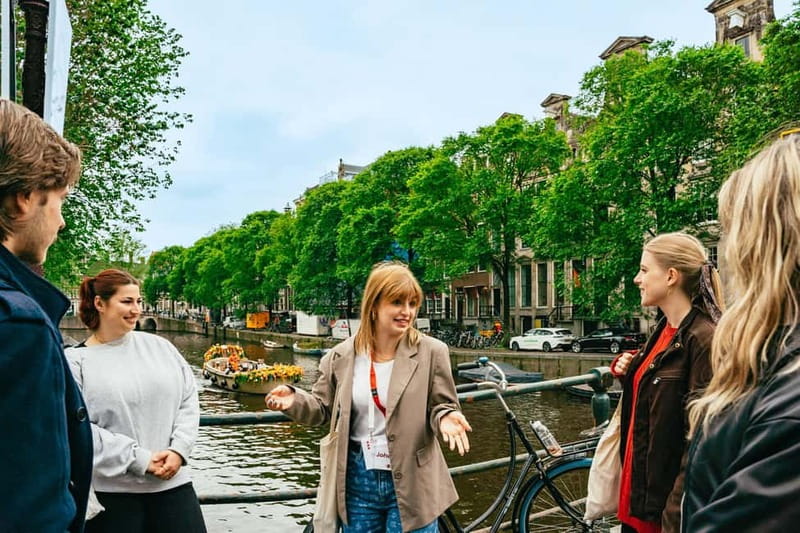
The walk continues toward the Torensluis Bridge, one of the places where Amsterdam’s past becomes less comfortable and more complicated. At the statue of Multatuli, the guide discusses the colonial era and the way Amsterdam’s prosperity was connected to overseas trade and power.
This is an important part of the tour’s approach. You are not given only the postcard version of the city, with picturesque buildings and tolerant attitudes. The guide also addresses the systems that helped create Amsterdam’s wealth and the debates that still shape how the city understands its past.
The route includes one of the smallest houses in Amsterdam, a detail that adds a little humor and visual interest to the heavier history. Narrow homes are a recurring theme in the city, and the guide explains how older architectural designs reflected limited space, property costs, and the needs of urban residents.
The walk then takes you past romantic canal-side houses and across Spui Square. The scenery here is pleasant, but the real value is learning how to read it. A leaning facade or narrow frontage is not just an attractive background. It tells you something about the city’s building traditions and the pressure to fit homes and businesses into a confined urban center.
Anne Frank, Westerkerk, and Amsterdam’s wartime memory
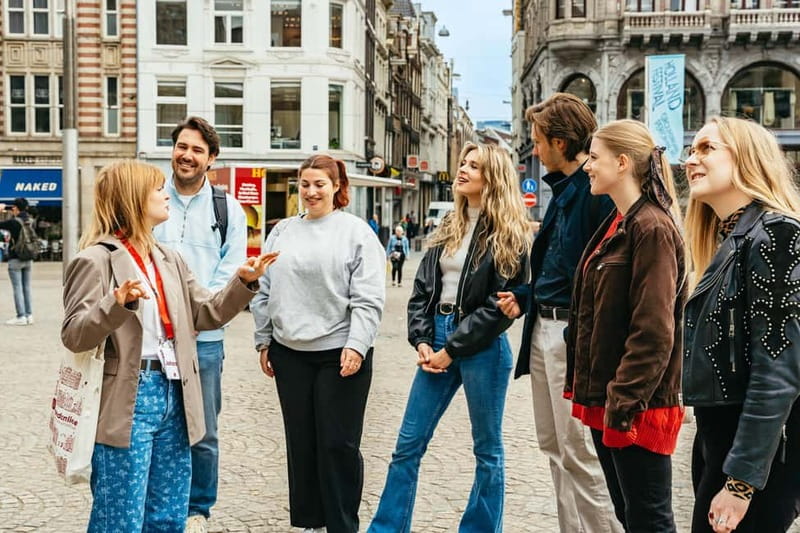
The Anne Frank Monument and Westerkerk bring the tour to Amsterdam during World War II. The guide discusses how the war changed the people of the city, moving the story from architecture and trade to fear, loss, resistance, and memory.
The Anne Frank Monument is treated as a photo stop and guided explanation rather than a replacement for the Anne Frank House. That distinction matters. If you want to visit the house, you will need a separate plan and admission arrangement. This walk gives you context, but it does not provide entry.
Westerkerk is another brief stop. Its connection with the nearby Anne Frank House makes this part of the route especially meaningful, though the tour remains outside. The guide may help you understand how the canal district looked and functioned during the period, but you should not expect an extensive museum-style account in five minutes.
The strongest aspect of this section is the balance between place and history. You are not hearing wartime facts in an abstract room. You are standing among the canals and buildings where Amsterdam’s civilian life continued under extraordinary pressure.
More Cultural Walking Tours in Amsterdam:
- Anne Frank Walking Tour Amsterdam Including Jewish Cultural Quarter
★ 5.0 · 1,879 reviews - Amsterdam: Food and Culture Walking Tour with Tastings
★ 4.9 · 838 reviews - Humans of Amsterdam: Cultural Walking Tour incl. meeting 2 locals
★ 5.0 · 320 reviews - Amsterdam: Cultural Highlights in English/German/Italian
★ 5.0 · 164 reviews
The Homomonument and Amsterdam today
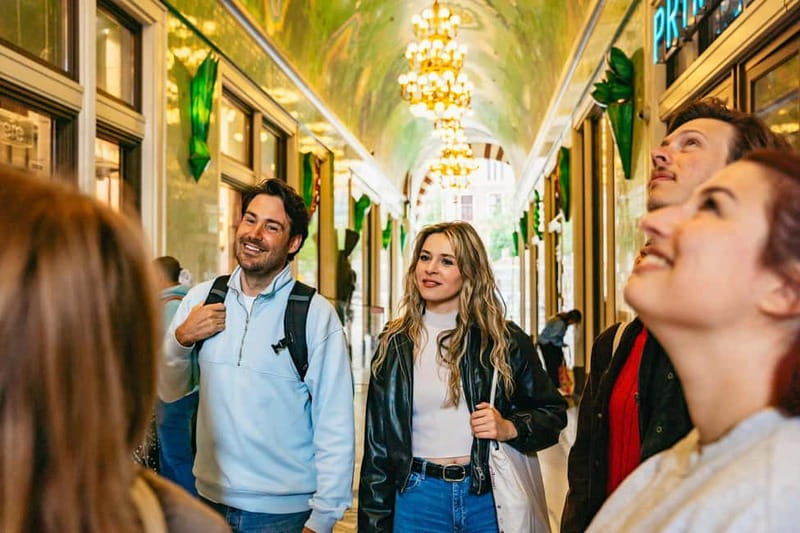
The Homomonument gives the walk another change of direction. Here, the guide discusses Amsterdam as a tolerant and multicultural city, along with the social changes that shaped its identity.
This stop helps keep the tour from ending in the past. Amsterdam is not presented as a finished historical exhibit. Your guide connects earlier ideas about trade, migration, religion, war, and urban life with the city people live in today.
The tour’s cultural focus is especially useful if you are visiting Amsterdam for the first time and want more than a list of monuments. Guides such as Deborah, Francesco, Stephanie, Lili, and Alex have been praised for answering questions and adjusting the discussion to the group. That matters because the city raises plenty of questions, from its history and politics to food, neighborhoods, and daily life.
You may also find the tone lighter than the subject matter suggests. Several guides are described as funny, friendly, and easy to talk with. That helps the walk stay engaging without making serious topics feel shallow.
De Negen Straatjes and everyday canal districts
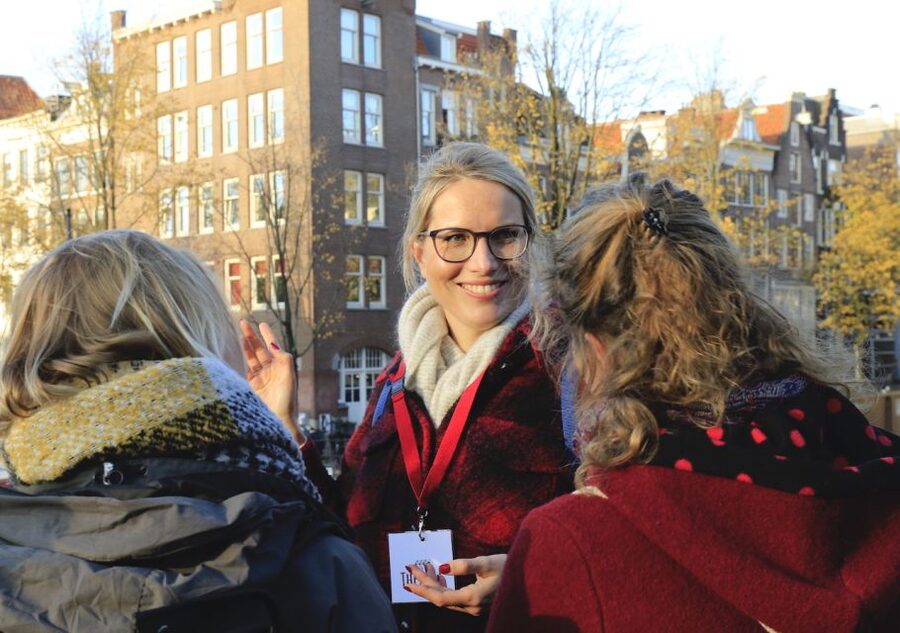
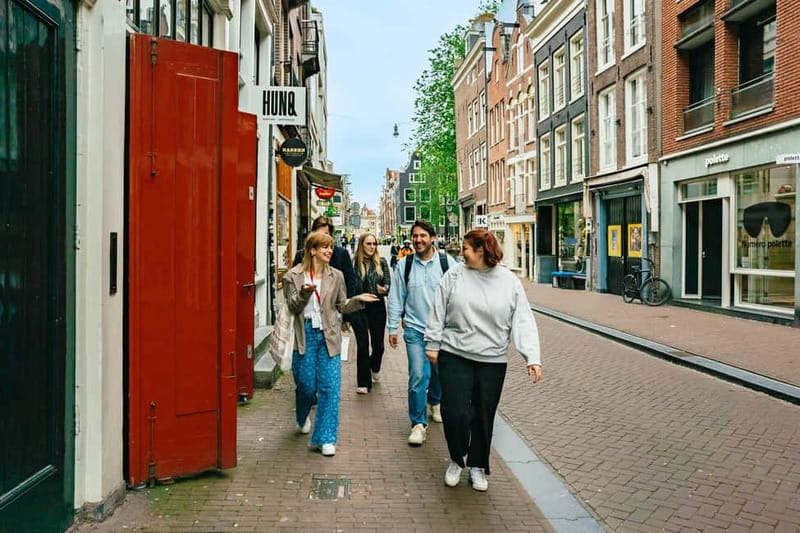
De Negen Straatjes, or the Nine Streets, receives a short guided stop. This canal district is known for its small streets, shops, cafes, and historic setting. The tour does not give you a long shopping session, but it shows you where to return if you want to browse independently.
This is one place where the short duration creates a limit. Five minutes is enough to point out the area and explain its character, but not enough to explore every lane. I would treat the stop as a useful preview rather than a complete visit.
The guide’s local suggestions add value here. You may receive ideas for restaurants, shopping, foods to try, and districts that are better explored by bicycle. Specific advice can save time later, especially if this is your first day in Amsterdam and you are still trying to understand how the central neighborhoods connect.
Several guides have also given guests tips about bitterballen, a classic Dutch snack. The walk does not include food or drinks, so budget separately for anything you want to sample.
Begijnhof, a quieter turn in the center
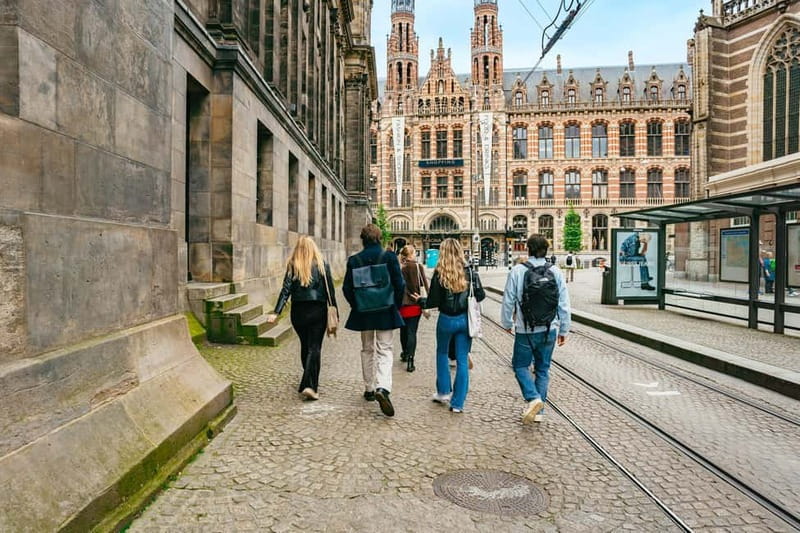
Begijnhof is often the most atmospheric stop on the route. After the open spaces, commercial buildings, monuments, and canals, this enclosed courtyard offers a calmer setting and a different view of Amsterdam’s past.
The guide explains the importance of the Begijnhof and points out the historic buildings around it. You can expect about 15 minutes here, including time for photographs and questions. It is a valuable stop because it shows that central Amsterdam was shaped not only by merchants and public institutions, but also by religious and communal life.
Please remember that Begijnhof is a living historic site, not simply a photo set. Keep your voice low and follow any posted instructions. The tour provides an introduction, but you may want to return later if you prefer to look around slowly.
I particularly like the way this stop changes the rhythm of the walk. It gives you a visual break and makes the central city feel less crowded without taking you far from Dam Square.
Returning along the Amstel and finishing at the monument
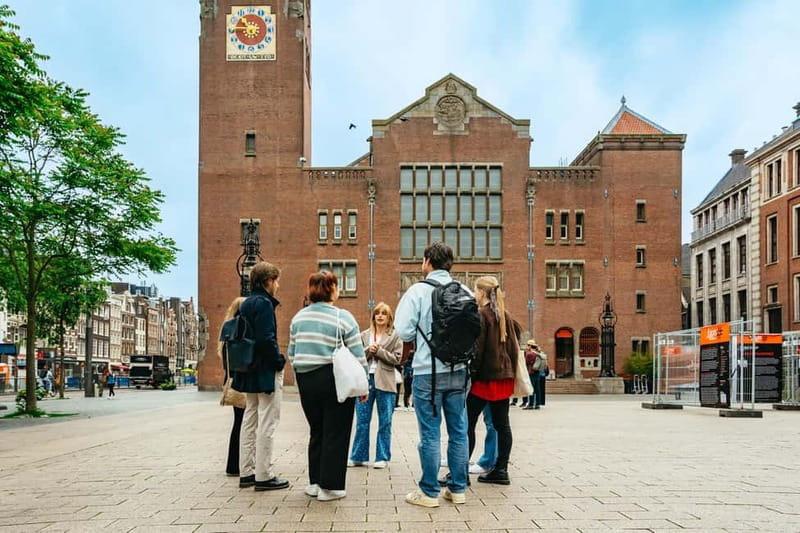
On the way back, the route reaches the Amstel River, the waterway that gave Amsterdam its name. This is a chance to connect the city’s name with its physical setting and to look back at the role of water in Amsterdam’s growth.
The final point is the National Monument on Dam Square. Ending where you began makes the tour easy to follow and leaves you in a useful position for the rest of the day. You can continue toward museums, return to the Nine Streets, seek out food, or use the guide’s suggestions for another district.
The route is described as a two-hour walk, but frequent stops make it less tiring than a continuous march. One guide’s group found the pace comfortable, while another noted that the tour involved less walking than expected. That is good news if you want a city introduction without covering a huge distance, though you should still wear comfortable shoes.
What the $30 price gets you
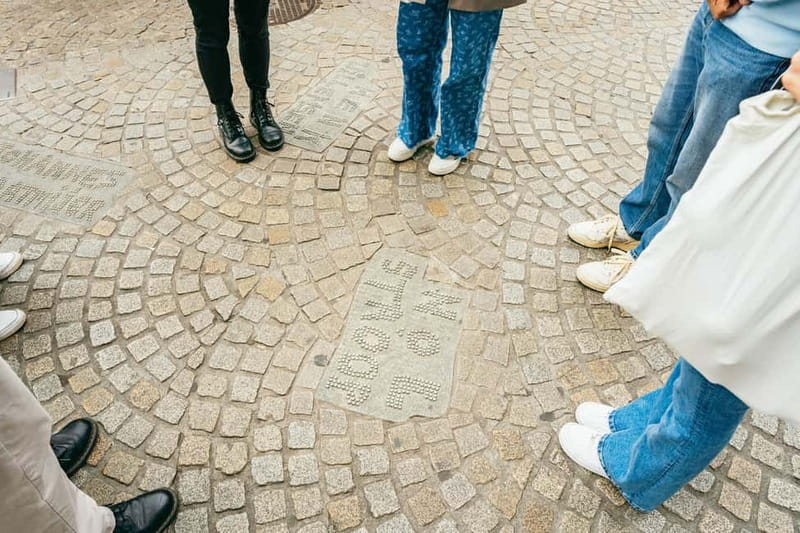
At $30 per person, this is not the cheapest way to hear a few facts about Amsterdam. Its value depends on how much you want from a guide-led introduction.
You are paying for a planned route, a live guide, historical context, cultural discussion, and practical recommendations. Since the tour uses public streets and courtyards, you do not pay admission fees during the walk. That keeps the total cost clear, although it also means the experience is entirely outdoors.
I consider the price fair for a first visit, especially if you use the advice afterward. A good guide can help you avoid spending your short stay only around the most obvious streets. The benefit is greatest when you ask questions and make notes about places to revisit.
The experience also offers free cancellation up to 24 hours in advance and a reserve-now, pay-later option. English, German, and Italian tours are available. A private group can be arranged, and the activity is listed as wheelchair accessible.
The guides and the feel of the experience
The guide is the biggest variable in any city walk, but the pattern here is encouraging. Alex has been praised for combining culture, politics, history, food, and lifestyle in a relaxed way. Deborah is noted for clear historical explanations and patience with questions. Francesco is described as enthusiastic and easy to understand, while Stephanie, Lili, Josh, Santina, Prisha, and others have received praise for warmth, humor, and strong storytelling.
That range matters because the tour covers serious material in a short time. You want someone who can explain Amsterdam’s past clearly, then shift into practical advice without making the walk feel like a classroom.
Small groups can make the experience more personal. Group size is not fixed in the information provided, but some departures have been very small, including a group of three and a group of four. Larger groups may feel less intimate, so stay near the guide and speak up when you have a question.
Weather is another factor. The walk operates outdoors, and one highly praised experience took place in poor weather. Bring an umbrella and water, and wear shoes suited to two hours on city streets. Rain will not erase the value of the route, but it can affect how long you want to pause at each stop.
Who should book this Amsterdam walk?
I would choose this tour for a first or second day in Amsterdam. It gives you a working map of the center and introduces the city’s major themes before you decide which museums, neighborhoods, and food stops deserve more time.
It suits families because the route is broken into short stops and no paid attraction is required. It also suits visitors who prefer a broad cultural picture instead of a tour focused only on canals, architecture, or one historical figure.
You may want something else if you prefer long visits inside museums, a food-focused experience, or a specialized tour about World War II, art, or architecture. The route touches all those subjects, but it does not explore any one of them at museum length.
Should you book it?
Book this walk if you want a clear, friendly introduction to Amsterdam’s center and practical ideas for what to do next. The strongest reasons are the range of subjects, the gentle pace, the frequent questions, and the way the route joins famous sights with less obvious stories about colonialism, wartime memory, sexuality, religion, and everyday life.
Skip it if you already know the center well or want extensive interior visits. For most first-time visitors, $30 is a reasonable price for two hours of orientation, especially when a guide such as Alex, Deborah, Francesco, Stephanie, or Lili turns a collection of pretty streets into a city you can better understand.
FAQ
Where does the Amsterdam Cultural Highlights Walking Tour start?
Meet on the stairs of the National Monument at Dam Square. The monument is a large white pillar or obelisk, and the guide wears a red name tag around their neck.
How long does the tour last?
The walking tour lasts two hours. Check available starting times when booking.
Which languages are available?
Live tours are available in English, German, and Italian.
Are admission tickets included?
No admission tickets are needed during the tour. The route visits sights from outside and includes free-to-enter areas, so there are no entry fees during the walk.
Is the tour suitable for children and wheelchair users?
The tour is suitable for children and is listed as wheelchair accessible.
What should I bring?
Bring comfortable shoes, an umbrella, and water. Food and drinks are not included.
More City Highlights Walking Tours in Amsterdam
- Ho Chi Minh City Street Food Tour & Sightseeing By Motorbike
★ 5.0 · 9,413 reviews - Historic Charleston Guided Sightseeing Walking Tour
★ 5.0 · 6,216 reviews - Dublin Highlights and Hidden Gems Guided Walking Tour
★ 5.0 · 6,020 reviews - Vienna: Guided Walking Tour of City Center Highlights
★ 4.7 · 4,989 reviews
New routes in Amsterdam
- Small Group Walking Tour in Amsterdam with Friendly and Fun Guide★ 5.0 · 281 reviews
- Humans of Amsterdam: Cultural Walking Tour incl. meeting 2 locals★ 5.0 · 320 reviews
- Private Tour: Amsterdam City Walking Tour and Canal Cruise★ 4.5 · 142 reviews
- Amsterdam: Private Introduction Walking Tour (TOP RATED)★ 5.0 · 223 reviews
- Anne Frank and Jewish Quarter Amsterdam Private Walking Tour★ 5.0 · 684 reviews
- Amsterdam: Anne Frank and World War II Walking Tour (TOP RATED)★ 4.5 · 72 reviews
- Secrets of Amsterdam Walking Tour plus Dutch Sweets Tasting★ 5.0 · 111 reviews
- Amsterdam Private Historical Walking Tour★ 5.0 · 75 reviews
Amsterdam Walking Tours, compared.

Amsterdam Anne Frank: Small-Group Walking Tour & Local Guide
Read our review →
Absolutely Amsterdam – the Essential Introductory Walking Tour
Read our review →
Anne Frank Guided Walking Tour in DE/EN/IT/ES
Read our review →
Anne Frank Walking Tour Amsterdam Including Jewish Cultural Quarter
Read our review →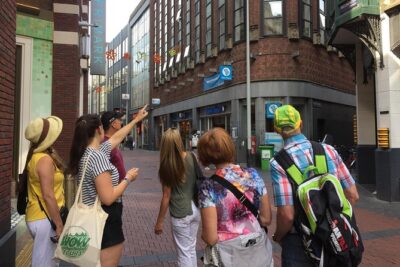
Amsterdam Highlights Walking Tour: Small Group Experience
Read our review →
Anne Frank’s Last Walk & See Anne Frank House in Virtual Reality
Read our review →
Browse the lists this tour appears in