
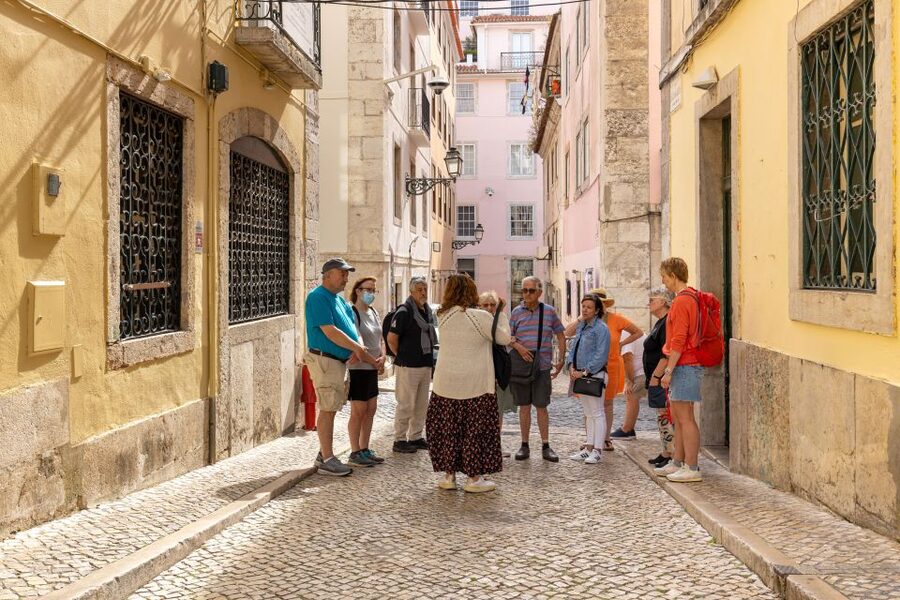
Review · LISBON
Lisbon: History, Stories and Lifestyle Walking Tour
Lisbon’s story is easiest to understand on foot, one hill and one viewpoint at a time. This tour links the old quarters with the 1755 earthquake, the 1974 Carnation Revolution, a classic tram ride, and the narrow lanes of Alfama. It gives you a useful first look at a city that can otherwise feel scattered across its hills.
I especially like the mix of major sights and local details, from the ornate interior of São Roque Church to a simple coffee and pastel de nata stop. I also like the guides’ personal approach. Paulo, Ricardo, Anna, Beatrice, and several other guides are praised for explaining Lisbon with humor, patience, and stories from modern Portuguese life.
The main consideration is the route itself. Lisbon is not flat, and three hours of walking includes hills, steps, and uneven streets. The pace is broken up by stops and a tram ride, but you should still wear good shoes and leave some room in your schedule, since the tour can run a little longer.
Key points at a glance
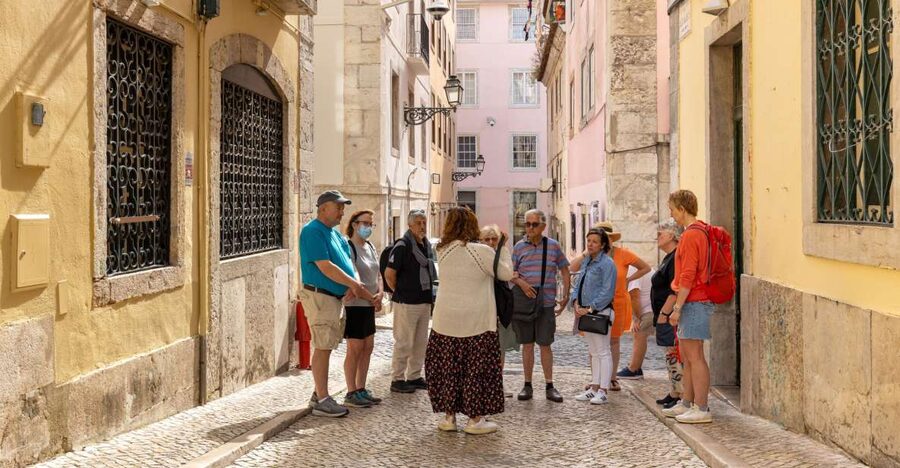
- Bairro Alto begins the story: See a 16th-century district shaped by Lisbon’s growth and rebuilding after the 1755 earthquake.
- São Pedro de Alcântara brings the views: Look over Baixa and across the Tagus toward the south bank.
- São Roque is plain outside, ornate inside: Its modest façade gives little hint of the gilded chapels, tiles, and paintings within.
- Carmo connects architecture with politics: The ruined convent is tied to the 1974 Carnation Revolution, which ended decades of dictatorship.
- The tram ride adds real Lisbon flavor: Ride uphill toward Portas do Sol before exploring Alfama on foot.
- Coffee and cake make a useful pause: The stop usually includes coffee and a pastel de nata, with dietary adjustments sometimes possible.
Why this three-hour route works as a first look at Lisbon
I see this tour as an orientation with a story, not simply a checklist of monuments. Lisbon’s central districts are close together on a map, but the hills, winding lanes, and different layers of construction can make the city hard to read on your own.
The guide helps connect the pieces. You move from the nightlife streets of Bairro Alto to a church filled with Baroque decoration, then down through the central Baixa district before riding uphill toward the oldest quarters. By the end, you have seen how Lisbon changed through royal ambition, religious influence, disaster, dictatorship, and modern city life.
That sequence matters. You are not only looking at pretty streets. You are learning why some areas are orderly and spacious, why others twist around steep slopes, and why Lisbon’s architecture often combines several periods in a single block.
The tour lasts three hours and costs $29 per person. For that price, you receive a live guide, the tram trip, the walking route, coffee, and cake. I consider that good value if you want context and a broad introduction, especially early in your stay. It is less useful if you prefer a slow visit inside every monument, since the route covers several districts rather than spending an hour at one church or viewpoint.
More History Walking Tours in Lisbon
- Lisbon: Private Dark History Walking Tour with Drinks
★ 4.8 · 387 reviews - Lisbon Essential Walking Tour: History, Stories and Lifestyle
★ 5.0 · 316 reviews - Historic Walking Tour Through Lisbon’s Oldest Neighborhood
★ 5.0 · 233 reviews
Bairro Alto and the view from São Pedro de Alcântara
The tour starts in Bairro Alto, a district dating from the 16th century. Today, you may know it for restaurants, bars, and narrow streets, but the guide begins with how the area developed and how Lisbon changed after the earthquake of 1755.
That disaster reshaped the city. Families from Baixa and nearby districts moved into Bairro Alto, helping renew and expand the neighborhood. The guide uses this part of the walk to explain the city’s growth instead of treating the district as a backdrop for photographs.
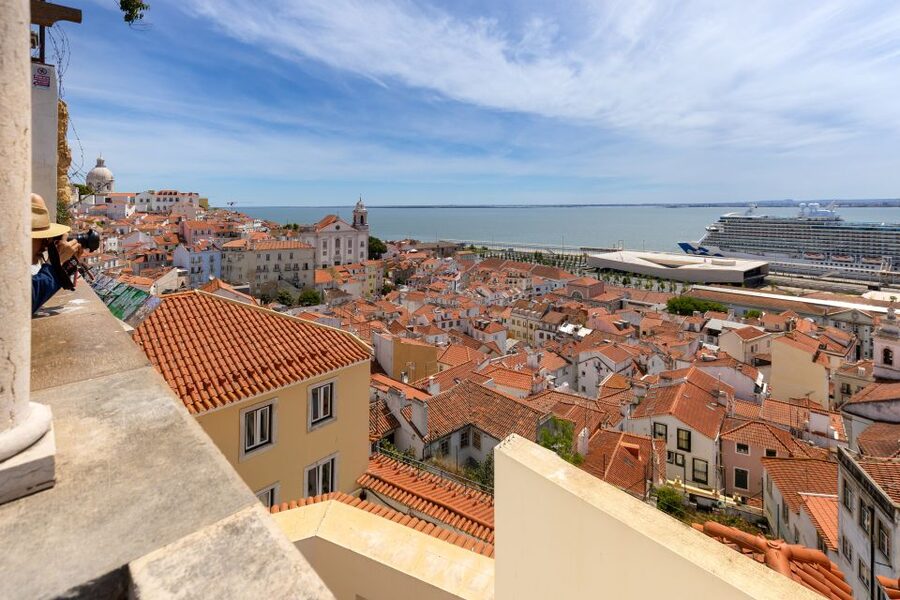
The first major view comes at the garden of São Pedro de Alcântara. From here, you look toward Baixa and across the Tagus River to the south bank. It is a fine place to pause because the view gives you a basic map of central Lisbon. You can begin to understand the city’s steep position above the river and see why viewpoints are part of everyday life here.
Bring a camera, but pay attention to the explanation too. A viewpoint is more useful when you know what you are seeing. The guide can point out the relationship between the central streets, the hilltop areas, and the riverfront.
São Roque Church: modest outside, lavish within
São Roque Church has an austere exterior that does not prepare you for the interior. Built by the Jesuits, it contains gilding, painted panels, and decorative tiles that show the reach of Mannerist and Baroque art in Lisbon.
This is one of the tour’s strongest stops for people who enjoy interiors and details. From the street, the church can seem restrained. Inside, the decoration is much more elaborate, and the contrast helps you understand how religious buildings communicated wealth, power, and devotion.
Your guide’s role matters here. Without an explanation, you might admire the gold and move on. With context, you can pay closer attention to the different styles and to the way the building functions almost like a small art museum.
Keep in mind that this is a walking tour, not a dedicated church visit. The time inside will be limited by the group and the rest of the route. If São Roque interests you greatly, note it as a place to revisit.
Carmo Convent and the memory of 1974
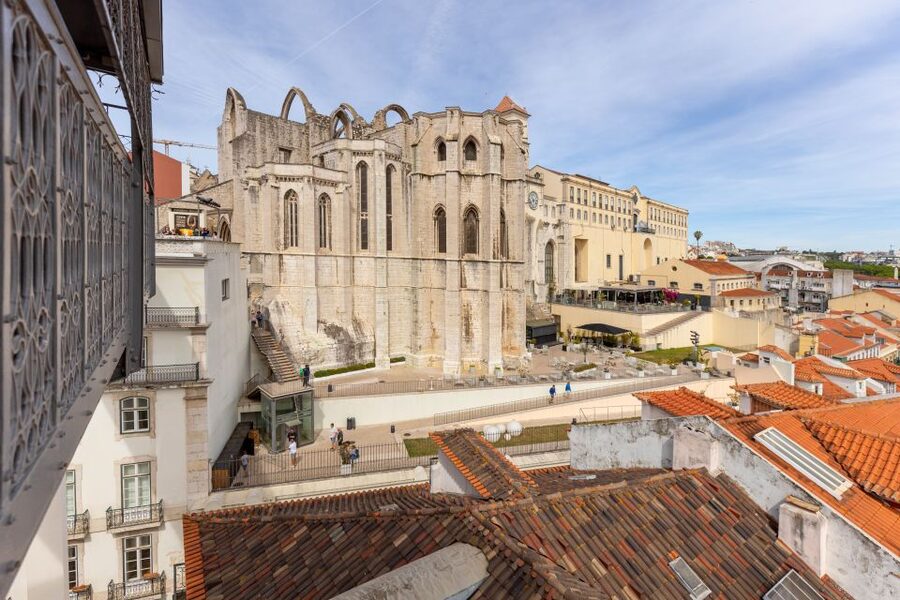
From Bairro Alto, the route heads downhill toward the Carmo convent and church. The building is one of Lisbon’s best reminders that the city has been shaped by both nature and politics.
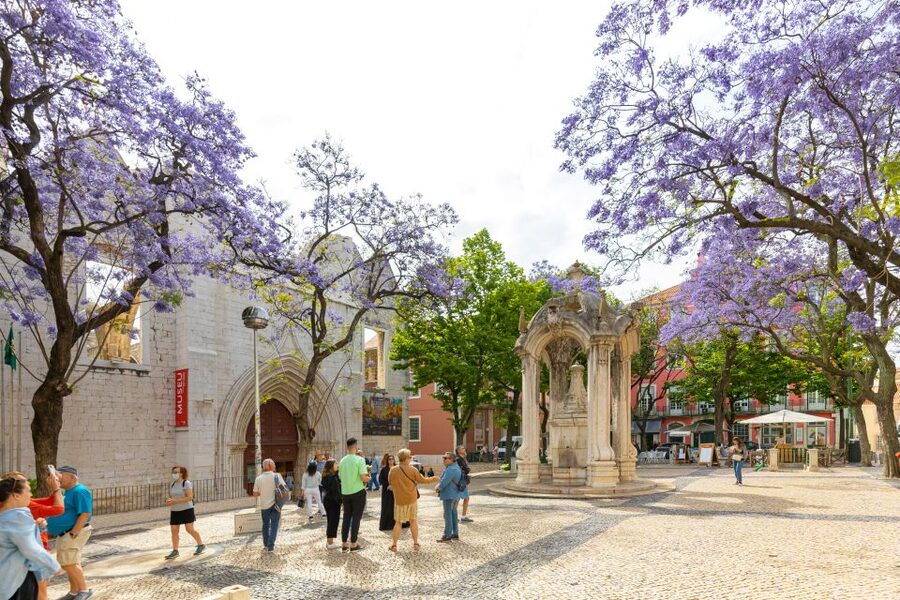
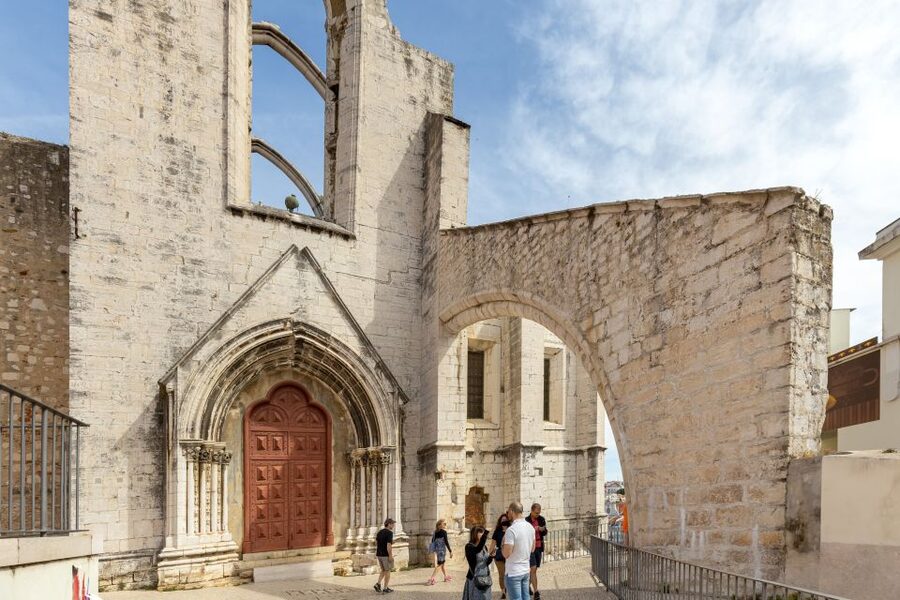
Carmo is a fine example of Gothic architecture, but its damaged form gives it a special character. The 1755 earthquake left the church roofless, and the remains now open the structure to the sky. It is a powerful stop because you can see the effects of the disaster rather than only hear about them.
The site also connects to the Carnation Revolution of 1974. The uprising began here and ended nearly five decades of dictatorship in Portugal. That recent political history gives the stop extra weight. The guide can help you understand that Lisbon is not only a medieval and imperial city. Many of its current freedoms belong to the lifetime of people who still live here.
Several guides bring this period to life in a personal way. Paulo, for example, has spoken about growing up in Lisbon during the revolution, giving the subject a human scale. You should not expect a full political history course, but you will get a clear explanation of why April 25 remains such an important date in Portugal.
More History Walking Tours in Portugal
- Lisbon: 3-Hour The Slave Trade – An Historical Walking Tour
★ 4.9 · 179 reviews - Porto: Historic City Center Walking Tour
★ 4.7 · 1,172 reviews - Porto: Historical Center Walking Tour
★ 4.8 · 898 reviews - Porto: Jewish Heritage Walking Tour
★ 4.7 · 266 reviews
Santa Justa and central Baixa
The route continues toward the Santa Justa elevator, one of Lisbon’s most recognizable structures. Its Gothic Revival design makes it look like a piece of iron lace rising from the central streets.
The elevator provides one of the city’s best viewpoints, though this walking tour is mainly about seeing it and understanding its place in Baixa. Depending on the route and conditions, you may not make a separate ride to the top. If the elevator is high on your personal list, ask the guide how much time you have and consider returning later.
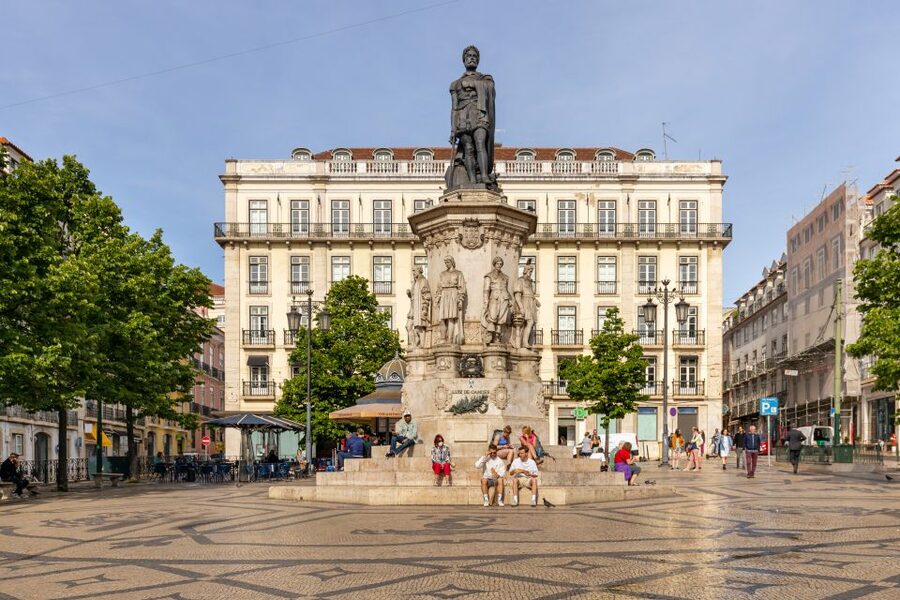
Baixa is the organized heart of central Lisbon. Its streets feel different from the crooked lanes of Alfama because the district was rebuilt with a more regular plan after the earthquake. The guide points out several attractions here while giving you time to take a short break.
That pause is welcome. Three hours is a fair amount of time for a city walk, and the break keeps the tour from becoming a nonstop lecture. It also gives you a chance to ask about restaurants, viewpoints, or places to return to later.
A short tram ride toward Portas do Sol
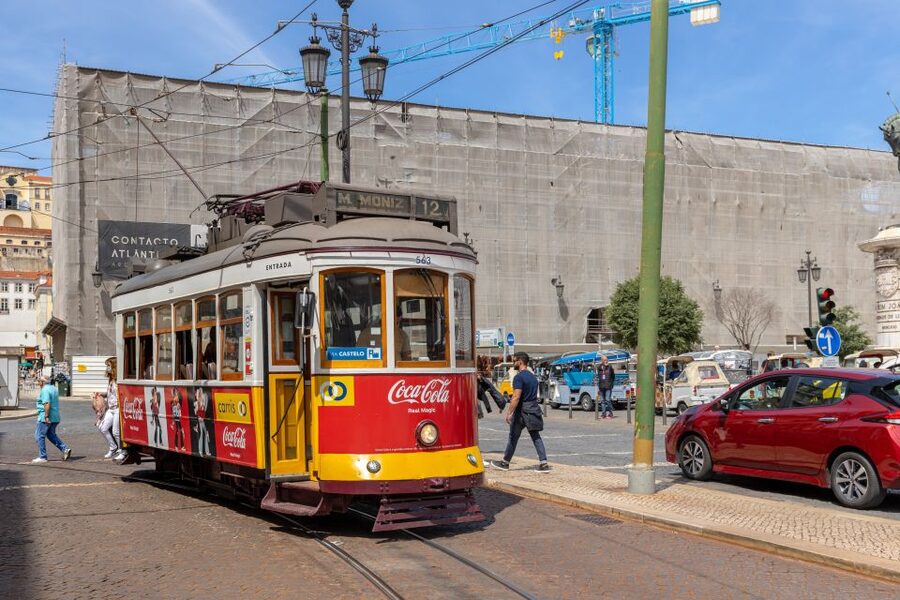
The tram portion is brief, but it gives the tour a needed change of pace. You ride uphill from the castle area toward Portas do Sol, experiencing one of Lisbon’s most familiar forms of transport instead of only photographing it.
The tram is part of daily city life, but it can also be crowded and affected by delays or mechanical problems. One guide had to change the route when the tram broke down and heavy rain arrived, adapting the plan without losing the main points. That is worth knowing: this part of the tour depends on public transport, so the exact flow can change.
A short ride is also more practical than building the whole tour around a tram journey. You get the sensation of the old route, then continue on foot where the city becomes most interesting.
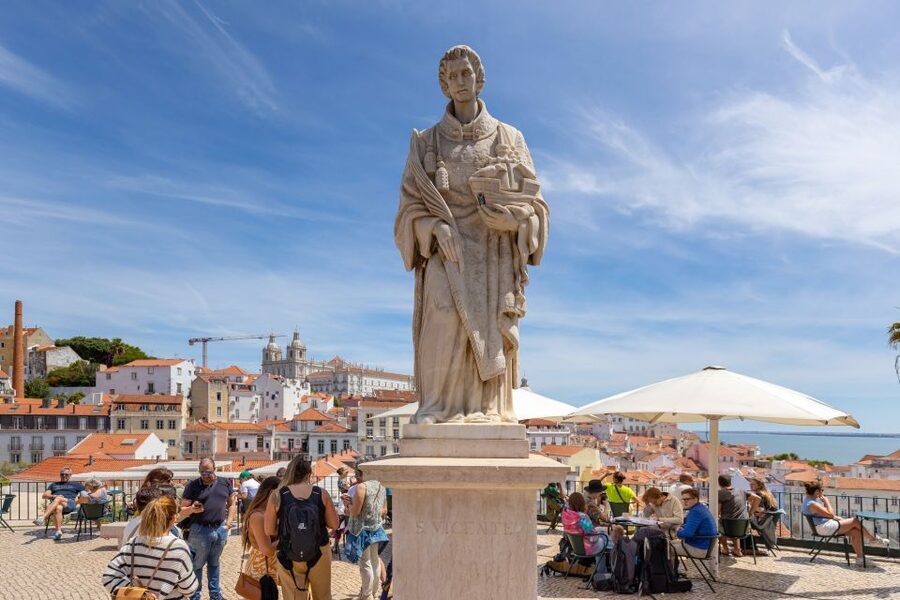
At Portas do Sol, pause for views over Alfama and the Tagus. You can also see the Monastery of São Vicente de Fora and the National Pantheon from this area. The viewpoint helps you understand how Alfama spreads down the hillside in layers of roofs, lanes, and stairways.
Alfama, Lisbon’s oldest traditional quarter
Alfama is the tour’s most atmospheric section. It is one of Lisbon’s oldest neighborhoods, with narrow streets that run and twist toward the river. The district is associated with fado houses, local festivals, and the celebrations of saints, especially St. Anthony.
This is where the walking format pays off. A vehicle cannot show you the small turns, sudden staircases, tiled façades, and changing views that make Alfama distinctive. You walk slowly enough to notice how the neighborhood is put together, while the guide explains how it fits into Lisbon’s wider story.
Do not expect Alfama to feel like a quiet museum. It is a lived-in district, and the streets can be busy or difficult to navigate. The same narrow lanes that make the area appealing can slow the group down. Stay near your guide, particularly at turns and busy corners.
The route is described as manageable for people who are not especially fit because there are many stops and photo breaks. Still, you should not confuse a relaxed pace with a flat walk. Hills and steps remain part of the experience.
Lisbon Cathedral and the final view of the past
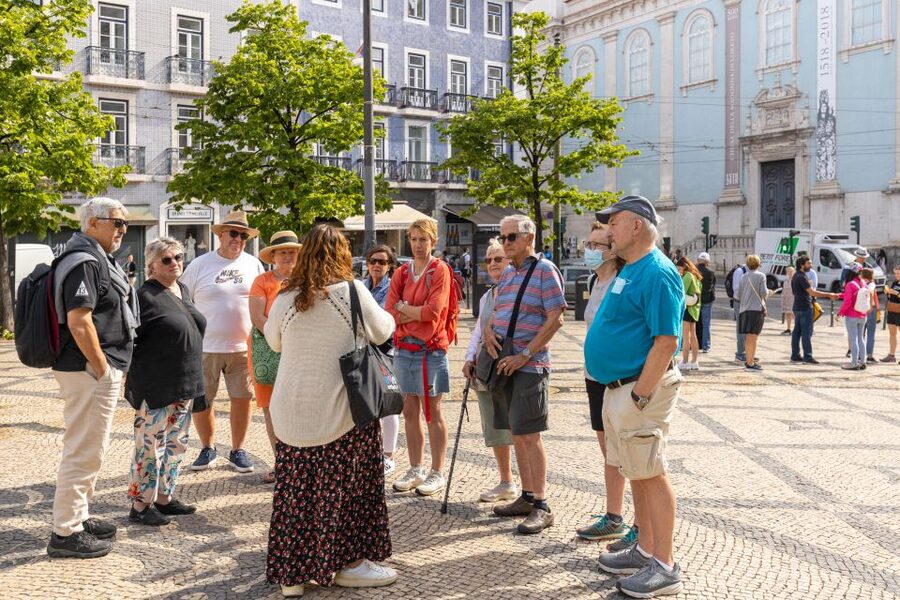
The tour ends at Lisbon Cathedral, built in 1150, three years after Christian forces took the city back from the Moors. Its appearance reflects later changes, so you will see a mixture of architectural styles rather than one perfectly unified design.
That mixture is a fitting end to the tour. Lisbon has been rebuilt, altered, decorated, damaged, and repaired many times. The cathedral helps pull together the themes you have seen all afternoon: conquest, religion, earthquakes, political change, and daily life.
Ending here is also practical. You finish in the historic center, close to Alfama and other places you may want to explore on your own. Ask your guide for suggestions before you part ways. Guides such as Ricardo are especially praised for offering useful ideas about what to do next in the city.
The guides make the biggest difference
This experience depends heavily on who leads it. The strongest guides combine facts with an easy manner, and the available names include Paulo, Ricardo, Anna, Beatrice, Raquel, Lucia, João, Helena, and others.
Paulo is described as a warm storyteller with personal insight into Lisbon and the 1974 revolution. Ricardo is praised for covering everything from ancient history to current changes in the city, while Anna is noted for answering questions and adjusting the pace. Beatrice is particularly good at balancing history with humor and looking after older members of a group.
That range matters because the experience is not built around an audio guide or a fixed script alone. The guide answers questions, adds local tips, and adjusts when rain, transport problems, or group needs affect the route. A smaller group makes it easier to hear explanations and ask questions. Private and small-group options are available if you want a more personal pace.
The tour is offered in Portuguese, Spanish, Italian, German, French, and English. Check the language and meeting point when you book, since the meeting location can vary by option.
Coffee, cake, and practical value
The food stop is modest but well judged. Coffee and cake give you a short rest after the hills, and the usual combination is an espresso-style coffee, sometimes called a bica, with a pastel de nata.
This is not a full meal, so do not book the tour expecting lunch. Think of it as a small taste of Lisbon and a chance to sit, talk, and ask questions. One guide arranged a vegan spinach snack instead of a traditional pastry for a vegetarian participant, suggesting that dietary needs may sometimes be accommodated. Ask in advance rather than counting on a particular substitute.
At $29, the included tram ride and refreshment improve the value. You are also paying for three hours of local explanation, route planning, and a useful introduction to neighborhoods that can be confusing on your own. For a first day in Lisbon, that can save time later because you learn which areas deserve a longer visit.
Free cancellation is available up to 24 hours before the tour, and you can reserve now and pay later. Those terms are useful when your arrival plans may shift, but the more important practical point is to leave some spare time afterward.
Who should book this Lisbon walk
I would choose this tour if you are visiting Lisbon for the first time and want a broad introduction before exploring alone. It suits people who like history, architecture, local stories, viewpoints, and a bit of public transport in one outing.
It also works well for solo visitors. The route creates easy opportunities to meet other people, while the guide keeps the group moving and explains what you are seeing. Families with older children may enjoy it, especially if the children can handle hills and several hours on foot.
You may want a different experience if you dislike hills, need a fully step-free route, or prefer long visits inside each monument. The tour covers a lot of ground, so it favors range over depth. Rain can also affect the tram and walking portions, though the guides have shown that they can adjust the plan.
Should you book it?
Yes, if you want to get your bearings quickly and understand how Lisbon’s districts connect. For $29, the combination of Bairro Alto, São Roque, Carmo, Baixa, Santa Justa, a tram ride, Portas do Sol, Alfama, coffee, and cake is a strong introduction.
Book it near the start of your stay if possible. You will leave with a clearer sense of where to return, plus practical suggestions from a local guide. Just wear supportive shoes, expect hills, and allow extra time in case the route runs beyond three hours.
FAQ
How long is the Lisbon History, Stories and Lifestyle Walking Tour?
The tour lasts three hours. Starting times depend on availability and the option you select.
What is included in the tour price?
The $29 price includes a live guide, the walking tour, a tram trip, coffee, and cake.
Which Lisbon neighborhoods does the tour visit?
The route includes Bairro Alto, Baixa, Alfama, and the area around Carmo, Santa Justa, Portas do Sol, and Lisbon Cathedral.
Is the tram ride included?
Yes. A short tram trip toward Portas do Sol is included in the tour.
Which languages are available?
The tour is available in Portuguese, Spanish, Italian, German, French, and English.
Can I book a private or small-group tour?
Yes. Private and small-group options are available, depending on the booking choice.
New routes in Lisbon
- Small Group Walking Tour of Belém★ 4.9 · 80 reviews
- Lisbon: Walking Tour in the Center (Max 12 Participants)★ 5.0 · 741 reviews
- Lisbon Through the Eyes of a Local – Food and Walking Tour★ 4.9 · 141 reviews
- Lisbon Tram No. 28 Ride & Walking Tour★ 4.1 · 766 reviews
- Lisbon: Street Art Walk★ 5.0 · 79 reviews
- Lisbon: Food and Culture 3-Hour Walking Tour★ 4.7 · 95 reviews
- Lisbon: Private Boat Trip, Guided Walking Tour, Bike & Tram★ 4.8 · 116 reviews
- Lisbon: Jewish Walking Tour★ 4.9 · 96 reviews
Lisbon Walking Tours, compared.
Best of Lisbon Small-Group Guided Walking Tour
Read our review →
Best of Lisbon Walking Tour: Rossio, Chiado & Alfama
Read our review →

Lisbon Food Tour with 10+ Tastings of Local Delicacies & Wines
Read our review →
Sintra & Cascais Day Tour with Pena Palace Entry and Gardens Walk
Read our review →
Lisbon Roots – Small group Food & Culture Walking Tour w/tastings
Read our review →
Lisbon Private Food Tour – Taste 10+ Local Dishes & Wines
Read our review →Browse the lists this tour appears in