
Review · LISBON
Lisbon Through the Eyes of a Local – Food and Walking Tour
Lisbon makes more sense when someone explains the city as you walk. This $17 local-led tour links the grand squares of Baixa with the crooked lanes of Alfama, adding pastel de nata, ginjinha, chocolate, and plenty of stories about Portuguese life. Guides Francisco and Chico receive the most praise, though JLO also leads the experience.
I like the way the tour gives you useful bearings early in your trip, and I like the final restaurant and bar suggestions, which can save you from guessing at tourist menus. The main consideration is time: two hours is enough for an introduction, not enough for a slow visit inside every landmark.
Key points at a glance
- Start beneath the Pedro IV Column: Meet in the middle of Rossio Square, an easy central point in Baixa.
- Taste Lisbon as you walk: The stops include pastel de nata, homemade ginjinha, and chocolate served with the cherry liqueur.
- Cover two very different districts: See the orderly streets of Baixa and the older, hillier lanes of Alfama.
- Get more than a standard sightseeing script: Francisco and Chico are praised for humor, local stories, practical warnings, and answers to questions.
- Finish with useful local advice: You receive suggestions for restaurants, bars, fado, sights, and additional activities.
- Plan for a brisk introduction: The route includes many stops in two hours, with short visits and photo pauses rather than long museum time.
Why this short Lisbon walk works so well
This is a city orientation walk with food built into it, rather than a full food tour or a formal monument tour. You move through central Lisbon, pause for small tastes, and learn how the districts fit together.
I especially like this format for your first day. The route begins at Rossio and reaches Baixa, Rua Augusta, Praça do Comércio, Alfama, and the cathedral. After two hours, you should have a basic mental map of central Lisbon and a better idea of where to return on your own.
The local angle matters. An alfacinha is a native Lisboeta, and the experience is designed around seeing the city through that perspective. The guide discusses history, myths, local customs, food, religion, and present day life rather than simply naming buildings.
Francisco is the guide most often associated with this experience. His style is lively, funny, and direct. Chico is another name connected with the tour, and JLO has also led it. The exact guide may vary, so book this for the local format rather than for a guaranteed individual guide.
More Food Walking Tours in Lisbon
- Lisbon: Food and Wine Small Group Walking Tour
★ 4.9 · 4,082 reviews - Lisbon Food Tour with 10+ Tastings of Local Delicacies & Wines
★ 5.0 · 1,339 reviews - Lisbon Roots – Small group Food & Culture Walking Tour w/tastings
★ 5.0 · 910 reviews
Meeting at Rossio and entering Lisbon’s center
You meet beneath the Column of Pedro IV in the middle of Praça do Rossio. This is a clear landmark in a busy square, but give yourself a few minutes to find the column and gather before the start.
Rossio is a good place to begin because it sits at the center of old Lisbon’s tourist district. From here, you can quickly reach Baixa, the main streets of Chiado, and the approach to Alfama.
The opening part of the walk focuses on orientation. You are not simply rushing from one landmark to the next. The guide uses the square and nearby streets to explain Lisbon’s layout, local habits, and historical layers.
The tour is offered in English and is wheelchair accessible. Still, you should ask about your own mobility needs when booking, since the route includes Alfama, a district known for narrow streets, slopes, and uneven walking surfaces. The supplied information confirms accessibility, but it does not give detailed route measurements or restroom information.
São Domingos Square and the Church of São Domingos
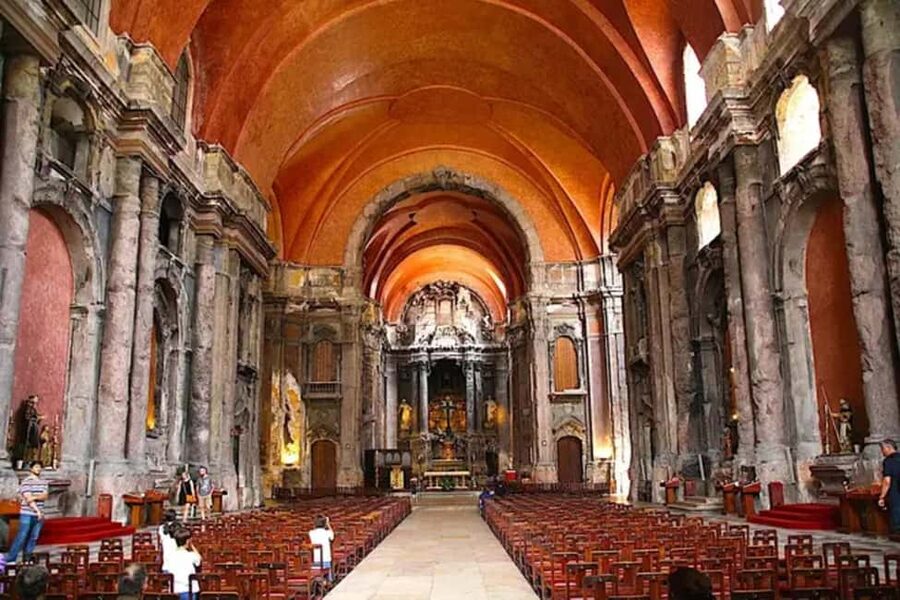
The first major stops are São Domingos Square and the Church of São Domingos. You get time for photographs and a guided explanation, with about 15 minutes listed for each stop.
This is a useful early lesson in Lisbon’s character. The city’s central squares can look polished and open, while the buildings around them carry traces of fire, earthquake, religious history, and everyday city life.
Inside or around the church, the guide can provide context that you might miss on a quick self-guided visit. The point is not a long architectural study. It is a compact look at one of the places that gives central Lisbon its particular mood.
You should expect a guided visit and sightseeing stop, not a lengthy church tour. If you want quiet time for detailed photographs or personal reflection, you may need to return later.
Praça da Figueira and the changing face of Baixa

From São Domingos, the walk continues to Praça da Figueira. This broad square gives you another chance to understand Baixa, the lower central district rebuilt in a more organized form after the 1755 earthquake.
The guide uses the walk to connect visible streets with Lisbon’s past. You learn not only what happened to the city, but also how history shapes the way people use its squares and commercial streets today.
The listed timing allows roughly 15 minutes here. That is enough for a short explanation, photos, and questions. It is not a full market or neighborhood visit, so keep your expectations in line with the tour’s compact format.
This section is particularly useful if you are staying in central Lisbon. You can return later to explore shops, cafés, and side streets at your own pace, now with a better sense of direction.
More Food Walking Tours in Portugal
- Lisbon Private Food Tour – Taste 10+ Local Dishes & Wines
★ 5.0 · 896 reviews - Eat & Walk Through Lisbon: A Local Food & Wine Experience
★ 4.9 · 458 reviews - Lisbon: Baixa Food Walking Tour with Drinks
★ 4.9 · 354 reviews - Lisbon: Food & Wine Walking Tour Through Baixa
★ 4.9 · 287 reviews
Rua Augusta, Santa Justa, and the pastry stop
Rua Augusta is one of central Lisbon’s main pedestrian streets. It leads toward the river and brings together grand architecture, shops, cafés, and a steady stream of people.
The walk includes views of the Elevador de Santa Justa. The lift is one of Lisbon’s famous sights, but this experience does not promise a ride or a visit to its upper platform. You see and discuss it as part of the route, which is an important distinction if riding the elevator is high on your list.
The food stop comes at a local bakery, where you taste pastel de nata. Several details make this more useful than simply being handed a packaged pastry. The guide takes you to a pastry shop, and some descriptions indicate that the custard tart is served fresh and can be watched as it is prepared.
A pastel de nata is small, so do not expect this to replace lunch. Think of it as a proper Lisbon introduction to flaky pastry and warm custard. It also gives the walk a welcome pause after several sightseeing stops.
The bakery visit includes free time, food tasting, and a guided explanation. If you have dietary restrictions, raise them before the tour. The information confirms the pastry tasting, but it does not promise alternatives.
The Rua Augusta Arch and Praça do Comércio
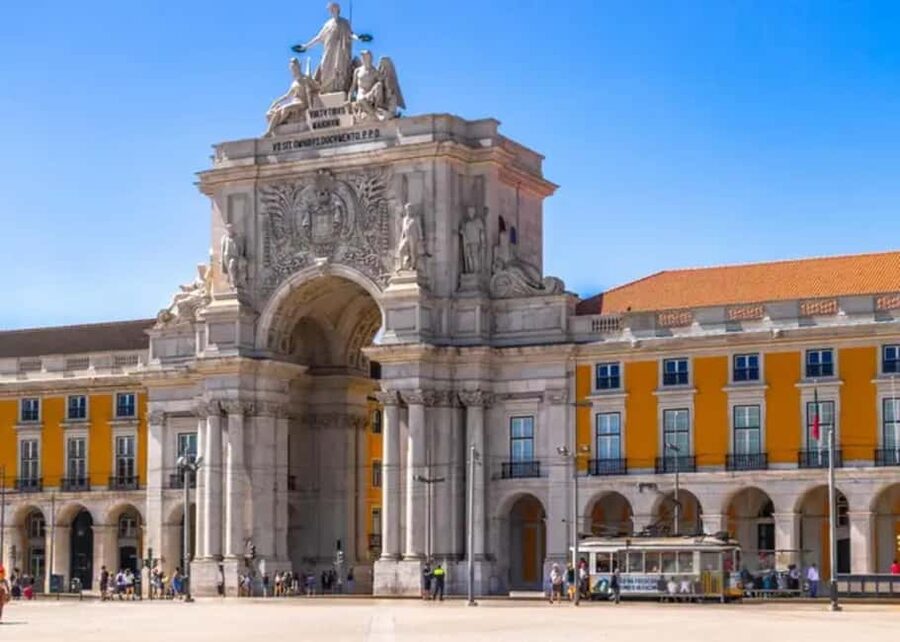
After Rua Augusta, the route reaches the Rua Augusta Arch and Praça do Comércio. These are among the most recognizable spaces in Lisbon, and they help explain the city’s relationship with the river.
The arch frames the approach to the square. Praça do Comércio opens wide toward the Tagus, giving you one of the walk’s clearest scenic moments. The listed stop includes photographs, sightseeing, and a guided explanation rather than entry to the arch.
I like this part because it shifts the mood of the tour. You move from streets and façades into a large public square with room to see Lisbon’s scale. The guide can also place the rebuilding of Baixa into a wider story about the earthquake and the city’s recovery.
The views are one of the strongest reasons to take the walk early in your visit. You learn where the riverfront sits in relation to Rossio and Alfama, then you can return later when you want a slower stroll or sunset light.
Walking into Alfama for ginjinha and chocolate
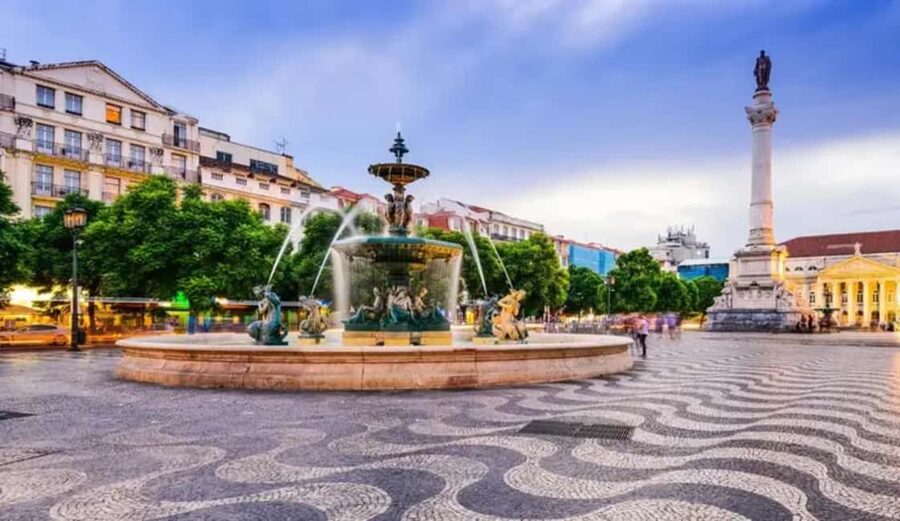
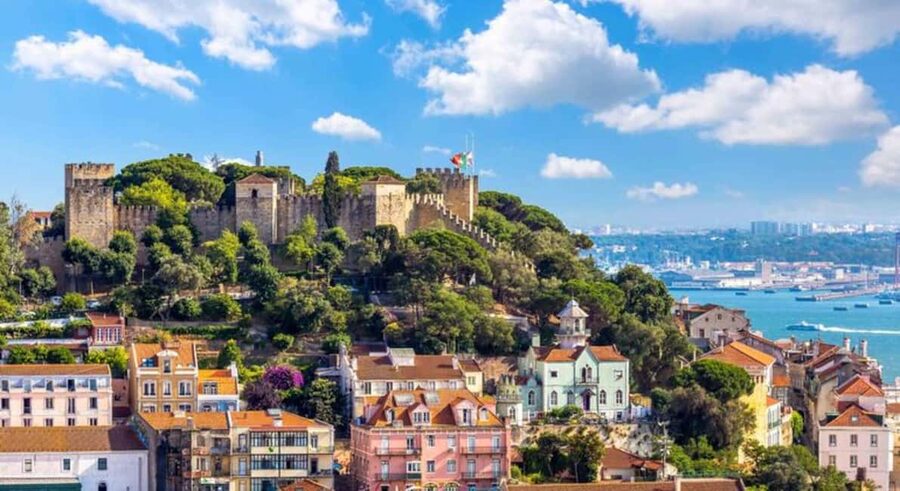
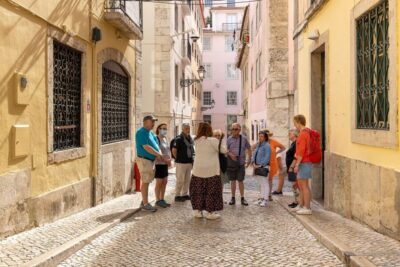
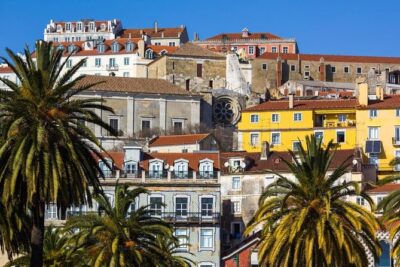
The route then turns toward Alfama, Lisbon’s older hill district. This is where the experience becomes less orderly and more intimate. Expect narrow streets, changing views, and a stronger sense of the old city’s street pattern.
The food and drink here are different from the pastry stop. You try ginjinha, a sweet cherry liqueur, with chocolate. The tasting is sometimes described as a homemade or local serving, and the chocolate may act as the small cup for the liqueur.
Ginjinha is a classic Lisbon taste, but it is still alcohol. The amount is a tasting portion, not a full drink. If you do not drink alcohol, confirm what nonalcoholic option is available before booking, since the supplied details do not promise one.
Alfama is also where the guide’s local stories matter most. You hear myths and legends alongside historical explanation, with room for questions about Portuguese traditions, fado, food, and daily life.
The route’s Alfama section includes scenic views, photographs, and a visit. You should expect walking rather than a long stop at a single attraction. The district can be demanding for anyone with limited mobility, even though the activity is listed as wheelchair accessible.
Lisbon Cathedral and the final local advice
The walk ends around Sé de Lisboa, the city’s cathedral. The cathedral stop includes a guided explanation, photographs, and a chance to see another major landmark in the old city.
The cathedral helps tie the route together. You have moved from Rossio’s central square, across Baixa’s planned streets, toward Alfama’s older lanes and one of Lisbon’s most important religious sites.
The tour does not promise a long interior visit or a detailed architectural lecture. Its value is the connection between the cathedral, Alfama, and the wider story of Lisbon. If you want to explore the cathedral at length, plan a separate return visit.
The final recommendations may be the most practical part of the experience. The guide sends or provides suggestions for restaurants, bars, fado, and other sights. Several comments describe advice tailored to dietary needs, special interests, and places open on difficult dates such as New Year’s Day.
This is a real advantage of taking the tour near the beginning of your stay. You can ask where to eat that night, which fado options seem worthwhile, and which nearby sights fit your remaining time. Francisco is also described as staying available for questions through WhatsApp after the walk, though you should confirm the exact contact arrangement when booking.
What the guide adds to the price
At $17 per person, this is inexpensive for a two-hour guided walk that includes three tasting elements. The value is not in the amount of food. A pastel de nata, a small ginjinha, and chocolate will not fill you up.
The value comes from the combination of orientation, local interpretation, and follow-up advice. A bad restaurant choice in central Lisbon can easily cost more than the tour itself, so practical recommendations may have genuine financial value.
Francisco is repeatedly praised for humor, clear English, generous answers, and a willingness to adjust the conversation to the group. One person with dietary needs received specific restaurant help. Another found the advice useful enough to avoid a costly mistake. Those details suggest that asking direct questions is part of getting the most from the walk.
The tour also suits solo visitors. It gives you a social way to see the center without committing to a full day with a private guide. Small groups can make the experience feel personal, though group size is not specified, so do not assume you will always have a private or tiny group.
Timing, pace, and practical limits
Two hours passes quickly on this route. The planned stops are generally about 15 minutes each, and the experience covers many places. That means you will hear short explanations, take photographs, taste a few items, and keep moving.
I would not book it if your main goal is long interior visits or a serious food crawl. You do not get a full meal, extended time at the cathedral, or a promised ride on Santa Justa.
I would book it if you want a lively introduction before exploring independently. The pace is described as easy by several people, and the guide has adjusted the walk for hot weather. Even so, wear comfortable shoes and bring water, especially in summer.
The route includes mostly central sightseeing and is not presented as a strenuous hike. Alfama can still feel steep or uneven. If you use a wheelchair or have mobility concerns, contact the provider through WhatsApp or Signal before booking and ask exactly how the planned route will be handled.
Cancellation is free up to 24 hours before the activity, and you can reserve now and pay later. That flexibility is useful if your arrival plans are uncertain.
Who should book this Lisbon experience
I think this tour suits you best if:
- You are visiting Lisbon for the first time.
- You want a short introduction before choosing where to return.
- You prefer stories and conversation over a formal lecture.
- You want to taste local specialties without spending much.
- You are traveling solo and would like a guided social activity.
- You want restaurant, bar, fado, and sightseeing suggestions from someone based in Lisbon.
- You enjoy humor and do not mind a guide with a strong personal style.
It may suit families and older visitors, but the walking conditions in Alfama deserve attention. It may also work well for a quick stopover, since the route starts in a central district and covers several major sights in a short time.
If you have already spent several days exploring Baixa and Alfama, the sightseeing may feel familiar. In that case, the guide’s local stories and food advice become the main reason to book.
Should you book it?
Book this tour if you want to get your bearings, taste a few Lisbon staples, and leave with a useful local contact. At $17, it offers strong value, especially near the start of a trip.
Skip it if you want a full meal, museum access, a long cathedral visit, or a private itinerary built around one narrow interest. For most first time visitors, though, the mix of Baixa, Alfama, history, humor, views, pastel de nata, ginjinha, and practical recommendations makes this a smart two-hour introduction.
FAQ
Where does the tour meet?
The meeting point is beneath the Column of Pedro IV in the middle of Rossio Square.
How long does the experience last?
The walking tour lasts two hours.
What language is the tour offered in?
The live tour guide speaks English.
Which Lisbon neighborhoods does the route visit?
The route explores Baixa, also referred to as Baixa Chiado, and Alfama.
What food and drink are included?
The experience includes pastel de nata, ginjinha, which is cherry liqueur, and chocolate.
Does the tour include the Elevador de Santa Justa?
The route includes the Elevador de Santa Justa as a sightseeing stop, but the supplied information does not state that a ride or interior visit is included.
Can I cancel the booking?
Yes. You can cancel up to 24 hours in advance for a full refund. You can also reserve now and pay later.
New routes in Lisbon
- Small Group Walking Tour of Belém★ 4.9 · 80 reviews
- Lisbon: Walking Tour in the Center (Max 12 Participants)★ 5.0 · 741 reviews
- Lisbon: Street Art Walk★ 5.0 · 79 reviews
- Lisbon: Food and Culture 3-Hour Walking Tour★ 4.7 · 95 reviews
- Lisbon Tram No. 28 Ride & Walking Tour★ 4.1 · 766 reviews
- Lisbon: Private Boat Trip, Guided Walking Tour, Bike & Tram★ 4.8 · 116 reviews
- Lisbon: Jewish Walking Tour★ 4.9 · 96 reviews
- Lisbon: Helicopter Ride, Boat Trip, & Old Town Walking Tour★ 4.7 · 480 reviews
Lisbon Walking Tours, compared.
Best of Lisbon Small-Group Guided Walking Tour
Read our review →
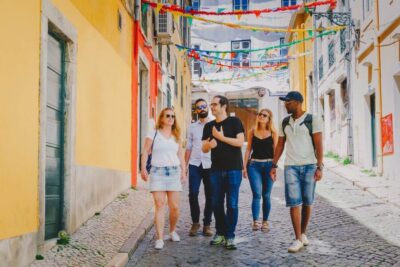
Best of Lisbon Walking Tour: Rossio, Chiado & Alfama
Read our review →
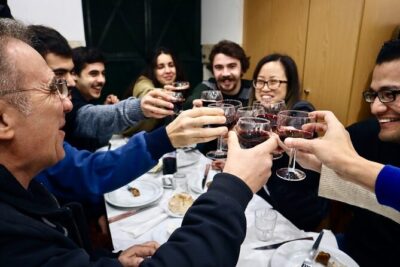
Lisbon Food Tour with 10+ Tastings of Local Delicacies & Wines
Read our review →
Sintra & Cascais Day Tour with Pena Palace Entry and Gardens Walk
Read our review →
Lisbon Roots – Small group Food & Culture Walking Tour w/tastings
Read our review →Browse the lists this tour appears in