
Review · LISBON
Lisbon: Walking Tour in the Center (Max 12 Participants)
Lisbon’s center is best understood on foot, and this route gives you the city’s big contrasts in one outing: grand Baixa, literary Chiado, nightlife-oriented Bairro Alto, and the crooked lanes of Alfama. I like the small maximum of 12 people, which makes it easier to hear a guide such as Pedro, Sara, or Melina. I also like the fine river views and the way the walk links famous sights with ordinary streets.
The main catch is physical. You will go up and down three of Lisbon’s hills, with plenty of walking over slopes and uneven streets. The route suits travelers who want a broad first look at central Lisbon, but it is not suitable for wheelchair users or people with mobility limits.
Key points to know before booking
- Three hills in 3.5 hours: This is an active introduction to Lisbon, not a gentle stroll.
- Four central districts: Baixa, Chiado, Bairro Alto, and Alfama each show a different side of the city.
- Maximum group of 12: The group size keeps the guide close and the commentary easier to follow.
- A strong mix of sights: You see the Santa Justa Lift, Carmo Monastery ruins, Lisbon tiles, viewpoints, and the Tagus waterfront.
- German-speaking guides: Pedro, Sara, and Melina are named in the available feedback, with praise for clear, entertaining explanations.
- Ends at Praça do Comércio: You finish beside the river, near the Arco de Rua Augusta, with the rest of the afternoon free.
Starting at Rossio Square
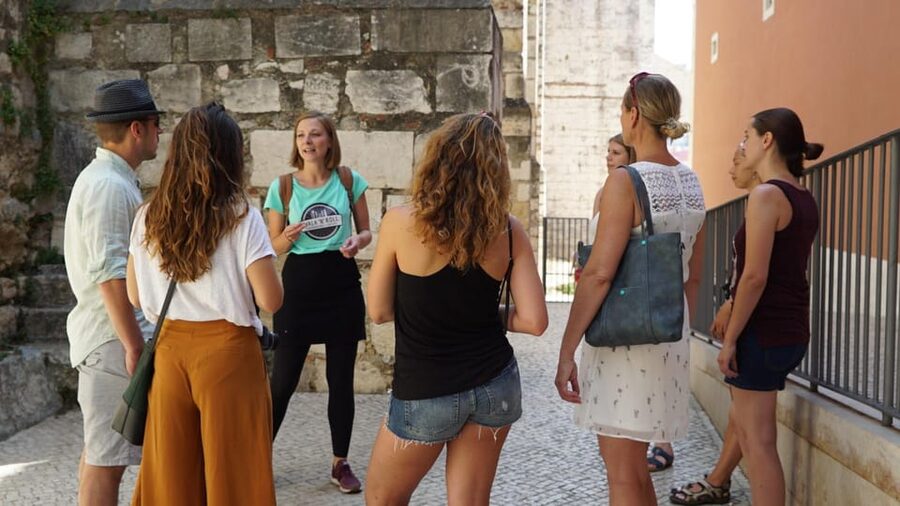
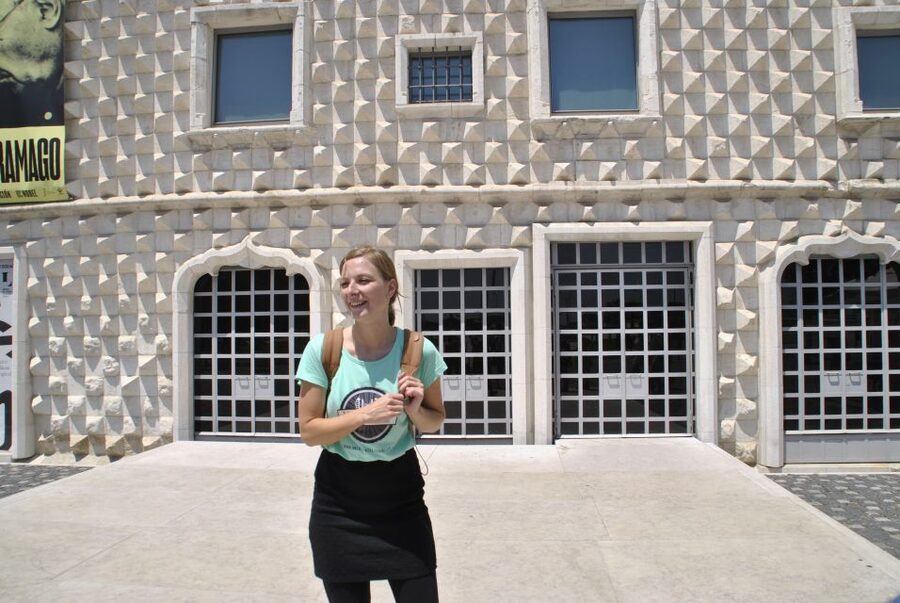
Meet at the north fountain in Rossio Square, between the National Theater and the Royal Statue. Look for a guide wearing a mint-colored WALK ‘N’ ROLL shirt or carrying a mint-colored WALK ‘N’ ROLL burlap bag.
This is a useful starting point. Rossio sits at the heart of central Lisbon, and from here you can quickly see how the city is arranged. Baixa spreads below the hills, while Chiado, Bairro Alto, and Alfama rise around it. Your guide uses the first part of the walk to put the streets and neighborhoods into context.
Give yourself enough time to find the fountain. Rossio is an open, busy square, and meeting points can be harder to spot when several groups are gathering. Comfortable shoes, water, and sunscreen are not optional extras here. You will feel all three hills in your legs.
More Walking Tours in Lisbon:
- Lisbon: History, Stories and Lifestyle Walking Tour
★ 4.8 · 10,902 reviews - Best of Lisbon Small-Group Guided Walking Tour
★ 5.0 · 4,869 reviews - Lisbon: Food and Wine Small Group Walking Tour
★ 4.9 · 4,082 reviews
Baixa and the Santa Justa Lift
The first section leads through Baixa de Lisboa, the lower town. Its broad streets and formal layout feel different from the winding lanes higher up. This is one of the best places to get your bearings and see how central Lisbon was planned after major rebuilding changed the city.
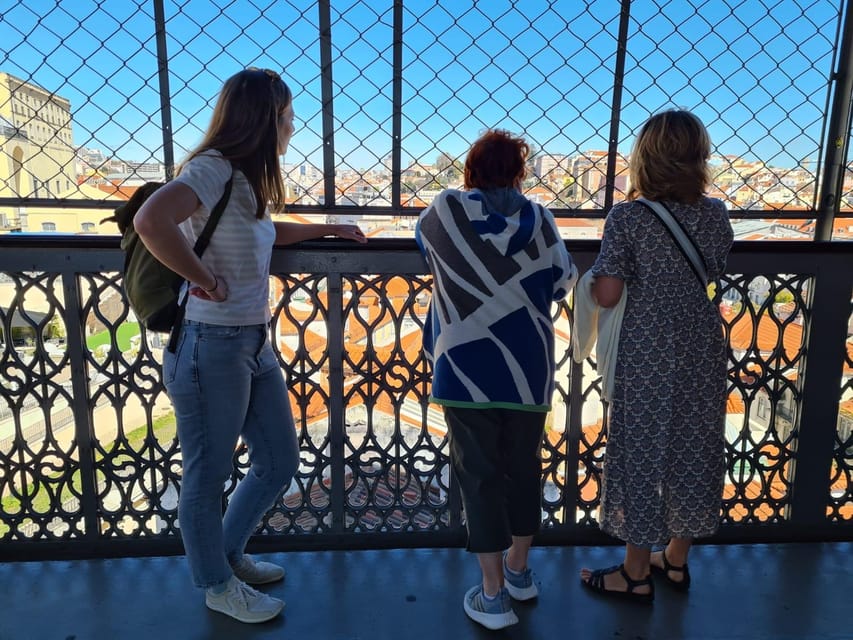
The Santa Justa Lift is one of the walk’s most recognizable sights. Its tall iron structure rises above the surrounding streets and connects the lower town with the area around Carmo. The guide explains the lift and its place in Lisbon’s city center, while you get a close look at a landmark that is easy to miss if you simply rush between shops and cafés.
I like this part because it gives you a clear visual transition. You begin among straight streets and open squares, then climb toward older quarters where the city feels less orderly and more personal. The route does not promise a ride on the lift, so think of this as a guided exterior stop rather than a ticketed attraction visit.
Carmo Monastery and Lisbon’s tiles
After the Santa Justa Lift, you walk up the first hill to the ruins of the Carmo Monastery. The roofless Gothic remains are among the most memorable sights in central Lisbon. The open arches give the site a strong sense of place without requiring a long museum visit.
The guide adds the historical setting, which helps the ruins mean more than a quick photo stop. You also come across some of Lisbon’s most attractive tiles along the way. Tiles are not just decoration here. They appear on façades, inside buildings, and across everyday streets, giving the city a visual style that you can keep noticing for the rest of your stay.
This section also signals what the tour does well. It combines a famous landmark with small details you might otherwise pass without understanding. The tradeoff is that you have limited time at each point. If you want a slow visit inside every major sight, this route will feel brisk.
Chiado, the poets’ quarter
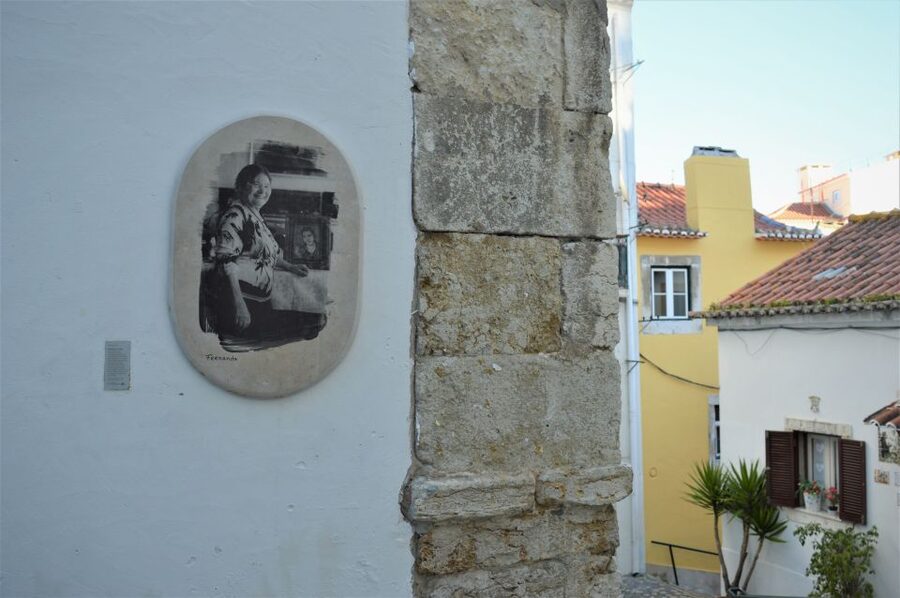
From Carmo, the walk moves into Chiado, once associated with Lisbon’s poets and writers. Today, it is one of the city center’s most visited districts, with a mix of old streets, cultural landmarks, and busy commercial life.
The guide’s role matters here. A good explanation turns a pleasant street into part of Lisbon’s story, and the feedback about Pedro, Sara, and Melina repeatedly points to tours that were informative without becoming dull. That balance is valuable on a long walking route. You want enough history to understand the city, but not so much detail that the hills become harder to face.
Chiado is also a practical place to note for later. If you want cafés, shops, or an easy return point, this district is convenient. The tour keeps moving, though, so save detailed browsing for another time.
Same streets, a different guide:
- Best of Lisbon Walking Tour: Rossio, Chiado & Alfama
★ 4.9 · 2,700 reviews - Age of Discoveries Walking Tour in Belém
★ 5.0 · 1,513 reviews - Lisbon Food Tour with 10+ Tastings of Local Delicacies & Wines
★ 5.0 · 1,339 reviews - Sintra & Cascais Day Tour with Pena Palace Entry and Gardens Walk
★ 5.0 · 962 reviews
Praça Luís de Camões and Bairro Alto
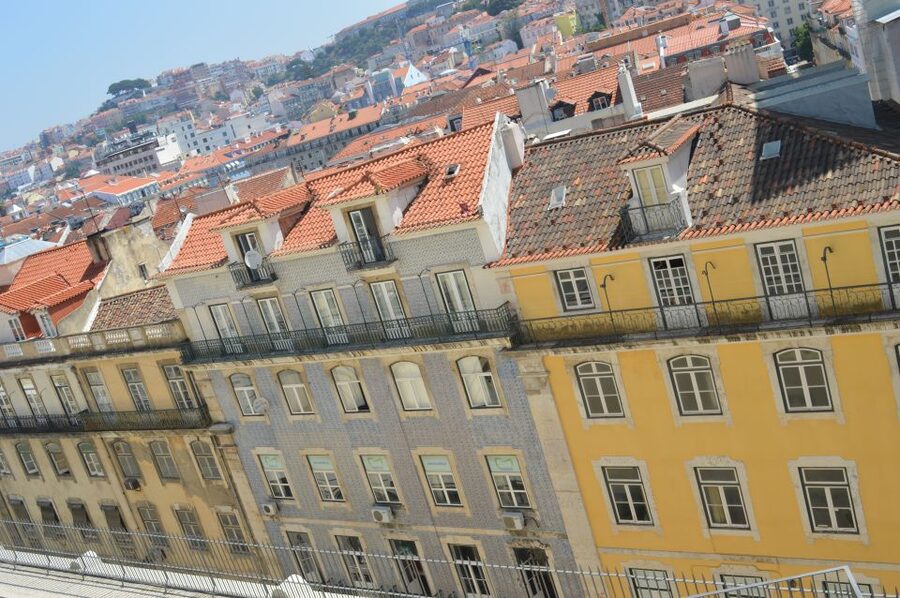
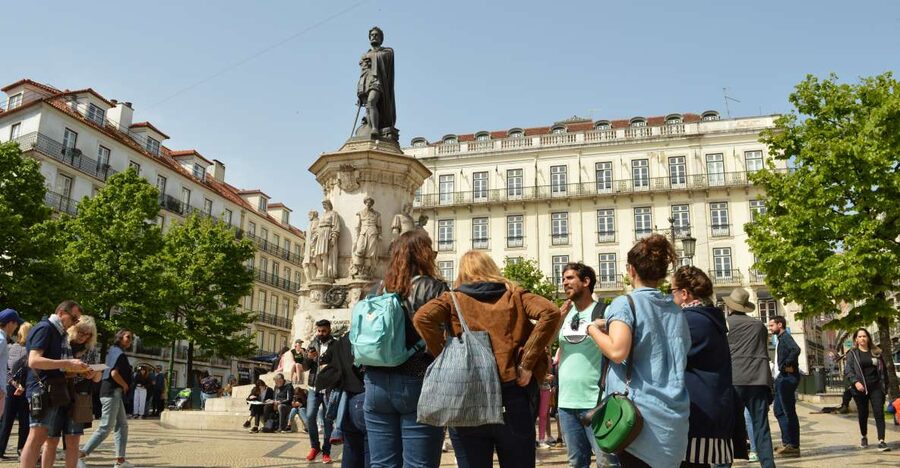
The route continues to Praça Luís de Camões, a natural link between Chiado and Bairro Alto. The square gives you a pause in the street pattern before the tour enters one of Lisbon’s best-known nightlife districts.
Bairro Alto is often associated with evening bars and music, but during the day it is also a residential quarter. You walk its narrow streets and hear how the neighborhood changes after dark. That contrast is one reason a daytime walk is useful. You see more than the nightlife label and get a sense of how the district functions as part of the city.
By this point, the uphill work has begun to add up. The route includes a short break, but you should not treat it as a long rest period. This is where water and good footwear earn their keep. If you prefer a flat, low-effort outing, choose a different way to see the center.
The view from São Pedro de Alcântara
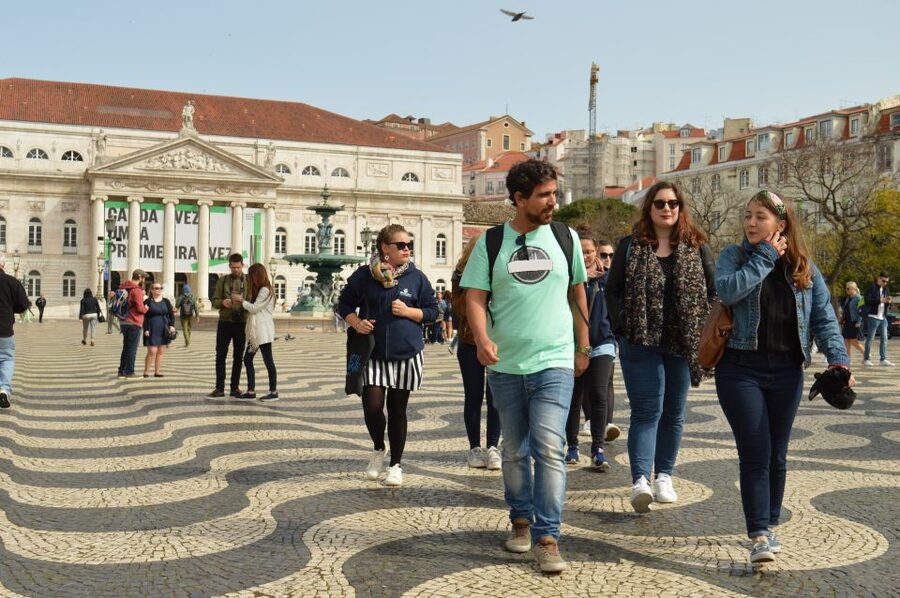
One of the tour’s best pauses comes at Miradouro de São Pedro de Alcântara. This viewpoint gives you a broad look across Lisbon toward the Tagus and the hills beyond the lower town. It is an ideal place to connect the neighborhoods you have just crossed.
The itinerary allows a 30-minute break here. That is long enough to catch your breath, take photographs, and let the route settle in. I consider this one of the strongest practical choices in the experience. A walking tour with three hills needs a proper pause, not just a quick explanation beside a monument.
The view also helps you understand Lisbon’s shape. From above, the route through Baixa, Chiado, and Bairro Alto becomes easier to picture. You can see why the city feels so different from one street to the next, and why a walking tour provides something a vehicle cannot.
A brief tasting on Rua Augusta
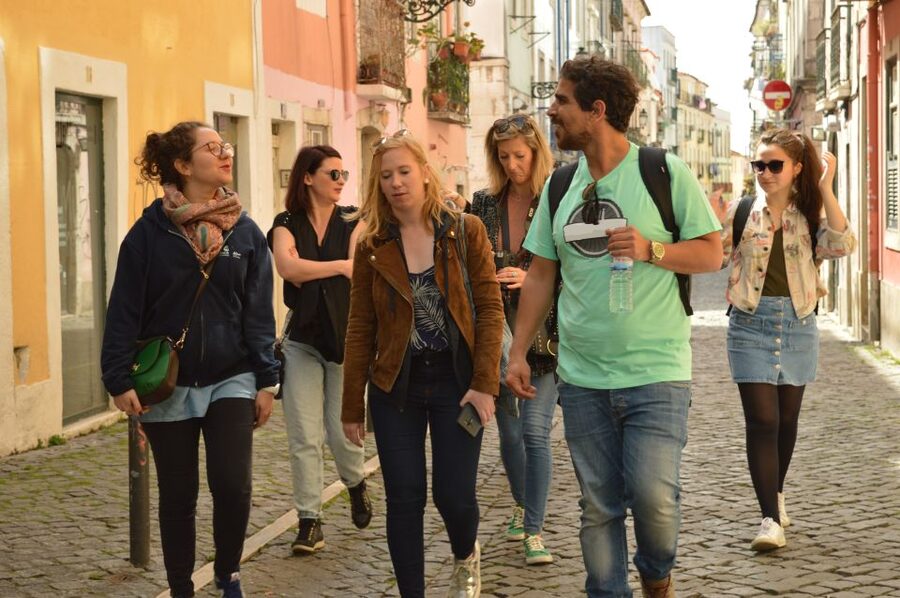
Later, on Rua Augusta, the tour includes a five-minute liquor tasting. Food is not included, so do not arrive expecting a meal or a full tasting session. This is a brief local touch within the larger walk.
Rua Augusta leads through the heart of Baixa toward the river. It is a useful place for the tasting because you are again moving through one of Lisbon’s main pedestrian routes, with the city’s grand center around you. Treat the tasting as a small cultural stop rather than a reason to book the tour on its own.
If you do want lunch, pastries, or a proper snack, plan to buy those separately. The tour covers a lot of ground, and three and a half hours is a long time to spend with only a short tasting break.
Alfama’s lanes and the Tagus view

The final neighborhood is Alfama, where the streets become narrower, steeper, and more winding. This is the part of the walk that feels most removed from Baixa’s orderly grid. You follow the guide through old lanes and learn about Lisbon’s history and culture as the route climbs and turns.
Alfama is also where the tour’s river focus becomes strongest. You stop at an iconic viewpoint overlooking the Tagus, one of the experience’s main highlights. The combination of steep lanes, old buildings, and open water gives you a vivid sense of Lisbon’s setting.
Do not confuse this with a quiet stroll. Alfama’s slopes can be demanding, and the route takes place rain or shine. In wet weather, the surfaces may feel harder to manage. The feedback from a January outing shows that the tour can still be enjoyable in poor weather, but you should dress for conditions rather than hope for a dry day.
Finishing beside the Tagus
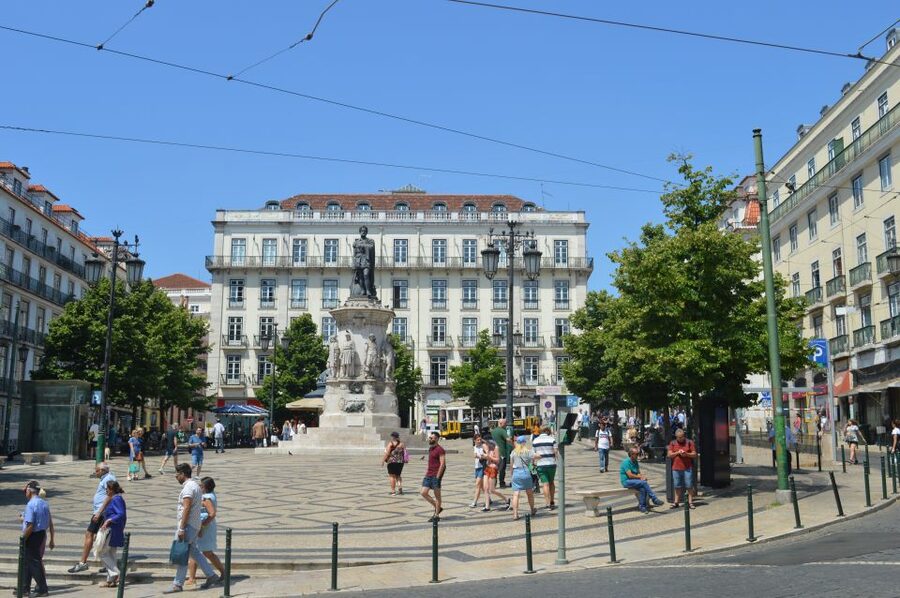
The walk ends at Praça do Comércio, beside the Tagus and the Arco de Rua Augusta. This is a satisfying finish because the route moves from a central square, over the hills, through older districts, and back down to the river.
You finish in a useful location for the rest of your day. You can remain by the waterfront, continue through Baixa, or use the square as a reference point for later plans. Ending here also keeps the tour focused. It does not leave you on a remote hill after a tiring walk.
The riverfront section gives the experience a clear shape. You start inland at Rossio and finish at the water, with Lisbon’s major central quarters between the two.
What the guides add
The available German-language feedback gives special weight to the guides’ style. Pedro is described as exceptionally engaging, while Sara is praised for handling difficult weather with clear and entertaining explanations. Melina receives similar credit for making the walk informative and easy to follow, with useful suggestions for the rest of a Lisbon stay.
That matters because the route includes familiar sights. Anyone can point out the Santa Justa Lift or the Carmo ruins. The value comes from helping you understand what you are seeing, keeping the pace lively, and offering practical ideas for later.
The German language is important to confirm before booking. The supplied information lists German as the tour language. A private group is available if you want the guide’s attention directed only to your own party, but the standard group already has a relatively low limit of 12 participants.
Is $47 a fair price?
At $47 per person, the tour is not the cheapest way to wander through central Lisbon, but the price can make sense if you want a guided overview in one half-day. You receive three and a half hours with a live guide, a route through four major districts, a 30-minute rest, the liquor tasting, and a finish by the Tagus.
The value is strongest early in your stay. You get the city’s layout, see which neighborhoods deserve more time, and pick up suggestions for the rest of your visit. The cost is less compelling if you already know central Lisbon well or prefer to spend an hour at each monument.
The group limit helps. A 12-person maximum is small enough for a guide to keep the group together and answer questions without shouting across a crowd. The private option gives you more control, but the standard group should suit most people who want structure without a large bus-tour feel.
Who should book this walk?
I would recommend it to you if you want a first-day orientation to Lisbon and enjoy learning while walking. It works especially well for people who want a mix of major sights, neighborhood character, river views, and practical city context.
It is also a good fit if you speak German and value a guide who can explain the city in your preferred language. The named guides have drawn praise for being friendly, informative, and entertaining, which is exactly what helps on a long route with several climbs.
I would be cautious if you have mobility limitations, use a wheelchair, or dislike steep streets. Baby strollers and luggage or large bags are not allowed, and the activity involves a fair amount of walking up and down hills. Rain will not cancel the outing, so your clothing and footwear need to be ready for changing conditions.
Should you book it?
Book this walk if you want to see a lot of central Lisbon in one well-shaped outing, especially at the start of your visit. The best reasons are the small group, the four contrasting districts, the São Pedro de Alcântara rest stop, and the final riverfront finish.
Skip it if you want a flat route, long interior visits, or a food-focused experience. For fit walkers who want clear history, strong city views, and a useful introduction to Lisbon’s center, $47 is a reasonable price for the time and coverage.
FAQ
Where does the walking tour begin?
It begins at the northern fountain in Rossio Square, between the National Theater and the Royal Statue. The guide wears a mint-colored WALK ‘N’ ROLL shirt or carries a matching mint-colored burlap bag.
Where does the tour finish?
The walk ends at Praça do Comércio, beside the Tagus River and the Arco de Rua Augusta.
How long does the tour last?
The tour lasts 3.5 hours, including a 30-minute break at Miradouro de São Pedro de Alcântara.
Which neighborhoods does the route visit?
The route passes through Baixa, Chiado, Bairro Alto, and Alfama. It also includes Rossio Square, Rua Augusta, and Praça do Comércio.
Is the tour suitable for wheelchair users?
No. The activity is not suitable for wheelchair users or people with mobility impairments because it includes substantial walking up and down three hills.
What language is the tour offered in?
The live tour guide language is German. Private groups are available, and the maximum standard group size is 12 participants.
New routes in Lisbon
- Small Group Walking Tour of Belém★ 4.9 · 80 reviews
- Lisbon Through the Eyes of a Local – Food and Walking Tour★ 4.9 · 141 reviews
- Lisbon: Food and Culture 3-Hour Walking Tour★ 4.7 · 95 reviews
- Lisbon Tram No. 28 Ride & Walking Tour★ 4.1 · 766 reviews
- Lisbon: Street Art Walk★ 5.0 · 79 reviews
- Lisbon: Private Boat Trip, Guided Walking Tour, Bike & Tram★ 4.8 · 116 reviews
- Lisbon: Jewish Walking Tour★ 4.9 · 96 reviews
- Lisbon: Helicopter Ride, Boat Trip, & Old Town Walking Tour★ 4.7 · 480 reviews
Lisbon Walking Tours, compared.
Best of Lisbon Small-Group Guided Walking Tour
Read our review →

Best of Lisbon Walking Tour: Rossio, Chiado & Alfama
Read our review →

Lisbon Food Tour with 10+ Tastings of Local Delicacies & Wines
Read our review →
Sintra & Cascais Day Tour with Pena Palace Entry and Gardens Walk
Read our review →
Lisbon Roots – Small group Food & Culture Walking Tour w/tastings
Read our review →Browse the lists this tour appears in