
Review · LISBON
Lisbon Essential Walking Tour: History, Stories and Lifestyle
Lisbon reveals itself best from the pavement, one hill, viewpoint, church, and narrow lane at a time. This three-hour walk links Bairro Alto, Baixa, and Alfama with the stories that explain how the city changed after the 1755 earthquake, the Carnation Revolution, and centuries of Portuguese rule.
I like the high viewpoints at São Pedro de Alcântara and Portas do Sol, plus the simple coffee-and-pastry break in a local café. I also like the short Tram 28 ride, which gives your feet a rest while adding a very Lisbon-style experience. The tradeoff is real: this is a hilly walk that can cover close to four miles, so comfortable shoes and water are essential.
Key points to know before you book
- The route covers three defining Lisbon districts: Bairro Alto, Baixa, and Alfama, giving you a useful sense of how the city fits together.
- The churches carry the strongest visual punch: San Roque has a plain exterior but a richly decorated interior, while Carmo brings Gothic ruins and modern political history.
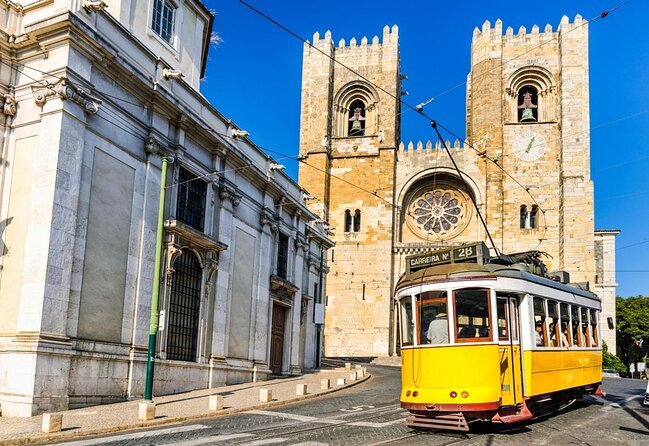
- The Tram 28 ride adds local flavor: It connects the walking route with one of Lisbon’s best-known public transport experiences.
- The guide makes a major difference: Ricardo, Beatrice, Paulo, Ana, Sofia, Joao, Lucie, and others have led this experience, with particular praise for clear storytelling and personal city advice.
- The $30.25 price is fair for the package: You receive a three-hour guided walk, a tram trip, coffee and cake, and a small group capped at 15 people.
- Plan for hills and uneven walking: The tour suits most people, but it is not a gentle, flat introduction to Lisbon.
Why this is a smart first morning in Lisbon
Lisbon can feel confusing at first. The city is spread over hills, the districts have different personalities, and important sights often sit behind ordinary-looking streets. This walk gives you a framework before you start exploring alone.
The route also mixes major sights with the spaces between them. You do not simply arrive at a church, hear a date, and move on. You walk through older neighborhoods, pause at viewpoints, ride a tram, and finish among the lanes of Alfama. That makes the city easier to read afterward.
I would book this early in your stay, ideally on your first day or soon after arriving. The route introduces areas you will likely return to, and guides such as Beatrice and Paulo have been especially useful with restaurant, fado, and navigation suggestions.
The tour is offered in English, with other language choices available when booking. It normally runs for about three hours, with no more than 15 people. That is small enough for questions without the cost of a private tour.
More History Walking Tours in Lisbon
- Lisbon: History, Stories and Lifestyle Walking Tour
★ 4.8 · 10,902 reviews - Lisbon: Private Dark History Walking Tour with Drinks
★ 4.8 · 387 reviews - Historic Walking Tour Through Lisbon’s Oldest Neighborhood
★ 5.0 · 233 reviews
Bairro Alto and São Pedro de Alcântara
The walk begins in Bairro Alto, a district with about five centuries of urban life behind it. Here, the guide explains how Lisbon changed after the earthquake of 1755, when families from Baixa and nearby districts moved into or helped renew this part of the city.
This opening is useful because it gives you more than a date and a disaster story. You begin to see Lisbon as a city repeatedly rebuilt, reshaped, and adapted. The hills, old streets, and changing neighborhoods start to make sense.
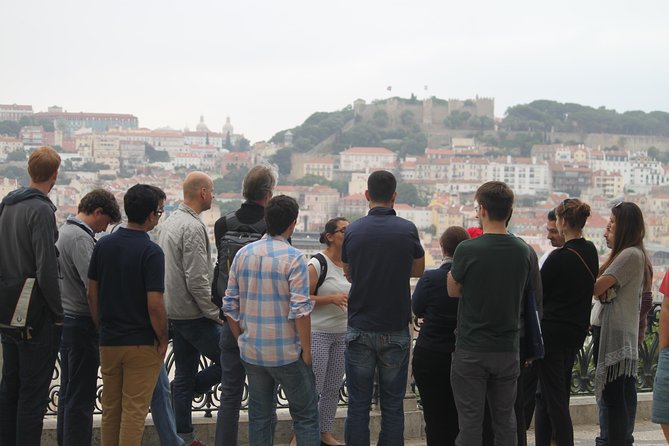
From there, you pass through the garden at Miradouro de São Pedro de Alcântara. This is one of the best early views on the route, looking across Baixa toward the south bank of the Tagus River.
Give yourself a moment here for photographs. The stop lasts about 15 minutes, which is enough for the view and a short explanation, but not so long that the tour loses its pace.
San Roque: plain outside, ornate inside
I especially like the contrast at Igreja de São Roque. From the street, the church has a restrained, almost severe exterior. Inside, it changes character completely, with gilding, tiles, and paintings in Mannerist and Baroque styles.
The church was built by the Jesuits and was among the first Jesuit churches in Portugal, as well as one of the earliest in the world. That gives the stop a wider place in European religious history, but you do not need to be a specialist to appreciate the visual surprise.
The visit lasts about 20 minutes. It is one of the most rewarding indoor stops on the route, particularly if you want more than viewpoints and street scenes. The guide helps connect the decoration with Lisbon’s religious and artistic past.
Carmo Church and the Carnation Revolution
The route then heads downhill toward Igreja do Carmo. The Carmo convent and church are important examples of Lisbon’s Gothic architecture, but their political importance is just as striking.
This is where the Carnation Revolution began in 1974. The movement ended nearly five decades of dictatorship, making the site a key part of modern Portuguese history. A good guide can show you how the physical remains of Carmo connect with the country’s recent political change.
The stop lasts about 20 minutes. It is a strong point in the tour because it shifts the story from medieval Lisbon to the 20th century. The route is not only about kings, churches, and earthquakes. It also explains the Portugal you see today.
More History Walking Tours in Portugal
- Lisbon: 3-Hour The Slave Trade – An Historical Walking Tour
★ 4.9 · 179 reviews - Porto: Historic City Center Walking Tour
★ 4.7 · 1,172 reviews - Porto: Historical Center Walking Tour
★ 4.8 · 898 reviews - Porto: Jewish Heritage Walking Tour
★ 4.7 · 266 reviews
Santa Justa and the descent into Baixa
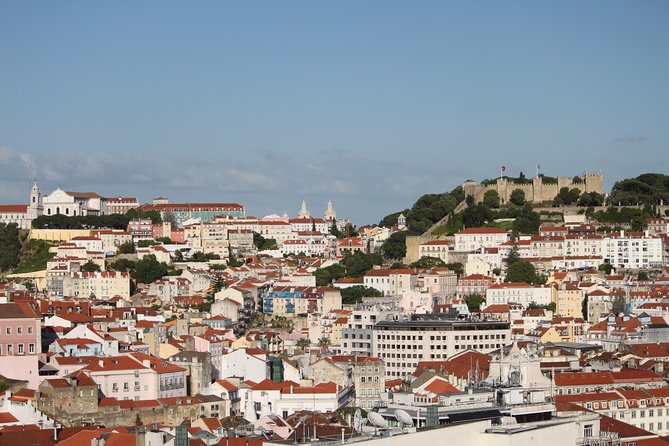
The Santa Justa elevator appears after the Carmo stop. Built in the Gothic Revival style, it is one of Lisbon’s most recognizable structures and offers a fine city viewpoint.
The elevator ride or upper viewing area is not included in the tour price, so treat this as a look at the monument rather than a guaranteed paid visit. Your guide will explain the sight, but any additional admission is your responsibility.
From here, the route moves into Baixa, the central district rebuilt after the earthquake. This is a useful transition. You have seen older hilltop neighborhoods, then a church tied to political change, and now you enter the more orderly heart of the rebuilt city.
Coffee, cake, and a short break
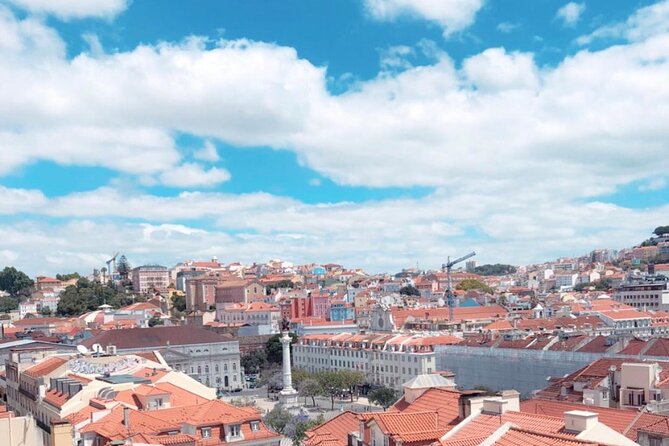
The coffee-and-pastry stop is a small feature, but it improves the rhythm of the morning. After the early hills and historic sites, you get about 15 minutes in a local café for coffee and cake.
The exact pastry is not specified, though several people particularly enjoyed the pastel de nata stop. One account also identifies the Academic Milk Bar as the place connected with the pastry break, but you should treat the café location as subject to the day’s arrangements.
This is not a full meal. Other food and drinks are not included, so eat beforehand if you need a substantial breakfast or lunch. Still, the pause gives you time to sit, ask questions, and reset before the next section.
Praça da Figueira and the Tram 28 ride
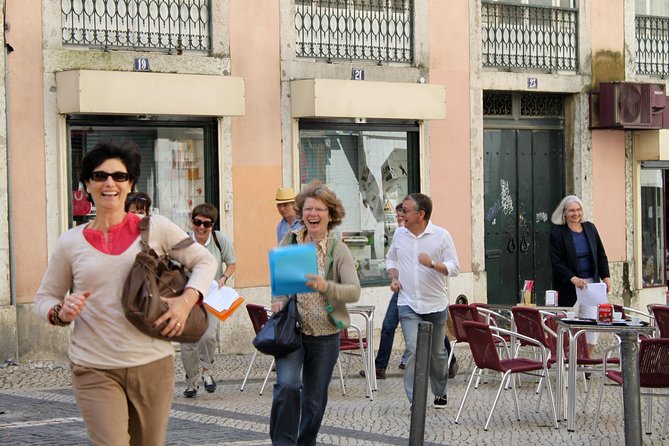
The tour continues through Baixa and Praça da Figueira, one of the central squares in this part of Lisbon. This section helps you understand the city’s main downtown area before the route climbs again.
A Tram 28 ride is included. The route description places the ride after the Baixa break and toward Portas do Sol, while the exact tram movement can vary with the day’s operation. You should expect a short public transport segment rather than a long scenic tram excursion.
Still, it is a worthwhile inclusion. Tram 28 is closely tied to Lisbon’s hills and older districts, and riding it gives you a practical sense of how people move through the city. It also breaks up the walking without turning the tour into a bus trip.
Alfama, fado, and Lisbon’s oldest lanes
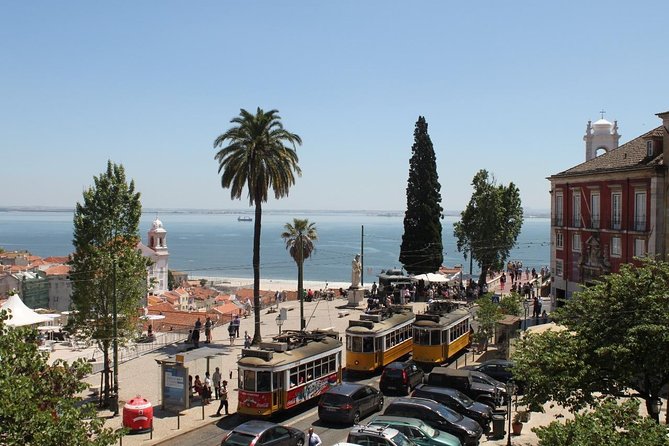
At Portas do Sol, the city opens up again. From the viewpoint, you can see the Tagus, the Alfama district, and important buildings including São Vicente de Fora and the National Pantheon.
Alfama is one of Lisbon’s oldest and most traditional neighborhoods. Its narrow streets run downhill toward the river, and the district is closely linked with fado houses and the June festivals honoring popular saints, especially St. Anthony.
This is where the tour feels most personal. The lanes are easier to appreciate when someone explains how the district developed and why fado belongs so strongly to Lisbon’s identity. Guides have also offered practical suggestions for places to hear fado later, which can help you avoid choosing a venue at random.
Allow about 20 minutes for this section, though the walking between points adds more time. Alfama can be uneven and confusing, so the guide’s route knowledge is useful. You get a sample of the district rather than a full neighborhood exploration, but the tour leaves you well placed to return on your own.
Ending at Lisbon Cathedral
The final stop is Lisbon Cathedral, known in Portuguese as Sé de Lisboa. It was built in 1150, only three years after the city was taken back from the Moors.
The cathedral has changed over time, so its appearance reflects several architectural periods rather than one clean design. That makes it a fitting end to a tour focused on Lisbon’s layers. You finish with a building that carries medieval beginnings and later alterations in the same place.
Ending here also makes practical sense. You are in a historic district with more of Alfama nearby, so you can continue exploring after the guide departs. The tour does not include transfers back to your hotel or starting point.
How good are the guides?
The guides are central to the experience. Ricardo receives repeated praise for bringing Portuguese and Lisbon history to life, and his background as a professor was specifically noted. Beatrice is praised for her care, humor, organization, and useful advice on restaurants, fado, and getting around.
Paulo is described as friendly, funny, and good with groups of different ages. Ana has led a route covering nearly four miles, with back streets and historical stories. Sofia, Joao, and Lucie have also received strong praise for their presentation and command of the city.
That said, guide quality can vary from one departure to another. One person found the explanations unclear, while another had trouble because the booking information had not reached the guide and the meeting details were incorrect. That appears to be an administrative problem rather than a feature of the walk, but it is a reason to check your confirmation carefully.
The overall record is strong: the experience has a 4.8 rating from 316 reviews, with 95 percent recommending it. The most consistent strengths are the guides’ historical storytelling, friendly manner, and practical suggestions for the rest of your stay.
Price, pace, and what to bring
At $30.25 per person, the price is reasonable for a three-hour guided walk with a professional guide, Tram 28 ride, coffee and cake, and insurance for liability and personal accidents. You are paying for context and route planning as much as for admission.
Most of the sights are viewed without extra admission charges. Santa Justa is the main listed exception, since any admission there is not included. Other food and drinks are also separate.
Bring:
- Comfortable shoes with reliable grip
- Water
- Sun protection if the weather is bright
- A phone for the mobile ticket
- A little extra money for food, drinks, or optional admissions
The walking is the main consideration. One account describes nearly four miles, and the route includes Lisbon’s hills, steps, and uneven lanes. Most people can take part, and service animals are allowed, but anyone with difficulty walking should think carefully before booking.
Free cancellation is available up to 24 hours before the start time for a full refund. Changes or cancellations made inside that window are not accepted for a refund.
Who should book this Lisbon walk?
I would choose this tour if you want a broad first look at Lisbon rather than a single museum or neighborhood. It suits first-time visitors, families with older children, and anyone who wants history explained in plain language.
It is also a good match if you like moving through a city instead of viewing it from a coach. The mix of churches, viewpoints, public transport, cafés, and residential lanes keeps the morning varied.
I would hesitate if you want a slow, flat walk with long periods inside each sight. The route moves at a steady pace, and the three-hour format means you will see highlights rather than study every building in detail.
Should you book it?
Yes, if you can handle the hills and want a strong orientation to Lisbon. The combination of Bairro Alto, San Roque, Carmo, Baixa, Alfama, Tram 28, and Lisbon Cathedral gives you a useful map of the city in one morning.
Book it near the start of your stay, bring water, and ask your guide for restaurant and fado advice. If Ricardo, Beatrice, Paulo, Ana, Sofia, Joao, or Lucie leads your departure, you can expect a guide-led experience with a strong focus on history and local stories. Just remember that Santa Justa extras are not included and that the walk is more demanding than the easy title might suggest.
FAQ
How long does the Lisbon Essential Walking Tour last?
The tour lasts approximately three hours.
How much does the tour cost?
The listed price is $30.25 per person.
What language is the tour offered in?
English is offered, and other language options are available when booking.
What areas of Lisbon does the tour visit?
The route includes Bairro Alto, Baixa, Praça da Figueira, and Alfama, with stops at several major sights between them.
Is the Tram 28 ride included?
Yes. The Tram 28 trip is included in the tour.
Are coffee and cake included?
Yes. The experience includes a coffee and pastry break at a local café.
Is entry to the Santa Justa elevator included?
No. Admission to Santa Justa is not included.
Does the tour include hotel transfers?
No. Transfers to and from the meeting point are not included.
How large is the group?
The tour has a maximum of 15 people.
Can I cancel for a full refund?
Yes. You can cancel at least 24 hours before the start time for a full refund. Cancellations made less than 24 hours before the start time are not refunded.
New routes in Lisbon
- Small Group Walking Tour of Belém★ 4.9 · 80 reviews
- Lisbon: Walking Tour in the Center (Max 12 Participants)★ 5.0 · 741 reviews
- Lisbon Through the Eyes of a Local – Food and Walking Tour★ 4.9 · 141 reviews
- Lisbon: Street Art Walk★ 5.0 · 79 reviews
- Lisbon: Food and Culture 3-Hour Walking Tour★ 4.7 · 95 reviews
- Lisbon Tram No. 28 Ride & Walking Tour★ 4.1 · 766 reviews
- Lisbon: Private Boat Trip, Guided Walking Tour, Bike & Tram★ 4.8 · 116 reviews
- Lisbon: Jewish Walking Tour★ 4.9 · 96 reviews
Lisbon Walking Tours, compared.
Best of Lisbon Small-Group Guided Walking Tour
Read our review →
Best of Lisbon Walking Tour: Rossio, Chiado & Alfama
Read our review →

Lisbon Food Tour with 10+ Tastings of Local Delicacies & Wines
Read our review →
Sintra & Cascais Day Tour with Pena Palace Entry and Gardens Walk
Read our review →
Lisbon Roots – Small group Food & Culture Walking Tour w/tastings
Read our review →Browse the lists this tour appears in