
Review · LISBON
Lisbon: 3-Hour The Slave Trade – An Historical Walking Tour
Lisbon’s grand plazas and Age of Discovery monuments tell only part of the city’s story. This walking tour puts Portugal’s role in the Atlantic slave trade at the center, tracing how the buying, selling, and forced transport of Africans helped shape the country and its capital. I especially like the small group and the way guide Rui Fernandes welcomes questions instead of delivering a set speech. I also like that the tour connects slavery with everyday Lisbon, not just famous explorers and royal buildings.
The subject is painful, and the amount of information can feel heavy during three hours on foot. This is not a light sightseeing stroll or a tour for anyone seeking only pretty views. Bring comfortable shoes, expect serious discussion, and check the group limit when booking because the information gives both six and eight as the maximum.
Key points to know before you book
- Starts in Alfama: Meet at Largo do Chafariz de Dentro, in Lisbon’s oldest district.
- A different view of familiar sights: Streets, monuments, churches, and squares are used to explain how slavery shaped Lisbon.
- Led by Rui Fernandes: He presents the subject in English and has a background in history, political science, and economics.
- A serious three-hour lesson: Topics range from Iberian slavery and the Atlantic trade to Brazil, abolition, African colonies, and liberation movements.
- Small and discussion-friendly: The group is advertised as limited to six or eight people, depending on the booking information.
- One useful pause: A coffee and WC break are included, and the walk has generally been described as relaxed, with few steep sections.
Why this history belongs on your Lisbon itinerary

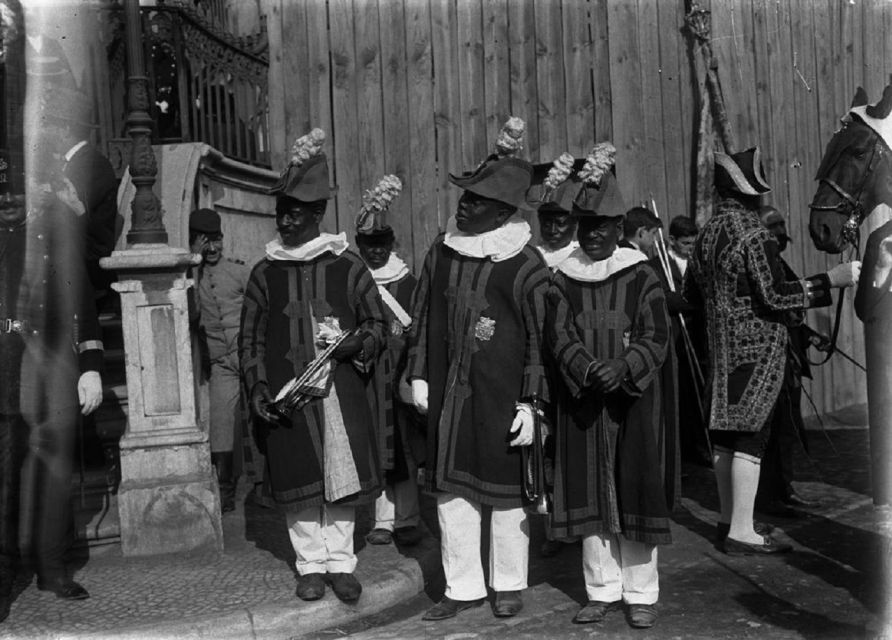
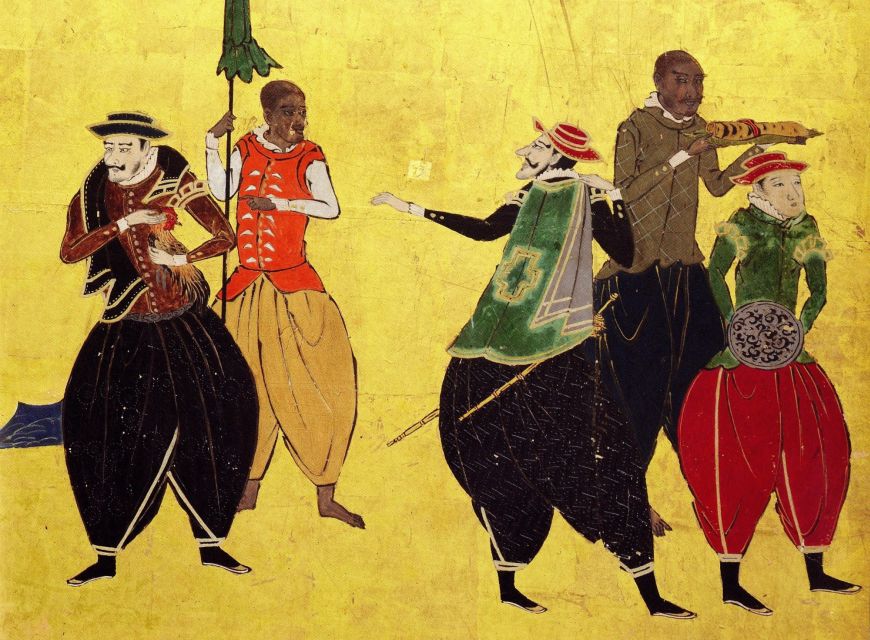
Many visitors arrive in Lisbon ready to hear about ships, navigators, spices, and overseas trade. Those subjects matter, but they can leave out the people whose forced labor and sale helped fund Portugal’s expansion. This tour corrects that imbalance by asking you to look at Lisbon through the history of African enslavement.
The tour begins with Portugal’s part in the Atlantic slave trade during the first half of the 15th century, under Prince Henry the Navigator. From there, it places Portugal within a system that sent an estimated 12 to 14 million Africans across the Atlantic over roughly four centuries.
That scale can be hard to grasp in a museum label. Walking through the city gives the subject a physical setting. A square, building, church, or street can become evidence of how commerce, religion, government, and daily life were tied to slavery. You are not simply memorizing dates. You are considering how a city’s wealth and public image were formed.
I like this approach because it makes Lisbon’s history less polished and more honest. The tour does not treat the Age of Discovery as a separate, heroic chapter. It explains how exploration, trade, colonial power, and human exploitation developed together.
More History Walking Tours in Lisbon
- Lisbon: History, Stories and Lifestyle Walking Tour
★ 4.8 · 10,902 reviews - Lisbon: Private Dark History Walking Tour with Drinks
★ 4.8 · 387 reviews - Lisbon Essential Walking Tour: History, Stories and Lifestyle
★ 5.0 · 316 reviews
Starting at Largo do Chafariz de Dentro
Your meeting point is Largo do Chafariz de Dentro, a square in Alfama. This is a practical place to begin because the tour starts in one of Lisbon’s oldest districts, where narrow streets and older buildings help set the scene.
You will then move through a mixture of back streets and main avenues. The route includes monuments, churches, and public squares with a connection to the history being discussed. The exact order may vary, but the basic idea is clear: the city itself becomes the classroom.
Alfama is also a useful starting point for a discussion of Lisbon’s long past. The tour addresses the origins of slavery in the Iberian Peninsula before moving toward the birth of the Atlantic trade. That broader opening matters. It helps you understand that slavery did not begin with one voyage or one royal decision, even though Portugal played a major role in building the Atlantic system.
Do not expect every stop to have a large plaque announcing its connection with slavery. Part of the value is learning how to notice less obvious links. A building’s former use, a location’s commercial purpose, or the movement of people through the city can carry historical meaning that is easy to miss on a standard sightseeing walk.
Following the route through Lisbon’s monuments and squares

The first half of the tour focuses on Lisbon’s main sights and their connections with the slave trade. You still see the city center, but the guide changes the questions you ask about it.
What money paid for a building? Who worked in the homes and businesses nearby? How were African people treated in daily Lisbon? How did religious institutions respond? How did merchants, officials, and ordinary households participate in or benefit from the system?
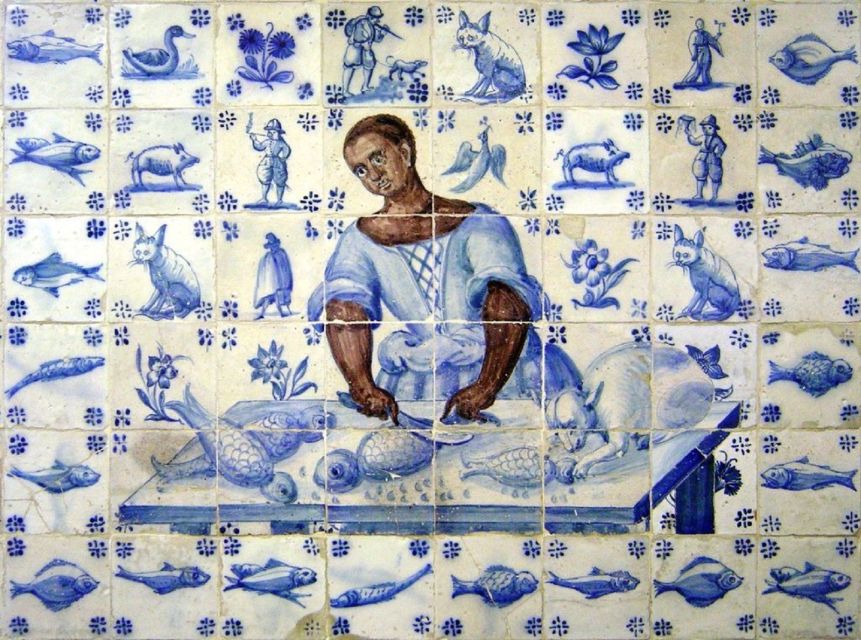
The tour covers the everyday life of an enslaved person in historical Lisbon, not only the actions of monarchs and merchants. That is one of its strongest features. Grand political events can make slavery seem distant. Details about work, movement, status, and treatment bring the human cost back into view.
Rui Fernandes also uses relevant pictures during the walk, according to the tour information. These visual aids can help you understand places that have changed over time. They are especially useful when discussing earlier buildings, past uses, or people who are no longer visible in the modern city.
The pace is intended to be relaxed. Several people who took the tour described the walk as slow and said it included few steep uphill stretches. That makes it easier to listen and ask questions, though you should still wear comfortable shoes because this remains a three-hour city walk on foot.
Portugal, Brazil, and the wider Atlantic system
The discussion then widens beyond Lisbon. Brazil receives particular attention because it was central to Portugal’s colonial economy and to the Atlantic slave system.
This wider view helps you understand that Lisbon was not an isolated port with a local problem. Portugal’s activities connected Europe, Africa, and the Americas through shipping, commerce, colonial rule, and forced labor. A city street in Lisbon could be linked to events taking place thousands of miles away.
The tour also examines the abolition of the slave trade in Portugal. That subject is important because ending the trade did not instantly erase the political, economic, or social structures that had grown around slavery. The walk links the history of abolition to Portugal’s colonies in Africa and to later African nationalist struggles for liberation.
You should expect the guide to move across several centuries and regions. That is intellectually useful, but it also explains why the tour can sometimes last closer to three and a half hours in practice. If you have a timed museum visit or dinner reservation immediately afterward, leave some space in your schedule.
More History Walking Tours in Portugal
- Historic Walking Tour Through Lisbon’s Oldest Neighborhood
★ 5.0 · 233 reviews - Porto: Historic City Center Walking Tour
★ 4.7 · 1,172 reviews - Porto: Historical Center Walking Tour
★ 4.8 · 898 reviews - Porto: Jewish Heritage Walking Tour
★ 4.7 · 266 reviews
A guide who invites questions
Rui Fernandes is the guide most closely associated with this experience. He is described as an African guide with a background in history, political science, and economics. His approach appears to combine historical research with personal connection, including references to his own family history.
That perspective matters on a tour about a subject often given little space in mainstream sightseeing. Fernandes presents Portugal’s involvement directly, while also explaining the moral, religious, political, and economic forces behind it. The aim is not to reduce the story to one simple explanation.
I particularly value the reported question-and-answer style. You have time to ask about Portugal, Africa, Brazil, the wider Atlantic trade, or the way this past still appears in modern life. The small group makes that possible. Fernandes also makes an effort to remember people’s names and include everyone in the discussion, which can make a difficult topic feel more like a guided conversation than a lecture.
His English is described as clear, and the tour is conducted in English. The guide also offers suggestions about food, shops, transport, and other places to visit in Lisbon. Those recommendations are a useful bonus, especially if you take the tour early in your stay and use it to shape the rest of your time in the city.
The coffee break and the practical rhythm
One coffee stop and one WC break are included. That may sound minor, but it is welcome during a serious three-hour walking tour. A short pause gives you time to absorb the subject, ask a private question, and regain your focus.
Some accounts of the experience describe a café stop with a pastel de nata. The supplied tour details guarantee a coffee and WC break, but do not promise a pastry, so treat the tart as a possible part of the pause rather than a fixed inclusion.
The guide has also been described as attentive to the heat and willing to find shade when needed. Still, Lisbon can be sunny, and you should plan sensibly. Comfortable shoes are specifically required, and light clothing, water, and sun protection are sensible additions even though they are not listed as inclusions.
Pets are not allowed. Hotel pickup and drop-off are not included, so you need to reach Largo do Chafariz de Dentro on your own. The meeting point is in Alfama, and checking the route from your accommodation before departure will prevent a rushed start.
Small-group value at $35
At $35 per person, this is priced like a focused specialist tour rather than a basic orientation walk. I think the price makes sense if you want a guide-led history lesson tied to the actual city around you.
You are paying for three hours, a licensed local guide, local taxes and fees, a small group, and the chance to ask detailed questions. A general city tour may cover more famous sights, but it is unlikely to give this subject equal time or attention.
The small group is a real part of the value. The details give two different limits: one section says up to eight participants, while another says a maximum of six. Check the specific booking option for your date. Either limit is small enough to support conversation, but the difference matters if you prefer a very intimate experience.
This tour is also a good use of money for repeat visitors who have already seen the main monuments. You still walk through central Lisbon, but you gain a new framework for understanding places you may have passed before.
Who will appreciate this tour most
I would recommend it to anyone interested in Portuguese history, the Atlantic world, colonialism, African history, or the long effects of slavery. You do not need prior academic knowledge. The guide builds the subject from its beginnings in Iberia through Portugal’s overseas expansion and later liberation struggles.
It is especially suited to visitors who feel that standard tours have given them a polished version of Lisbon but not the full story. The experience can also be meaningful for people whose families or communities have a direct connection to the history of slavery, provided they are comfortable spending several hours with difficult material.
The tour may be less suitable if you want a casual introduction to Lisbon, a food walk, or a fast list of landmarks. It is information-heavy. You will need to concentrate, and the subject may leave you thinking long after the walk ends.
Families with older children or teenagers may find it useful if they are ready for an honest discussion of slavery and racism. The available information does not specify a minimum age, so confirm suitability when booking if you are traveling with young children.
Timing, cancellations, and booking advice
The stated duration is three hours, though some tours may run to about three and a half hours. The start time depends on availability, so check before you reserve.
You can cancel up to 24 hours in advance for a full refund. The reserve-now, pay-later option lets you hold a place without paying immediately, which is useful when your Lisbon schedule is still changing.
I would book this early in your stay if you want to use the guide’s advice about transport, food, shops, and other sights. I would also avoid placing a major attraction booking too close to the end of the walk. Give yourself time for the discussion to run long or for the group to pause.
Should you book the Lisbon Slave Trade Historical Walking Tour?
Book it if you want to understand Lisbon beyond its tiled façades, viewpoints, and maritime monuments. The strongest reasons are the focused subject, the route through real city spaces, Rui Fernandes’s clear and personal presentation, and the chance to ask questions in a small group.
The main caution is the pace and tone. This is a serious history tour, not a breezy sightseeing outing, and the amount of material may feel demanding. Yet that is also why it offers such good value: in three hours, you gain a fuller picture of how Portugal, Lisbon, Africa, Brazil, and the Atlantic slave trade were connected.
Wear comfortable shoes, arrive at Largo do Chafariz de Dentro ready to listen, and leave room in your day. If you want a more truthful understanding of Lisbon’s past, this is a worthwhile addition to your itinerary.
FAQ
Where does the walking tour meet?
Meet your guide at Largo do Chafariz de Dentro, a square in Lisbon’s Alfama district.
How long does the tour last?
The stated duration is three hours. Some descriptions indicate that it can last about three to three and a half hours, so leave extra time afterward.
What language is the tour conducted in?
The tour is conducted in English.
Who leads the experience?
The tour is led by a licensed local guide. Rui Fernandes is the guide associated with the experience and has a background in history, political science, and economics.
Is hotel pickup or drop-off included?
No. Hotel pickup and hotel drop-off are not included, so you must make your own way to the meeting point.
Is a break included?
Yes. One coffee break and one WC break are included. Some descriptions also mention a café stop and pastel de nata, but the guaranteed inclusion is the coffee and WC break.
How many people are in the group?
The experience is described as a small group. One section lists a maximum of eight participants, while the know-before-you-go information lists a maximum of six, so check the limit for your selected booking date.
More Three-Hour Walks in Lisbon
- Lisbon: Food and Culture 3-Hour Walking Tour
★ 4.7 · 95 reviews - Prague: 3-Hour Walking Tour of Old Town & Prague Castle
★ 4.7 · 5,696 reviews - Eat Like a Local: Venice 3-Hour Small-Group Food Tasting Tour
★ 5.0 · 3,137 reviews - Experience Porto’s Charm: 3-Hour Guided Walking Tour
★ 5.0 · 2,432 reviews
New routes in Lisbon
- Small Group Walking Tour of Belém★ 4.9 · 80 reviews
- Lisbon: Walking Tour in the Center (Max 12 Participants)★ 5.0 · 741 reviews
- Lisbon Through the Eyes of a Local – Food and Walking Tour★ 4.9 · 141 reviews
- Lisbon Tram No. 28 Ride & Walking Tour★ 4.1 · 766 reviews
- Lisbon: Street Art Walk★ 5.0 · 79 reviews
- Lisbon: Food and Culture 3-Hour Walking Tour★ 4.7 · 95 reviews
- Lisbon: Private Boat Trip, Guided Walking Tour, Bike & Tram★ 4.8 · 116 reviews
- Lisbon: Jewish Walking Tour★ 4.9 · 96 reviews
Lisbon Walking Tours, compared.
Best of Lisbon Small-Group Guided Walking Tour
Read our review →
Best of Lisbon Walking Tour: Rossio, Chiado & Alfama
Read our review →

Lisbon Food Tour with 10+ Tastings of Local Delicacies & Wines
Read our review →
Sintra & Cascais Day Tour with Pena Palace Entry and Gardens Walk
Read our review →
Lisbon Roots – Small group Food & Culture Walking Tour w/tastings
Read our review →Browse the lists this tour appears in