
Review · KYOTO
Kyoto: Imperial Palace & Nijo Castle Guided Walking Tour
Kyoto’s political past comes into focus on this compact walk from Nijo Castle to the Imperial Palace. In one morning or afternoon, you see the shogun’s Kyoto residence and the emperor’s former home, two places that can seem similar until a guide explains the very different power each one represented. I like the small group limit of nine and the choice of several start times, especially for a short Kyoto stay.
I also like that entrance fees are included and that guides such as Jasmine, Raphael, Vincent, and Taku have been praised for clear explanations, cultural context, and thoughtful answers. The main consideration is the amount of walking: the route covers large grounds, lasts three hours, and is not suitable for people with mobility, heart, respiratory, or pregnancy-related concerns. Summer heat can be tough, so bring water and a hat.
Key points to know before you book
- Two power centers in one walk: Compare the shogun’s Nijo Castle with the emperor’s Kyoto Imperial Palace.
- A true small group: The tour is limited to nine participants, allowing room for questions and a more personal pace.
- Ninomaru Palace is included: At Nijo Castle, the guide takes you through the Ninomaru-goten Palace and Painting Gallery, plus the garden.
- The guide makes the difference: Jasmine, Raphael, Vincent, Alex, Taku, and others have been praised for history, architecture, culture, and friendly explanations.
- Useful for a tight schedule: The tour runs three hours, with about one hour at each main site and walking between them.
- Simple planning: Meet outside Exit 1 at Nijojo-mae Station and finish near Imadegawa Station.
Why this Kyoto history walk works
Kyoto can feel like a museum without labels. You see grand gates, painted screens, gardens, and long corridors, but the meaning is easy to miss. This tour gives you a human guide to connect the buildings with the people who used them.
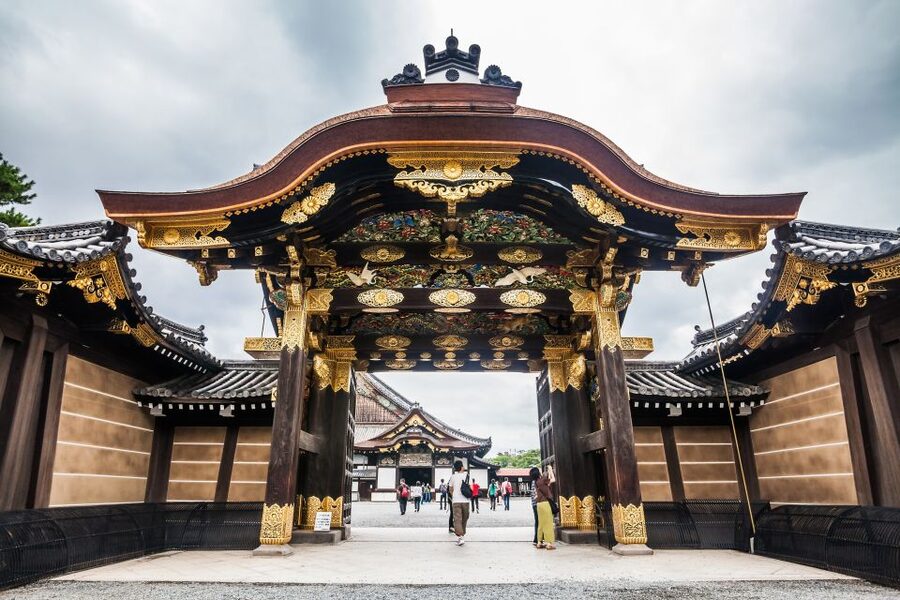
The central idea is simple: Nijo Castle represents the military government, while Kyoto Imperial Palace represents the imperial court. The two sites are not interchangeable. One was tied to the shogun and feudal power. The other was the formal home of Japan’s imperial family for more than a thousand years.
That contrast gives the route a useful shape. Instead of looking at two separate historic sites, you can compare two versions of authority in Japan. A good guide can point out how architecture, ceremony, gardens, and room design reflect those roles.
The group size matters here. With no more than nine people, you should have a better chance of hearing the guide and asking questions than on a large coach tour. The guide can also adjust explanations to the group. Past guide assignments have included Jasmine, Raphael, Vincent, Alex, Taku, Cecilia, Kosuke, and Naoki, with strong praise for clear English, patience, humor, and cultural insight.
The language choices are English, French, and Spanish. You select the available language and start time when booking.
More Castle and Palace Walking Tours in Kyoto:
- Edinburgh Castle: Guided Walking Tour with Entry Ticket
★ 4.7 · 11,699 reviews - Venice: Doge’s Palace and St Mark’s Basilica Walking Tour
★ 4.4 · 6,291 reviews - Prague: 3-Hour Walking Tour of Old Town & Prague Castle
★ 4.7 · 5,696 reviews
Starting at Nijojo-mae Station
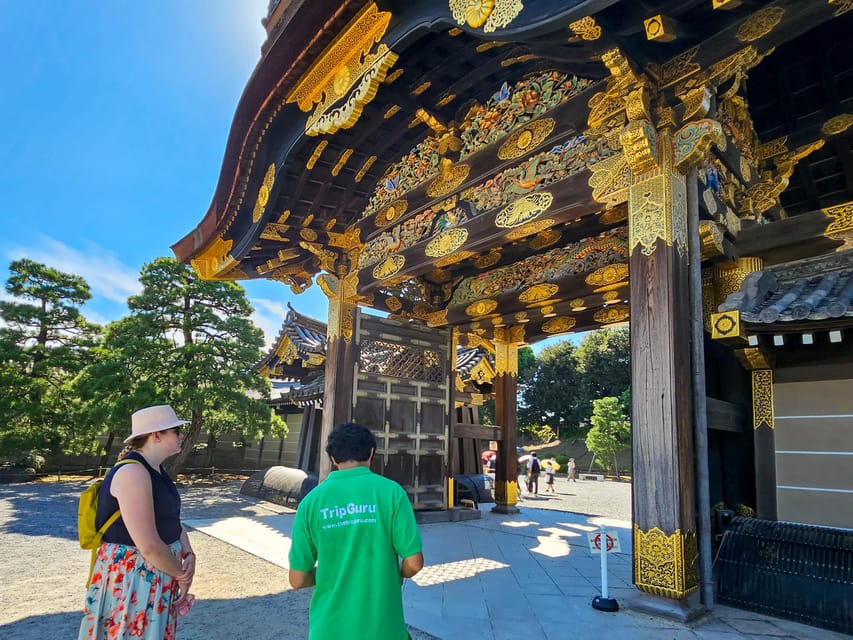
The meeting point is outside Exit 1 of Nijojo-mae Station, beside Nijo Castle. Arrive at least 10 minutes early. The guide wears a TripGuru shirt or holds a TripGuru sign, which makes the meeting point easier to identify.
The punctuality rule is firm. Guides wait a maximum of 10 minutes before moving on, so allow extra time if you are crossing Kyoto during a busy morning. Traffic can take longer than navigation apps suggest, and a late arrival could mean missing the start.
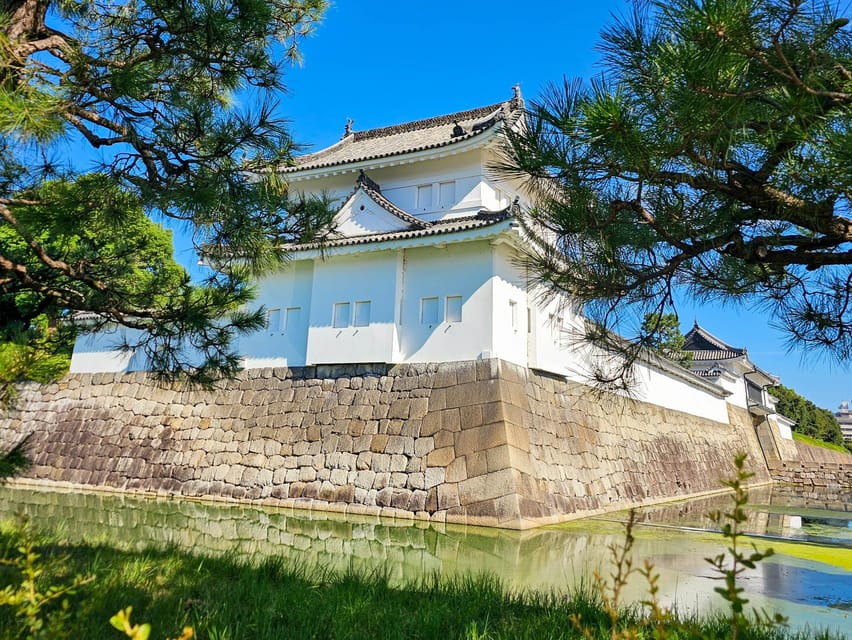
Nijo Castle is a sensible place to begin because it gives you an immediate visual introduction to the shogun’s position in Kyoto. The exterior gates and walls signal authority, but the important experience is inside the Ninomaru-goten Palace and its garden.
You do not need to arrange a separate castle ticket. The entrance fee is included, including access to the Ninomaru-goten Palace and Painting Gallery.
Inside Nijo Castle’s Ninomaru Palace
The Ninomaru Palace is the strongest part of the tour for many people. This is where the route moves beyond broad historical dates and gives you a look at how power was performed inside a feudal residence.
The guide brings you through the Ninomaru-goten Palace and garden, explaining the architecture and interior details. Painted rooms, formal spaces, and carefully arranged areas help show how visitors were received and how rank shaped movement through the building.
The castle is also useful for understanding the shogun’s role. Your guide can explain why this was not simply a defensive fortress. It was a residence, a ceremonial setting, and a political statement.
Allow about one hour for the guided visit. That is enough time for the main interiors and garden without turning the stop into an exhausting full-day examination of every corner. If you like detailed architecture, you may wish you had more time to explore independently after the tour.
One important limit is that the guide only takes the group to the Ninomaru-goten Palace and Garden at Nijo Castle. That is a worthwhile section, but it is not a promise of access to every part of the wider castle grounds.
The Ninomaru visit also involves walking and standing. Wear shoes that are comfortable for a long sightseeing route. Modest dress is expected at both sites, and shorts or tank tops may not be suitable for the palace grounds.
Walking toward Kyoto Imperial Palace
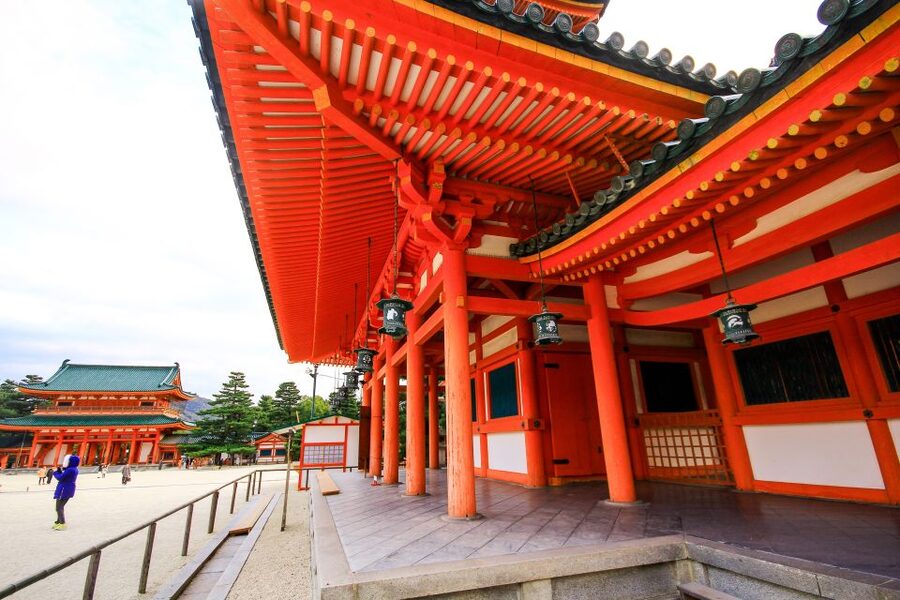
After Nijo Castle, the tour continues on foot toward Kyoto Imperial Palace. The route is part of the experience, but it also explains why the three-hour duration matters. The product description sometimes frames the activity as a way to see two sites in about two hours, yet the stated duration is three hours, with roughly one hour at each main stop and time for the transfer.
You should not plan another timed activity immediately afterward. The walking pace is described as manageable, but the total distance, weather, group pace, and time spent answering questions can vary.
This change of site gives the guide a natural moment to connect the two places. At Nijo Castle, the focus is the shogun’s military and political authority. At the Imperial Palace, the focus shifts to the imperial household and court tradition.
That comparison is one of the tour’s best uses of time. You do not need to know Japanese history before arriving. The guide can provide the basic structure first, then add details about symbols, architecture, religion, culture, and daily life. Guides such as Jasmine and Raphael have been especially appreciated for telling the story in a clear and friendly way.
More Guided Walks in Kyoto:
- Kyoto: Izakaya Bars Guided Walking Tour
★ 4.9 · 815 reviews - Kyoto Gion Night Walk & Geisha District Guided Tour
★ 5.0 · 786 reviews - Kyoto: Gion Sunset Walking Tour with Local Guide
★ 4.7 · 351 reviews - Kyoto : Private Custom Walking Tour With A Local Guide
★ 4.6 · 144 reviews
Kyoto Imperial Palace and its open grounds
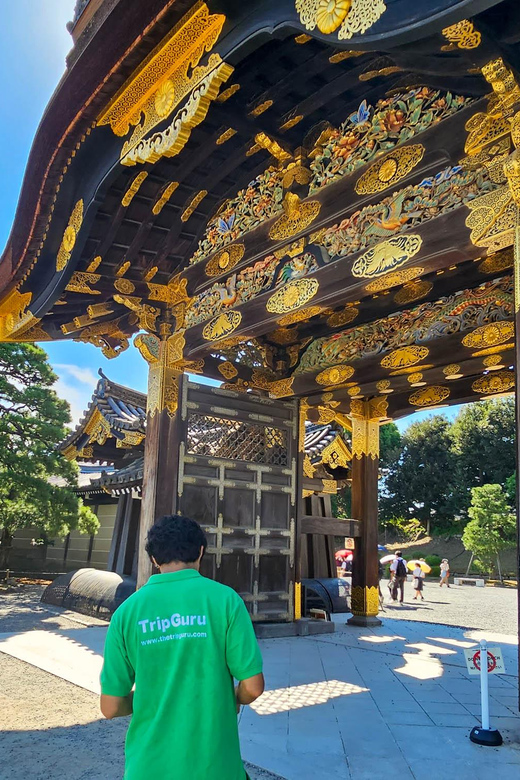
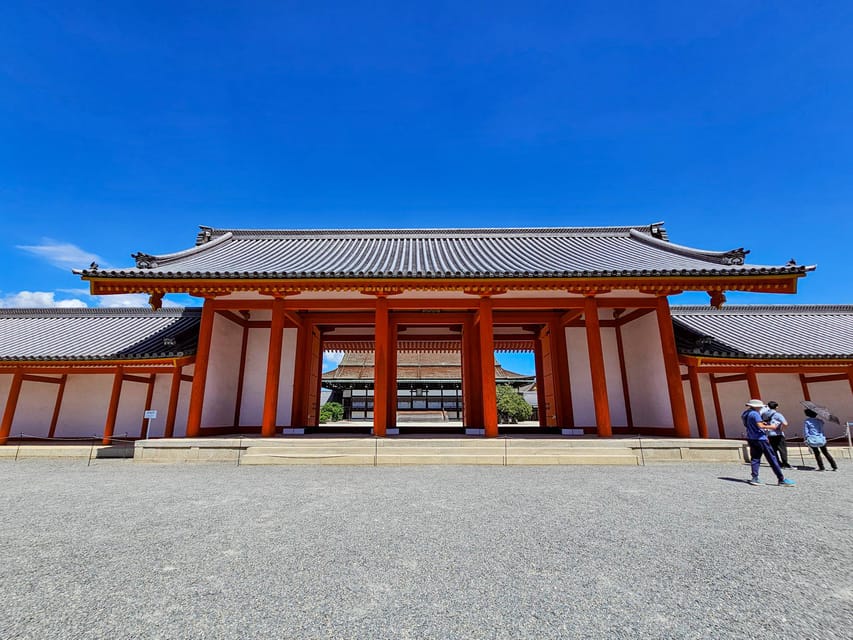
The Imperial Palace was once the residence of Japan’s imperial family. The visit gives you time to see the impressive structures, gardens, and grounds while learning how the palace functioned.
One point matters before you book: this is not presented as an interior tour of the palace buildings. A past participant specifically wished there were more to see at the Imperial Palace and noted that the inside could not be visited. You should expect a guided look at the grounds and exterior areas rather than access to every interior room.
That limitation will matter more to some people than others. If you want a broad understanding of Kyoto’s imperial past, the palace is an important stop. If your priority is richly decorated interiors, Nijo Castle may be the more satisfying half of the tour.
The palace grounds also add breathing room after the castle interiors. You can admire the scale of the site, the formal architecture, and the garden setting while the guide explains why Kyoto remained central to the imperial story.
A modest dress code applies. Avoid clothing that is too revealing or overly casual, particularly shorts and tank tops. This is also a good place to remember the practical side of the tour: bring water, wear comfortable shoes, and carry a camera if you want photographs.
What the guides add to the experience
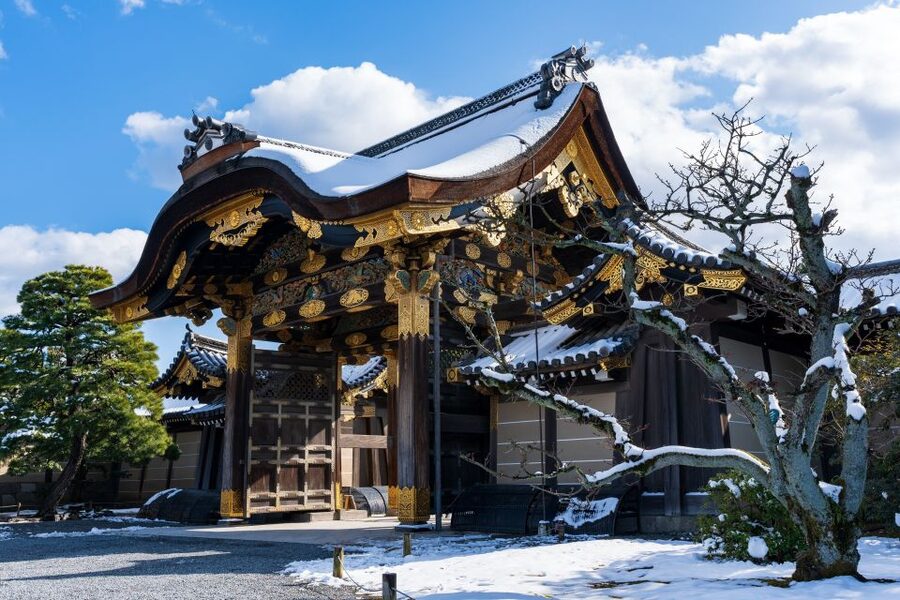
The guide is the main reason to choose this activity instead of visiting both sites alone. The buildings are impressive without commentary, but their purpose and symbolism are easier to understand with someone who can explain them in real time.
The strongest guide feedback centers on four qualities:
- Clear historical structure: Guides explain the relationship between the emperor, shogun, court, and feudal government.
- Architecture and symbolism: You may learn why rooms, gardens, paintings, and design choices mattered.
- Good communication: Guides such as Jasmine have been praised for speaking clearly so the whole group can hear.
- Personal help: Guides have answered wide-ranging questions, offered Kyoto suggestions, taken photographs, and helped with practical needs.
Raphael has been praised for combining historical accuracy with cultural references and an entertaining style. Vincent has been described as attentive with time management and good at answering questions. Taku has been appreciated for patience and care toward everyone in the group. Alex has been noted for connecting the sites with modern Japanese culture as well as the past.
Your exact guide is not guaranteed, so do not book solely to request one named person. Still, the repeated pattern is useful: this is a guide-led history tour, not a script read aloud beside a gate.
The activity is also available in French and Spanish, alongside English. Check the available language and time before paying.
Is $49 a good value?
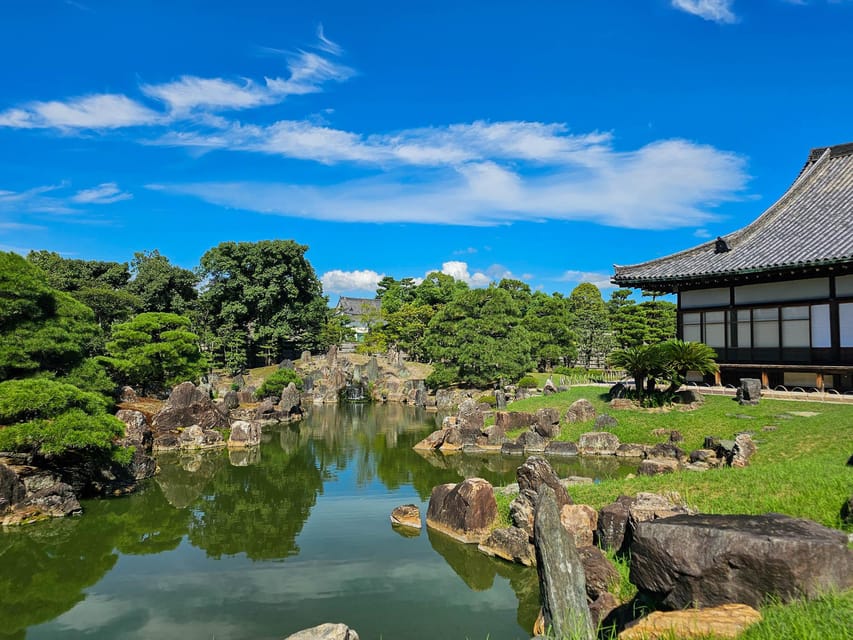
At $49 per person, the price is reasonable if you want both entry fees and a guide handled in one booking. You receive admission to Nijo Castle, including the Ninomaru-goten Palace and Painting Gallery, an English, French, or Spanish-speaking guide, and a three-hour walking route.
The value is strongest for first-time visitors who want context. You could visit both places without a guide, but you would need to arrange entry, navigate between them, and interpret the buildings on your own. The tour also reduces the mental work of deciding what deserves attention.
The value is weaker if you prefer slow independent sightseeing. You will follow a group schedule, and one hour at each principal site may feel brief if you want extensive photography or quiet time. The Imperial Palace portion may also feel less rewarding if you are mainly seeking interior access.
There is no hotel pickup, drop-off, food, or drinks. Bring your own water and budget for personal expenses. You can reserve now and pay later, and cancellation is free up to 24 hours before the start time, which helps if your Kyoto plans are still changing.
Who should book this walking tour?
I would choose this tour if you have only part of a day in Kyoto and want a clear introduction to two major historic sites. It suits first-time visitors, couples, solo visitors, and small groups who enjoy asking questions rather than simply collecting photographs.
It is especially useful if Japanese history feels confusing. The shogun and emperor are often reduced to simple labels, but seeing their residences side by side helps make the distinction practical.
You should think twice if you have trouble walking or standing for several hours. The activity is not suitable for people with mobility impairments, heart problems, respiratory issues, or pregnancy. Kyoto’s heat can also make the route demanding in summer.
For the best experience, schedule it when you are alert and not rushing to a train or dinner reservation. Wear comfortable shoes, dress respectfully, bring water and cash, and arrive early at the station.
Should you book it?
Book this tour if you want historical context in a compact format and like the idea of comparing the shogun’s castle with the emperor’s palace in one outing. The small group, included admissions, flexible start times, and repeated praise for guides such as Jasmine, Raphael, Vincent, and Taku make it a practical choice at $49.
Skip it if you want a long, independent visit, extensive interior access at the Imperial Palace, or a route with little walking. For most first-time Kyoto visitors with three hours to spare, though, this is a well-focused way to understand two of the city’s most important power centers.
FAQ
How long does the tour last?
The tour lasts three hours. The guided visits at Nijo Castle and Kyoto Imperial Palace are listed at about one hour each, with walking time between the sites.
Where does the tour begin?
Meet outside Exit 1 of Nijojo-mae Station, beside Nijo Castle. The guide will wear a TripGuru shirt or hold a TripGuru sign.
Where does the tour finish?
The tour finishes at Imadegawa Station.
What is included in the price?
The price includes an English, French, or Spanish-speaking guide, the walking tour, and Nijo Castle admission, including the Ninomaru-goten Palace and Painting Gallery.
Does the guide take visitors inside the Kyoto Imperial Palace?
The tour includes a guided visit to the Kyoto Imperial Palace grounds and impressive structures. Interior access to the palace is not included.
How many people are in the group?
The group is limited to nine participants.
What should I bring and wear?
Bring comfortable shoes, a camera, and cash. Dress modestly and respectfully for the palace grounds, avoiding clothing that is too revealing or casual, such as shorts or tank tops.
New routes in Kyoto
- Kyoto : Private Custom Walking Tour With A Local Guide★ 4.6 · 144 reviews
- Kyoto: Private 2.5 Hour Historical Walking Tour★ 4.9 · 121 reviews
- Kyoto: Gion Walking Tour★ 5.0 · 195 reviews
- Kyoto: Izakaya Bars Guided Walking Tour★ 4.9 · 815 reviews
- Kyoto: Gion Sunset Walking Tour with Local Guide★ 4.7 · 351 reviews
- Kyoto: Private Walking Tour with a Local★ 4.6 · 118 reviews
- Kyoto Fushimi-Inari Night Walking Tour★ 4.8 · 171 reviews
- Kyoto Gion Cultural Walk & Geisha Show with Dining Options★ 5.0 · 518 reviews
Kyoto Walking Tours, compared.
Kyoto Geisha Walking Tour: Gion District & Hidden Gems
Read our review →
Gion Geisha District Walking Tour – Stories of Geisha
Read our review →
Best of Kyoto: Gion, Geisha, Pagodas & Cobblestones
Read our review →

Nishiki Market Brunch Walking Tour (7 Tastings + Brunch)
Read our review →
Kyoto Arashiyama Walking Tour: Bamboo, Monkeys, Gardens & Secrets
Read our review →
Kyoto Gion: 2-Hour Geisha Culture & History Walking Tour
Read our review →
Browse the lists this tour appears in