
Review · DINNER EXPERIENCES
Kyoto Gion Cultural Walk & Geisha Show with Dining Options
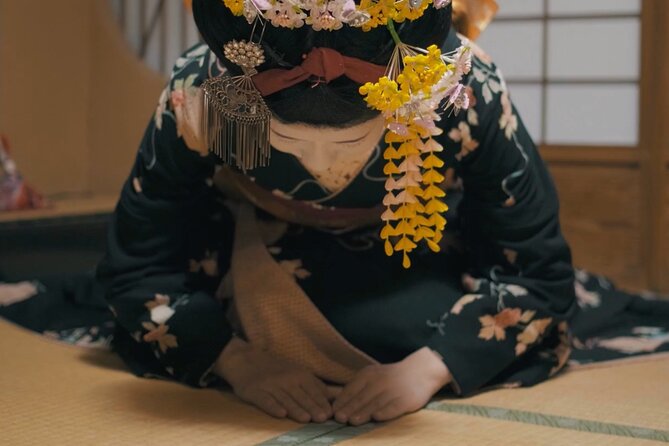
The real draw here is the face-to-face meeting with a maiko, a geiko apprentice in Kyoto’s traditional entertainment world. You walk through Gion first, then sit close enough to ask questions, watch one or two dances, and see the clothing, hair, makeup, and manners that make this culture so distinctive.
I like the way the tour connects the quiet streets of Gion with the living people behind its traditions. I also like the choice of lunch, tea, or dinner, since you can fit the experience into different Kyoto schedules. The main consideration is mobility: there is a fairly long walk, and the activity is not suitable for people with mobility impairments.
Key points at a glance
- Meet a real maiko in a small group: Ask questions directly and watch a performance of one or two songs.
- Start at the Izumo-no-Okuni statue: The meeting point is near Exit 4 of Keihan Gion Shijo Station.
- Learn the difference between geiko and maiko: The guide explains training, daily life, history, and the meaning of the terms.
- Choose your food setting: Pick a Japanese lunch, an afternoon tea break, or dinner with eight shared dishes.
- Expect strong English guidance: Kenta, Ken, and Akari are repeatedly praised for clear explanations and thoughtful group handling.
- Keep the tour focused: It lasts about three hours and limits the group to eight participants.
Why the maiko meeting is the heart of the experience
Kyoto’s geiko culture can be hard to understand from a distance. You may see a woman in a striking kimono hurry along a Gion street, but that glimpse tells you little about her training, work, or place in Kyoto society.
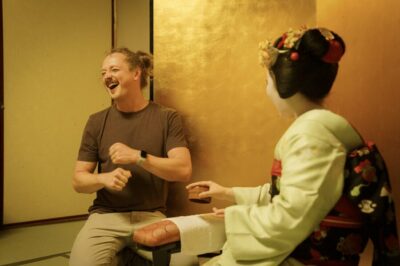
This tour gives you a more useful introduction. After the walking portion, you meet a maiko in a proper setting rather than trying to photograph one on the street. She answers questions, performs traditional dances, and spends time with the group over tea or a meal.
The performance is not a long stage production. It is a close cultural presentation, usually involving one or two songs and dances during a 50-minute meeting. That smaller scale is part of its value. You can notice the controlled movements, the formal presentation, and the details of the kimono and hair ornaments without sitting in a large theater.
The question-and-answer period also matters. You can ask about her training and routine, while the guide helps explain the cultural setting and keeps questions respectful. This is a better way to learn than treating a maiko as a costumed photo opportunity.
Photography is allowed in some parts of the meeting, but you should follow the instructions given on the day. One participant specifically noted that guests were asked not to share photos online. Respect that request. The point is to meet a person, not to collect an image for social media.
More Cultural Walking Tours in Kyoto:
- Kyoto Gion: 2-Hour Geisha Culture & History Walking Tour
★ 5.0 · 1,186 reviews - Kyoto: Gion Hidden Gems & Geisha Culture Tour
★ 4.9 · 126 reviews - Kyoto: Geisha Dinner & Gion Cultural Walk
★ 5.0 · 73 reviews
Starting near Izumo-no-Okuni in Gion
The tour begins in front of the statue of Izumo no Okuni, near Exit 4 of Keihan Gion Shijo Station. This is a practical location in central Kyoto, but station exits can be confusing, so allow a few extra minutes to find the statue.
Izumo no Okuni is associated with the origins of kabuki, making the statue a fitting starting point for a tour about Kyoto’s performing arts. From there, your guide leads you into Gion and explains how the district developed as an entertainment area.
Your guide may be Kenta, Ken, or Akari. The strongest part of their work is not simply naming buildings. They explain how geiko and maiko fit into the district today, and they take care to correct the common idea that geisha are simply entertainers in elaborate costumes.
You will hear the terms used correctly. Geiko is the Kyoto word commonly used for a fully trained geisha, while maiko refers to an apprentice. The guide also explains that the role involves years of study, discipline, artistic practice, and formal conduct.
This background makes the later meeting more meaningful. You are not just watching a dance. You understand why the dancer is called a maiko, what her training represents, and how she relates to Kyoto’s traditional arts.
Walking through Gion and Miyagawasuji
The walking portion lasts about 1.5 hours, although the activity information also describes the district walk as lasting up to two hours. Plan for a substantial walk rather than a quick photo stop.
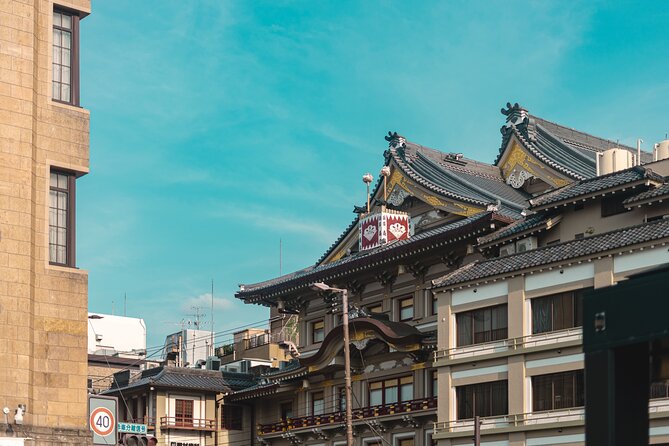
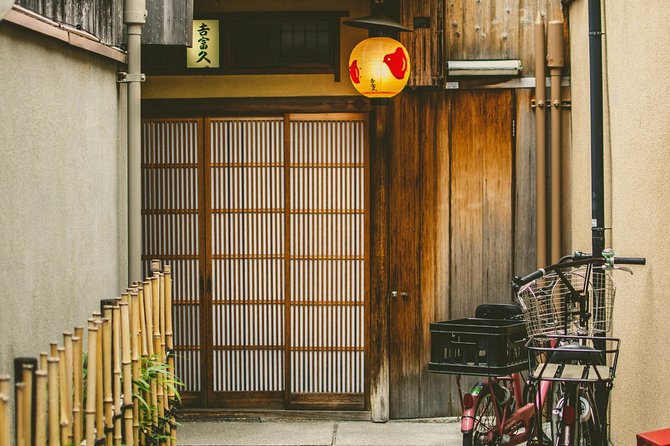
Gion is famous, but it is also a working neighborhood. The streets include traditional architecture, restaurants, shrines, schools, and venues connected with the geiko world. A good guide helps you look past the surface and understand how the district functions.
The route may include parts of Gion and Miyagawasuji, another historic entertainment district. One useful feature is that the walk is not limited to the most photographed lanes. You may see places connected with the training and daily work of geiko and maiko, along with nearby temples and a shrine.
The pace is described as moderate. That should suit most people who can comfortably walk for 90 minutes, but it may be tiring in hot weather or if you are wearing uncomfortable shoes. In summer, guides have provided cold drinks to help with the heat, but you should still dress for walking and bring water if needed.
I especially like the daylight option for first-time visitors. It lets you see the architecture and street layout clearly. The evening option has a different mood, with softly lit lanes and a more atmospheric feel, but the darker streets can make it harder to appreciate details.
Gion attracts plenty of people, and respectful behavior matters. Do not block doorways, enter private lanes, or photograph people without permission. Your guide explains how to avoid disturbing residents and working performers. That practical etiquette advice is one of the quiet strengths of the walk.
What the guides add to the experience
The guide can make or break a culture tour. Here, the repeated praise for Kenta, Ken, and Akari centers on clear English, patience, humor, and a real concern for presenting geiko culture accurately.
Kenta is described as warm, engaging, and especially passionate about correcting false ideas about geiko and maiko. Ken is praised for his friendly style and strong command of English. Akari is noted for her enthusiasm, careful answers, and attention to the needs of the group.
That range matters because the subject can feel unfamiliar at first. The guide needs to explain formal customs without making the tour feel like a lecture. Questions are encouraged throughout the walk and again during the maiko meeting.
The small group size helps. With a maximum of eight participants, you have a better chance to hear explanations, ask follow-up questions, and see the performance without a crowd between you and the dancer. A small group also makes the meal or tea conversation feel more personal.
Guides have also helped participants with photographs and offered suggestions for other things to do in Kyoto. Those extras are not the main reason to book, but they can be useful if this is one of your first days in the city.
More Evening Meals on the Route in Kyoto:
- Osaka: Deep Backstreets Walking Tour with Dinner Option
★ 4.9 · 902 reviews - Marrakech: Authentic Moroccan Food Walking Tour & Dinner
★ 4.8 · 261 reviews - Athens at Night Small-Group Walking Tour with Dinner
★ 5.0 · 230 reviews - Hiroshima: Food and Culture Guided Walking Tour with Dinner
★ 4.9 · 212 reviews
Lunch, tea, or dinner: choosing the right option
The tour offers three formats, and the choice affects the feel of the afternoon or evening.
The lunch option begins at 10:30 a.m. and includes a Japanese lunch plate. It is a good choice if you want to keep your evening free for a temple visit, a river walk, or dinner elsewhere. It also gives you daylight for the Gion walk.
The tea option begins at 2:30 p.m. and includes a cup of tea. This is the lightest food choice and may suit you if you already have restaurant plans. Do not choose it expecting a meal. The main value is the conversation and performance, not the refreshment.
The dinner option begins at 6:30 p.m. and includes eight shared dishes at a local restaurant. The courses are presented in small portions, so this is best understood as a Japanese shared-dish experience rather than a large, filling dinner. The food is described as attractive and tasty, but one participant found the meal light.
Dinner gives the tour a special evening atmosphere. You finish the Gion walk as the district changes character, then meet the maiko over food and drinks. It is the strongest option if you want the whole activity to feel like one complete night out.
At the stated price of $108 per person, the value depends on your chosen format and your interest in the cultural access. You are paying for a three-hour guided experience, a small group, the maiko meeting, the performance, and either a meal or tea. Compared with simply walking through Gion on your own, the price is substantial. Compared with arranging private access to a traditional performance or cultural demonstration, it is more reasonable.
The lunch and dinner choices offer better food value than the tea option, while the tea option may be the smartest pick for people who want the cultural meeting without adding another full meal.
The 50-minute performance and question period
The maiko meeting lasts about 50 minutes. It includes a question-and-answer session, the performance, and one or two traditional songs and dances.
Expect a poised and carefully prepared presentation. The maiko’s kimono, hairstyle, makeup, and movements are all part of a larger artistic tradition. Your guide gives context, but the dancer herself provides the most memorable connection to the subject.
The question period is often the most informative part for curious visitors. You can ask about her life, training, work, and reasons for entering the profession, as long as you keep questions polite and within the boundaries set by the guide.
The meeting can also include a simple game or a chance to take photographs, depending on the arrangements that day. These details are not guaranteed, so treat them as possible additions rather than promises.
The performance is short enough to hold the attention of children and visitors who are not specialists in Japanese arts. Still, you should not book this expecting a large-scale theatrical show. The appeal is the closeness of the encounter and the chance to learn directly in a small setting.
Who will get the most from this tour
This experience suits first-time Kyoto visitors who want more than temples and photographs. It is also a good fit if you have already walked through Gion but want to understand what you were seeing.
I would recommend it to:
- Couples looking for a memorable cultural evening
- Families with older children who can walk and listen for three hours
- Visitors interested in Japanese performing arts
- People who want clear English explanations
- Anyone unsure how to approach geiko culture respectfully
- Food-focused visitors who like to pair a cultural activity with lunch or dinner
You do not need a deep interest in geiko culture to enjoy the tour. The walk, food, and performance create a varied afternoon or evening. Still, people looking only for sightseeing may find the explanations more detailed than expected.
The activity is not suitable for people with mobility impairments, and large bags or luggage are not allowed. Wear comfortable shoes and arrive without anything bulky. The route includes walking through historic districts, so you should be ready to stay on your feet for much of the first half.
Practical timing and booking advice
The tour lasts 210 minutes, or three and a half hours according to the stated duration, while the walking and performance sections are each described as about 1.5 hours. Since the meeting portion is listed separately as 50 minutes, allow at least three hours and some extra time around the start and finish.
Check the available starting time before booking, especially if you are coordinating temple visits or train travel. The lunch, tea, and dinner options begin at different times, and you should select the format that matches your appetite and the rest of your day.
The activity is conducted in English. Guides such as Kenta, Ken, and Akari are praised for speaking clearly and explaining unfamiliar terms in an accessible way, but the exact guide is not guaranteed.
Free cancellation is available up to 24 hours before the activity for a full refund. You can also reserve and pay later, which helps if your Kyoto plans are still changing. These policies are useful, but the more important booking decision is choosing the food option and timing that suit you.
Final verdict: should you book it?
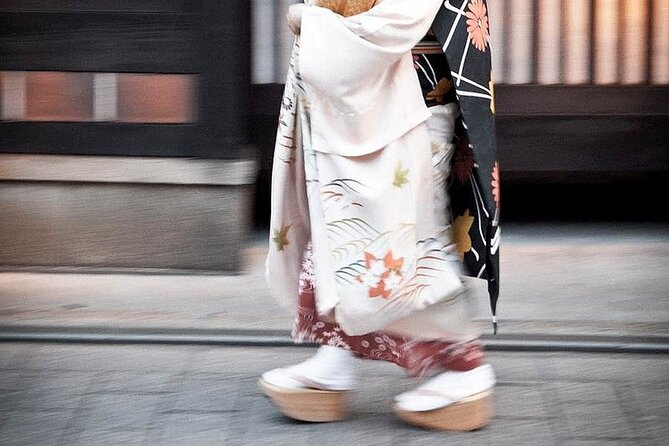
Book this tour if you want a respectful, close look at Kyoto’s geiko and maiko traditions rather than a quick glimpse on a busy street. The strongest elements are the small group, the thoughtful English guidance, the walk through Gion and Miyagawasuji, and the chance to ask a maiko questions before watching her perform.
I would choose lunch if you want daylight and a full day of sightseeing afterward. Choose tea if the conversation and performance matter more than the food. Choose dinner if you want the most complete evening and like the idea of sharing eight small dishes in a local restaurant.
Skip it if you dislike walking, want a large theatrical production, or are looking for a cheap sightseeing activity. For everyone else, $108 is a fair price for access that would be difficult to arrange on your own, especially when the guide helps you understand the culture and behave properly in the district.
FAQ
Where does the tour meet?
Meet in front of the statue of Izumo no Okuni near Exit 4 of Keihan Gion Shijo Station.
How long does the experience last?
The stated duration is 210 minutes, or three and a half hours. The walking tour lasts about 1.5 to 2 hours, and the maiko meeting lasts about 50 minutes.
What will I do during the Gion walk?
You will walk through Gion and nearby historic areas, learning about the history, customs, training, and present-day role of geiko and maiko.
Will I meet a real maiko?
Yes. The experience includes a meeting with a maiko, a geiko apprentice, along with a question-and-answer session and a traditional performance.
Which food options are available?
You can choose Japanese lunch, an afternoon tea break, or dinner with eight shared dishes. The selected option determines what is included.
Is the tour conducted in English?
Yes. The live tour guide speaks English.
Can I bring luggage?
Large bags and luggage are not allowed. The activity is also not suitable for people with mobility impairments.
Can I cancel the booking?
You can cancel up to 24 hours in advance for a full refund. Reserve now and pay later is also available.
More Walks That End at the Table in Kyoto
- Naples: Street Food Experience With 6 Stops
★ 4.7 · 392 reviews - Tirana: Local food experience & walking tour
★ 5.0 · 154 reviews - Bologna: Dinner, Wine & Tastings Walking Tour
★ 4.8 · 109 reviews
New routes in Kyoto
- Kyoto : Private Custom Walking Tour With A Local Guide★ 4.6 · 144 reviews
- Kyoto: Gion Walking Tour★ 5.0 · 195 reviews
- Kyoto: Private 2.5 Hour Historical Walking Tour★ 4.9 · 121 reviews
- Kyoto: Izakaya Bars Guided Walking Tour★ 4.9 · 815 reviews
- Kyoto: Gion Sunset Walking Tour with Local Guide★ 4.7 · 351 reviews
- Kyoto: Private Walking Tour with a Local★ 4.6 · 118 reviews
- Kyoto Fushimi-Inari Night Walking Tour★ 4.8 · 171 reviews
- Kyoto: Imperial Palace & Nijo Castle Guided Walking Tour★ 4.7 · 453 reviews
Dinner Experiences, compared.
Deep Backstreets Walking Tour with Dinner Option
Read our review →

Athens at Night Small-Group Walking Tour with Dinner
Read our review →
Hiroshima: Food and Culture Guided Walking Tour with Dinner
Read our review →
Browse the lists this tour appears in