
Review · DINNER EXPERIENCES
Marrakech: Authentic Moroccan Food Walking Tour & Dinner
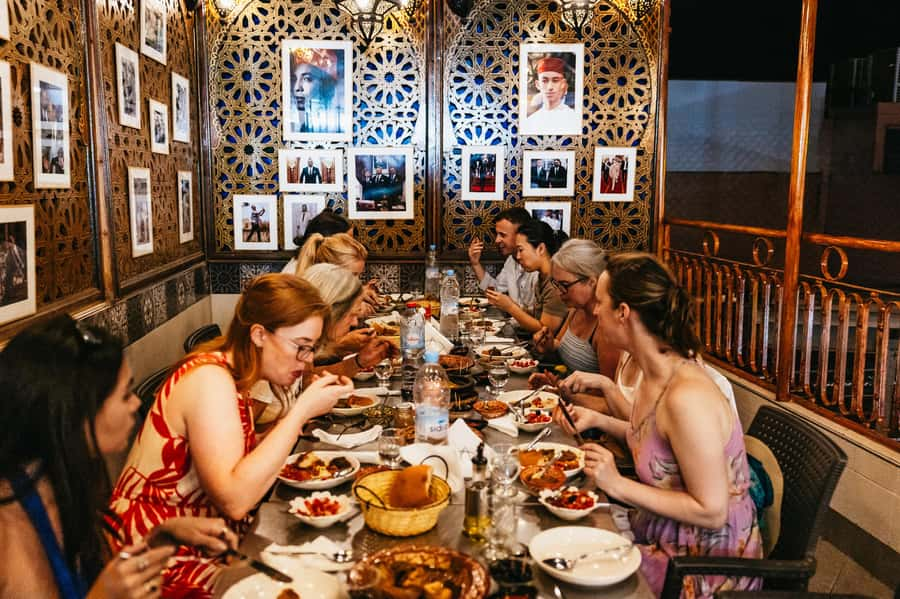
Marrakech is easiest to understand with your appetite switched on. This three-hour Medina food walk leads you from small local stops to a proper dinner, with tastes ranging from harira soup and Moroccan snails to almond pastries, fresh fruit drinks, and grilled meat. It is less about sitting through one long meal and more about seeing how food fits into daily life.
I like two things here. First, the route gets you beyond the obvious tourist restaurants and into food spots many visitors would walk past. Second, the guides, including Yaya, Ali, Mehdi, and Rachid, seem to make the evening personal with stories, jokes, and useful advice about Marrakech. The main drawback is simple: there is a lot of food, so arrive hungry and expect a full stomach by the end.
Quick takeaways
- Start at Poste du Maroc: Meet in front of the post office on Rue Beni Marine, then walk through the Old Medina.
- Expect two possible routes: The exact stops depend on the guide, season, and pace of the evening.
- Taste more than street snacks: The evening can include soup, pastries, olives, dried fruit, snails, cactus fruit, stuffed pancakes, and a full dinner.
- The guides add real value: Yaya, Ali, Rachid, Mehdi, and other local guides explain food customs, Medina life, and the places you visit.
- Plan around the meal: At $52 per person, the price is strong if you enjoy variety, dinner, and cultural explanation in one outing.
- Wear proper shoes: The route is on foot through the Medina, where the ground, crowds, and pace can vary.
Why this food walk is a smart first evening in Marrakech
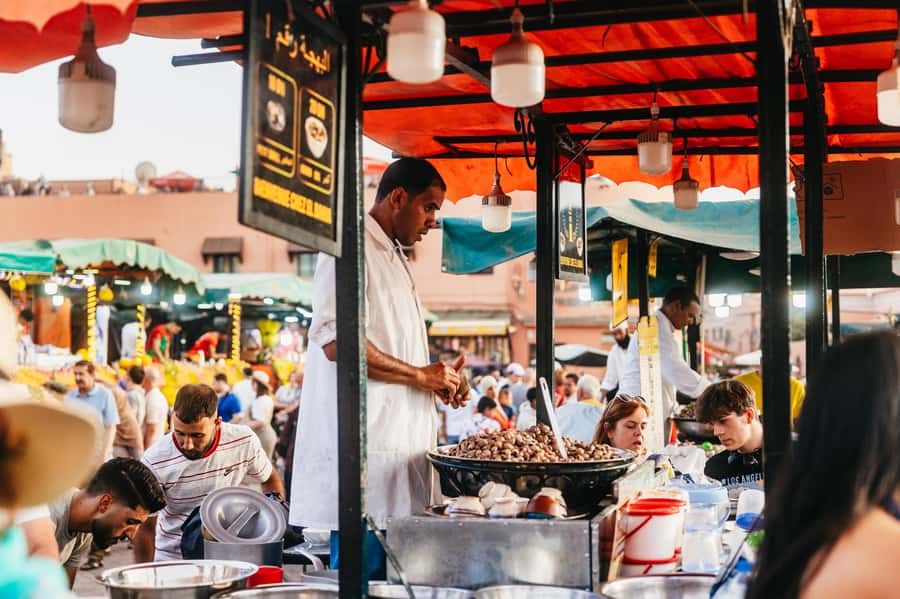
A food tour works especially well at the start of a Marrakech stay. The Medina can feel confusing at first, and food stalls may offer dishes you cannot identify at a glance. With a local guide beside you, you can try unfamiliar food without spending your first night guessing which stall to choose.
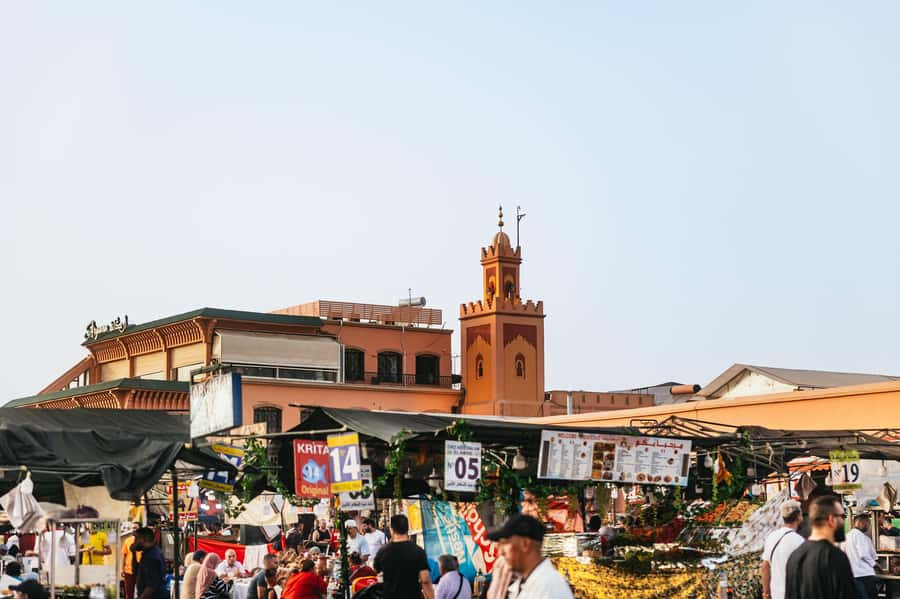
You also get a useful introduction to the city’s rhythm. The route moves through local eating places, market streets, and souk areas rather than keeping you inside a single restaurant. That gives you a better sense of how people in Marrakech snack, share tea, mark celebrations, and eat after sunset.
The meeting point is in front of Poste du Maroc on Rue Beni Marine. You return there after the three-hour walk, so you are not left trying to find your way back from an unknown part of town.
More Food Walking Tours in Morocco:
- Reykjavik Food Walk – Local Foodie Adventure in Iceland
★ 5.0 · 18,952 reviews - Ho Chi Minh City Street Food Tour & Sightseeing By Motorbike
★ 5.0 · 9,413 reviews - Little Havana Food and Walking Tour in Miami
★ 5.0 · 8,882 reviews
What the $52 price buys you
At $52, this is not the cheapest way to eat in Marrakech. It is also not just a restaurant dinner. The fee covers a certified English-speaking guide, food samples at several stops, mint tea, and dinner at either a local restaurant or an open-air grill, depending on the route.
The value comes from the range. You may taste small sweets, soup, pancakes, fruit, olives, nuts, and savory dishes before sitting down to a proper meal. If you ordered every item separately, the cost would not be the only issue. You would also need to find the right places, judge what to order, and understand what you were eating.
The price makes less sense if you want a quiet, single-course dinner or if you have a small appetite. This is a tasting walk with a meal attached, not a light nibble around town. Several people found themselves extremely full, and that is easy to understand when the evening can include more than a dozen tastings.
Route one: harira, snails, pastries, and tajine
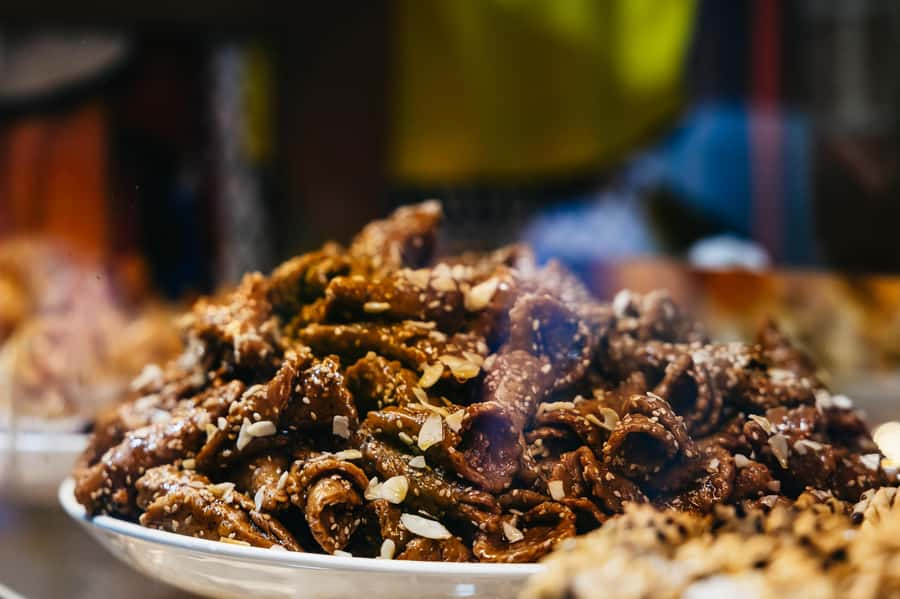
One possible route begins with Moroccan coconut macaroons, a sweet that is especially popular with children. From there, you may try kaab ghzal, often translated as gazelle ankles, a delicate pastry filled with almond paste and scented with orange blossom water.
The combination gives you a quick lesson in Moroccan sweets. These are not simply sugar-heavy treats. Almonds, orange blossom, honey, and dried fruit appear again and again in Moroccan cooking, especially at family gatherings and celebrations.
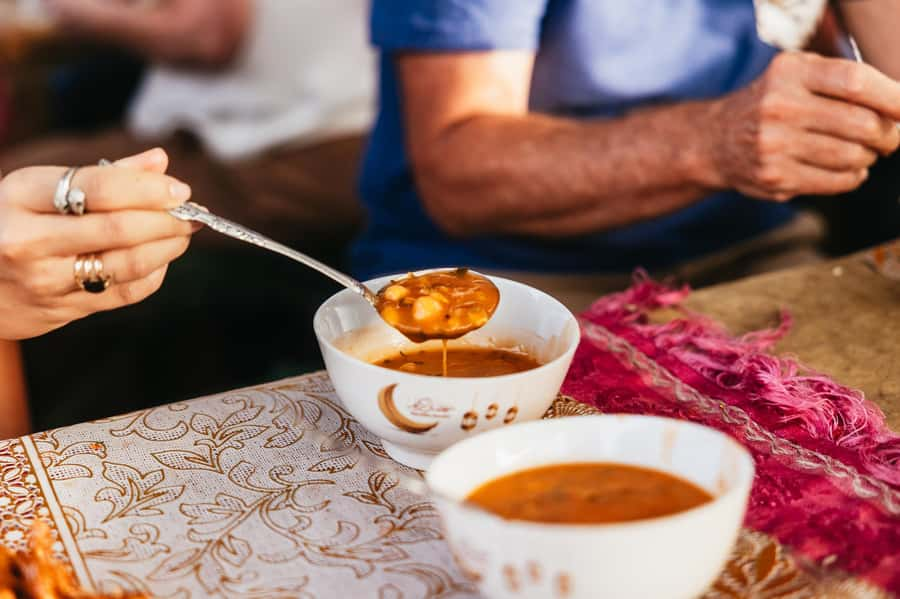
A stop for harira soup brings a savory change. Harira is commonly served with dates and chebakia, a sesame-coated pastry. This pairing is closely linked to breaking the fast during Ramadan, so your guide can explain the social and religious setting behind the food. The soup is also a useful pause in the walk, particularly on a cooler evening.
The more adventurous stop may be babbouche, or Moroccan snails, slowly cooked in an aromatic herbal broth. You do not have to pretend this is an everyday comfort food if it is new to you. Still, it is exactly the kind of local specialty that can be difficult to find or identify on your own.
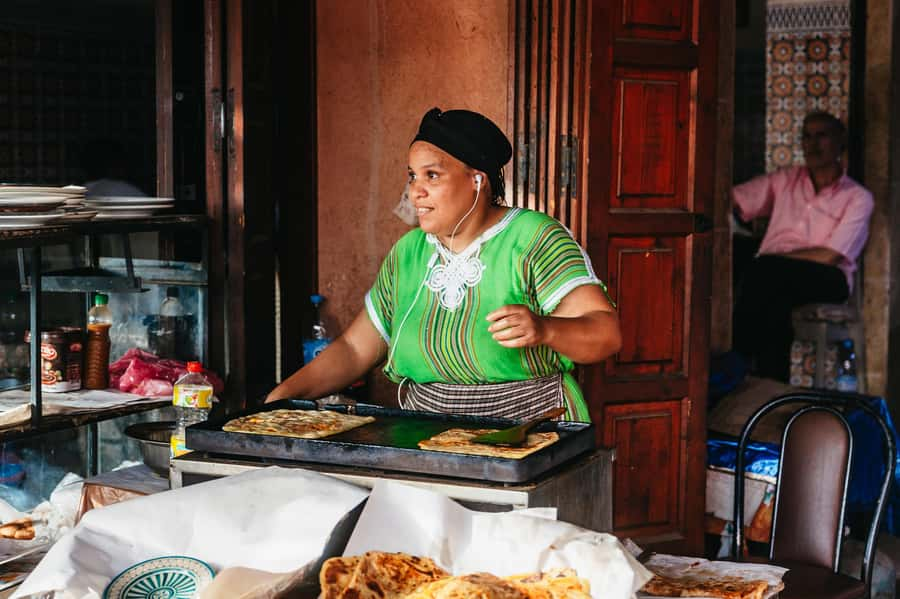
After that come authentic mint tea and msemmen, a pan-fried Moroccan pancake. It may be served with honey and cheese, giving you a mix of crisp edges, soft layers, salt, and sweetness. This is a good example of why the tour works best when you pace yourself. Each stop is manageable, but the portions add up.
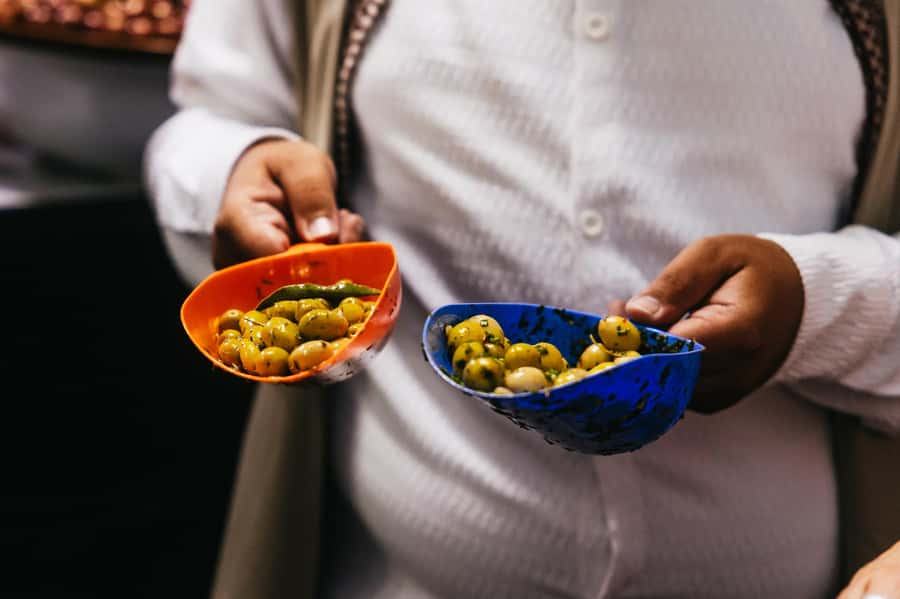
Fakya is a festive mix of dried fruit and nuts, commonly shared among family and friends during celebrations. You may also sample Moroccan olives, including green olives with a creamy texture and red varieties tossed with parsley and cilantro.
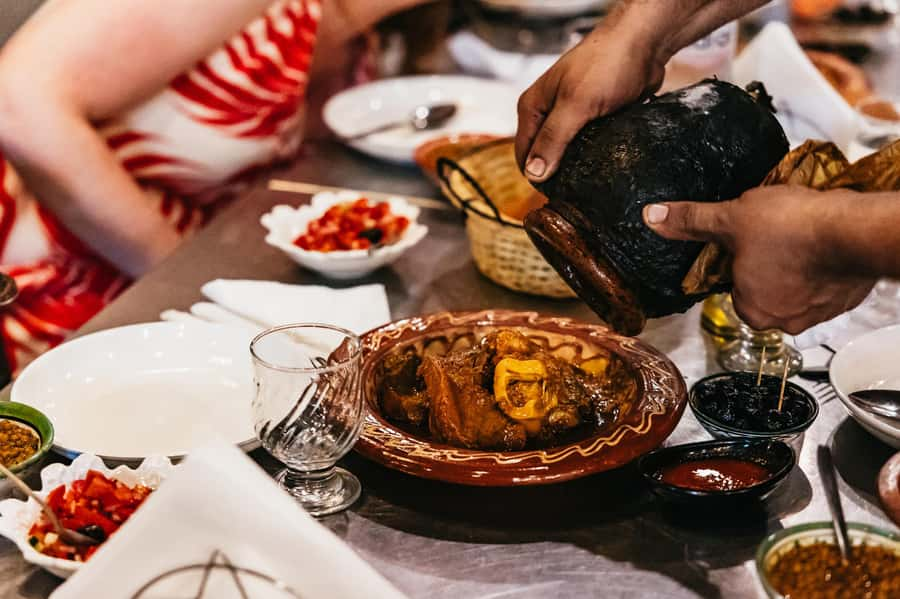
Dinner on this route is served at a local restaurant. Expect fresh Moroccan salad followed by a hearty tajine, with homemade Raïb, a creamy yogurt, for dessert. Tajine is the substantial finish after several smaller tastings, while Raïb gives the meal a cool, mild ending.
Route two: stuffed pancakes, cactus fruit, and open-air barbecue
The second possible route takes a more varied street-food turn. You may begin with Msemen Amer, a Moroccan pancake stuffed with savory fillings such as spiced vegetables. It is often eaten around teatime, and it shows how one basic dough can work as both a snack and a meal.
Harira and chebakia appear on this route as well. Later, Makkla bel Kefta offers a Moroccan take on shakshouka, with spiced meatballs and eggs in a saucy preparation. This is a more filling stop, so resist the urge to eat a large meal beforehand.
Sfenj is another highlight. These traditional Moroccan donuts are crisp outside and airy inside, making them one of the country’s favorite street snacks. You may also taste Lhindiya, refreshing cactus fruit that is especially welcome in hot weather.
The most unusual item on this version may be Rass Mbekher, delicately steamed sheep’s head seasoned with cumin. It is not a token novelty added for tourists. It is a traditional food, but it can be challenging if you are cautious about texture or unfamiliar cuts.
Sometimes the sheep’s head is replaced with local chawarma, using chicken or crispy falafel. Since the route can change, you should not book this expecting one fixed menu. The uncertainty is part of the local feel, but it also means you should tell the guide about dietary needs early.
The sweeter and lighter stops include Panaché, a colorful smoothie made from seasonal fruit, and Khoudenjal, a hot herbal drink made with galangal root. The infusion is traditionally enjoyed for comfort and digestion, especially in cooler weather.
Dinner on this route is an open-air chwa experience, with grilled beef, turkey, and liver. This is a meat-focused finish and may suit you better than the tajine route if you like smoky grilled food. Vegetarians should speak up before the meal, since one guide was praised for arranging substitutes throughout the evening.
More Evening Meals on the Route in Morocco:
- Osaka: Deep Backstreets Walking Tour with Dinner Option
★ 4.9 · 902 reviews - Kyoto Gion Cultural Walk & Geisha Show with Dining Options
★ 5.0 · 518 reviews - Athens at Night Small-Group Walking Tour with Dinner
★ 5.0 · 230 reviews - Hiroshima: Food and Culture Guided Walking Tour with Dinner
★ 4.9 · 212 reviews
The guide makes the difference
The food matters, but the guide shapes the quality of the night. Names that appear repeatedly in the experience include Yaya or Yahya, Ali, Rachid, Mehdi, and Mohammed. Guides vary, so you may not receive the same person each evening.
The strongest part of the guiding style is the mix of food explanation and practical local help. Yaya, for example, is described as friendly, funny, and able to explain both the food and the streets around the Medina. Rachid was particularly appreciated for explaining each dish and offering advice about seeing the city after the tour.
That matters because a food walk can easily become a list of stops with no context. Here, your guide may explain why particular foods are eaten at celebrations, how Ramadan changes the evening, and where locals go for snacks. You can also ask questions about dishes that do not appear on the menu.
Some guides may take you to a traditional herbalist’s shop for a short break. This can include a look at Moroccan spices, a cup of mint tea, and access to a restroom. It is worth keeping an open mind, but remember that the stop is part of the cultural presentation, not necessarily a required shopping visit.
Walking through the Medina after sunset
The route begins and ends at the central post office, but most of the experience takes place on foot in the Old Medina. The walking is not presented as a formal sightseeing tour, yet you will see parts of the souks and side streets that you might not choose alone.
Marrakech’s Medina is lively, crowded, and sometimes hectic. That can be tiring if you are not used to narrow streets, changing foot traffic, and food stalls operating close to the walking route. Comfortable shoes are essential, and you should avoid arriving in footwear that is fine for a restaurant but poor for several hours on uneven ground.
The evening timing can add another layer. After sunset prayer, the market may become much more active, with more food stalls and people out eating. During Ramadan, the timing and meal arrangements can change significantly. The activity information says dinner is not available during Ramadan, while the route description refers to experiencing the breaking of the fast, so confirm the exact dinner plan before booking for that period.
Dietary needs, children, and appetite
This tour suits adventurous eaters, but you do not need to be an expert in Moroccan cuisine. The menu includes familiar choices such as pancakes, bread, fruit, grilled meat, yogurt, tea, and pastries, along with less familiar items such as snails and sheep’s head.
Vegetarians should notify the guide at the start. One guide made a point of finding substitutes, but the listed menus are not fully vegetarian, and the open-air barbecue route is built around meat. The food stops can also be social and energetic, which worked well for families with children aged seven to twelve.
Your appetite is the biggest practical issue. The tour includes tasting after tasting, followed by dinner. I would skip lunch or keep it very small, especially if you want to sample the unusual dishes rather than fill up on the first few stops.
How the two routes compare
Choose the first route if you prefer a classic Moroccan meal with tajine, soup, pastries, olives, dried fruit, tea, and yogurt. It has a clear balance of sweet and savory foods and may feel more familiar if you want to ease into local cuisine.
Choose the second route if you are keen on street food and want the possibility of grilled meats at the end. It is the more adventurous path, especially with sheep’s head, though the option of chawarma may replace it.
You cannot select every stop in advance. The guide, season, and pace of the group shape the evening. That is a minor compromise for an experience based on current local food rather than a rigid restaurant schedule.
Small details that improve the evening
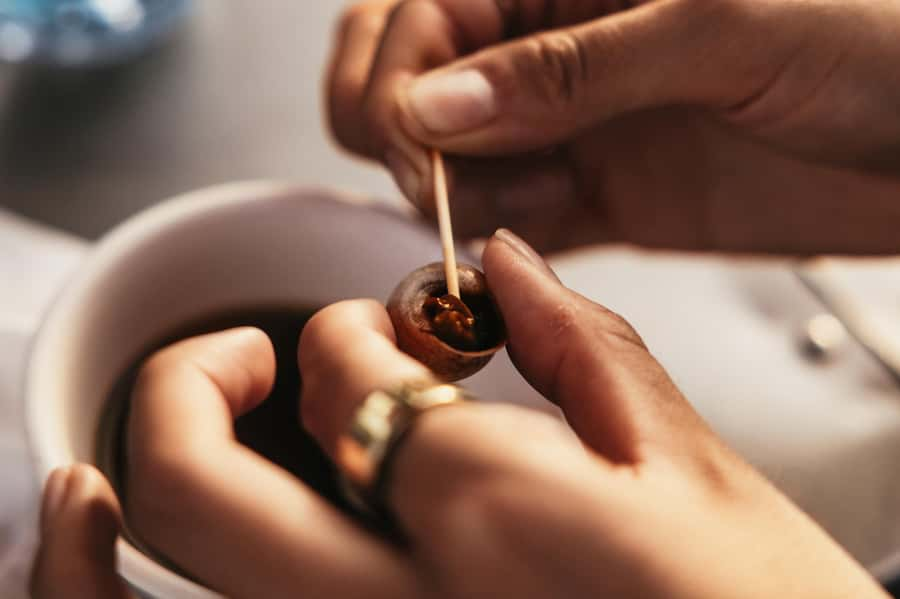
Meet at the post office with enough time to locate the guide. The exact meeting point is in front of Poste du Maroc, Rue Beni Marine, and the guide speaks English.
Keep your plans light after the tour. You may finish close to the starting point, but you will probably want a slow walk back rather than another meal. The experience lasts three hours, though the pace includes repeated stops, conversation, and time to eat.
The activity offers free cancellation up to 24 hours before departure and allows you to reserve while paying later. Check the available start times for your date, since the tour does not list one fixed daily departure.
Should you book this Marrakech food tour?
Book it if you want a friendly introduction to Moroccan food, prefer local stalls to formal sightseeing, and enjoy trying several small dishes in one evening. It is especially useful during your first days in Marrakech, when a guide can help you understand the Medina and point out places you may want to revisit.
Think twice if you dislike walking, avoid adventurous foods, or want a quiet dinner with a fixed menu. For most people who arrive hungry and ready to taste widely, the combination of local stops, cultural explanation, and a full dinner makes $52 a fair price.
FAQ
Where does the Marrakech food tour start?
Meet your English-speaking guide in front of Poste du Maroc on Rue Beni Marine.
How long does the food walk last?
The experience lasts three hours and returns to the Poste du Maroc meeting point.
What food can I expect to taste?
Possible tastings include harira, chebakia, msemmen, Moroccan pastries, coconut macaroons, kaab ghzal, olives, dried fruit and nuts, mint tea, sfenj, cactus fruit, Panaché, snails, and other local specialties.
Is dinner included?
Yes, dinner is included. Depending on the route, it is either a local restaurant meal with salad and tajine, or an open-air barbecue with grilled beef, turkey, and liver. The activity information says dinner is not available during Ramadan, so confirm the arrangement if you visit then.
Is the exact menu fixed?
No. The tour follows one of two possible routes, and stops can depend on the guide, season, and pace of the evening.
Can vegetarians join?
Yes, but you should tell the guide about your dietary needs. The listed routes include many meat dishes, though a guide may arrange substitutes.
What should I bring?
Wear comfortable walking shoes. You will spend the experience walking through the Medina and stopping at several food places.
More Walks That End at the Table in Morocco
- Naples: Street Food Experience With 6 Stops
★ 4.7 · 392 reviews - Tirana: Local food experience & walking tour
★ 5.0 · 154 reviews - Bologna: Dinner, Wine & Tastings Walking Tour
★ 4.8 · 109 reviews - Kyoto: Geisha Dinner & Gion Cultural Walk
★ 5.0 · 73 reviews
New routes in Morocco
- Marrakech: Souk by Night Medina Guided Walking Tour.★ 4.3 · 166 reviews
- Marrakech: Monuments, Souks and Medina Guided Walking Tour★ 4.8 · 208 reviews
- Marrakech: Uncover Hidden Gems on a Half-Day Walking Tour★ 4.2 · 92 reviews
- Marrakech 3-Hour Walking Tour★ 4.3 · 120 reviews
- Marrakech: Customized Guided Walking Tour★ 4.3 · 82 reviews
- Marrakech: 3-Hour Monuments, Souks & Old Medina Walking Tour★ 4.7 · 133 reviews
- Marrakech Guided Souks Tour with a Local Insider★ 4.6 · 109 reviews
- Fez: Walking Tour in the Ancient City of Fez★ 4.8 · 73 reviews
Dinner Experiences, compared.
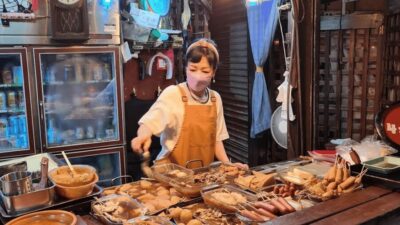
Deep Backstreets Walking Tour with Dinner Option
Read our review →
Kyoto Gion Cultural Walk & Geisha Show with Dining Options
Read our review →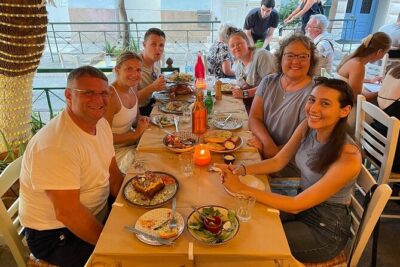
Athens at Night Small-Group Walking Tour with Dinner
Read our review →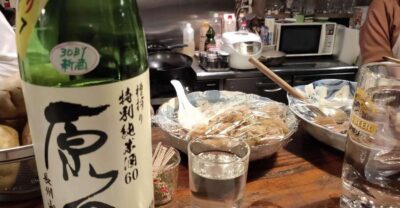
Hiroshima: Food and Culture Guided Walking Tour with Dinner
Read our review →

Browse the lists this tour appears in