
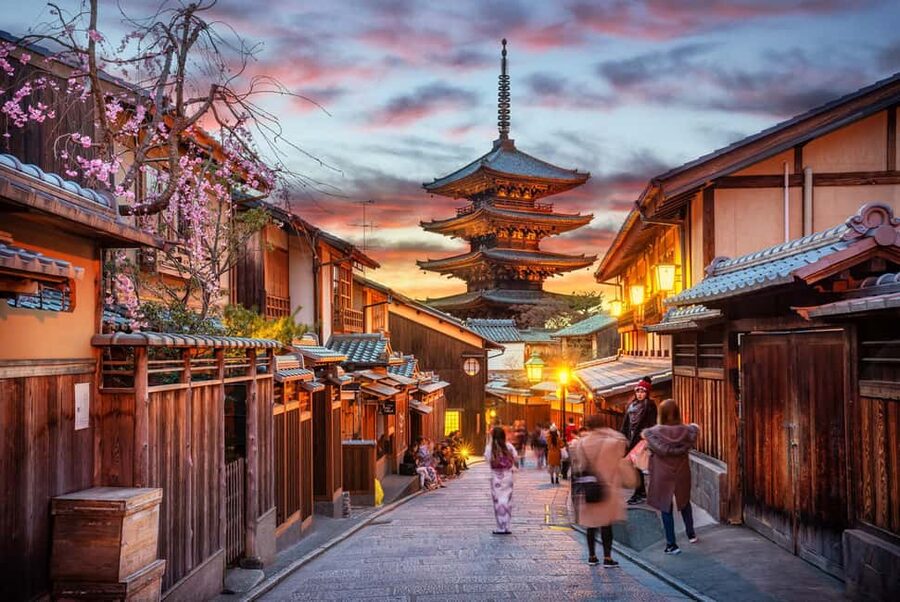
Review · KYOTO
Kyoto: Gion Hidden Gems & Geisha Culture Tour
Gion is at its best when the day-trippers have gone home. This two-hour walk takes you from the willow-lined Shirakawa Canal through quiet lanes, old wooden townhouses, small shrines, and the geisha district’s main street. The possible reward at the end is a glimpse of a geisha or maiko heading to an evening appointment, though no sighting is promised.
I like the way the route combines famous Kyoto sights with less obvious lanes, and I like the practical help from guides such as Uta, Dan, Mai, and Takumi. They explain geisha training, kimono craft, hairstyles, shrines, and Japanese words in clear English. The main catch is pace: fitting this much into two hours means steady walking, and the tour is not suited to wheelchair users or people with mobility limits.
Key points to know before booking
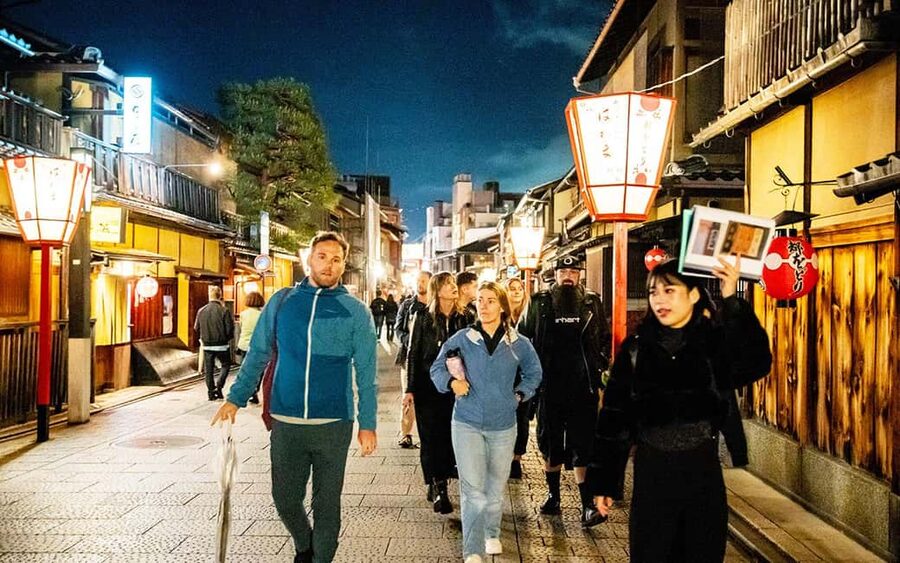
- Gion after dark: Evening departures can mean fewer people and a more peaceful feel along the narrow lanes.
- A chance to see geisha: You may spot a geisha or maiko on the way to an engagement, but it is never guaranteed.
- Seven major stops: The route includes Tatsumi-jinja, Yasaka Shrine, Ninenzaka, Hōkan-ji, Yasui Kompira-Gu, and Hanamikoji-dori.
- Strong guide element: English-speaking guides explain customs, history, Japanese terms, and local food options.
- Good value at $23: Two hours of guiding across several important Gion areas makes this a low-cost introduction to Kyoto.
- Walking matters: Wear comfortable shoes, carry water, and be ready for rain, sun, stone paths, and a fairly quick pace.
Starting beside the Kamo River at Shijo Ohashi
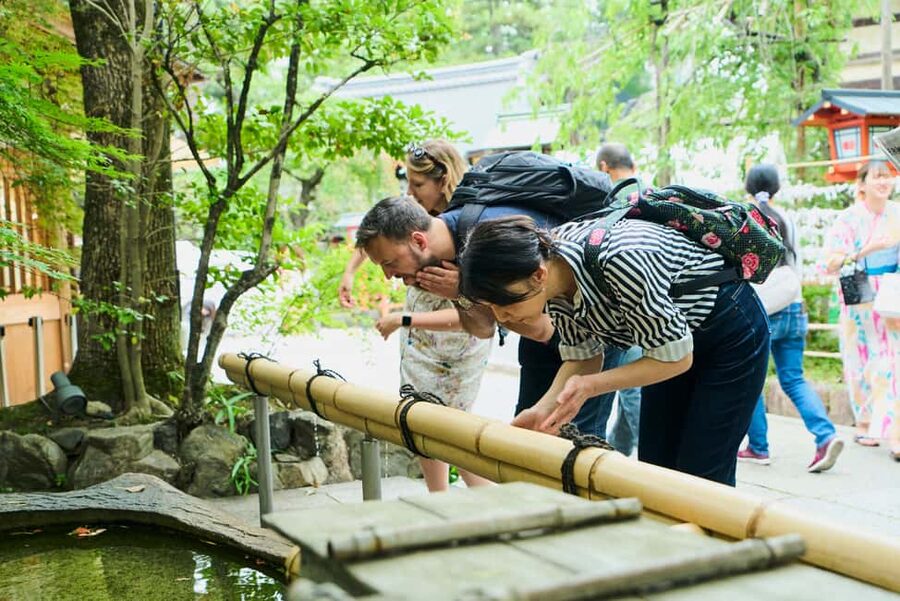
The meeting point is the McDonald’s Shijo Ohashi store at 105-1 Hashimoto-cho, Shimogyo-ku. Look for a guide holding a Local Guide Stars sign beside the restaurant, not necessarily at the crowded front entrance.
This is a useful starting point because the walk quickly moves into Kyoto’s traditional eastern districts. You begin near the Shijo Ohashi area, then make your way toward Gion Shirakawa and its canal. The first few minutes help your guide gather the group and set the rhythm for the walk.
You do not need private transport during the tour. This is a walking route from start to finish, so the meeting point is more important than finding a taxi or bus connection during the experience. Arrive ready to walk rather than treating the first stop as a formal indoor visit.
More Hidden Gems Walking Tours in Kyoto:
- Kyoto Geisha Walking Tour: Gion District & Hidden Gems
★ 4.7 · 3,273 reviews - Kyoto Arashiyama Walking Tour: Bamboo, Monkeys, Gardens & Secrets
★ 5.0 · 1,216 reviews - Dublin Highlights and Hidden Gems Guided Walking Tour
★ 5.0 · 6,020 reviews
Shirakawa Canal gives Gion its postcard view
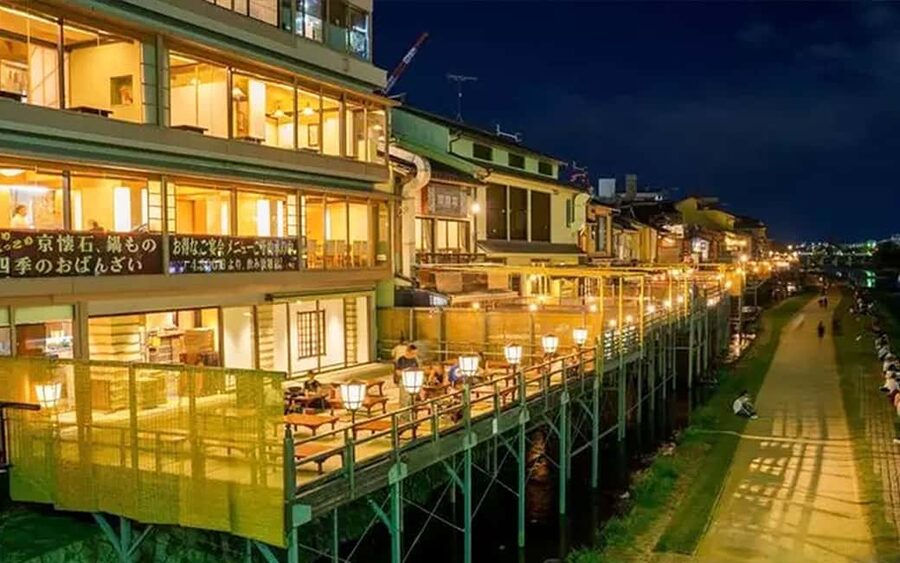
The Shirakawa Canal is one of the prettiest parts of the walk. Willow trees lean over the water, traditional tea houses line the route, and stone paving gives the area an old Kyoto feel.
This is where the tour settles into its main theme: Gion is not just a district of attractive buildings. It is a working cultural area shaped by tea houses, performance traditions, local shrines, and narrow streets that reward careful attention.
Your guide can point out details you could easily pass without understanding. The wooden facades, quiet water, and tightly packed lanes are pleasant on their own, but the explanation gives them meaning.
The canal section is also a good place for photographs, though you should keep your camera work respectful. Gion is not a theme park, and some of the buildings are connected to private businesses and residential life. The experience is better when you observe rather than block a lane or pursue a photograph.
Tatsumi-jinja and the smaller side of shrine culture
Tatsumi-jinja is a compact shrine and an important change of pace from the canal scenery. Instead of simply walking past a large landmark, you stop to look at a smaller sacred site in its neighborhood setting.
The guide explains what you are seeing and how the shrine fits into the cultural life of Gion. This is one reason a guided walk can help during a first visit to Kyoto. A small shrine may not explain itself in English, and its meaning can be easy to miss if you are rushing from one famous temple to the next.
The stop is brief, so do not expect a long temple visit or an elaborate ceremony. Think of it as a focused introduction to local religious spaces, followed by more walking through the surrounding lanes.
Yasaka Shrine connects Gion to Kyoto’s larger story
Yasaka Shrine gives the walk a more substantial landmark. It is one of the best-known religious sites in this part of Kyoto, and the tour includes time to visit, take photographs, and hear the guide’s explanation.
This stop helps you see how Gion is connected to the wider city. The district’s entertainment traditions did not develop in isolation. Shrines, streets, festivals, businesses, and neighborhood customs all sit close together.
I would pay attention here to the guide’s explanation rather than trying to photograph every angle. Guides including Kenta and Dan have been praised for explaining Japanese history and cultural terms in a way that works well for first-time visitors. That context can make the rest of the route easier to understand.
Because the tour has several stops, the visit is not a slow, exhaustive exploration of Yasaka Shrine. If you want extended time for worship, photography, or independent wandering, plan a separate visit.
More Cultural Walking Tours in Kyoto:
- Kyoto Gion: 2-Hour Geisha Culture & History Walking Tour
★ 5.0 · 1,186 reviews - Kyoto Gion Cultural Walk & Geisha Show with Dining Options
★ 5.0 · 518 reviews - Kyoto: Geisha Dinner & Gion Cultural Walk
★ 5.0 · 73 reviews - Savannah First Squares Culinary & Cultural Walking Food Tour
★ 5.0 · 3,229 reviews
Edo-period townhouses and the feel of old Kyoto

One of the most enjoyable parts of the route is simply walking between the major sights. Edo-period wooden townhouses appear along the lanes, offering a view of Kyoto’s older building style without requiring a museum visit.
These houses are valuable because they show the scale of everyday Kyoto. The grand temples get the attention, but the narrow fronts, dark wood, and close-set buildings create much of the atmosphere people come to Gion to find.
Your guide can also help you separate what is old from what is merely designed to look old. That is a useful distinction in a district where traditional architecture, tourism, restaurants, tea houses, and private homes share the same streets.
The quiet lanes are a strong reason to choose this tour instead of walking only along the main roads. Still, quiet does not mean empty. You need to leave room for residents, staff, and people going about their work.
Ninenzaka and Hōkan-ji bring famous Kyoto views
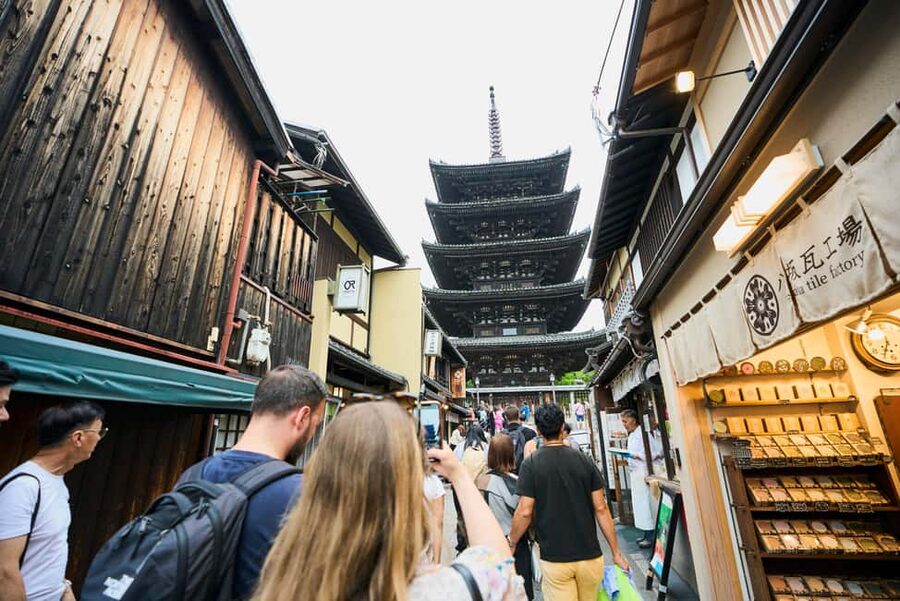
The route continues toward Ninenzaka, a sloping historic lane known for its traditional buildings and strong views toward Hōkan-ji Temple. This section is photogenic, but it also has a practical drawback: stone paving and slopes make the walk more demanding.
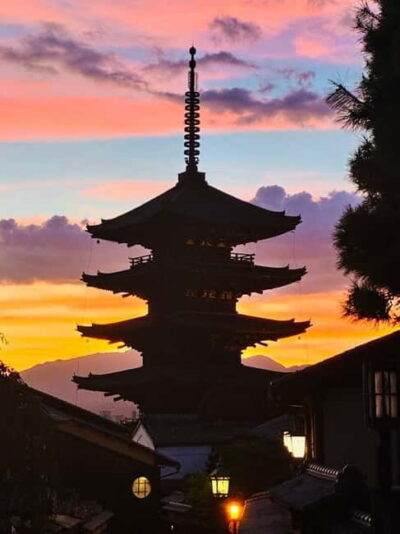
Hōkan-ji is often recognized by its distinctive pagoda. The guide makes a photo stop and explains the area as you walk. You should not expect a long interior temple visit here. The value is in seeing how the temple, street, traditional buildings, and hillside setting fit together.
This portion can be busier than the quieter lanes near Shirakawa, especially at popular times. The guide’s job is partly to keep the group moving and together. Several people specifically appreciated guides who waited for everyone to catch up before continuing the explanation.
If you have knee problems, balance concerns, or difficulty with uneven ground, this is the section to consider carefully. The tour provider says the activity is not suitable for people with mobility impairments or wheelchair users.
Yasui Kompira-Gu adds a memorable local detail
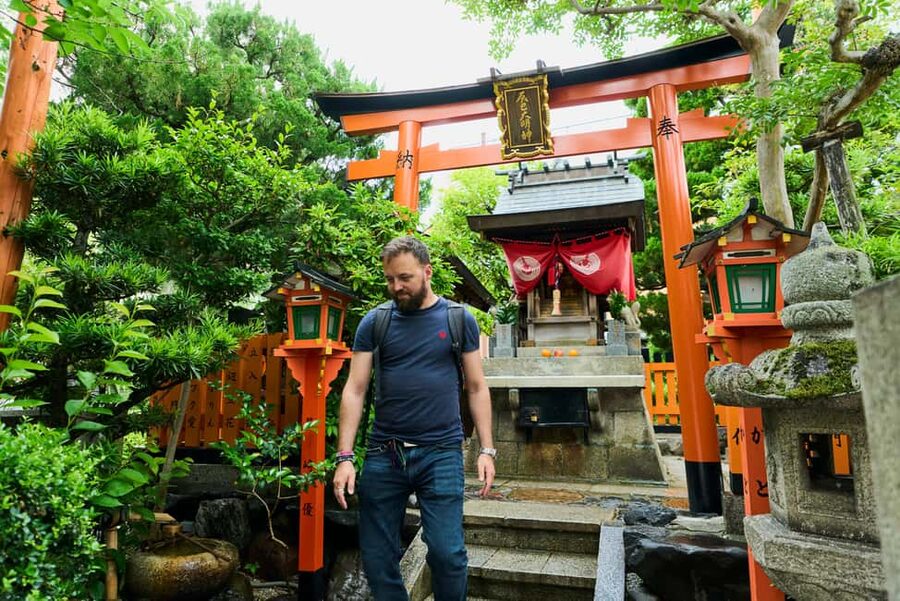
Yasui Kompira-Gu is another shrine stop, and it gives the tour a more unusual point of interest. The visit breaks up the route and offers another chance to hear about Kyoto’s religious traditions in a smaller setting.
This is the kind of stop that can be hard to find on your own when you have only a short time in Gion. It is not simply a famous name on a sightseeing checklist. The guide gives you a reason to pause and notice the site before moving on.
Photography is allowed, but flash photography is not permitted inside temples. Follow the guide’s instructions and watch for signs at each religious site. Quiet behavior matters more here than collecting a perfect photograph.
Hanamikoji-dori and the chance to see geisha
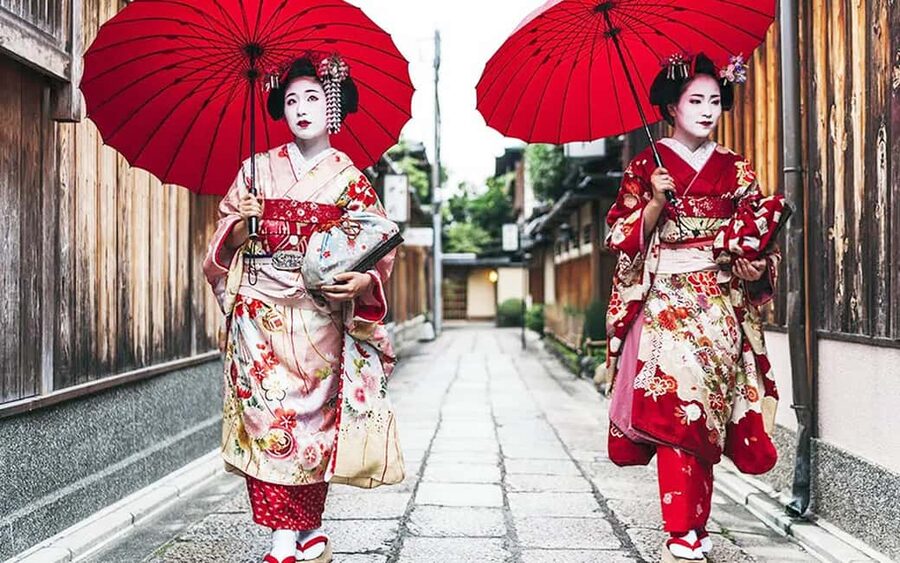
The tour finishes on Hanamikoji Street, the heart of Gion’s geisha district. This is where the guide focuses most directly on geisha and maiko culture, including strict training, graceful dance, kimono craftsmanship, and elaborate hairstyles.
The words matter. A maiko is an apprentice, while a geisha, also called geiko in Kyoto, is a trained professional. Guides such as Takumi and Uta have explained the customs and daily discipline behind these roles, helping you see the people involved as working artists rather than as photo subjects.
You may see a geisha or maiko moving toward an evening engagement. Several people on the tour have been fortunate enough to see one, and some have seen both. But the possibility is a bonus, not the product itself. Sightings depend on timing, schedules, and luck.
If you do see one, keep your distance and avoid blocking the street. Do not use flash. The respectful approach is also the practical one: you get a better sense of the district when you watch quietly instead of turning a working neighborhood into a photo hunt.
Hanamikoji is a natural ending because you can continue into dinner afterward. Guides have offered restaurant suggestions, and some participants used those recommendations after the walk. That local advice can add real value, especially if this is your first evening in Kyoto.
What the guides add to the walk
The tour’s strongest feature is the live English guidance. The named guides vary by departure, but the comments about Uta, Dan, Mai, Takumi, Wajid, Noa, Kenta, and others point to the importance of the person leading your group.
You can expect explanations of:
- Japanese history and shrine customs
- Geisha and maiko training
- Japanese words and cultural meanings
- The design of kimonos and hairstyles
- Gion’s tea-house traditions
- Restaurant and food suggestions for afterward
The best guides adjust to the group. Noa was praised for keeping a comfortable pace and waiting until everyone had caught up. Takumi was noted for keeping a large group engaged, while Uta was especially effective with families, including children aged eight and ten.
That said, guide style can vary. Some departures may feel more energetic and tightly timed than others. The route includes a lot for two hours, so you should expect short explanations at several stops rather than long, quiet visits at each one.
Is $23 a fair price for two hours?
At $23 per person, this is a strong-value introduction to Gion. You get an English-speaking local guide, several major sights, smaller shrines, traditional streets, cultural explanation, and practical food suggestions.
The value is highest if you are new to Kyoto. In two hours, you cover ground that could take much longer to understand by yourself. You also get help noticing the difference between a shrine, temple, tea-house street, townhouse, and geisha district.
The price does not include a meal, transportation, or a private guide. It is a group walking tour, and the pace is designed to cover the route rather than let you linger at every stop. If you already know Gion well, the added value will come mainly from the cultural explanation and side streets.
The tour has a 4.9 rating from 126 reviews, with most praise focused on guide quality, clear explanations, friendly attitudes, and the amount covered in two hours. One four-star rating pointed out that bad weather affected the experience, which is a useful reminder that much of the appeal depends on being outdoors.
Best time to take this Gion walk
Evening is the most appealing choice if you want a calmer mood and a chance to see the district preparing for nighttime engagements. Several people enjoyed late departures because the streets felt less crowded after the main daytime rush.
An earlier slot can work better if you want daylight for photographs or if you prefer to finish before dinner. The tour offers different starting times, subject to availability.
Weather matters. The walk operates in rain, so bring an umbrella or raincoat. In warm months, carry water and sunscreen. Humidity can make the steady pace feel harder, and wet stone paths require extra care.
Comfortable shoes are essential. This is not a bus tour with occasional stops. You will walk across paved streets, traditional lanes, slopes, and shrine approaches.
Who should book this tour?
I would choose this for a first or second day in Kyoto, especially if you want an introduction to Gion before exploring on your own. It is also a good fit if you care about cultural context but do not want a long lecture or a formal indoor performance.
Families can enjoy it, and Uta has been praised for working well with children. Keep in mind that the pace may be demanding for younger children, particularly in hot weather or rain.
Photography fans will find plenty to point a camera at, from Shirakawa’s willows to Hōkan-ji’s pagoda and Hanamikoji’s wooden streets. The tour is less suitable if your main goal is guaranteed geisha access, private conversation with performers, or a long visit inside each shrine.
Free cancellation is available up to 24 hours before the tour, and you can reserve now and pay later. Those options are useful when your Kyoto schedule is still shifting, but the key decision is simpler: are you comfortable walking outdoors for two hours?
Should you book the Gion Hidden Gems and Geisha Culture Tour?
Book it if you want a low-cost, well-paced introduction to Gion, especially in the evening. The route mixes famous sights with quiet lanes, and the guide’s explanation gives you much more than a self-guided stroll through attractive streets.
Do not book it expecting a guaranteed geisha sighting or a slow, private tour. The group must cover a lot of ground, the pace can be brisk, and rain or heat can affect the experience.
For most first-time visitors, I think the $23 price is easy to justify. Take it early in your Kyoto stay, listen closely to the guide’s local suggestions, and finish with dinner near Hanamikoji-dori.
FAQ
Where does the tour meet?
Meet beside the McDonald’s Shijo Ohashi store at 105-1 Hashimoto-cho, Shimogyo-ku, Kyoto-shi, Kyoto. The guide holds a Local Guide Stars sign beside the restaurant because the front entrance can be crowded.
How long does the tour last?
The walking tour lasts two hours.
What language is the tour in?
The tour is conducted in English by a live local guide.
How much does the tour cost?
The listed price is $23 per person.
Can I see a geisha?
You may see a geisha or maiko traveling to an evening engagement, but a sighting is not guaranteed.
What places does the tour visit?
The route includes the Shirakawa Canal, Tatsumi-jinja Shrine, Yasaka Shrine, Ninenzaka, Hōkan-ji Temple, Yasui Kompira-Gu Shrine, and Hanamikoji-dori.
Is photography allowed?
Photography is allowed, but flash photography is not permitted inside temples.
What should I bring?
Wear comfortable walking shoes and bring water and sunscreen. If rain is expected, bring an umbrella or raincoat.
Does the tour operate in the rain?
Yes. The tour takes place in rainy weather, so you should come prepared with suitable rain protection.
Is the tour suitable for wheelchair users?
No. The tour is not suitable for wheelchair users or people with mobility impairments.
New routes in Kyoto
- Kyoto : Private Custom Walking Tour With A Local Guide★ 4.6 · 144 reviews
- Kyoto: Private 2.5 Hour Historical Walking Tour★ 4.9 · 121 reviews
- Kyoto: Gion Walking Tour★ 5.0 · 195 reviews
- Kyoto: Izakaya Bars Guided Walking Tour★ 4.9 · 815 reviews
- Kyoto: Gion Sunset Walking Tour with Local Guide★ 4.7 · 351 reviews
- Kyoto: Private Walking Tour with a Local★ 4.6 · 118 reviews
- Kyoto Fushimi-Inari Night Walking Tour★ 4.8 · 171 reviews
- Kyoto Gion Cultural Walk & Geisha Show with Dining Options★ 5.0 · 518 reviews
Kyoto Walking Tours, compared.
Kyoto Geisha Walking Tour: Gion District & Hidden Gems
Read our review →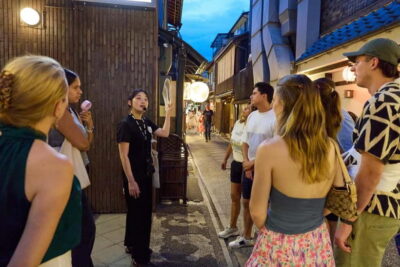
Gion Geisha District Walking Tour – Stories of Geisha
Read our review →
Best of Kyoto: Gion, Geisha, Pagodas & Cobblestones
Read our review →
Nishiki Market Brunch Walking Tour (7 Tastings + Brunch)
Read our review →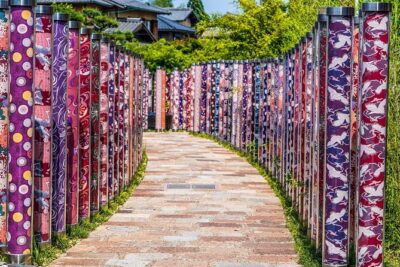
Kyoto Arashiyama Walking Tour: Bamboo, Monkeys, Gardens & Secrets
Read our review →
Kyoto Gion: 2-Hour Geisha Culture & History Walking Tour
Read our review →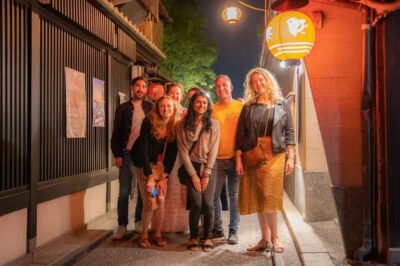
Browse the lists this tour appears in