
Review · JAPAN
Hiroshima: History of Hiroshima Group Walking Tour
Hiroshima’s Peace Memorial Park can feel calm and spacious, but every path here carries a story. This two-hour walking tour helps you connect the memorials, survivor accounts, and bombing sites into one clear account of what happened on August 6, 1945, and how Hiroshima rebuilt itself afterward.
I like the tour’s personal storytelling, especially when guides such as Moe, Cva, or Sada share family connections to survivors. I also like its route through both famous and lesser-known monuments, including the Korean Atomic Bomb Victims Cenotaph and the Atomic Bomb Memorial Burial Mound. The main consideration is the pace: two hours covers a lot, and a large group can make it harder to hear or ask questions.
Key points to know before you book
- The Atomic Bomb Dome is the final stop: You see the city’s best-known ruin after learning the history that gives it meaning.
- Personal stories add weight: Several guides have shared family connections to Hiroshima survivors.
- The route covers more than the main sights: You visit memorials many people would miss without a guide.
- The Peace Memorial Hall is included: Admission is part of the $35 price.
- The tour stays in one walkable area: There is no bus or train transfer during the route.
- English is the only listed tour language: The experience is wheelchair accessible, and comfortable shoes are important.
Why a guided walk helps in Hiroshima
You can visit the Peace Memorial Park on your own, but it is not always easy to understand how its monuments fit together. A statue may honor a particular group of victims. A bell may express a hope for peace. A cenotaph may carry names and memories that are easy to overlook when you are moving from one famous sight to the next.
This tour gives you a timeline and a human scale. You learn what Hiroshima was like before the bombing, why the city was chosen as the primary target, what happened that morning, and how residents faced the years that followed.
I especially value the focus on Hiroshima before and after the attack. The story is not reduced to one aircraft, one explosion, or one ruined building. You also hear about the city that existed before August 6 and the people who worked to rebuild it afterward.
At $35 per person, the price is reasonable for a live, English-speaking guide and admission to the Hiroshima National Peace Memorial Hall for Atomic Bomb Victims. The real value depends on how much help you want with interpretation. If you already plan to read extensively and visit every monument at your own pace, a self-guided visit costs less. If you want context, direction, and time for questions, the fee makes sense.
More History Walking Tours in Japan
- Tokyo: Imperial Palace and Shogun Historical Walking Tour
★ 5.0 · 2,251 reviews - Kyoto Gion: 2-Hour Geisha Culture & History Walking Tour
★ 5.0 · 1,186 reviews - Tokyo: Imperial Palace Japanese History Walking Tour
★ 4.9 · 987 reviews
Beginning at the Gates of Peace
Meet your guide in front of the Gates of Peace, beside the Italian restaurant Mario. This is a useful starting point because the tour moves straight into the memorial area rather than spending time on transportation.
The opening section introduces the purpose of the park and prepares you for a serious subject. Guides come from different academic and cultural backgrounds, including tourism, anthropology, history, and peace studies. The experience is not presented as a casual sightseeing stroll, so expect the tone to become reflective early on.
You should arrive ready to walk outdoors for most of the two hours. Hiroshima weather can change, and one visitor specifically completed the tour during heavy snow. Wear comfortable shoes and dress for the conditions.
Mother and Baby in the Storm
The first major memorial is Mother and Baby in the Storm. You spend about five minutes here with the guide, learning how the sculpture relates to the human cost of the bombing.
This short stop sets the tone for the route. The park contains large, formal memorials, but it also remembers individual lives and family suffering. That contrast is important. You are not only looking at monuments to an event in military history. You are also confronting the effect on parents, children, and ordinary households.
Prayer Fountain and the open spaces of the park
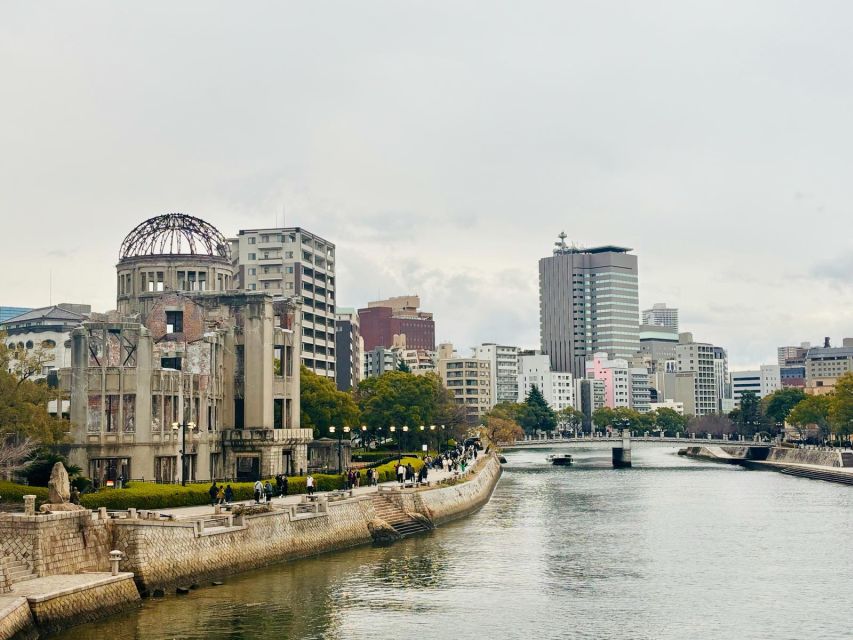
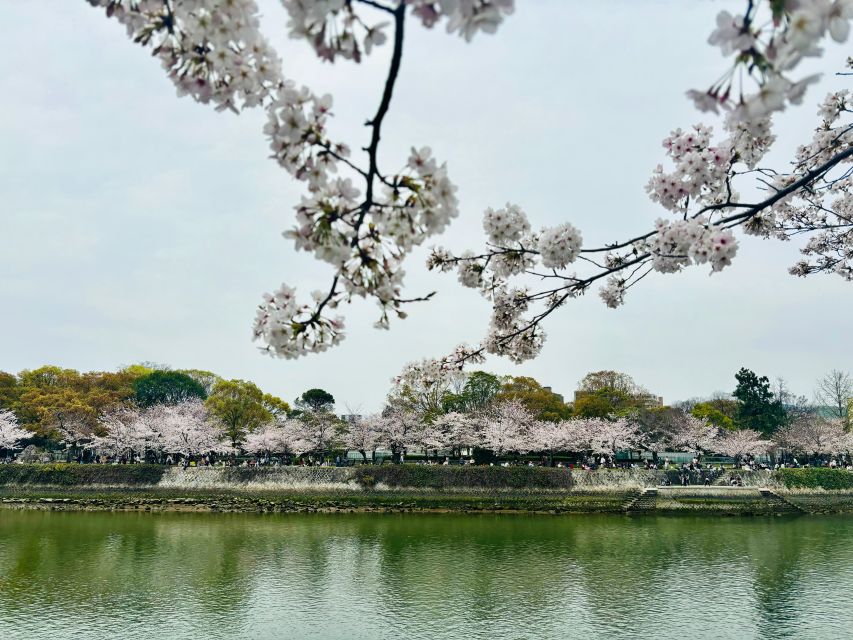
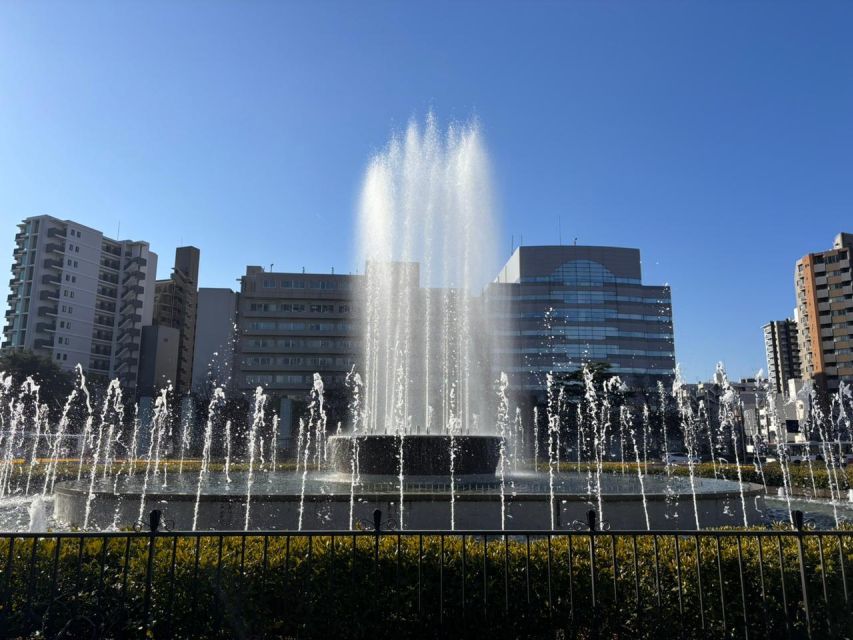
The tour then continues to the Prayer Fountain, with about ten minutes for explanation and sightseeing. The open spaces around the fountain give you a little room to look, listen, and process what you have just heard.
This is one of the places where a guide adds useful detail. The park’s layout contains symbols that are easy to miss if you are focused only on taking photographs. You learn how memorials, water, fire, and open space express grief, remembrance, and the wish for peace.
The outdoor route also means the tour experience changes with the weather. On a warm day, the walking is easy. In rain, heat, or snow, the same route requires more stamina. Bring water when needed, and keep an umbrella or suitable clothing handy.
Same streets, a different guide:
- Kyoto Geisha Walking Tour: Gion District & Hidden Gems
★ 4.7 · 3,273 reviews - Tokyo Tsukiji Fish Market Food and Culture Walking Tour
★ 5.0 · 3,184 reviews - Kyoto: Gion Magical Night Walking Tour with Geisha Trivia
★ 4.9 · 2,393 reviews - Kyoto: Gion Geisha District Walking Tour – Stories of Geisha
★ 4.7 · 2,187 reviews
The Cenotaph and Flame of Peace
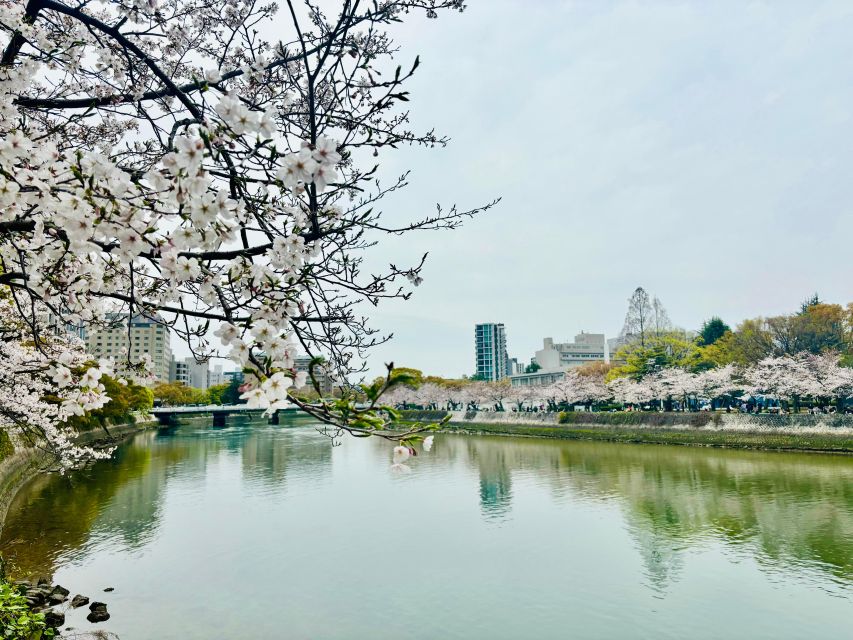
At the Hiroshima Victims Memorial Cenotaph, you spend about ten minutes hearing about the memorial’s role in remembering the victims of the atomic bombing. This is one of the central points in the park, and the guide helps place it within the larger sequence of monuments.
Next comes the Flame of Peace, with about five minutes of guided explanation. The flame is one of the park’s most recognizable symbols, but it carries more weight when you understand how it connects to the city’s message of peace and its opposition to nuclear destruction.
The route does not rush you through a long list of unrelated sights. Instead, the guide links each stop to the people affected by the bombing. That connection is one of the strongest reasons to choose a guided walk instead of simply following a map.
Inside the Hiroshima National Peace Memorial Hall
The tour includes entry to the Hiroshima National Peace Memorial Hall for Atomic Bomb Victims, with about fifteen minutes inside. This indoor stop offers a break from the weather and gives the group a quieter setting for remembrance.
The hall is dedicated to the victims of the nuclear attack, including people affected directly and indirectly. Your guide explains the role of the hall and connects it to the wider story of the city.
Fifteen minutes is enough for an introduction, but not enough for a long independent visit. If you want to spend serious time with the hall’s material, you may wish to return later on your own. The benefit of entering with the tour is that you get orientation before continuing through the park.
Time for questions and a slower look
The itinerary allows about twenty minutes for a visit, guided explanation, and free time. This is valuable because the subject needs pauses. A tightly packed schedule can turn difficult history into a blur, while a little free time gives you space to think and ask questions.
The best guides adjust their delivery to the group. Cva, for example, was praised for asking questions, involving everyone, and leaving time for answers. Other guides, including Tomas, Camille, Aya, Nisa, Ali, and Han, were described as warm, clear, and engaging.
Guide quality can vary from person to person, as it does on any group tour. The consistent strength here is the stated emphasis on English-language guides with long experience in Hiroshima. The strongest individual accounts describe guides who are respectful, approachable, and able to explain difficult subjects without turning the tour into a lecture.
Children’s Peace Monument
The Children’s Peace Monument receives about ten minutes, including a photo stop and guided visit. This is one of the park’s most widely recognized memorials, and it brings the experience into a child’s world.
The guide explains the story behind the monument and ties it to the lives of children affected by the bombing. This section may be particularly meaningful for families, though the subject remains emotionally difficult for visitors of every age.
You will have time to take photographs, but this is not a photo-first tour. The memorials are treated as places of remembrance. A respectful approach matters, especially when other people are praying or reflecting nearby.
The Atomic Bomb Memorial Burial Mound
The Atomic Bomb Memorial Burial Mound is a quieter stop, with about ten minutes of explanation. It helps show the scale of the disaster and the difficult work of caring for victims after the bombing.
This is the sort of location many people might walk past without understanding. The guide provides the context needed to see why it matters. It also reinforces a central point of the tour: the bombing affected far more people than the most famous individual stories can convey.
The mound is not presented as a dramatic attraction. It is a solemn memorial. You should expect the mood to become heavier here, and the guide’s tone matters. Several participants specifically praised guides for giving emotional sections enough space without rushing through them.
Korean Atomic Bomb Victims Cenotaph
The route continues to the Korean Atomic Bomb Victims Cenotaph for about five minutes. This stop broadens the story beyond Hiroshima’s Japanese residents and acknowledges Korean victims of the bombing.
It is a useful reminder that the population of wartime Hiroshima was not uniform. The memorial asks you to consider how war and nuclear attacks affect people across national and cultural lines.
The stop is brief, but it adds an important perspective. If you visited the park alone, you might see the cenotaph without understanding its place in the history of Hiroshima. Here, the guide connects it to the wider human story.
The Bell of Peace
At the Bell of Peace, you spend about ten minutes on a guided visit and photo stop. Like the Flame of Peace, the bell expresses the city’s appeal for peace, but the experience feels more interactive because the bell itself invites attention and sound.
Your guide explains the meaning behind the monument and how it fits into the park’s message. The route alternates between large memorials, quiet spaces, and symbolic objects, which keeps the walk from feeling like a single long lecture.
You can take photographs here, though the emotional tone remains more important than the image. The guide’s job is to help you see why the monument exists, not simply point out another place to take a picture.
The Atomic Bomb Dome and the final walk to the hypocenter
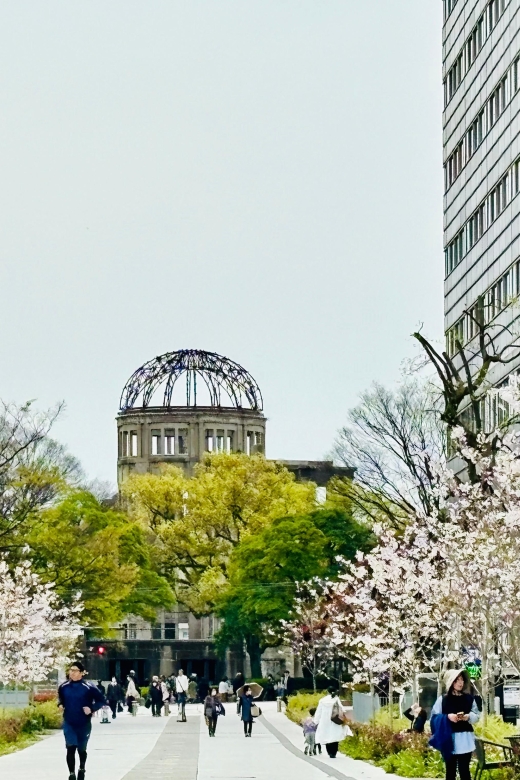
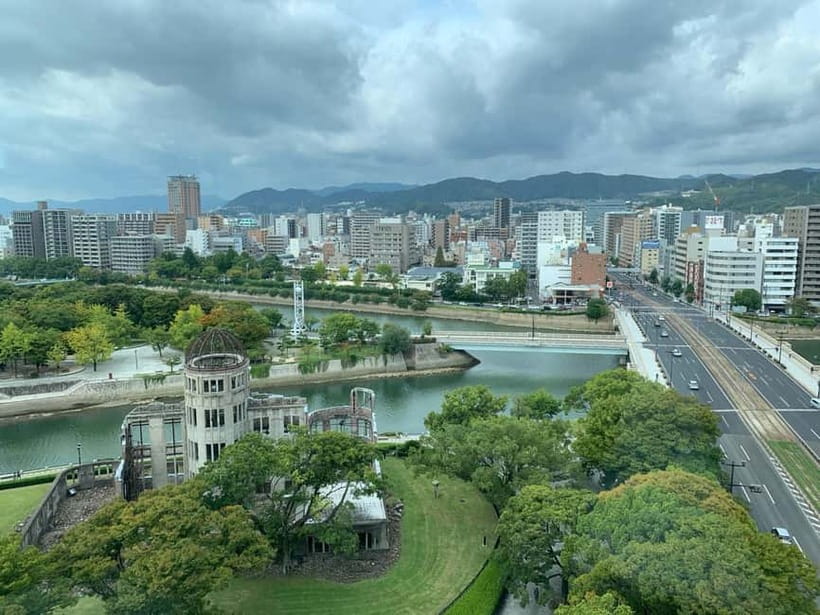
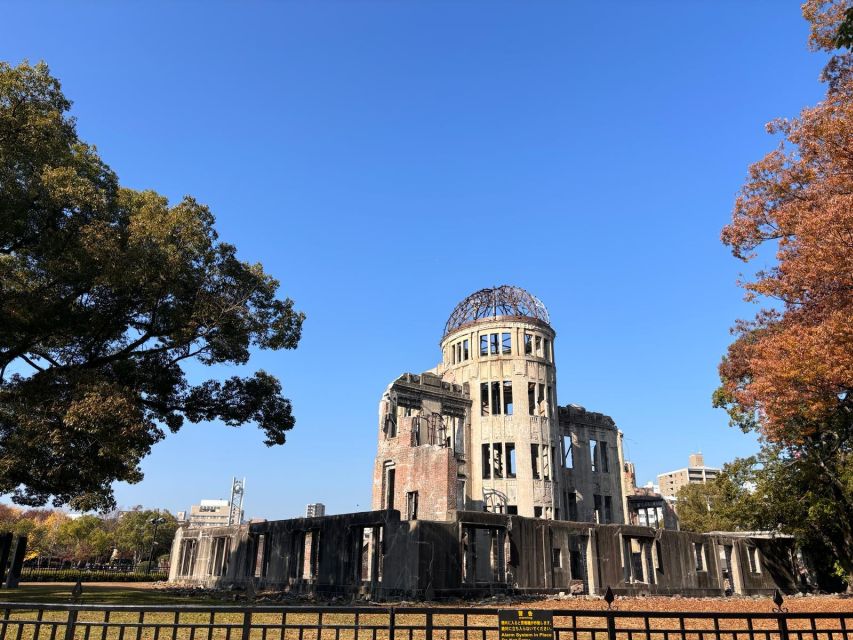
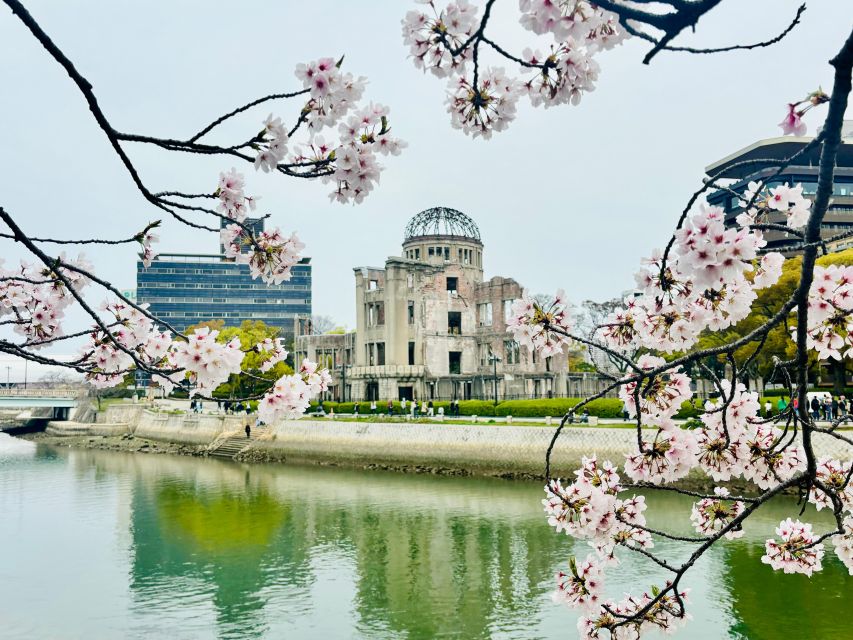
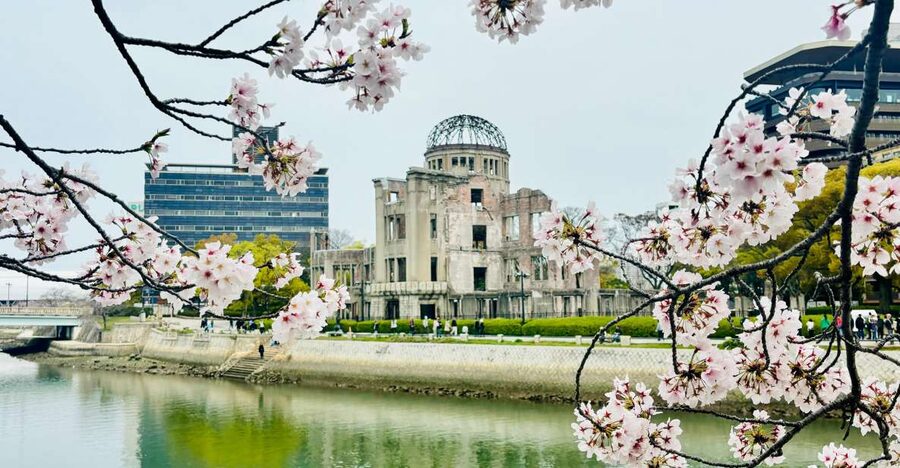
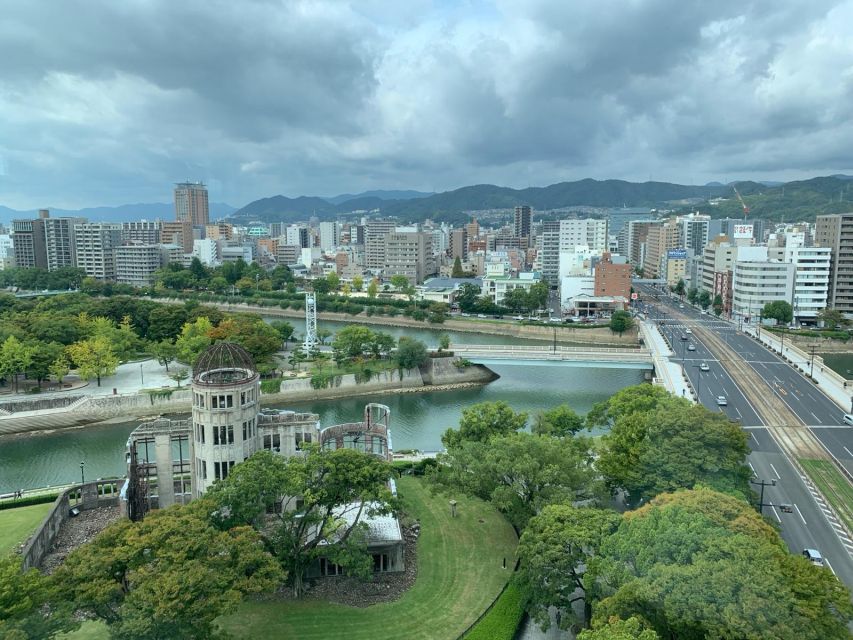
The Atomic Bomb Dome receives about fifteen minutes, making it one of the longer stops. The building is the only structure left intact enough to remain after the blast near the hypocenter. Its damaged frame is now a memorial to those killed and to the city’s appeal for peace.
Seeing the Dome at the end works well. By this point, you have heard about the people, memorials, and city that surround it. The ruin is no longer just an impressive photograph. You understand why it has become the visual symbol of Hiroshima.
The final stop is the Atomic Bomb Hypocenter Monument, with about ten minutes for a guided visit and photo stop. This location marks the point above which the bomb detonated. Ending here gives the tour a clear geographic conclusion and brings the historical account back to one specific place.
The route is not designed to leave you cheerful. It is designed to leave you better informed and more thoughtful about the consequences of nuclear weapons, the lives of survivors, and the city’s decision to promote peace rather than revenge.
How the guides handle a difficult subject
The strongest feature of this experience is the way guides handle emotional material. Cva has been praised for combining facts, survivor accounts, humor used carefully, and time for questions. Moe has shared personal family stories, while Sada has connected Hiroshima’s history with its culture, food, recovery, and present-day life.
Some guides have family ties to survivors, which can make the stories feel immediate. That does not replace historical evidence, but it gives the presentation a personal dimension. You should still expect different guides to have different speaking styles and levels of detail.
The tour is conducted in English. Several guides have been described as fluent and easy to understand, though a large group can make listening harder. One participant found a group too large for comfort even while praising the guide’s effort. If you prefer quiet, private discussion, a private tour may suit you better.
Who will get the most from this tour
I recommend this walk if you are visiting Hiroshima for the first time and want a clear introduction before exploring the museums independently. It also suits people who want the stories behind memorials rather than a simple list of dates and names.
Families can take it, but parents should decide how much detail their children are ready to hear. The subject is serious, and some sections may be upsetting. The guide’s respectful approach helps, but no walking tour can make this history light.
It is also a good fit if you already know the basic history. One participant who considered themselves well read still found new information and appreciated the chance to ask detailed questions.
The two-hour length works well for a first visit, but you may leave wanting more time. Plan to return to the Peace Memorial Hall or other park sites afterward if you want a slower, more private look.
Practical details and final advice
The meeting point is in front of the Gates of Peace, next to Mario restaurant. Check the exact starting time when booking, since availability changes. The listed language is English, and the tour is wheelchair accessible.
Free cancellation is available up to 24 hours before the start time, and you can reserve now and pay later. Those options are useful if your Japan itinerary depends on train schedules or changing weather.
Bring comfortable shoes and weather-appropriate clothing. The route is outdoors for much of its length, and the tour continues in poor weather unless conditions lead to a change by the provider.
Should you book it?
Book this tour if you want human stories, historical context, and a guided route through the major memorials for $35. It offers solid value, particularly because admission to the Hiroshima National Peace Memorial Hall is included and the guide helps you find sites you might otherwise miss.
Skip it only if you strongly prefer complete independence, already know the park well, or want extended time inside each memorial. For most first-time visitors, this is a thoughtful and efficient way to begin understanding Hiroshima.
FAQ
How long is the Hiroshima history walking tour?
The tour lasts two hours.
How much does the tour cost?
The listed price is $35 per person.
What language is the tour conducted in?
The tour is conducted in English.
Where does the tour meet?
Meet your guide in front of the Gates of Peace, next to the Italian restaurant Mario.
Where does the tour finish?
The tour finishes at the Hiroshima Atomic Bomb Hypocenter Monument.
Is admission to the Peace Memorial Hall included?
Yes. Entrance to the Hiroshima National Peace Memorial Hall for Atomic Bomb Victims is included.
Is the tour wheelchair accessible?
Yes, the activity is listed as wheelchair accessible.
What should I bring?
Bring comfortable shoes and clothing suitable for the weather.
Can I cancel the booking for a full refund?
Yes. You can cancel up to 24 hours in advance for a full refund.
New routes in Japan
- Tokyo: Asakusa & Sensoji ー Oldest Temple Walking Tour (2hrs)★ 5.0 · 213 reviews
- Asakusa Cultural Walk & Matcha Making Tour★ 5.0 · 245 reviews
- Asakusa Senso-ji Temple and Old Tokyo Walking Tour★ 5.0 · 560 reviews
- Tokyo: Tsukiji Market Walking Tour & Sushi Cooking Class★ 4.6 · 122 reviews
- Tokyo: Shinjuku Nightlife & Secret Backstreets Walking Tour★ 4.8 · 229 reviews
- Tokyo: Shinjuku Bar Hopping & Night Walking Tour★ 4.6 · 137 reviews
- Tokyo: Dark Side of Tokyo Shinjuku Red Light Walking Tour★ 4.7 · 862 reviews
- Tokyo: Shibuya Highlights Walking Tour★ 4.8 · 601 reviews
Japan Walking Tours, compared.
Kyoto Geisha Walking Tour: Gion District & Hidden Gems
Read our review →
Tokyo Tsukiji Fish Market Food and Culture Walking Tour
Read our review →
Imperial Palace and Shogun Historical Walking Tour
Read our review →
Gion Geisha District Walking Tour – Stories of Geisha
Read our review →
Best of Kyoto: Gion, Geisha, Pagodas & Cobblestones
Read our review →
Shinjuku Local Bar and Izakaya Guided Walking Tour
Read our review →
Asakusa Walking Tour with Sensoji Temple Visit
Read our review →Browse the lists this tour appears in