
Review · TANZANIA
Dar es Salaam City Center: Walking Tour
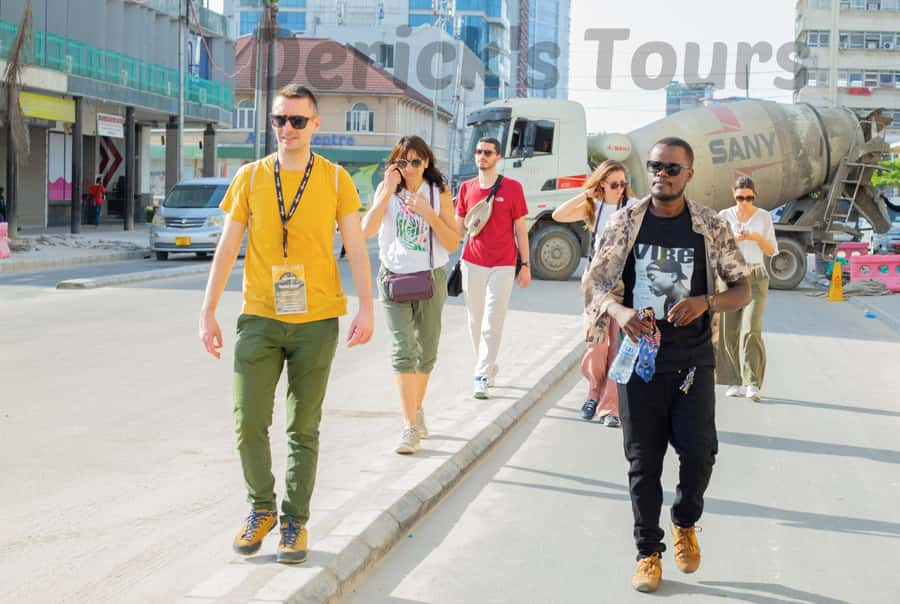
Dar es Salaam reveals itself best on foot, especially at Kivukoni Fish Market, where fishermen land seafood, repair nets, and sell the day’s catch. This two-hour walk links that everyday scene with major landmarks, old churches, leafy gardens, and colonial-era buildings.
I like the mix of city history and ordinary local life, and I like that Derick Lawrence can adjust the route instead of treating every booking as a fixed script. The main drawback is the pace: two hours covers a lot, so you may have limited time for photographs, and the fish market can be hot, crowded, and strong-smelling.
Key points to know before booking
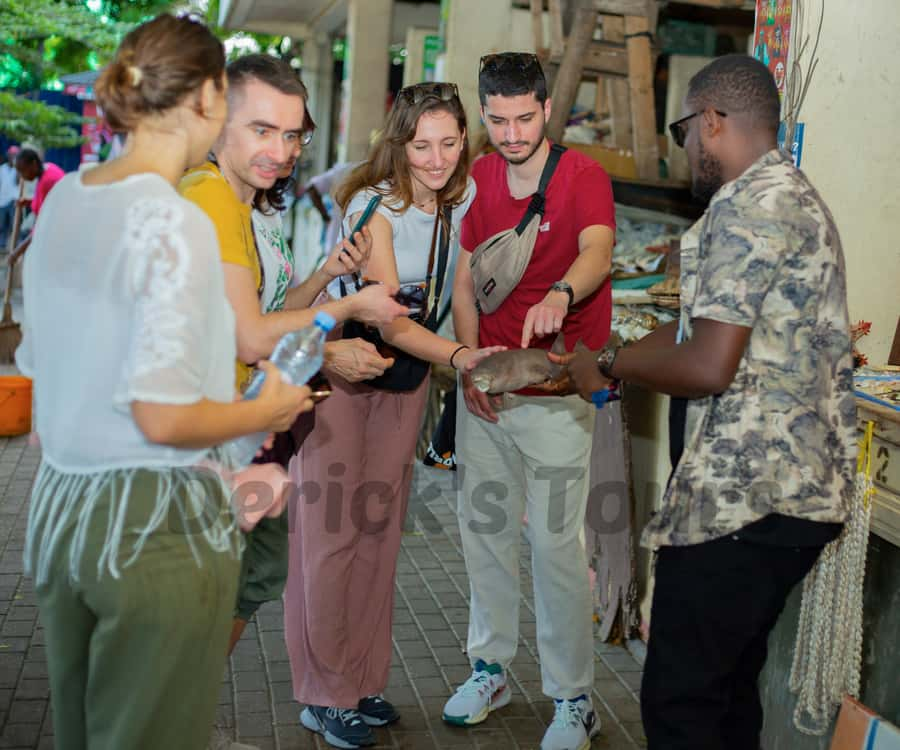
- Kivukoni Fish Market is the tour’s most vivid stop, with seafood sellers, fishermen, and a close look at coastal life.
- Derick Lawrence explains Dar es Salaam’s past clearly, from the sultanate period and German rule to British rule and modern Tanzania.
- The route balances famous landmarks with local places, including churches, the Botanical Garden, Old Boma, and an art gallery.
- The tour can be personalized, including a different stop if you need to avoid the fish market.
- Late afternoon may be more comfortable than midday, with one guest changing a 2 PM booking to 5 PM because of the heat.
- At $30 per person, the value is strongest for a first visit, when context and orientation matter more than ticking off attractions.
Why this two-hour walk works as a first look at Dar es Salaam
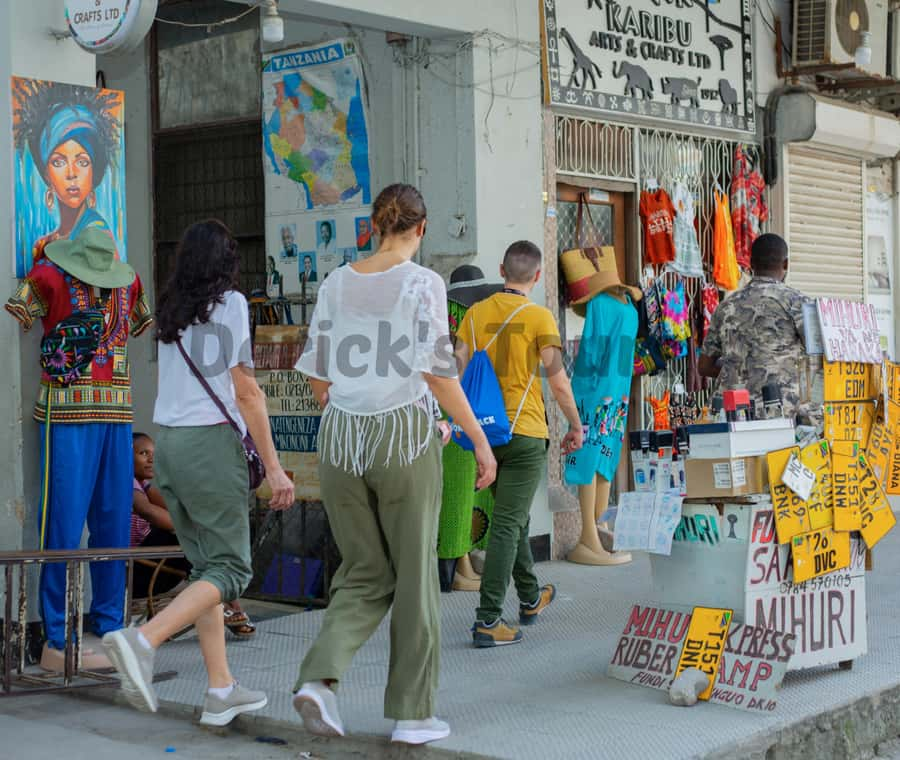
Dar es Salaam is a large, busy coastal city, and its central district can feel scattered if you explore without context. A guide helps connect the buildings, monuments, markets, and streets into a story you can follow.
This is not a museum-heavy tour. It is a walk through the city itself, with time spent looking at architecture, hearing about Tanzania’s political and cultural past, and watching daily business unfold. You get an introduction rather than a full study of Dar es Salaam, but that is useful if you are staying briefly, arriving before a safari, or trying to get your bearings at the start of a longer trip.
Derick Lawrence is the guide named for this experience. He leads in English and has been praised for explaining the city’s development, culture, traditions, and changing political periods in clear terms. He also tends to answer questions at length, which matters if you want more than a list of dates and building names.
The group size is not specified, so you should not assume a private tour. Still, the route can become very personal when only one booking is scheduled. One solo guest even completed part of the experience by motorbike, while other bookings involved small groups of three. Ask ahead if group size or transport matters to you.
More Walking Tours in the world:
- Magical London: Harry Potter Guided Walking Tour
★ 4.7 · 22,044 reviews - Reykjavik Food Walk – Local Foodie Adventure in Iceland
★ 5.0 · 18,952 reviews - History and Hauntings of Salem Guided Walking Tour
★ 5.0 · 14,564 reviews
St. Joseph Cathedral and Azania Front Church
The walk begins at St. Joseph Cathedral, one of central Dar es Salaam’s most recognizable buildings. Its Gothic style gives the city center a European architectural note, but the real value here is the chance to place the building within the city’s wider religious and colonial story.
You will then visit Azania Front Lutheran Church. Its form reflects German colonial influence, giving you a useful comparison with St. Joseph Cathedral. Seeing the two churches together helps explain how outside powers shaped central Dar es Salaam, while also showing how religious buildings became part of the city’s daily life.
I appreciate this opening because it gives you visual anchors early in the walk. You are not simply hearing that Dar es Salaam has a colonial past. You are looking directly at the structures that remain from it.
There is a limit, though. These are exterior-focused city stops unless access happens to be available. If you want long visits inside both churches, ask Derick before booking so you know how much time the route allows.
The Askari Monument and Tanzania’s wartime story
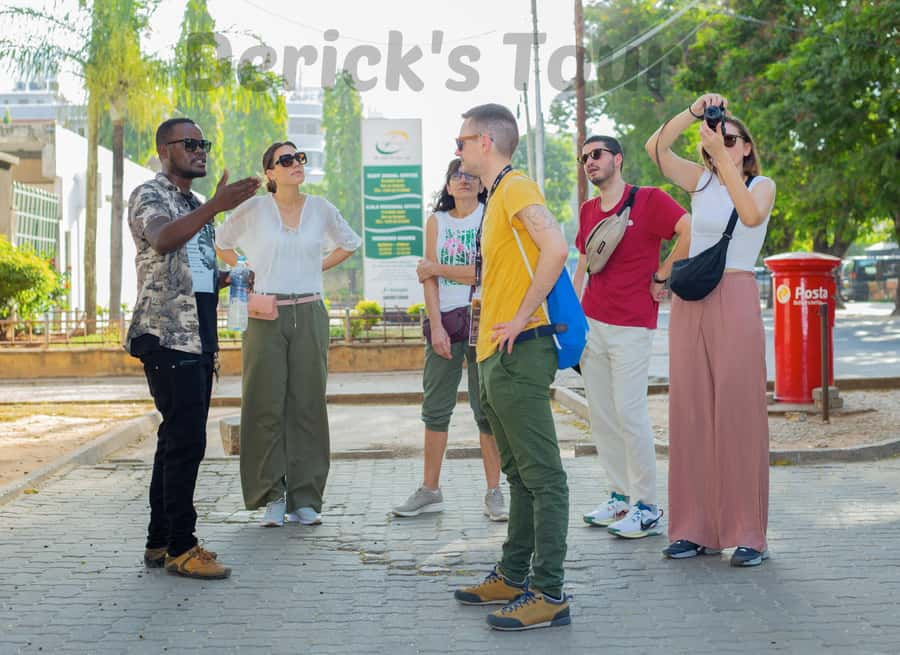
The Askari Monument is a central memorial dedicated to African soldiers who served during World War I. It offers a short but important pause in the route, since it turns a familiar traffic junction into a place for discussing East Africa’s role in a global conflict.
This stop also helps broaden the story beyond colonial architecture. The monument points to African service and sacrifice, not only to the European powers that controlled the region. Derick can place it within the larger story of Tanzania and Dar es Salaam, moving the tour from buildings to people and political change.
For many visitors, this is the kind of stop that is easy to miss alone. You might walk past the monument, take a quick photograph, and never learn why it is there. With a guide, it becomes a useful lesson in how public memorials shape a city’s identity.
A green pause at the Botanical Garden
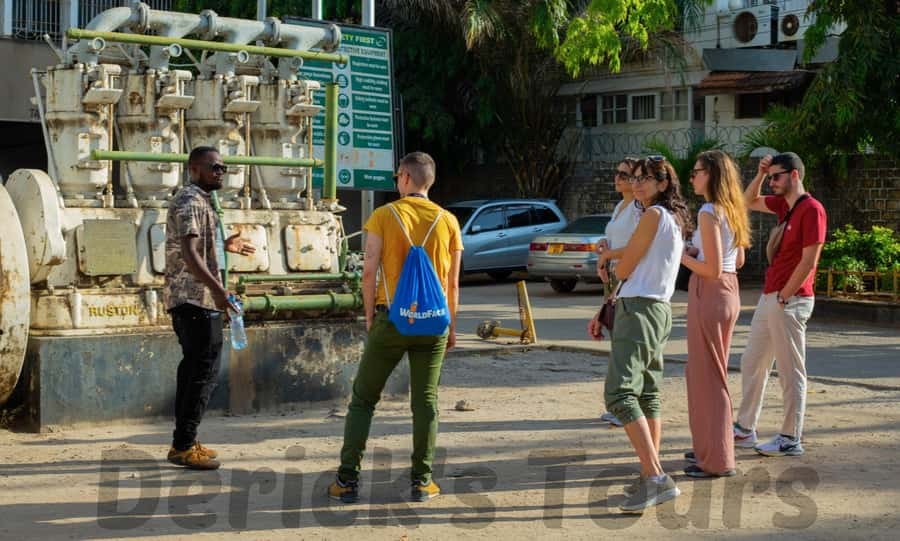
The Botanical Garden provides a welcome change of pace. After streets, traffic, and stone buildings, you move into a quieter green space with tropical plants and trees.
Do not expect a full botanical visit with a long plant-by-plant lecture. The garden works better as a breathing space within the walk. It gives you a chance to slow down, take photographs, and see how greenery survives in the middle of central Dar es Salaam.
This is also one reason the route feels more varied than a simple architecture walk. In two hours, you move between religious buildings, a war memorial, plants, a market, and older civic structures. The variety keeps the experience from becoming a long march between similar facades.
Because Dar es Salaam can be hot, the garden may feel especially welcome. Still, the tour remains outdoors, so bring water, wear comfortable shoes, and dress for heat. The advertised duration is two hours, but the actual comfort of the walk will depend on the time of day and your own pace.
Same streets, a different guide:
- New Orleans Premier Ghost, Voodoo and Vampire Walking Tour
★ 4.5 · 12,856 reviews - Amsterdam Anne Frank: Small-Group Walking Tour & Local Guide
★ 4.8 · 12,789 reviews - Edinburgh: Harry Potter Magical Guided Walking Tour
★ 4.8 · 11,944 reviews - Edinburgh Castle: Guided Walking Tour with Entry Ticket
★ 4.7 · 11,699 reviews
Kivukoni Fish Market brings the city to life
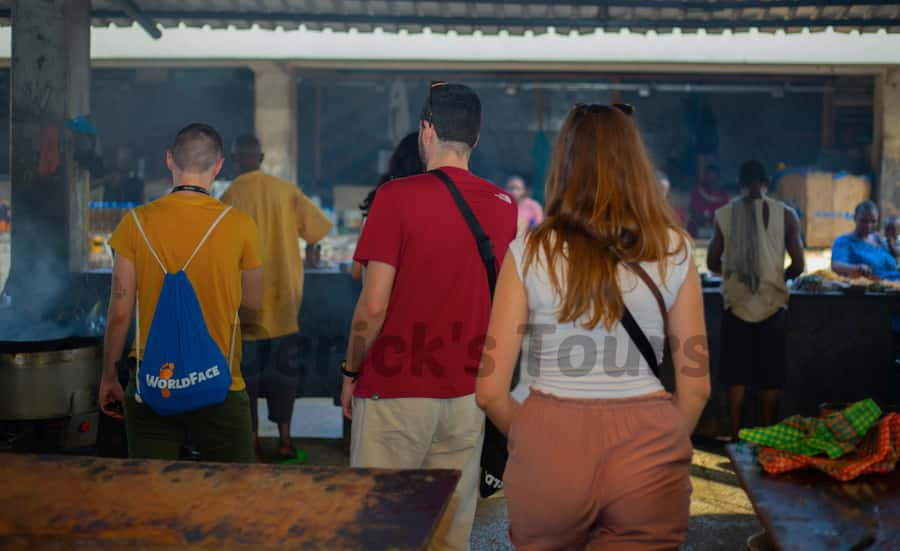
The Kivukoni Fish Market is likely to be the most memorable part of the tour. Here, you see freshly caught seafood being sold, fishermen working with nets, and the fast-moving trade that links the city to the Indian Ocean.
This is not a polished sightseeing stop. It is a working market. That is precisely why it matters. You see people buying and selling food, watch the practical rhythm of fishing life, and experience a side of Dar es Salaam that a vehicle tour could easily pass by.
One guest ended the walk at the market and tried street food with Derick. That is not listed as a guaranteed inclusion, so you should treat it as a possible extra rather than part of the ticket. If it appeals to you, ask about it before the tour. The same applies to food allergies and sensitivities.
The market has a strong smell, and one guest requested a different route because of an allergy to it. Derick substituted Coco Beach in that case. This is a useful sign that the route is not entirely rigid, but you should still mention any allergy or health concern in advance.
Photography also calls for common sense. The market is a place where people work, not a staged performance. Ask before taking close portraits, keep your belongings secure, and follow Derick’s lead in crowded areas.
Old Boma and the city’s older layers
Old Boma is one of Dar es Salaam’s oldest surviving buildings. Its thick-walled form and age make it an important stop for understanding the city’s architectural past.
The value here is not only the building itself. Old Boma helps show that Dar es Salaam is not a city built in one period. Its story includes coastal trade, sultanate influence, German colonial rule, British rule, independence, and present-day urban life. A guide can connect those periods in a way that a short caption cannot.
You may also find that the tour includes nearby details that are not obvious from the main route. Derick has adjusted walks for personal interests and has taken some visitors to unusual spots around the city. One guest also reached a high viewpoint in one of Dar es Salaam’s twin buildings. That experience is not part of the stated standard route, so ask before counting on it.
The local art gallery adds a modern note
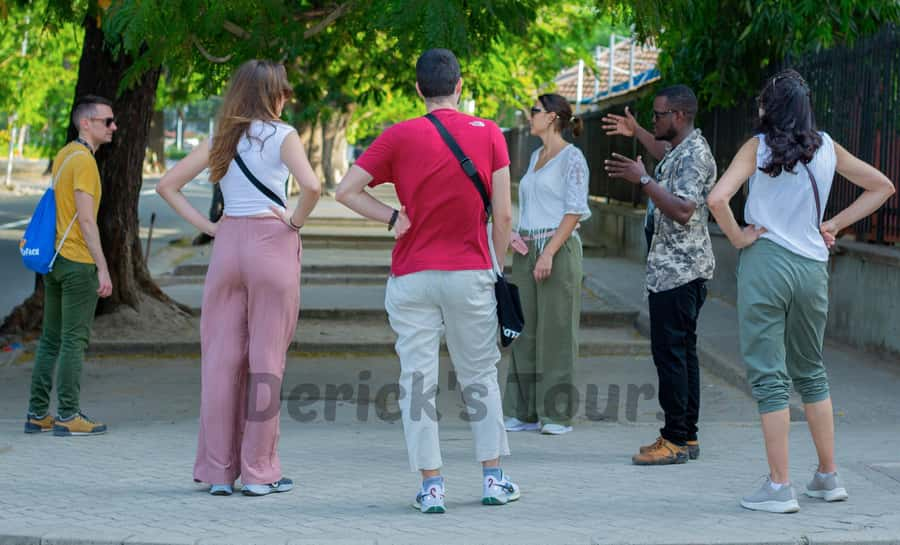
The tour includes a stop at a local art gallery, described as a lively place for seeing local art. This gives the walk a contemporary edge.
After churches, monuments, gardens, and older buildings, the gallery shifts attention to how Dar es Salaam presents itself today. Art can show subjects and viewpoints that formal landmarks leave out, from daily work to identity, style, and national culture.
The exact gallery is not named, and opening arrangements are not specified. If this stop is especially important to you, confirm it with Derick in advance. The experience is customizable, so you may also ask how much time can be given to art compared with the market or historic sites.
How much history will you get in two hours?
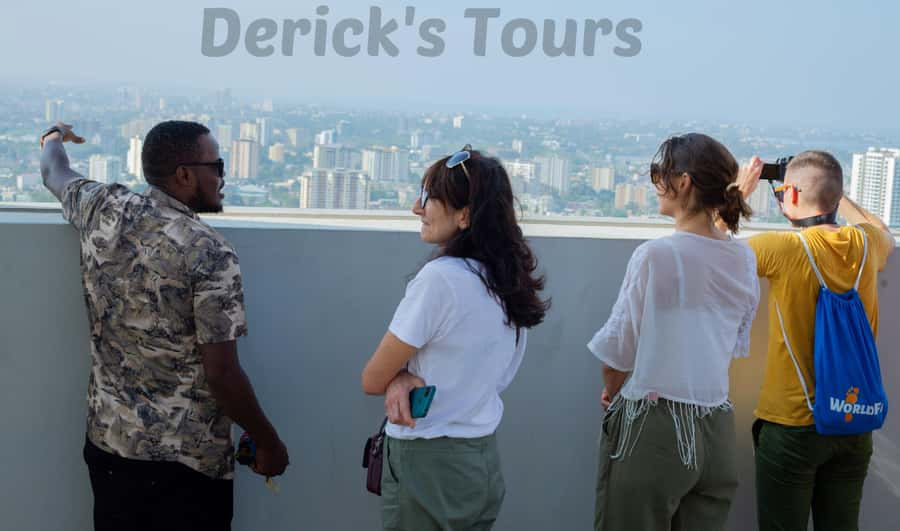
You will get a solid introduction, not an academic course. Derick has been praised for covering periods from the sultanate through German and British rule, along with modern events, culture, and local traditions.
The strongest feature is the chance to ask questions. If you want to understand how Dar es Salaam developed, ask about the relationship between the coast and the city, the role of the colonial buildings, or how central Dar has changed. If you prefer a lighter walk, you can focus more on photographs, architecture, food, and daily life.
The route is described as a walking tour, but one guest received a ride back to a homestay and another completed the experience partly by motorbike. Those are individual arrangements, not promised inclusions. Plan on walking unless you agree on something different with Derick beforehand.
A small caution: one person felt the guide moved too quickly and did not allow enough time for photographs. If you like to stop often, say so at the beginning. A slower version may mean skipping one location, but it will give you more time to look closely and take pictures.
Timing, comfort, and practical value at $30
At $30 per person, this tour is priced reasonably for a two-hour guided introduction, especially if you are new to Dar es Salaam. You are paying for local interpretation, route planning, and the ability to ask questions, not for entry to a major paid attraction.
The value is highest when you use the walk as an orientation. Afterward, you will know which parts of the center you want to revisit, where the market is, and how the city’s main landmarks fit together. If you already know central Dar well, the experience may feel less essential unless you want deeper historical context or a customized route.
Time of day matters. A booking can be moved by arrangement, and one guest switched from 2 PM to 5 PM to avoid the worst heat. A later start may also make the walk more comfortable, but market activity and lighting can vary. Confirm the preferred time with Derick rather than assuming every slot is available.
Cancellation is free up to 24 hours before the start, and you can reserve now and pay later. The guide operates in English. Those terms are useful if your schedule depends on flights, ferries, or a changing safari plan.
Who will get the most from this experience?
I would choose this tour if you are visiting Dar es Salaam for the first time and want a clear introduction without committing to a full-day outing. It suits solo visitors, couples, small groups, and anyone who prefers conversation over a recorded audio guide.
It is also a good match if you care about local daily life, not only famous buildings. The fish market, art gallery, and city streets give the tour more texture than a route limited to monuments.
You may want a different plan if you dislike walking in heat, have a strong sensitivity to market smells, or need extensive time at each photo stop. In those cases, tell Derick what you need. The tour can be adapted, but a two-hour route cannot provide long visits everywhere.
Should you book the Dar es Salaam city walk?
Book it if you want a compact, flexible introduction led by a local guide who can explain both the city’s past and its present. The churches, Askari Monument, Botanical Garden, Old Boma, gallery, and Kivukoni Fish Market create a well-balanced route, with the market providing the most direct connection to everyday coastal life.
I would especially recommend it for a first day in Dar es Salaam, a short stop between other trips, or a solo visit when you want help getting oriented. Ask for a cooler time, explain any allergies, and say how much time you want for photographs.
Skip it only if you already know the city center well or want a slow, specialist visit to one site. For most first-time visitors, $30 buys useful context, local conversation, and a practical sense of how Dar es Salaam fits together.
FAQ
How long does the walking tour last?
The tour lasts two hours.
How much does the tour cost?
The price is $30 per person.
Which landmarks are included?
The route includes St. Joseph Cathedral, Azania Front Lutheran Church, the Askari Monument, the Botanical Garden, Kivukoni Fish Market, Old Boma, and a local art gallery.
Is the tour conducted in English?
Yes. The live tour guide speaks English, and English is the listed tour language.
Can the route be customized?
Yes. You can request changes based on your interests by messaging Derick in advance.
Can I avoid the fish market?
Yes. A different stop can be arranged. One alternative used for a guest with an allergy to the market smell was Coco Beach.
What is the cancellation policy?
You can cancel up to 24 hours in advance for a full refund. You can also reserve the experience and pay later.
New routes in the world
- Barcelona Historical Walking Tour: Gothic Quarter and El Born★ 5.0 · 217 reviews
- Gothic Quarter Donation-Based Walking Tour in English★ 5.0 · 72 reviews
- Private Tailored Barcelona Walking Tour★ 5.0 · 80 reviews
- The Spanish Civil War & Franco Barcelona Walking Tour★ 5.0 · 539 reviews
- Jewish Walking Tour Barcelona by Expert Jewish Guide 2h★ 5.0 · 297 reviews
- Barcelona Dark History Night Walking Tour With Drinks★ 5.0 · 153 reviews
- Ramblas, Old Town, Gothic and Gaudi Architecture Walking Tour★ 5.0 · 723 reviews
- Barcelona Gems, 10+ Sights Immersive Walking Tour★ 5.0 · 209 reviews
Tanzania Walking Tours, compared.

Zanzibar: Stone Town Historical Cultural Walking Guided Tour
Read our review →
Stonetown: Food Markets and Street Food Walking Tour
Read our review →
Arusha Guided Walking City Tour, Culture, Lifestyle & History
Read our review →Browse the lists this tour appears in