
Review · TANZANIA
Arusha Guided Walking City Tour, Culture, Lifestyle & History
Arusha’s best introduction may be a walk through its everyday places rather than a quick look from a safari vehicle. This four-hour city tour links colonial buildings, museums, jewelry, markets, and public streets, giving you a useful first picture of how Arusha works.
I like the mix of history and daily life, especially the Old Boma Museum and the Maasai market. I also like that Tanzanite and African art admission are included in the $26 price. The main consideration is that this may not be a pure walking tour, since some versions use a car or tuk-tuk between stops, and the pace can vary from about two and a half to six hours.
Key points to know before booking
- The Old Boma Museum explains Arusha’s early colonial past, human evolution, and local ecology in one compact stop.
- Tanzanite is part of the tour price, with a guided look at mining, cutting, polishing, and the stone’s famous violet-blue color.
- Guide Israel receives especially strong praise for clear English, local knowledge, and helping solo visitors feel comfortable in busy streets.
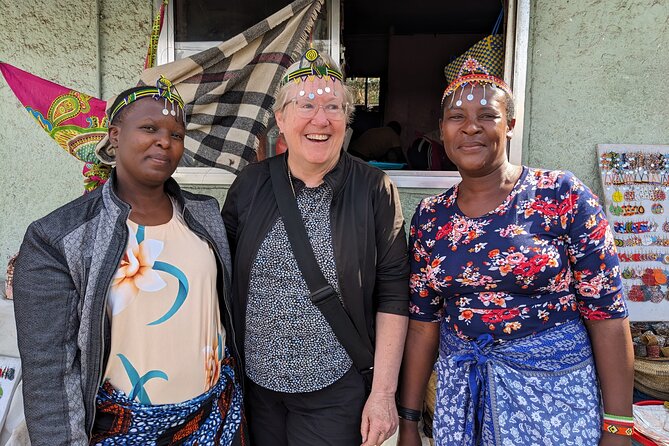
- The Maasai market is better for browsing than rushing, with fabric, jewelry, shoes, bags, blankets, and small artworks.
- The route blends walking with short rides, so confirm the exact pickup and transport plan if you want a fully pedestrian outing.
- The maximum group size is 19, though the experience is most useful when you can hear the guide easily and ask questions.
Why this is a useful first afternoon in Arusha
Arusha is often treated as a launching point for Mount Kilimanjaro, safari parks, or other northern Tanzania trips. That is a shame. The city has its own story, and this tour gives you a structured way to see it without spending a full day in a museum.
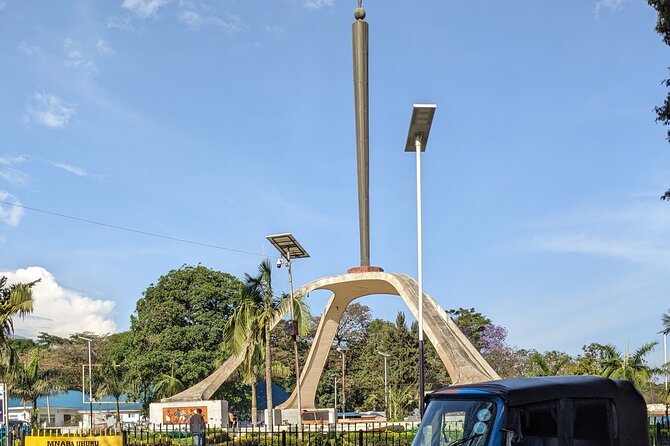
You move through several different sides of town. One stop deals with colonial rule and human evolution. Another explains a gemstone sold around the world. Then you pass through a central meeting point, shop for local crafts, and finish among African art and cultural objects.
I would use this tour early in an Arusha stay. It can help you recognize the city’s landmarks, understand local references, and get more comfortable with markets and central streets. It is also a practical choice if you have only one free afternoon before a safari.
The guide matters a great deal here. Israel is the guide named most often in the feedback, and his strengths are clear English, an easy manner, and detailed explanations of Tanzanian history and culture. You cannot assume he will lead every departure, so ask when booking if having him is important to you.
More History Walking Tours in the world:
- History and Hauntings of Salem Guided Walking Tour
★ 5.0 · 14,564 reviews - Lisbon: History, Stories and Lifestyle Walking Tour
★ 4.8 · 10,902 reviews - Boston: Freedom Trail History Small Group Walking Tour
★ 5.0 · 6,450 reviews
The Old Boma Museum puts Arusha’s past in context
The Old Boma Museum is the most substantial history stop. The building was constructed by the Germans during the colonial period as a fort, and it is described as the oldest building in Arusha. Today, it operates as the National Natural History Museum.
You can expect three permanent exhibitions and three temporary exhibitions. The main subjects listed for this visit are:
- Human evolution, including replica fossils, early tools, and the oldest footprint found in East Africa
- The history of the Boma and Arusha from 1884 to 1919
- Ecology and wildlife photography
This is a useful combination. The human evolution display connects Arusha to the wider story of East Africa, while the Boma exhibit explains the city’s role during the German colonial period. The wildlife photography section shifts the focus from people and politics to the natural world that shapes tourism in northern Tanzania.
Plan about 45 minutes here. The museum admission is not included, with an additional fee of $6 per adult. That extra charge is worth noting when comparing the tour price. If your interest is mainly shopping and modern city life, you might find the museum too formal. If you want basic historical context, it is one of the most worthwhile stops.
The route toward the museum also passes the East African Community headquarters, an international conference building, and a large public hospital. These are not listed as full stops, but they help show Arusha as an administrative center, not only a safari base.
Tanzanite explains a distinctly Tanzanian luxury
The Tanzanite Experience offers a different kind of history lesson. Tanzanite is mined only in Tanzania, and the museum explains why that narrow source makes the stone so scarce. The tour also covers mining, cutting, polishing, and the stories and myths tied to the violet-blue stone.
The visit takes about 30 minutes, and admission is included. There is also a shop, with stones and jewelry listed from about $100 to $3,000 and above. That range makes this stop useful even if you have no intention of buying. You can learn how the stone is presented and priced before deciding if anything suits your budget.
I would treat the shop as optional, not as a reason to book the tour. Bring a clear spending limit if you like jewelry, and do not feel pressured to purchase. The valuable part for most people is the explanation of how an uncut stone becomes a finished piece.
The tour description compares Tanzanite’s rarity with diamonds and describes it as roughly 1,000 times rarer because of its limited source. Your guide can explain the claim and the stone’s place in Tanzania’s economy. This makes the stop more meaningful than a simple jewelry showroom visit.
The Clock Tower is a quick lesson in city geography
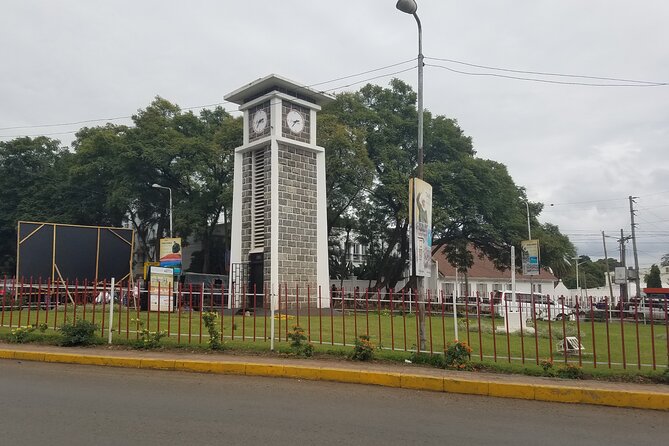
The Arusha Clock Tower is scheduled for about 15 minutes. It is a common meeting point in the city and was built by Galanos, a Greek millionaire who came to Tanganyika in the early twentieth century.
The tower is also linked to a popular geographic claim: that it sits between Cairo and Cape Town and near the meeting point of Tanzania, Kenya, and Uganda. The precise wording of that claim can vary, but it is part of the landmark’s local identity and makes the stop more than a photo opportunity.
The short visit works well as a pause between indoor attractions and markets. Afterward, the route continues toward one of the oldest hotels and schools built during the colonial period. Those buildings help you notice how older public structures remain woven into modern Arusha.
Do not expect a long guided tour at the Clock Tower. Fifteen minutes is enough for a quick explanation, a look around, and a photograph before moving on.
More Cultural Walking Tours in the world:
- Savannah First Squares Culinary & Cultural Walking Food Tour
★ 5.0 · 3,229 reviews - Tokyo Tsukiji Fish Market Food and Culture Walking Tour
★ 5.0 · 3,184 reviews - New Orleans French Quarter, Voodoo and Culture Walking Tour
★ 4.5 · 2,961 reviews - Amsterdam: Cultural Highlights Walking Tour
★ 4.9 · 2,629 reviews
The Maasai market is where your shopping skills matter
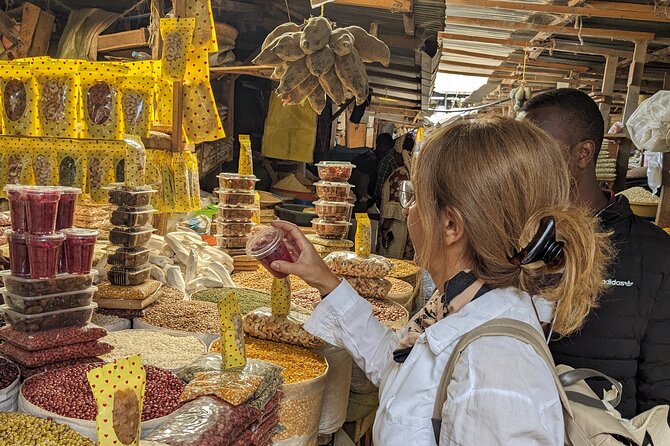
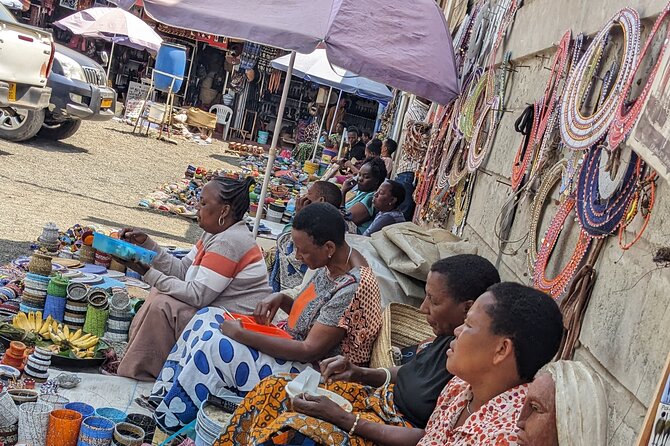
The Maasai Market Curios and Crafts stop lasts about 25 minutes, though shopping can easily stretch longer if your schedule allows. The market sells the kinds of items many people hope to take home from Tanzania:
- African pots and pans
- Safari shirts and fabric clothing
- Tanzania jerseys
- Maasai shoes and sandals
- Jewelry and necklaces
- Bags in different sizes
- Shuka blankets
- Artwork
This is the stop where a guide can make a real difference. Busy streets and market stalls can feel confusing at first, especially if you are not used to comparing prices or deciding how long to browse. Israel is specifically praised for guiding people through markets and crowded streets in a calm way.
The market is best approached with curiosity and patience. Ask about materials, use, and origin. You may find good souvenirs, but the tour does not include money for purchases, so bring cash if you plan to shop. The price of the tour also does not include food or drinks.
Twenty-five minutes is enough for a quick look, but not enough for an extended shopping session. If you want to buy several pieces, tell the guide early. The schedule can be flexible, since the overall duration is described as ranging from two and a half to six hours.
The Cultural Heritage Centre finishes with art and design

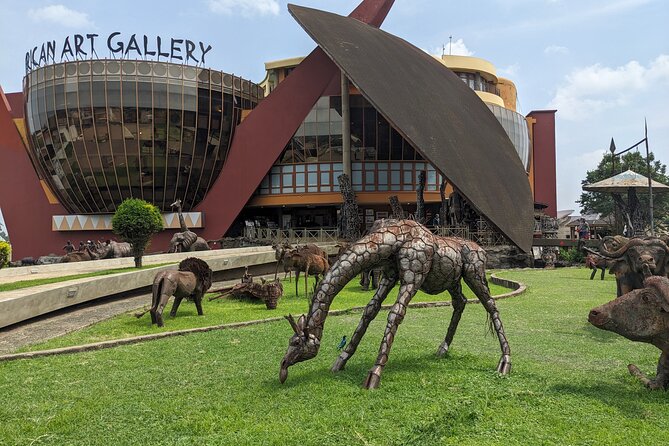
The Cultural Heritage Centre is scheduled for about 40 minutes and is described as one of the largest art galleries in Africa. The collection includes art from different parts of Tanzania and other African countries.
This stop broadens the picture beyond Maasai souvenirs. You can look at sculpture, paintings, decorative objects, and other forms of African art in a more organized setting than the open market. There is also a shop nearby, so you can compare the formal gallery setting with the market experience earlier in the day.
Admission to the African art gallery and cultural heritage portion is included. Purchases are not. That distinction matters because it keeps the basic tour affordable while leaving you free to decide what, if anything, to buy.
I like this as the final stop because it gives you time to slow down after the streets and market. It also lets you see different price levels and styles before making a souvenir decision. If you are not interested in art or shopping, this may feel less essential than the museum, but the collection adds cultural range to the afternoon.
What the $26 price really covers
At $26 per person, the tour offers solid value if you visit the included attractions. Tanzanite museum admission and the African art and cultural heritage costs are included, as is hotel pickup and drop-off for hotels near the city center.
The Old Boma Museum costs an additional $6 per adult. Food, drinks, accommodation, tips, souvenirs, and any extra tour after the city walk are also excluded. A little cash is sensible, both for the market and for any small purchases.
The price is especially fair for a visitor who wants a guide rather than simply walking between landmarks. You are paying for local explanation, route planning, market help, and transport support as well as entry to two attractions.
The value is less clear if you plan to skip museums and do not want to shop. In that case, you may use only part of what the fee provides. Also check the exact route length, since the stated duration is flexible. The advertised average is four hours, but the included information gives a possible range from two and a half to six hours.
Walking, pickups, and group size
Pickup is offered from hotels near central Arusha. The experience is described as a walking tour, but some departures include a car or tuk-tuk ride to the first sight and between locations. That can be helpful in heat or when sights are spread out, but it changes the feel of the experience.
If you want a fully walking-based route, ask before the day begins. If you prefer less walking, the mixed format may suit you better. The important point is to set the right expectation: this is a city tour with walking, not necessarily four continuous hours on foot.
The maximum group size is 19 people. That is not a tiny private tour, but it is still manageable if the guide uses a clear voice. Past feedback gives Israel particular credit for speaking clearly and explaining places in an easy-to-follow way.
Most people can take part, and the tour is near public transportation. The supplied information does not give a detailed accessibility assessment, so anyone with mobility concerns should ask about the amount of walking, steps at the museum, and the vehicle arrangements before booking.
Who will get the most from this tour
I would recommend this experience to you if:
- You have never visited Arusha and want a useful introduction
- You enjoy combining museums, streets, markets, and art
- You want to understand Tanzanian culture beyond safari parks
- You prefer having a local guide in busy market areas
- You have a free morning or afternoon before another scheduled activity
- You are a solo visitor who would appreciate help with navigation and local context
It is also a good fit for couples and small groups who want a broad sample of the city without arranging several separate visits.
You may want something else if you want a quiet, specialized museum tour, a long shopping session, or a fully private itinerary. The route covers many subjects in a short time, so no single stop receives a very deep treatment.
Practical advice for a smoother visit
Wear comfortable shoes, since the route includes walking on city streets even when short rides are used. Carry cash for the $6 museum fee and purchases, and keep some time in reserve because the total duration can change.
Ask your guide to explain which claims are local tradition and which are established historical facts. This is especially useful at the Clock Tower and the Tanzanite stop, where memorable stories are part of the experience.
If you hope to buy jewelry, set your budget before entering the shop. At the Cultural Heritage Centre and Maasai market, take a first look before committing to a purchase. You will make better choices after comparing styles and prices.
The tour can be canceled for a full refund up to 24 hours before the start time. Cancellations or changes within 24 hours are not refunded, and all cut-off times follow local time in Tanzania.
Should you book the Arusha city tour?
Book it if you want a friendly, well-organized introduction to Arusha with a good mix of history, shopping, art, and local explanation. The $26 fee is reasonable once the included Tanzanite and Cultural Heritage Centre admissions are counted, though you should add the Old Boma fee and shopping money.
The strongest reason to choose this tour is the guide-led connection between ordinary city life and larger themes: colonial rule, human evolution, Tanzanian gemstones, African art, and market culture. Ask whether Israel is available if his clear English and strong local explanations are important to you.
Skip it if you want a strict walking route, a slow museum study, or a shopping-only outing. For most first-time visitors with half a day free, though, this is an efficient and personable way to get your bearings in Arusha.
FAQ
How long does the Arusha city tour take?
The usual duration is about four hours. The included information gives a possible range from two and a half to six hours, depending on the route and timing.
How much does the tour cost?
The listed price is $26 per person.
Is hotel pickup available?
Yes. Pickup and drop-off are offered for hotels near the city center.
Is the tour entirely on foot?
Not always. It is presented as a walking city tour, but some departures use a car or tuk-tuk between locations. Confirm the exact plan if this matters to you.
Is admission to the Old Boma Museum included?
No. The Natural History Museum, also called the German Boma, costs $6 per adult.
Is the Tanzanite museum included?
Yes. Admission to the Tanzanite Experience is included in the tour price.
Is the Cultural Heritage Centre included?
Yes. The African art gallery and cultural heritage costs are included.
Are food and drinks included?
No. Food and drinks are not included.
How large can the group be?
The maximum group size is 19 people.
Can I cancel for a full refund?
Yes, if you cancel at least 24 hours before the experience start time. Cancellations within 24 hours are not refunded, and changes within that period are not accepted.
New routes in the world
- Baltimore Walking Foodie Tour in Fells Point★ 5.0 · 182 reviews
- Baku Oil Heritage & Old Town Walking Tour★ 5.0 · 232 reviews
- Baku Walking Tour (Old City)★ 5.0 · 127 reviews
- The Madam’s Curse Walking Ghost Tour★ 4.5 · 103 reviews
- Austin Small Group Morning Walk★ 5.0 · 412 reviews
- Austin Haunted Pub Crawl Walking Tour★ 4.5 · 232 reviews
- Austin Downtown Private Walking Food Tour With Secret Food Tours★ 5.0 · 71 reviews
- Austin Murder Walk★ 5.0 · 310 reviews
Tanzania Walking Tours, compared.

Zanzibar: Stone Town Historical Cultural Walking Guided Tour
Read our review →
Stonetown: Food Markets and Street Food Walking Tour
Read our review →
Browse the lists this tour appears in